The useful way to think about vision is not as a recording but as a reconstruction — a best guess assembled from partial data. Here are twelve of the shortcuts involved.
1. You Have a Blind Spot in Each Eye

Where the optic nerve leaves the retina there are no light receptors at all, producing a real hole in each eye’s field of view.
You never notice it, because the brain fills the gap with whatever is around it and presents the result as continuous. The invention is seamless. The blind spot is the piece of missing vision your brain covers up permanently.
Like our content? Follow us for more.
2. Your Nose Is Always in Shot

Your nose sits within your visual field constantly, and you can see it right now if you look for it.
The brain suppresses it because it never changes, treating permanently static input as irrelevant. Once noticed it becomes briefly hard to ignore. Your nose in shot is the object your visual system has decided you do not need to see.
3. Detailed Vision Covers a Tiny Area
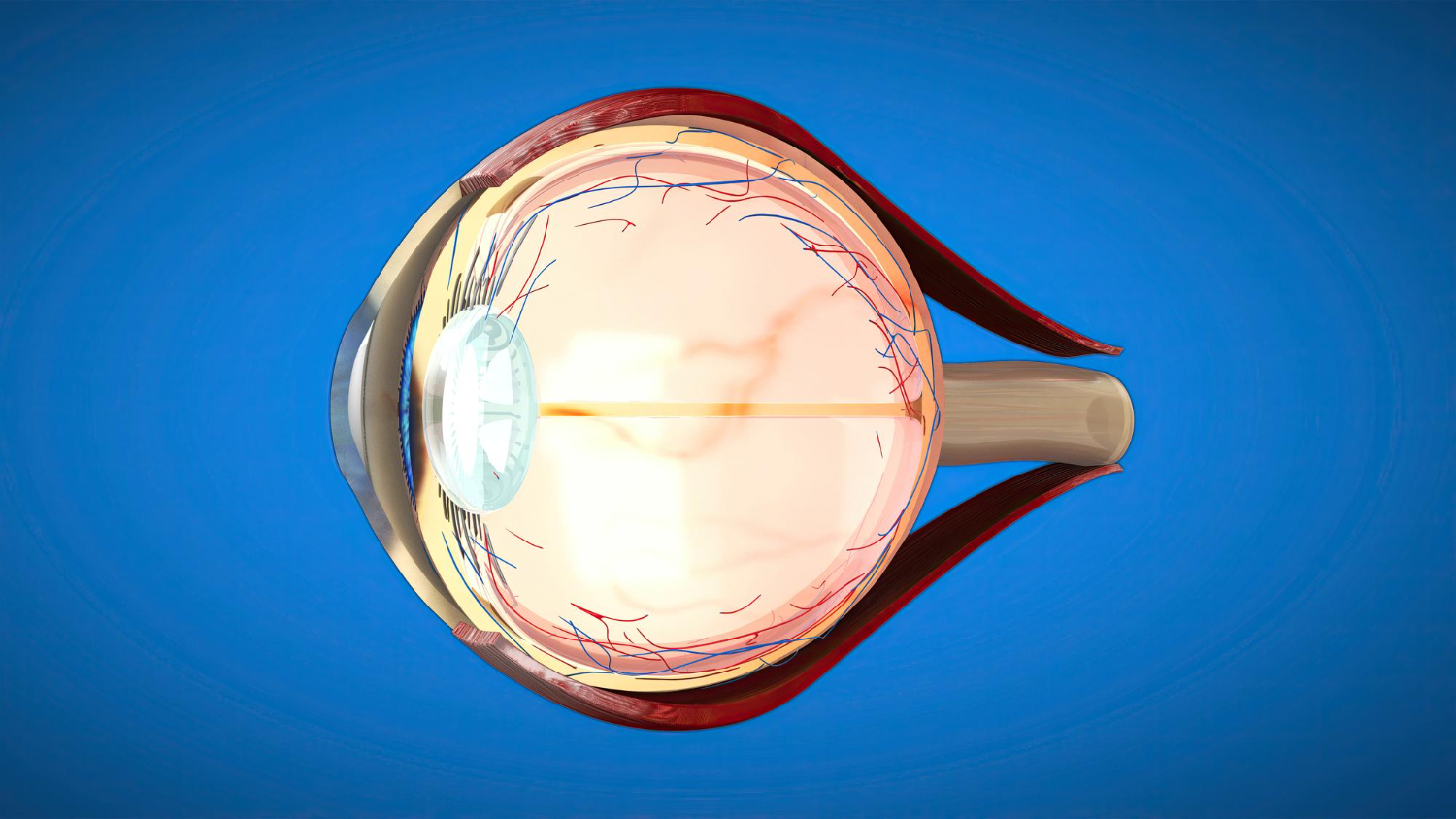
Sharp, detailed colour vision is confined to a very small central region of the retina, covering an area roughly the size of a thumbnail at arm’s length.
Everything else is blurry and poorly resolved, which you never perceive because your eyes move constantly to sample whatever matters. Detailed vision covering a tiny area is the limitation your eye movements exist to disguise.
4. Your Eyes Move in Jumps, Not Sweeps
Eyes do not glide smoothly across a scene. They jump between fixation points several times a second, in movements called saccades.
You can verify this by watching someone else read: their eyes hop rather than slide. Smooth movement is only possible when tracking something that is itself moving. Movement in jumps is how your eyes actually sample the world.
5. You Are Blind During Those Jumps

Vision is suppressed during each jump, because the smeared image produced by a moving eye would be useless.
That means you spend a meaningful proportion of your waking life with vision effectively switched off, and you have never noticed a single interruption. Being blind during eye movements is the gap your brain edits out completely.
6. The Stopped-Clock Illusion
Look at a second hand and the first tick often appears to last longer than a second, because your brain backfills the blank period during the eye movement with whatever it sees on arrival.
The effect is easy to reproduce with any analogue clock. The stopped clock is the everyday illusion produced by your brain covering its own blindness.
7. Colour Fades at the Edges
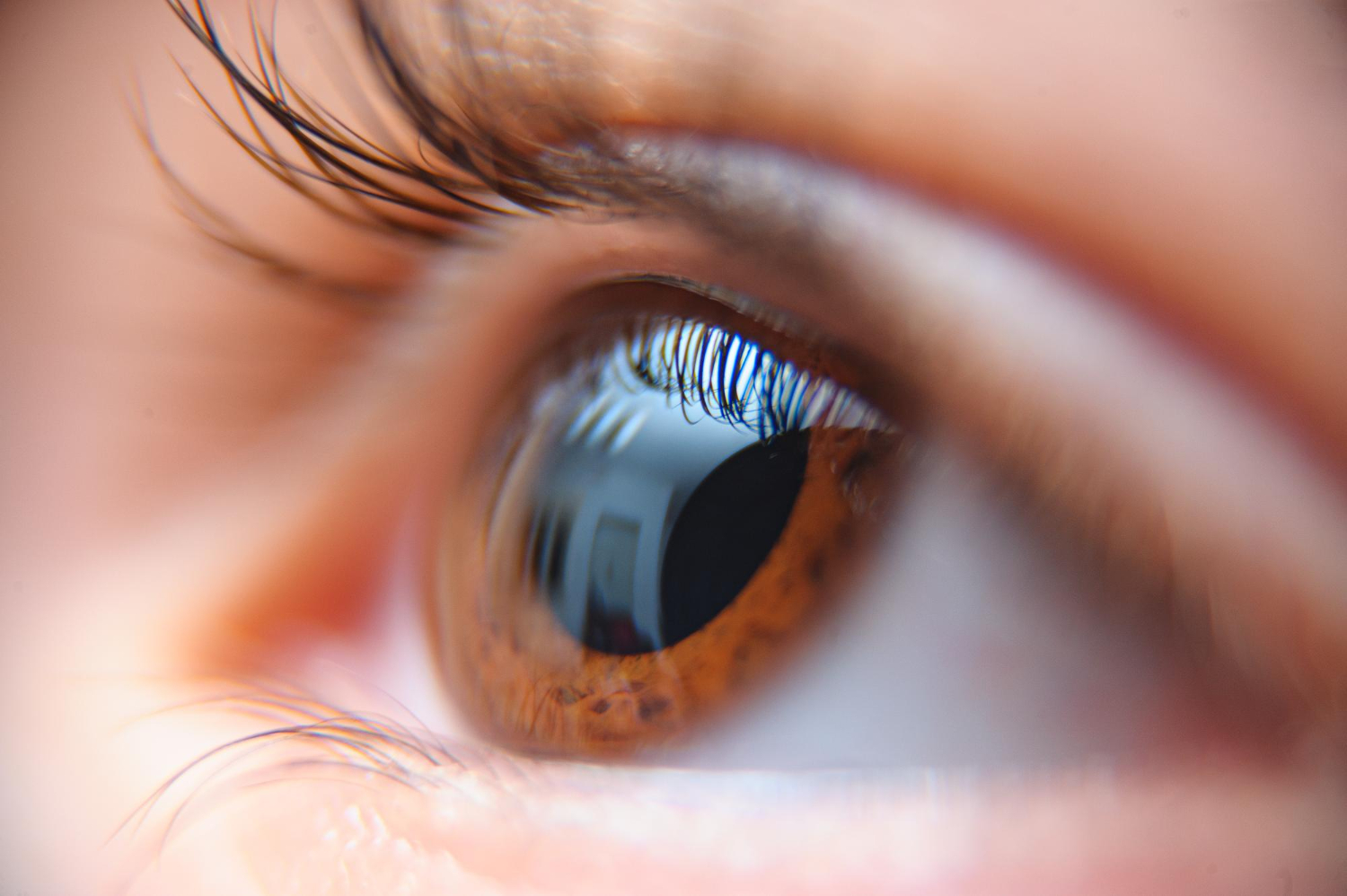
Colour receptors are concentrated centrally and sparse toward the periphery, so peripheral vision is close to colourless.
You perceive a fully coloured world because the brain assumes colour continues where it cannot actually detect it. It is filling in from memory and expectation. Colour fading at the edges is the invention that makes peripheral vision feel complete.
8. Your Eyes Are Never Still

Even during fixation, eyes make continuous tiny movements. These are essential rather than incidental.
Images artificially stabilised on the retina fade from perception within seconds, because the visual system responds to change rather than to steady input. Constant micro-movement is what stops your vision from switching itself off.
9. The Image Is Upside Down

The lens projects an inverted image onto the retina, and the brain simply interprets it the right way up.
Experiments with inverting spectacles found that wearers adapted over days, and then had to adapt again when the glasses came off. The upside-down image is the correction your brain applies without any awareness of doing it.
10. You See a Stable World From a Wobbling Head

Your head moves constantly, yet the world does not appear to shake, because a reflex driven by the inner ear moves your eyes in the opposite direction automatically.
You can demonstrate it by holding a finger up and shaking your head, then holding the finger and shaking that instead — one stays sharp, the other does not. Stability from a wobbling head is the compensation running continuously behind ordinary vision.
11. Context Changes What Colour You See
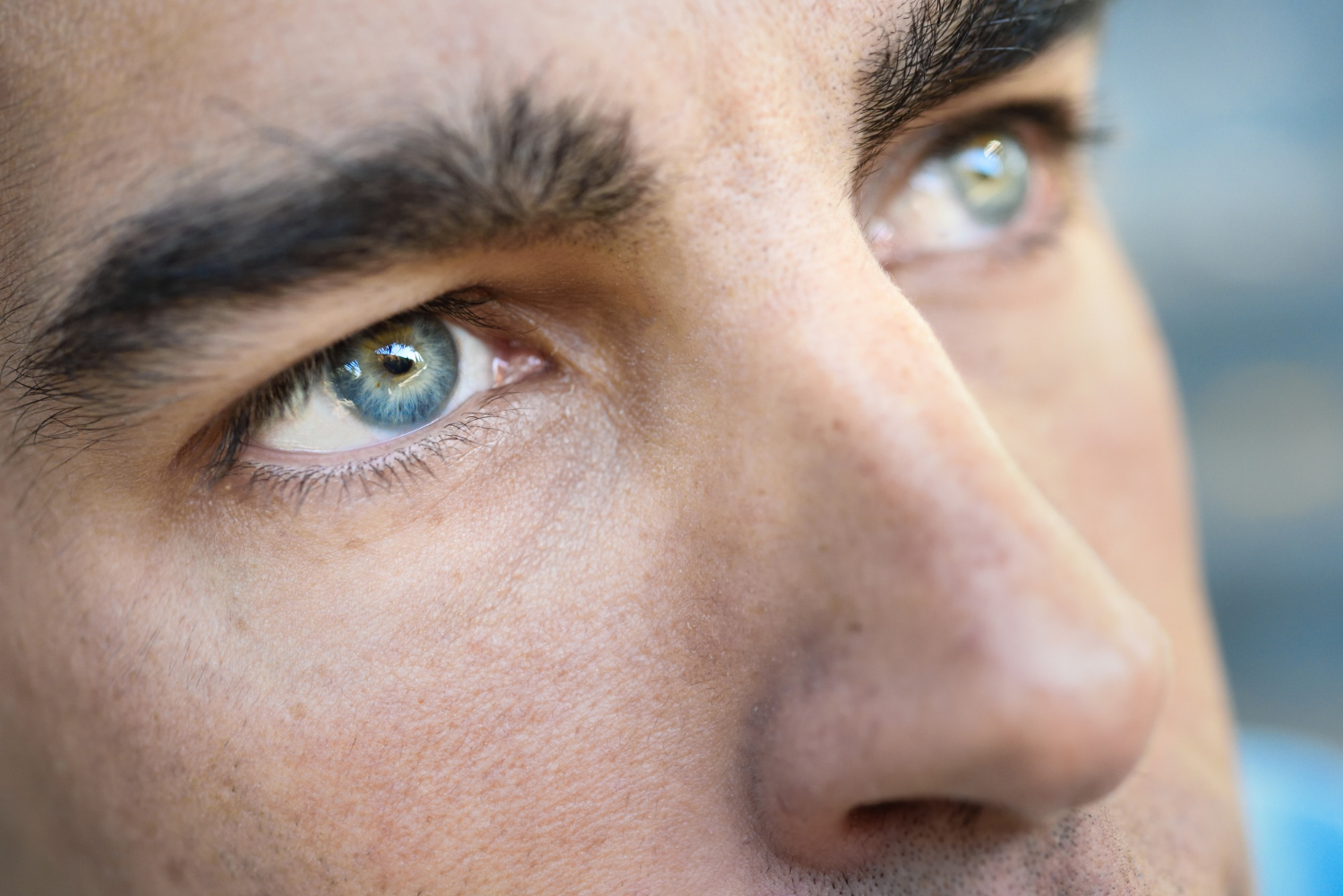
The same patch of grey appears lighter or darker depending on what surrounds it, because the brain judges brightness relatively rather than absolutely.
This is not an error; it is what allows you to recognise an object as the same colour under sunlight and lamplight. Context changing colour is the adjustment that makes vision useful outdoors and indoors alike.
12. You Notice Far Less Than You Think

Attention is narrow, and unattended changes in a scene frequently go unregistered even when they are large and in plain view.
Experiments on this are unsettling to read about, and the effect is strongest exactly when you are confident you would have noticed. Noticing far less than you think is the visual limitation with the widest consequences outside the laboratory.
A Reconstruction, Not a Recording
Every item here is a shortcut, and together they explain why vision feels effortless. The system is not delivering the world; it is delivering a serviceable model of it, updated fast enough that you never see the joins.
None of this is malfunction. A system that transmitted everything would be slower and less useful than one that predicts, discards and fills in. The oddity is not that your eyes cut corners — it is that they cut so many, so continuously, and you have never once caught them at it.
Like our content? Follow us for more.