

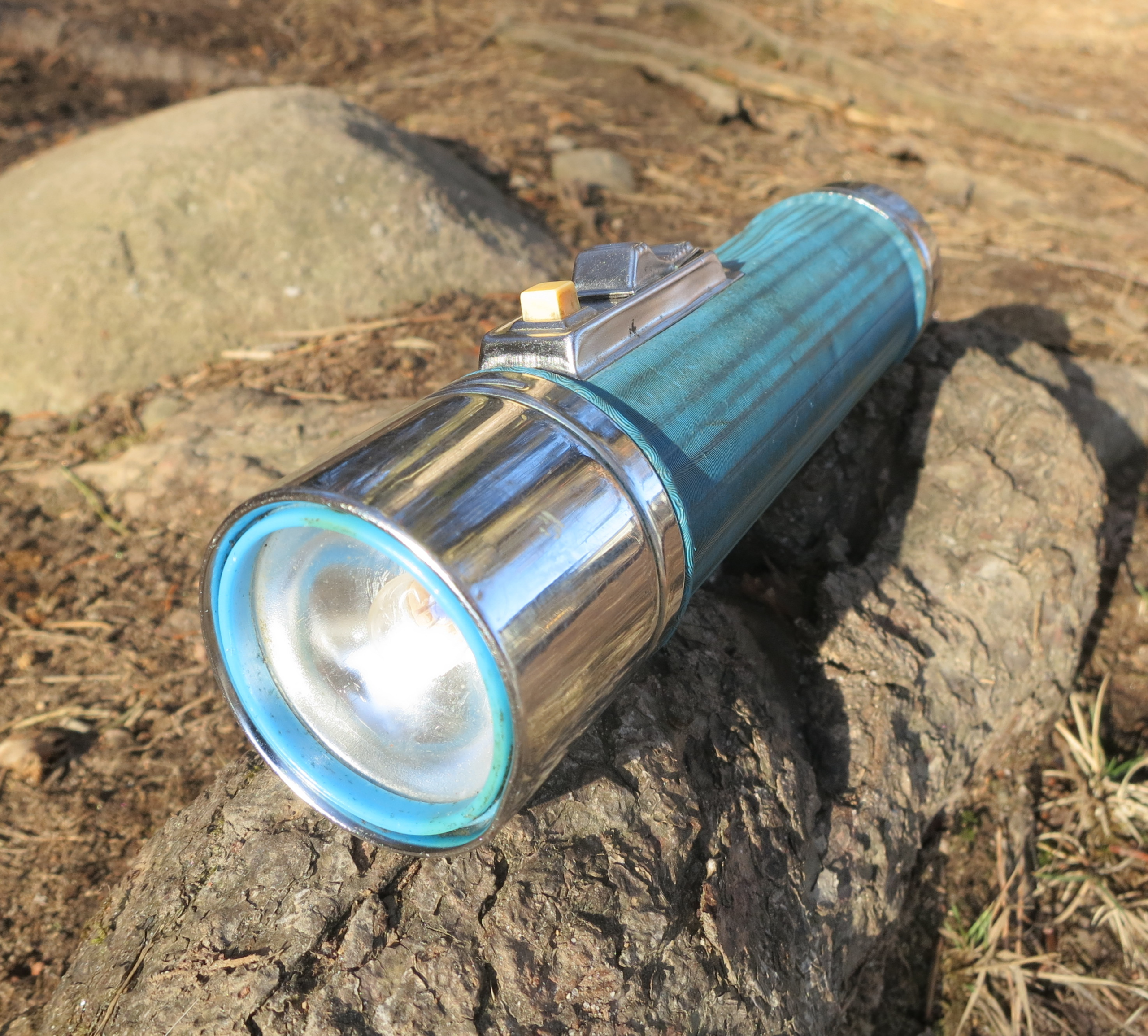
In 1974 the flashlight in an American kitchen drawer was a metal tube that weighed a pound, ran on two expensive cells, and produced about twenty feet of dim yellow light that faded continuously while it was switched on.
There was a spare bulb clipped into the base, because the bulb was expected to blow. The switch was a slide with a momentary position, because you were supposed to look and then turn it off to save the batteries. If it flickered you hit it against your palm, and that genuinely worked.
And at least one flashlight in every house was dead, kept in the drawer anyway, and tried first in every emergency. Here are fourteen things every household knew.
1. It Was a Metal Tube and It Was Heavy
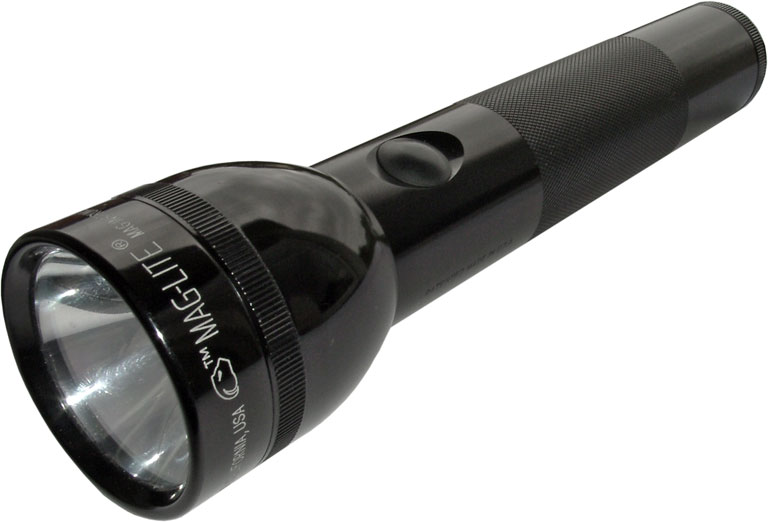
The standard household flashlight was a one-piece metal cylinder – plated steel, brass or later aluminium – with a knurled grip, a screw-on head, a lens and reflector at the front and a cap at the back, weighing a pound or more loaded.
Small light bodies in aluminium or moulded plastic, with the best of them weighing a few ounces and the cheapest weighing almost nothing.
The weight was the batteries and the tube around them. A metal case strong enough to survive being dropped, kept in a truck or used to knock on something had to be thick, and the cells inside were heavy – which is why the object had a presence that a modern light does not.
Like our content? Follow us for more.
2. It Ran on Two Big Round Cells and They Were Expensive
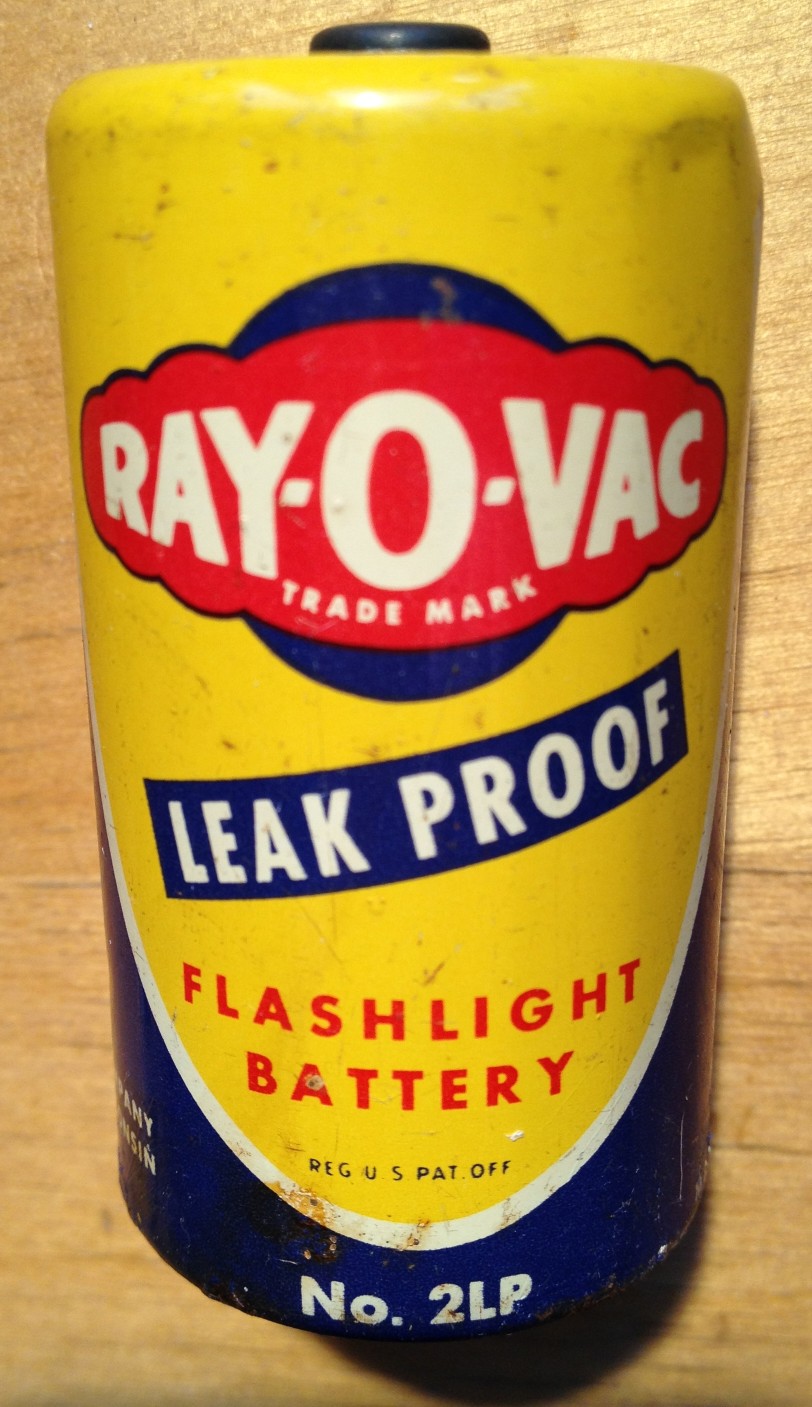
Power came from two or three large cylindrical cells stacked in series inside the tube, which cost a meaningful fraction of what the flashlight itself had cost and had to be replaced regularly.
The same cell sizes still sold, alongside rechargeable lights and a whole category of devices that simply use whatever battery the phone has.
The cost relationship is what governed how the thing was used. When a set of cells costs a third of the price of the light, you do not leave it on while you look for something – and children were told so repeatedly, which is why a generation learned to switch a light off between looks.
3. The Bulb Was a Filament and It Blew
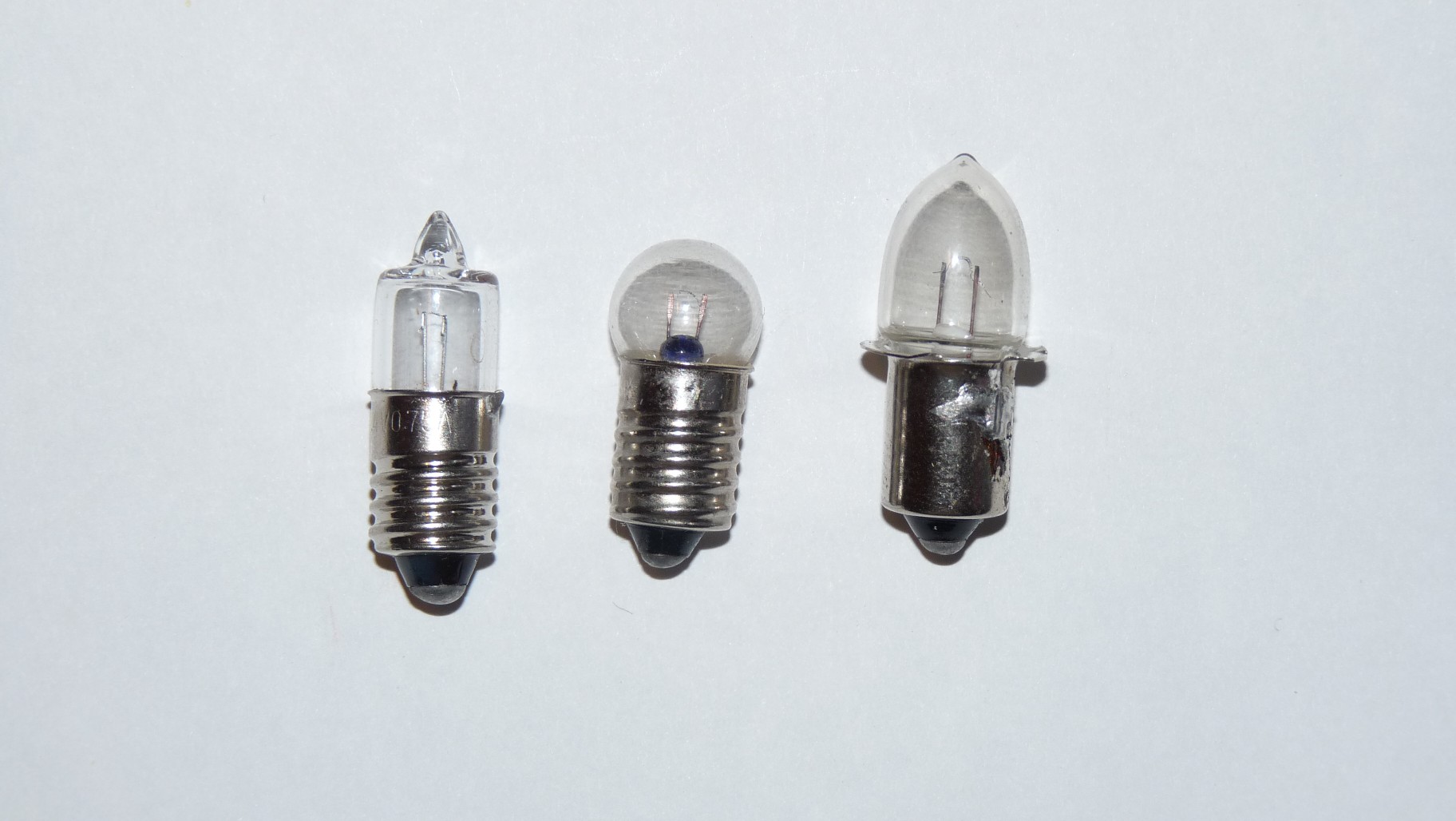
The light came from a small incandescent bulb with a metal base screwed into a contact at the centre of the reflector, drawing a substantial current and lasting a modest number of hours before it failed.
Light-emitting diodes with service lives measured in tens of thousands of hours, which in practice means the bulb never fails at all.
The filament is the single difference from which everything else about the old object follows. It is fragile, inefficient, hot and short-lived – so the light was dim, the batteries drained fast, the bulb failed, and the whole design had to accommodate a consumable at the heart of it.
4. There Was a Spare Bulb in the Base
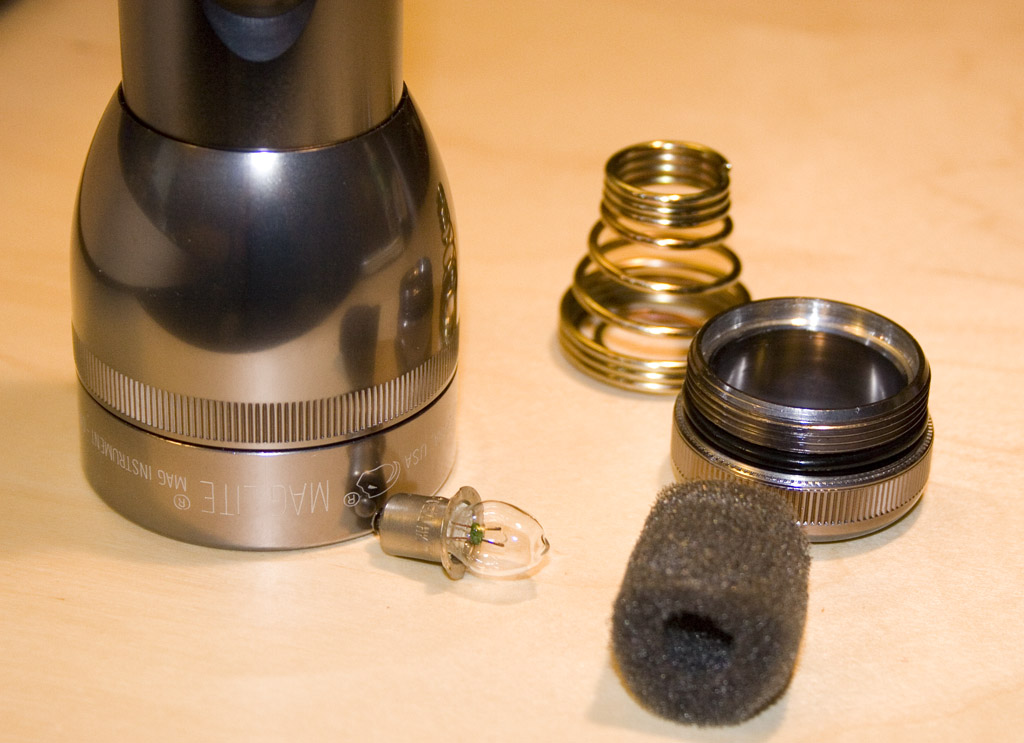
A great many flashlights carried a replacement bulb clipped into the tail cap or held in a recess in the base – supplied with the light, intended to be used, and replaced from a shop when it was.
Nothing comparable, because the light source outlasts the product and there is nothing to carry a spare for.
The spare bulb tells you exactly what kind of object this was understood to be. A manufacturer who ships a replacement part inside the product is saying plainly that the part will fail during normal use and that the owner will be the one fitting it – which is a different relationship with a purchase from the one anybody has now.
5. The Batteries Leaked and Destroyed the Flashlight
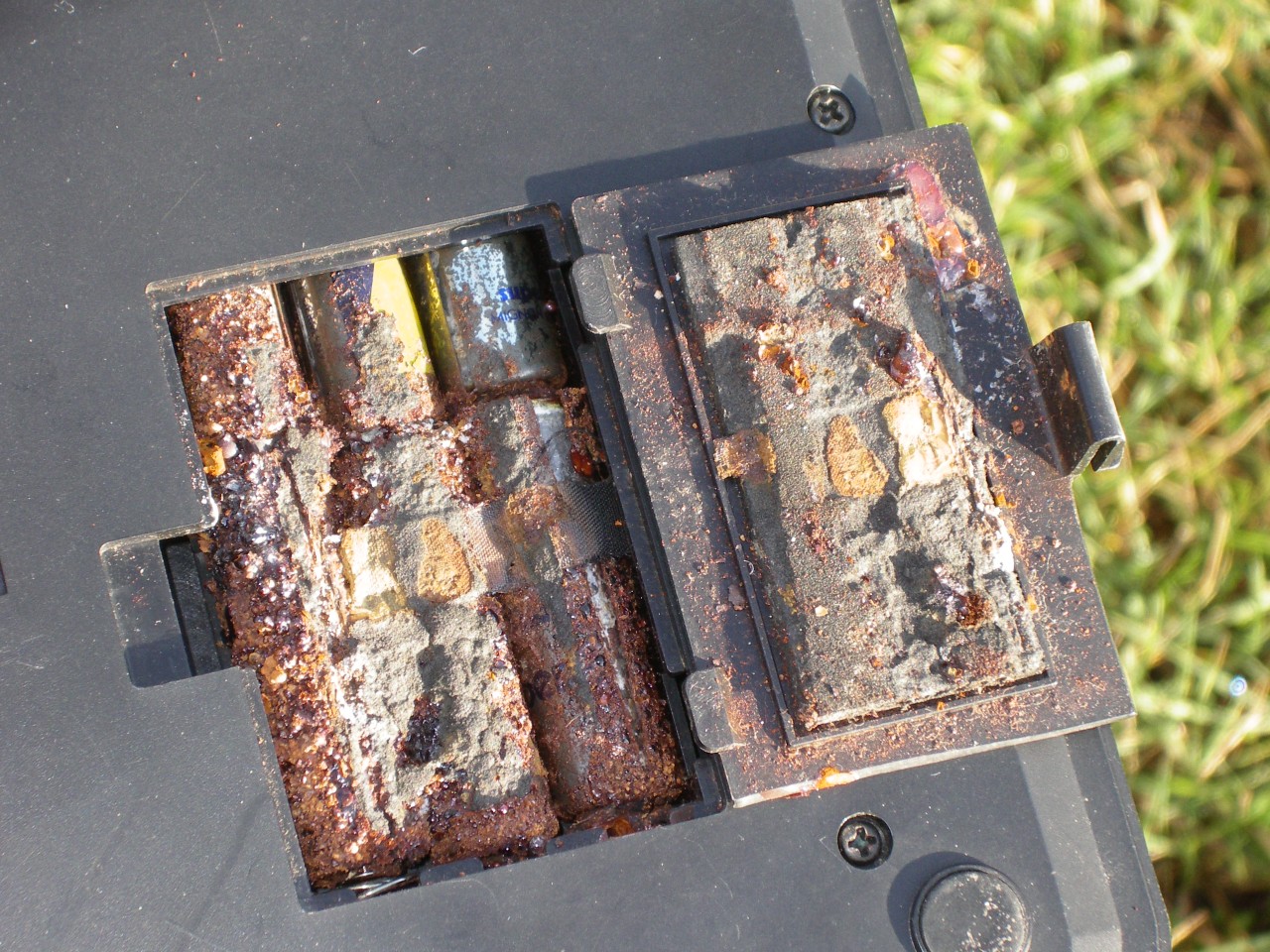
Cells left in a light for years corroded, split and leaked, and the residue welded the cells into the tube, ate the spring and the contacts, and left a crust that made the light unusable even once the cells were dug out.
Chemistries far less prone to it, with leakage now unusual rather than routine – though a light left in a drawer for a decade can still be found ruined.
This is why so few old flashlights survive working and it was the commonest failure by a wide margin. The irony is precise: a light kept carefully for emergencies, unused, was more likely to be destroyed by its own batteries than one used every week and refilled.
6. It Lived in One of Three Places
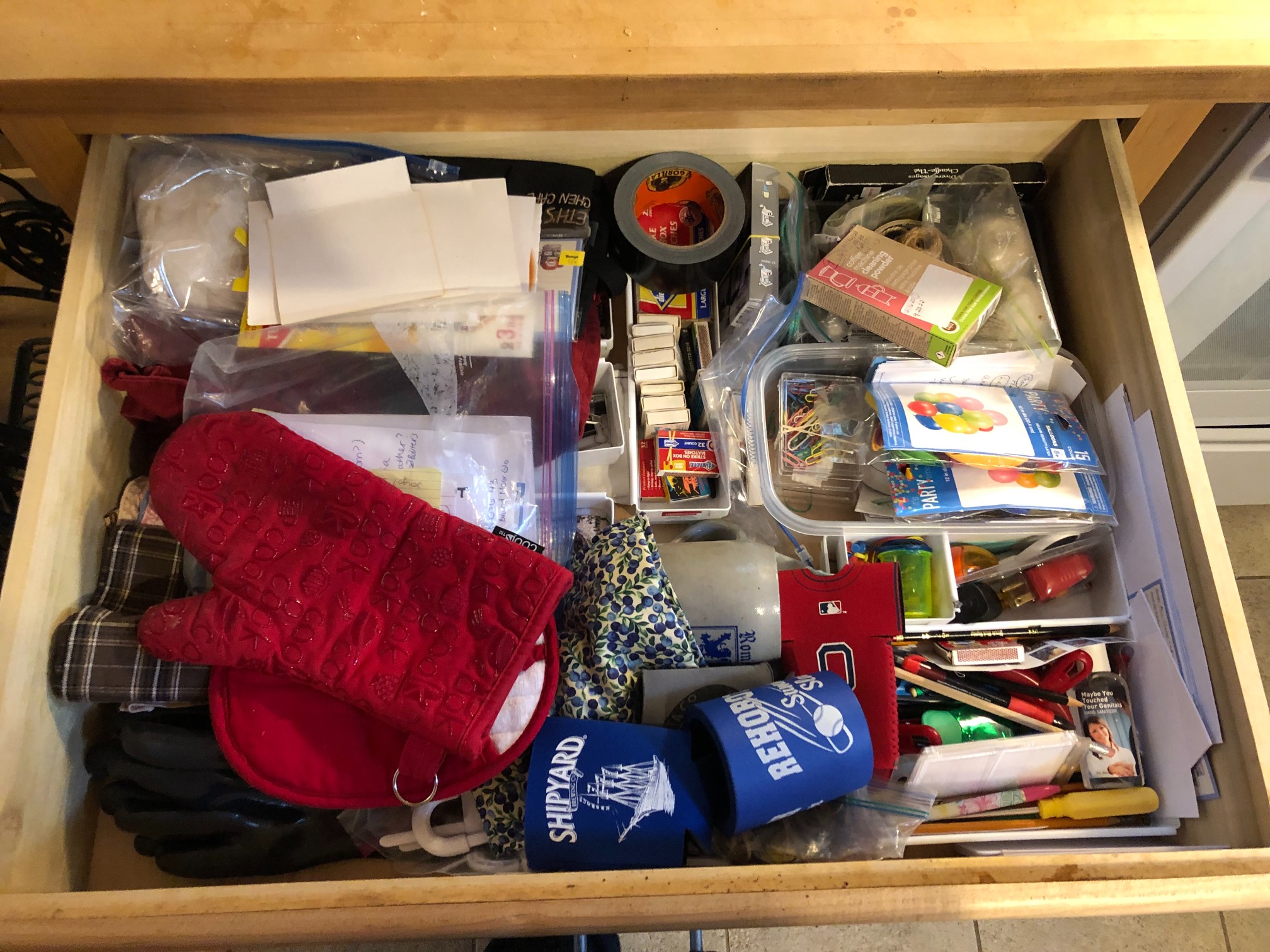
Every household had an understood location: a kitchen drawer, the shelf by the back door, or the glove compartment – and in most houses there was one of each, plus an unofficial fourth that somebody had taken and not returned.
A telephone in every pocket, which has removed the need for a designated location entirely because the light is wherever the person is.
The fixed location mattered because of what the object was for. A light is needed suddenly, in the dark, by somebody who cannot see to look for it – so the only useful flashlight is one that is always in the same place, and every household enforced that rule with varying success.
7. The Beam Was Yellow, Narrow and Not Very Bright
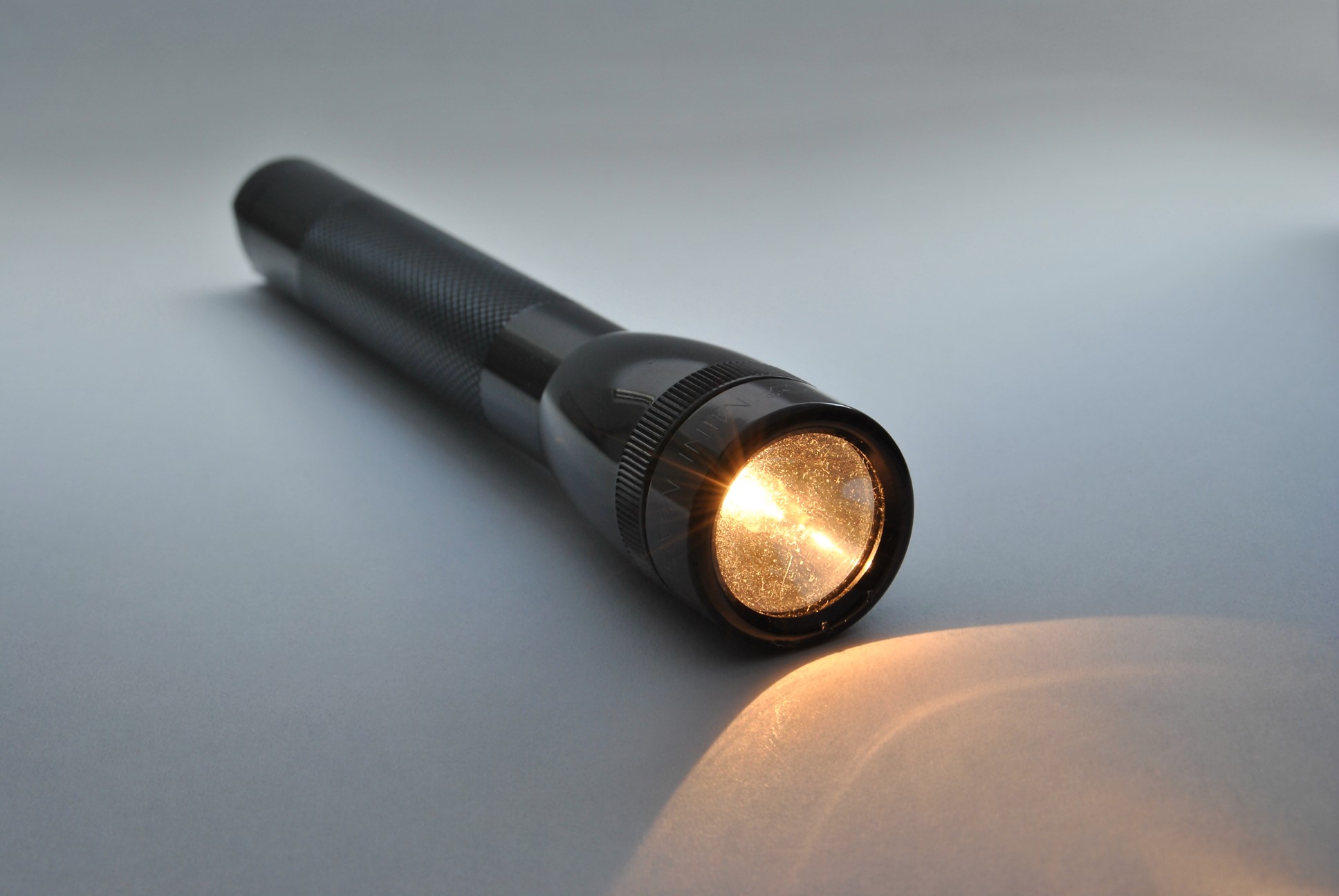
A filament bulb behind a shaped reflector produced a warm yellowish beam with a bright centre and a soft edge, throwing usable light perhaps twenty or thirty feet and fading rapidly as the cells ran down.
Cool white beams of far greater output, with adjustable focus, multiple brightness levels and regulated circuits that hold the brightness steady until the power is nearly gone.
The fading is the characteristic that has disappeared most completely. An old flashlight dimmed continuously from the moment it was switched on, so you could tell how much life was left by looking at the light – whereas a regulated modern one is equally bright until it abruptly is not.
8. You Hit It and It Worked Again
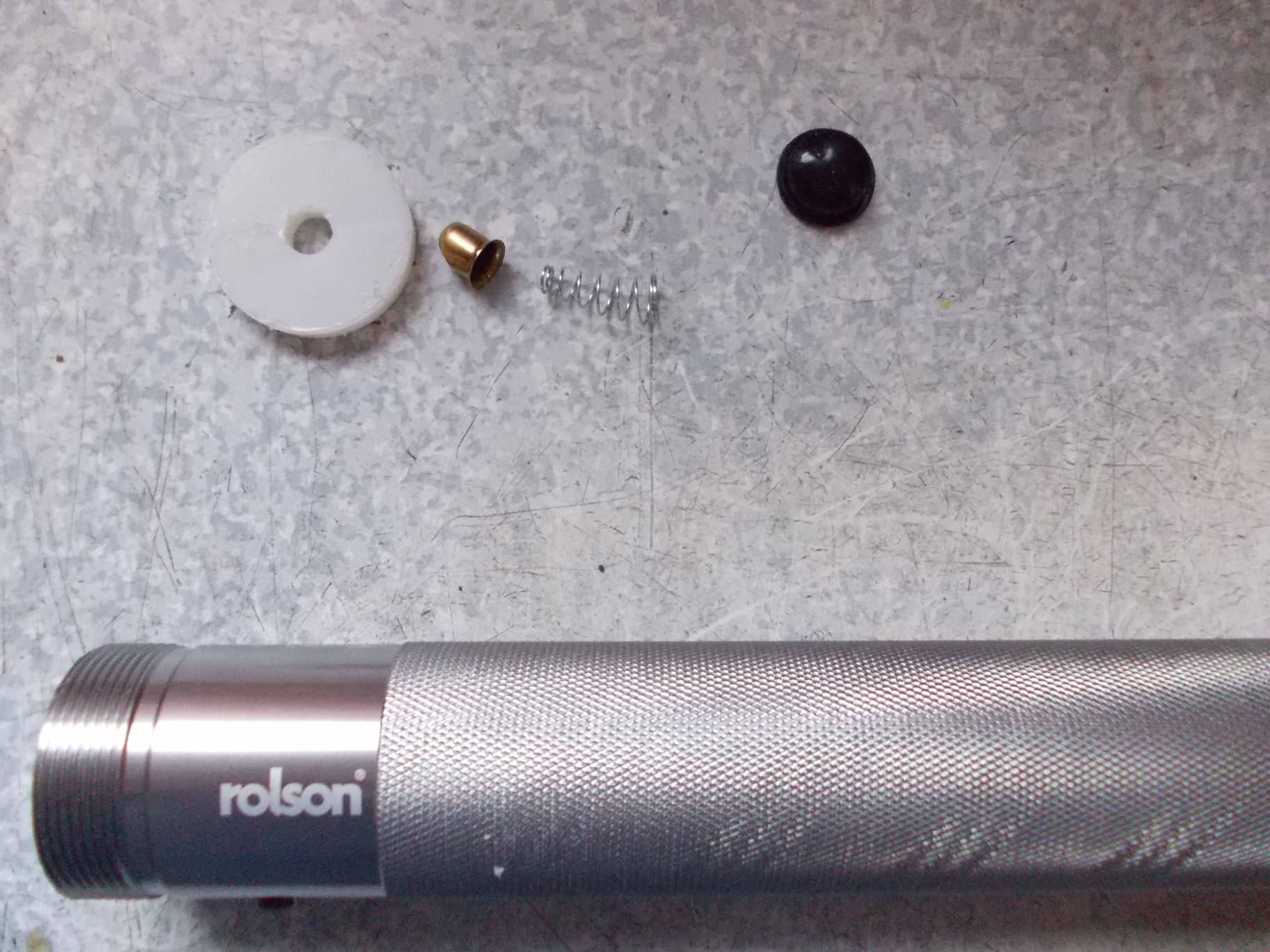
An intermittent light was fixed by striking the tube against your palm or against something solid – because the fault was almost always a dirty contact, a loose bulb or a tired spring, and a sharp knock reseated all three.
Nothing to hit. Solid-state electronics and sealed switches fail completely rather than intermittently, and percussion does not help.
The knock worked for a genuine reason and it was not superstition. A circuit made up of a spring, two or three cells pressed together, a sliding switch and a screw-base bulb has five or six mechanical contacts in series, every one of which can oxidise or lose pressure – so mechanical shock really does restore a connection.
9. The Switch Was a Sliding Button With a Momentary Position
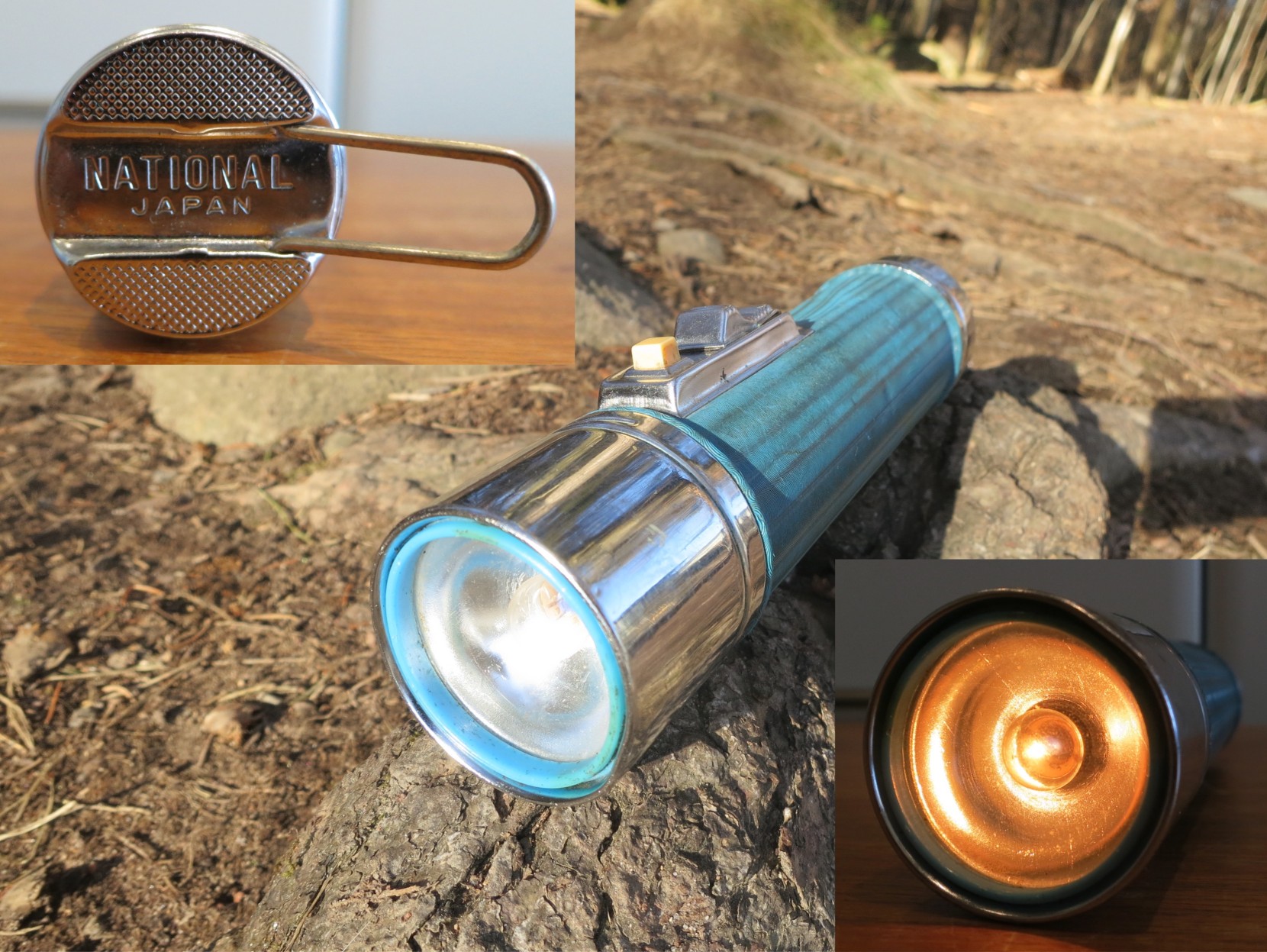
Most had a thumb-operated slide on the barrel that locked on, and in many designs pushing it forward past the detent gave a momentary on that returned to off when released.
Push-button tail switches and electronic switches with multiple modes, usually requiring a press pattern rather than a position.
The momentary position was the most used feature on the whole object, because it matched how a light is actually needed: a short look, then off, to save the cells. The slide switch also told you its state by touch in the dark, which a push-button cannot do at all.
10. The Big Ones Were a Different Category
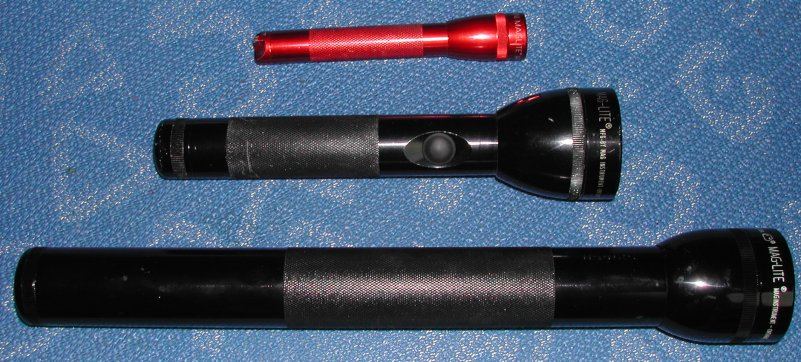
Alongside the household tube there was the long multi-cell light – four, five or six cells in a heavy aluminium body nearly two feet long – carried by watchmen, police, utility crews and anybody who worked outdoors at night.
Compact high-output lights that produce many times the beam from something that fits in a hand, with the long body surviving mainly where mass and reach are wanted for their own sake.
The length was not showing off. More cells in series gave a higher voltage and a brighter filament, and a longer body allowed a bigger reflector and therefore a tighter beam – so the size was the output, directly, in a way that no longer applies.
11. There Was a Lantern Version With a Handle
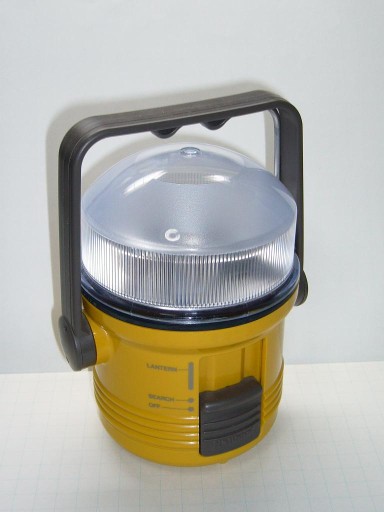
For stationary use there was the square or round lantern: a large box containing one big battery, with a handle on top, a wide lens, and frequently a red filter panel or a flashing setting for use beside a road.
Rechargeable work lights and area lanterns of far greater output, with the same handle-and-wide-beam idea intact.
The big battery is what distinguished it. A single large cell holds far more energy than a stack of small ones of the same total volume, so a lantern ran for many hours where a hand light ran for one or two – which is why the lantern was the one you took when you did not know how long you would be.
12. Children Used Them for Everything and Were Told to Stop

The flashlight was the most borrowed object in the house: read under the covers after lights out, used for shadows on a bedroom wall, carried outside after dark, pointed at the sky, and flashed between houses as a signal.
Phone screens and dedicated lights in every pocket, which cover all of those uses and several more, with no borrowing and nobody’s batteries to run down.
Every single one of those uses ran the cells flat, which is why it was the thing children were most consistently told to put back. The signalling between houses is the one that people remember most fondly – two children in two bedrooms a hundred yards apart, with a code they had agreed, using the only transmitter either of them had access to.
13. Everybody Had One That Did Not Work
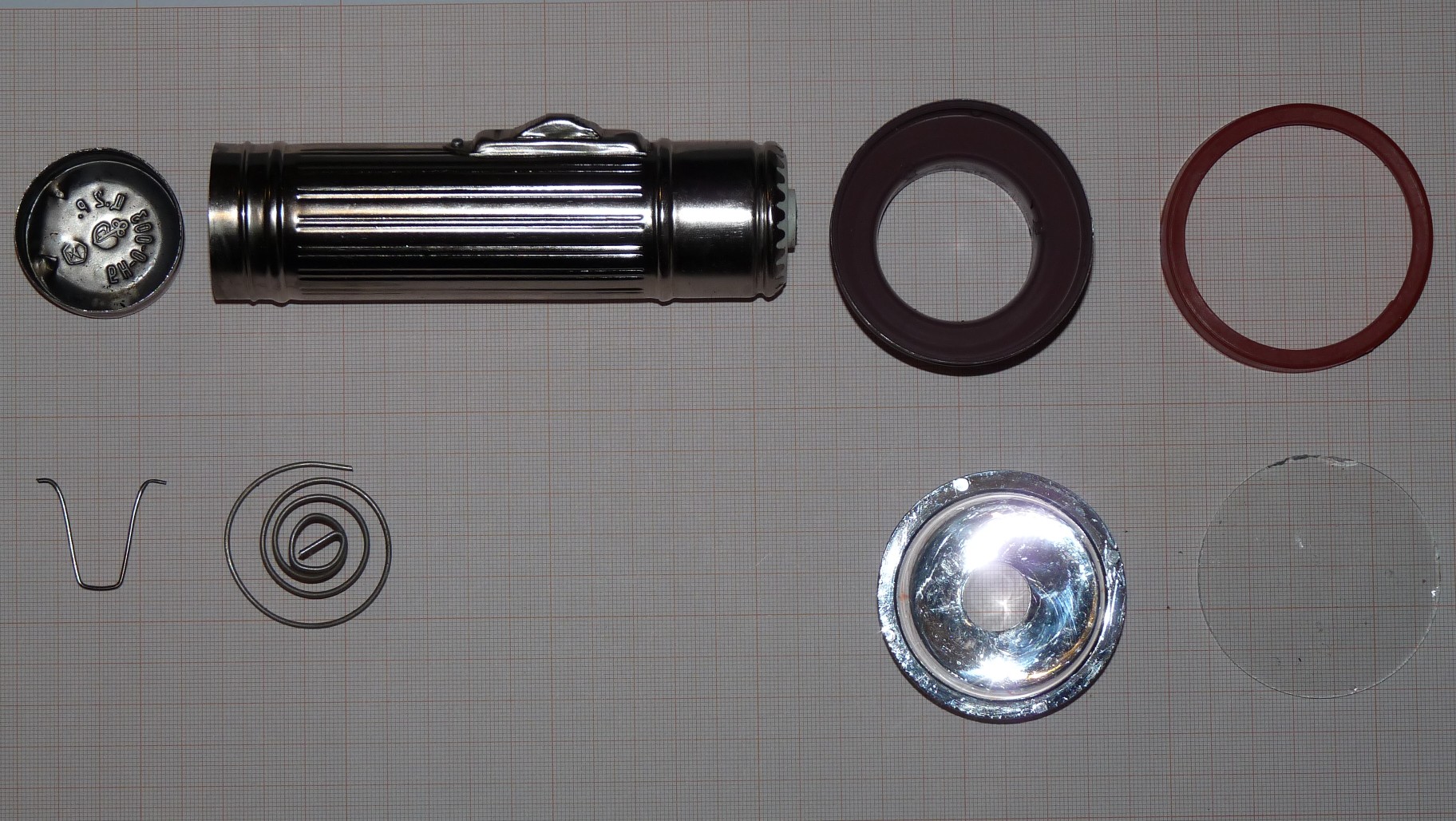
In every American household there was at least one flashlight that was dead – flat cells, a blown bulb, or corroded contacts – kept in the drawer anyway, tried first in every emergency, and never repaired.
The same phenomenon applied to other objects, with flashlights themselves now so reliable and so numerous that the dead one has largely disappeared as a household fixture.
The dead flashlight is one of the most universally reported objects of the period and the reason is structural. It required cells and a bulb, both of which failed, both of which cost money, and neither of which was worth a trip to the store until the moment you needed the light – which is exactly the moment you discovered the problem.
14. Then the Light Source Stopped Being a Consumable
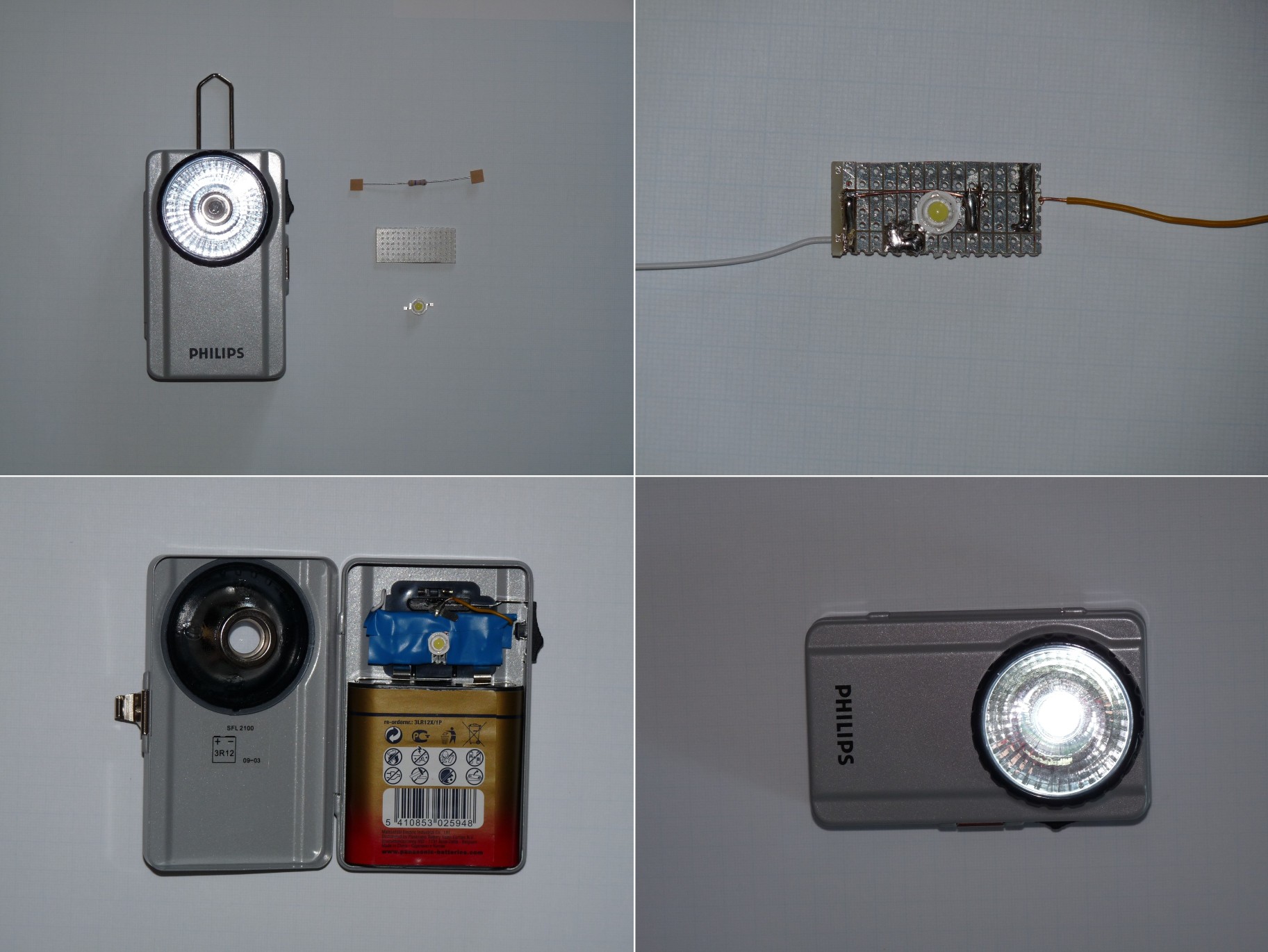
The object was a heavy metal tube containing expensive short-lived cells and a fragile short-lived bulb, producing a dim fading yellow beam for an hour or two, kept in a designated drawer, carrying its own spare bulb, destroyed from the inside by its own batteries, and dead when you needed it.
Lights that are brighter by an order of magnitude, run for many hours, never need a bulb, cost very little, and are in any case redundant because everybody is carrying a perfectly good light in their pocket at all times.
And the single change that produced every one of those improvements is that the light source stopped being a part that wears out. A filament is a consumable: it is fragile, it runs hot, it wastes most of its energy, and it has a defined and short life, which forces the whole product around it – a thick case to protect it, large expensive cells to feed it, a spare clipped in the base, and a dim fading beam as its reward. Replace it with a solid-state emitter and all of that collapses at once. The light becomes efficient, so the cells last; it becomes hard to break, so the case can be light; it effectively never fails, so the spare is pointless; and the output rises so far that the twenty feet of yellow a 1974 household called a flashlight beam is now what a cheap keyring light does by accident. The old object has not been improved. It has been rendered unnecessary by the removal of the one part everything else existed to accommodate.
Everything Was Built Around a Part That Wore Out
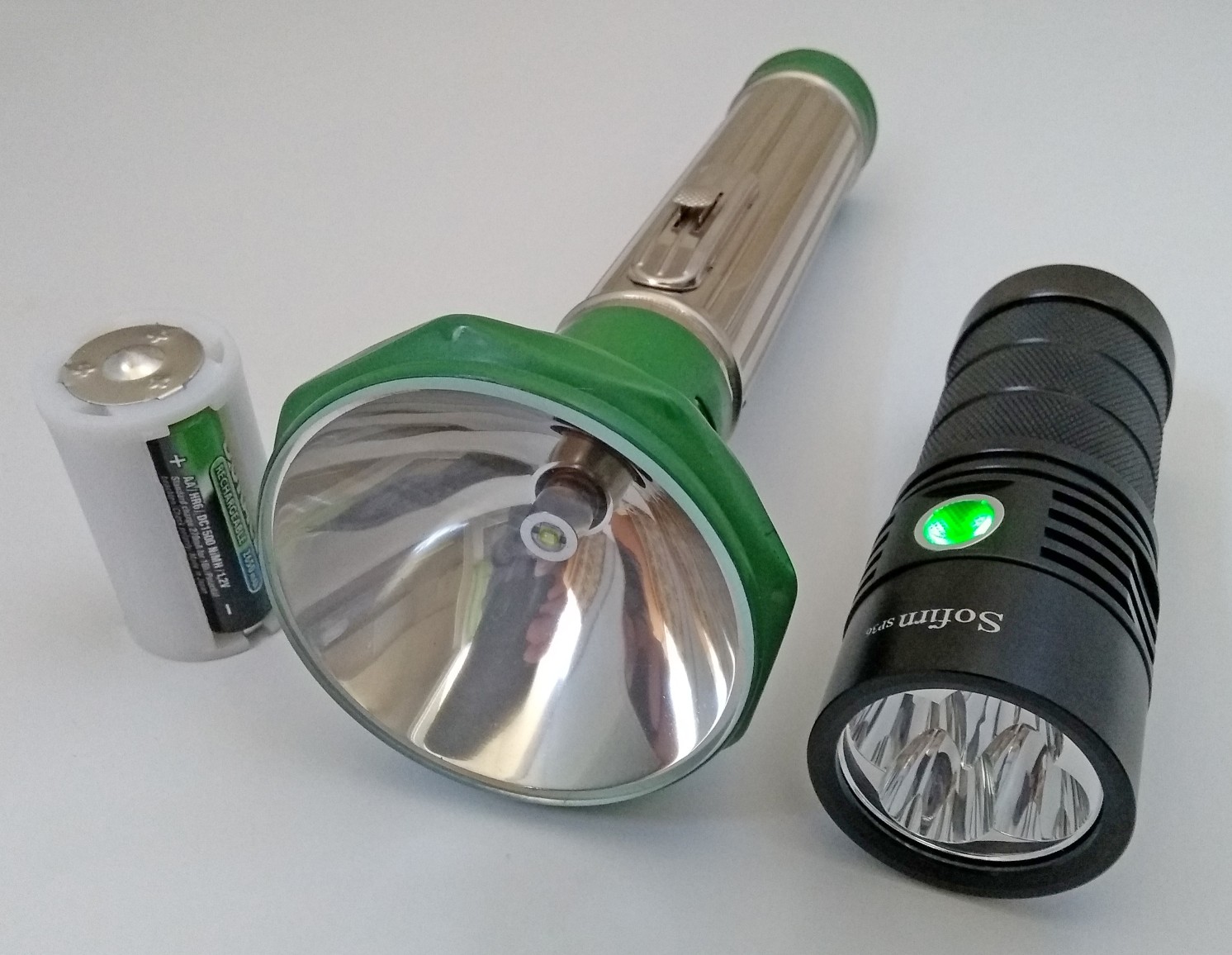
It is easy to list the ways a modern light beats an old one – brighter, lighter, cheaper, longer-running, more reliable – and conclude that the technology simply got better across the board.
It did not get better across the board. One thing changed, and every other improvement is a consequence of it.
The light source stopped being a consumable.
Think about what an incandescent filament actually is. A thin wire heated until it glows, which means it is fragile, runs extremely hot, converts the great majority of its energy into heat rather than light, and has a defined and fairly short working life after which it fails without warning. That is a part that wears out, sitting at the functional centre of the product.
Now watch the whole flashlight assemble itself around that fact.
The bulb is fragile, so the case has to be thick metal to protect it, which makes the object heavy. The bulb is inefficient, so it needs a great deal of current, which means large cells – and large cells are expensive, which is why households rationed the light and told children to switch it off between looks. The bulb has a short life, so the manufacturer clips a spare into the tail cap, because they know it will fail while you own it. The current draw is high, so run time is an hour or two and the beam dims visibly the whole time. And the expensive cells are left in for years between uses, where they corrode and leak and destroy the light from the inside – which is why so few old flashlights survive working and why every house had a dead one in the drawer.
Every single item on that list traces back to the filament.
Replace it with a solid-state emitter and the entire structure collapses in one step. It is efficient, so modest cells run for many hours. It is hard to break, so the case does not need to be a pipe. It effectively never fails, so the spare bulb is meaningless and the tail cap can be solid. And the output is so much greater that the twenty or thirty feet of yellow light a 1974 household called a beam is now what a free keyring light does without trying.
So the old flashlight was not a worse version of the new one. It was a well-made, sensible, correctly engineered solution to the problem of carrying a filament around, and the problem was abolished.
Which is also why the object itself has quietly disappeared rather than merely improved. The best flashlight most people own is not a flashlight. It is on the back of a telephone that is already in their pocket, always charged, always present, and bright enough for anything a household drawer light was ever asked to do.
There is no longer a designated place in the kitchen where the light lives, because there is no longer a moment when somebody is in the dark and has to go and find one.
If you grew up with one, you remember hitting it against your hand, and you remember being told to turn it off.
And there is a flashlight somewhere in your parents’ house right now with two cells welded into it.
Like our content? Follow us for more.

