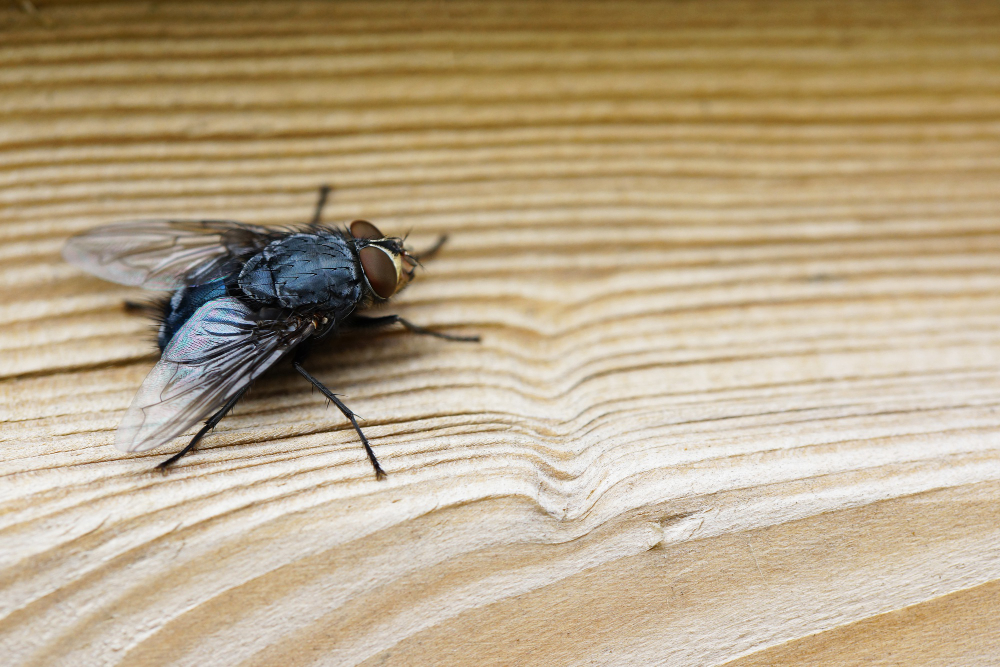
It tastes with its feet, cannot chew, and sees you coming in slow motion. Here are fifteen.
1. It Tastes Everything With Its Feet
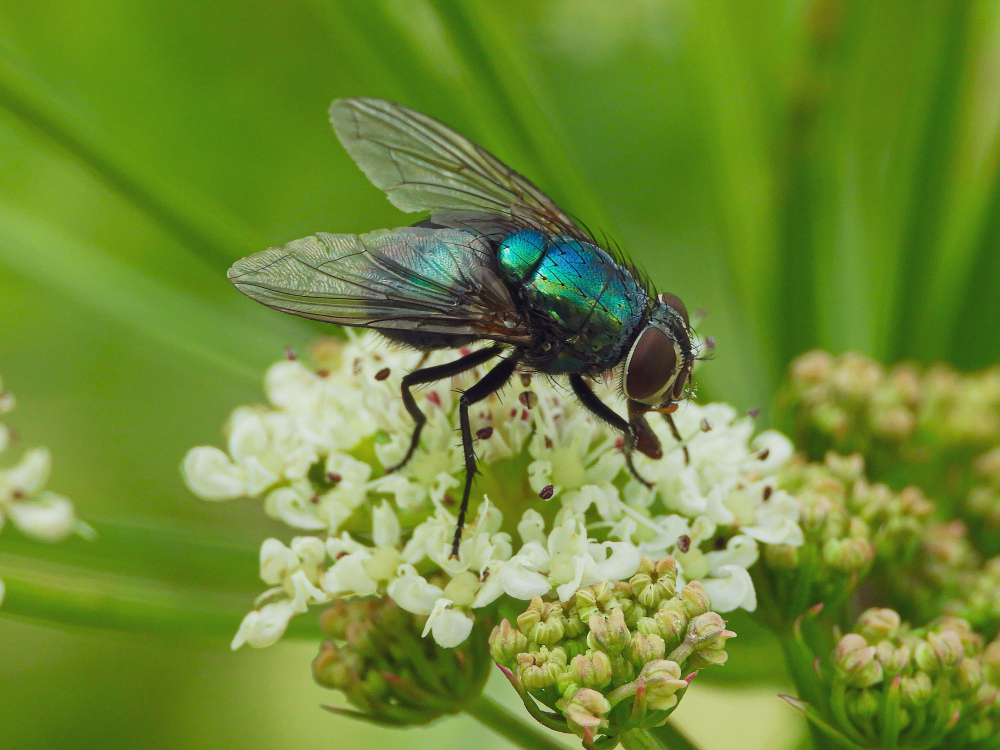
There are taste organs on the lowest segments of a housefly’s legs, which means that the moment it touches down on something it already knows whether it is food.
Which explains the behaviour everybody has watched without thinking about it: the landing, the brief pause, and then either the immediate departure or the settling in to feed. No investigation is needed and nothing has to be sampled by mouth. The decision was made by its feet on contact, in the time it took to stop moving.
Like our content? Follow us for more.
2. It Has No Jaws and Cannot Chew Anything
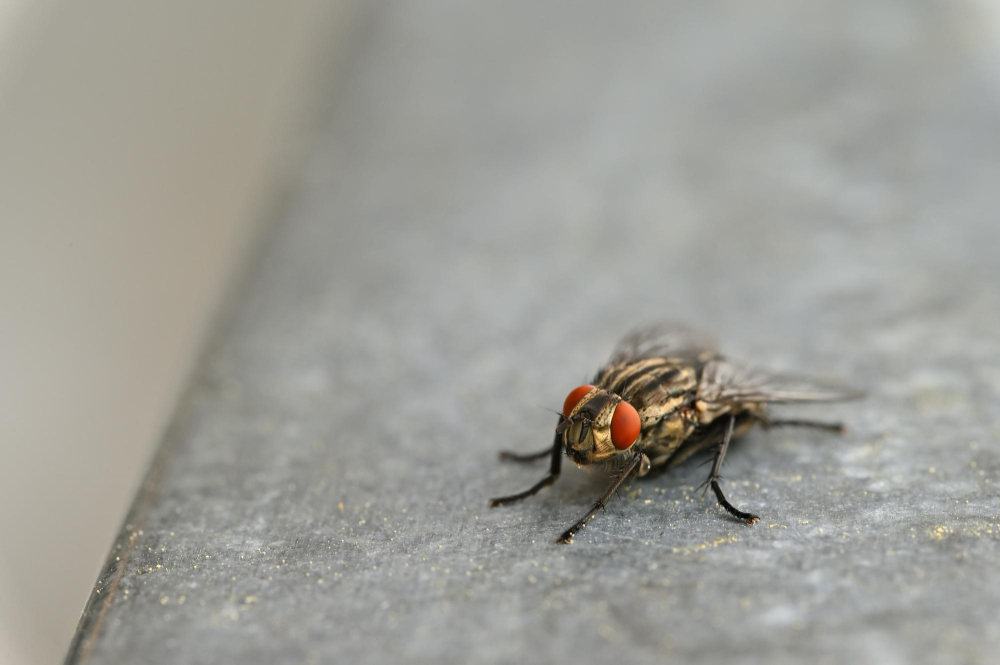
A housefly cannot bite. It has no mandibles, no cutting parts and nothing capable of taking a piece out of anything, which is why a housefly landing on you is harmless and a biting fly is a different insect altogether.
What it has instead is a soft retractable pad at the end of a flexible tube, with fine channels across the surface that draw liquid up by capillary action. It is a sponge on a straw. Anything it consumes has to already be a liquid, or be made into one.
3. Which Is Why It Vomits on Solid Food
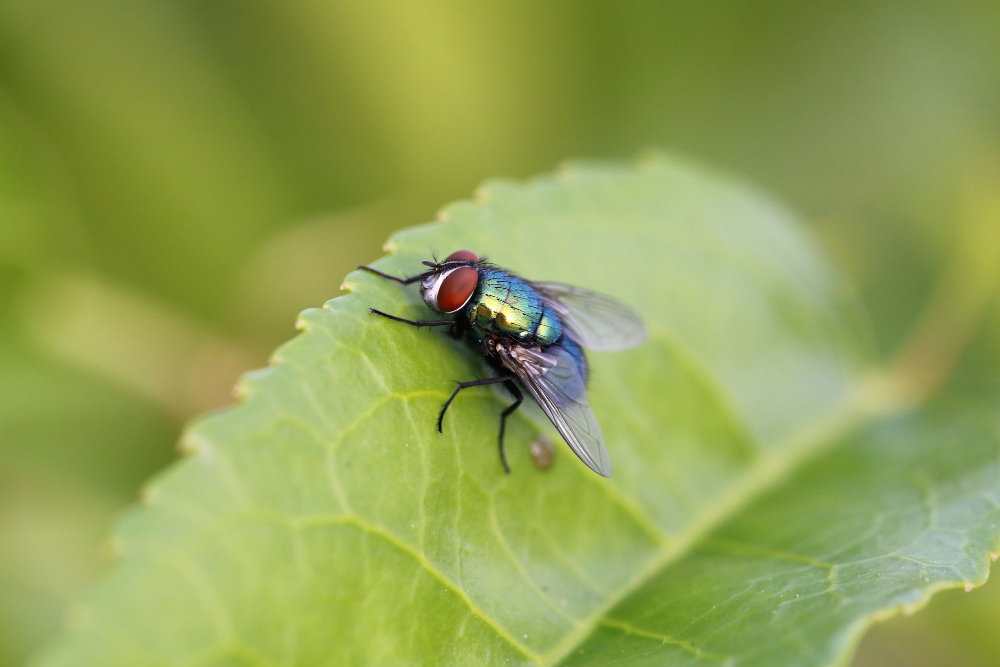
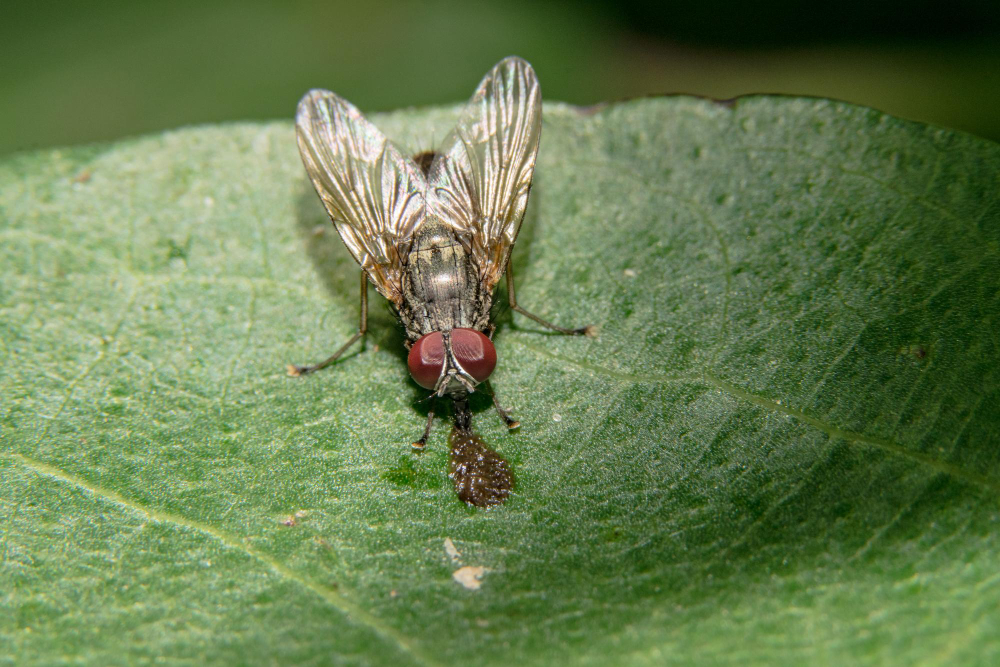
This is the item everybody wishes they did not know. Presented with something solid, a housefly deposits a drop of fluid from its own gut onto the surface, lets it dissolve what it can, and then sponges the result back up.
It is the only way the insect can eat anything that is not already wet. The fluid contains digestive enzymes, so the dissolving is real chemical digestion carried out outside the body, on the food, in the open. A fly that has walked across something solid and spent a few seconds apparently doing nothing has usually just done this.
4. And It Is Also Why Flies Are a Public Health Matter
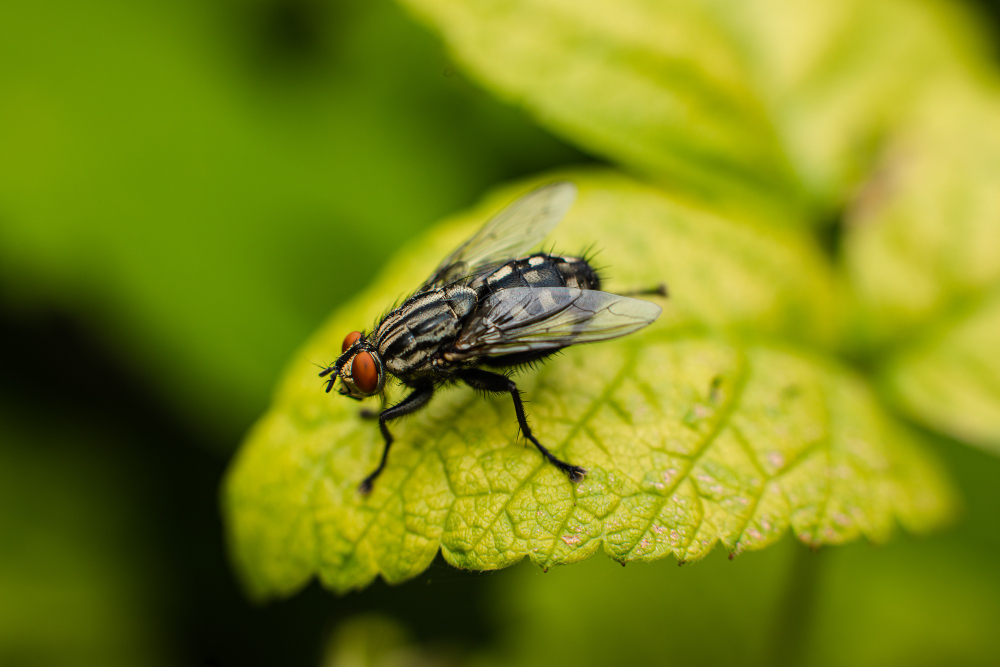
The consequence of the previous item is mechanical rather than complicated. An insect that lands on decaying material, feeds there by regurgitation, walks through it with sticky adhesive pads on its feet, and then lands somewhere else, moves material from the first place to the second.
Houseflies are accordingly documented as mechanical carriers of a long list of organisms – not because they are dirty in some vague sense, but because of a specific and traceable sequence involving their feet, their gut and their feeding method. Nothing in this item is advice of any kind, and the piece does not go on to tell anybody what to do about it.
5. It Beats Its Wings About Two Hundred Times a Second
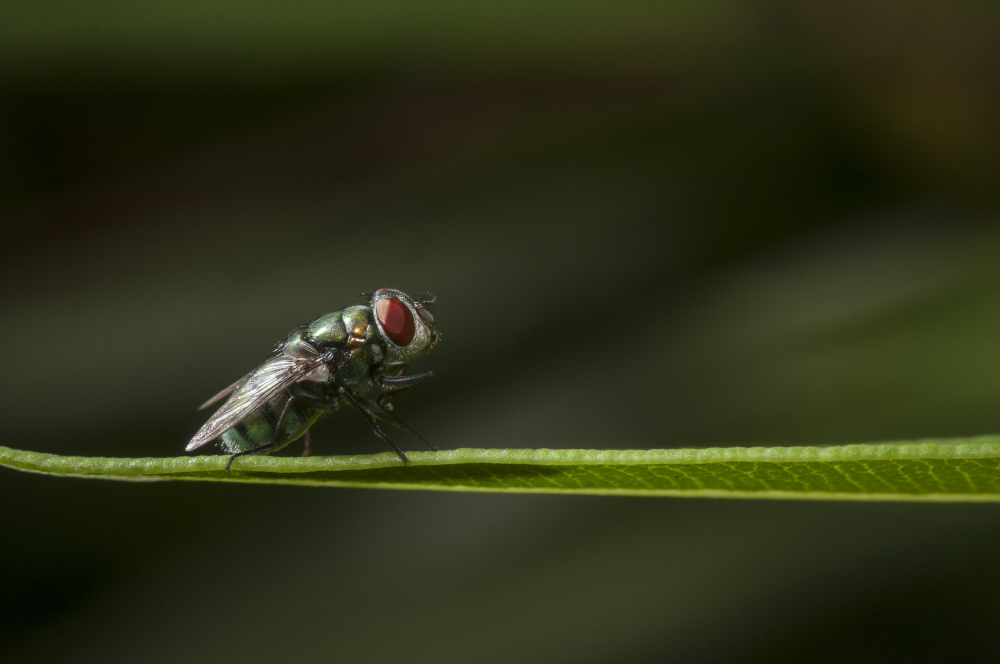
The sound a fly makes is the wingbeat, and the pitch of it is a direct readout of the rate: somewhere in the region of two hundred beats per second for a housefly.
Which is why the noise is so specific and so recognisable, and why a tiring or injured fly sounds different – the frequency has dropped and the note has gone down with it. It is also well beyond what any muscle could achieve by contracting once per beat, and the flight muscles work on a different principle to manage it.
6. Its Eyes Have Thousands of Separate Lenses
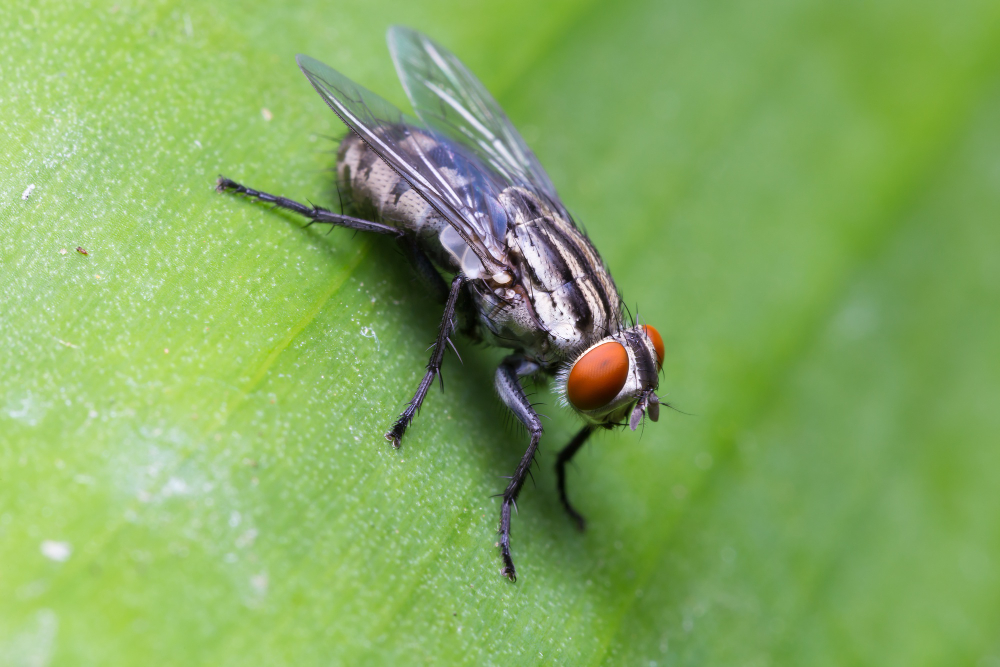
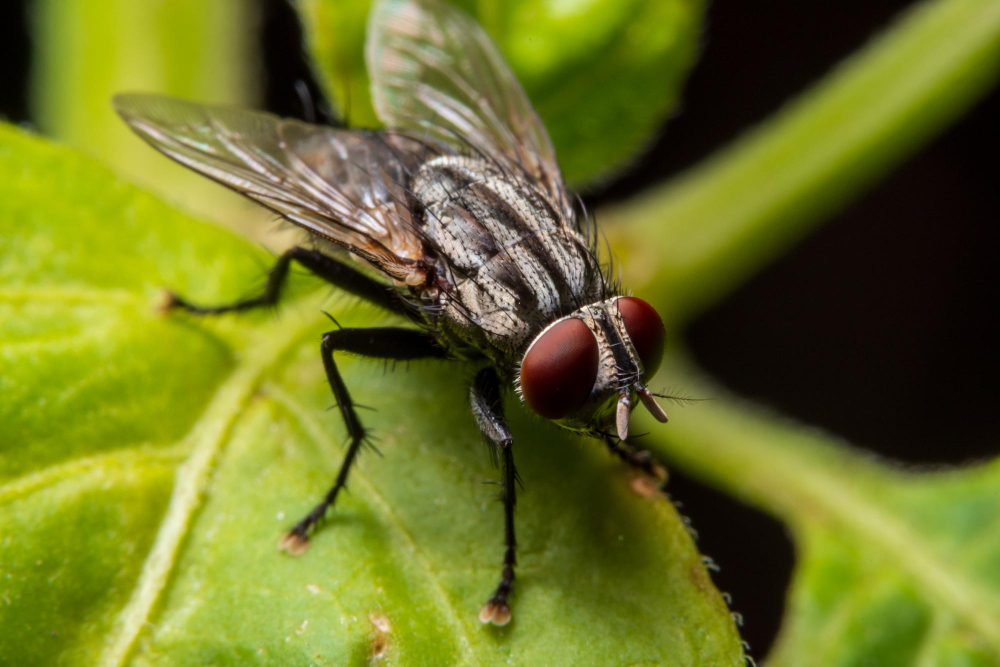
Each of the two large eyes is built from several thousand individual units, each with its own lens and its own small cluster of light-detecting cells, each pointing in a slightly different direction.
So a fly is not looking through two eyes in the sense we are. It has a few thousand very low-resolution views, assembled into a single mosaic covering very nearly the whole sphere around it. The detail is poor – far poorer than ours – and the coverage is almost total, with barely any direction it cannot see at once.
7. And It Sees in Something Close to Slow Motion
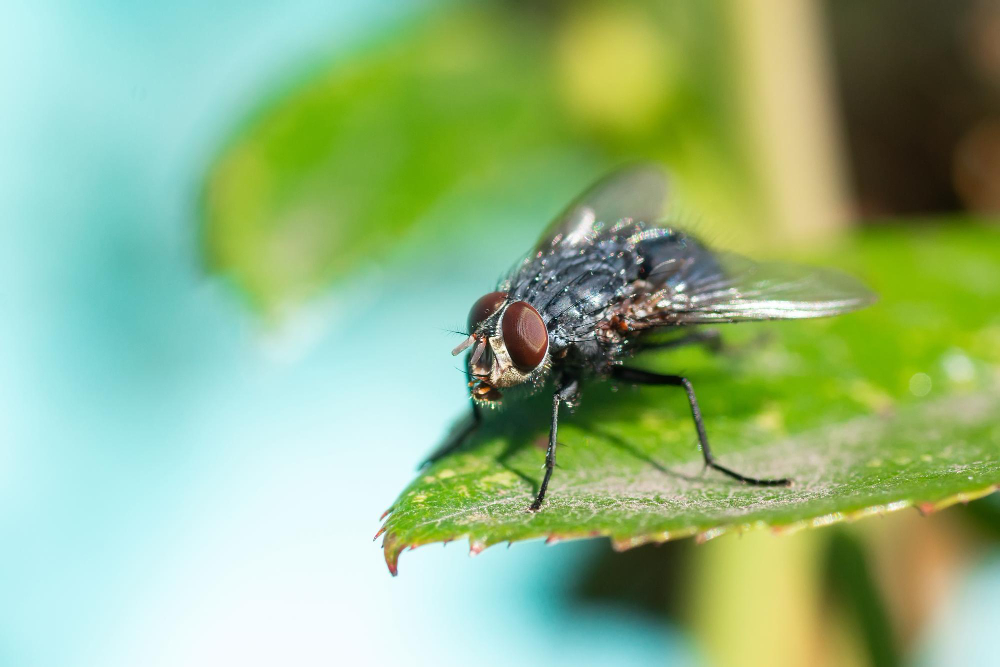
Here is the fact that explains the swatting. An eye like that samples changes in light far faster than ours, and a fly’s visual system updates several times faster than a human’s.
A moving hand that looks continuous to you is, to the fly, a sequence of separate positions with gaps between them. It is not reacting faster to the same information; it is receiving considerably more information in the same interval. The relationship is roughly that of normal footage to slow motion, which means it sees the approach begin while you are still thinking of it as a single movement.
8. It Also Works Out Which Way to Jump Before It Moves
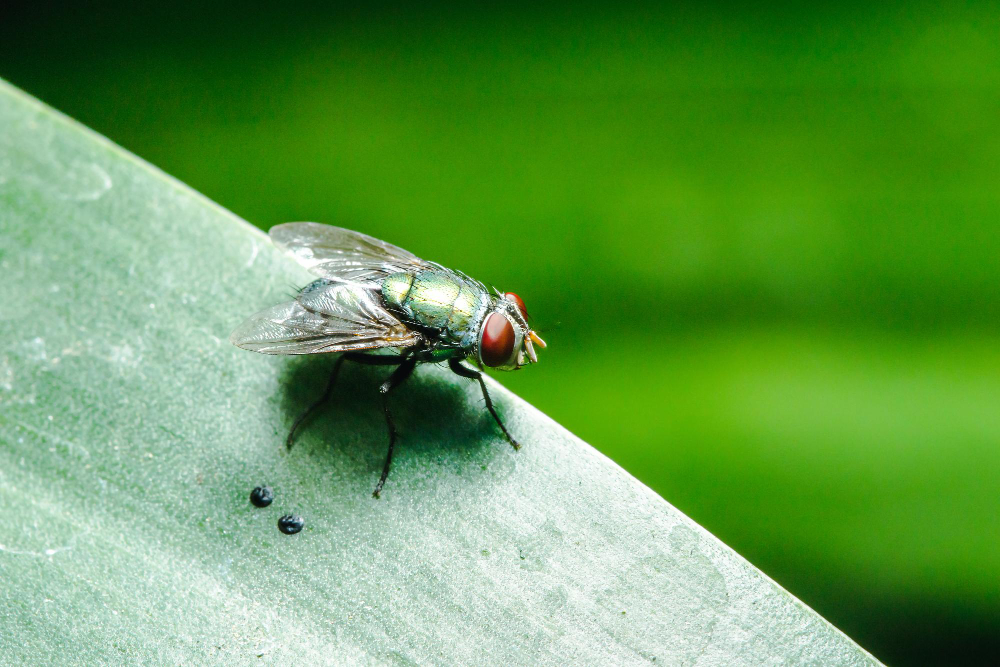
Being able to see the hand early would be no use without somewhere to go, and the escape is not a panic. Work on flies has shown that within around a tenth of a second of detecting something looming, the insect has already repositioned its legs and leaned its body to launch in the correct direction – away from the threat, whichever side it came from.
So the take-off is planned rather than reflexive, and it is planned before anything visibly happens. By the time a fly appears to react it has in fact been preparing for the best part of a tenth of a second, and it leaves along a vector it chose.
9. The Hairs All Over It Are Sense Organs
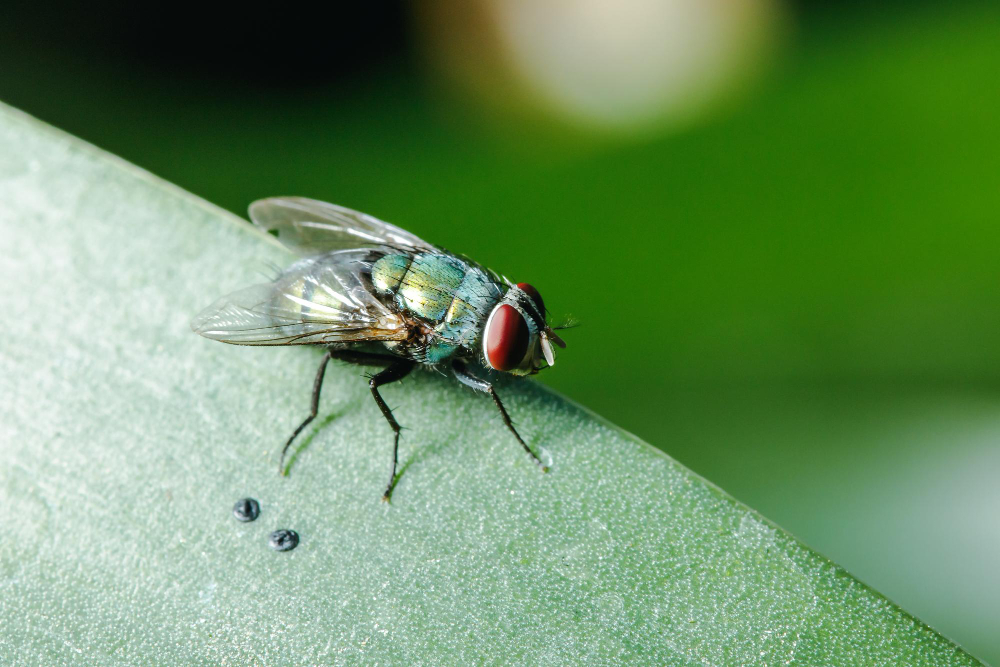
A housefly is covered in bristles and none of them are decoration. They are mechanical sensors, and a large number of them detect air movement.
Which is the other half of the swatting problem. An approaching hand pushes a cushion of air ahead of it, and the fly feels that arriving before anything touches it. It therefore has two independent early-warning systems – one visual, one based on moving air – and defeating both at once with a flat object travelling through air is close to impossible.
10. It Walks on the Ceiling With Wet Feet
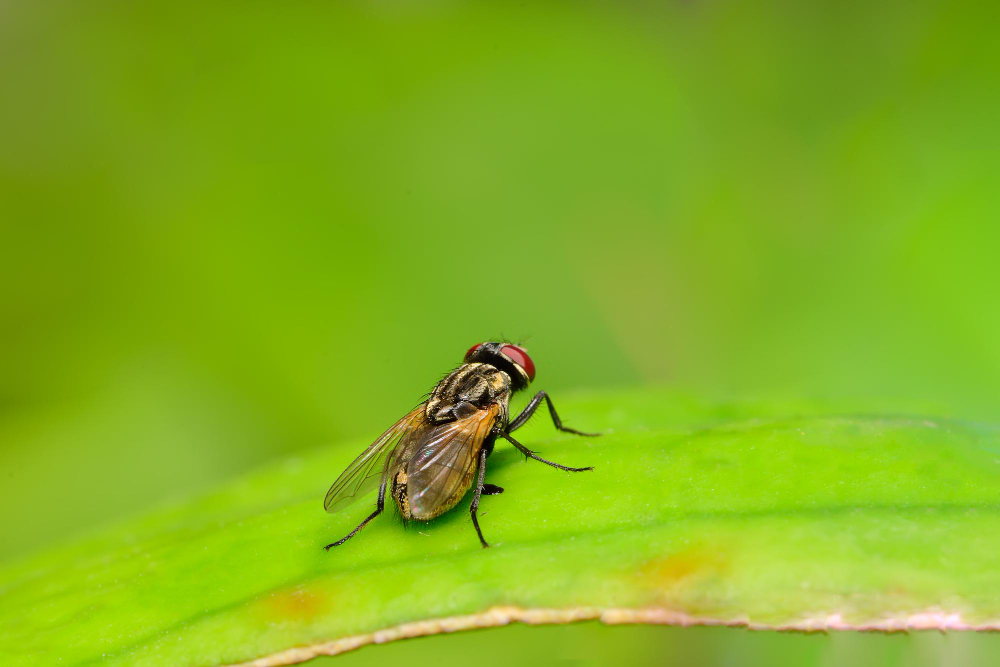
The last segment of each foot carries a pair of claws for rough surfaces and, between them, two small pads covered in fine hairs that secrete a thin oily fluid.
The adhesion is wet rather than dry: each hair makes contact through a film of liquid, and the combined surface tension of several thousand tiny contacts is enough to hold the insect upside down. It also means the fly leaves a faint trace wherever it walks, which is relevant to the fourth item on this list, and that it can detach cleanly by peeling rather than pulling.
11. It Is Nearly Blind to Red
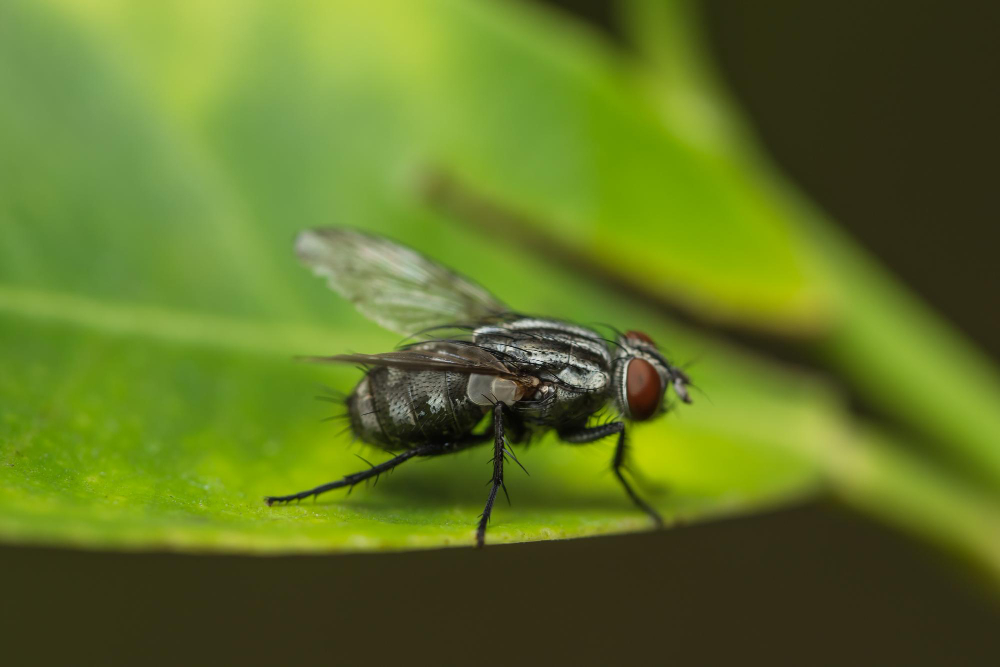
Fly vision is shifted toward the short end of the spectrum. They see ultraviolet, which we cannot, and they respond very poorly to red, which to a fly is close to dark.
Which means the visual world a fly inhabits is not a brighter version of ours but a different one, with markings on flowers and surfaces that are invisible to us standing out clearly, and red objects reading as shadow. It is one of the clearer cases where two animals in the same room are not looking at the same scene.
12. The Larva Is a Different Animal in a Different Place
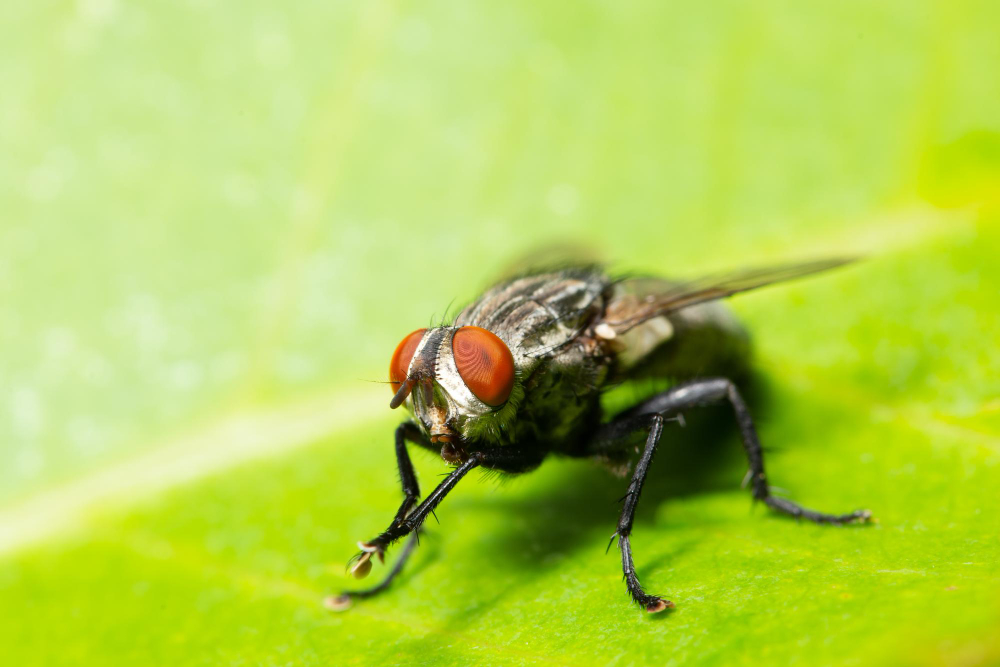
The maggot and the fly share nothing structurally. One is a legless, eyeless, soft, blind feeding tube living inside decaying material; the other is a flying, seeing, walking insect with hard parts and six legs.
They also do not compete, which is the point. The larva eats rotting matter in a confined damp place and never leaves it; the adult flies, finds new sites and disperses. Splitting a life into a growth stage and a travel stage, with no overlap in habitat or diet, is a strategy and not an accident.
13. It Gets From Egg to Adult in About a Week
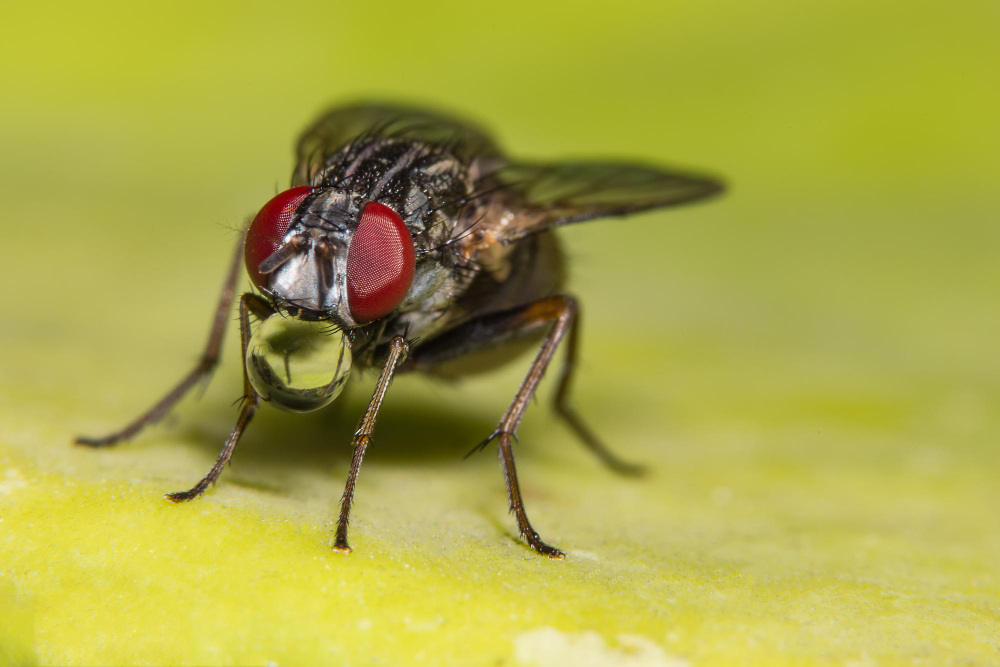
In warm conditions the whole sequence – egg, larval growth through several stages, the still pupal phase, emergence – can be complete in something like seven to ten days.
Which is the single most important fact about controlling them and the reason the numbers move so fast. A population is never more than a week or so behind its conditions, so warm damp weather with available material produces flies almost immediately, and the removal of the material produces the reverse just as quickly.
14. It Does Not Sleep, Exactly, but It Is Nearly Helpless at Night
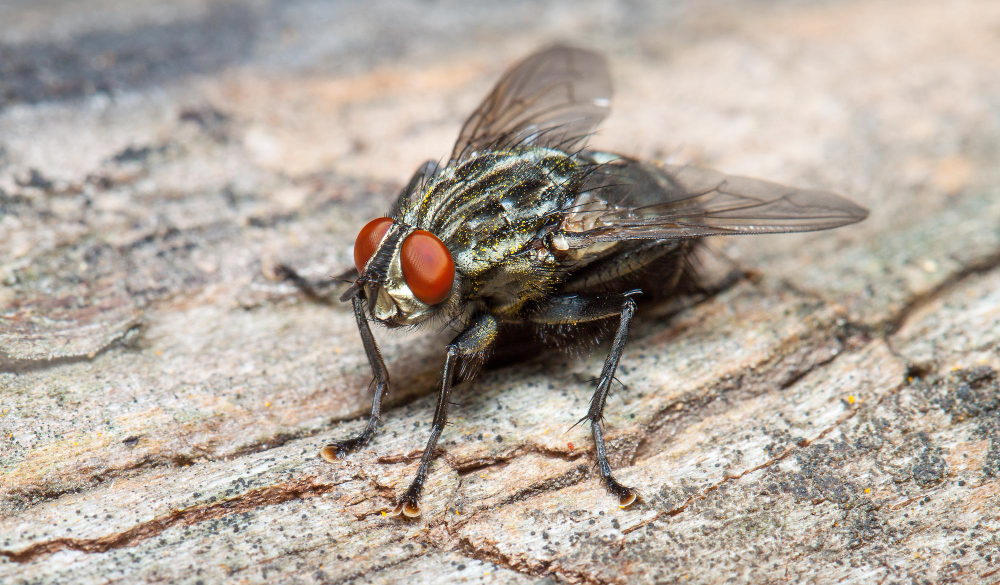
Flies have a daily rest period. In darkness they stop flying, settle somewhere high, become unresponsive and are markedly easier to approach and catch than at any point during the day.
Which is why a fly that has been impossible all afternoon can be dealt with in the evening without difficulty, and why they are invariably found on ceilings and light fittings in the morning. The visual system that makes them so hard to catch depends entirely on light, and when the light goes, so does the advantage.
15. It Has Followed People Everywhere and Barely Lives Without Us
The housefly is one of the most widely distributed insects on earth and it got that way by attaching itself to human activity. It is abundant wherever there are people and livestock and markedly scarce in places where there are neither.
The dependency is specific rather than sentimental: it needs a reliable supply of warm decaying organic material in which to lay, and people and their animals produce that continuously and in one place. Take the settlement away and the fly does not adapt – it mostly goes. For an insect with no interest in us whatsoever, it is almost entirely reliant on us being there.
A Sponge on a Straw With Four Thousand Eyes
Taste organs on the feet deciding everything on contact, no jaws at all, external digestion carried out by regurgitating onto food, a wingbeat at two hundred a second, a few thousand lenses covering almost the whole sphere, vision fast enough to see a hand as separate positions, and a jump direction chosen before it moves.
The seventh and eighth items together are why nobody can swat one. A fly’s visual system samples several times faster than ours, so a hand that looks to you like one continuous movement arrives at the fly as a series of separate positions – it is watching the approach in something close to slow motion. And it is not merely reacting: within about a tenth of a second of spotting the threat it has already shifted its legs and leaned its body to launch away from whichever side you came from. By the time it appears to move it has been getting ready for a while.
Like our content? Follow us for more.