In 1974 an American school raised money by sending its children out to collect newspapers.
It was announced as a competition between classrooms with the standings posted weekly. Children went door to door after school asking households to hand over their old papers, tied them flat into bundles with twine crossed underneath, and hauled them back in wagons, sleds, bicycle baskets and somebody’s father’s pickup.
Then the bundles were weighed in front of everybody, the tonnage went up on a board, a dealer came and paid by the ton, and the money bought one specific thing that stayed in the building for years. Here are fifteen things every school did.
1. It Was Announced as a Competition Between Classes
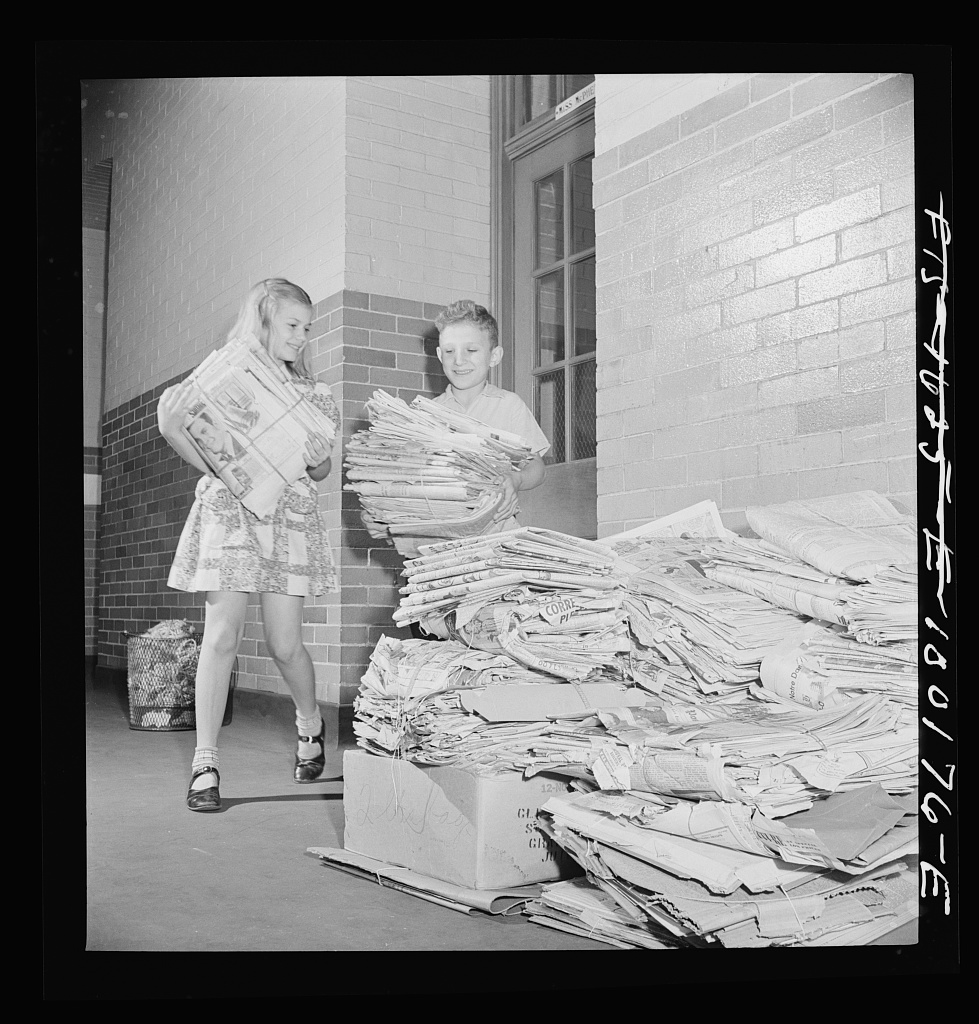
The drive was launched at an assembly or over the intercom with a target, a deadline and a standings board – and the unit of competition was the classroom, with results posted weekly.
Fundraising through catalogue sales, online giving pages, event sponsorship and direct appeals to parents, with no collection of physical material and no inter-class contest built on weight.
Making the classroom the unit was the whole mechanism. A child who did not much care about the school band cared a great deal about their room beating the room across the hall, which converted an abstract fundraising goal into a rivalry nine-year-olds would work extremely hard at.
Like our content? Follow us for more.
2. Children Went Door to Door and Asked for Newspapers
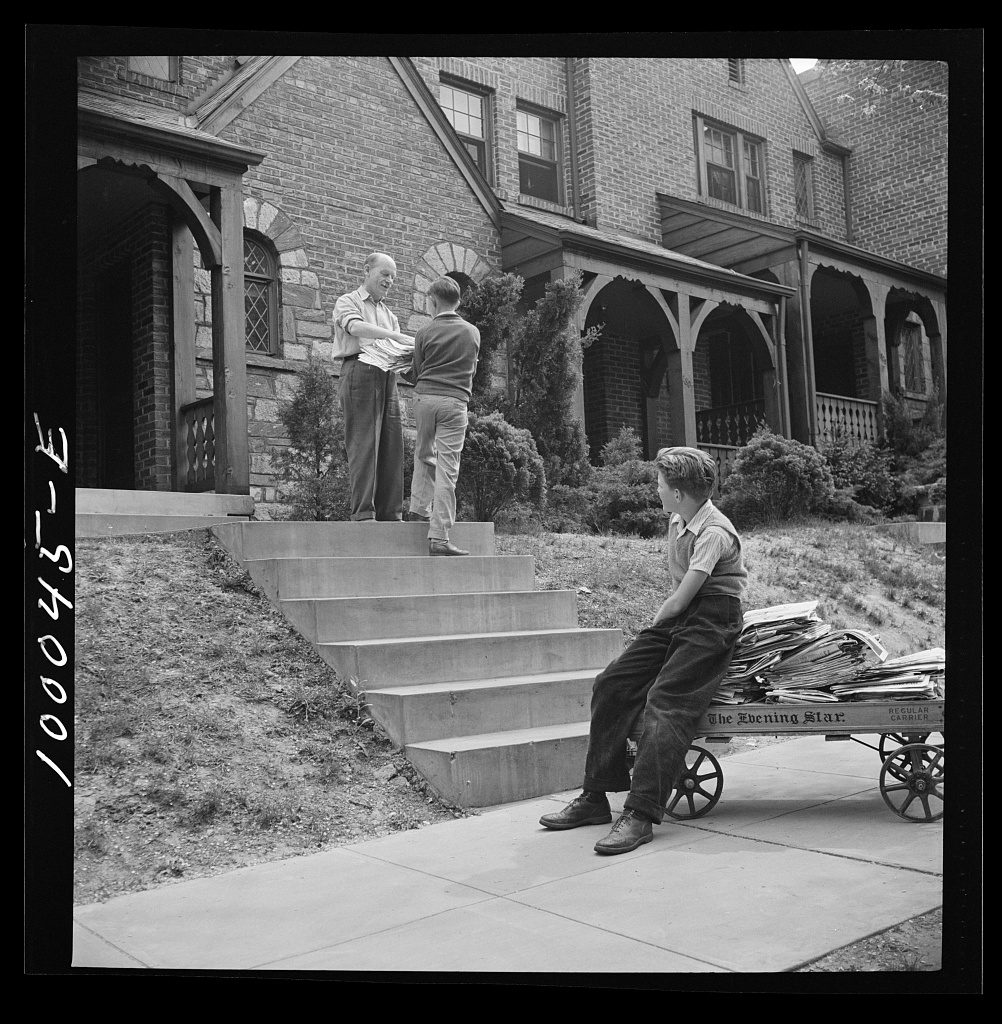
Collection was done by the children themselves, on foot, in their own neighbourhoods, knocking on doors and asking households to hand over their accumulated newspapers.
Material placed by householders in a municipal bin at the kerb, collected by a truck on a schedule, with no child involved at any point.
Asking was easy in a way that selling is not, and that is why these drives worked so well. A household with a stack of old papers in the garage was being relieved of a nuisance rather than asked to buy something – so the refusal rate was close to nothing and a child could cover a block in an hour.
3. The Bundles Were Tied With Twine and the Tying Was a Skill
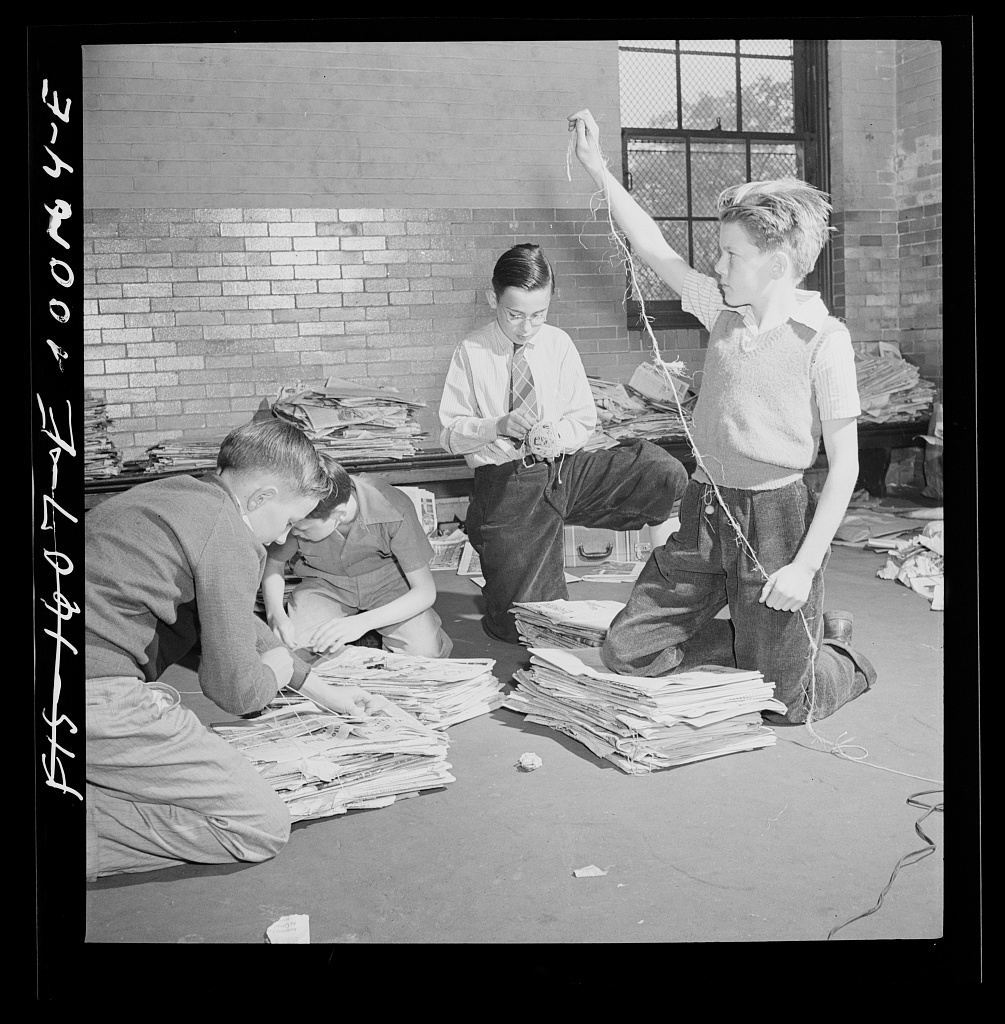
Papers were stacked flat, squared up, and tied into bundles with two lengths of twine crossing underneath – tight enough to carry by the string without the whole thing sliding apart.
Loose material in a bin, deliberately untied, since modern sorting equipment handles unbound paper and bundles are a nuisance to process.
Every child who did this learned the knot and the technique, and a badly tied bundle taught the lesson immediately by collapsing in the street. The tying also mattered commercially, because a dealer buying by weight wanted material that stacked, and loose paper does not stack.
4. Weight Was the Unit and It Was Weighed in Front of You
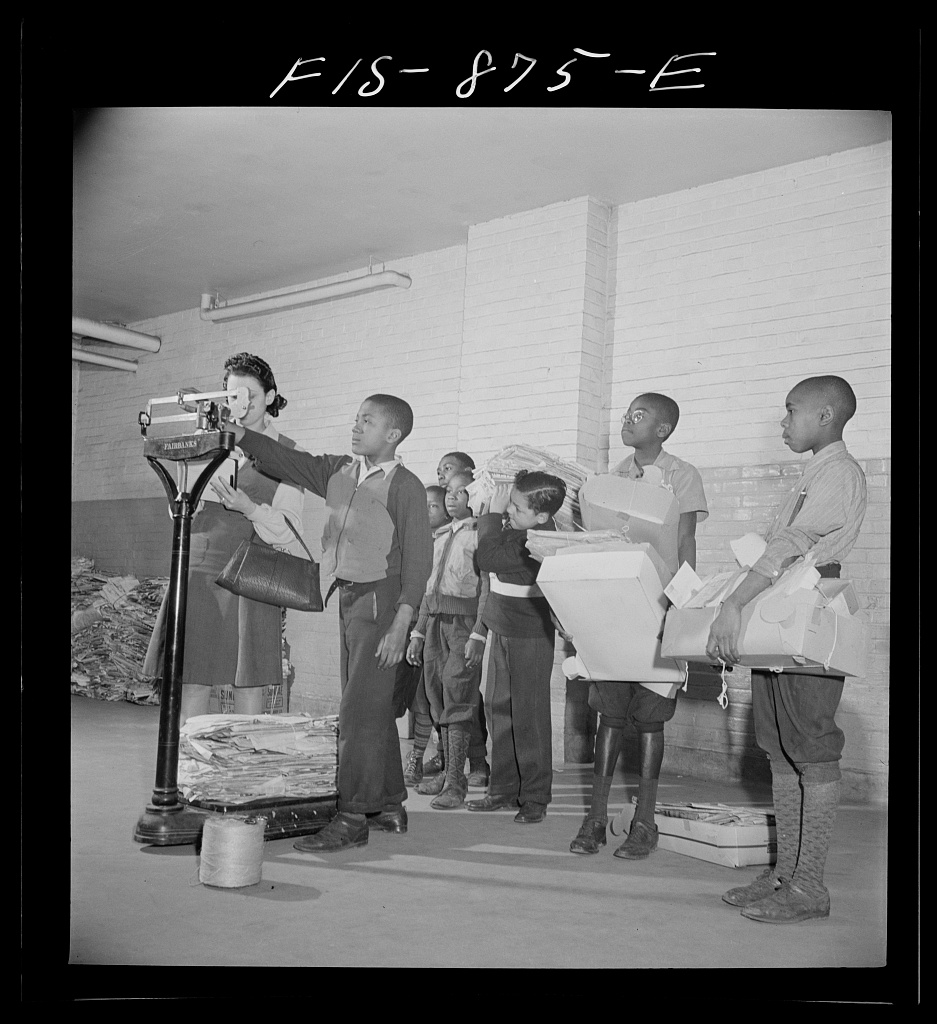
Bundles were brought in and weighed – on a platform scale in the gym, on a hanging scale, or on the dealer’s truck scale – with the figure recorded against the child’s name and their classroom’s running total.
Volumes measured in aggregate by the hauler and reported to the municipality, with no individual household or participant ever seeing a figure.
The public weighing is the thing that made the whole exercise educational rather than merely useful. A child watched a quantity of material they had personally gathered convert into a number, saw that number added to a total, and could compare it with everybody else’s – which is a direct and unforgettable lesson about mass, effort and accumulation.
5. It Piled Up Somewhere Inconvenient
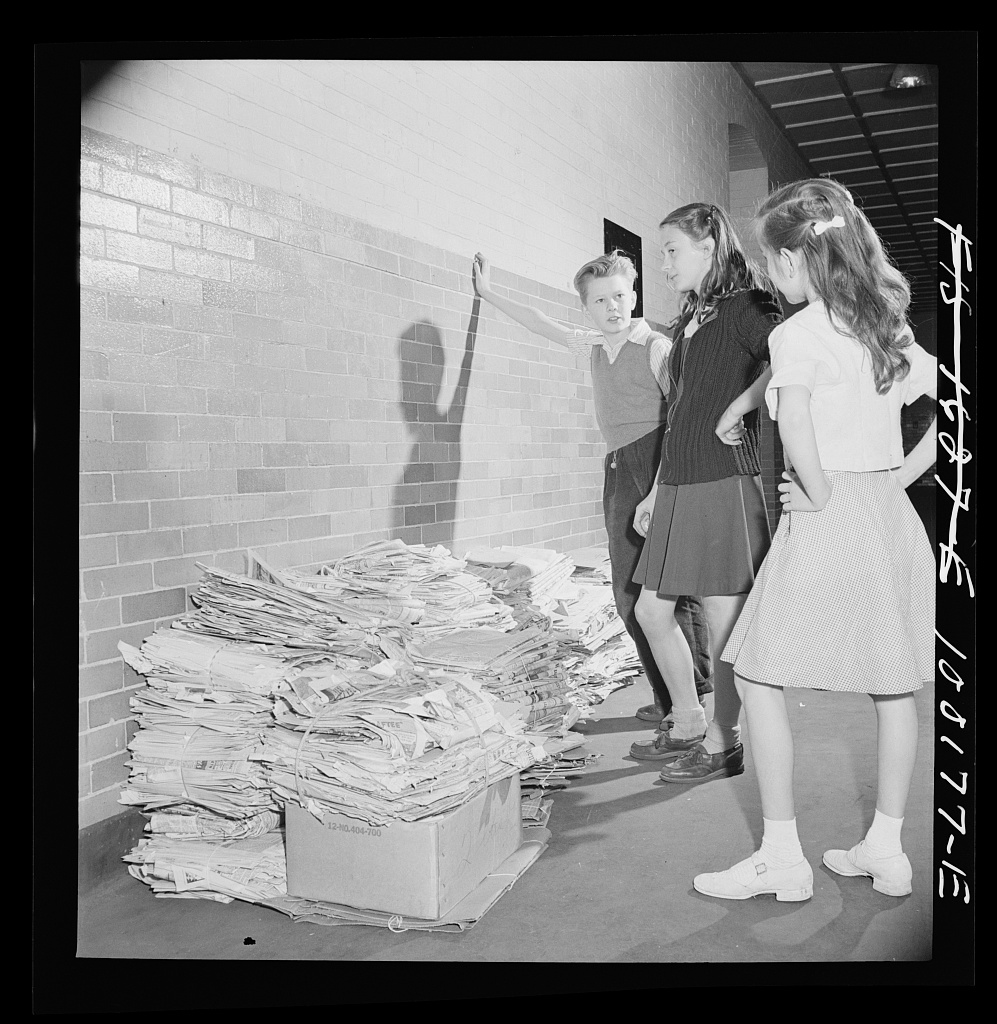
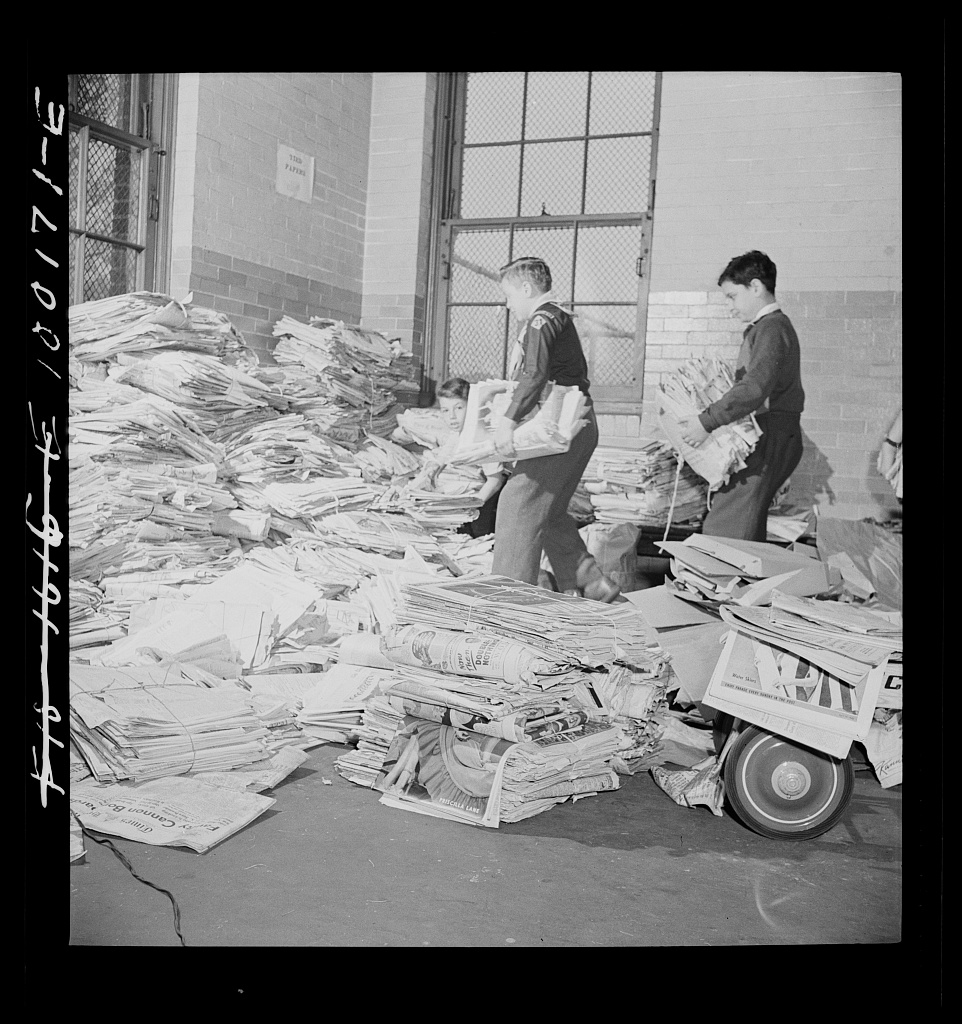
The accumulated paper was stored until collection – in the gymnasium, along a corridor, in a boiler room, in a trailer parked on the lot or in a fenced corner of the playground – in quantities measured in tons.
Nothing stored anywhere, since collection is continuous and the material never accumulates in one place that anybody sees.
The pile was part of the experience and it was also the reason the drives had a deadline. Several tons of newspaper stacked in a school gymnasium is a fire load, a pest attractant and a space problem, which is why it had to go out as fast as it came in – and why the dealer’s arrival was an event.
6. A Dealer Came and Paid by the Ton
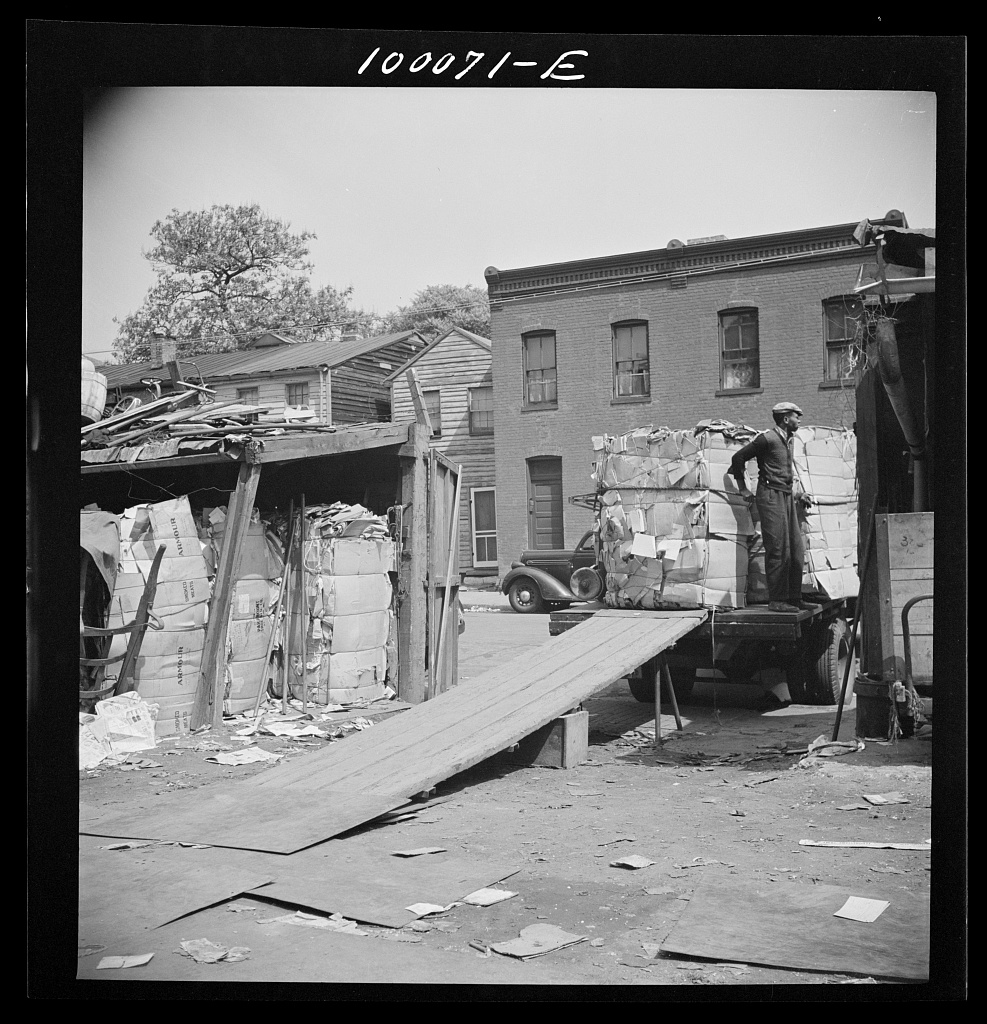
At the end of the drive a waste paper dealer arrived with a truck, loaded the bundles, weighed the load, and paid the school – by cheque, at a price per ton agreed in advance or quoted on the day.
Municipal contracts with processors, in which the city pays a hauler and the revenue from the material, if any, accrues to the contract rather than to anybody who collected it.
The payment was the point and the figure was announced. A school that collected eleven tons knew what eleven tons was worth, and so did every child in it – which means a generation of American children had direct experience of a commodity price.
7. The Money Bought One Specific Visible Thing
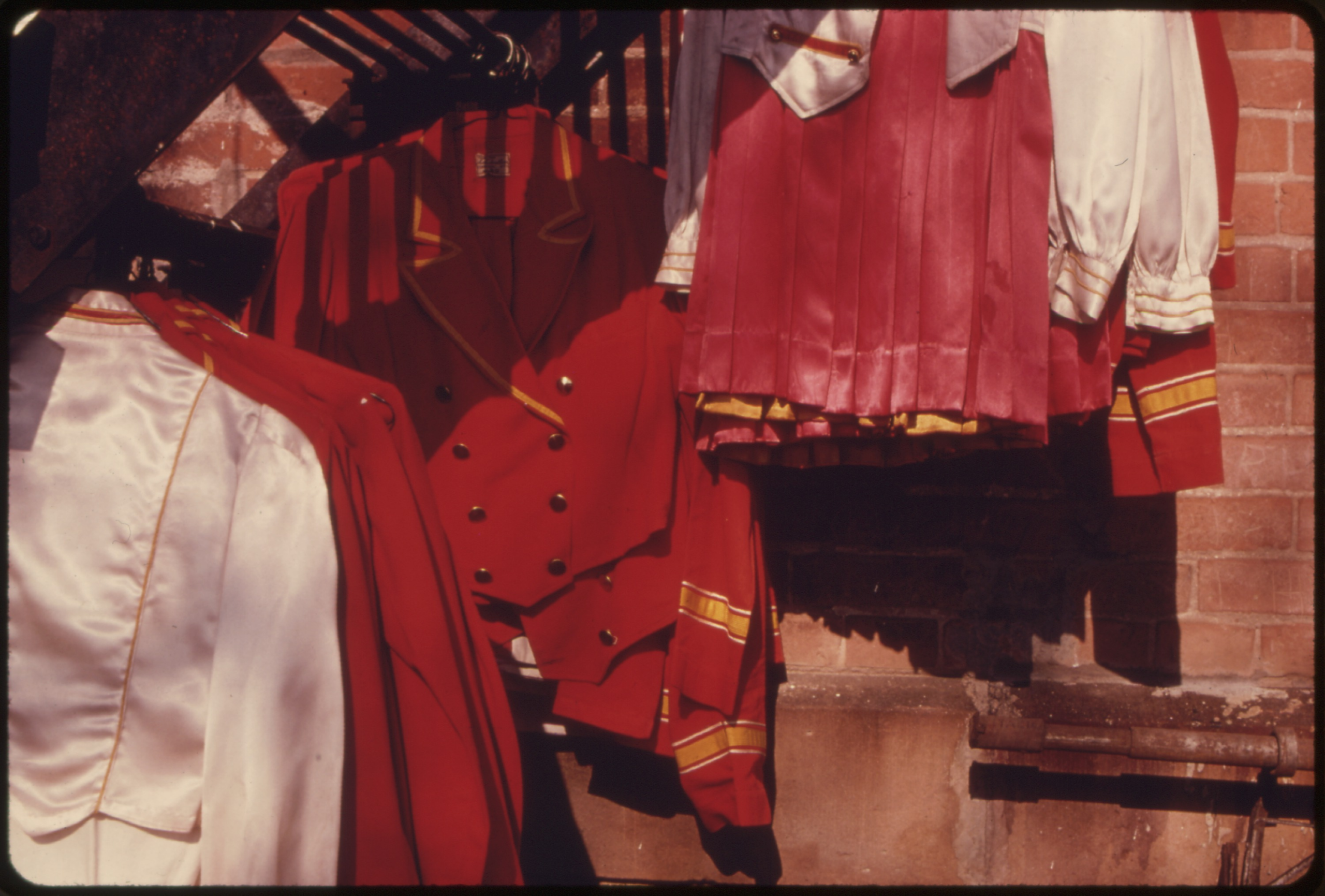
Proceeds were assigned to a named object before the drive began: band uniforms, a set of encyclopedias, playground equipment, a film projector, sports equipment, a bus trip.
Funds absorbed into general or activity budgets, or raised for designated purposes that are rarely represented by a single object a child can go and look at.
Naming the object was deliberate and it worked. Children collecting paper to buy a specific thing, which then arrived and was used and was visibly theirs, is an entirely different proposition from collecting for a fund – and the thing stayed in the building for years as the physical result of a fortnight’s work.
8. The Price Moved and Everybody Learned Why
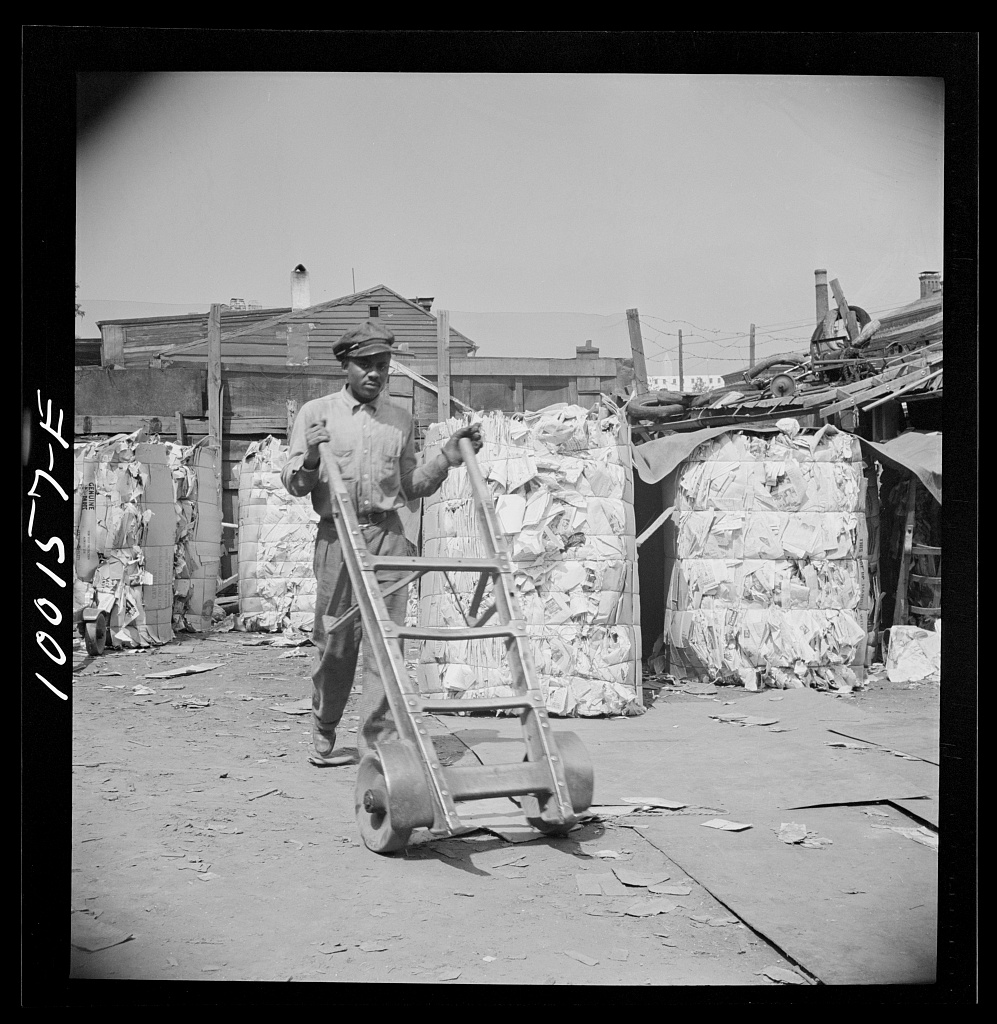
Waste paper prices fluctuated considerably, and a drive held in a strong market earned several times what the same tonnage earned in a weak one – which was explained to the children, because it had to be.
Price volatility that is now entirely invisible to participants, affecting municipal budgets rather than anybody’s project.
This is the most sophisticated thing the drives taught and it was taught by accident. A class that worked just as hard as last year’s and raised half as much had to be told why, which meant somebody explained to a room of fifth-graders that the value of what they had collected depended on mills, demand and distance – and they remembered it.
9. Magazines Were Worth Less and Were a Problem
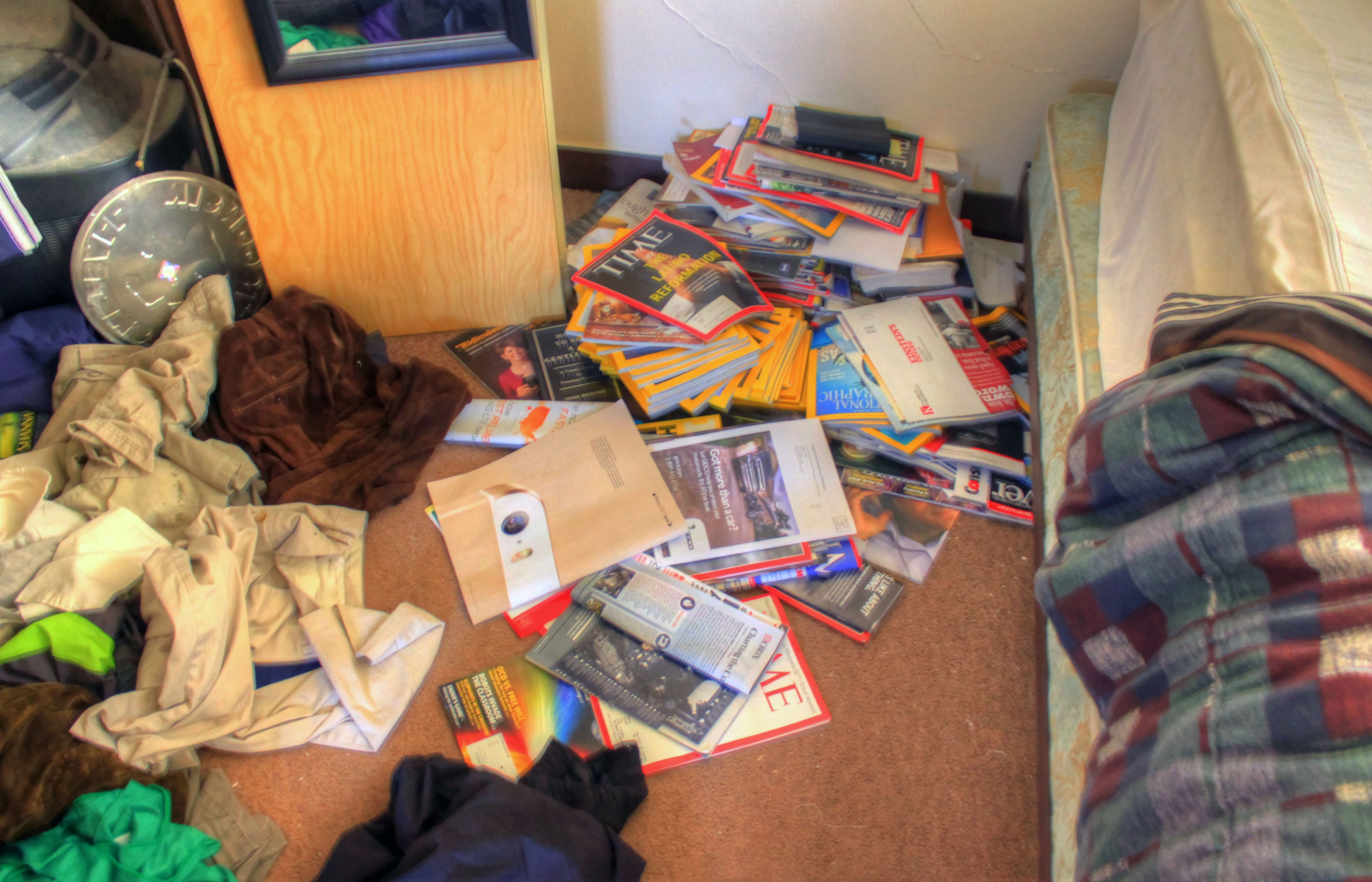
Glossy magazines, catalogues and coated stock were accepted reluctantly or refused, were worth considerably less per ton than newsprint, and had to be kept separate – which children constantly failed to do.
Mixed paper accepted together in most municipal programmes, with separation handled mechanically and optically at a processing facility.
The reason is straightforward and was explained at the time: different papers have different fibre and different coatings, which means they go to different buyers at different prices, and a mixed bundle is worth whatever the worst material in it is worth. Contamination reducing the value of the whole load is exactly the problem municipal recycling has now.
10. Rags, Metal and Grease Drives Worked the Same Way
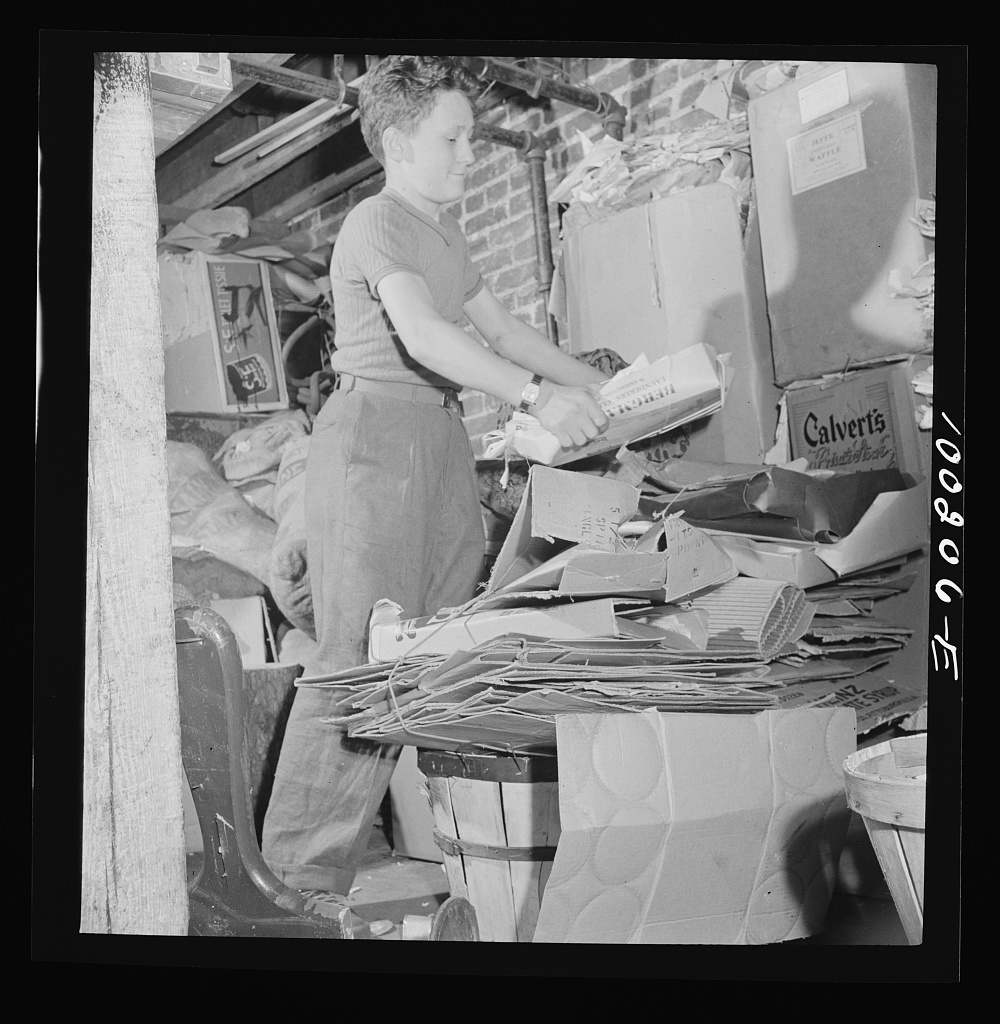
The newspaper drive was the commonest but not the only one. Schools, scout troops and church groups ran collections of rags, scrap metal, aluminium, glass and in some places waste cooking fat, on the identical model.
Municipal collection of most of those materials, with metal and aluminium still having genuine positive value and being collected commercially at scale.
All of them rested on the same condition. Each material had a buyer willing to pay cash for it in quantity, which made collecting it a fundraising activity rather than a public service – and the ones that still have strong markets, particularly aluminium and metal, are the ones where organised collection still happens.
11. Children Went Out Alone, at Night, in Winter
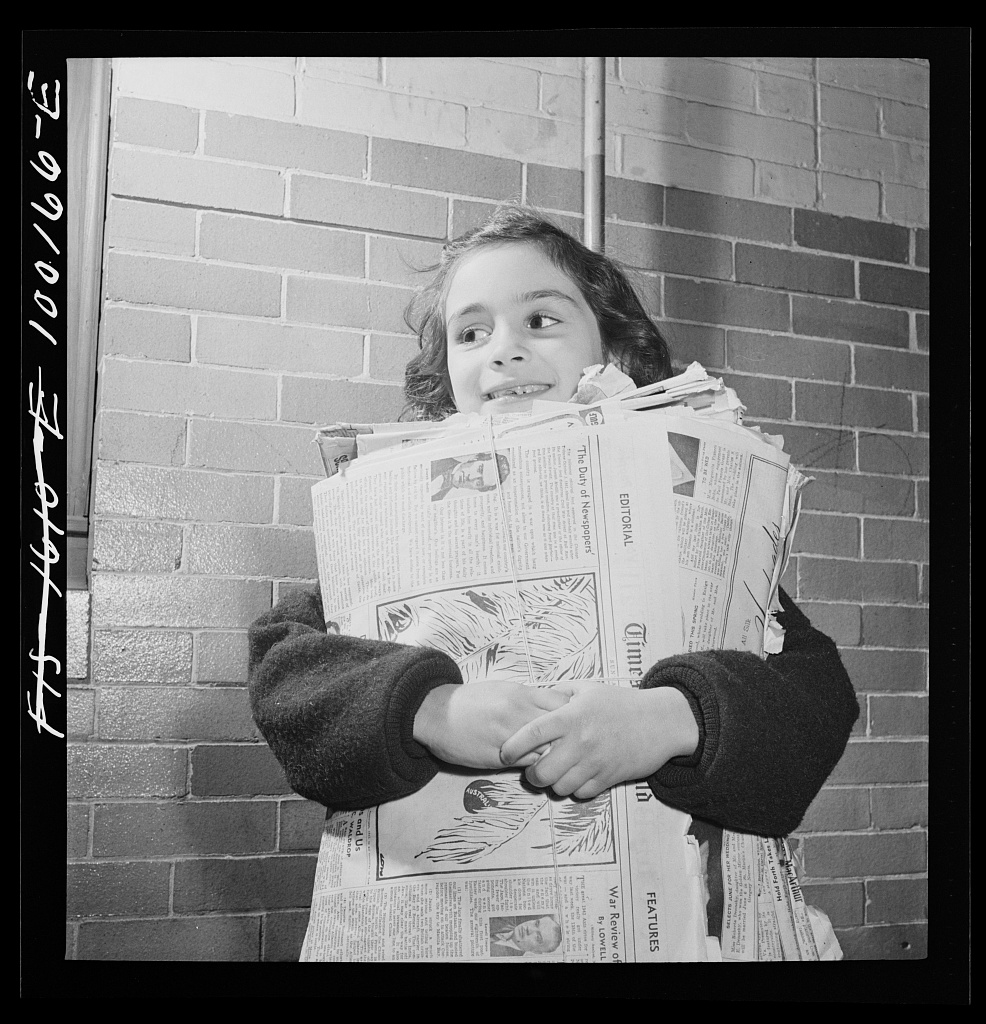
Collection happened after school, which in the northern states meant in the dark, in cold weather, by children of eight or nine, individually or in pairs, knocking on the doors of houses where they did not necessarily know the occupants.
Nothing remotely comparable. No American school district would organise unsupervised door-to-door collection by young children today, and the reasons for that are not disputed by anybody.
It should be recorded plainly rather than presented as a better era. Unsupervised children calling at unknown houses after dark was the normal arrangement, it was organised by schools, and the change in how such activity is supervised is a straightforward improvement in child safety that nobody should wish undone.
12. You Hauled It in Whatever You Had
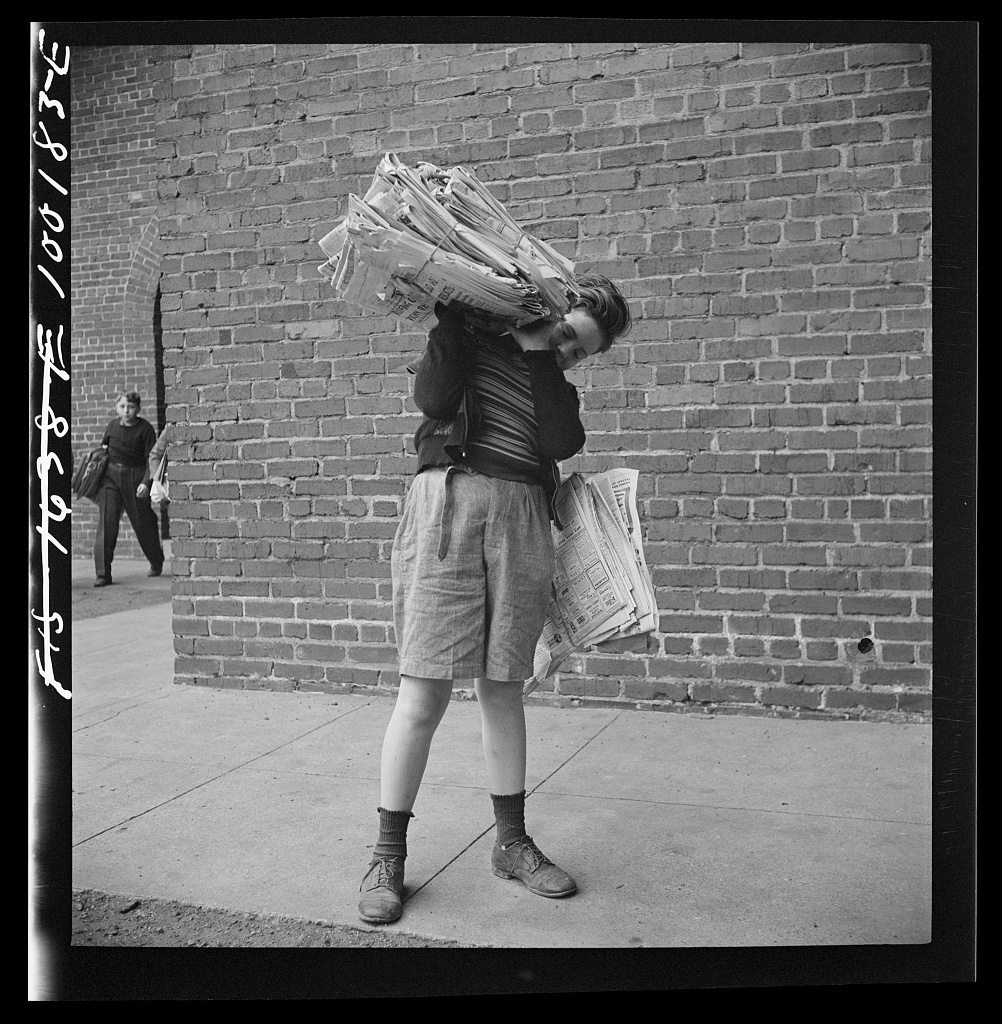
Transport was improvised: a wagon, a sled in snow, a bicycle with a basket, a wheelbarrow, somebody’s older brother’s car, or a father’s pickup truck driven round the block on a Saturday.
A municipal truck designed for the job, with a lifting mechanism and a compaction body.
The hauling was most of the labour and all of the difficulty, because newspaper is dense. A wagon of bundled papers is heavy enough that a nine-year-old can move it about a hundred yards at a time – which is why the drives were a neighbourhood activity with a very short radius.
13. The Winning Class Got Something
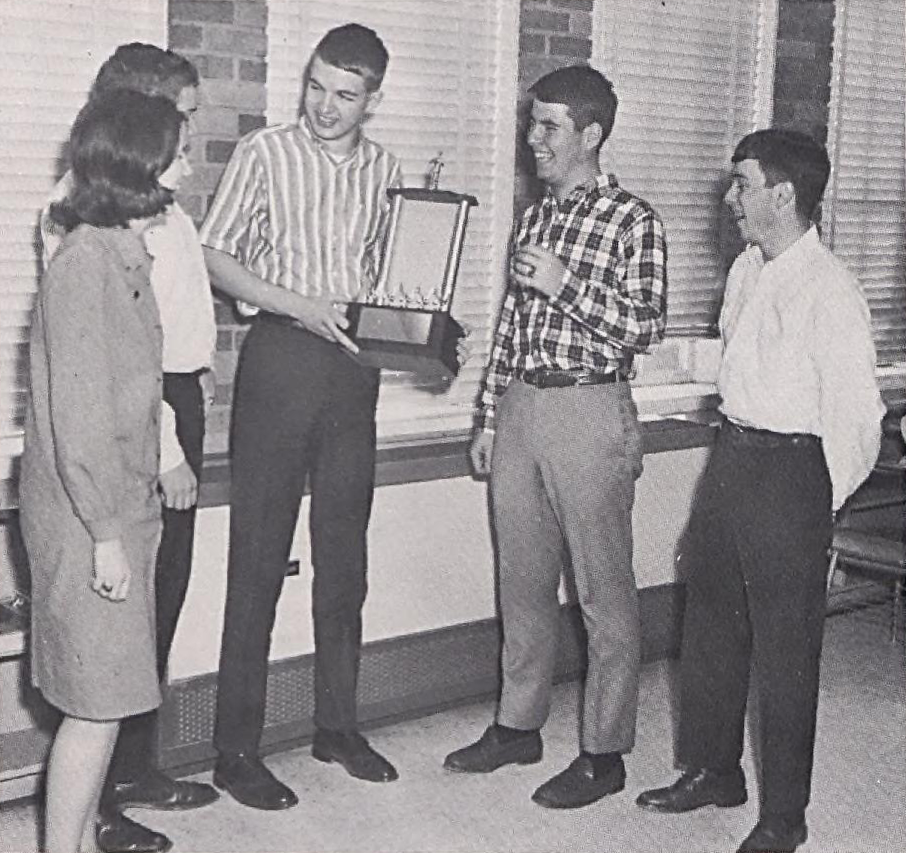
The classroom with the highest total received a prize: a party, an afternoon off, a pizza, ice cream, a trophy that stayed in the room for a year, or simply having its name read over the intercom.
Recognition schemes within fundraising programmes, usually individual rather than classroom-based and usually tied to a sales catalogue.
The prize was almost always trivial relative to the effort and it did not matter at all. What the children were competing for was the standing – the posted totals, the comparison, the name read out – and the trophy was simply the token that proved it.
14. It Was Recycling Before the Word Was in Use
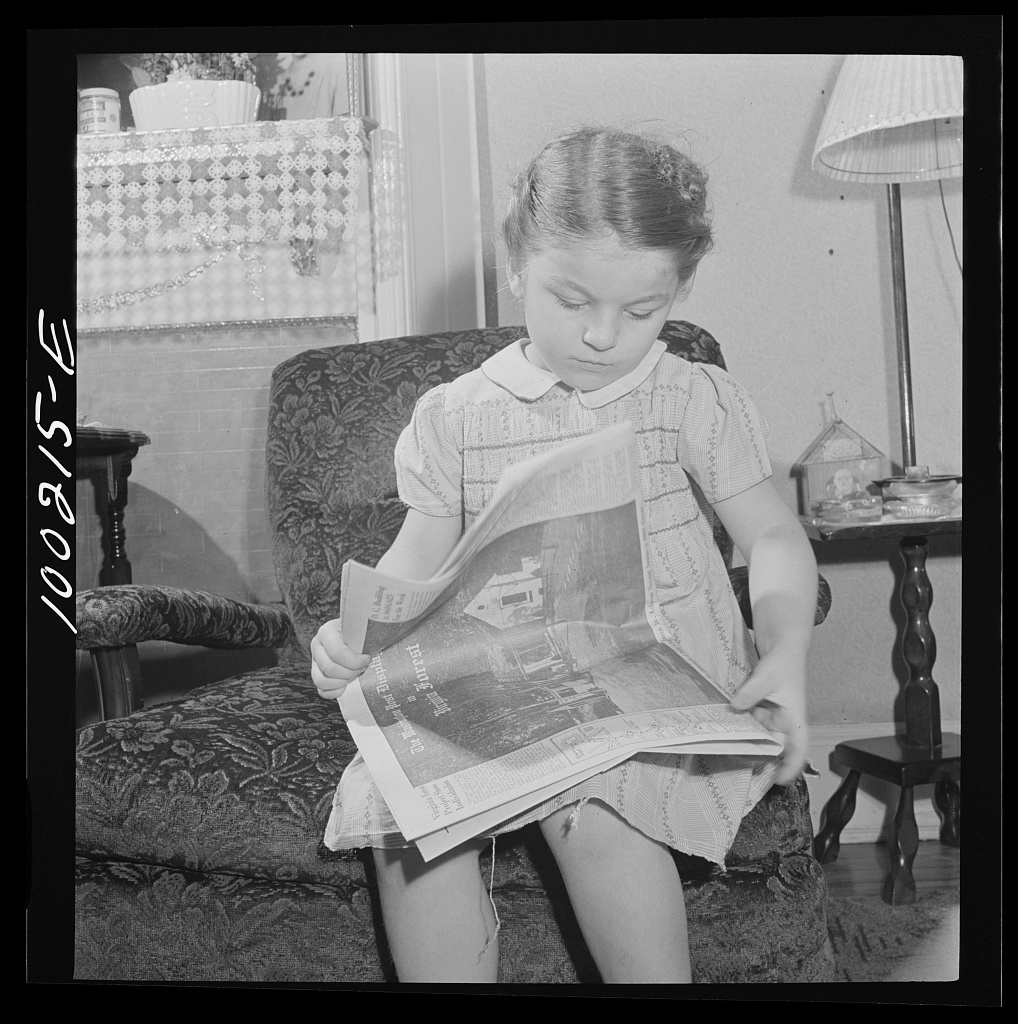
The entire operation – collection, separation by grade, bundling, weighing, sale to a processor and return of the material to manufacture – is recycling, conducted systematically, decades before the term entered ordinary American speech.
Municipal recycling at vastly greater scale and participation, with far better separation, more materials and almost universal coverage.
And it is worth being accurate about the motive, because it was not environmental. These drives happened because waste paper was worth money and children’s labour was free, which is a commercial arrangement that produced an environmental outcome – and the material was recovered just as effectively for having been collected for the band uniforms.
15. Then the Material Stopped Paying for Its Own Collection
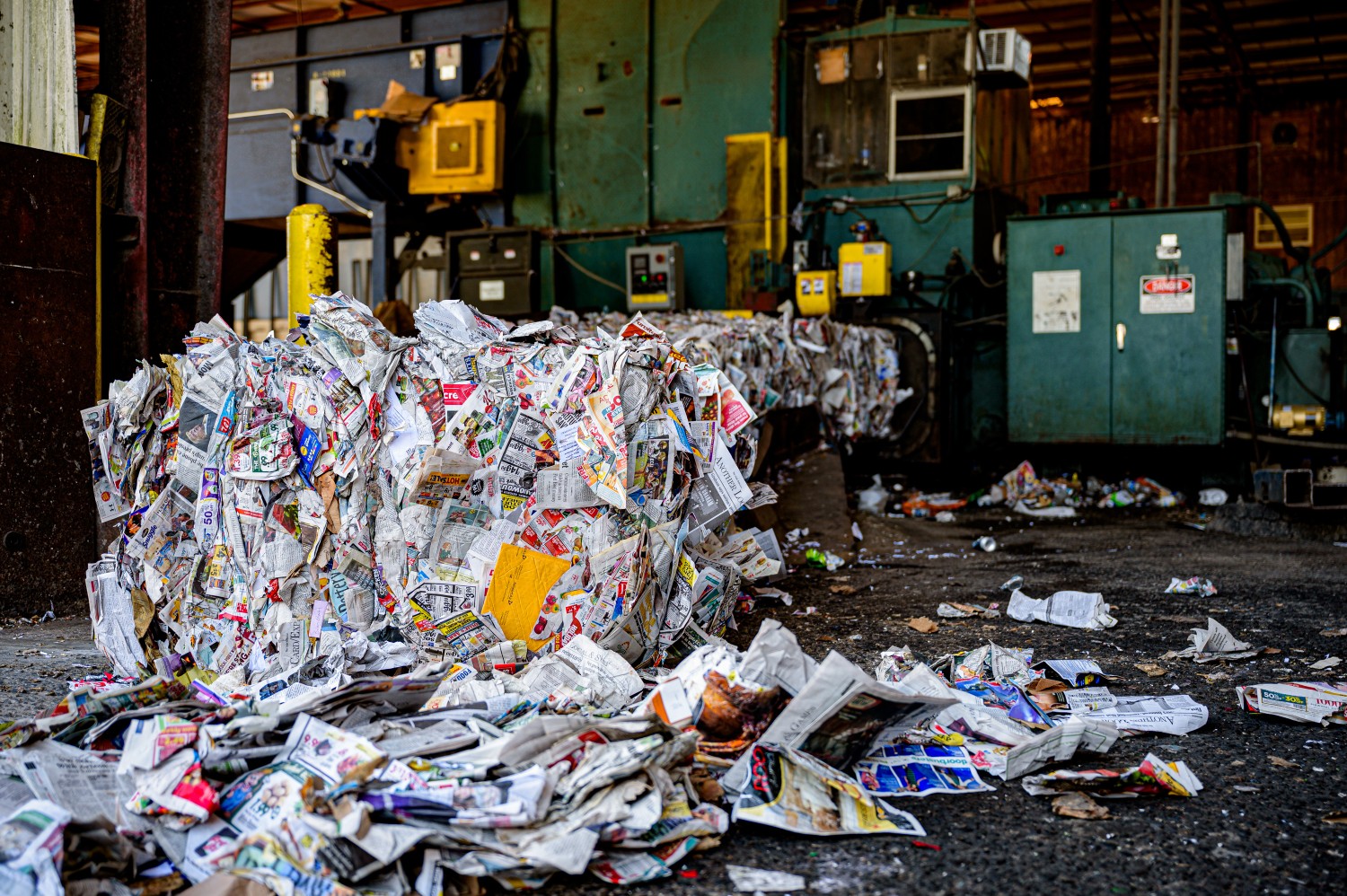
A paper drive worked because three things were true at once: newspaper had a positive market value per ton, a dealer would come and pay cash for it, and the labour of gathering it cost nothing because it was done by children competing for a trophy.
Kerbside municipal collection that recovers far more material from far more households – and which the municipality pays for, and which in a weak market can cost money to dispose of rather than earning anything.
Which is the inversion worth sitting with. The modern system is better in every way that matters: more material, more households, more types, no children in the dark, no tonnes of paper in a gymnasium. But it reversed the economics completely. The paper drive could only exist while the material was worth more than the cost of collecting it, and that condition – the one that made recycling a fundraiser rather than an expense – is precisely the condition modern recycling has struggled with for years. The other loss is educational and it is sharper. A child in 1974 gathered material, watched it weighed, saw the tonnage posted, heard what it sold for, was told why the price had changed since last year, and then looked at the band uniforms it had bought. Material now vanishes from a bin on a Tuesday and no one in the household knows its weight, its value, its destination or whether it was used at all.
It Was Only Possible Because the Paper Was Worth Something
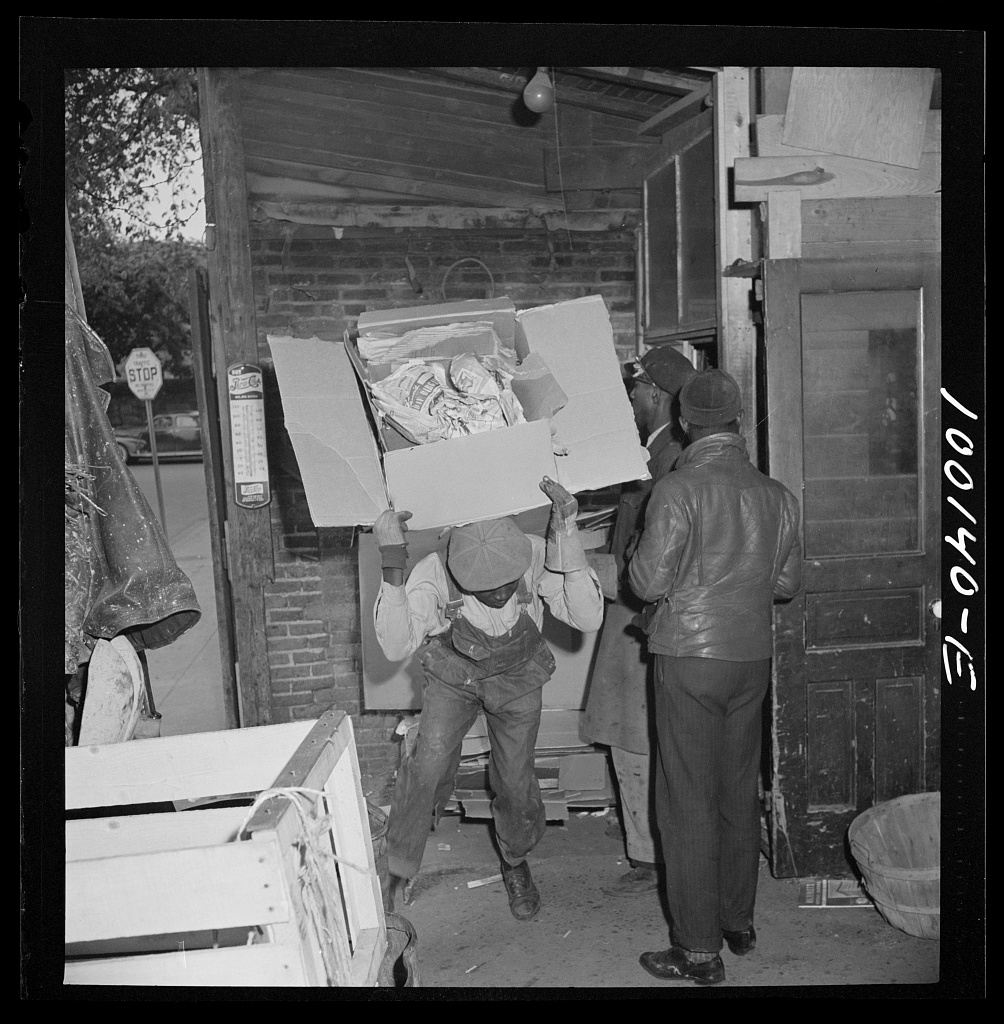
The paper drive is usually remembered as evidence that schools were more resourceful, or children harder working, or communities more willing. All three are flattering and none is the explanation.
The drives existed because of an economic condition that no longer holds.
Three things had to be true at the same time. Waste newspaper had to have a positive market value per ton. A dealer had to be willing to drive a truck to a school, load it and hand over a cheque. And the labour of gathering it had to cost nothing – which it did, because it was performed by children who were competing for a trophy and the right to have their classroom’s name read over the intercom.
Under those conditions, recovering material was not a public service or an environmental measure. It was a fundraiser. The band uniforms were bought with a commodity, harvested from garages across a neighbourhood by nine-year-olds with wagons, and the environmental benefit was entirely incidental – the paper went back to a mill just as effectively for having been collected to pay for uniforms.
Now reverse each condition and you have the present system.
Municipal kerbside collection recovers vastly more material, from essentially every household, across many more categories, with proper separation, and without sending any child out after dark in January. On every measure of effectiveness it is better, and this is not a close question.
But the money runs the other way. A city pays a hauler to collect, pays a facility to sort, and sells what comes out at whatever the market gives – and when prices are weak, the material costs money to move rather than earning anything. The very condition that made a paper drive possible, that the stuff was worth more than the cost of gathering it, is the condition modern recycling has struggled with for years.
So the resourcefulness was real and it was downstream of a price.
The second loss is smaller and sharper, and it is educational. Follow what a child actually experienced in 1974. They gathered a quantity of material with their own hands. They watched it weighed on a scale in front of them. They saw the figure written down and added to a total on a board. They heard what the total sold for. If it sold for less than last year’s, somebody stood up and explained to a room of ten-year-olds that the value depended on mills and demand and distance. And then the thing it had bought arrived, and was used, and sat in the building for a decade.
That is the entire chain – labour, mass, price, market, proceeds, outcome – made visible to a child, by accident, as a side effect of a fundraiser.
Material now leaves a household in a bin on a Tuesday. Nobody in that house knows its weight, its value, where it went, or whether it was used at all.
If you did this, you remember the twine, and you remember how heavy a wagon of newspapers actually is.
And you remember what your class was collecting for, and whether you won.
Like our content? Follow us for more.