

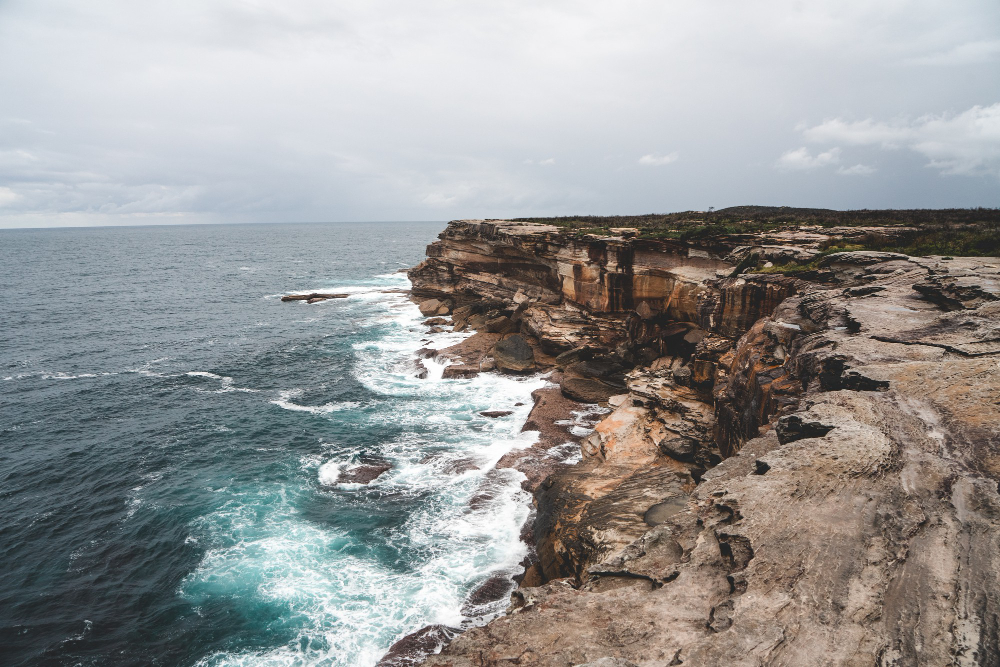
The whole subject reduces to one comparison: which rock resisted and which did not. Everything projecting is what held out, everything indented is what did not, and every feature between them is a stage in the process. Here are seventeen.
1. A Headland Is Just Slower Erosion
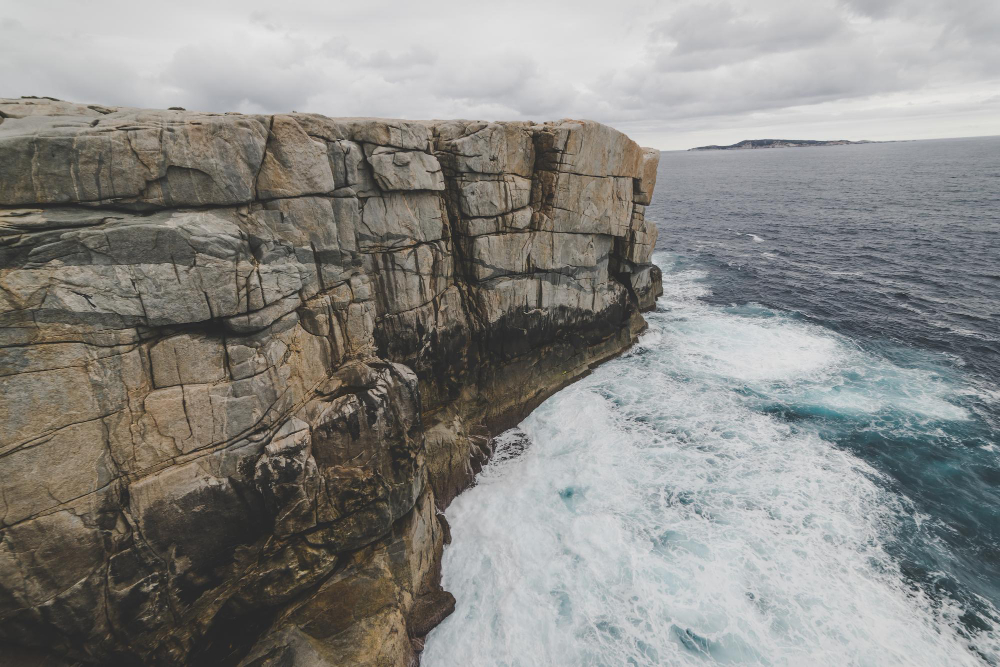
Where a band of harder rock meets the coast, it erodes more slowly than the softer rock either side – so bays are cut back and the resistant material is left projecting.
Nothing was pushed outward. Differential erosion is the only mechanism producing headlands.
Like our content? Follow us for more.
2. And the Bays Are the Weak Rock
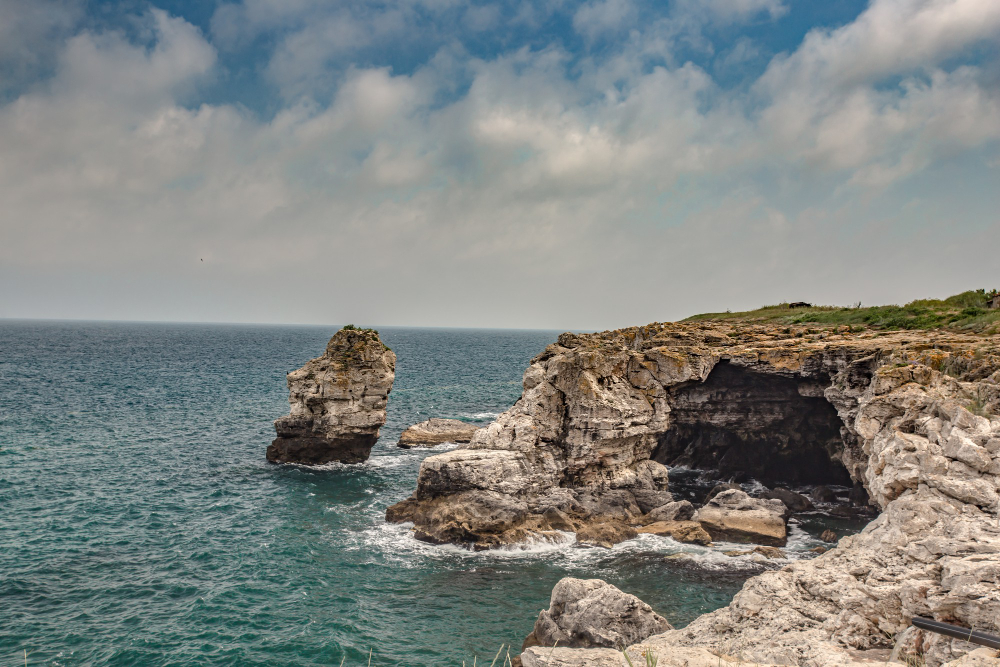
The indentations are not features in themselves; they are where material has been removed, and their shape records the extent of the weaker band.
The bay is an absence. Selective removal is why a coast alternates rather than retreating evenly.
3. Waves Bend Toward the Headland
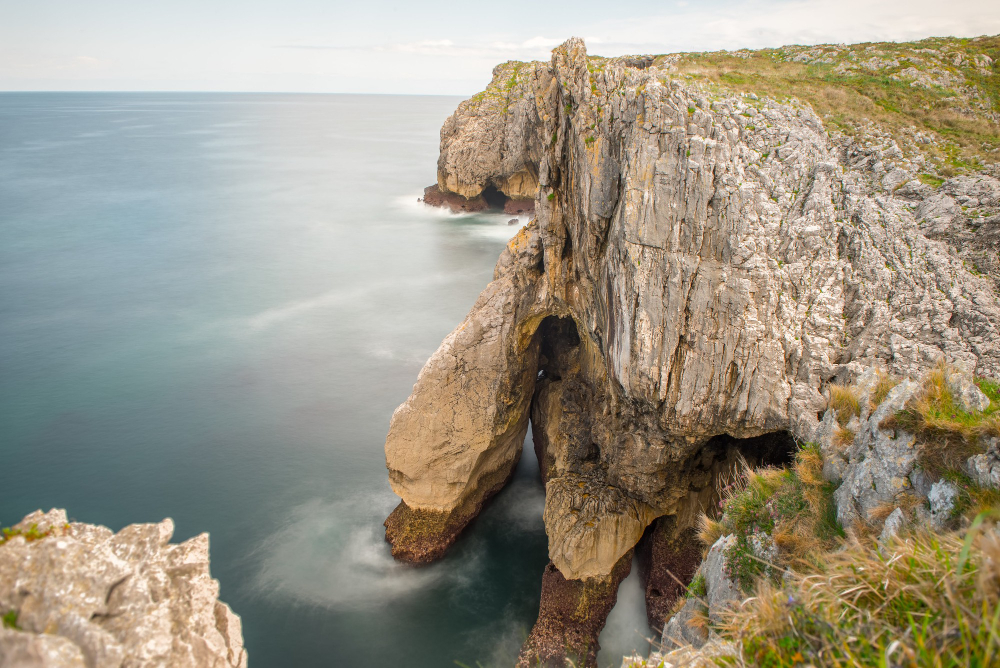
As waves approach shallower water off a headland they slow and turn, which concentrates their energy on the projecting rock and disperses it across the bays.
The projection attracts its own destruction. Wave refraction is why headlands erode faster once they exist.
4. So Headlands Are Temporary
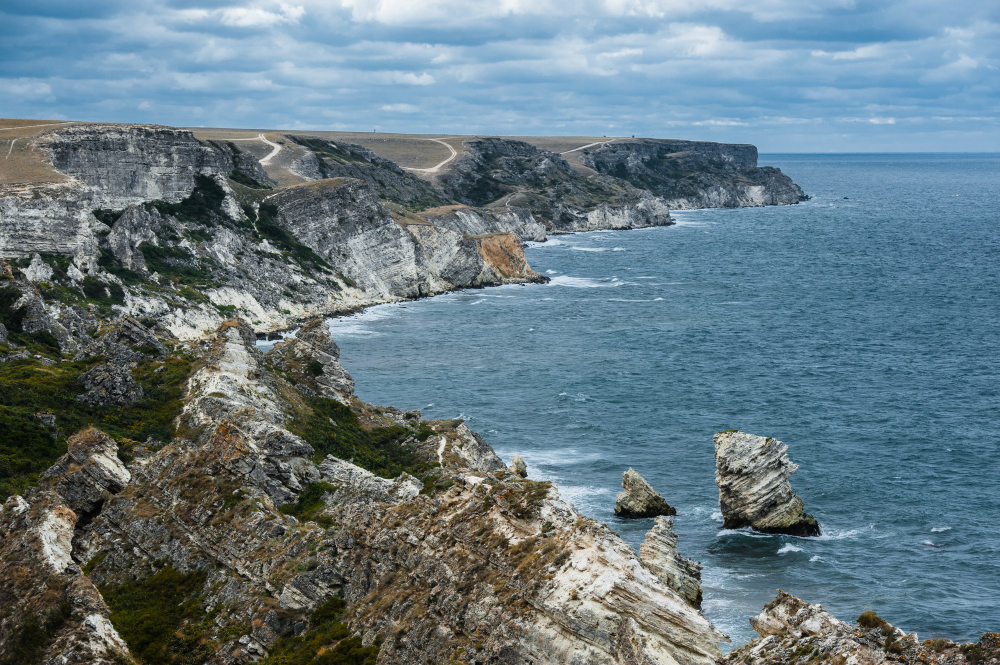
The concentration of energy means a headland is being attacked harder than anything around it, and over a long enough period the coast straightens itself.
Every projection is on its way out. Self-limiting geometry is why coasts tend toward straight lines.
5. And the Bays Collect What Is Removed
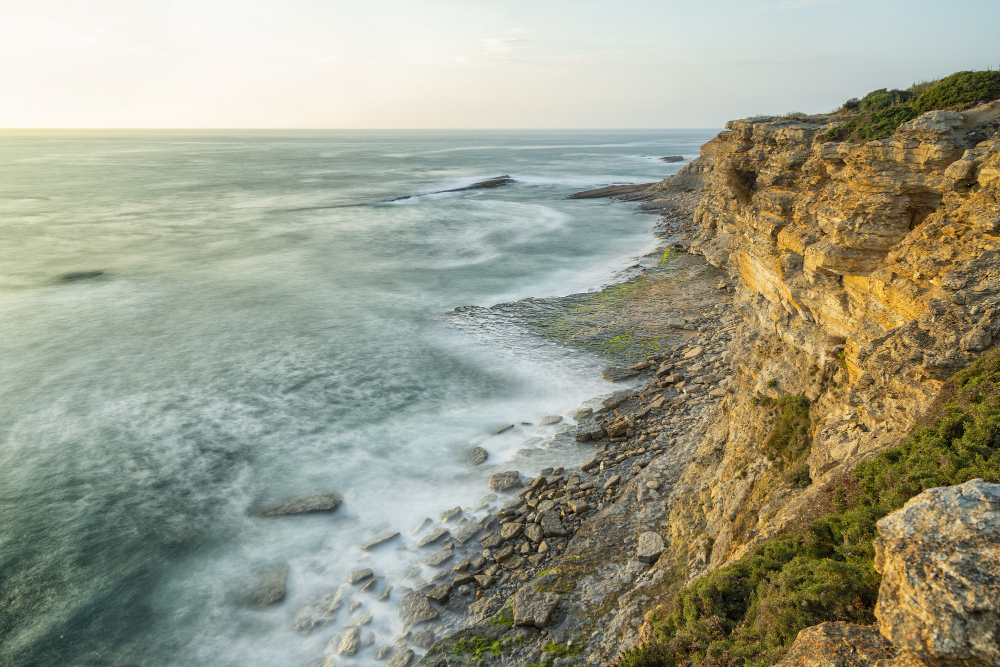
Dispersed wave energy in a bay means less capacity to carry material, so sediment eroded from the headlands is deposited in the bays between them.
The beach is made of the cliff next door. Local supply is why bay beaches exist at all.
6. The Waves Find the Weakness First
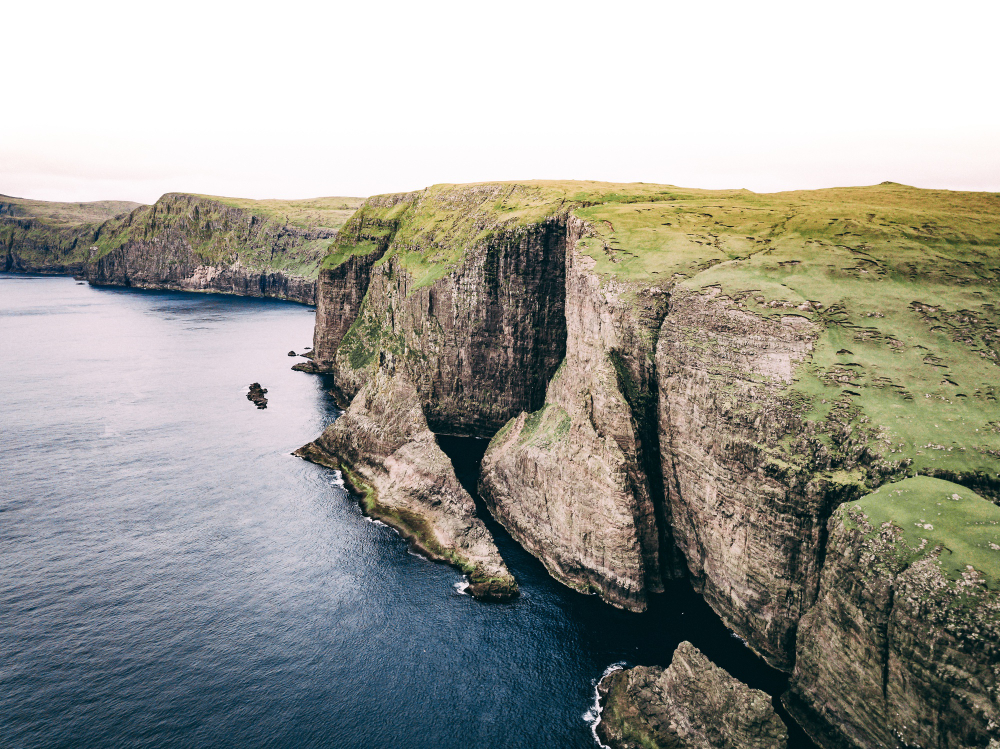
Attack concentrates along joints, faults and bedding planes, because those are where the rock is already divided – so erosion follows the structure rather than acting evenly.
The rock chooses where it fails. Structural exploitation is the pattern behind every feature below.
7. A Crack Becomes a Cave
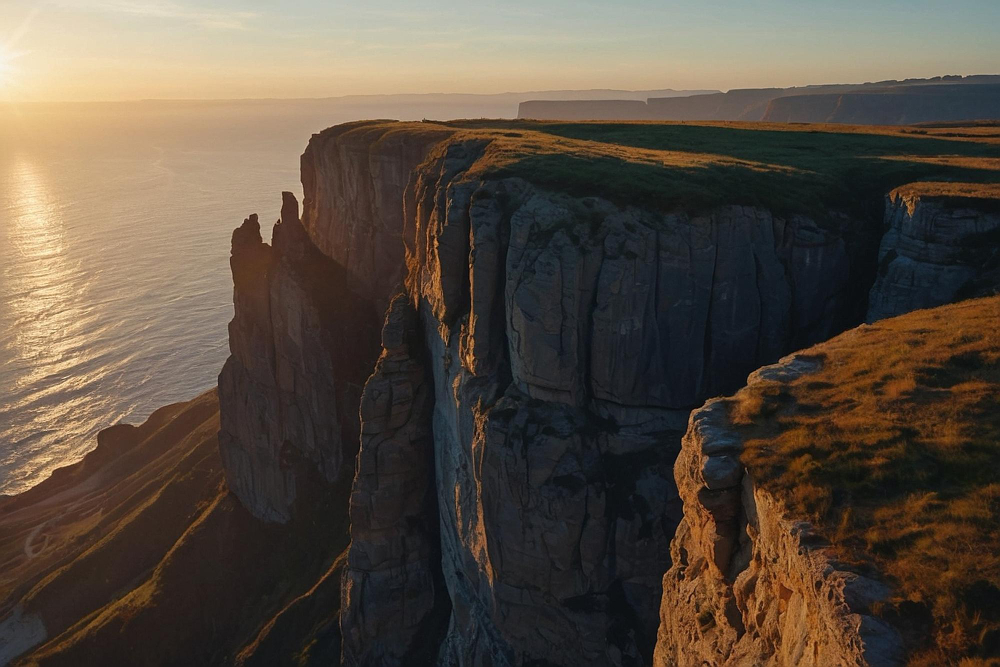
Repeated wave action along a line of weakness enlarges it, aided by air compressed into the crack by each wave, which expands explosively as the water withdraws.
The air does as much as the water. Cave formation is erosion working along an existing line.
8. A Cave Becomes an Arch
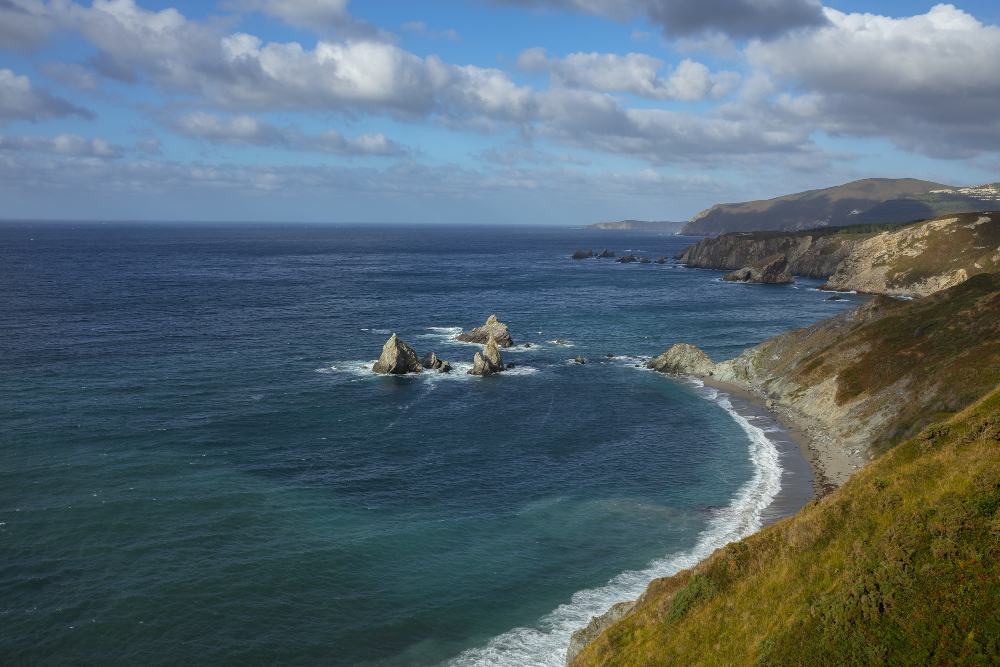
Where a cave is driven right through a narrow headland, or where two caves meet from opposite sides, the result is an opening with rock above it.
The headland is now hollow. Arch formation is a cave that went all the way.
9. An Arch Becomes a Stack
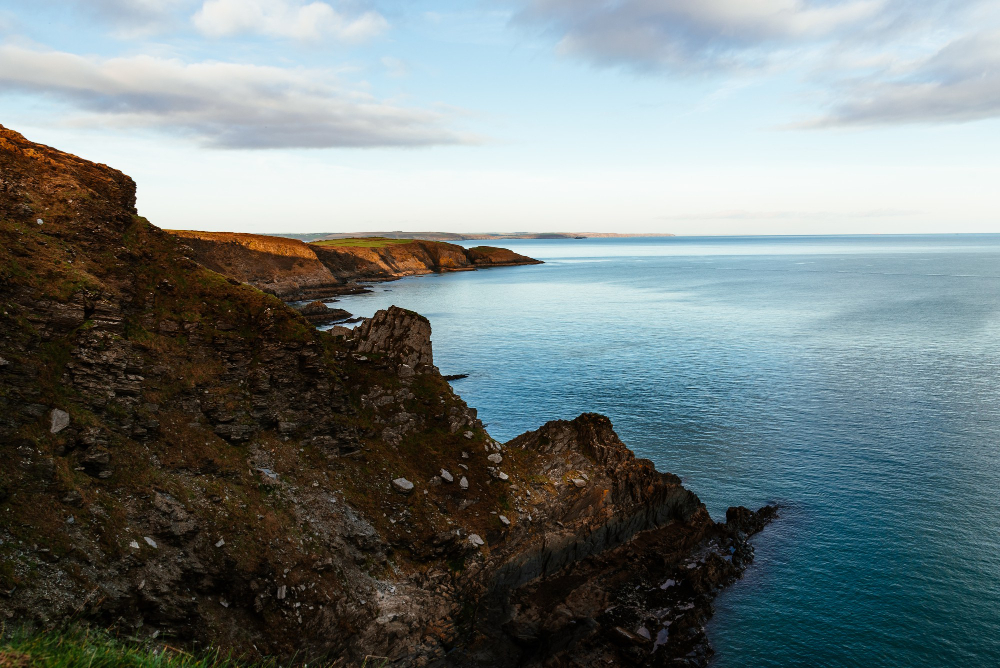
The roof of an arch is unsupported and eventually collapses, leaving an isolated column of rock standing offshore, separated from the land it was part of.
Collapse is inevitable rather than possible. Stack formation is the arch failing.
10. And a Stack Becomes a Stump
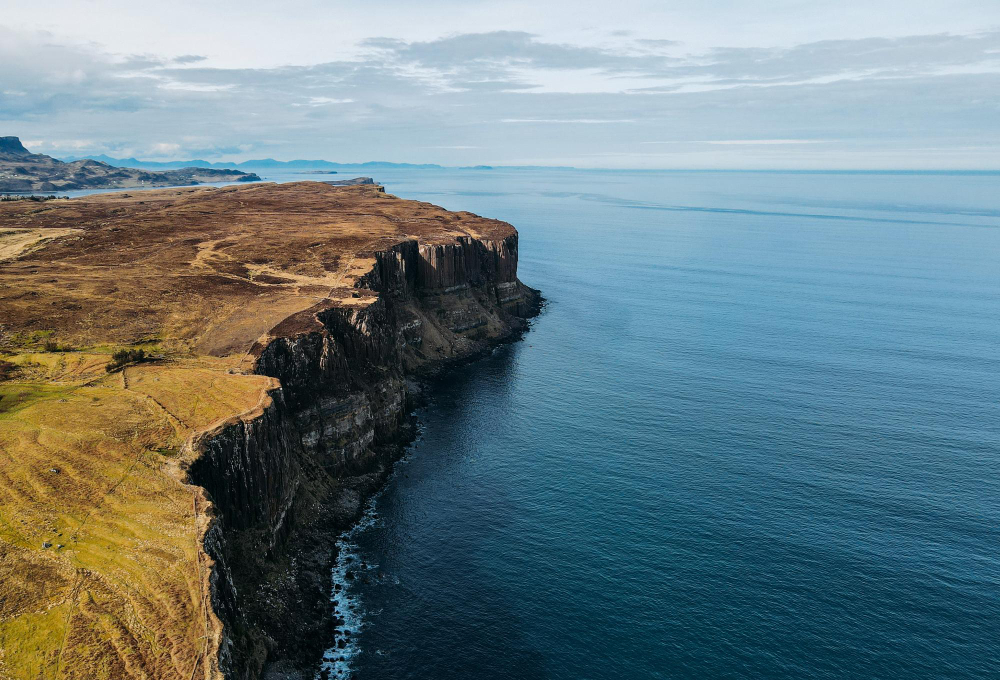
Continued attack at the base of a stack undercuts it until it falls, leaving a low remnant visible only at lower water.
The sequence has one direction. Stump formation is the final stage before disappearance.
11. The Notch at the Bottom of a Cliff
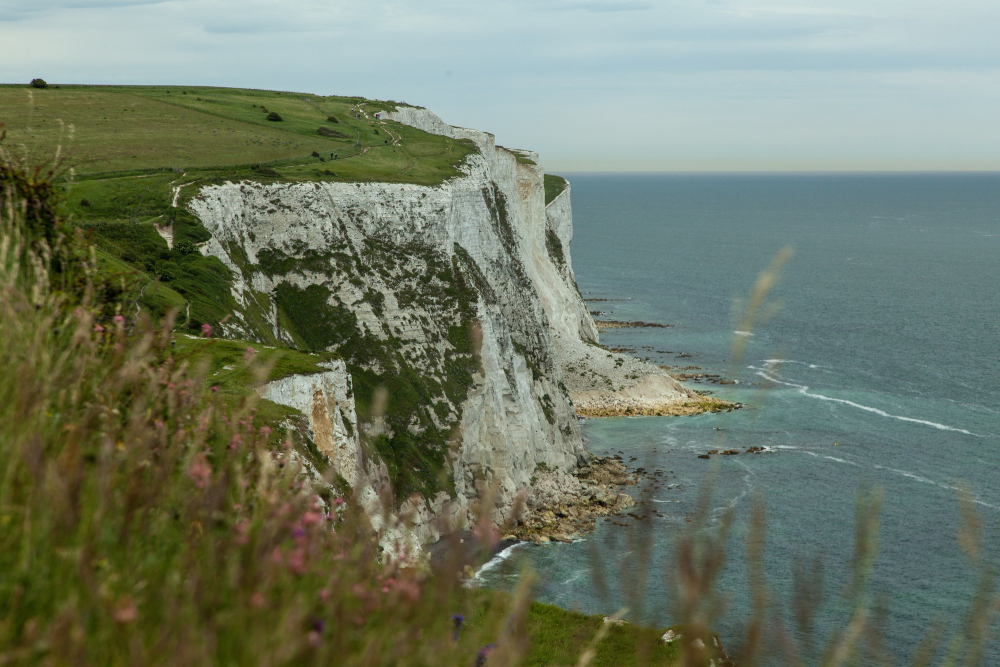
Wave attack is concentrated at the water line, which cuts a recess into the base of a cliff and leaves the material above unsupported.
It is being undercut continuously. The wave-cut notch is what precedes every cliff collapse.
12. Which Is Why Cliffs Fail Suddenly
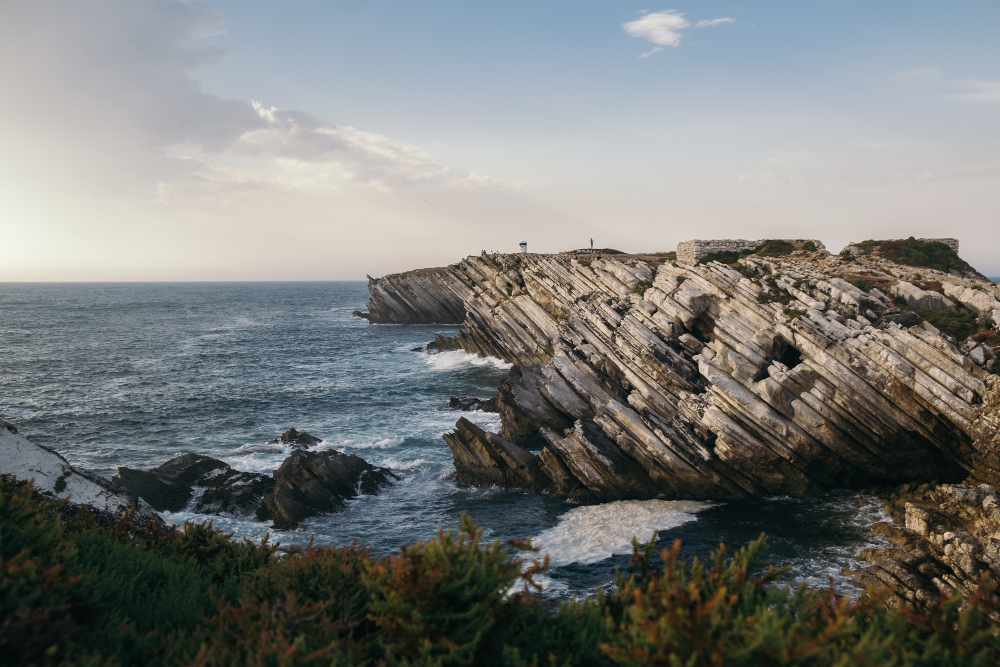
A cliff does not erode gradually from the top. It is undermined at the base until the overhang cannot support itself, and then a section falls at once.
The failure is abrupt and the process is slow. Undercutting is why cliff retreat happens in events.
13. The Flat Shelf at the Base
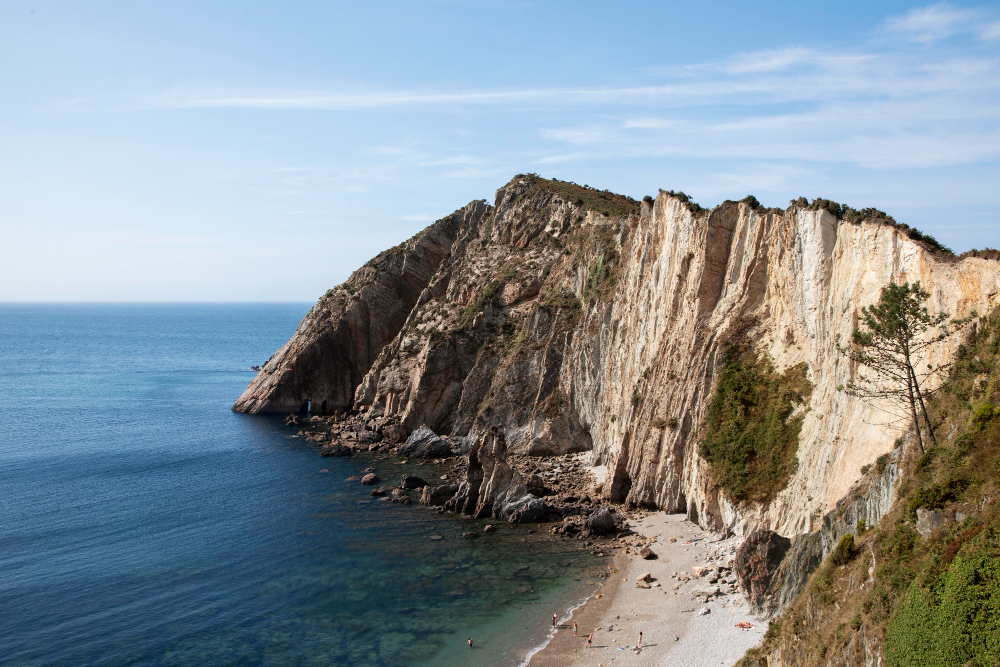
As a cliff retreats, it leaves behind a gently sloping rock platform at around the level of the wave attack, extending seaward as far as the cliff has moved.
It is a map of the retreat. The wave-cut platform records how much land has gone.
14. The Cliff Profile Records the Rock
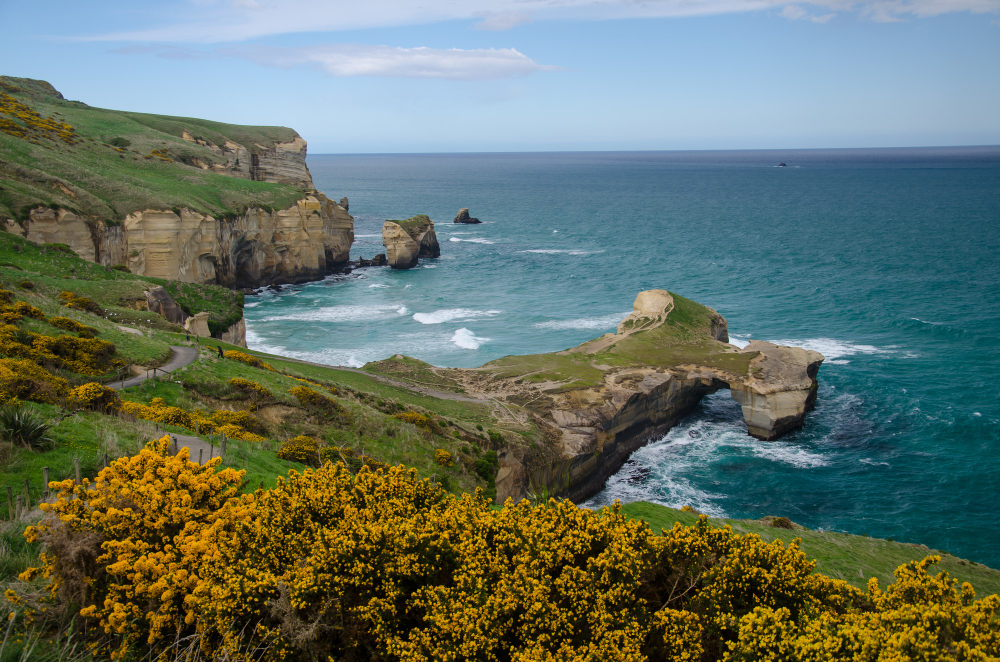
Hard rock stands near-vertical; soft material slumps to a shallower angle; alternating bands produce a stepped profile – so the shape of a cliff is a reading of what it is made of.
You can see the geology from the beach. Profile angle is the rock stating its own strength.
15. And So Does the Direction of the Beds
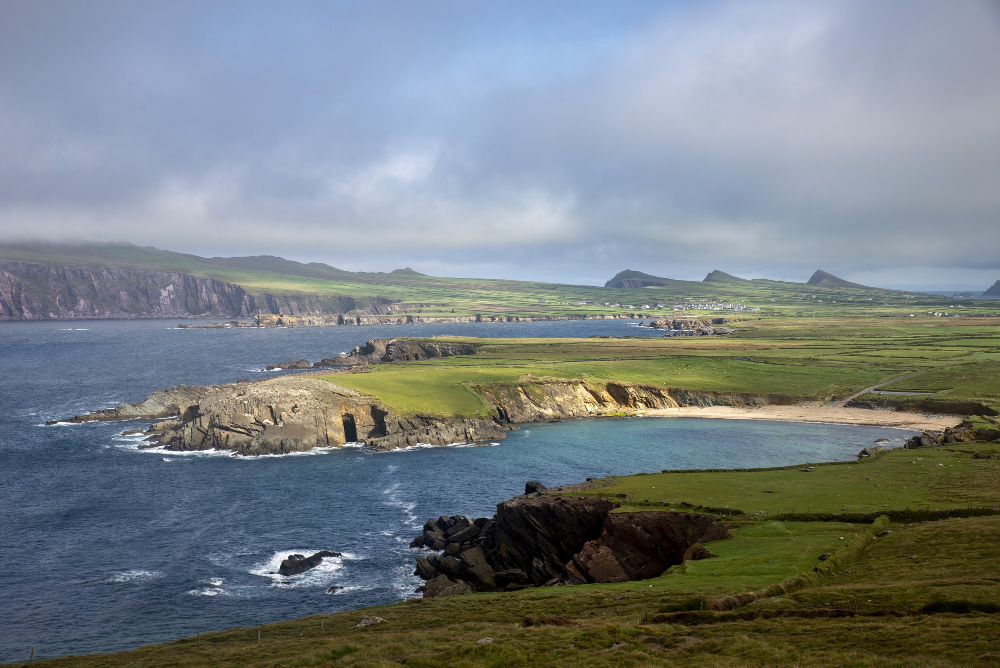
Rock layers dipping toward the sea fail differently from layers dipping inland, because one arrangement offers a ready-made surface to slide along and the other does not.
It determines whether failure is by slide or by fall. Bedding orientation is the hidden variable in cliff stability.
16. Where the Bands Run Along the Coast
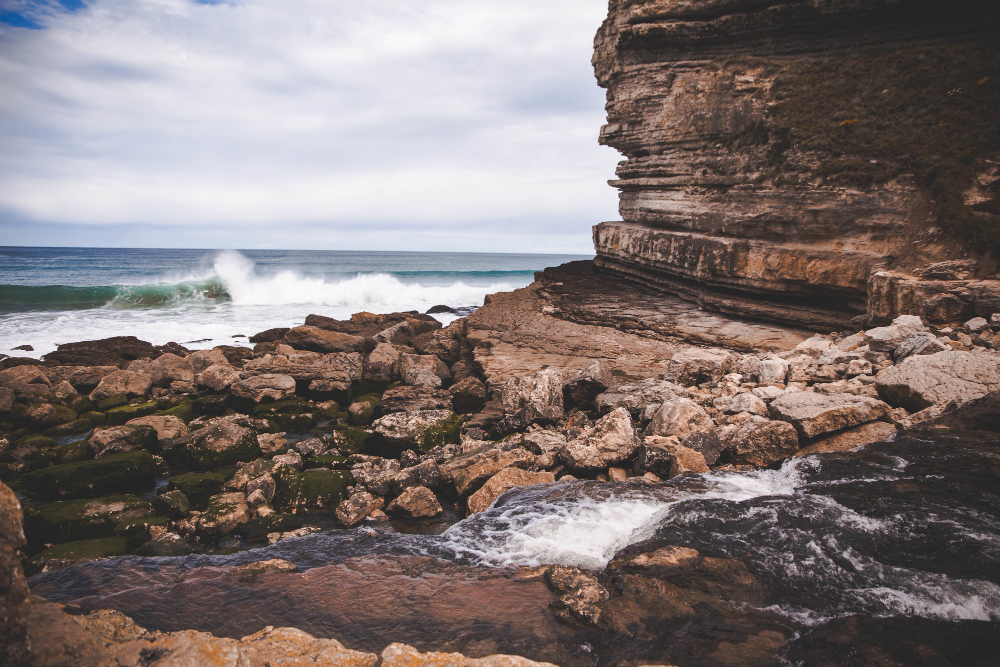
Where rock layers lie parallel to the shoreline, a resistant band forms a continuous barrier, and a breach in it allows the sea to excavate a wide bay behind through the softer material.
The result is a coast with round bays and narrow entrances. Concordant structure produces an entirely different coastline.
17. And Where They Meet It at an Angle
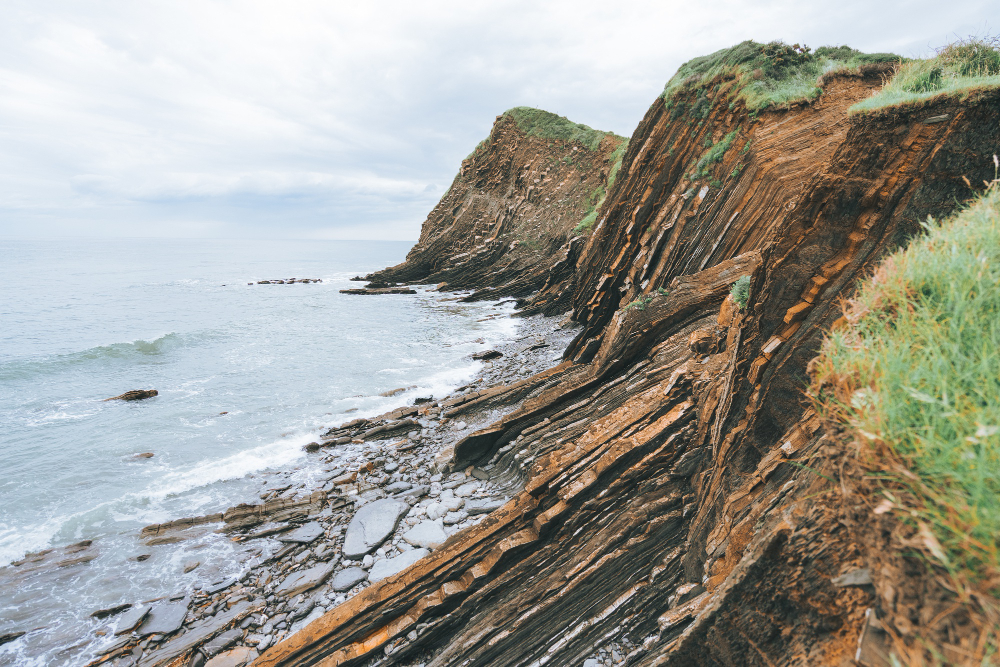
Where bands run across the coast rather than along it, each meets the sea separately – producing the alternating headlands and bays that most people picture as a coastline.
It is the arrangement that makes the whole sequence visible. Discordant structure is what produces a scalloped coast.
Which Rock Gave Way First
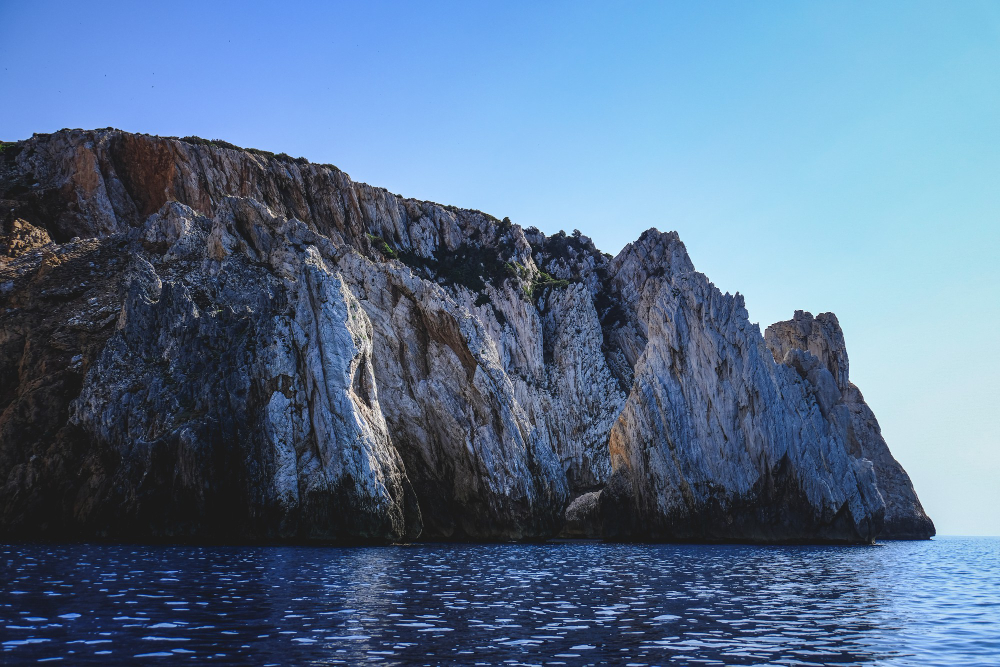
Harder bands left standing, softer bands carved into bays, wave energy bending onto whatever projects, and a sequence from crack to cave to arch to stack that only runs one way.
A serious note: everything above describes ground that is being actively undermined. A cliff edge is unsupported by definition, the ground near one may be overhanging with nothing visible to indicate it, rockfall onto beaches beneath is continuous rather than occasional, and arches and stacks are structures in the process of collapsing. Keep well back from edges, well out from bases, and treat fencing and signage as marking something real.
Like our content? Follow us for more.
