
From a $4 million Stradivarius left in a Newark cab to a Stradivarius cello taken on a three-hour ride through New York, the world’s most valuable instruments have a strange habit of getting briefly mislaid in transit. The recoveries are even stranger than the losses.
There’s a particular kind of news story that recurs every few years, almost always involving a classical musician, almost always involving a New York taxi cab, and almost always with a happy ending. A virtuoso performer — exhausted after a concert, distracted by a phone call, helping a friend with luggage — accidentally leaves behind an instrument worth millions of dollars. Hours of panic follow. Police get involved. The instrument turns up. Everyone breathes.
The cumulative value of items lost and recovered in this strange small subgenre of news event runs well into the tens of millions of dollars. Here are seven of the most expensive — including some that took decades to recover.
1. Yo-Yo Ma’s $2.5 million Montagnana cello, New York City taxi, 1999

This is the most famous instance, and worth getting one detail right that’s frequently misreported: Yo-Yo Ma’s cello in this particular case was not a Stradivarius. It was a 1733 Domenico Montagnana cello — made by another celebrated Venetian luthier, comparable in stature to Stradivari among string-instrument experts.
On Saturday, October 16, 1999, the day after a Carnegie Hall performance, Ma got into a taxi at Central Park West to ride to the Peninsula Hotel on Fifth Avenue. He placed the cello in the trunk. The ride was short. When he stepped out at the Peninsula and the cab pulled away at 1:20 PM, Ma realized the cello was still in the back. According to CBS News reporting at the time, he immediately notified hotel security, who called police.
The New York Police Department, working with the Taxi and Limousine Commission, traced the cab’s medallion to a garage in Queens. The cab had been parked there overnight while the driver, Dishashi Lukumwena, finished his shift. When Lukumwena arrived to clock out around 4 PM, police explained the situation and asked him to open the trunk. The cello was still there, undisturbed.
Ma, in comments to reporters afterwards, was characteristically self-effacing. “I made a stupid mistake,” he said. “I was in such a rush, I was so exhausted… Somehow magic happened, and I have my cello. The instrument is my voice. So I need it. [If it hadn’t been recovered,] I would be crying right now.”
He had recovered the cello in time for an evening concert at the Anchorage in Brooklyn. He performed with it that night.
2. Philippe Quint’s $4 million Stradivarius, Newark cab, 2008

In 2008, Grammy-nominated violinist Philippe Quint nearly lost a 1723 Antonio Stradivari “Ex-Keisewetter” violin — valued at more than $4 million — in a Newark cab. The instrument had been loaned to him by Buffalo philanthropists Clement and Karen Arrison through the Chicago-based Stradivari Society, which loans rare instruments to rising classical performers.
Quint had been returning home to Manhattan from a Dallas performance via Newark Liberty International Airport at around 12:30 AM on a Monday. Cab driver Mohammed Khalil drove Quint and his girlfriend to lower Manhattan. As Khalil began driving away, Quint realized one of his bags was still in the cab — the bag containing the Stradivarius.
Quint immediately called 911 and the Port Authority of New York and New Jersey. Khalil, unaware that he had a $4 million violin in his cab, parked the minivan overnight on a street in Newark. The next morning, one of his employees took the cab out for fares before Khalil himself learned about the missing violin. Once Khalil understood what was happening, he located the violin in his cab and drove to Newark airport to meet a desperate Quint.
“I was going to give him everything: my leg, my arm,” Quint told the Newark Star-Ledger. He ultimately tipped Khalil $100. The Newark mayor later honored Khalil with a special medallion. Quint subsequently gave him a 30-minute private violin performance as a thank-you.
3. Roman Totenberg’s “Ames” Stradivarius — stolen 1980, recovered 2015

This is the longest recovery on the list — 35 years between disappearance and return.
Roman Totenberg was a Polish-born virtuoso violinist who had immigrated to the United States in 1938 and had a long and distinguished career. In May 1980, after a concert at the Longy School of Music in Cambridge, Massachusetts, his “Ames” Stradivarius — made by Antonio Stradivari in 1734, named for George Ames who owned it in the late 1800s — was stolen from his office during a brief absence.
Totenberg always suspected one specific person: a young violinist named Phillip Johnson who had been seen near his office around the time of the theft. He never had enough evidence to prove it. Johnson denied involvement until his death in 2011. Totenberg himself died in 2012, never having seen the violin again.
Then, in June 2015, Johnson’s ex-wife and her current boyfriend were going through her former husband’s belongings. They found a violin case with a combination lock. They broke the lock and opened the case to find a violin with a label inside that read “Antonius Stradivarius Cremona, 1734.”
Most violins with “Stradivarius” labels are copies — only about 550 genuine Stradivari instruments exist. The ex-wife sent photos to violin appraiser Phillip Injeian in Pittsburgh. Injeian compared the photos against the Violin Iconography of Antonio Stradivari — the comprehensive catalog of all known authentic Stradivari instruments — and identified it as the “Ames” Stradivarius, missing since 1980.
When Injeian met Johnson’s ex-wife in New York to examine the instrument, he checked it for over half an hour before delivering his verdict. “I’ve got good news for you, and I’ve got bad news for you,” he told her. “The good news is that this is a Stradivarius. The bad news is it was stolen 35 years ago from Roman Totenberg.” She voluntarily surrendered the instrument to the FBI’s Art Crime Team.
Totenberg’s three daughters — Nina, Jill, and Amy — eventually arranged for the violin to be sold on the condition that it would continue to be played in concert halls rather than locked away as a collector’s item. The buyer, who has remained anonymous, is referred to in the music community only as “our friend.” The instrument is now known as the “Ames-Totenberg” Stradivarius and is performed with publicly under that name.
4. The Lipinski Stradivarius — $5 million, Milwaukee taser robbery, 2014
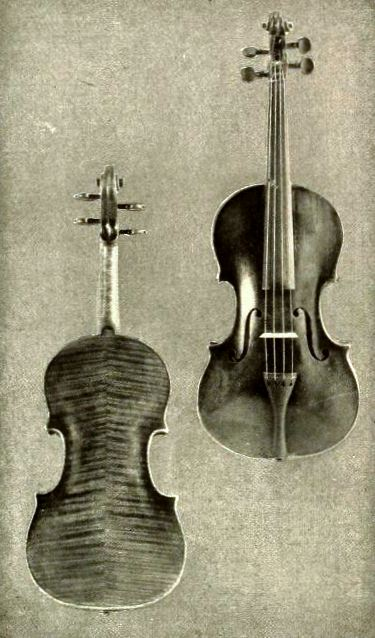
In 2014, Frank Almond, concertmaster of the Milwaukee Symphony Orchestra, was carrying the “Lipinski” Stradivarius — made by Stradivari in 1715 and valued at over $5 million — when he was attacked outside Wisconsin Lutheran College after a performance. A man approached him as he walked to his car, fired a Taser, and stole the violin.
The Milwaukee Police Department, working with the FBI Art Crime Team, traced the Taser from the manufacturer to its purchaser — a Milwaukee barber named Universal Knowledge Allah. With a $100,000 reward offered, police received a tip identifying Salah Salahaydn as the second suspect. Both were arrested within a week.
Nine days after the robbery, Salahaydn led FBI investigators to a Milwaukee home where the violin had been hidden, still in its case, in an attic. The instrument was recovered in excellent condition. Two valuable bows that had been stolen along with it were also recovered. Almond resumed performing with the violin within weeks.
5. Min-Jin Kym’s 1696 Stradivarius — Euston Station, London, 2010

In November 2010, classical violinist Min-Jin Kym stopped at London’s Euston Station for a sandwich on her way to an evening performance. She placed her violin case — containing a 1696 Antonio Stradivari worth approximately £1.2 million — on a chair beside her in a sandwich shop. The case disappeared.
Three thieves — a 40-year-old man and two teenage accomplices — had taken it. They tried, almost immediately, to sell the violin on the secondhand market for £100. The dealer they approached recognized the instrument as too distinctive and unusual to have been legitimately acquired and reported it to police. The thieves were arrested in March 2011, but had hidden the violin somewhere police couldn’t locate it.
For nearly three years, the case was officially open but the violin’s whereabouts were unknown. Kym was emotionally and financially devastated; she had taken out a substantial loan against the instrument. She wrote a memoir about the experience.
In July 2013, police finally recovered the violin in connection with an unrelated investigation. The Chief Inspector on the case made a comment that captures something true about the broader pattern: “I always maintained that its rarity and distinctiveness would make any attempt to sell it extremely difficult, if not futile, because established arts and antiques dealers would easily recognise it as stolen property.” Stradivarius instruments are individually catalogued, individually photographed, and individually known to every serious dealer in the world. Stealing one is, in practice, almost impossible to convert into money.
6. Gidon Kremer’s $3 million Guarneri, Amtrak train, 2004

In 2004, classical violinist Gidon Kremer left his approximately $3 million Guarneri del Gesù violin on an Amtrak train in Baltimore. Kremer realized the loss after exiting the train. Amtrak baggage handlers found the violin still on board at the train’s next stop and the instrument was returned without incident.
The Guarneri family, working in Cremona at roughly the same time as Antonio Stradivari, made some of the most prized violins in classical music history. There are fewer Guarneri instruments in existence than Stradivari instruments — only about 150 — and the very best Guarneri violins (like Niccolò Paganini’s “Cannon” Guarneri) are valued in similar ranges to the most prized Stradivaris.
This case is interesting partly because it didn’t even produce a major news cycle at the time — it was a routine “how is this possible” item. Apparently, leaving a multi-million-dollar violin on a train is something that occasionally just happens to musicians who travel as much as Kremer.
7. The German train Stradivarius, 2016

The most recent in the parade of accidentally-misplaced Stradivariuses involves a violinist whose name was not publicly released. In 2016, a violinist was traveling by train from Mannheim to Saarbrücken in western Germany. She placed her Stradivarius — valued at $2.6 million — in the luggage rack above her seat. She got off the train without it.
German police were alerted immediately. The violin was tracked down on the train as it continued its route, recovered, and returned to its owner. The violinist’s identity was kept private for security reasons.
What this pattern actually means
Reading this list cumulatively, an interesting pattern becomes visible. Lost-instrument stories almost always end well. The reason isn’t divine intervention or particularly attentive police work — it’s that the instruments themselves are uniquely impossible to fence. There are roughly 550 known Stradivarius violins in existence, each individually catalogued, individually photographed in multiple references including the Violin Iconography of Antonio Stradivari, and immediately recognizable to the global community of dealers and luthiers who specialize in the instruments. A stolen Stradivarius can’t be quietly sold to a collector, because no serious collector would buy one without verifying provenance against the Cozio Archive and other reference databases.
This is why the Lipinski case ended with the violin in an attic, the Kym case ended with thieves trying to sell the instrument for £100 (a price that itself signaled the violin was stolen), and the Totenberg “Ames” Stradivarius was held by the thief’s family for 35 years without ever being sold — because there was no realistic way to monetize it.
The accidentally-left-in-a-cab cases end well for a different reason: the cab drivers, when they figure out what they have, almost always return it. Mohammed Khalil in Newark, Dishashi Lukumwena in Queens, the German train staff — none stole the instruments they had every legal practical opportunity to steal. The cumulative honesty rate of taxi drivers and transit staff who have found multi-million-dollar instruments in the back of their vehicles, based on the public record, appears to be effectively 100%.
Whatever else this strange subgenre of news story reveals, it’s a quiet endorsement of two things at once: the remarkable difficulty of converting catalogued cultural property into cash, and the surprisingly consistent honesty of strangers handed an extraordinary opportunity for theft. The musicians who lose these instruments through honest forgetfulness — the tired post-concert mistakes that make up most of the cases — appear to be operating in a system that, against all economic logic, mostly returns what it loses.