

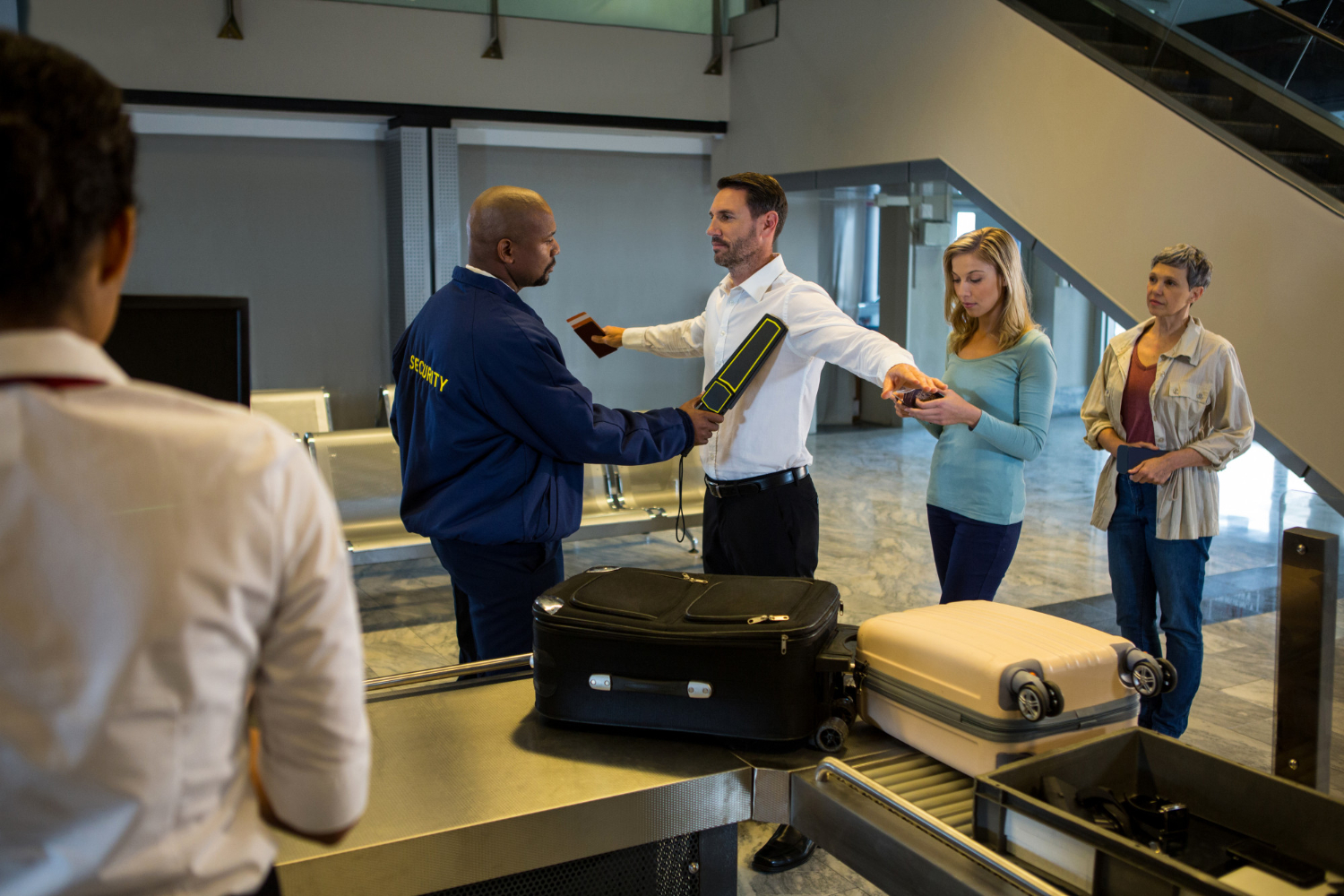
If you flew domestically in 2024, your driver’s license probably worked at the airport. Today, it may not. REAL ID enforcement went live on May 7, 2025, and on February 1, 2026, the TSA introduced a $45 fee — the ConfirmID charge — for any traveler who shows up without a compliant ID. The rules are simple, but the consequences for missing them are not. Here is exactly what every American adult needs to know before checking in for a domestic flight this summer.
1. The Star in the Corner
A REAL ID-compliant driver’s license has a star symbol in the upper-right corner of the card. Some states print a black star, some a gold star, some a star inside a circle, and some a state-specific variation like California’s bear-and-star. Enhanced Driver’s Licenses from Washington, Michigan, Minnesota, New York, and Vermont are also accepted at TSA checkpoints — most of those do not display a star, but instead show “Enhanced” printed at the top of the card and include an embedded RFID chip. If your card shows neither a star nor the word “Enhanced,” it is not REAL ID compliant. Several states issued non-compliant licenses well into 2024, so the date of issue does not guarantee compliance. The TSA has a state-by-state guide at TSA.gov/REAL-ID that lets travelers verify by state.
2. What Happens If You Don’t Have One

Since May 7, 2025, a non-compliant license has no longer been accepted as a stand-alone ID at TSA checkpoints. Travelers in that situation can still fly, but they need a backup. The accepted alternatives include a U.S. passport, a U.S. passport card, a Department of Defense military ID, a Global Entry card, a NEXUS card, a SENTRI card, a FAST card, a tribal-issued photo ID, a permanent resident card, or a foreign government-issued passport. A temporary paper driver’s license is not accepted — even if it was issued two days earlier and the permanent card is en route. The TSA’s complete acceptable-ID list is published on its website and updates periodically. The Atlanta airport, the busiest in the country, reports a 93.5% compliant-ID rate as of early 2026 — meaning roughly one in fifteen travelers is now being directed to secondary screening.
3. The $45 ConfirmID Fee
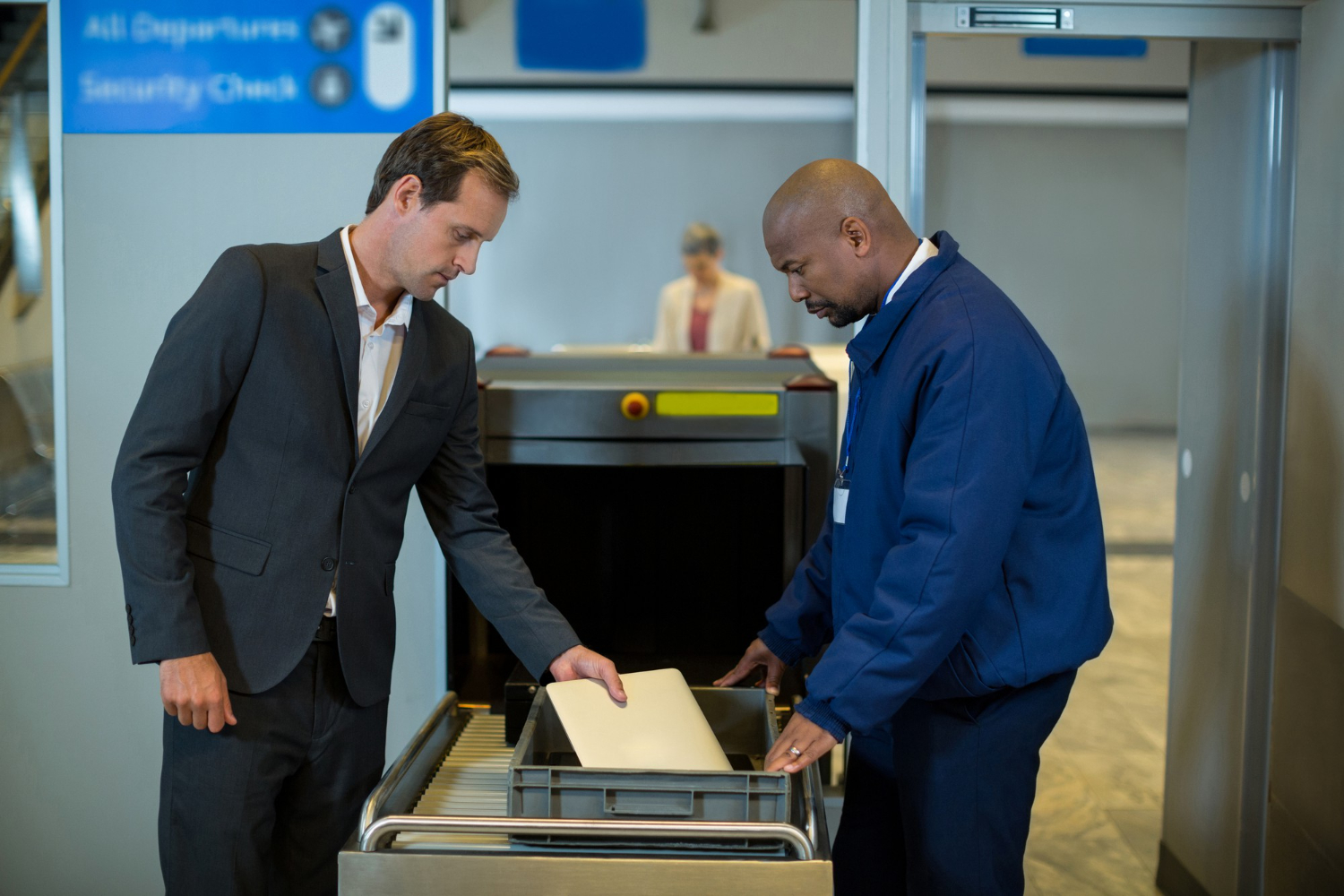
On February 1, 2026, the TSA launched a paid identity-verification option called ConfirmID. Travelers without a compliant ID can pay $45 to undergo biometric or biographic verification at the checkpoint. The verification process compares facial recognition data, fingerprints, or biographic information against federal databases. The receipt issued at the end of verification is valid for a 10-day travel period, allowing for round-trip flights without re-paying. The fee is non-refundable. If verification fails for any reason — outdated database records, an uncommon name, a recent legal name change — there is no guarantee the traveler will be cleared to fly. The fee has been controversial since announcement, with civil liberties groups challenging the cost as a back-door fee for non-compliance. The TSA’s position is that the fee covers the verification process itself, not the right to fly.
4. The Time It Costs You

TSA estimates the ConfirmID process takes 10 to 15 minutes per traveler, with some cases running over 30 minutes when biometric matches require manual review. The agency recommends arriving 2 hours before a domestic flight and 3 hours before international, with additional time for ConfirmID users. The Atlanta airport’s TSA officials have publicly recommended that travelers without compliant ID arrive 30 minutes earlier than the standard recommendation. Some major hub airports — Atlanta, Chicago O’Hare, Dallas-Fort Worth, Denver — have set up dedicated ConfirmID processing stations to keep regular security lanes moving. Others process ConfirmID in-line, which can extend wait times for all travelers in that lane. The TSA has not committed to a specific service-level guarantee, and travelers who miss flights due to ConfirmID delays are not eligible for any compensation.
5. The Kids Are Fine

The TSA does not require passengers under 18 to show ID for domestic flights, provided they are traveling with an adult who can verify their identity. No REAL ID required. No passport required. No ConfirmID fee. This rule has not changed since REAL ID enforcement began. For unaccompanied minors traveling alone, airlines have their own ID procedures — Southwest, American, Delta, and United all require unaccompanied-minor paperwork at check-in, but TSA itself does not check the child’s identification. International travel, including to Canada and Mexico, requires a passport or passport card for all ages. The American Academy of Pediatrics recommends that infants under one year carry birth certificate copies in case of medical emergencies during travel, but this is not a TSA requirement.
6. How to Get a REAL ID

Apply at your state Department of Motor Vehicles or equivalent agency. The required documents are uniform across states under federal regulation: one proof of identity (a certified birth certificate, U.S. passport, or permanent resident card), one proof of Social Security number (the original Social Security card, a W-2 form, or a recent pay stub showing the number), and two proofs of current residential address (utility bills, lease agreements, bank statements, or vehicle registration). All documents must be originals or certified copies — photocopies are not accepted. Plan on an in-person appointment in nearly all states. Wait times for appointments vary by state: California has run 8 to 12 weeks in 2026, Texas has run 4 to 6 weeks, New York has run 6 to 8 weeks. A handful of states still offer walk-in REAL ID processing for residents.
7. The Passport Backup

If your DMV appointment is months away, a U.S. passport will get you through any TSA checkpoint immediately — and it covers international travel as well. Routine passport processing currently runs 4 to 6 weeks through the U.S. State Department, with expedited service available for an additional $60 that brings the timeline to 2 to 3 weeks. Application requires a certified birth certificate, two passport photos, a completed DS-11 form, and the $130 application fee plus $35 execution fee for first-time applicants. A passport card — which costs $30 plus the application fee for first-time applicants — works for domestic flights and for land border crossings to Canada and Mexico, but not for international air travel. Many Americans get both the passport book and the passport card together, since the additional cost is minimal.
8. The Mobile Driver’s License Option

A handful of states — including Arizona, Colorado, Iowa, Maryland, Utah, Mississippi, and Delaware — now issue Mobile Driver’s Licenses, called mDLs, that the TSA accepts at certain participating airports. The mDL must be based on a REAL ID-compliant credential, which means it cannot be used to circumvent the underlying REAL ID requirement. The list of approved states and approved airports changes periodically. As of early 2026, mDL acceptance has been confirmed at airports in Phoenix, Denver, Baltimore, Salt Lake City, and Atlanta. Travelers using an mDL should check the TSA’s Participating States and Eligible Digital IDs page before relying on phone-based ID at the checkpoint — and they should still carry a physical license or passport as backup, since phone batteries die and TSA systems occasionally fail to read the digital credential.
9. What Counts as an Expired ID

The TSA accepts expired driver’s licenses, expired U.S. passports, and expired Global Entry cards up to two years past the expiration date for domestic flights. This grace period applies only to the listed acceptable document types — it does not extend to non-REAL ID licenses or temporary cards. If your expired license was already non-REAL-ID-compliant, expiration adds nothing to its usability. For international travel, the rule changes: most foreign destinations require at least six months of validity remaining on a U.S. passport from the date of entry. Some destinations, including South Africa and several South American countries, require blank visa pages as well. The TSA’s two-year grace period is intended to accommodate travelers who experience DMV processing delays, not to be used as a workaround for ID compliance.
10. Pre-Pay Online to Save Time

TSA strongly encourages travelers who know they will lack compliant ID to pre-pay the $45 ConfirmID fee online before arriving at the airport. The online portal, accessible through TSA.gov, allows for advance identity verification through fingerprint upload, facial recognition, or biographic data submission. As of early 2026, the online portal is still being rolled out across all U.S. airports, and the federal interagency cooperation needed to make instant background checks possible at every airport is ongoing. Travelers who pre-pay receive an email confirmation valid for ten days of travel and can show that confirmation directly to the TSA officer at the checkpoint, bypassing the in-person verification process and the long wait at airport ConfirmID stations. The system has been most reliable at the largest hub airports.
11. What’s Coming Next

The TSA has announced that ConfirmID will eventually expand to include biometric facial-recognition verification at select airports, with the eventual goal of allowing pre-enrolled travelers to skip the entire ID-check process by walking past a camera. Civil liberties groups, including the ACLU and the Electronic Frontier Foundation, have pushed back against the expansion. The agency has not committed to a timeline for full biometric rollout, though TSA Administrator David Pekoske said at a January 2026 industry conference that pilots are running at three major airports. For now, ConfirmID at most checkpoints remains a manual identity-document and database-check process. The agency has emphasized that biometric verification will be optional and that travelers can still opt for traditional ID checks indefinitely.
12. The Simple Rule

If you do not see a star or the word “Enhanced” on your driver’s license, bring your passport to every domestic flight. The single most expensive mistake at TSA in 2026 is assuming yesterday’s ID still works. The single cheapest fix is checking the upper corner of your wallet before you leave the house. A passport will cover you for both domestic flights and international travel. A passport card costs less and works for domestic flights and Canadian and Mexican land crossings. The DMV appointment will eventually come through. The $45 ConfirmID fee exists for the genuine emergency — the traveler who finds out at the gate that their license is non-compliant. It is not intended to be the routine workflow for unprepared travelers, and the consequences of relying on it can include missing the flight entirely.
