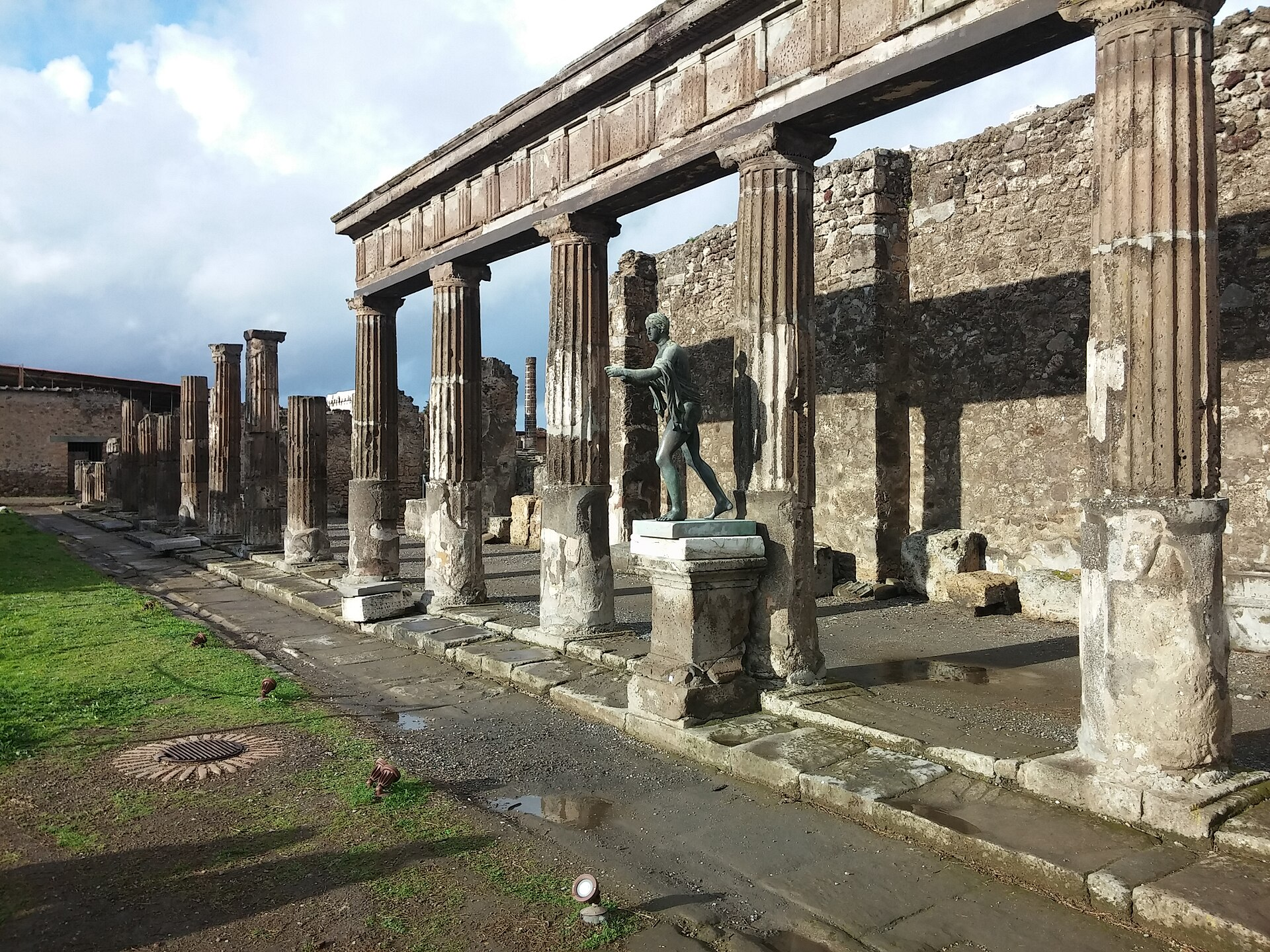
For almost 300 years, the excavation of Pompeii has stayed close to eye level, and for good reason. The ground floors of the buried city offer an unrivaled snapshot of Roman life: colonnaded gardens, mosaic-floored bathhouses, frescoed dining rooms, even loaves of bread left in ovens. There has always been more than enough to explore without worrying about what stood above. But the people of Pompeii did not live only on the ground floor, and a recent discovery has begun to reveal the parts of the city that the eruption erased.
It started with a staircase that appeared to lead nowhere. In a recently excavated residence known as the House of Thiasus, archaeologists found a monumental stone stairway that, at first glance, seemed to climb toward empty air. The lower rooms it connected to were relatively simple, which made the grandeur of the staircase itself puzzling. Why build such an impressive set of steps to reach modest quarters? The answer, it turned out, lay in the floors that no longer existed.
Looking Up Instead of Down
The key to the mystery came from a project with an apt name: POMPEII RESET, a collaboration between the Archaeological Park of Pompeii and Humboldt University in Berlin. Rather than excavate further, the team set out to reconstruct what had been lost from the upper levels of the city’s grandest homes.
To do this, they turned to digital archaeology. Using LiDAR laser scanning and detailed close-range photography, researchers created precise three-dimensional models of the structures that survived. Then they looked for clues to what had once risen above: staircases that stopped abruptly, sockets where wooden beams had been anchored, severed supports, and alignments in the surviving walls. From these telltale signs, they extended their digital models upward, reconstructing the vanished stories with what they described as careful approximation and plausibility.
The picture that emerged changed the understanding of how wealthy Romans in Pompeii actually lived. That puzzling staircase in the House of Thiasus, it turned out, had led to a tower.
Like our content? Follow us for more.
The Towers of Pompeii’s Elite
The reconstructions suggest that the grandest houses in Pompeii were topped with towers reaching as high as roughly 40 feet above the villa. These were not mere storage spaces or cramped servants’ quarters, as conventional wisdom had long assumed. Within the reconstructed tower of the House of Thiasus, researchers identified room for a wooden staircase and an upper dining room ringed with windows.
From these elevated rooms, the wealthy occupants could look out across the rooftops of the city, gaze over the Bay of Naples, and watch the night sky from a vantage point that no longer exists. The contrast was striking: relatively plain furnishings on the lower levels, reached by a monumental external staircase that announced status, leading up to elegant, representative spaces high above the street. The towers dominated the skyline and served as visible symbols of their owners’ power, recognizable even to citizens who would never be invited inside.
The finding corrects a long-held assumption. For generations, scholars treated the upper floors of Pompeian homes as simple, utilitarian spaces. The new evidence suggests that high-level rooms could be just as refined as those below, reshaping the understanding of domestic life and social display in the ancient city.
Why a Digital Approach
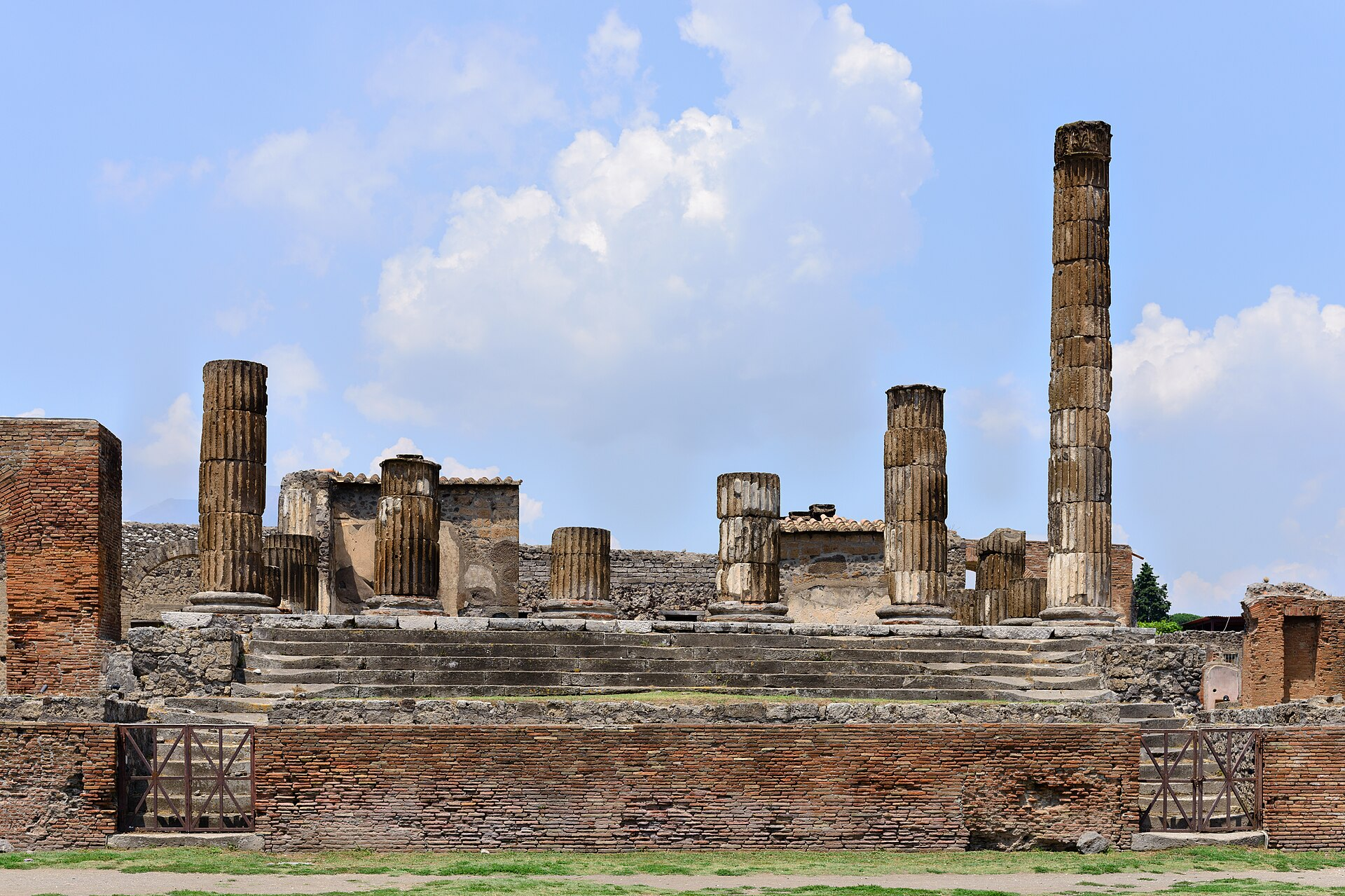
The decision to reconstruct rather than excavate was deliberate, and it reflects a broader shift in how Pompeii is being studied. The project began after a researcher, visiting the site with students, became inspired by the park’s preservation efforts and proposed a way to capture knowledge about the city without disturbing its fragile remains. With ruins exposed to fluctuating weather and a changing climate, non-invasive methods help protect what survives while still expanding what we know.
The park’s director has emphasized that excavating all of Pompeii is not the goal. A significant portion of the city remains deliberately unexcavated, left for future generations and future technologies. Digital reconstruction offers a way to keep learning without spending the site’s finite, irreplaceable material. As the researchers put it, assembling the data into a 3D model lets them develop informed hypotheses that help us understand the experience, the spaces, and the society of the ancient world.
What Visitors Can See Today
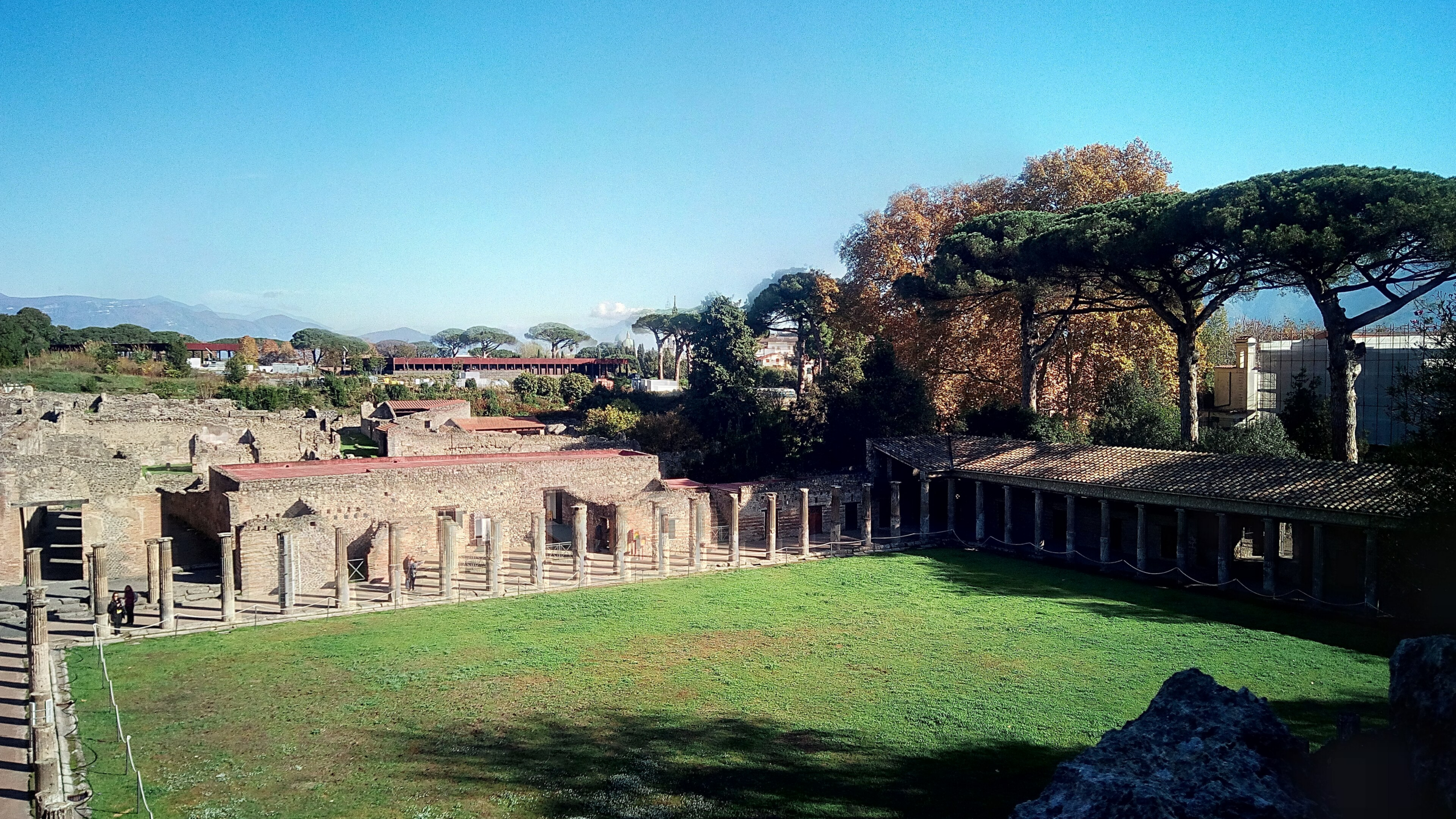
For travelers planning a visit, the discovery adds a new dimension to walking the site, even though the towers themselves no longer stand. The House of Thiasus and its surroundings are part of the ongoing work in the less-visited reaches of the archaeological park, where excavation and study continue. The most rewarding way to experience Pompeii now is to arrive with the upper city in mind: as you move through the streets, picture the towers that once rose above the grandest homes, the window-lined rooms that caught the breeze off the bay, and the residents who climbed to them for the view.
The park has increasingly embraced technology to help visitors imagine what is gone, and the digital reconstructions emerging from projects like this one point toward a future in which a phone or headset might let you see a vanished tower rise back into place as you stand beneath it. Practical tips for a visit remain straightforward: come early to beat both the heat and the crowds, wear sturdy shoes for the uneven ancient paving, bring water and sun protection in summer, and allow far more time than you expect, because the site is vast. A guide or a good audio tour pays for itself many times over, turning rows of ruins into a legible, living city.
The journal article laid out the reasoning in detail, presenting the digital architecture as a set of informed hypotheses rather than fixed conclusions, and the team was careful to distinguish between what the surviving evidence proves and what it merely suggests. That transparency matters, because reconstructing a vanished building always involves judgment calls, and a responsible project makes clear where certainty ends and approximation begins.
A City With Layers Still to Reveal
The story of Pompeii’s upper floors is also a reminder that the city’s history did not end with the eruption. Other recent work has shown that some people returned to the ruined city afterward, building among the buried upper stories and digging down into former ground floors to create cellars where they installed ovens and mills. One staircase, built from repurposed marble fragments and local volcanic stone, showed how these returnees adapted to a transformed landscape, entering buildings from a much higher level than had existed before the disaster. That later settlement was eventually abandoned after another eruption centuries on.
For travelers, the practical takeaway is that Pompeii is far from a finished story. The site visitors walk through today represents only part of what once stood, and the parts now being reconstructed digitally, the towers, the upper dining rooms, the lost skyline, deepen the sense of a real, three-dimensional city rather than a flat field of ruins. Standing among the excavated streets, it is worth imagining the towers that once rose overhead and the residents who climbed them to watch the sun set over the bay. Nearly two thousand years later, and after three centuries of digging, Pompeii is still finding new ways to surprise the people who study it.