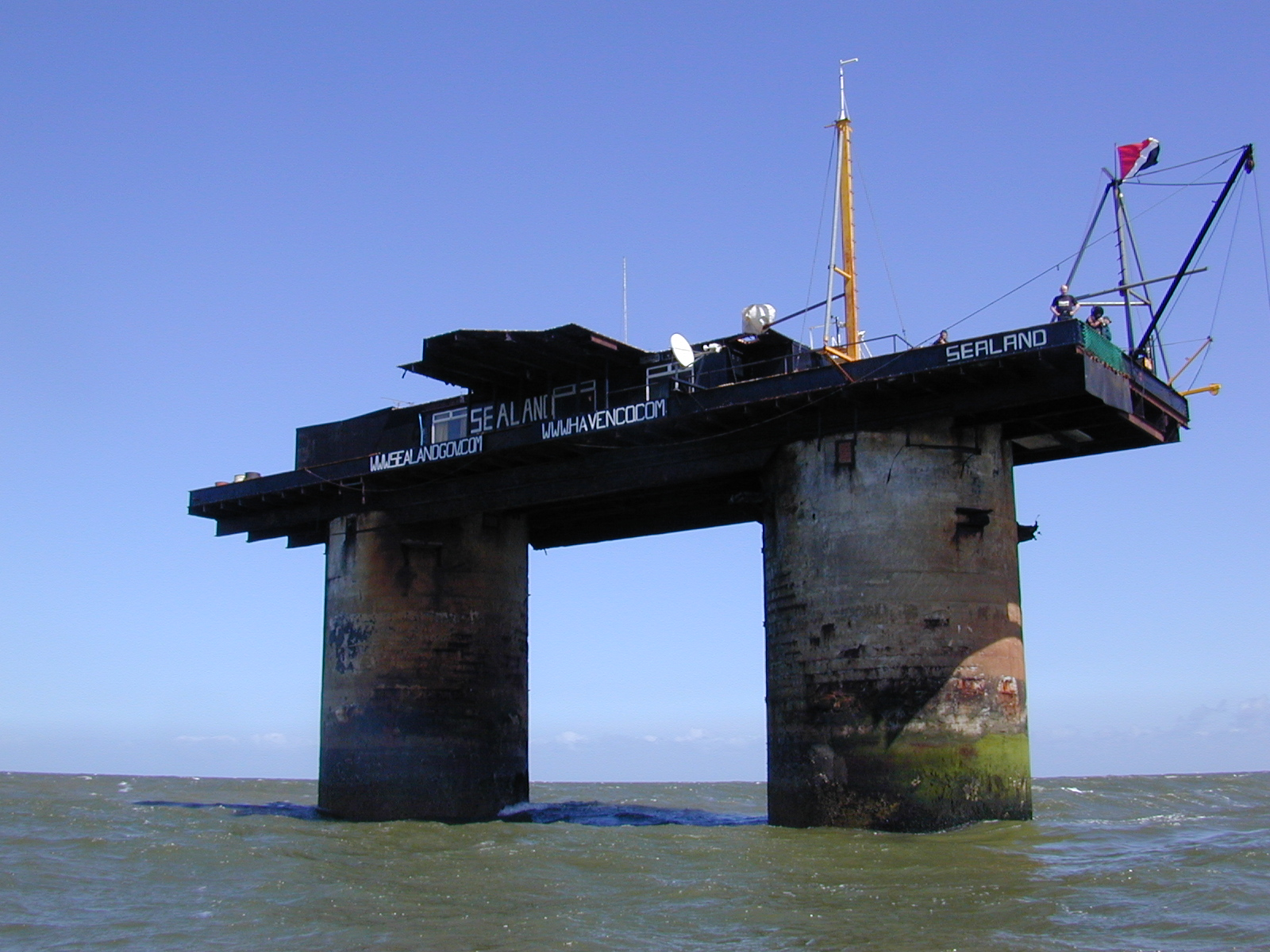
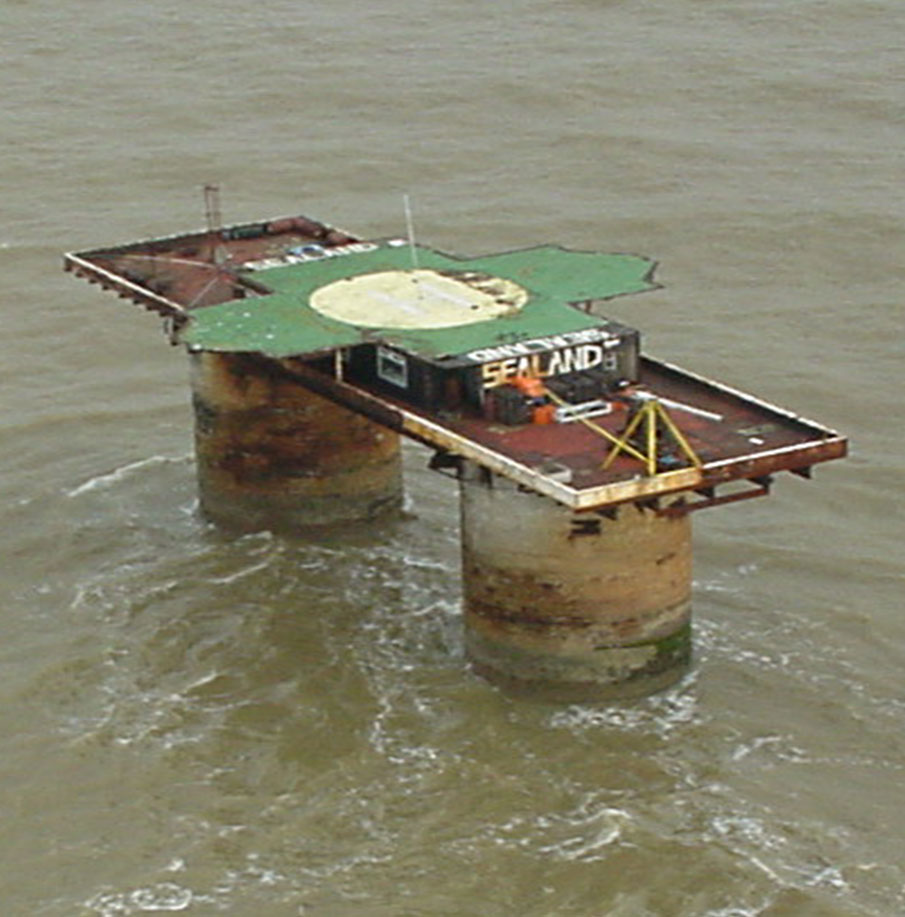
In the gray waters of the North Sea, a few miles off the coast of Suffolk in England, stands one of the strangest sovereign claims in the world: a self-declared country perched on a rusting steel platform barely larger than two tennis courts. It has a flag, a constitution, a royal family, its own passports, stamps, and coins, and a national motto — “From the Sea, Freedom.” It has been “invaded,” has repelled its attackers by force, and has been ruled by the same family for well over half a century. It is the Principality of Sealand, and it is the world’s most famous micronation.
Sealand is the kind of story that sounds invented — a private country the size of a small building, founded by a swashbuckling ex-army officer, defended with firearms, and passed down as a hereditary principality. But it is entirely real, thoroughly documented, and truly one of the odder ongoing sagas in modern history. Its improbable existence turns on pirate radio, a legal loophole in international waters, and the sheer stubbornness of one family who declared themselves royalty and simply refused to leave. Here is how a wartime gun platform became a nation.
A Fortress Built for War
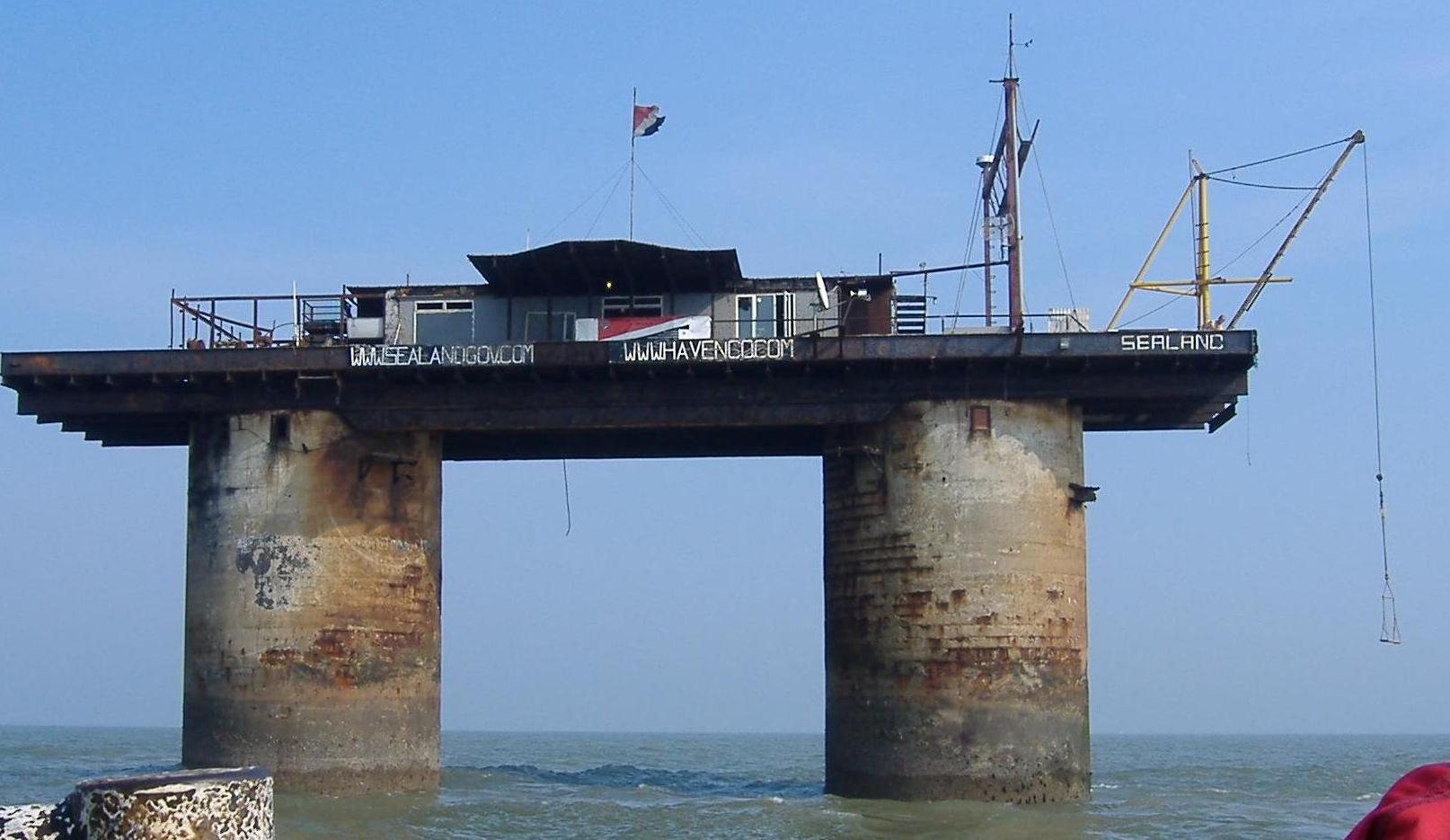
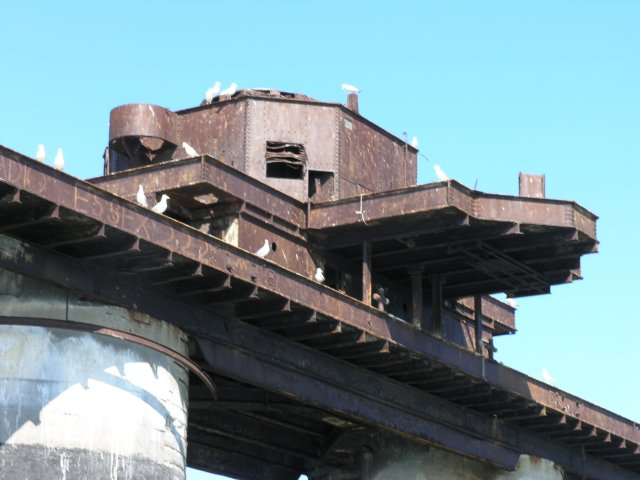
Sealand’s story begins, like so many strange stories, in the Second World War. In the early 1940s, Britain constructed a series of offshore forts in the North Sea to help defend against German aircraft and naval attacks. One of these, known as Roughs Tower or HM Fort Roughs, was a utilitarian structure: two hollow concrete towers supporting a steel platform, floated out on a barge and sunk onto a sandbar, where it was manned by gun crews watching the water for the enemy.
Crucially, Roughs Tower was positioned in international waters, beyond the limit of Britain’s territorial sea as it stood at the time. During the war this was simply a matter of defensive positioning. After the war, like the other sea forts, Roughs Tower was decommissioned and abandoned — an expensive, obsolete hunk of concrete and steel left to rust in the North Sea, of no apparent use to anyone. That combination of features — abandoned, habitable, and technically outside British jurisdiction — would prove to be exactly what one enterprising man was looking for.
Like our content? Follow us for more.
Pirate Radio and a Legal Loophole
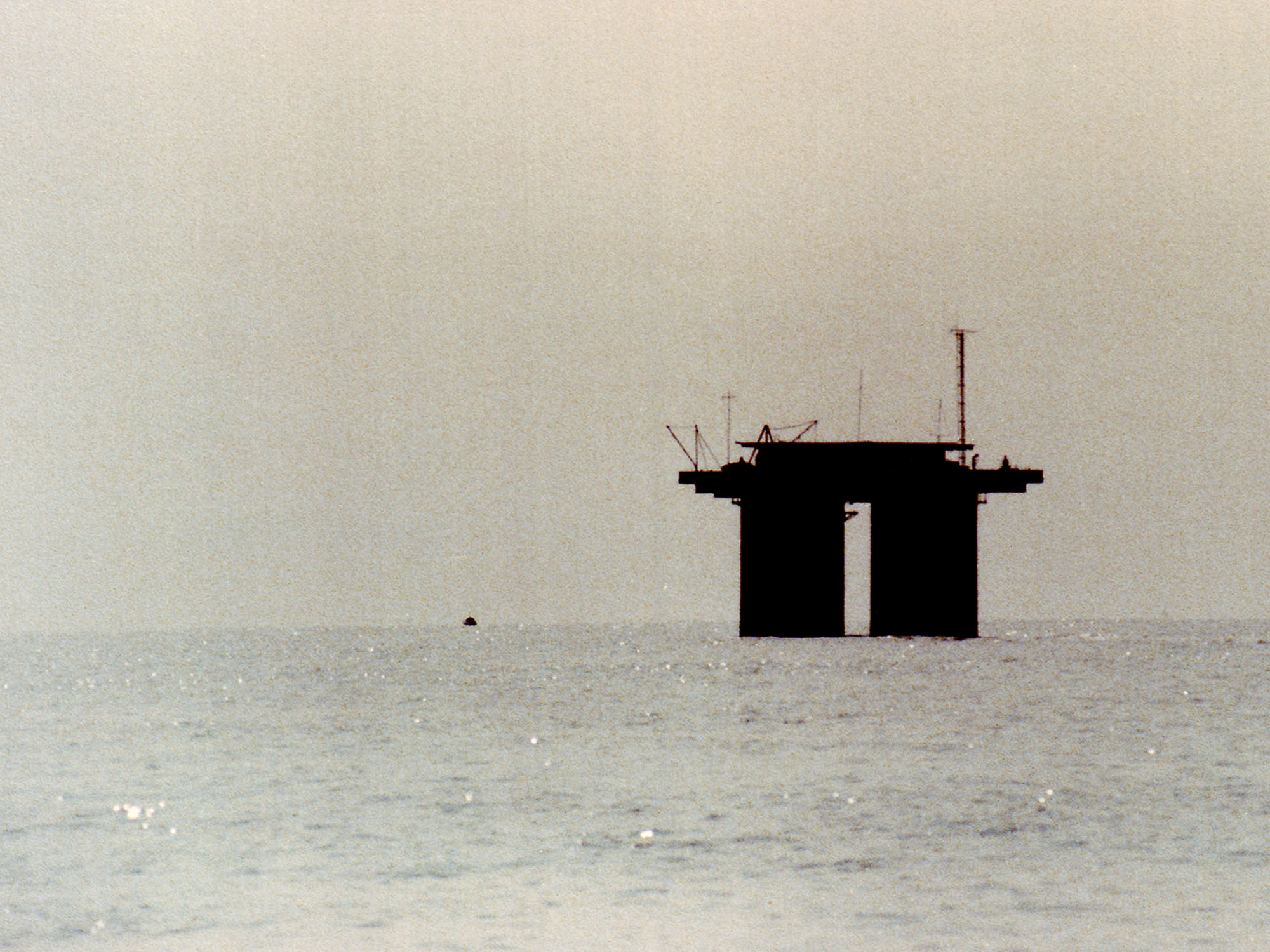
The path to nationhood ran through pirate radio. In the 1960s, Britain’s airwaves were tightly controlled, and a generation of unlicensed “pirate” radio stations sprang up to broadcast pop music to a public tired of the official offerings. Because broadcasting from within Britain was illegal, these stations operated from ships and, tellingly, from the abandoned wartime sea forts sitting just outside territorial waters.
One of these pirate broadcasters was a former British Army major named Paddy Roy Bates, who ran a station called Radio Essex from one of the forts. When authorities cracked down and made his position difficult, Bates looked for a fort beyond Britain’s reach, and Roughs Tower — sitting in international waters — fit the bill. In 1967, Bates occupied Roughs Tower, ejecting a rival group of pirate broadcasters who were also using it. His original intention was to broadcast his own station from the platform, though by most accounts he never actually got around to broadcasting from it.
Instead, Bates had a more audacious idea. On September 2, 1967 — chosen because it was his wife Joan’s birthday — Bates declared Roughs Tower to be an independent sovereign state: the Principality of Sealand. He crowned himself Prince Roy and Joan as Princess Joan, in a gesture that was as much romantic as political. It would have been easy to dismiss the whole thing as a stunt. But Bates was entirely serious, and what he did next is why Sealand still exists.
Building a Nation
Bates did the things that founders of nations do. He wrote a constitution for Sealand. He designed a national flag and a coat of arms. He issued passports, printed postage stamps, and minted currency bearing his wife’s likeness. He adopted a national motto — E Mare, Libertas, meaning “From the Sea, Freedom” — and declared a national identity. He and his family moved onto the platform and prepared to defend their claim. In every symbolic and administrative respect, Bates behaved as though Sealand were a real country, and by acting the part consistently for years, he made the claim harder and harder to simply wave away.
The critical moment came in 1968. British workmen entered what Bates claimed were Sealand’s territorial waters to service a navigational buoy near the platform, and Bates’s son Michael reportedly fired warning shots from the fort. Because Bates was still a British citizen, he was charged in a British court over the firearms. But the case produced the loophole that made Sealand famous: the court ruled that it did not have jurisdiction over the platform, because Roughs Tower lay outside British territorial waters at the time. It was not a formal recognition of Sealand as a country — no nation has ever officially recognized Sealand — but it was a British court effectively declining to exercise authority over the fort, which the Bates family seized upon as vindication of their sovereignty. It’s the closest thing to legal legitimacy Sealand has ever had, and it was enough.
The Invasion
Sealand’s most extraordinary chapter came in 1978, and it reads like the plot of a heist film. While Prince Roy and Princess Joan were away, a group associated with a business dispute — including hired mercenaries — staged an armed assault on the platform, reportedly arriving by helicopter and boat. They took control of Sealand and held Roy’s son Michael captive.
The Bates family’s response was not to call the authorities but to mount a counter-attack. Roy Bates gathered support, and the family retook the fortress by force in a helicopter-borne assault, overpowering the invaders and reclaiming their nation. In the aftermath, they held one of the attackers — who held a Sealand passport Bates had issued — as a prisoner, effectively charging him with treason against Sealand. The episode escalated into a real minor international incident, as the home country of some of the captured men had to send a diplomat to negotiate the release of its citizen from a self-declared principality on a platform in the North Sea. The Bates family later pointed to this diplomatic contact as further evidence of their de facto sovereignty. However one interprets it, the fact remains: a family defended their homemade country against an armed coup and won.
Sealand Today
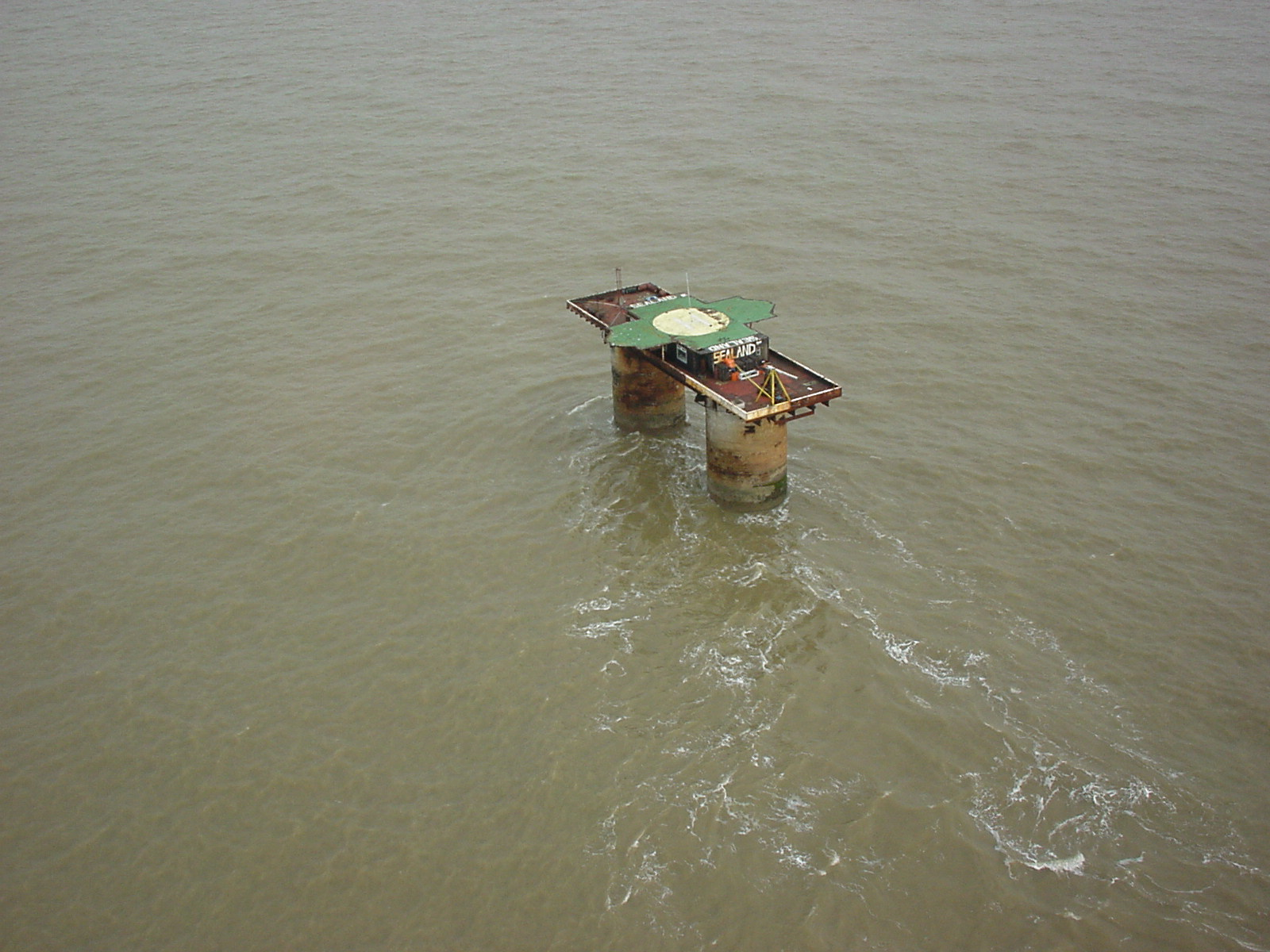
The Principality of Sealand has endured every challenge to its existence, including the moment in 1987 when Britain extended its territorial waters, a change that now encompasses the location of the platform. Sealand has continued to assert its sovereignty regardless, and the British government has, for its part, largely left the peculiar little “nation” alone rather than force a confrontation over a rusting fort occupied by a stubborn family.
Prince Roy Bates has since passed away, and the principality has been inherited by his descendants, continuing the royal line he founded — a hereditary micronation now into its second generation of rule. Sealand has stayed in the public eye through various ventures over the years, including an early-2000s attempt to establish a “data haven” on the platform, and a brisk business selling Sealand titles, souvenirs, passports, and the novelty of association with the world’s most famous micronation, which is followed by a large online community around the world.
Can You Visit?
For the curious traveler, Sealand is more an idea to appreciate than a destination to visit. It is a private platform with a permanent population that has often numbered just one or a handful of people, and it is not a place you can casually drop by — there is no dock, no tourism infrastructure, and access is entirely at the discretion of the Bates family, reachable only by boat or helicopter in often rough seas. In practice, almost no one visits.
What you can do is engage with Sealand from afar, which is how nearly all of its “citizens” and fans do. The principality sells novelty titles of nobility, letting you become, for a modest sum, a Lord or Lady of Sealand — a popular gift and a truly amusing conversation piece. It sells stamps, coins, and merchandise. And it maintains a presence that keeps the story alive for a global audience delighted by the sheer audacity of the whole enterprise. Sealand’s real territory, in a sense, is the imagination — the appeal of a place that insists, against all logic and authority, on being its own country.
The Country That Refused Not to Exist
Sealand endures because it sits at a fascinating fault line in how we think about nations. What actually makes a country a country? Sealand has a government, a flag, a constitution, currency, passports, a defined territory, and a population, and it has defended that territory by force and governed it continuously for decades. What it lacks is recognition — no other state acknowledges it — and, by most legal standards, that recognition is what separates a real country from an elaborate claim. Sealand is the ultimate test case, a place that has every trapping of sovereignty except the one that counts.
But that’s precisely what makes it wonderful. Sealand is a monument to human audacity — to the idea that a person can look at an abandoned platform in the sea, decide it’s a kingdom, crown himself its prince, and then, through sheer persistence and the occasional helicopter assault, make the claim stick for over half a century. It will probably never be a recognized nation. It doesn’t really need to be. It has already achieved something rarer: it made the whole world wonder, even briefly, whether a rusting gun platform the size of two tennis courts might just be a country after all. And for the Bates family, that has always been the entire point.
Like our content? Follow us for more.