

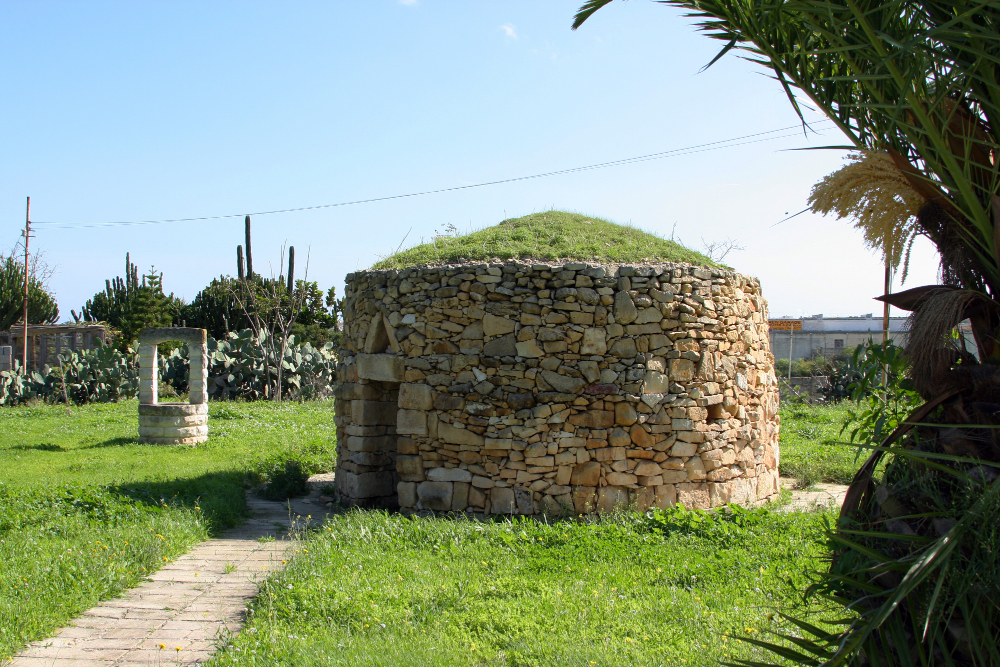
There is a type of building standing in fields, farmyards and the grounds of old houses that most people pass without knowing what it was for.
It is frequently round or square, frequently of stone or brick, with a small opening near the top and a door low down. From outside it could be a storehouse, a tower or a folly.
Inside, the walls are lined from floor almost to roof with small recesses, row upon row, sometimes numbering many hundreds.
Each recess was a nest. The building was a farm for pigeons — a way of producing a steady supply of meat and eggs from birds that fed themselves — and for a long period it was one of the most valuable structures on an estate.
There is a scale point worth noting first. Dovecotes range from small boxes set into the gable of a barn, holding a few dozen pairs, to free-standing towers holding many hundreds, and the difference usually reflects the size and wealth of the estate.
The small versions were far more common; the large towers are the ones that survived conspicuously.
Why Pigeons
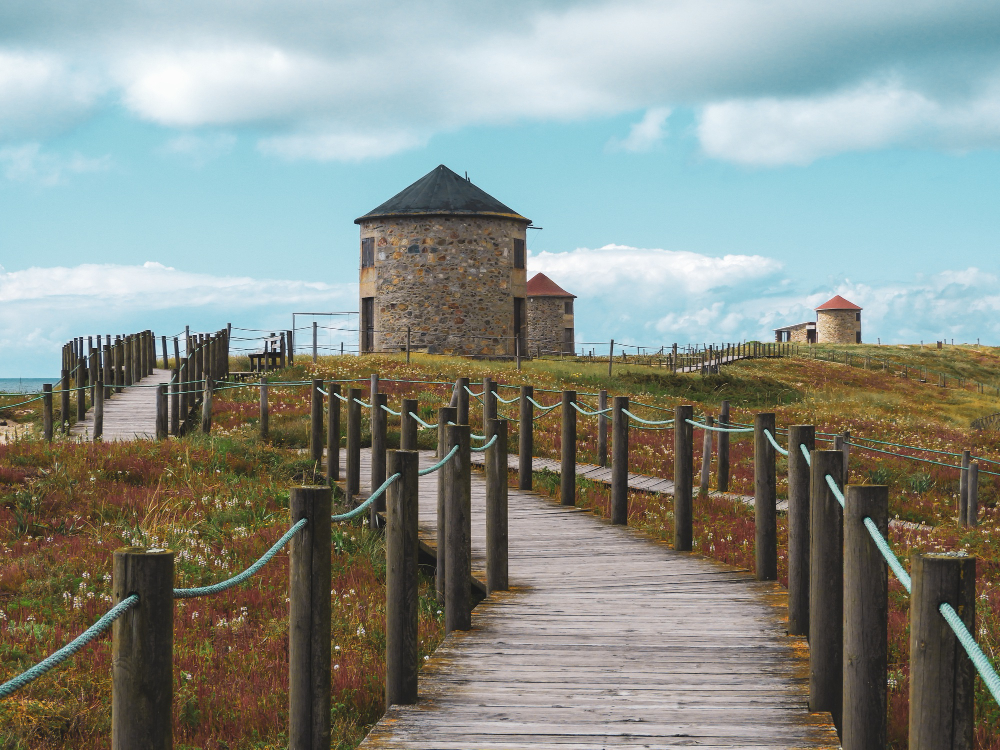
The choice of bird follows from their unusual biology.
Pigeons breed repeatedly through much of the year rather than in a single season, raising a pair of young many times over.
The young are fed by both parents on a secretion produced in the crop, which means they grow quickly and do not depend on seasonal insect supplies.
The birds forage over the surrounding countryside and return to the same site to roost and breed, so they require little feeding by their owners.
They are strongly attached to their home building, which is the property that makes a dovecote possible — the birds come back of their own accord.
The result was a supply of fresh meat available through the year at very little cost, at a time when fresh meat outside the autumn slaughter was otherwise scarce.
There is a numbers point worth adding. A pair of pigeons could raise several broods in a year, so a building with hundreds of nest holes could produce a very large number of young birds annually from a population that largely fed itself.
Like our content? Follow us for more.
How the Building Worked
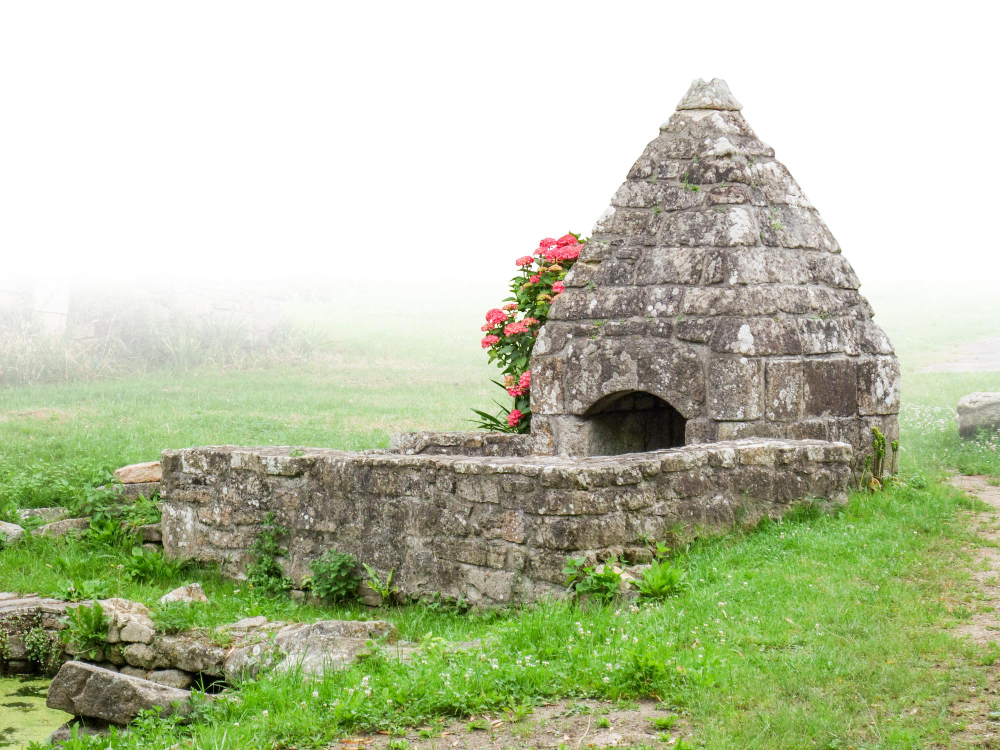
Every feature of a dovecote served either the birds or the collection of their young.
The nesting recesses were sized for a pair and their young, and set in regular rows so that each could be reached.
The opening at the top, frequently in a small louvred structure on the roof, let the birds in and out while keeping out rain and larger predators.
The walls were thick and the entrance low and small, which kept out the animals that would otherwise raid the nests.
The smooth outer walls, sometimes with a projecting ledge partway up, made it difficult for climbing animals to reach the top.
And in the larger examples, a central post supporting a rotating ladder allowed a person to reach every nest in turn by walking around the interior — a piece of engineering that made harvesting hundreds of nests practical.
There is a seasonal point worth including. Because pigeons bred through much of the year, the dovecote supplied fresh meat in the months when other sources were scarce, which was its principal advantage over keeping other livestock.
Salted and preserved meat dominated those months otherwise.
What It Produced
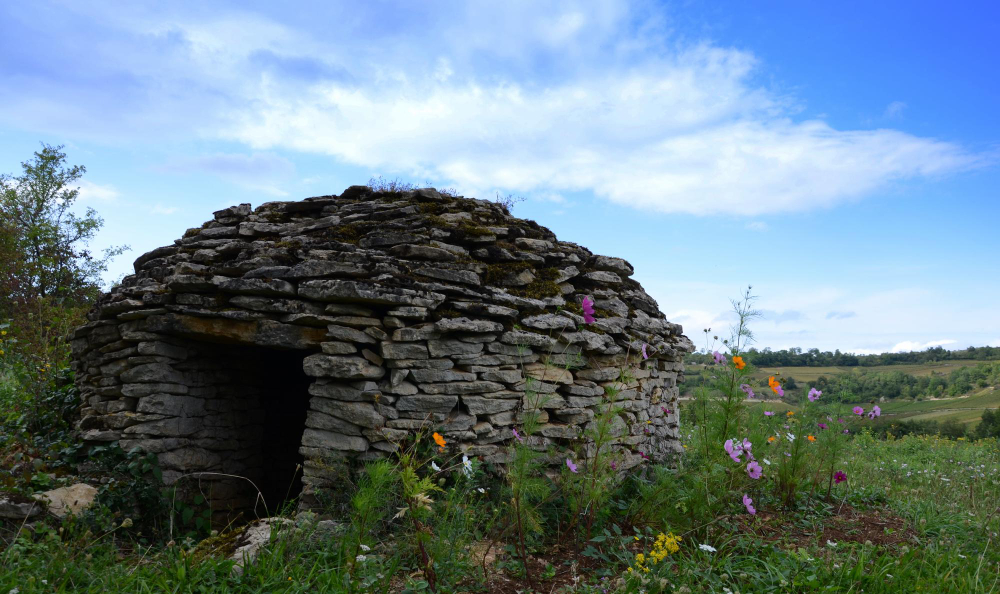
The yield went well beyond meat.
The young birds were taken just before they could fly, when they were plump and tender, and this was the principal product.
Eggs were collected as well.
The droppings accumulated on the floor in considerable quantity and were a valuable fertiliser, rich in nitrogen, used on gardens and fields.
That manure also had an industrial use for a period: it was a source of material used in the manufacture of gunpowder, which gave dovecotes an unexpected strategic value in some places.
So a single building produced food, fertiliser and a raw material, from birds that largely fed themselves elsewhere.
There is a labour point worth adding. Collecting young birds from hundreds of nests was regular work, and on larger estates somebody was responsible for the dovecote as part of their duties.
Who Was Allowed One
The ownership rules are what made dovecotes contentious.
In many places the right to build and keep a dovecote was restricted — to lords of the manor, to religious institutions, or to landowners above a certain standing.
The birds did not respect property boundaries. They fed on the grain and seed of the surrounding farms, including the fields of people who had no right to keep pigeons of their own and could not legally kill the birds eating their crops.
That meant ordinary farmers were in effect feeding their landlord’s birds, which was a persistent and bitter grievance.
In some places the resentment was strong enough that the privilege became a symbol of wider inequality, and its abolition was associated with broader changes in the rights attached to land.
The buildings themselves outlasted the rules, which is why a structure that was once a symbol of privilege may now stand, unnoticed, in a public park or a housing estate.
What the Numbers Meant
The scale of a dovecote was a direct statement of wealth, and in some places it was regulated.
A large building with many hundreds of nest holes could support a very substantial population of birds, which fed across a correspondingly large area of surrounding land.
In some places the permitted size of a dovecote was tied to the amount of land the owner held, on the reasoning that the birds should feed primarily on the owner’s own fields rather than on everybody else’s.
That rule was difficult to enforce, since pigeons do not recognise boundaries, and it did little to reduce the resentment of neighbouring farmers.
Counting the nest holes in a surviving dovecote therefore gives an approximate measure of the estate it served and, indirectly, of the owner’s standing.
Some estates had several dovecotes, and some very large examples were built as much to display status as to produce food.
That display element is why some dovecotes are architecturally elaborate far beyond their function, with decorated roofs, lanterns and fine stonework on a building whose purpose was to house birds.
Why They Declined
The decline came from changes in farming and food rather than from any single event.
Improvements in the winter feeding of livestock meant fresh meat was available through the year from other sources, removing the pigeon’s main advantage.
Changes in agriculture and in the value of crops made the damage done by large flocks less tolerable.
The legal privileges attached to dovecotes were abolished or lapsed in many places.
And tastes changed, so that pigeon moved from a staple to an occasional dish.
Many buildings were converted to other uses — storage, housing, garden features — and many were demolished; those that survive do so largely because they were well built and inexpensive to leave standing.
There is a survival point worth adding. Because a dovecote is a compact, solid, single-purpose structure with no internal floors to rot, it tends to survive neglect far better than barns or houses of the same age.
That is why some of the oldest standing agricultural buildings in a district are frequently dovecotes.
There is a use point worth adding. A surviving dovecote may still house birds, since pigeons readily occupy an old building with suitable holes, which can make it easy to understand what the structure was for.
Reading One
A surviving dovecote rewards a close look.
The number of nesting recesses indicates the scale of the operation and, indirectly, the status of the owner, since larger buildings belonged to wealthier estates.
The shape and material reflect the period and the region — early examples are frequently round and of stone, later ones square or polygonal and of brick.
A central pivot or its socket in the floor indicates a rotating ladder.
The position — near a manor house, beside a church, in a farmyard — indicates who owned it.
And the entrance at the top, whether still open or blocked, shows whether the building was still in use as a dovecote when it was last altered.
Which makes these unassuming towers unusually informative buildings. Each one records a way of producing food, a set of rights about who could do so, and a long-running grievance between those who kept the birds and those whose crops fed them.
Which is a reminder that the most ordinary agricultural buildings can carry a great deal of history. A round stone tower in a field looks like nothing in particular, and it once stood for who was permitted to produce food and who was obliged to feed it.
Like our content? Follow us for more.
