

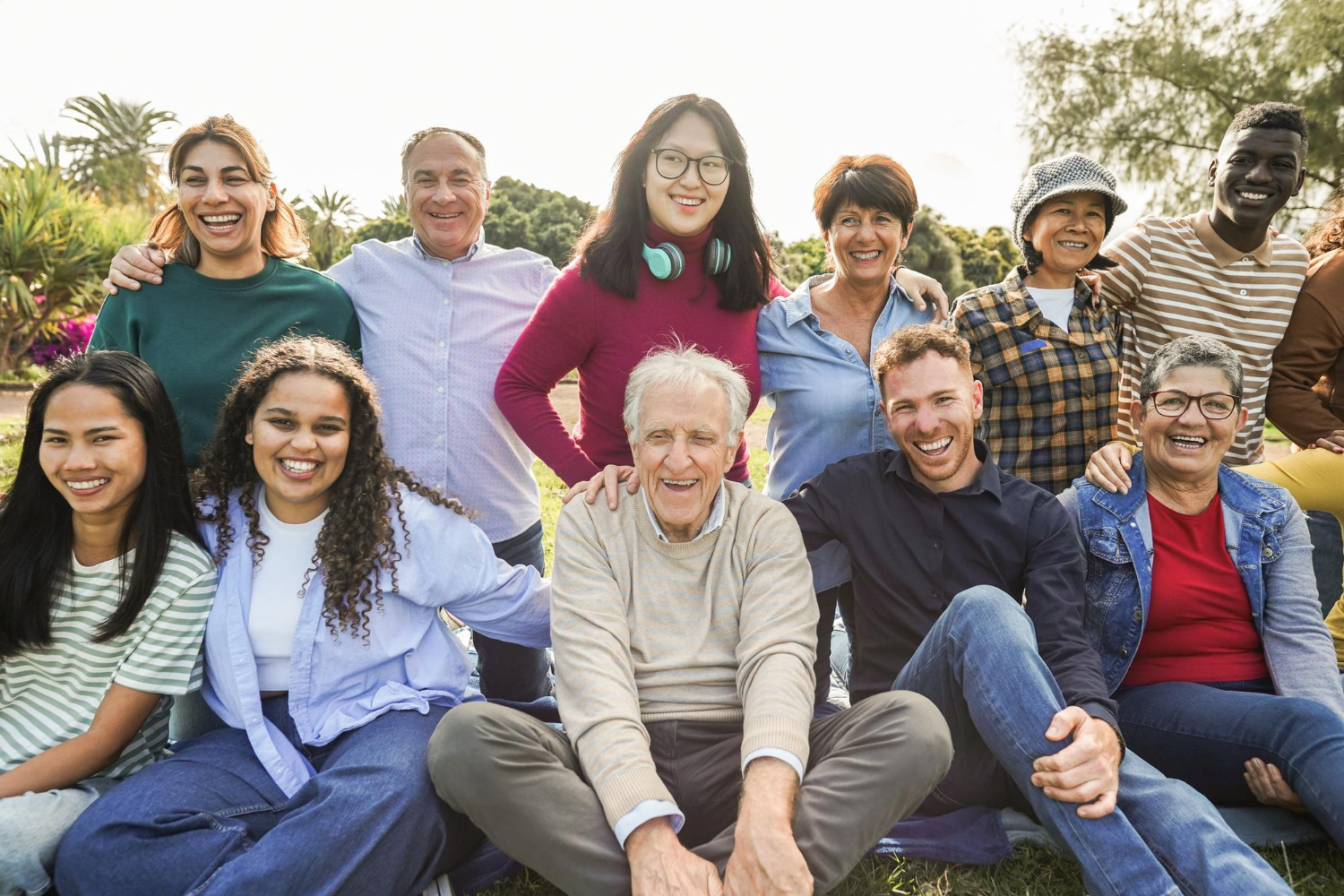
“You’re only as old as you feel,” the saying goes, but a recent survey decided to pin down an actual number, and the results have sparked plenty of conversation. Polling thousands of people across different generations, the study asked at what age a person officially becomes “old,” along with when various age-related changes are thought to set in. The headline finding, that Gen Z considers 62 to be the threshold of old age, is just the start. The full results reveal a fascinating, and sometimes anxious, picture of how young people view aging, and how those views compare with reality. Here is what the survey found and what it really tells us.
The Magic Number: 62
According to the poll of 4,000 people, members of Gen Z, broadly those aged roughly 18 to 29, identified 62 as the age at which a person becomes officially “old.” For anyone approaching or past that milestone, it might come as a slight shock to be filed under “old” by the younger generation, especially at a time when many people in their sixties are healthier, more active, and more engaged than ever.
The figure is striking partly because it sits well below traditional retirement age in many countries and far below modern life expectancy. With people routinely living into their eighties and beyond, and staying active for much longer, calling 62 “old” reflects a perception that does not quite match the lived reality of aging today. It says more about youthful viewpoint than about any biological fact.
Like our content? Follow us for more.
Looking “Old” Comes Even Earlier
If 62 seems young to be labeled old, some of the survey’s other findings cut even closer. The poll suggested that, in the eyes of younger respondents, people stop looking good in current fashions at around 56, a notion captured by the old-fashioned and rather unkind phrase “mutton dressed as lamb.” In other words, the perception of aging in terms of style and appearance kicks in years before the official “old” threshold.
Other data points reinforced the pattern. A significant share of Gen Z respondents associated being over 50 with struggling to keep up with technology, a stereotype that sits awkwardly alongside the reality that many over-50s are perfectly comfortable in the digital world. These perceptions reveal how strongly appearance, fashion, and tech-savviness factor into younger people’s mental image of what it means to be “old.”
The Language of Aging

The survey also explored the words people associate with older age, and the results were telling. Across all those polled, the most common phrase used in reference to an older person was “stuck in your ways,” followed by the appearance-focused “mutton dressed as lamb.” Other frequently cited expressions included “over the hill,” “dinosaur,” and “you’re too old for that.”
This vocabulary paints a picture of how casually ageist language creeps into everyday speech. Many of these phrases are used jokingly, but together they reveal a set of assumptions, that older people are rigid, out of touch, and past their prime, that do not hold up well against the diverse and active lives many older adults actually lead. The language we use shapes the way we think, and these common phrases reinforce some unflattering stereotypes.
Anxiety About Their Own Aging
Perhaps the most revealing part of the survey was what it showed about how young people feel about their own futures. A notable share of Gen Z respondents expressed real anxiety about growing older. A fifth said they did not think they would look good when they were “old.” A quarter did not expect to still have plenty of family or friends around them in later life. More than a quarter doubted they would be in good health when older, and many believed people simply have less fun as they age.
These findings suggest that the way young people view old age is shaped less by knowledge than by fear. The prospect of aging, still decades away for them, is wrapped up in worries about health, appearance, loneliness, and relevance. It is a poignant reminder that anxieties about getting older start far earlier than we might assume, and that they can color how an entire generation perceives those already in their later years.
What the Numbers Really Tell Us

It is easy to react to a survey like this with mock outrage, and plenty of people over 50 will roll their eyes at being written off so early. But the more interesting takeaway is what these perceptions reveal about youth, not about age. Young people, with little firsthand experience of later life, tend to imagine it through a lens of decline, focusing on lost looks, fading health, and irrelevance. It is a perspective that almost always softens with age and experience.
The reality of aging, of course, looks very different from the inside. Surveys of older adults frequently find that people feel younger than their years, report high levels of life satisfaction, and continue to learn, work, travel, and enjoy life well past the ages younger people label “old.” Many of the assumptions baked into a poll like this simply do not survive contact with how people actually live in their sixties, seventies, and beyond.
How Perceptions Have Shifted Over Time

It is worth remembering that definitions of “old” are not fixed; they move with each generation and with the realities of health and longevity. A century ago, when life expectancy was far lower, the age at which someone was considered old would have been very different. As people live longer and stay active later, the goalposts keep shifting, and today’s sixty-somethings often bear little resemblance to the stereotype of “old” that younger people carry in their heads.
Research consistently shows a gap between how young people imagine old age and how older people actually experience it. Many older adults report feeling years or even decades younger than their chronological age, and levels of happiness and life satisfaction often rise rather than fall in later life. The anxious picture painted by a survey of young respondents, in other words, tends to dissolve on contact with reality. The number a generation picks for “old” reveals their fears far more than it describes the rich, varied lives of the people who have actually reached that age.
Aging Is What You Make of It
Ultimately, the survey is less a verdict on when old age begins than a snapshot of generational attitudes at a single moment. Definitions of “old” have always shifted, and they will keep shifting as life expectancy rises and active later life becomes the norm. The number 62 says little about the people who reach it and a great deal about the youthful imagination of those who chose it.
If there is a lesson here, it is a gentle one. Aging is not the cliff that anxious young people imagine, and the markers of “old” are far more fluid than any single figure suggests. The people being filed under “old” at 62 are, in countless cases, living some of the fullest, freest, and most interesting years of their lives. Perhaps the real wisdom is to worry less about the number and more about staying curious, active, and engaged at every age, which has a way of keeping a person young in all the ways that actually matter.
Like our content? Follow us for more.
