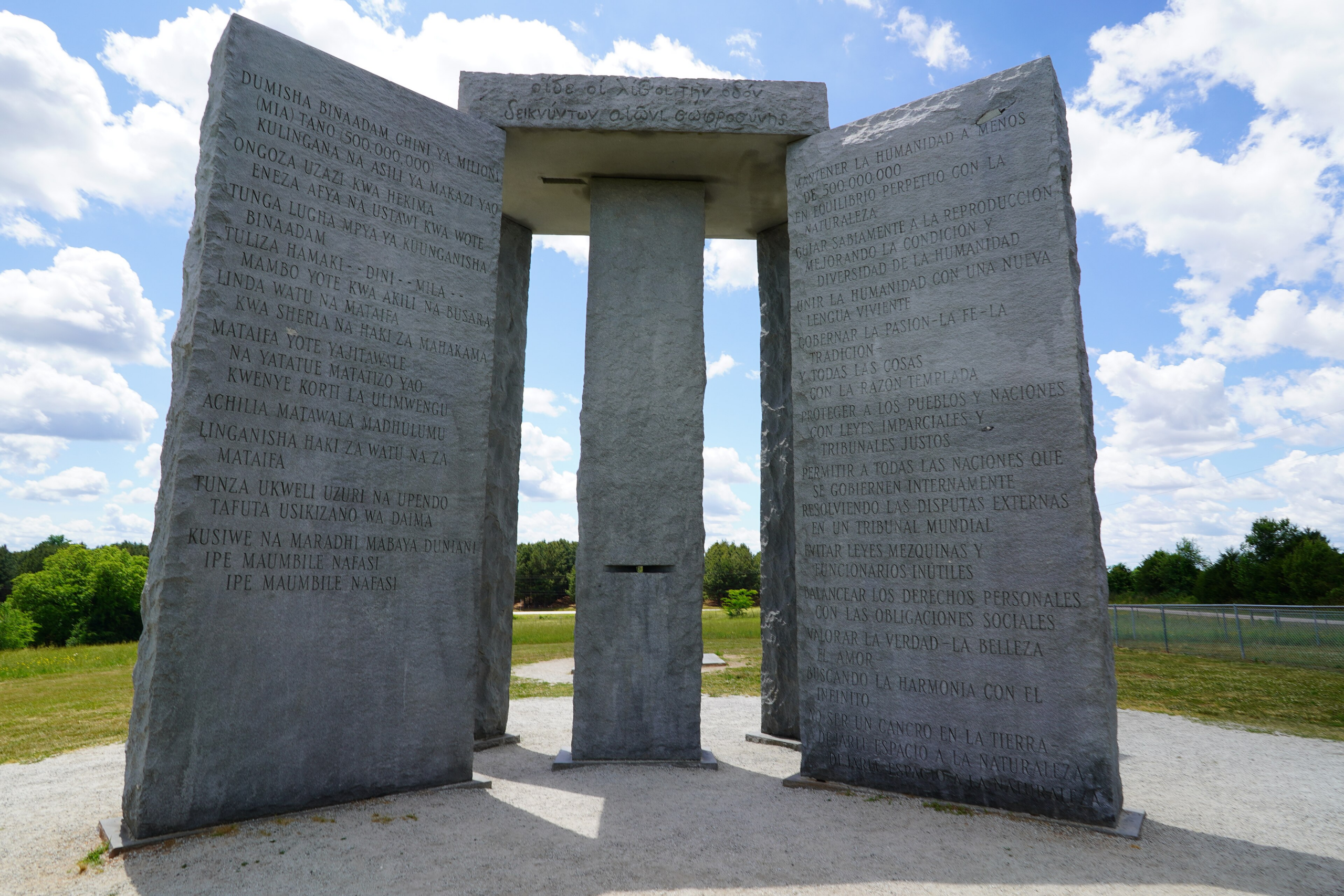
On a low hill in Elbert County, Georgia, in the rural northeastern corner of the state, there stood for over four decades one of the most enigmatic monuments in America: a cluster of towering granite slabs, nearly twenty feet tall, arranged like a strange modern Stonehenge and carved with a message for humanity. Nobody knew for certain who had built them or why. They were inscribed with ten cryptic “guidelines” written in eight languages, they were precisely aligned to track the sun and stars, and they became, over their lifetime, one of America’s most curious roadside attractions and one of its most fevered magnets for conspiracy theory.
The Georgia Guidestones stood from 1980 until 2022, when they were destroyed in an early-morning explosion by an unknown attacker. In their 42 years, they were admired as a work of idealism, feared as something sinister, defaced, debated, and endlessly speculated about, all while the identity of the man who commissioned them remained a closely guarded secret. Their mysterious origin and their violent, unsolved end make them one of the strangest true stories in modern America — a real enigma that stood in plain sight beside a Georgia highway for a generation. Here is the story of America’s Stonehenge.
The Stranger With a Fake Name
The mystery begins in 1979, when a well-dressed stranger walked into a granite company in Elberton, Georgia — a town that calls itself the granite capital of the world — and commissioned an enormous monument. He gave his name as “R.C. Christian,” but he made no secret of the fact that this was a pseudonym, an alias chosen, he said, partly because of his Christian faith. He claimed to represent a small group of Americans who had been planning the monument for years and who wished to remain completely anonymous.
The stranger’s demands were unusual and specific. He had detailed plans for exactly what he wanted built, he seemed to have ample funding, and above all he insisted on total secrecy: the terms of the arrangement required that his true identity, and that of the group he represented, never be revealed, and that the plans and records be destroyed after completion. The granite company, initially skeptical, took the commission. And so a monument was built to the specifications of a man whose real name no one has ever definitively established, funded by a group whose membership remains unknown, for reasons that were spelled out on the stones themselves but have been argued over ever since. The stranger got his wish: to this day, the identity of “R.C. Christian” remains one of the monument’s most enduring mysteries, the subject of decades of investigation and speculation that has never produced a universally accepted answer.
Like our content? Follow us for more.
Ten Guidelines for Humanity
The monument itself was as striking as its origin. Unveiled in 1980, it consisted of several massive slabs of locally quarried granite — four tall upright stones arranged around a central pillar, topped by a capstone — standing nearly twenty feet high and weighing many tons. But the physical structure was just the vessel for its real content: a message, carved into the stones, addressed to humanity.
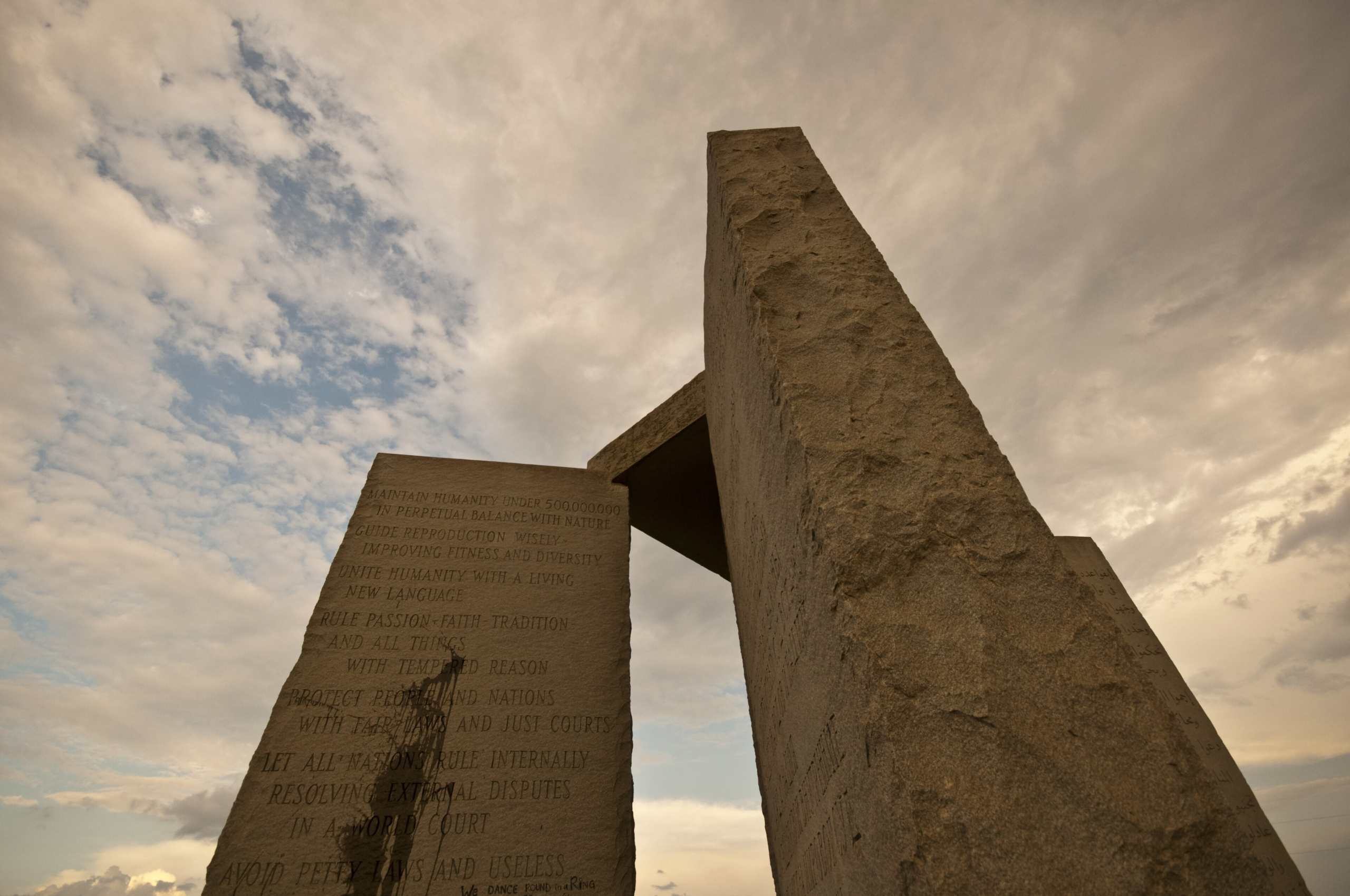
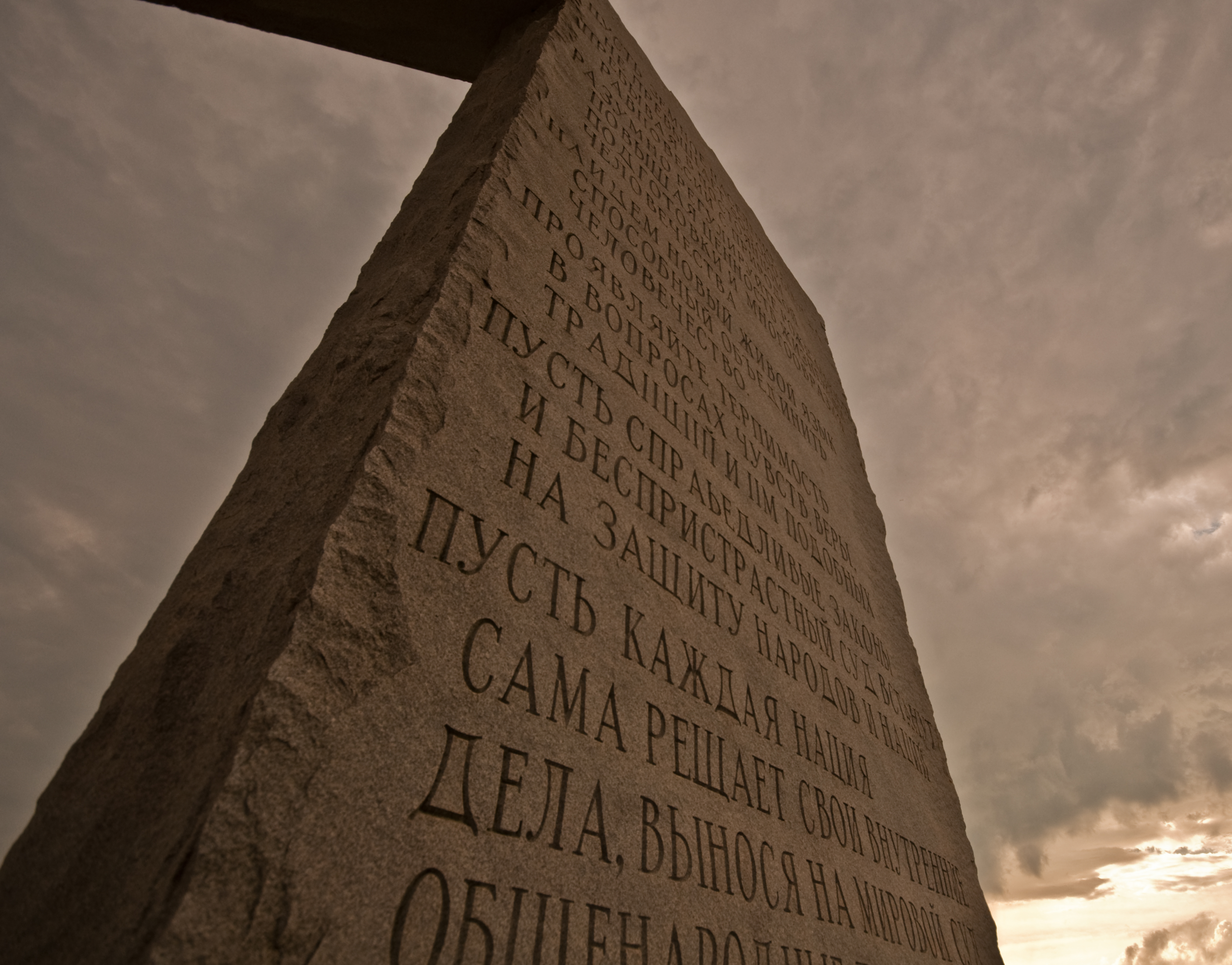
Inscribed across the four outer stones were ten short statements, often called the ten “guidelines” or principles, and to ensure they could be read around the world and, perhaps, far into the future, they were engraved in eight modern languages, including English, Spanish, Russian, Chinese, Arabic, Hebrew, Hindi, and Swahili. The guidelines read as a kind of blueprint for a rational, sustainable future civilization, touching on themes like living in balance with nature, guiding reproduction wisely, uniting humanity with a common language, ruling with reason and justice, prizing truth and beauty, and seeking harmony with the infinite. The capstone carried additional text in older languages. On the whole, the inscriptions presented themselves as advice for rebuilding or guiding a society, especially in the wake of some possible future catastrophe — a message in a bottle for a world that might one day need to start over. To supporters, it was an earnest, idealistic call for reason and stewardship. The precise meaning and intent, however, were open to interpretation, and interpret them people certainly did.
America’s Stonehenge
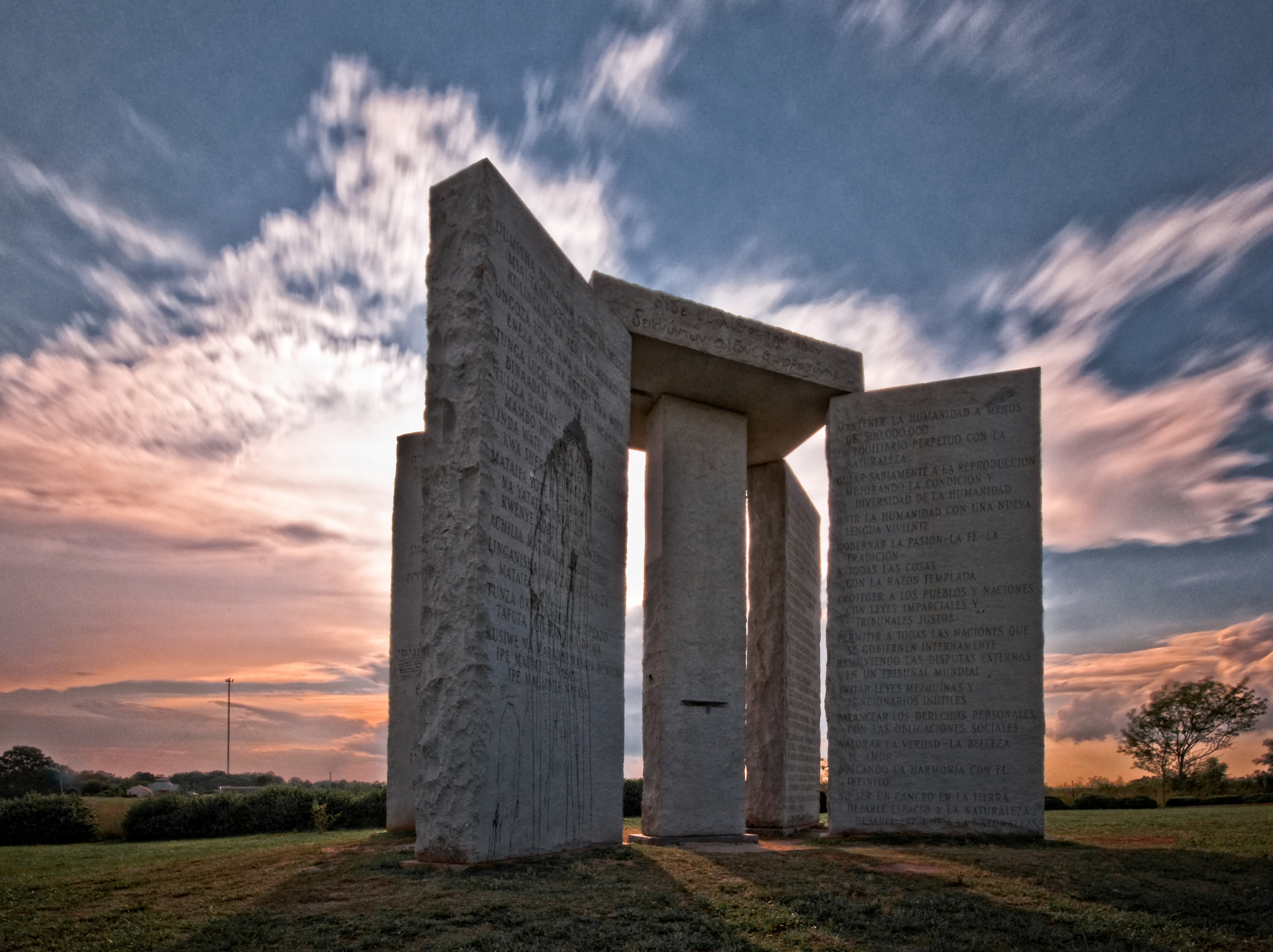
Beyond the written message, the Guidestones had a second, hidden layer of sophistication: they were an astronomical instrument. The monument was engineered with remarkable precision to function as a kind of celestial calendar and clock, echoing ancient monuments like Stonehenge, which earned the Guidestones their popular nickname, “America’s Stonehenge.”
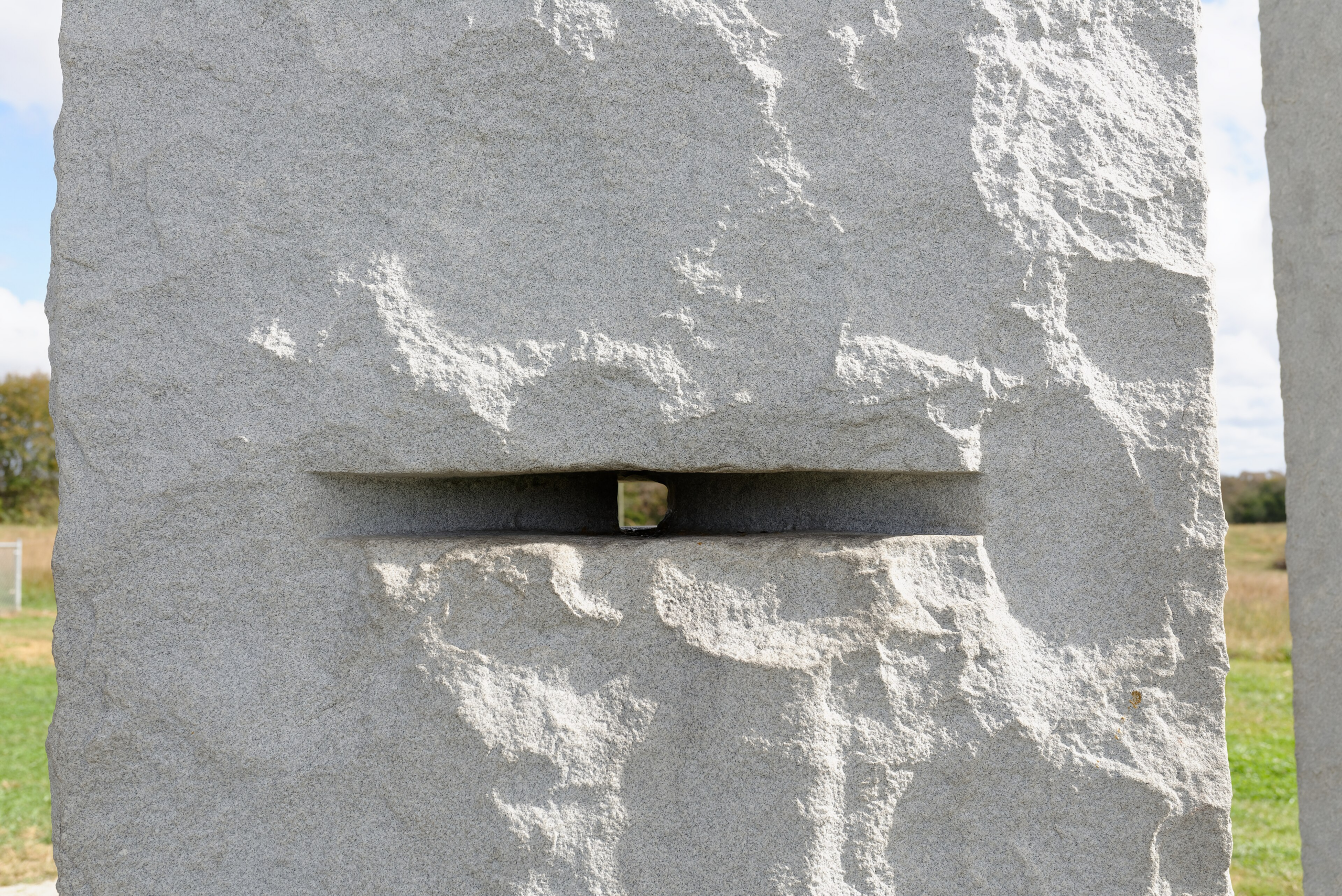
The stones incorporated several astronomical features. A hole was drilled through the central pillar so that it aligned with the North Star. A slot was cut to track the sun’s movement through the seasons, marking the solstices and equinoxes. And a small aperture in the capstone was positioned to cast a beam of sunlight that would indicate the day of the year at noon. These features connected the modern monument to a very ancient human impulse — the desire to mark the passage of time by the movements of the sky, and to build in stone something aligned with the cosmos. It was this combination of the mysterious message and the precise astronomical engineering, all of unknown authorship, that gave the Guidestones their uncanny power and made them far more than an ordinary roadside marker. They felt, to many visitors, like an artifact from another time or another mind entirely.
A Magnet for Controversy
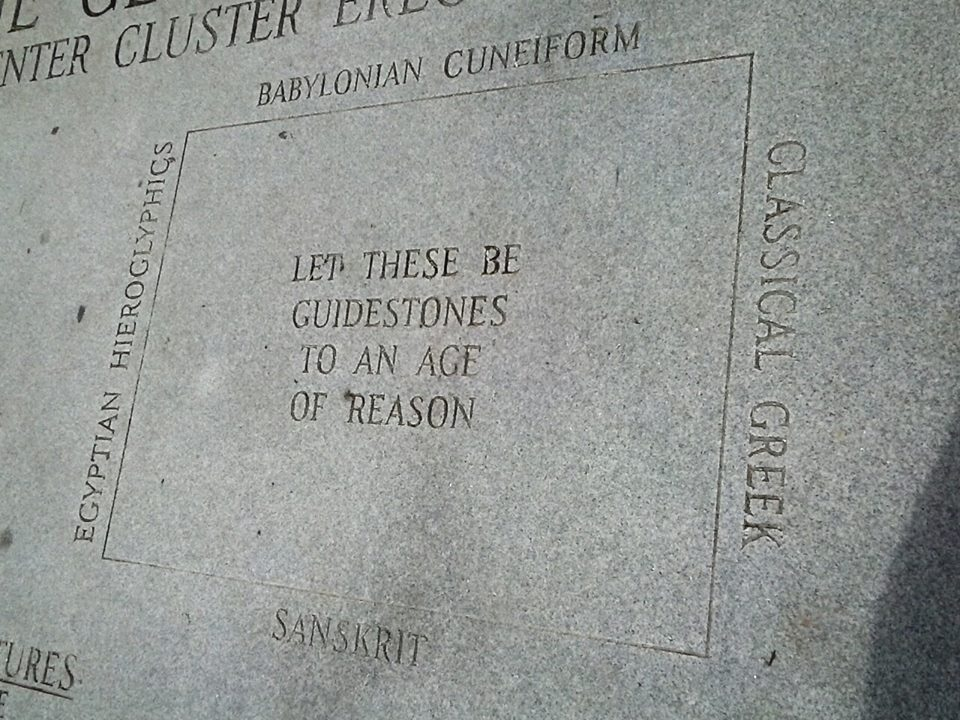
From early on, the Guidestones attracted intense and often polarized reactions, and over the decades they became a lightning rod for controversy and conspiracy theory. The very first of the ten guidelines, which spoke of maintaining humanity’s population within a certain limit, became the focus of alarm for many, who read it as an endorsement of drastic population control, and this interpretation fueled decades of suspicion.
To some observers, the monument was a benign and thoughtful call for sustainability and reason. To others, it was something dark and threatening. Various groups came to see the Guidestones as sinister, interpreting the anonymous message as evidence of a secret agenda, and the monument became woven into a wide range of conspiracy theories, including fears about a so-called “new world order.” The stones were vandalized on occasion over the years, defaced with graffiti by those who objected to them. The controversy simmered for decades and then intensified sharply in the monument’s final years, as it drew renewed attention on social media and became entangled in contemporary political and cultural disputes, with some public figures openly calling for its removal. What had been built, at least ostensibly, as a message of guidance had become, for many, an object of deep suspicion and hostility — a Rorschach test onto which people projected their hopes and fears about the direction of the world.
The Explosion
In the pre-dawn hours of July 6, 2022, that long controversy reached a violent climax. An explosion tore through the monument, destroying one of the massive granite slabs and severely damaging the structure. Investigators found evidence that a bomb had been deliberately used, and surveillance footage reportedly captured the moment of the blast, and even a vehicle leaving the scene.
Because the damage left the remaining structure unstable and unsafe, authorities made the decision to demolish what was left of the monument that same day, for public safety. And so, after 42 years, the Georgia Guidestones were gone — reduced to rubble and cleared away within hours of the attack. The mystery of who bombed them, and why, joined the mystery of who built them: no one has been publicly charged with the crime, and the investigation into the bombing has remained unresolved. The monument that had begun with an anonymous stranger and a secret ended with an anonymous attacker and an unsolved case, its whole existence bracketed by mysteries at both ends. In a strange way, the violent, enigmatic destruction was fitting for a monument whose entire life had been shrouded in the unexplained.
The Legacy of the Guidestones
Though the Georgia Guidestones no longer stand, they endure powerfully in memory and imagination, and their story raises questions that outlast the granite. Who was R.C. Christian, and what group did he truly represent? What did the builders truly intend by their ten guidelines — sincere idealism, or something else? Who destroyed the monument, and what did they believe they were doing? None of these questions has a settled answer, which is precisely why the Guidestones continue to fascinate. A nearby museum preserves a model and the story for those who want to learn about them.
Perhaps the deepest lesson of the Guidestones lies in how they functioned as a mirror. The same stones that struck some people as a hopeful, rational guide for humanity’s future struck others as a sinister blueprint for control, and the monument’s blank anonymity invited everyone to fill it with their own meaning. That a large granite message meant to unite and guide humanity ended up dividing opinion so sharply, and was ultimately destroyed by someone who saw in it something worth blowing up, says something about how differently people can read the same words. The Georgia Guidestones stood for 42 years as a real American enigma, and even in their absence, they remain one: a mystery of stone that appeared without explanation, spoke in riddles to the future, and vanished in an explosion no one has answered for. America’s Stonehenge is gone, but the questions it raised are still standing.
Like our content? Follow us for more.