

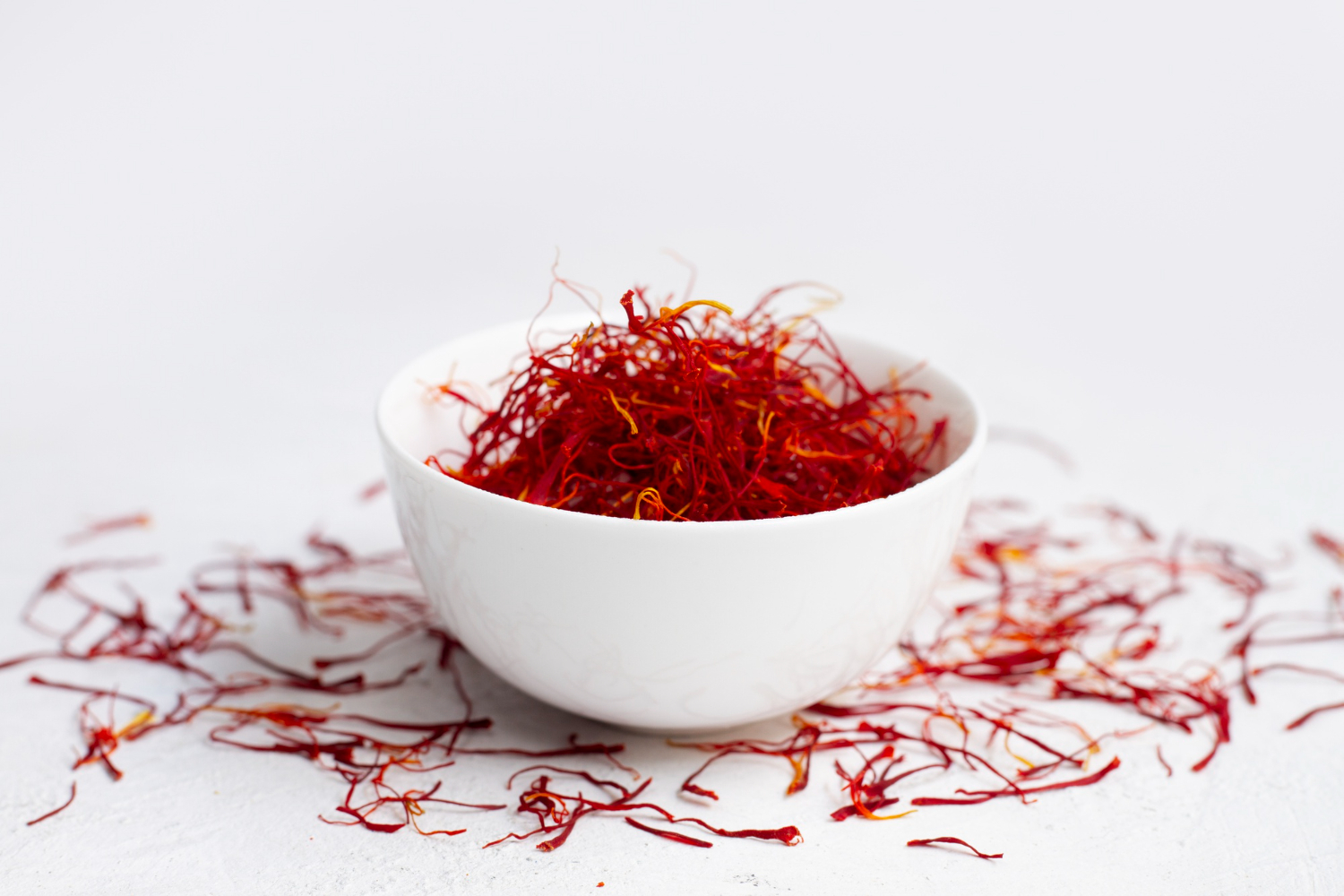
There is a jar in a great many kitchens containing a pinch of thin red threads that cost more per gram than almost anything else in the house. Most people who own one have no clear idea why.
The explanation is not that saffron is rare in the sense of growing in one hidden valley. It is cultivated across a wide band from the Mediterranean to the Himalayas, on ordinary farmland, by ordinary farmers.
The explanation is labour. Saffron is the part of a flower that resists every attempt at mechanisation, harvested in a narrow annual window, in quantities so small per plant that the numbers become absurd very quickly.
Here is where saffron actually comes from and why a gram of it costs more than a pound of anything else on the spice shelf.
Three Threads Per Flower
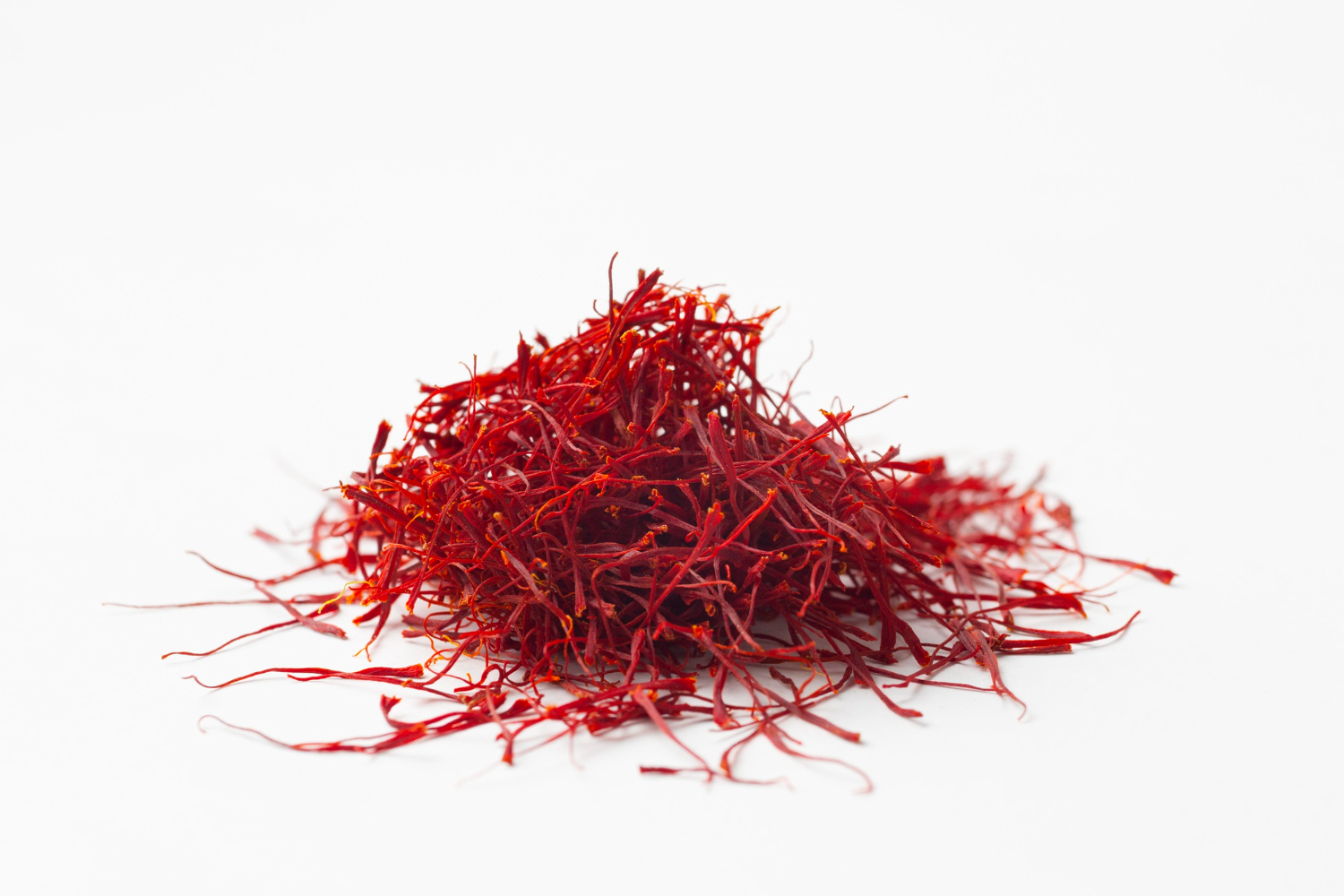
Saffron is the dried stigmas of Crocus sativus, the saffron crocus — a purple autumn-flowering plant grown from corms.
The stigma is the pollen-receiving part of the flower’s female reproductive structure, and each flower produces exactly three. That is the entire yield. Everything else — petals, stem, the yellow style below the red thread — is not saffron, and the presence of too much pale style material in a batch lowers its grade.
The threads are brilliant red, often with a slightly orange tip, and they are extremely delicate. They cannot be gathered mechanically, because the part being harvested is small, fragile and buried inside a flower that must be opened without crushing it.
So each flower is picked individually by hand, and then each of its three stigmas is removed by hand, and then they are dried. That is the whole process, and it has not fundamentally changed in three thousand years.
Like our content? Follow us for more.
The Arithmetic
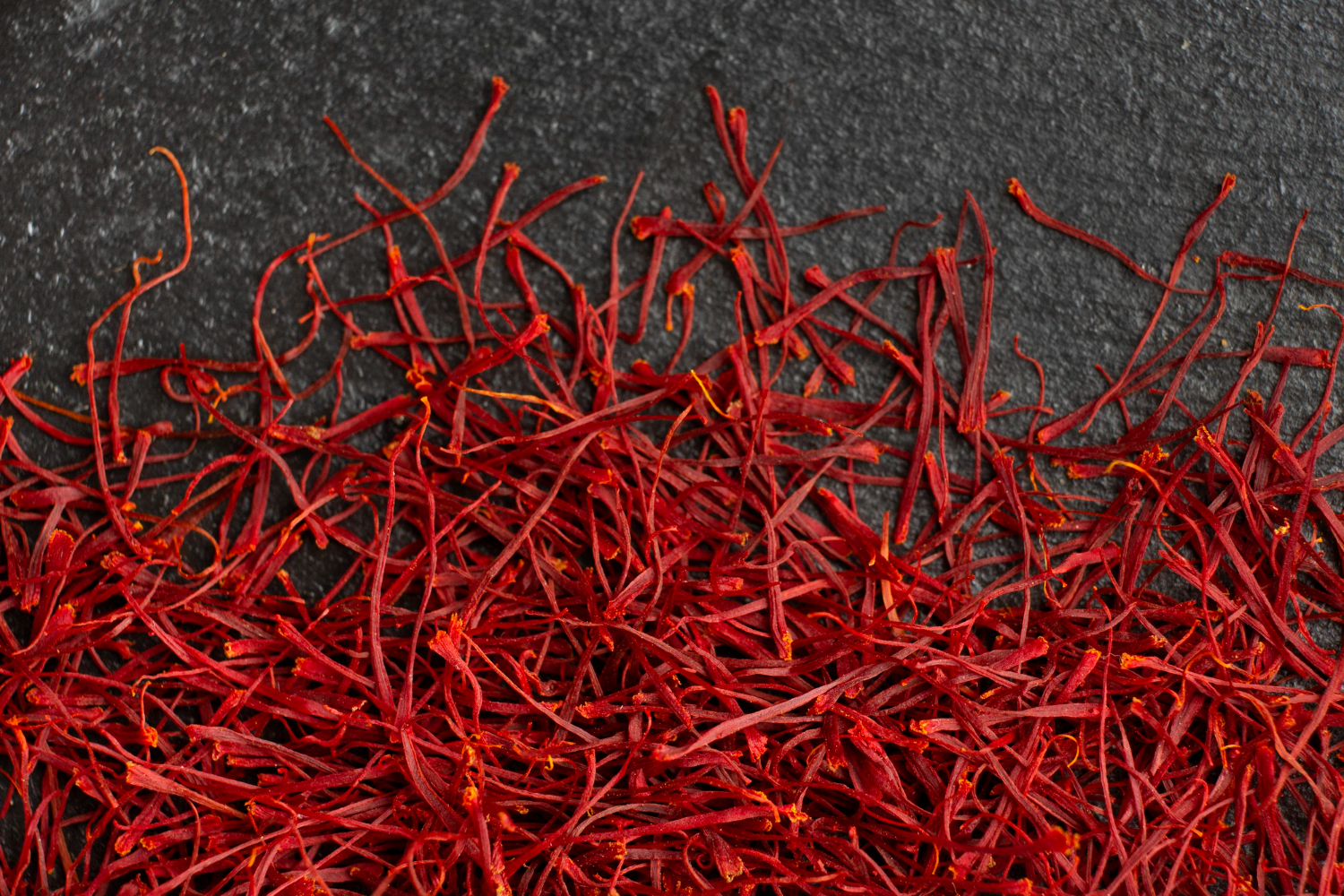
The numbers are what make the price comprehensible.
Estimates vary by source and by yield, but the range is consistent: roughly 150,000 to 200,000 flowers to produce one kilogram of dried saffron, with one scientific paper putting it at around 250,000 stigmas per kilogram.
Scaled down, that means about 150 to 170 flowers for a single gram, and roughly 4,000 flowers for an ounce. A pound requires something in the region of 75,000 flowers, containing 15,000 to 20,000 stigmas.
The harvest window compounds it. Saffron crocuses bloom for only a few weeks in autumn, and the flowers must be picked promptly — ideally early on a dry morning, before heat and light degrade the stigmas. The entire annual crop of a farm has to be gathered within that short period, which means the labour cannot be spread out and must be concentrated into an intense few weeks.
Add specific growing requirements — cold winters, hot dry summers, well-drained soil, suitable altitude — and the geography narrows further.
Reported trade prices run to figures in the region of several thousand dollars per pound, and retail prices commonly sit somewhere around five to fifteen dollars per gram depending on grade and origin. A gram of decent saffron costs more than a pound of black pepper.
Where It Grows
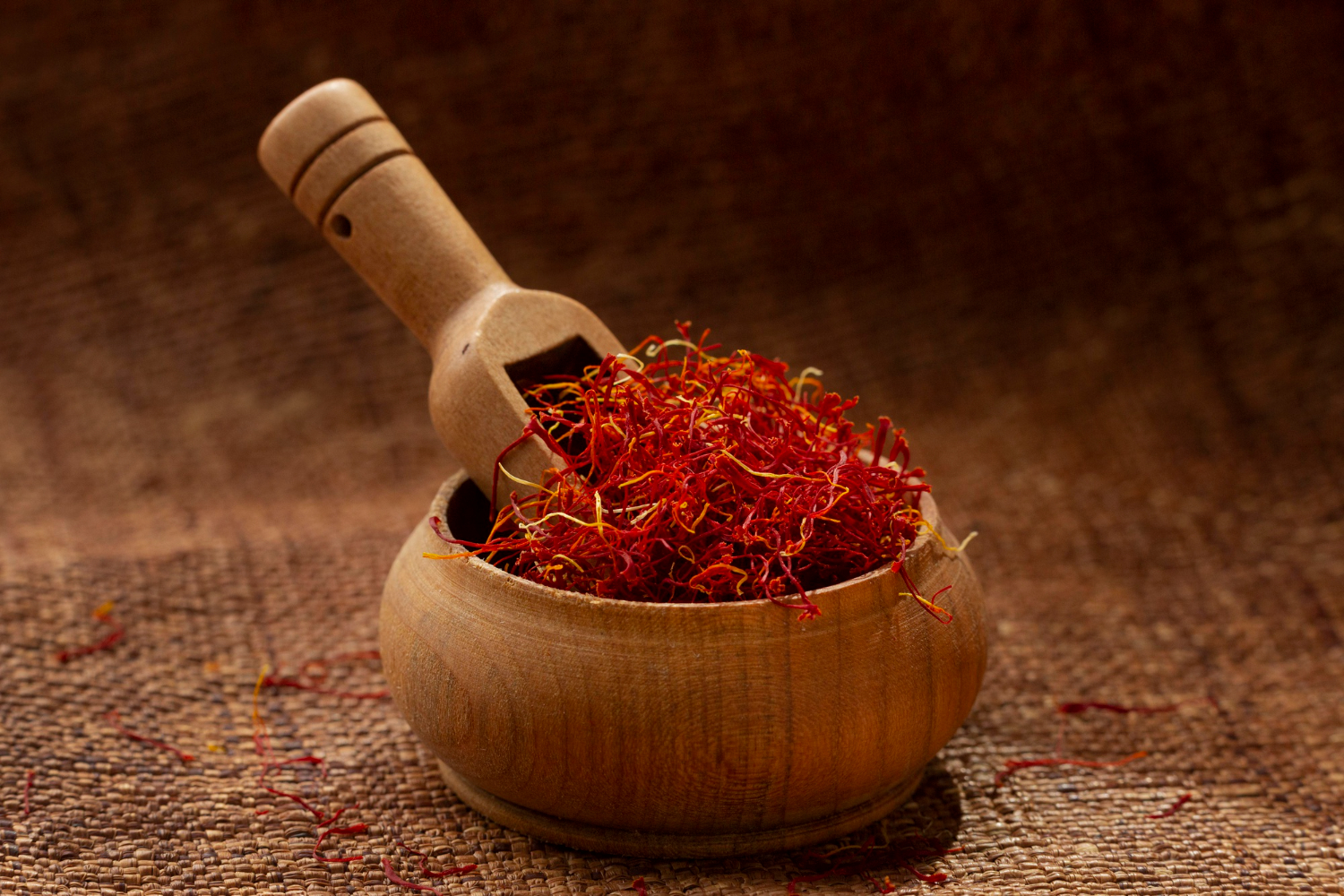
Saffron is believed to be native to the eastern Mediterranean, Asia Minor and the region of modern Iran, with domestication generally attributed to either ancient Persia or the Greek islands.
Today Iran dominates production overwhelmingly, accounting for roughly 90 percent of the global supply, with a cultivation history going back more than three thousand years. Spain, India, Afghanistan, Greece, Morocco and Italy are the other significant producers, and total annual world production is on the order of a few hundred tonnes.
Reputation attaches strongly to origin, with saffron from Kashmir and particular Spanish and Iranian grades commanding premiums.
Interest in growing it elsewhere has increased, with researchers in North America studying whether saffron could help small growers diversify. The plant itself is not difficult to grow; the constraint has never been horticultural.
One further complication is that the plant is sterile and vegetatively propagated. It does not produce viable seed and is multiplied by dividing corms, which limits how quickly production can expand.
Why It Is Faked So Often
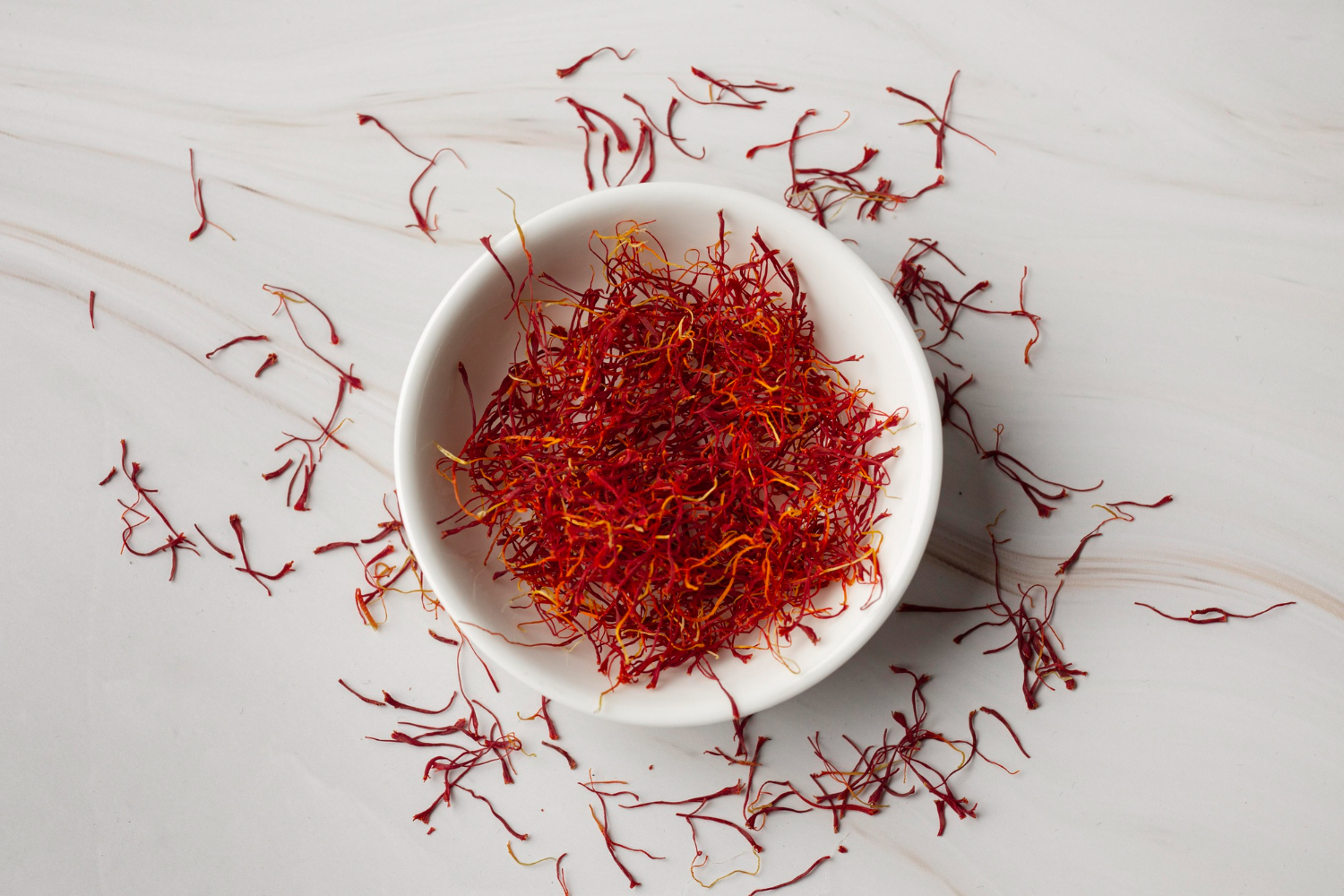
A product this valuable, sold in tiny quantities as dried fragments, is an obvious target for adulteration, and it has been for a very long time.
The common approaches are to bulk out real saffron with cheaper material of similar appearance, to substitute other plant material entirely, or — more recently — to misdeclare geographic origin. Scientific work has gone into authentication methods, including isotope-ratio analysis to establish where a sample was actually grown.
The practical signals for a buyer are straightforward. Real saffron consists of whole threads, trumpet-shaped at one end, deep red with orange tips, and it should be sold by weight in small quantities. Powdered saffron is far easier to adulterate and is worth avoiding for that reason alone.
Price is the clearest indicator. Saffron cannot be produced cheaply, so an unusually low price is not a bargain but a warning.
And a small quantity should be enough. Saffron is potent, and a recipe calling for a large spoonful of it is either not calling for saffron or not worth following.
The agricultural side is less well known than the harvest, and it explains why production is concentrated where it is.
Saffron grows from corms — swollen underground stems rather than true bulbs — planted in summer to flower in autumn. The plant is dormant through the hottest part of the year, produces flowers in a short burst, then grows leaves through the winter before going dormant again as temperatures rise.
That schedule requires a specific climate: hot dry summers when the corm is resting, and mild wet winters when the leaves are working. It is the pattern found around the Mediterranean, across parts of Iran and Afghanistan, and in comparable zones elsewhere.
Because the plant is sterile, it cannot be improved or expanded through seed. Each corm produces daughter corms below ground, which are lifted, divided and replanted after several seasons to prevent overcrowding. Every saffron plant in cultivation is therefore a clone of a very old lineage.
Fields are typically productive for a handful of years before the corms need lifting and dividing, and yields vary substantially with weather, soil and how recently the beds were renewed.
None of this is difficult farming. It is simply farming that produces, per hectare, a very small quantity of an extremely labour-intensive product.
What It Is Actually For
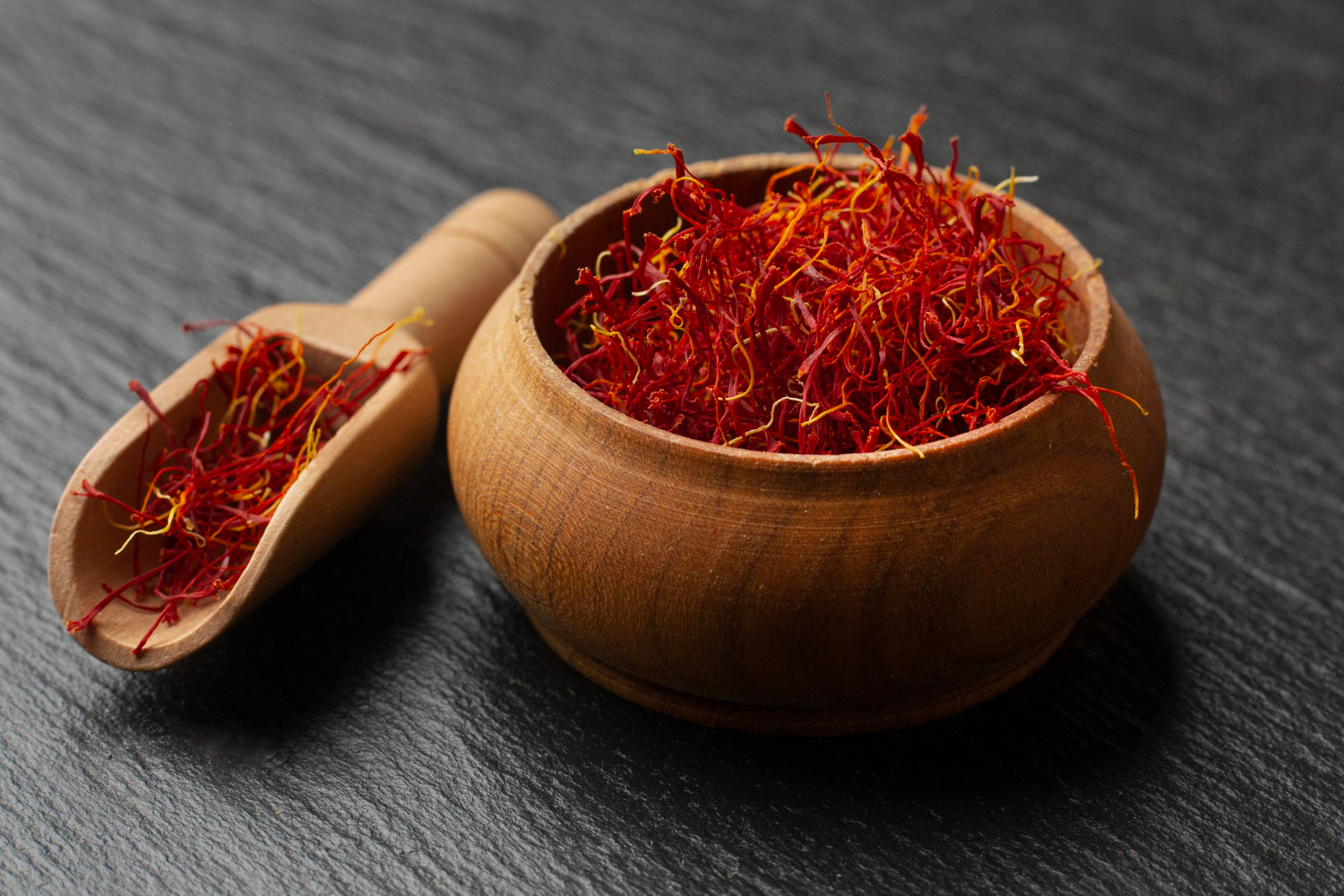
Saffron does three things simultaneously, which is unusual for a spice.
It colours. The compound crocin produces an intense yellow-gold that transfers readily to liquid, which is why saffron is used in rice dishes across an enormous geographic range.
It smells. Safranal gives the distinctive aroma, described variously as hay-like, floral and faintly metallic.
And it tastes bitter, from picrocrocin, which is the element people least expect and which balances the sweetness in many dishes.
To extract all three, threads are usually steeped in a small quantity of warm liquid before use rather than added dry, which releases the colour and aroma into the dish rather than leaving them locked in the thread.
Its uses run through Persian, Indian, Spanish, Italian, Moroccan and French cooking, and historically it served as a dye and a perfume as well as a flavouring. It appears in ancient Greek and Roman records and in Chinese pharmacological texts from the sixteenth century.
The Long History Behind the Price
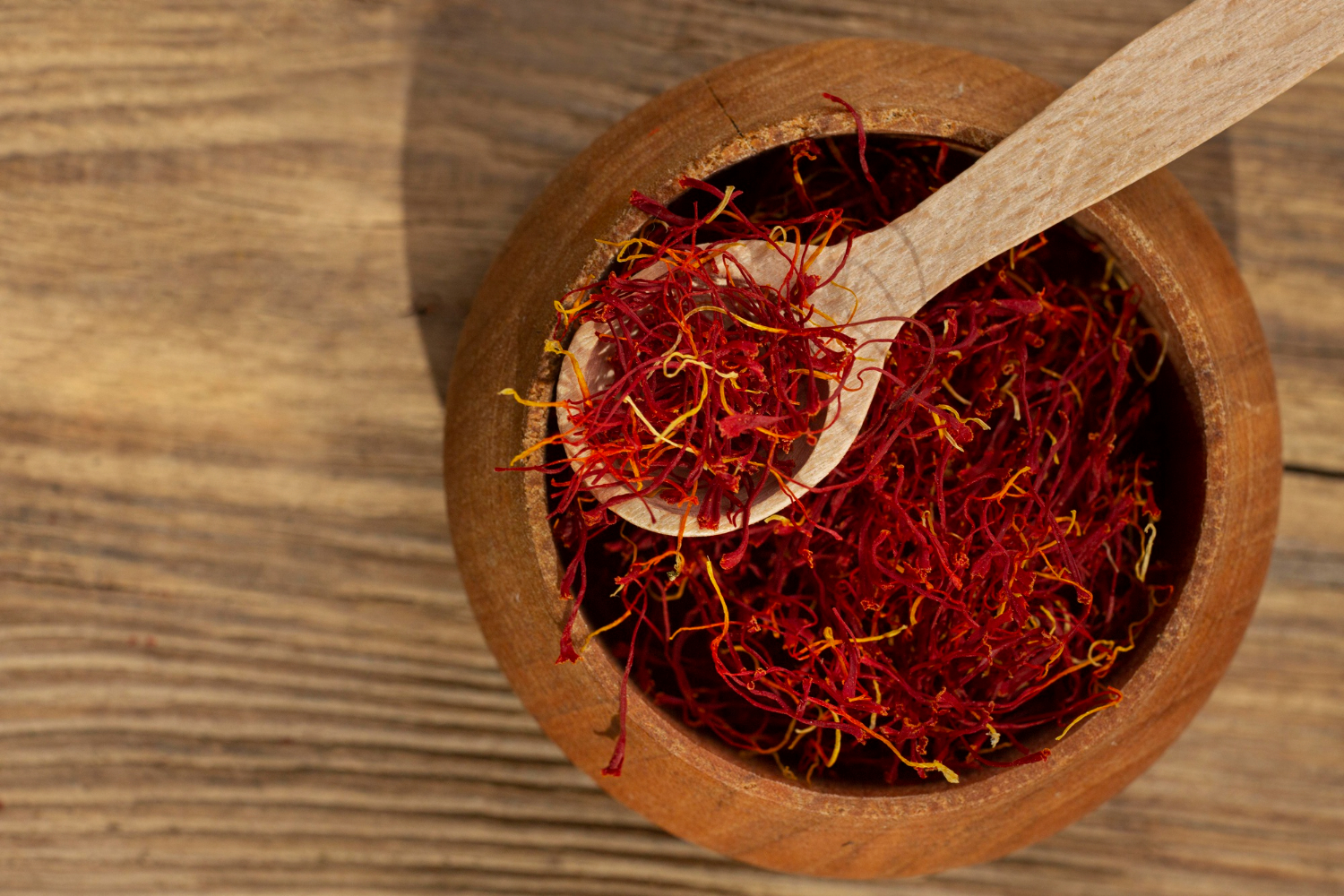
Saffron’s cost is not a modern development, and the record of people valuing it goes back a very long way.
It appears in the ancient Mediterranean world as a dye, a perfume and a medicine as much as a flavouring, with Greek and Roman writers referencing its use in scented preparations. Frescoes from the Aegean Bronze Age depict what appear to be saffron harvests, which would make it one of the earliest documented cultivated luxuries.
Its use as a dye is worth noting, because dyeing cloth requires far more of it than cooking does. That saffron was ever considered worth using in that quantity says something about how differently it was valued when labour costs were structured differently.
It travelled with trade and conquest, moving through Persia, the Arab world, the Mediterranean and eventually across Europe, appearing in Chinese pharmacological literature by the sixteenth century.
There have been periods when saffron was, by weight, more expensive than gold — a comparison that gets repeated loosely but which reflects a real historical pattern of scarcity pricing.
That history also explains why adulteration is ancient rather than modern. Wherever something small, dry and valuable is sold by weight, someone has always been prepared to add something else to it, and buyers have been guarding against it for as long as the trade has existed.
Worth It, In Small Amounts
The reasonable conclusion is that saffron is expensive for entirely legitimate reasons and is also used in quantities so small that the cost per dish is modest.
A pinch is truly a pinch. A gram, which sounds like nothing, is a substantial number of servings, and a jar bought once will outlast most other spices in the cupboard if kept sealed and away from light.
What you are paying for is not rarity, exclusivity or branding. It is several thousand flowers, picked one at a time on autumn mornings, each opened by hand so three threads could be pulled out with fingertips, dried, sorted and graded.
There are very few products left where the price is that directly a measure of human labour, and the threads in the jar are the physical evidence of it.
Like our content? Follow us for more.
