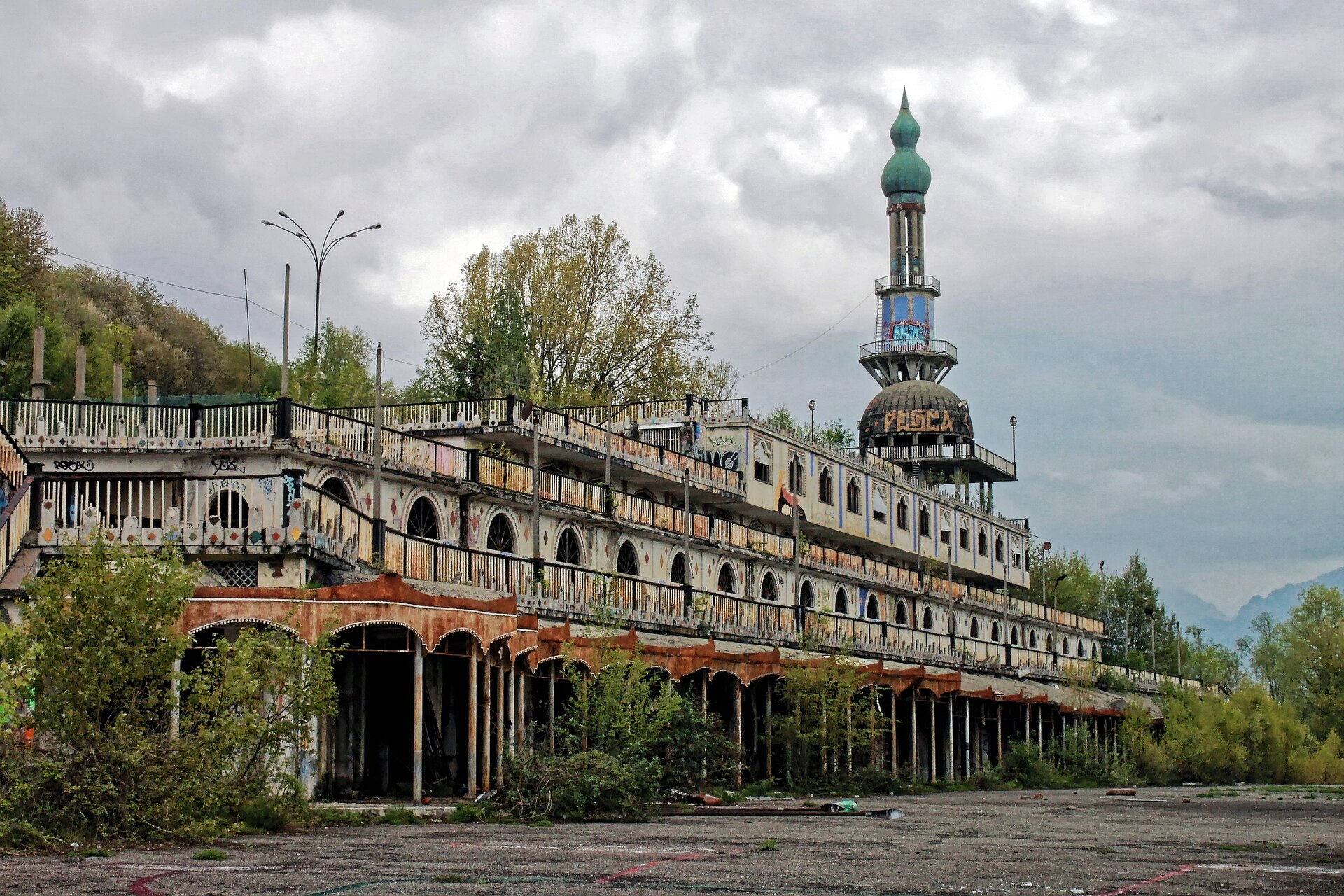
Tucked into the hills of Italy’s Lombardy region, roughly an hour northeast of Milan, sits one of Europe’s strangest ghost towns, not the ruins of a medieval village lost to time, but the abandoned shell of a 1960s amusement resort that never got the chance to finish being built. Consonno’s story involves a demolished hamlet, a mosque-like minaret, a Chinese pagoda, and not one but two landslides that sealed its fate.
A Quiet Hamlet, Then a Count’s Vision
Until the early 1960s, Consonno was an unremarkable farming hamlet of a few dozen residents, reachable only by a mule track through the hills near Lecco. In 1962, an entrepreneur and construction magnate named Mario Bagno purchased the entire village for 22.5 million lire, evicted its residents, and demolished nearly every building except the 13th-century church of San Maurizio, its rectory, and the small village cemetery. Bagno’s ambition was audacious: transform this remote hillside hamlet into what he called the “Città dei Balocchi,” the City of Toys, a glittering entertainment resort he hoped would become the “Las Vegas of Brianza.”
Like our content? Follow us for more.
A Kitsch Wonderland Rises
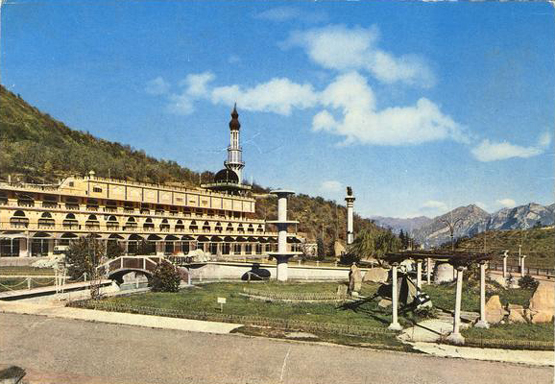
What followed was one of the more eccentric building projects in postwar Italian history. Bagno constructed a luxury hotel, a dance hall, restaurants, shopping galleries, and a bizarre mix of mismatched architectural landmarks, a medieval castle gateway, a minaret resembling a mosque, and a Chinese-style pagoda topped with a mounted cannon. He planned a small panoramic railway to tour the complex, and envisioned further expansion with a zoo, a motor-racing circuit, basketball and tennis courts, and a miniature golf course. During its brief heyday in the late 1960s and early 1970s, Consonno drew thousands of visitors and hosted major Italian entertainers of the era, becoming a genuinely popular, if architecturally chaotic, weekend destination for newlyweds and pleasure-seekers from Milan.
The Landscape Fights Back
Bagno’s relentless reshaping of the terrain, including the use of dynamite to improve sightlines and views, took a serious toll on the area’s fragile hydrogeology. Heavy rains triggered a landslide in 1966 or 1967 that damaged the access road, though Bagno managed to repair it and continue building. The fatal blow came in October 1976, when another, larger landslide, worsened by the very earthworks that had built the resort, destroyed the town’s only connecting road entirely, cutting Consonno off from the outside world. Without any way for visitors to reach it, the City of Toys emptied out almost overnight.
Decline, a Retirement Home, and Rave Parties
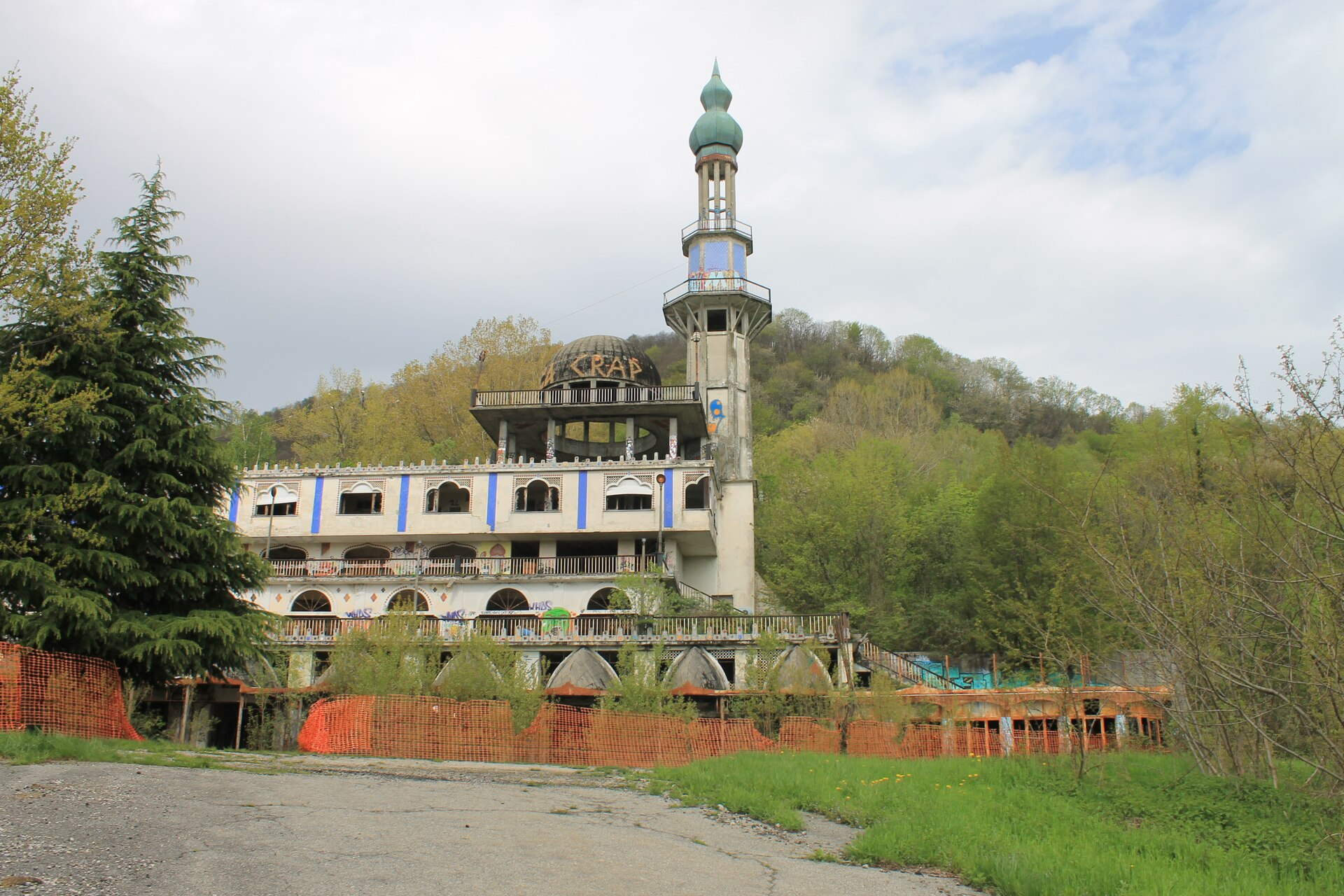
Bagno attempted to revive his investment for years afterward, at one point converting the resort’s grand hotel into a retirement home, an incongruous second act for a building designed for nightlife and spectacle. The retirement home limped along until it finally closed in 2007. That same year, word spread online of an illegal rave party, and more than a thousand attendees descended on the abandoned resort, leaving behind extensive vandalism and graffiti that further accelerated the decay of Bagno’s already-crumbling structures. Bagno himself died in 1995, and without his personal investment, his heirs showed little interest in reviving the project.
A Landscape of Shattered Ambition
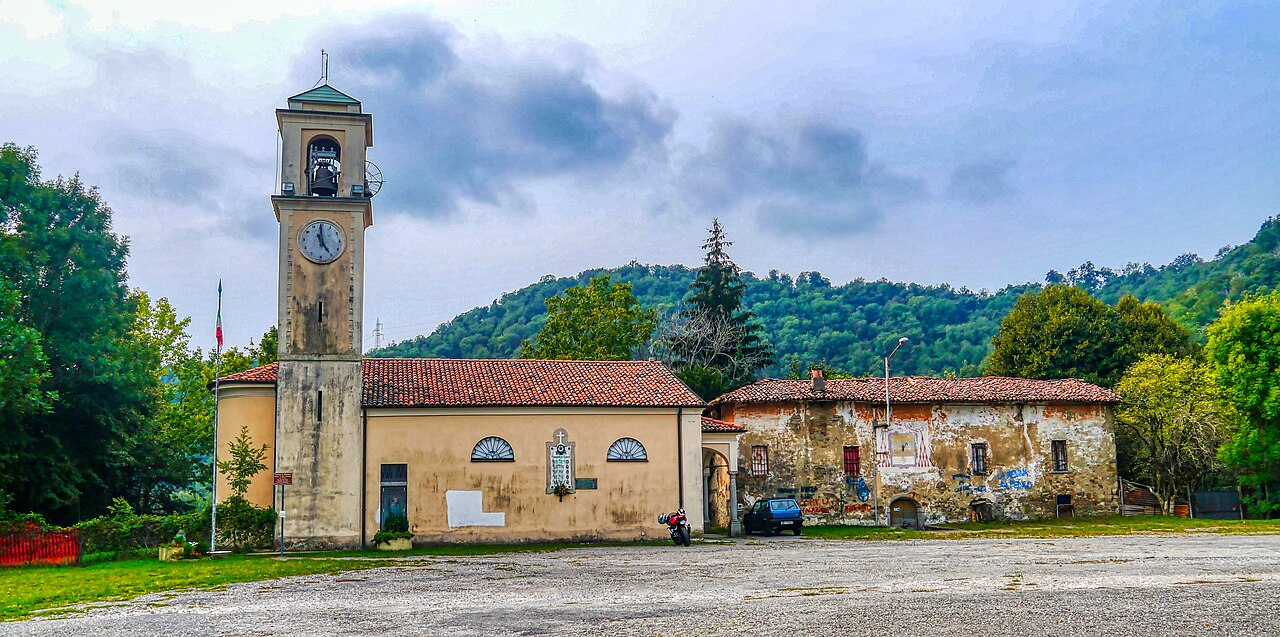
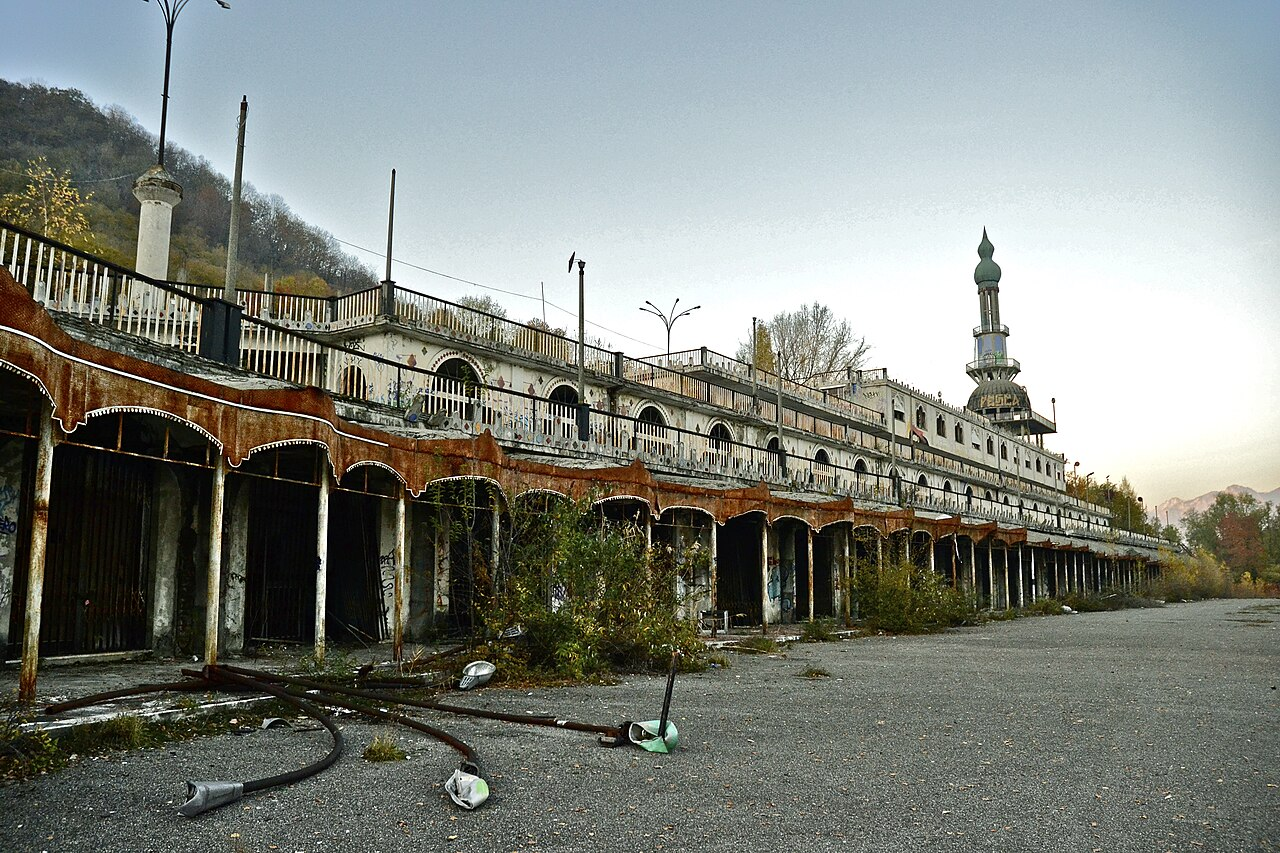
Today, Consonno’s surviving structures, the minaret, the pagoda, the shell of the grand hotel, and the fragments of the medieval-style gateway, stand in varying states of collapse, steadily being reclaimed by the surrounding forest. The access road was eventually rebuilt around 2010, making the site reachable again, though it remains officially an abandoned, largely unregulated property. A small group called Amici di Consonno, formed by former residents and their descendants, now runs a modest seasonal bar on site and organizes occasional community events, a quiet, grassroots effort to reclaim some positive meaning from the site’s strange history.
Visiting the Ruins Today
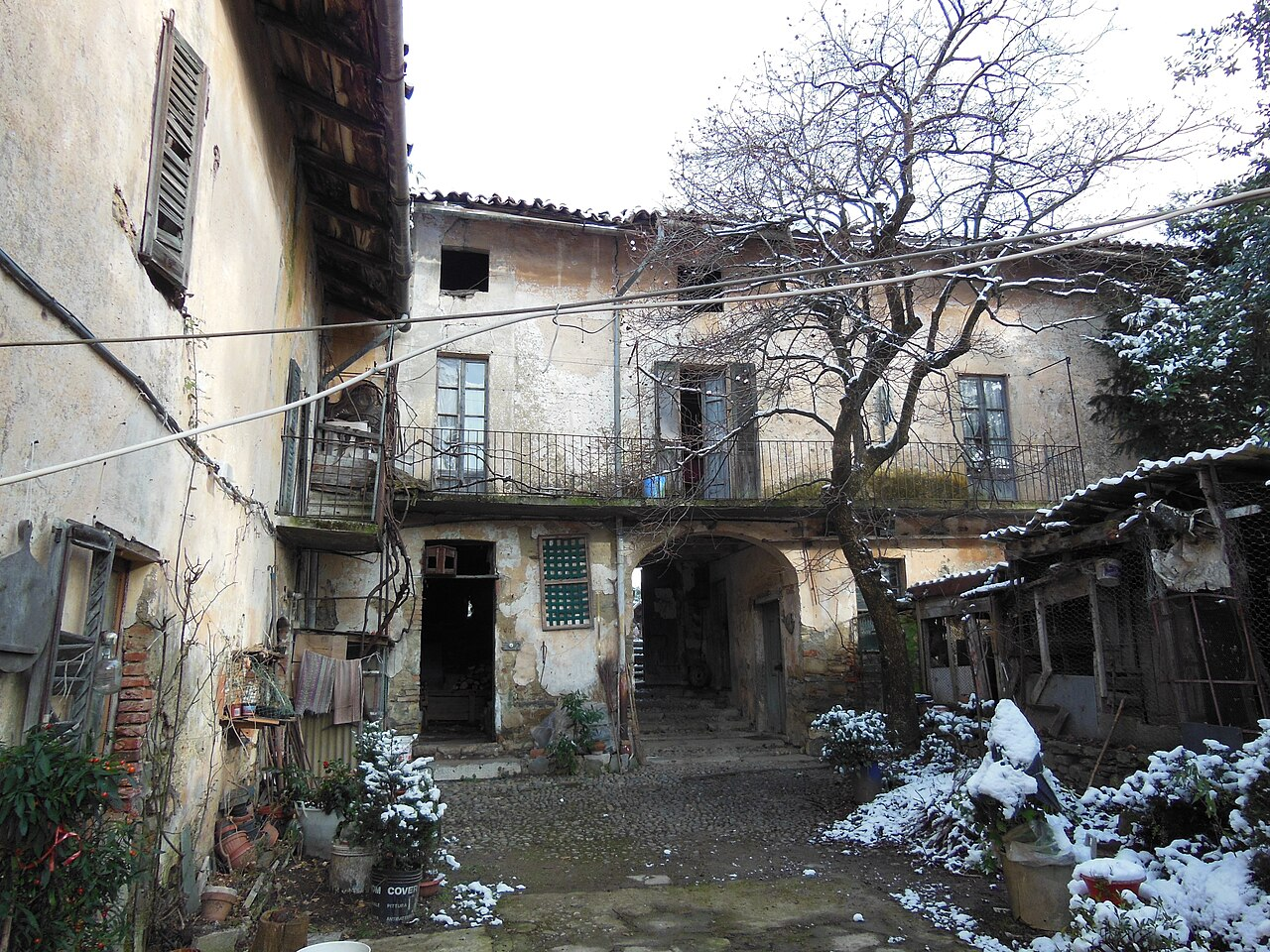
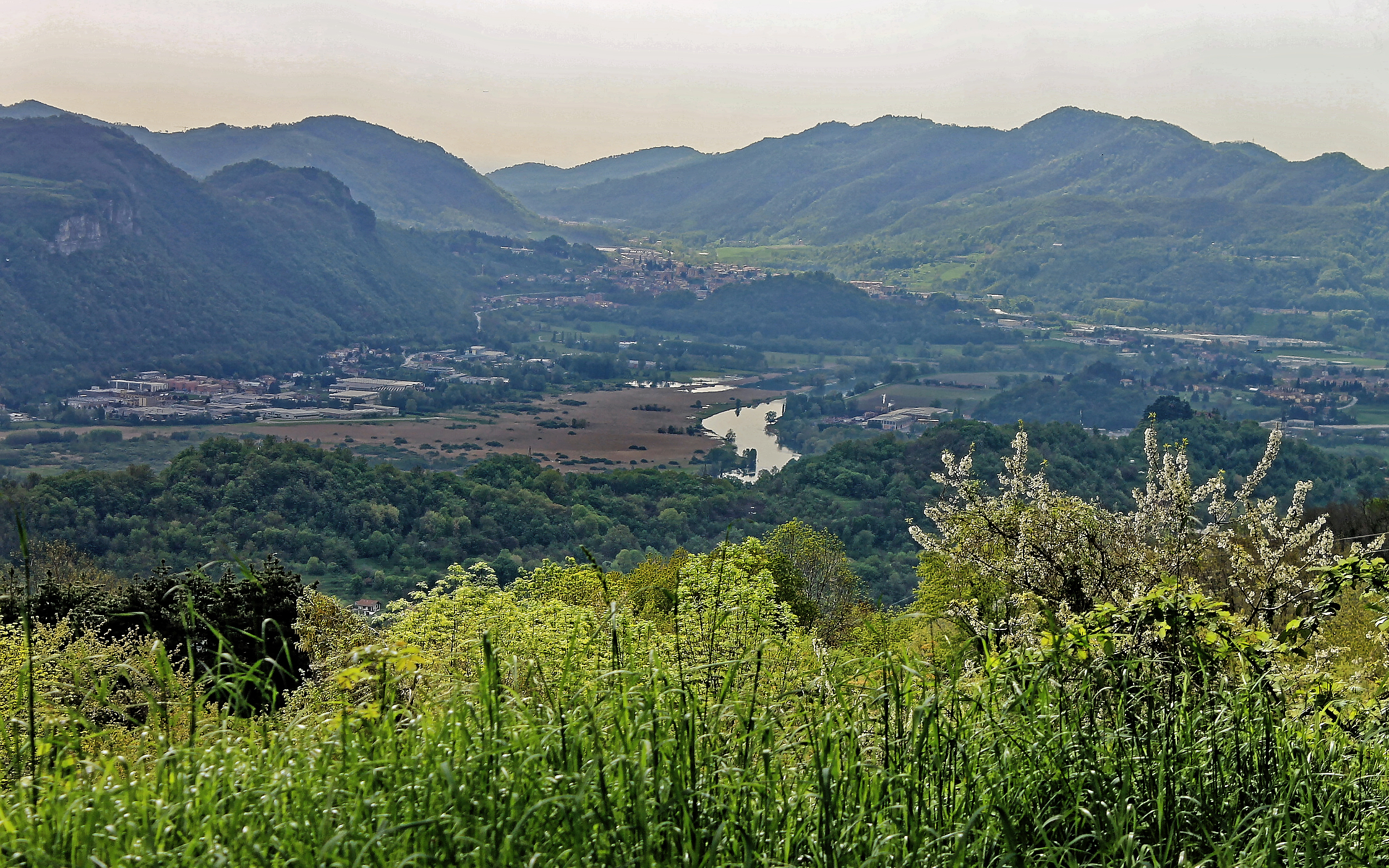
Consonno can be reached by car from Lecco or Milan, with the rebuilt road leading up to the former resort. Visitors can walk among the ruins, though the structures are unstable and officially off-limits in places, and photographers and urban explorers have made it something of a cult destination for those fascinated by decayed, oddball architecture. The nearby views of the Adda river valley and the surrounding Lombard countryside offer a striking, incongruous backdrop to the crumbling minaret and pagoda, remnants of a Las Vegas-style dream that lasted barely a decade.
A Cautionary Tale Wrapped in Kitsch
Consonno remains one of Europe’s most unusual abandoned places, less a story of gradual historical decline than of a single man’s audacious, environmentally reckless attempt to remake a landscape entirely to his own vision, and the swift natural consequences that followed. For travelers with an interest in the strange, the kitsch, and the cautionary, Consonno offers a genuinely one-of-a-kind detour into a very particular chapter of Italian excess.
Like our content? Follow us for more.