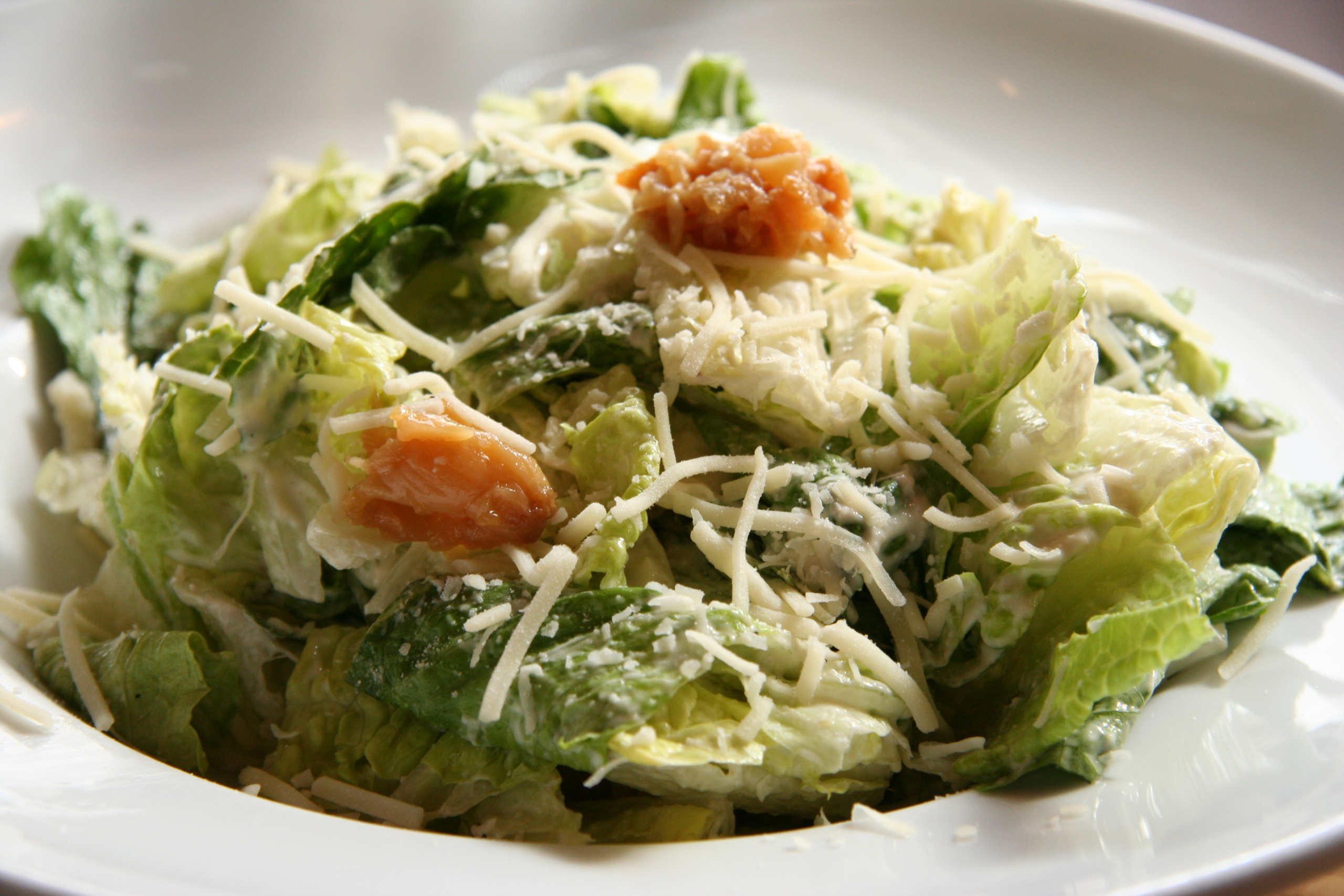
Almost everyone assumes the Caesar salad is named after Julius Caesar, and the assumption is so natural that it barely registers as an assumption. It has a Roman emperor’s name, it turns up on Italian restaurant menus everywhere, and the whole thing carries a vaguely Mediterranean, vaguely classical air. It is also completely wrong. The salad has no connection to ancient Rome, was not invented in Italy, and did not originate in the United States either.
It was invented in Tijuana, Mexico, and it has an unusually precise birthday: July 4, 1924. It was created by an Italian immigrant named Caesar Cardini, in a restaurant he ran specifically to serve Americans crossing the border to drink legally during Prohibition, and it happened because a holiday crowd cleaned out his kitchen and he had to improvise. The dish now sits on menus on every continent, in a hundred variations its creator would not recognize, and the true story of where it came from is one of the better small histories in food.
Prohibition Built the Restaurant
The essential background is that the Caesar salad exists because of American alcohol law. When Prohibition took effect in the United States, border towns became destinations — Tijuana in particular transformed into a busy resort for Californians who could drive south and drink perfectly legally, and the town filled with bars, restaurants, nightclubs, a racetrack, and bullfights catering to that traffic. Hollywood people, tourists, and weekenders poured across.
Caesar Cardini was an Italian immigrant who had come to North America in the early 1910s and, like a great many Italian immigrants, gone into the restaurant business. He lived in San Diego but ran a restaurant across the border in Tijuana — a straightforward commercial decision, since that was where the customers with money and thirst were. His establishment on the town’s main avenue drew exactly the clientele the location was designed for.
It’s worth noting the cultural crossroads this produced. As culinary historians have observed, Tijuana at the time was a town assembled from many origins — Mexican, Chinese, Californian, European — serving an international crowd, and the food that emerged from it reflected that mix. The Caesar salad is not a Mexican dish in the sense of drawing on Mexican culinary tradition. It is, as one historian puts it, an Italian salad that happens to have been born in Mexico, created for Americans.
Like our content? Follow us for more.
The Fourth of July
The founding story comes primarily from Cardini’s daughter Rosa, who recounted it in interviews over many years, and it is the version accepted by the family, by the restaurant, and by most food historians.
On July 4, 1924, the restaurant was overwhelmed. American Independence Day sent a flood of holiday visitors across the border, and by some point in the evening the kitchen had been stripped of most of what it had. Faced with a full dining room and a nearly empty larder, Cardini pulled together the things he still had and built a salad out of them at the table, in front of the guests.
What went into it was simple: whole leaves of romaine lettuce, olive oil flavored with garlic, a coddled or raw egg, grated Parmesan, Worcestershire sauce, lemon or lime juice, black pepper, and toasted bread. The presentation was the trick. Rather than sending it out from the kitchen, Cardini tossed it tableside with theatrical flourish, and the whole leaves were meant to be picked up and eaten by hand rather than cut. It was a piece of improvised dinner theater as much as a recipe, and it worked immediately.
What Wasn’t in the Original
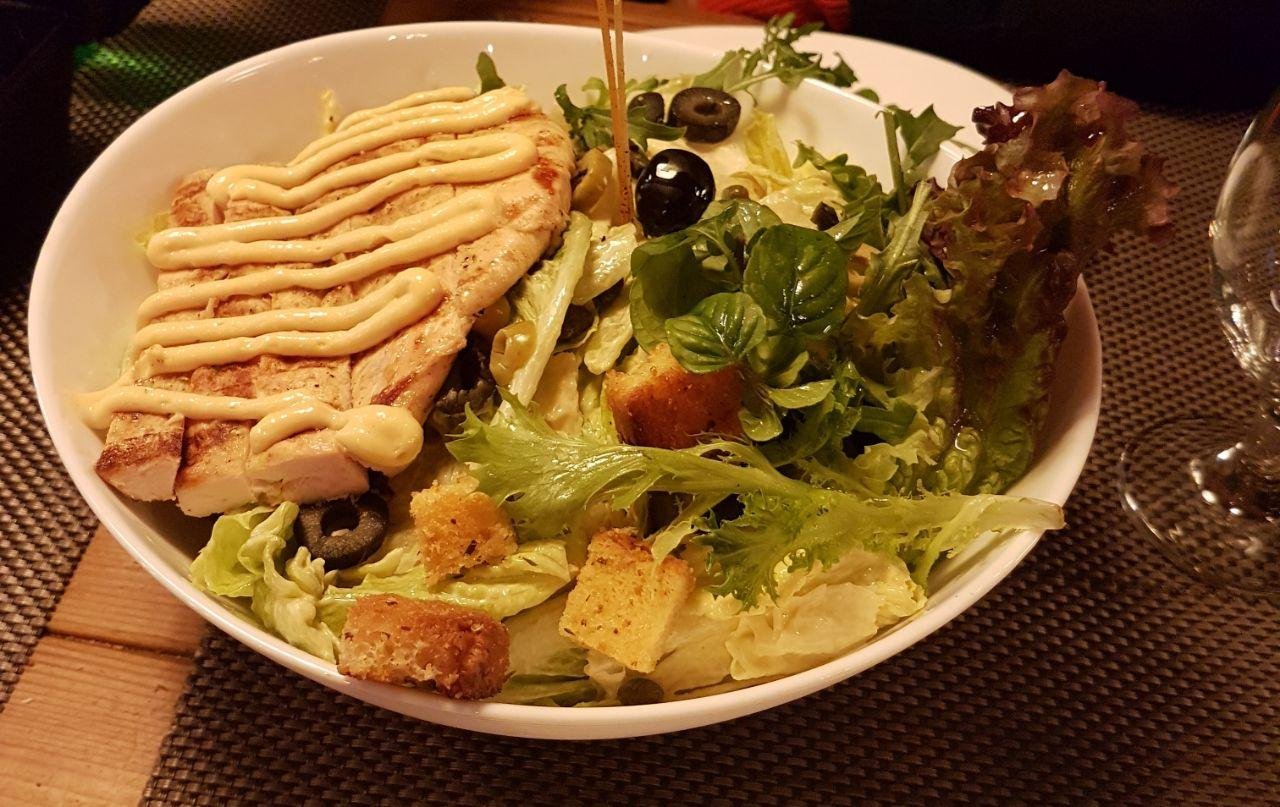
Here is where most people’s mental image of the dish diverges from the thing Cardini made, and food historians are firm about it.
There were no anchovies. This surprises people, because anchovy is now treated as the defining note of a proper Caesar dressing, but by his daughter’s account Cardini did not use whole anchovies and considered the small quantity of anchovy present in Worcestershire sauce to be sufficient — enough savory depth without the fish itself. The prominent anchovy in modern versions came later, from other hands.
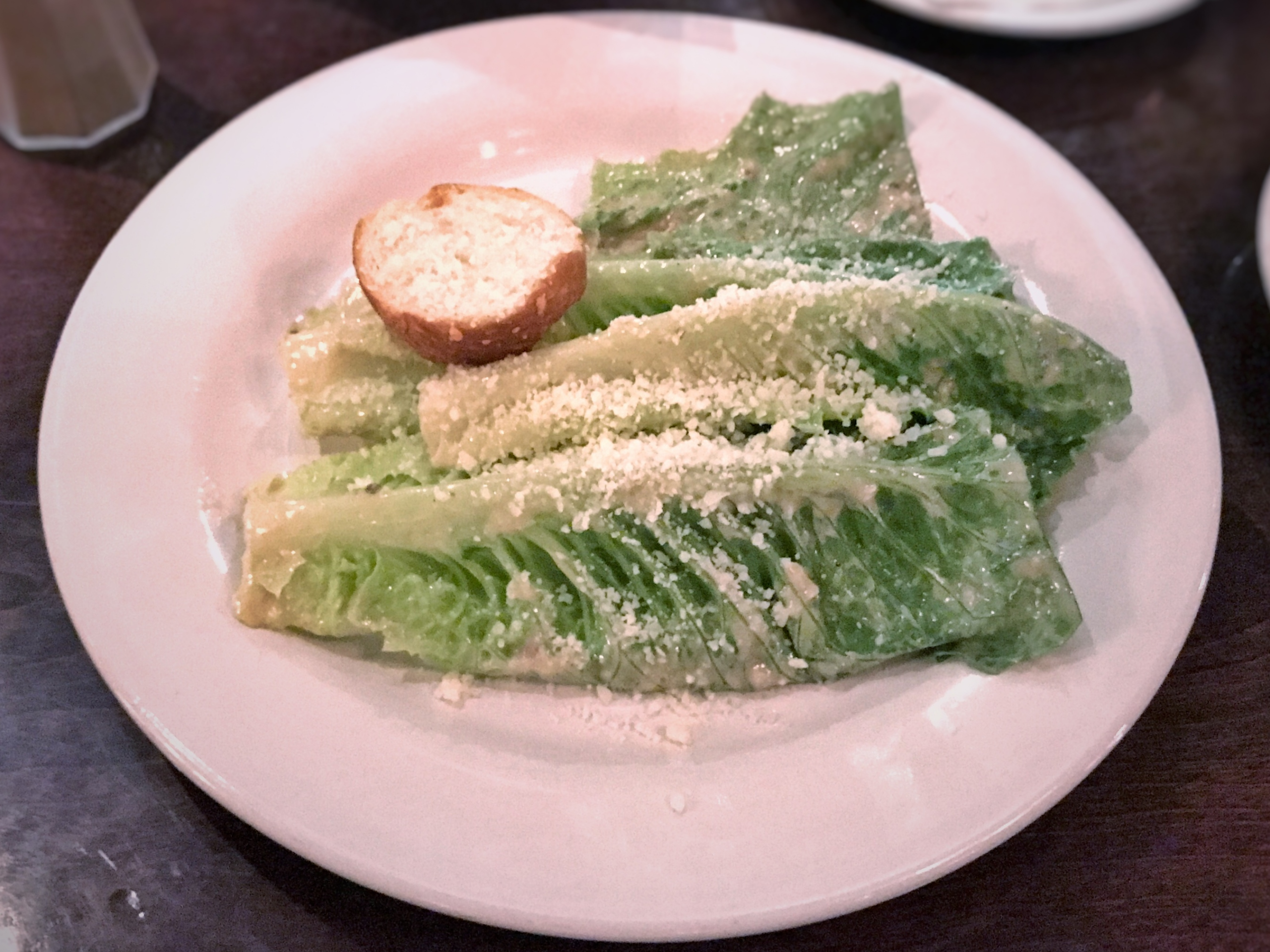
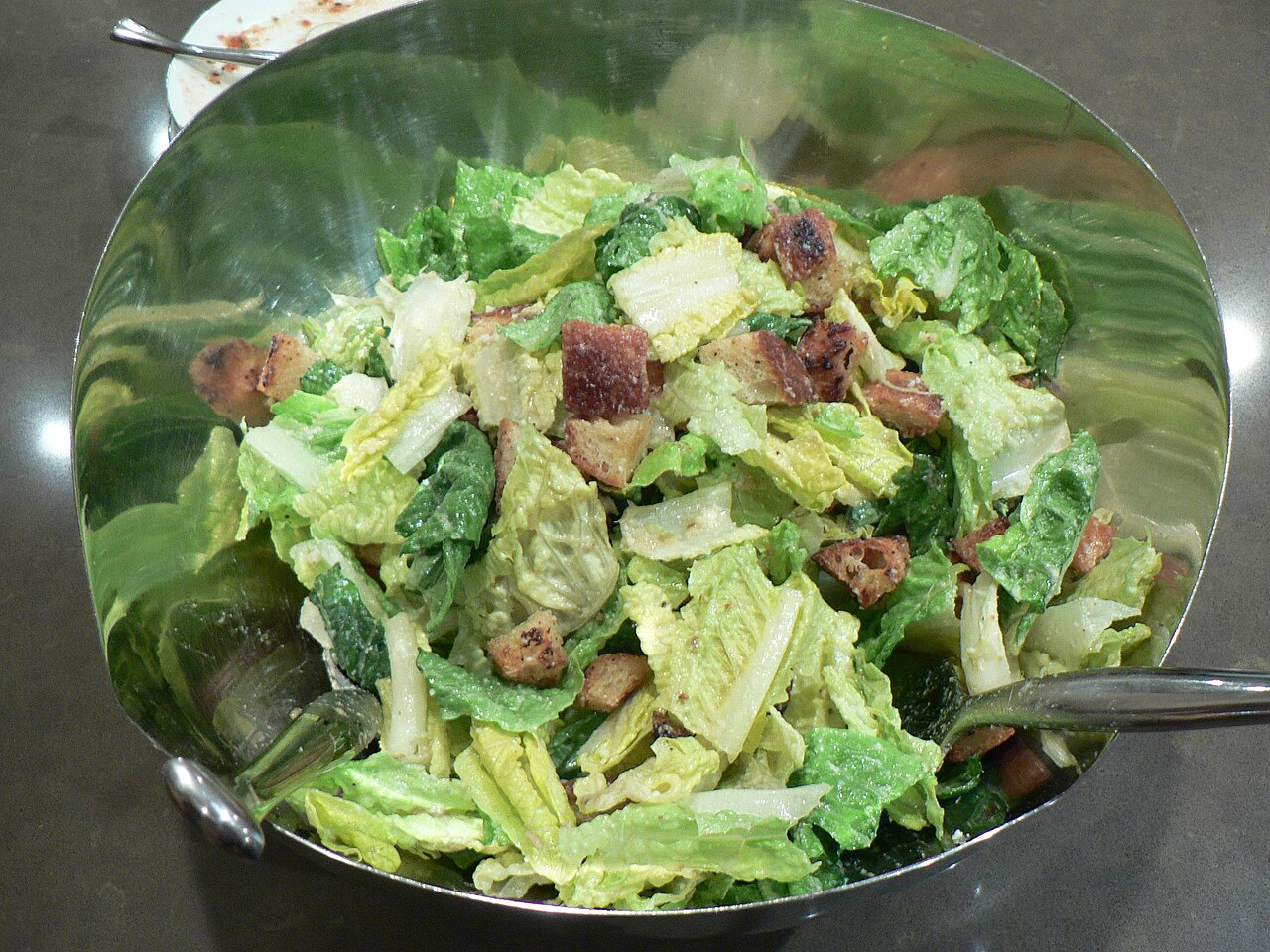
There was no Dijon mustard, which is now standard in most recipes. There were no small croutons in the modern sense; the bread element was a toasted slice rather than a scattering of cubes. There was no grilled chicken, obviously, which is a much later American addition that turned the salad into a main course. And the lettuce was served in whole leaves, not chopped — a presentation almost nobody encounters today.
In other words, the dish that conquered the world is a distant descendant of the original. Cardini’s brother Alex, who also worked in the restaurant business, is credited by some accounts with an anchovy-forward variation, and other members of the staff — including a young cook named Livio Santini — have been advanced as the true inventor by their families and supporters. Tijuana historians who spent years researching the question concluded that the July 4, 1924 creation by Caesar Cardini is the best-supported account, but the competing claims are a permanent feature of the story, as they are with almost any famous dish.
From Border Town to the World
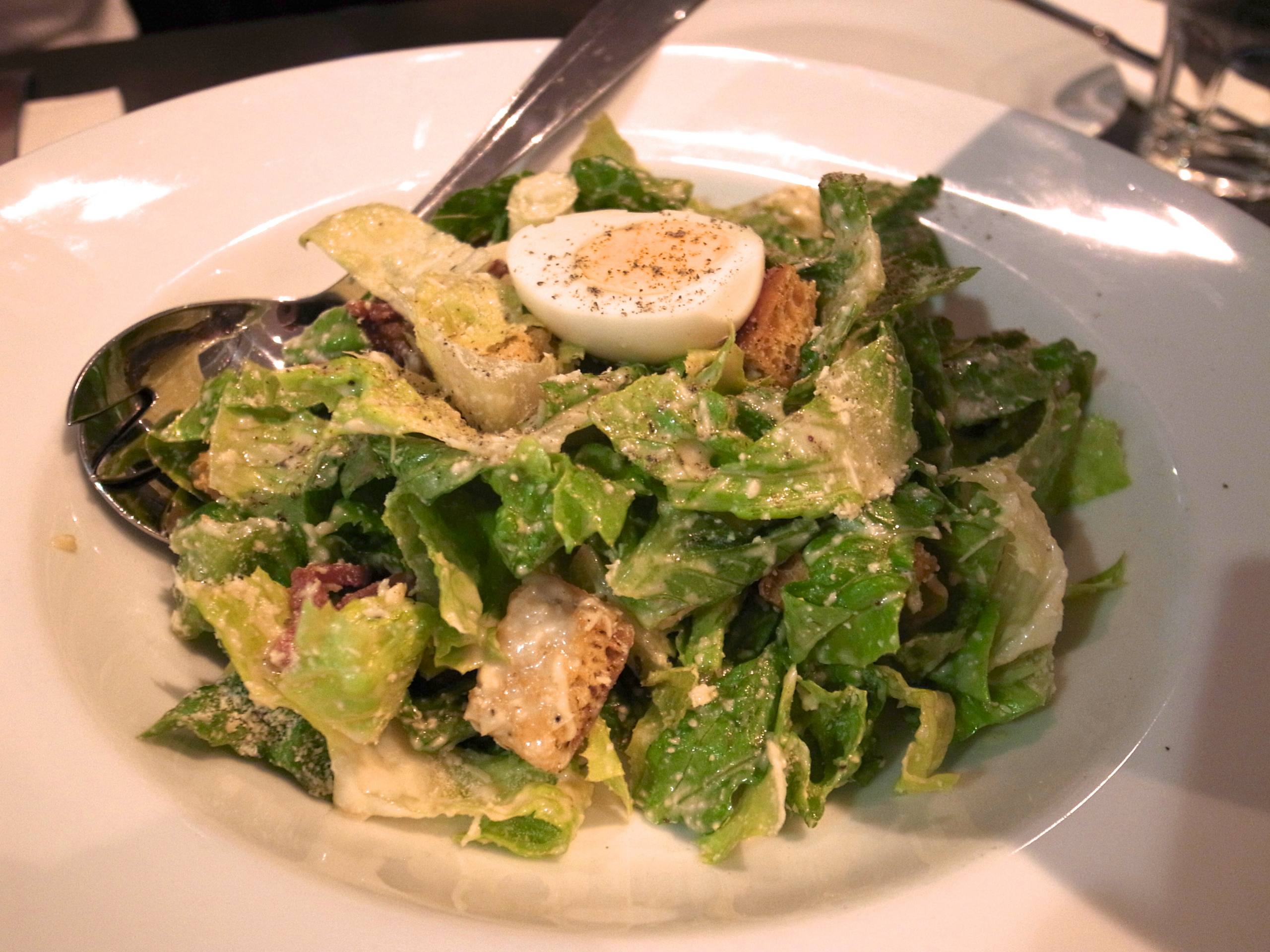
The salad spread through exactly the channels you would expect. The customers who ate it in Tijuana were largely Americans, many of them from Los Angeles, and a significant number of them were in the film business. They took the dish home, asked for it in restaurants, and made it fashionable in California and then nationally. The tableside preparation traveled with it and became a fixture of mid-century restaurant showmanship.
The endorsement that mattered most may have come from Julia Child, who wrote about eating at Cardini’s restaurant in Tijuana as a child and experiencing the salad prepared at the table by Cardini himself — an account she included in a 1975 book, which lent the origin story the weight of a beloved authority. By then the Caesar was everywhere, and the process of mutation was well underway: chopped lettuce, bottled dressing, anchovies, mustard, croutons by the handful, and eventually the grilled chicken that made it lunch.
The original restaurant on Tijuana’s main avenue is still operating, still makes the salad tableside, and the dish’s centenary in 2024 was marked with celebrations in Baja California — a food festival honoring a hundred years of a salad invented in a rush by a man who had run out of everything else.
Why the Name Fools Everyone
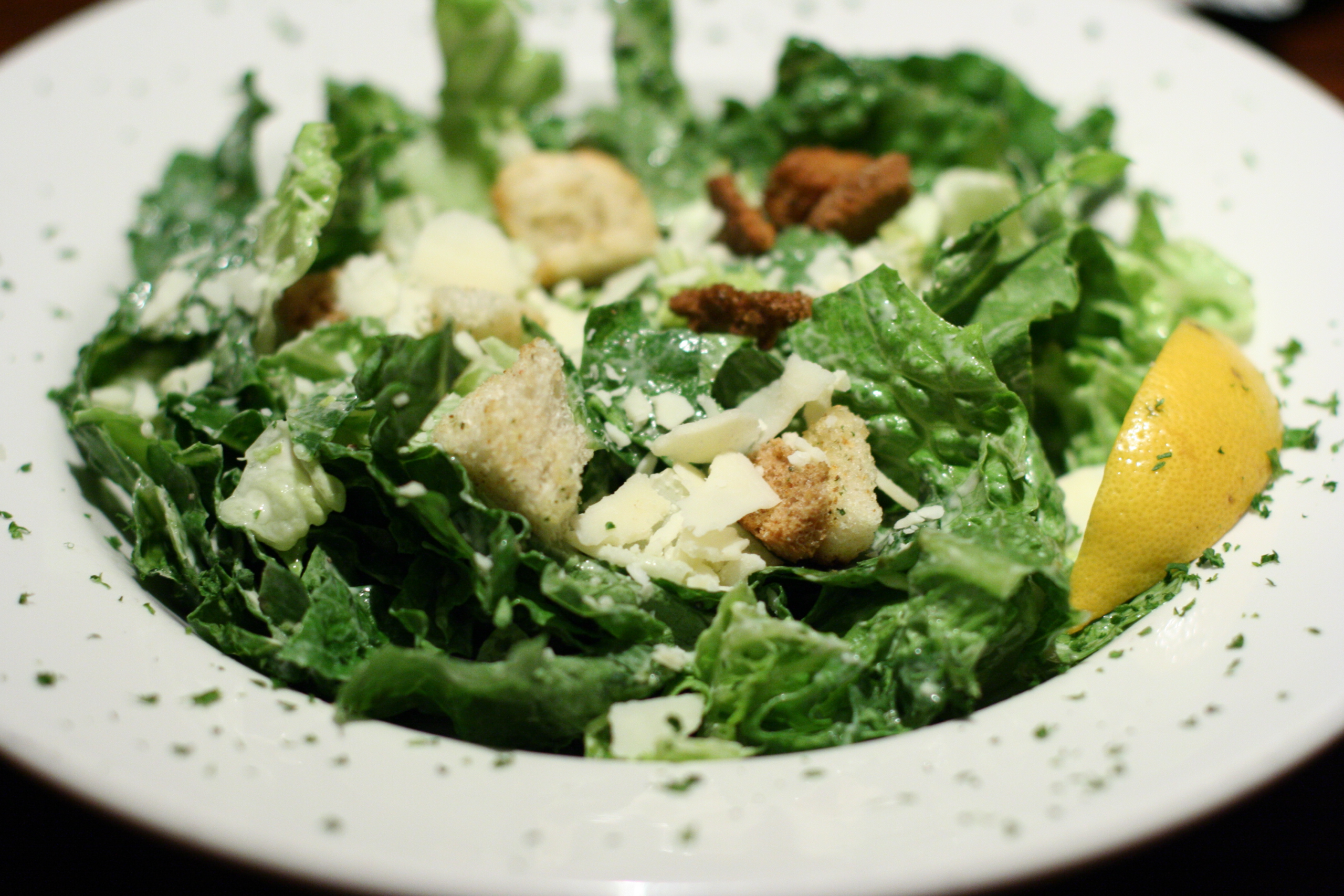
The confusion is entirely the fault of a coincidence. Caesar Cardini’s given name — Cesare, anglicized to Caesar — happens to be the name of the most famous Roman in history, and once the dish carried that name onto international menus, the association did the rest. People assumed a classical origin because the name invited it, and no one had reason to check.
The result is one of the more complete misunderstandings in everyday food. A dish named after its creator gets attributed to an emperor who died nearly two thousand years before it existed; a salad invented in Mexico gets read as Italian; and a recipe improvised from leftovers during an American holiday rush becomes a staple of formal dining rooms. Names, once attached, are extraordinarily hard to correct — a pattern that runs through food history everywhere.
How to Recognize the Original
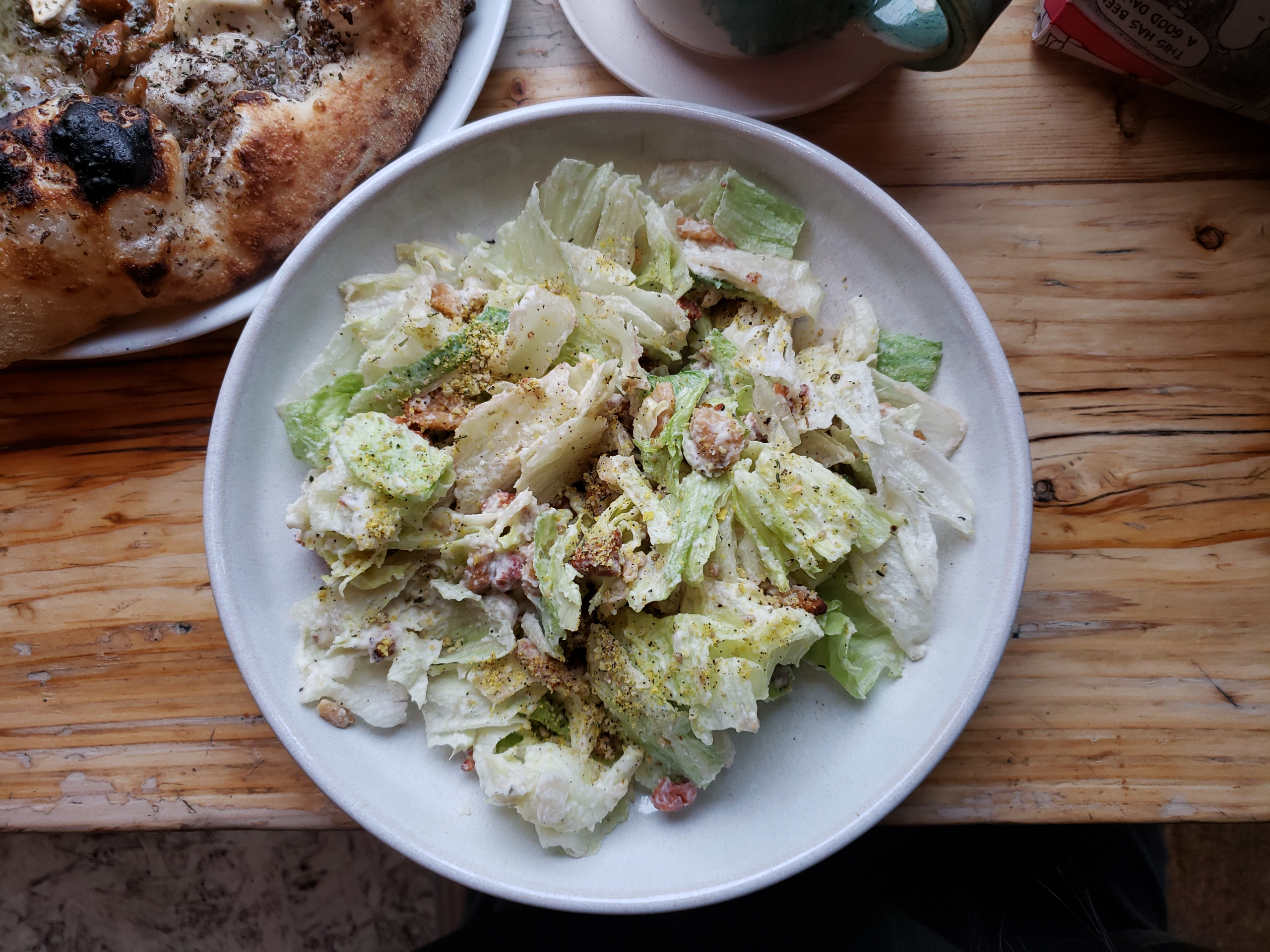
For anyone curious enough to try the 1924 version, the differences from a modern Caesar are easy to identify. The lettuce should be whole romaine leaves, trimmed and left intact rather than chopped, arranged so they can be lifted by the stem and eaten with the fingers. The dressing is built around garlic-infused olive oil, egg, lemon, Worcestershire, and a generous quantity of grated Parmesan, with black pepper — and no anchovy fillets, no mustard, and no cream, all of which are later additions. The bread element is a toasted slice rather than a handful of cubes.
A number of restaurants, including the original in Tijuana, still prepare it tableside in the traditional way, tossing the leaves in a large bowl in front of the guests. It’s worth ordering at least once if you come across it, because the theater is not a gimmick added later — the performance was part of the dish from the first night, and it is the closest most people will get to the thing Cardini actually served to a room full of stranded American tourists.
An Empty Kitchen and a Full Dining Room
What makes the Caesar salad’s real story satisfying is how ordinary it is. There was no culinary genius seeking to create a masterpiece. There was a restaurateur on a holiday night with too many customers and not enough food, doing what cooks have always done under pressure: looking at what was left, thinking fast, and making a virtue of the limitation by turning the assembly into a performance.
A hundred years later, a version of that improvisation appears on menus in essentially every country with restaurants. It has been altered beyond recognition, mass-produced in bottles, and rebuilt as a chicken entrée — and its inventor’s actual creation, the whole romaine leaves tossed at the table with garlic oil and Parmesan and no anchovy at all, is now the unusual version you have to seek out. It was never Roman. It was one Italian immigrant in a Mexican border town on the Fourth of July, running out of options and improvising something worth remembering.
Like our content? Follow us for more.