

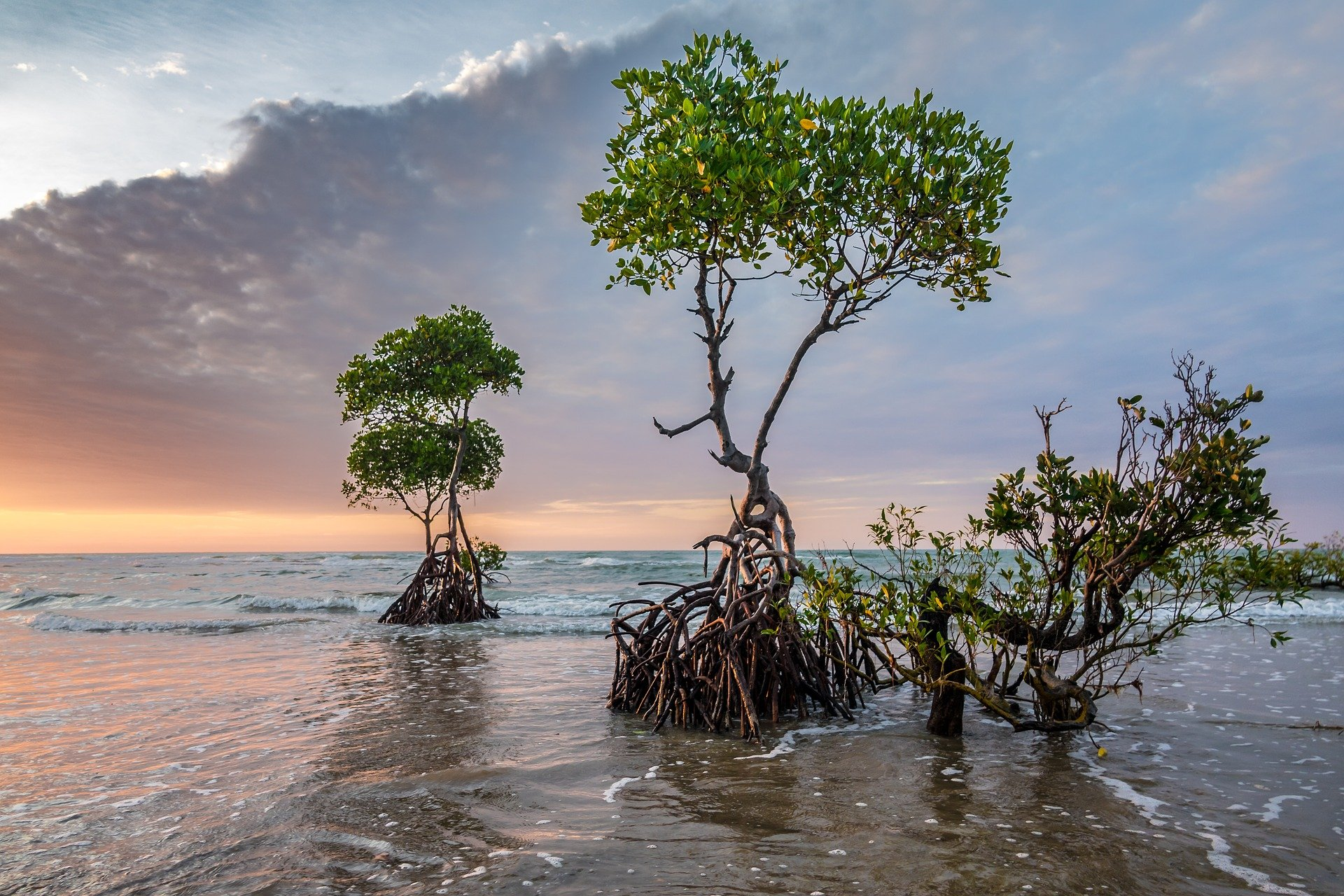
Every July 26, World Mangrove Day marks a kind of forest most people have never walked through and many couldn’t quite describe — a tangle of trees standing in seawater along tropical coastlines, their roots arching out of the mud in impossible shapes, the ground flooding and draining twice a day with the tide. Mangroves are among the most peculiar plants on the planet and among the most steadily essential, and the day exists because they are disappearing far faster than most people realize.
What makes them worth an entire international observance is that they do several things no other ecosystem does as well, all at once. They are natural sea walls that blunt storms and tsunamis before those reach the towns behind them. They are nurseries for a huge share of the fish and shellfish that coastal communities eat and sell. They are among the most concentrated carbon stores on Earth, locking away more per acre than a rainforest. And they do all of this while performing biological feats — living in saltwater, breathing through their roots, giving birth to seedlings that sprout while still attached to the parent tree — that sound closer to science fiction than botany. Here is what they actually are, and why their day matters.
Trees That Live in the Sea
The first remarkable thing about a mangrove is simply that it exists. The overwhelming majority of plants cannot tolerate saltwater; it kills them by drawing moisture out of their tissues. Mangroves are the exception, a group of salt-tolerant trees and shrubs that have independently evolved the ability to live where the land meets the sea, flooded by tides, rooted in oxygen-starved mud, in water that would poison almost anything else.
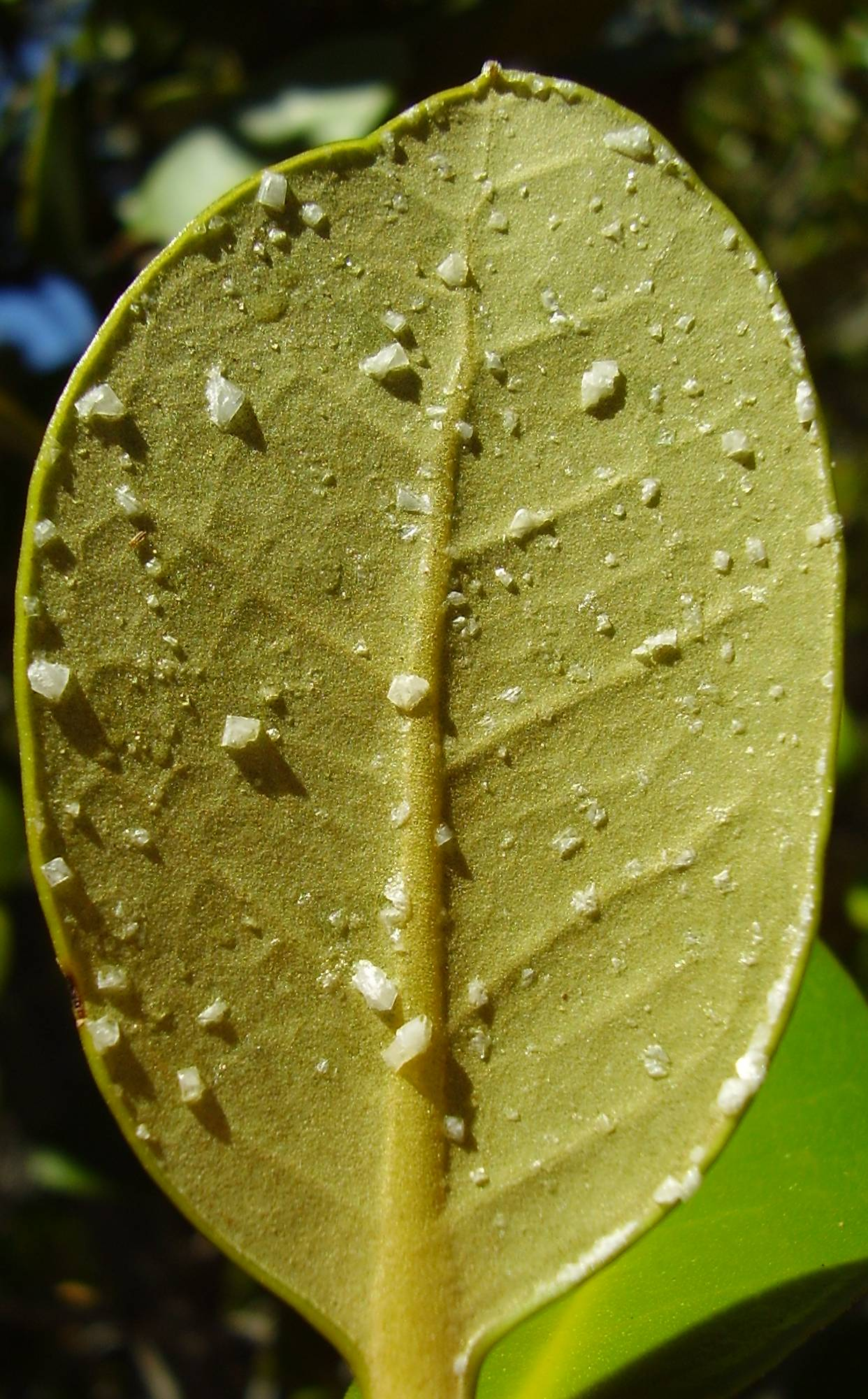
They manage the salt through a couple of different strategies depending on the species. Some filter it out at the roots, their root systems acting as an extraordinarily fine barrier that excludes most of the salt before the water ever enters the plant. Others take the salt up and then get rid of it, excreting it through special glands in their leaves so that the foliage can be visibly crusted with salt crystals, or concentrating it in older leaves that are then shed. Either way, the tree is performing a continuous desalination operation that human engineers spend enormous sums trying to replicate, steadily, on every tide.
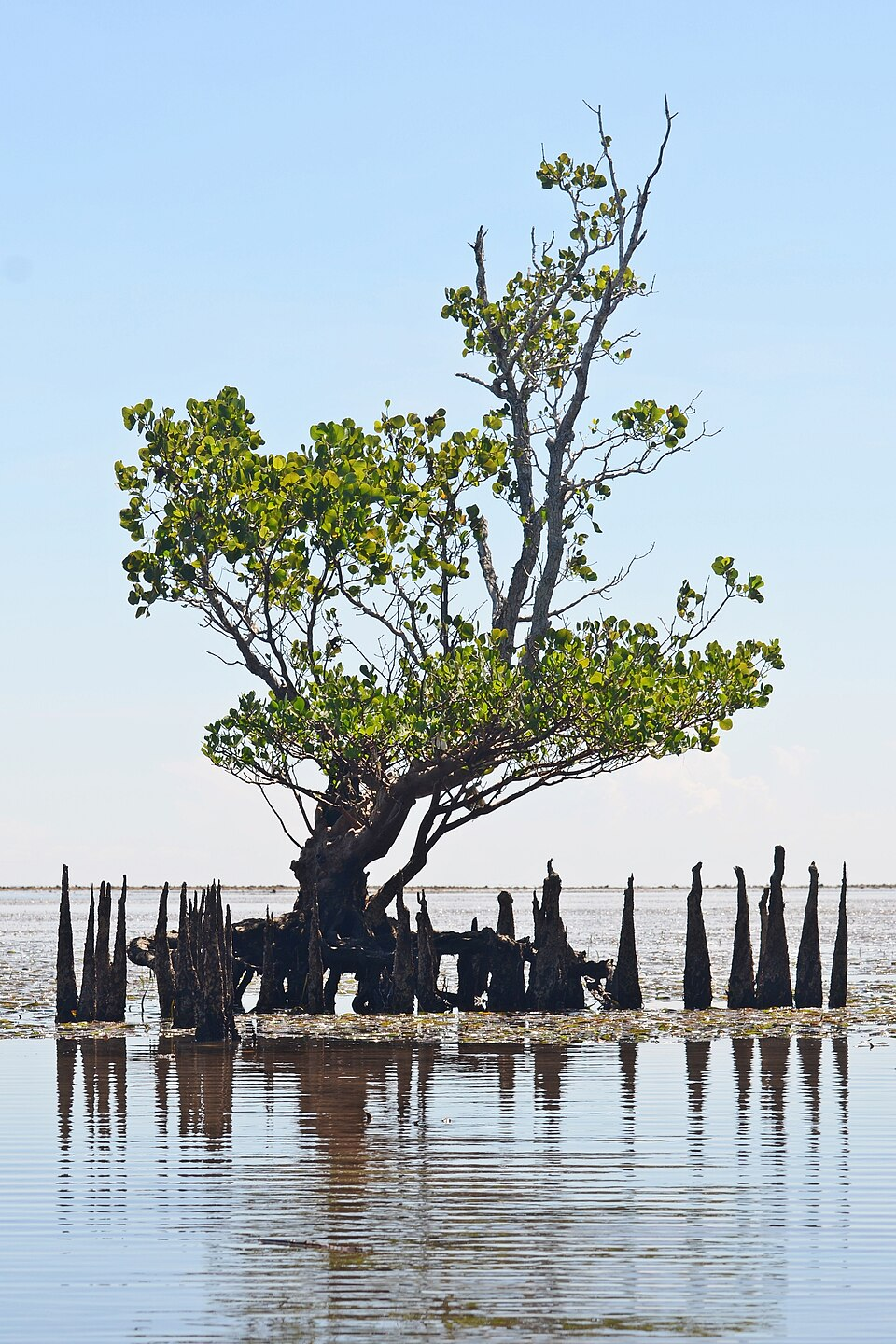
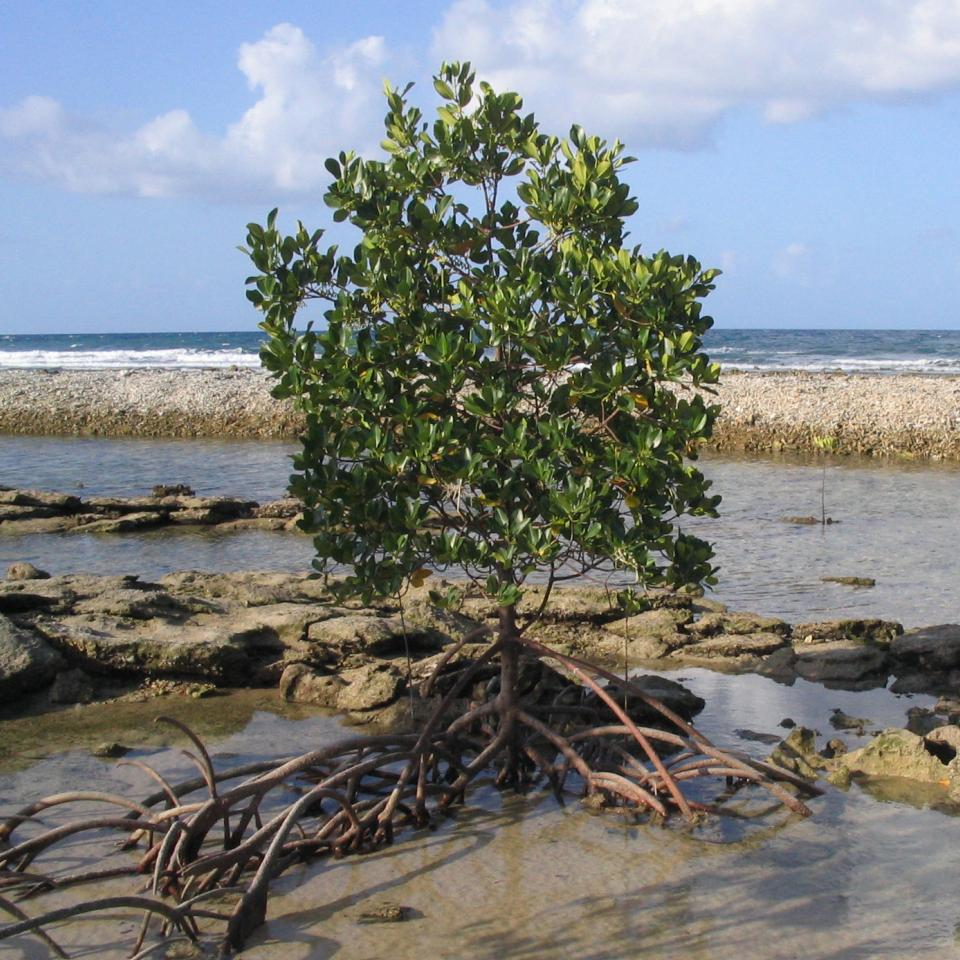
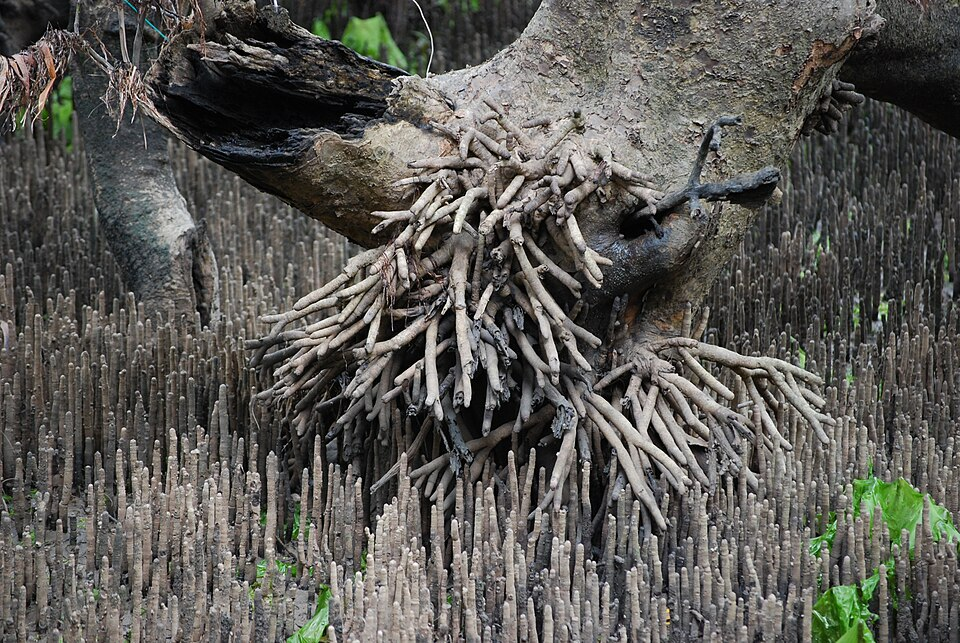
There’s a second feat layered on the first. Mangroves live in waterlogged coastal mud that contains almost no oxygen — ordinary roots would suffocate — so they breathe through their roots, above the waterline. Different species do this in strikingly different ways, which is why a mangrove forest looks so strange. Some send up thin, pencil-like roots called pneumatophores that poke vertically out of the mud in their thousands, like a field of snorkels or a bed of nails, taking in air through tiny pores when the tide is out. Others — the classic red mangroves of the picture-book image — stand on great arching prop roots and stilt roots that lift the trunk clear of the water and let the plant breathe and stay anchored in shifting ground at the same time. These roots are the signature of the ecosystem, and they are not decorative: they are the tree’s lungs, and the reason it can live somewhere nothing else can.
Like our content? Follow us for more.
A Nursery for the Ocean
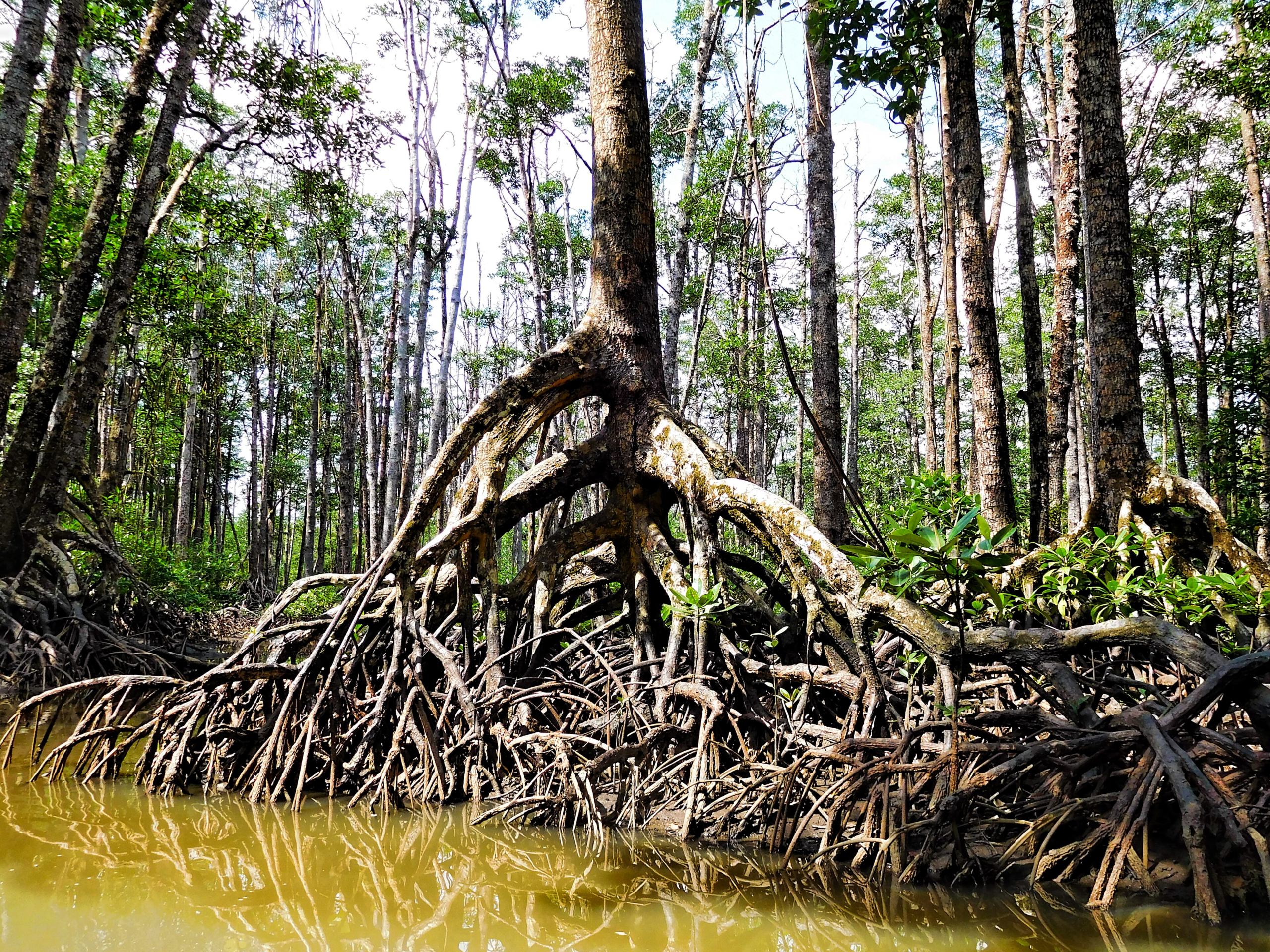
Down among those roots is where the mangrove earns much of its economic value. The dense, submerged tangle of prop roots and pneumatophores creates a sheltered, predator-shielded maze, and it functions as one of the most important nursery habitats in the ocean.
An enormous range of fish, shrimp, crabs, and other creatures spend the vulnerable early part of their lives among mangrove roots, where the structure hides them from larger predators and the rich, sheltered water provides food. Many of them then move out to seagrass beds, coral reefs, and the open sea as adults — including a great many of the species that coastal fisheries depend on. The link is direct enough that the health of offshore fisheries is tied to the health of the mangroves onshore, and communities that lose their mangroves frequently watch their catches decline afterward. When people describe mangroves as the ocean’s cradle, it is not a metaphor: a substantial fraction of tropical marine life passes through them.
The Best Sea Wall Nobody Built
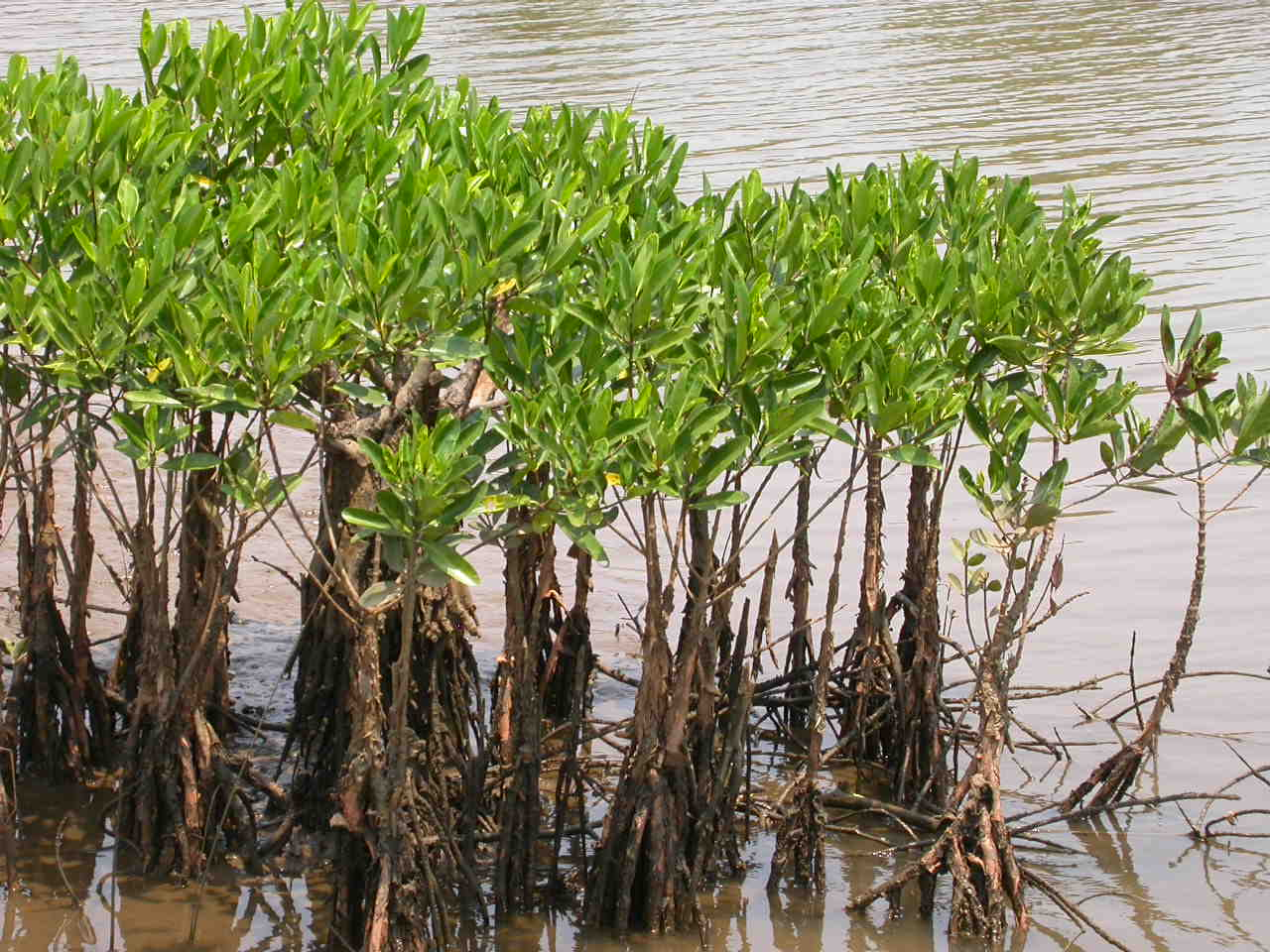
The feature that has drawn the most attention lately is protection. A belt of mangroves in front of a coastline is a formidable natural defense against exactly the things that threaten coastal communities most: storm surge, large waves, and tsunami.
The mechanism is physical. The dense above-ground root systems and closely packed trunks present enormous resistance to moving water, so a wave or surge passing through a mangrove belt loses a large share of its energy and height. Studies have found that even a relatively narrow band of mangrove forest can substantially reduce wave height, and that mangroves measurably lessen flood depth and damage from major storms. Research on hurricane damage in Florida has found that property behind mangroves suffered significantly less flood damage than comparable property without that buffer, and global analyses estimate mangroves provide tens of billions of dollars a year in flood-protection benefits and spare millions of people from flooding annually who would otherwise be exposed. A forest that grows itself, repairs itself, and rises with the tides is, in many places, a better and cheaper coastal defense than a concrete wall — and it comes with fish and carbon storage attached.
More Carbon Than a Rainforest
The last of the mangrove’s headline services is invisible and enormous. Mangroves are among the most carbon-dense ecosystems on the planet, and the carbon is stored mostly out of sight, in the deep, waterlogged, oxygen-poor mud beneath the trees.
Because that soil is flooded and starved of oxygen, the organic matter that accumulates in it — fallen leaves, roots, trapped sediment — decomposes extremely slowly, so carbon that would quickly return to the atmosphere in a normal forest instead builds up in the mud over centuries and millennia. The result is that mangroves, along with salt marshes and seagrasses, store carbon per unit area far in excess of most land forests, in what scientists call “blue carbon.” This is a double-edged fact, and it is the crux of why their loss matters so much: an intact mangrove is a superb carbon store, but a destroyed or drained one releases that long-buried carbon back into the atmosphere. Cutting down a mangrove doesn’t just remove a future carbon sink — it opens an old vault.
Why the Day Exists
All of which explains the observance. World Mangrove Day exists because mangroves are being lost at an alarming rate — a large share of the world’s mangrove forests have been destroyed or degraded over recent decades, cleared for coastal development, shrimp and fish farming, agriculture, and timber, or lost to pollution and rising seas. The loss is a rare case where every single benefit disappears at once: the coastal protection, the fish nursery, the carbon store, and the wildlife habitat all vanish together when the forest goes.
The encouraging part, and part of what the day promotes, is that mangroves respond remarkably well to protection and restoration. They grow relatively fast, they recolonize where conditions allow, and studies of forests hit by hurricanes have found them recovering their structure and carbon-storing function within a handful of years when the underlying conditions are healthy. Replanting and, crucially, restoring the natural water flow that mangroves need has worked in many places, and mangrove restoration has become one of the more promising and cost-effective tools in both coastal defense and climate strategy. Unlike a lot of environmental problems, this one has a solution that is known, affordable, and already working where it’s tried.
Seeing Them for Yourself
For travelers, mangroves reward a visit far more than their muddy reputation suggests. They’re found across tropical and subtropical coastlines worldwide, and many of the best are protected and set up for visitors — boardwalks that carry you out over the roots, kayak and canoe trails that thread through the tidal channels, and boat tours through the larger forests. The Sundarbans, straddling India and Bangladesh, is the largest mangrove forest on Earth and famously shelters tigers; there are extensive, accessible mangrove parks across Southeast Asia, the Caribbean, Florida, and Australia, among many others.
Going at the right state of the tide matters, and a knowledgeable guide transforms the experience, because a mangrove forest is one of those places that looks like not much until someone shows you what you’re looking at — the breathing roots, the mudskippers, the crabs, the juvenile fish sheltering in the shallows, the birds. It is one of the few landscapes where you can actually watch an ecosystem doing its work in real time as the tide moves through it.
The Forest Between Two Worlds
Mangroves sit at the exact boundary between land and sea, and they spend their lives doing the difficult, unglamorous work of holding that boundary in place — filtering saltwater, breathing through the mud, raising the ocean’s young, burying carbon, and standing between the open water and the towns behind them when the storms come. They ask for nothing and give an extraordinary amount, and for a long time people repaid them by cutting them down.
World Mangrove Day is, in the end, an argument that these strange saltwater forests are worth more standing than cleared — and the argument is unusually easy to make, because the accounting is so lopsided. A mangrove protects a coastline, feeds a fishery, stores a vault of carbon, and shelters a tiger, all at once, for free. On July 26, that seems worth marking: the trees that grow in the sea, breathe through snorkels, and steadily do more useful work than almost anything else with roots.
Like our content? Follow us for more.
