On the night of August 15, 1977, a radio telescope in Ohio was doing what it did every night: silently scanning the sky, listening for radio signals from the depths of space. As part of a project searching for possible signs of extraterrestrial intelligence, the telescope swept across the heavens, recording the faint radio hiss of the cosmos onto printouts for astronomers to examine later. That night, it recorded something that has never been fully explained, something that would become one of the most famous and tantalizing mysteries in the history of science.
For 72 seconds, the telescope detected a powerful, distinctive radio signal coming from the direction of deep space. When an astronomer reviewed the data printout a few days later and saw the striking pattern the signal had left, he was so astonished that he circled it in red pen and wrote a single exclamation beside it: “Wow!” That word gave the signal its enduring name. The Wow! Signal, as it has been known ever since, appeared to match many of the characteristics that scientists expected a real message from an alien civilization might have. And then it vanished. Despite decades of dedicated searching, the signal was never detected again, and to this day, no one has been able to say for certain what it was. Here is the story of the Wow! Signal, the 72-second mystery from the stars.
Listening to the Stars
To understand the Wow! Signal, you have to understand what the telescope was doing in the first place. By the 1970s, scientists had begun seriously pursuing the search for extraterrestrial intelligence, often abbreviated as SETI, the effort to find evidence of alien civilizations by scanning the sky for signals they might be transmitting. The idea was that an advanced civilization elsewhere in the galaxy might broadcast radio signals, either deliberately or as a byproduct of their technology, and that we might be able to detect such signals with radio telescopes.
The telescope involved in the Wow! Signal was a large radio observatory in Ohio, nicknamed for its great size, which was dedicated to this kind of sky survey. Rather than being watched in real time by astronomers, it recorded the radio data it collected onto computer printouts, which would be examined by researchers days later. Scientists searching for alien signals had reasoned about what such a signal might look like: they expected it might be a “narrowband” signal, concentrated at a very specific radio frequency rather than spread across a wide range, since natural cosmic sources tend to broadcast across broad swaths of the spectrum, while an artificial, technological signal might be tuned to a single frequency, much like a radio station. In particular, researchers thought a special frequency associated with hydrogen, the most common element in the universe, would be a logical choice for any civilization trying to get the attention of others. It was against this backdrop of careful expectation that the Wow! Signal arrived, and it fit the profile almost eerily well.
Like our content? Follow us for more.
The Night of the Signal
The signal itself was recorded during the telescope’s routine scanning on that August night in 1977, though no human saw it at the time; it was captured on the data printout to be reviewed later. When the astronomer responsible for examining the data went through the printouts a few days afterward, his attention was seized by a sequence that stood out dramatically from the ordinary background noise.
The signal was strong, far more intense than the usual cosmic static, and it had exactly the characteristics that a sought-after alien signal was expected to have. It was a narrowband signal, concentrated in frequency, and it appeared at close to that significant frequency associated with hydrogen that scientists had flagged as a likely choice for an interstellar broadcast. Its pattern over the 72 seconds it was recorded matched what you would expect from a fixed source out in space passing through the telescope’s field of view as the Earth rotated: it rose in intensity, peaked, and then fell away, precisely the signature of a real celestial source rather than local interference. In short, the signal looked remarkably like exactly the kind of thing the search for extraterrestrial intelligence was hoping to find. It was this astonishing match to expectations, this sense of “this is what we’ve been looking for,” that prompted the astronomer’s famous handwritten reaction. He circled the data and wrote “Wow!” in the margin, and in doing so, unwittingly named one of the great mysteries of modern science.
The Signal That Never Returned
If the Wow! Signal had appeared once and then been detected again, its story might have unfolded very differently; a repeat detection could have confirmed it as a real, persistent source and opened the door to intense study. But that is not what happened. The signal was recorded during that single 72-second window, and then it was gone. In the days, months, years, and decades that followed, astronomers repeatedly turned telescopes back toward the same patch of sky from which the signal had come, hoping to catch it again. They never did.
This is the crux of what makes the Wow! Signal so enduringly mysterious. A one-time signal is extraordinarily difficult to interpret. Because it never repeated, scientists could not gather more data on it, could not study its source, and could not confirm or rule out various explanations. It remained a single, isolated event: 72 seconds of powerful, intriguing signal, and then silence. Over the years, many attempts were made to detect a recurrence, using increasingly sophisticated equipment, and the persistent failure to find the signal again only deepened the puzzle. The very quality that made the signal so exciting, its apparent match to the profile of an alien transmission, was undercut by its refusal to reappear, leaving scientists with a truly singular and frustrating enigma. Was it a fluke? A one-off event? Something that would never be seen again? Without a repeat, there was no way to know for sure.
The Search for an Explanation
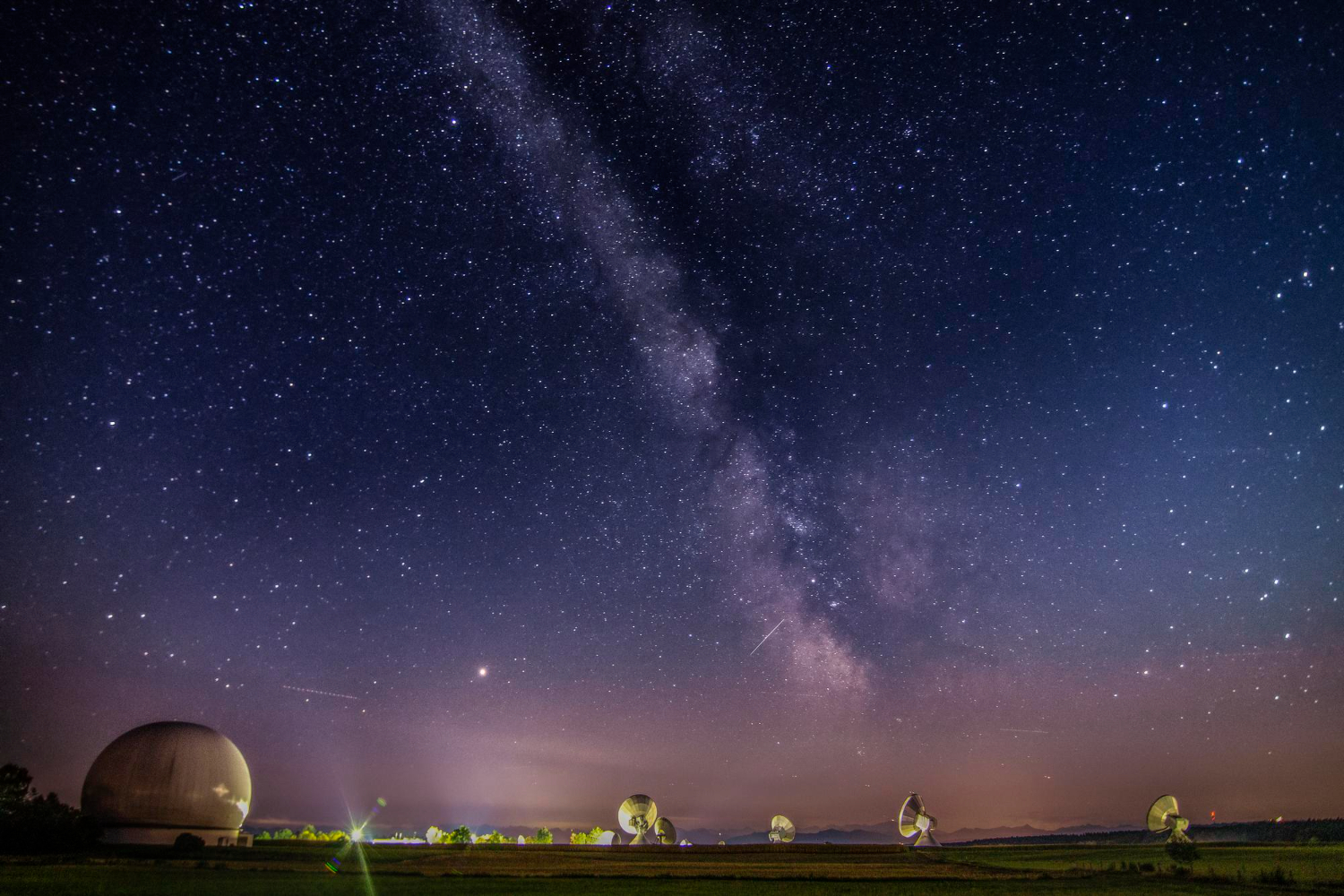
In the decades since the Wow! Signal was detected, scientists have proposed a variety of explanations for it, attempting to account for the mysterious 72 seconds through natural or mundane causes. The scientific community has generally approached the signal with appropriate caution, resisting the temptation to leap to the conclusion that it was definitely a message from aliens, and instead trying to find more ordinary explanations first.
Various hypotheses have been put forward over the years. Some have suggested the signal might have come from a natural astronomical source of some kind, perhaps involving clouds of hydrogen gas in space being briefly energized or brightened by some passing source of radiation, producing a burst of signal at the telltale frequency. Others have wondered whether the signal could have been the result of some form of interference, perhaps a human-made signal reflected off a piece of space debris or otherwise mistakenly appearing to come from deep space, though such explanations face difficulties in accounting for all the signal’s characteristics. Each proposed explanation has been examined and debated, and while some are considered more plausible than others, none has been definitively confirmed as the answer. The honest scientific position remains that the source of the Wow! Signal is not known. It sits in a rare category: a signal intriguing enough to have tantalized researchers for decades, but elusive enough to have resisted every attempt at a conclusive explanation, whether ordinary or extraordinary.
Why It Still Captivates Us
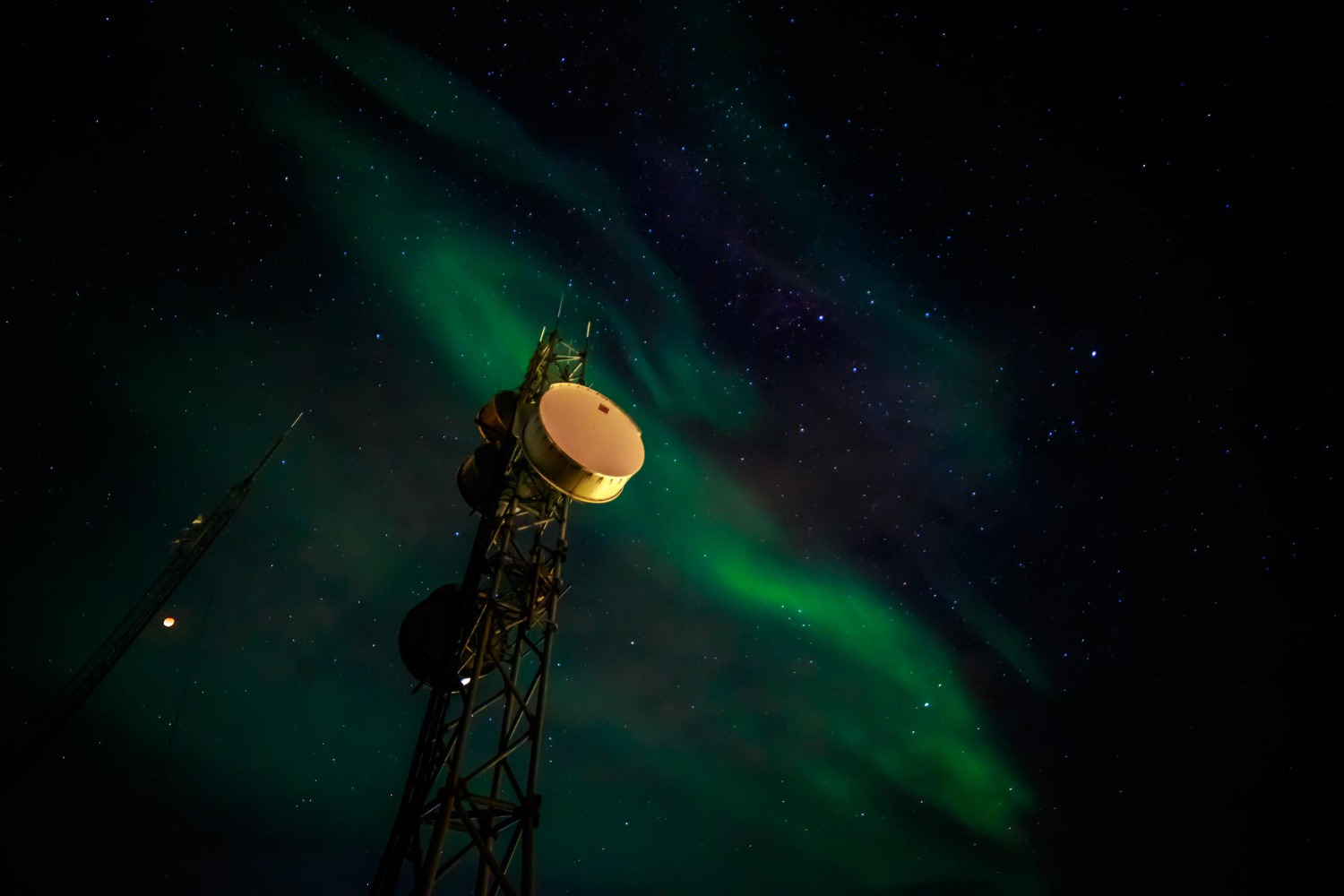
The Wow! Signal has retained its hold on the public imagination for nearly half a century, and it’s worth asking why. Part of the answer is simply that it remains unexplained; unsolved mysteries have a natural power to fascinate, and a real, well-documented enigma from the frontier of science is irresistible. But there is something more specific about the Wow! Signal that gives it such resonance: it touches on one of the biggest questions humanity has ever asked, whether we are alone in the universe.
For as long as people have gazed up at the stars, they have wondered whether there might be other intelligent beings out there, and whether we might one day make contact. The Wow! Signal represents perhaps the closest thing to a tantalizing hint we have ever received, a moment when a telescope picked up exactly the kind of signal we might expect from another civilization, only for it to slip away and never return. It is important to be clear that the signal has not been shown to be of alien origin; the responsible scientific view is that it is unexplained, not proven to be extraterrestrial, and it may well have a natural cause we have yet to identify. But the mere possibility, the fact that this signal so perfectly fit the profile of what we were looking for, is enough to keep it alive in our imaginations as a symbol of the search for cosmic companionship. It stands as a reminder of how much we still don’t know, and of the profound questions that remain open above our heads.
The Enduring Enigma
Nearly fifty years after that August night in 1977, the Wow! Signal remains what it has always been: a real and unsolved mystery, a brief, powerful, tantalizing signal from the direction of deep space that has never been explained and never been repeated. The telescope that detected it has long since been dismantled, and the astronomer who gave it its famous name has passed on, but the signal endures as one of the most intriguing puzzles in the history of astronomy.
Whether the Wow! Signal will ever be explained is unknown. Perhaps future research, new technology, or a fresh detection will finally reveal its source, whether mundane or momentous. Or perhaps it will remain forever a single, isolated 72 seconds of mystery, a question mark scrawled across the sky. Either way, it stands as a powerful emblem of human curiosity and our enduring quest to understand the universe and our place within it. That a single word, hastily written in red pen beside a computer printout nearly five decades ago, has come to represent one of the great open questions of science is a testament to the enduring allure of the unknown. The Wow! Signal reminds us that the cosmos still holds mysteries we cannot yet solve, and that sometimes the most captivating questions are the ones that remain, tantalizingly, unanswered.
Like our content? Follow us for more.