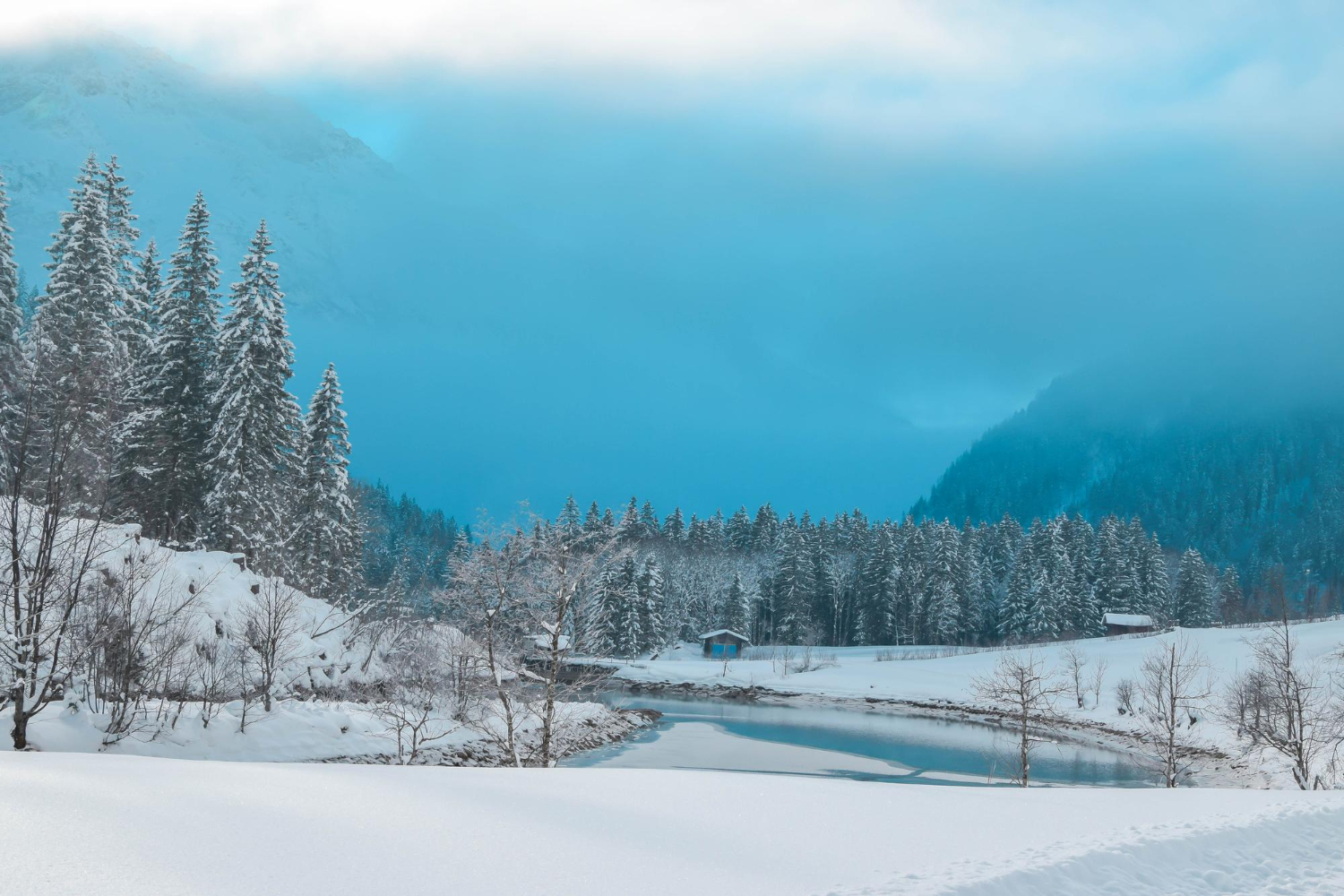
Look at Earth from orbit today and you see the famous blue marble: oceans, cloud swirls, green continents. Run the clock back roughly 700 million years and an observer in the same position would have seen something almost unrecognizable. A white sphere. Ice from pole to pole, reaching across the tropics, with glaciers sitting on ground that should have been sweltering equatorial coastline.
This is the Snowball Earth hypothesis, and when it was first proposed it struck many geologists as impossible. Ice at the equator implies a planet so cold that the freeze should have been permanent, since a white planet reflects sunlight rather than absorbing it. And yet the geological record kept insisting it happened, not once but at least twice. Today the picture has largely flipped: the idea that was once dismissed as unbelievable is now the prevailing view among scientists working on the period. What remains truly contested is how complete the freeze was, how life survived it, and how much of what came afterward, including the rise of complex multicellular life, we owe to it. Here is the story of the coldest chapter in Earth’s history.
The Rocks That Made No Sense
The evidence came first, and it was baffling. Geologists studying rocks from the Neoproterozoic era, hundreds of millions of years old, kept finding glacial deposits in places that made no geographic sense. Diamictites, the jumbled sediment left behind by moving ice, turned up on essentially every continent. That alone might not be conclusive, since continents move over geological time. But when researchers reconstructed where those landmasses sat when the deposits formed, some of them had been sitting at or near the equator.
That is the crux of the problem. Glaciers in Canada are unremarkable; glaciers in Canada when Canada was straddling the equator are extraordinary. One influential line of work used uranium-lead dating on volcanic rocks sandwiched between glacial sediments to pin down exactly when tropical ice existed, and the reasoning that followed was straightforward: if there was ice in the hottest region of the planet, ice had very likely covered a great deal of everything else.
A second oddity reinforced it. Those glacial deposits are, almost everywhere they appear, capped by a distinctive layer of carbonate rock. Carbonates typically form in warm, shallow seas. Finding them directly on top of glacial debris, with no sign that meaningful time passed in between, means the planet went from frozen to tropical with startling speed. Geologists were, in the words of one account, stumped to explain so sudden a change.
Like our content? Follow us for more.
How a Planet Freezes Solid
The mechanism behind a global freeze has been understood, at least in outline, since climate modeling began in the 1960s, and it rests on a feedback loop that is uncomfortably simple.
Ice is white and reflects sunlight back into space. Open ocean is dark and absorbs it. So when the climate cools for any reason and ice caps expand, the planet reflects away more of the sunlight it used to absorb, which cools it further, which grows the ice further. Under normal conditions this is self-limiting; the tropics stay warm enough to hold the line. But models show there is a threshold. If ice manages to advance to roughly 30 to 40 degrees latitude, about where North Africa and the continental United States sit today, the feedback runs away. The cooling accelerates beyond any capacity to stop it, and glaciers can cover the entire planet within a few hundred years.
The geological record indicates Earth has crossed that threshold at least twice, during the Cryogenian period, which ran from roughly 720 to 635 million years ago. The first of these events, the Sturtian, began around 717 million years ago and lasted for something in the region of 57 million years. The second, the Marinoan, followed and ended around 635 million years ago. These were not cold snaps. They were tens of millions of years of a frozen world.
The Problem of Getting Out
A frozen planet raises an obvious question: how does it ever thaw? If ice reflects sunlight and drives more cooling, the state should be permanent. Something had to break the loop, and the leading explanation involves volcanoes.
Volcanic activity continues regardless of what is happening at the surface, and volcanoes emit carbon dioxide. On a normal planet, that carbon dioxide is steadily pulled back out of the atmosphere by the weathering of exposed rock and by ocean chemistry. On a frozen planet, with continents sealed under ice and oceans capped, those removal processes largely shut down. So the carbon dioxide accumulates, century after century, for millions of years, until the greenhouse effect finally overwhelms the reflectivity of the ice and the whole thing melts, fast.
This also explains those strange cap carbonates: an atmosphere loaded with carbon dioxide, meeting a suddenly liquid ocean, would drive exactly the kind of rapid carbonate deposition found sitting on top of the glacial rubble. It is worth noting that this part of the story has drawn criticism. Some researchers have argued that the carbon dioxide levels required would be hundreds of times today’s concentrations, and that direct evidence for such an extreme buildup is thin. The escape mechanism remains an area of active argument.
How Anything Survived
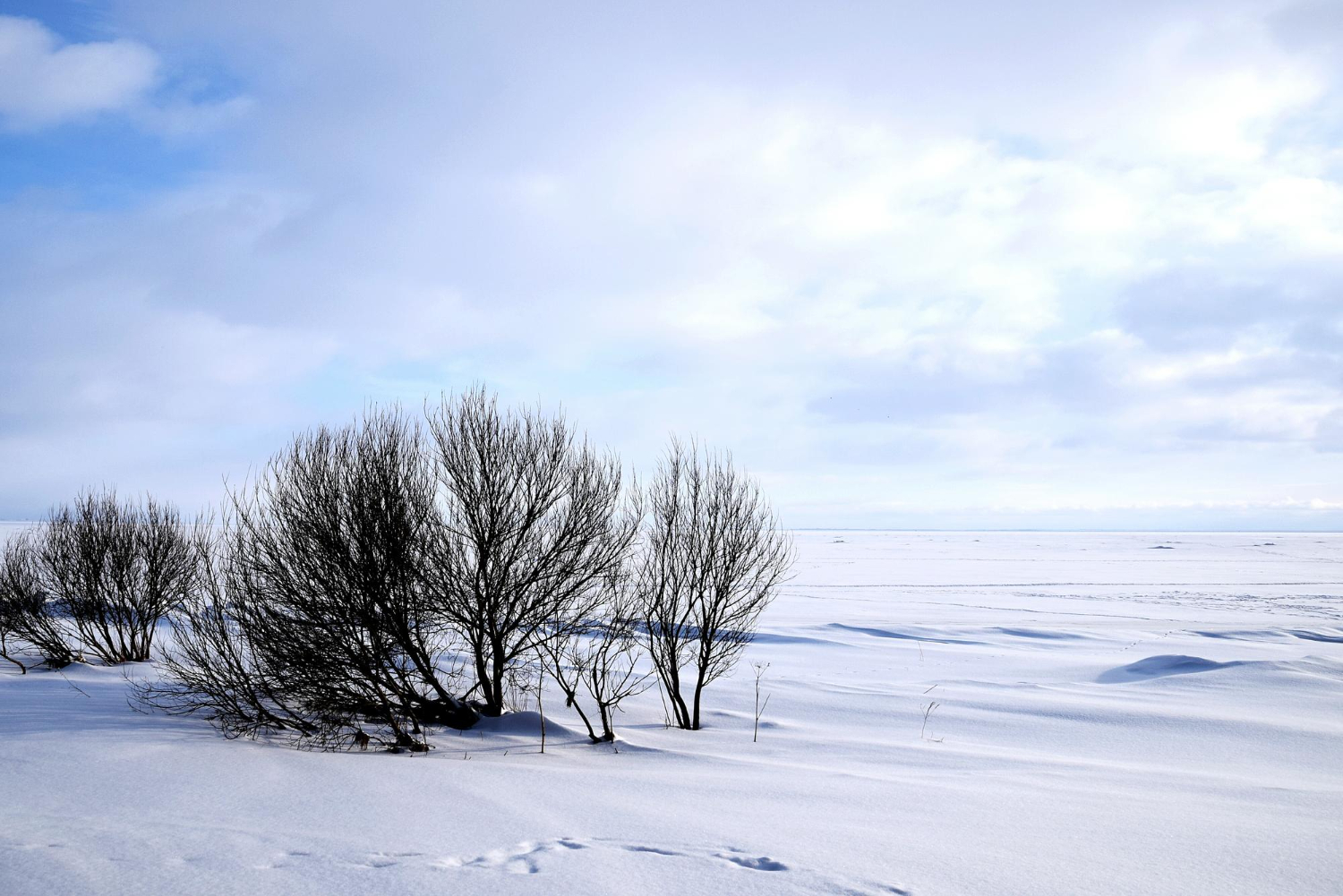
The hardest question is biological. With the oceans capped by ice, sunlight could not reach the water, which should have shut down photosynthesis. With the continents frozen, weathering stopped delivering nutrients to the sea. By any straightforward reading, life should have been extinguished. And yet the fossil record shows complex single-celled organisms before the Cryogenian and after it. As one researcher put it, the remarkable part of the mystery is that we know life survived; the open question is how and where.
Several answers have been proposed, and the debate is lively. One possibility is that hot springs and hydrothermal systems beneath the ice provided refuges. Another, developed by a team spanning institutions in the United States, Britain, and New Zealand, points to meltwater ponds on the surface of the ice itself. Dark dust and debris carried up by glaciers absorb sunlight, warm, and melt small pockets into the ice, creating features that still exist today and are known as cryoconite holes. These could have served as small above-ice oases, and the researchers found evidence consistent with complex cells persisting in exactly that kind of habitat.
A third possibility challenges the premise. Some researchers argue the freeze was never total, favoring a “slushball” picture in which a thin or patchy ice cover over parts of the ocean let light through, or in which stretches of open water persisted. One study of ancient sediments concluded that ice-free conditions existed in mid-latitude oceans during the waning stage of the second glaciation, well north of the equator, suggesting habitable patches may have been far more widespread than assumed. That interpretation is contested; one of the geologists who pioneered the Snowball hypothesis has said openly that open ocean outside the tropics is difficult for him to accept, since climate simulations struggle to produce even an ice-free equator. Recent work in Scotland and Ireland, meanwhile, has identified rock sequences that may preserve the most complete record yet of the freeze and the moment it began.
The Twist: Ice as a Catalyst
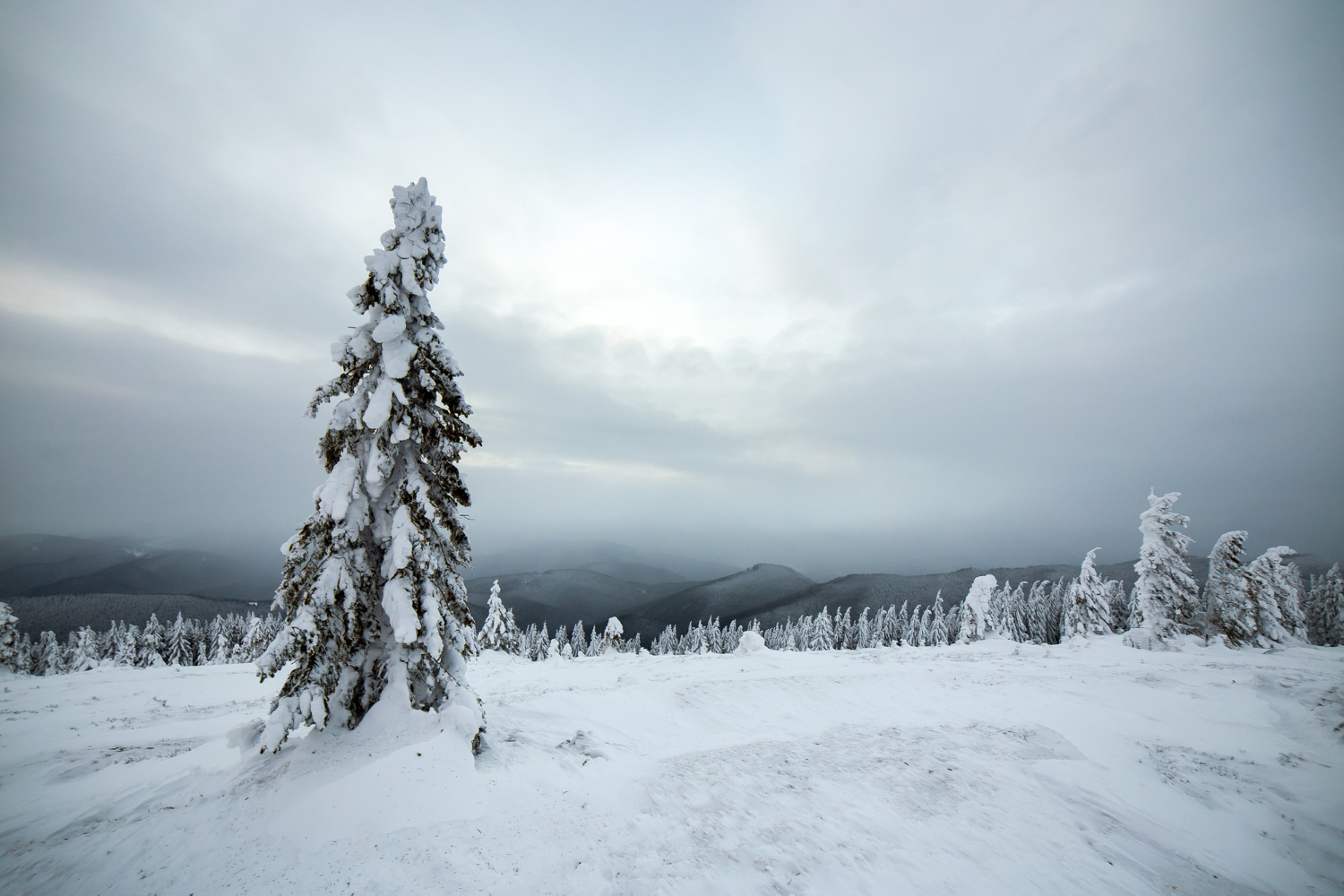
Here is the part that turns the story from a survival tale into something stranger. The period immediately following these glaciations is when animal life, complex multicellular organisms, began its dramatic expansion. That timing is not thought to be coincidental.
One proposed link runs through phosphorus. Glaciers are enormously effective at grinding rock into fine powder, and that powder is rich in nutrients including phosphorus. When the ice melted, all of that pulverized rock flushed into the oceans at once, delivering a nutrient pulse on a scale the planet had not seen. Researchers have suggested that this fertilization, arriving in a warming ocean, fueled an explosion in the diversity and abundance of multicellular life. Some scientists think this happened primarily during the warm interval between the two glaciations, others emphasize the aftermath of the second.
There are other proposed mechanisms as well, including the possibility that the extreme environmental pressure of the freeze itself favored organisms capable of cooperation and complexity. As one geologist working on the period summarized the emerging view, many researchers now think life not only survived the frozen age but that the extreme conditions may have actively helped drive it toward complexity, a process that would eventually lead to every animal form that exists.
What It Means to Sit With an Unfinished Story
Snowball Earth is a useful case study in how science actually proceeds, because the story is truly unfinished and nobody involved pretends otherwise. The core claim, that ice reached the equator at least twice between roughly 717 and 635 million years ago and stayed for tens of millions of years, has moved from inconceivable to accepted. But the details around it remain contested in ways that matter: how completely the oceans froze, where exactly life held on, whether the carbon dioxide escape mechanism works as described, and how directly the freeze catalyzed complex life.
That unfinished quality is not a weakness in the account; it is what an active field looks like. New evidence keeps arriving from unexpected places, from sediment cores, from rock formations on a Scottish island, from an unusual sandstone encased in the granite of a Colorado mountain that geologists described as a missing link showing ice sheets reached continental interiors in equatorial regions.
What is not in doubt is the scale of the thing. For tens of millions of years, this planet was a white sphere with ice grinding across ground that is now tropical. Every living thing today descends from whatever managed to hold on through it, in meltwater pools, around hot springs, or in whatever patches of open water existed. The next time the weather feels extreme, it is worth remembering that the Earth has been through something substantially more dramatic, and that the world we know may owe its complexity to the coldest period it ever endured.
Like our content? Follow us for more.