

Medieval chronicles contain a great deal of material that is obviously not literal. Portents, marvels, signs and wonders appear regularly, and historians read them as they were meant — as meaningful rather than reportorial.
Occasionally something appears that does not fit that category comfortably. It is recorded with specific detail, in a mundane register, by writers who elsewhere show critical judgement, and with an outcome that is unglamorous rather than miraculous.
The account of two children found near an English village in the twelfth century is in that awkward middle ground, and it has consequently been argued about for a very long time.
Here is what the sources say, what has been proposed, and why the question is more interesting than the answer.
What the Chroniclers Recorded
Two writers of the period recorded the account, and the agreement between them is a substantial part of why it is taken seriously as a text.
The broad outline is consistent. Two children, a boy and a girl, were discovered near a village in Suffolk. Their skin was described as green in colour. They wore clothing of an unfamiliar material or cut. They spoke a language nobody present recognised.
They initially refused all food offered to them, and would eat only one particular thing — described as beans, or a bean-like plant — until they gradually accepted other food.
The boy declined and did not survive long. The girl adapted, learned the local language, was baptised, entered service and later married locally.
Once she could communicate, she gave an account of where they had come from: a place of perpetual twilight, where the inhabitants were the same colour, and from which they had somehow become lost and emerged.
The two chroniclers differ in emphasis and in some details, and one of them explicitly expresses reservation — recording that he found the account difficult to credit and was including it because of the number of people who attested to it.
Like our content? Follow us for more.
Why the Sources Matter
The evidentiary position is unusual and worth setting out precisely.
Two independent accounts is better than one, and the writers were not copying each other in any straightforward way. Both were serious chroniclers rather than compilers of marvels, and one of them is noted for a comparatively critical approach to his material.
That said, both were writing some decades after the events they describe, from report rather than observation, and neither names a source who was present.
The expressed scepticism cuts both ways. It indicates a writer exercising judgement rather than credulously recording anything, which is a point in favour of taking the text seriously. It also demonstrates that the account was regarded as strange at the time rather than as ordinary.
So what exists is a well-attested medieval text, recorded by two credible writers, about an event neither witnessed, one of whom doubted it.
The Explanations Proposed
Several accounts have been offered and each addresses part of the material.
The folklore reading treats the whole thing as a story rather than a report — a narrative with recognisable elements, since children from an otherworld, colour marking otherness, and a place without proper daylight all appear in the folk traditions of the period. On this account the details are meaningful rather than factual and the question of what happened is misconceived.
The garbled-history reading holds that something real underlies it, distorted in transmission. The most discussed version proposes that the children were from a community speaking a different language, in a period following disruption and displacement, and that their unfamiliar speech, clothing and unexplained arrival were reworked into something stranger as the account passed between tellers.
There is a further element to that proposal concerning a place name that could plausibly have been misheard or reinterpreted as referring to somewhere otherworldly, which would explain the twilight description as a linguistic accident rather than a claim.
The physiological reading addresses the colour specifically. A condition producing a greenish pallor is associated with severe nutritional deficiency, and children who had been surviving on a very restricted diet — such as one consisting largely of beans — could plausibly have presented that way, with the colour resolving as their diet improved. That would account for the green skin, the initial refusal of unfamiliar food, and the recovery.
None of these is established, and they are not mutually exclusive. A real event, misunderstood, could readily acquire folkloric shape in transmission.
Why It Cannot Be Settled
The obstacles are the ordinary ones for the period and they are decisive.
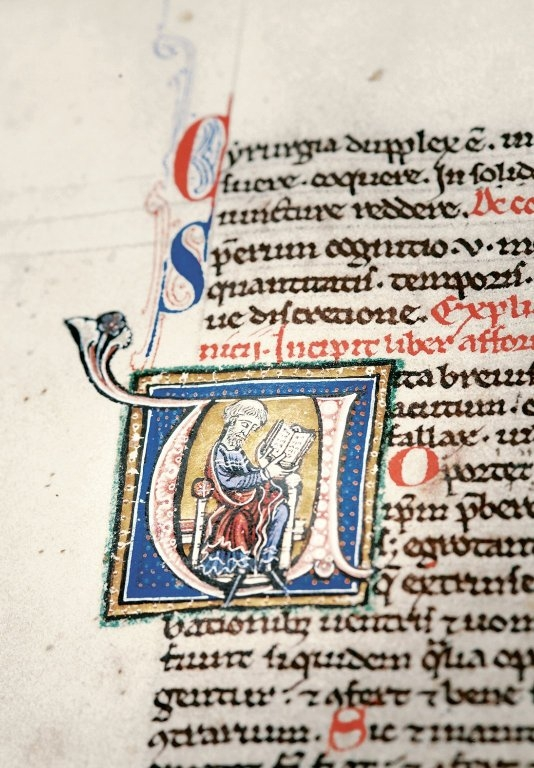
There is no independent documentation. No administrative record, no legal document, no property reference and nothing beyond the two chronicles.
The chroniclers wrote decades later and did not name witnesses. There is no way to establish what the original report contained before it passed through however many tellings preceded them.
And the categories are wrong again. A medieval writer recording a marvel was not doing what a modern reporter does, and the question of whether the account is true assumes a distinction between reportage and meaningful narrative that the sources were not drawing.
There is also no material evidence and no prospect of any, since the account concerns two individuals and an event that would leave no archaeological trace.
The Detail That Argues Against Pure Invention
There is one element of the account that has struck a number of historians as difficult to explain if the whole thing were fabricated.
The outcome is mundane. The surviving child does not return whence she came, is not revealed to be anything, and does not occasion any miracle. She learns the language, is baptised, enters service and marries locally — which is an unremarkable life.
Invented marvels generally have a point. They demonstrate something, punish somebody, reward piety or explain a feature of the landscape. This one resolves into ordinary domestic biography and then stops.
That is not proof of anything. A story can be invented and then acquire a flat ending through retelling, and a chronicler may have supplied a plausible outcome for an account that lacked one.
But it is the kind of detail that arguments about authenticity turn on, and it cuts against the reading that treats the whole thing as constructed narrative — because a constructed narrative would more probably have gone somewhere.
The green colour is the opposite case. It is the most striking element, the most obviously symbolic, and the one most easily explained as folkloric — which is precisely why the physiological reading, which accounts for it mundanely, has attracted so much interest.
So the two most discussed features of the account point in opposite directions: an ending too flat to be invented, attached to a detail too vivid to be accidental.
What the Case Is Actually Useful For
The value is methodological rather than historical.
It demonstrates the difficulty of the whole enterprise. Historians work from texts written by people with purposes, for audiences with expectations, in genres with conventions, and extracting events from that is not a matter of removing decoration to find facts underneath.
It also illustrates how a mundane explanation can account for the details without settling anything. The nutritional reading is plausible, fits several elements neatly and remains unverifiable — and its plausibility is not evidence that it is what occurred.
And it shows why competing explanations can coexist indefinitely. Folklore, garbled history and physiology each explain different parts well, none explains everything, and no new evidence will arrive to distinguish between them.
That is a substantially more common situation in medieval history than popular treatments suggest, and this case is an unusually clean example because the material is short, the sources are few and the competing readings are clearly separable.
An Account That Survived Its Own Doubter
What is worth sitting with is the position of the writer who expressed reservation.
He found the account difficult to believe. He recorded it because a substantial number of people attested to it, and he said so in the text — which is an act of intellectual honesty that has preserved both the story and the evidence of contemporary scepticism about it.
Without that, the account would read as unqualified marvel and would be dismissed accordingly. Because he included his own doubt, the text carries information about how it was received at the time, which is worth more than the story itself.
So what survives is not a mystery so much as a document about how a strange report was handled by careful people eight hundred years ago — who could not verify it, could not dismiss it, and wrote down both facts.
Which is, on the whole, what the historians arguing about it have been doing ever since.
Like our content? Follow us for more.
