

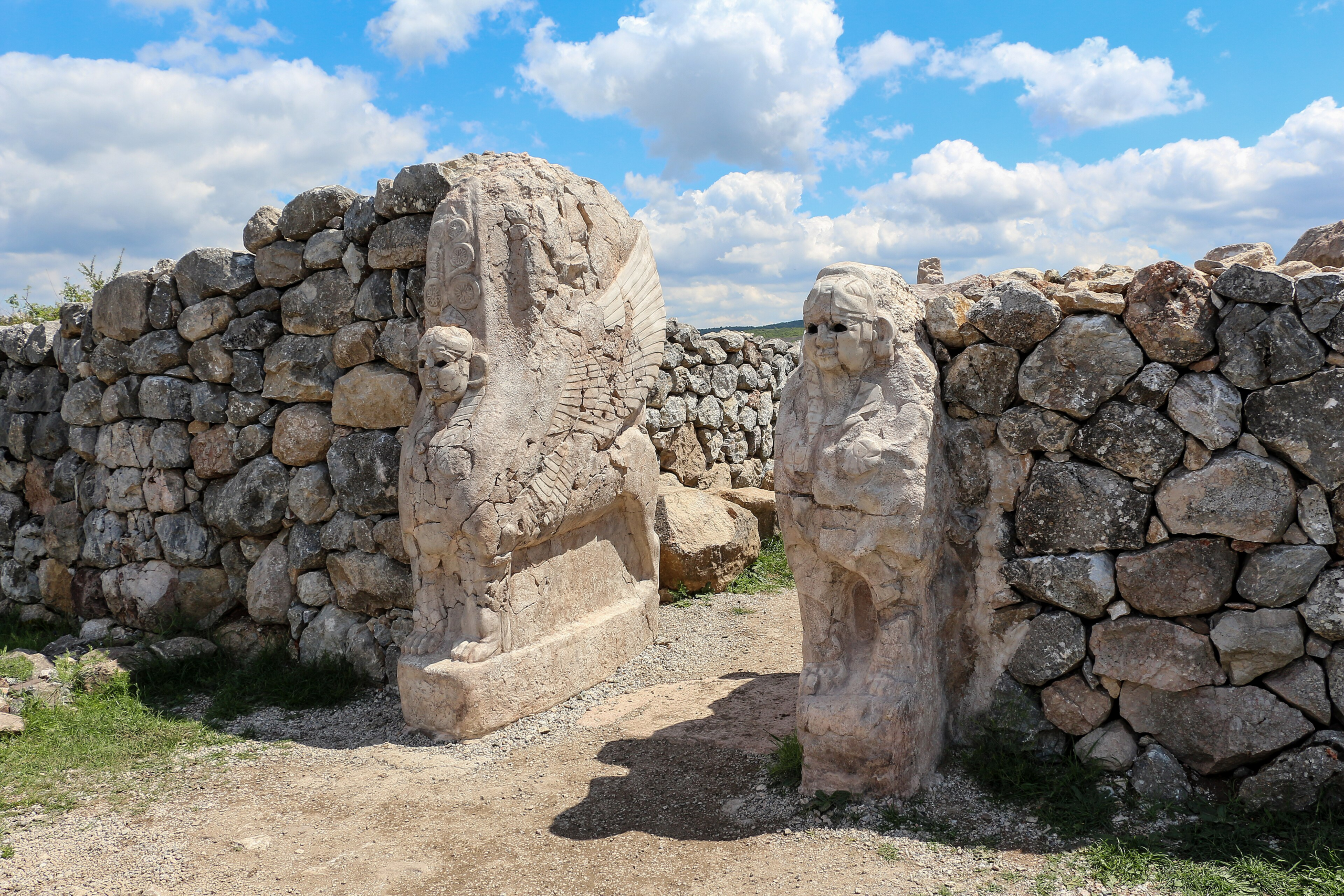
There is a particular category of historical event that is easier to document than to explain, and this is the largest example available.
For several centuries before 1200 BC, the eastern Mediterranean supported something that looks surprisingly modern in outline: a set of substantial states in regular contact, exchanging goods, letters and diplomats, with a shared elite culture and an economy that depended on long-distance supply.
Within roughly fifty years, most of it stopped working. Major centres were abandoned or destroyed. The correspondence ends. Trade goods stop appearing in the archaeological record. In some regions, administrative writing disappears entirely and does not return for hundreds of years.
Explaining that has occupied historians for a very long time, and the shape of the explanation has changed substantially in recent decades.
What Was Actually There
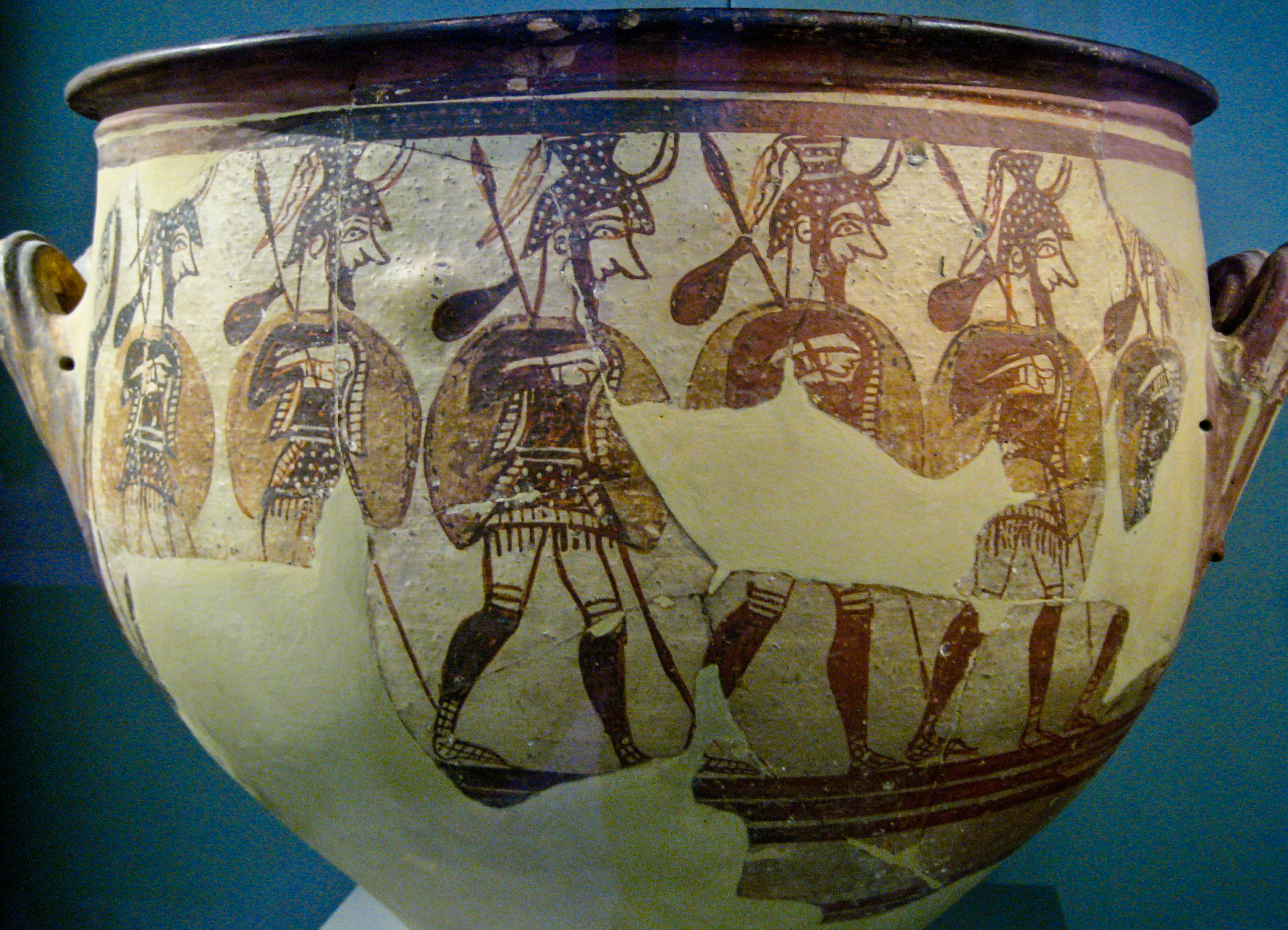
Understanding the collapse requires understanding how connected the system was, which is the part most people underestimate.
The states involved corresponded with one another regularly. Archives recovered from several sites contain diplomatic letters between rulers, discussing marriages, gifts, complaints, trade disputes and requests for help.
They shared standards for weights, exchanged specialist craftsmen, and moved goods over enormous distances. Shipwrecks from the period carry cargoes assembled from sources across the whole region.
Most importantly, they depended on that connection. Bronze — the defining material — requires copper and tin, and those two metals do not generally occur in the same places. Making bronze at scale therefore required a functioning long-distance trade network, permanently.
That is a real vulnerability, and it is the reason the interconnection matters. A system where every participant depends on distant suppliers for its most important material fails differently from a set of independent states.
Like our content? Follow us for more.
What the Evidence Shows
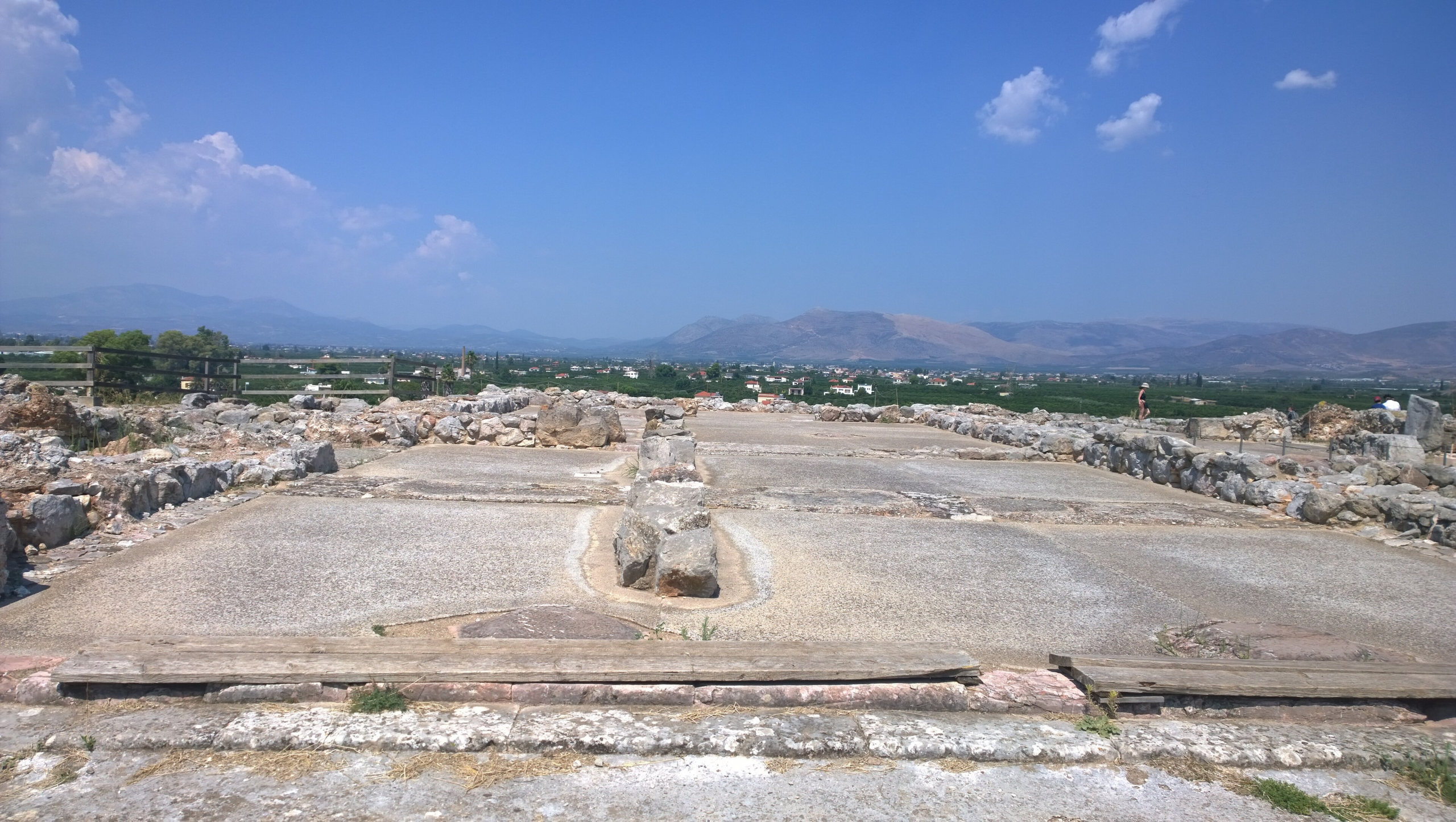
The archaeological picture is consistent across many sites and is worth stating carefully.
A large number of major centres show destruction or abandonment within a relatively narrow window. Some show clear signs of burning; others appear to have been simply left.
Administrative systems stop. The tablet archives end, and in several regions the scripts used for them fall out of use entirely.
Long-distance trade goods become rare in subsequent layers, indicating that the exchange network had ceased rather than merely contracted.
Settlement patterns change substantially, with populations in several regions shifting toward smaller and more dispersed sites.
And material culture simplifies. The elite goods requiring specialist production and imported materials largely disappear.
What the evidence does not show is a single simultaneous event. The dates vary between sites, the pattern differs by region, and some places continued or even prospered while others ended.
There is one further characteristic of the system worth noting. Wealth and administration were concentrated in palace centres that controlled production, storage and distribution over their territories.
That arrangement is efficient and it has a specific weakness: if the centre stops functioning, the distribution it managed stops with it, and there is no alternative mechanism underneath to take over. A dispersed system degrades; a centralised one can fail outright.
The Explanations Proposed
Several causes have been argued, each supported by real evidence and each insufficient alone.
Climate is the explanation with the strongest recent support. Multiple independent lines of environmental evidence indicate a period of significant drying in the region around this time, sustained over decades. A prolonged drought affecting agricultural output across a wide area would produce food shortage, population movement and pressure on states already operating close to their limits.
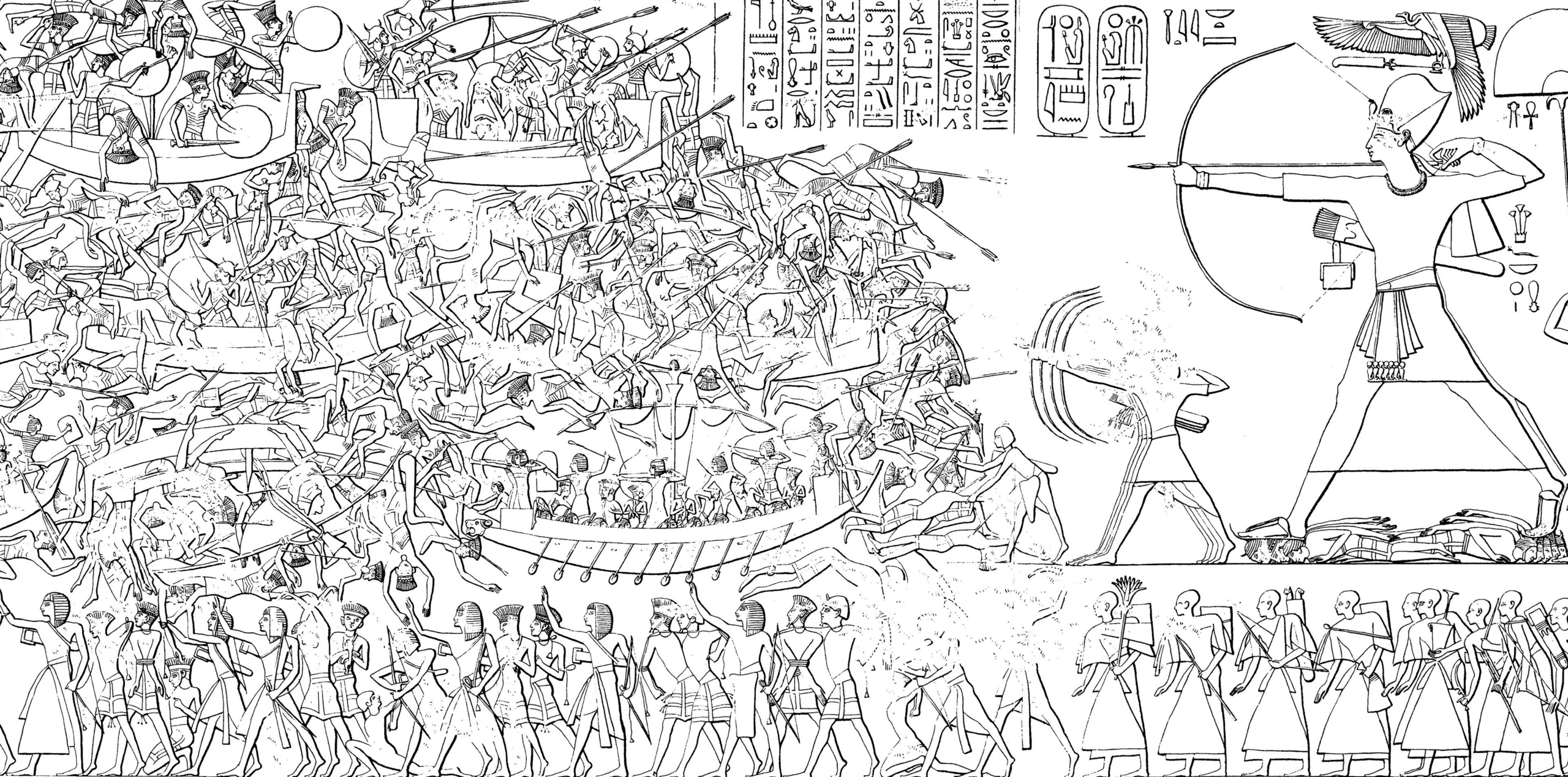
Migration and conflict appear in the contemporary sources. Egyptian records describe groups arriving by sea and land, and describe fighting them. Those accounts are real and are frequently overread — they are inscriptions by a ruler describing a victory, they do not identify the groups clearly, and the modern label applied to them is a nineteenth-century construction rather than anything the sources say.
Systems failure is the structural argument. A network of states dependent on long-distance supply for its essential material, with centralised palace economies controlling distribution, is efficient and brittle. Disruption in one part propagates, and each failure removes capacity to absorb the next.
Earthquakes have been proposed, with evidence of seismic damage at some sites, though a regional earthquake sequence explaining destruction across such a wide area over decades is difficult to sustain.
Internal unrest, changes in military technology and disease have all been argued as contributing factors, with varying support.
Why the Question Changed
The significant development is not a new answer but a different way of asking.
For a long period the debate was structured as a search for the cause — the one thing that brought the system down. That framing produced a century of arguments in which each proposal was defeated by the evidence it could not explain.
The current position treats it as a systems failure with multiple interacting causes, in which drought reduced agricultural surplus, which strained states, which disrupted trade, which removed access to essential materials, which caused further failure, which prompted movement of populations, which added pressure elsewhere.
On that account, no single cause is sufficient and no single cause is unnecessary. The collapse is the interaction rather than any component of it.
That is a less satisfying answer and is probably the correct one. Complex interconnected systems do not usually fail because of one thing; they fail because several stresses arrive together and the capacity to absorb any of them has already been spent on the others.
What Was Lost and What Was Not
The aftermath is worth describing accurately, because both the severity and the recovery are frequently overstated.
The losses were real. Literacy disappeared in several regions for centuries. Populations declined substantially in some areas. The scale and complexity of building, craft production and trade fell markedly.
But it was not uniform. Some regions were affected far less than others, some settlements continued, and a few places gained from the disruption of established powers.
And the recovery produced something different rather than a restoration. The states that emerged afterwards were organised differently, and the period saw the spread of iron working and, in one region, the development of an alphabetic script that proved substantially easier to learn than what preceded it.
That is a common pattern after systemic failure. What follows is not the previous arrangement resumed but a reorganisation, and some of what emerges would not have been possible while the old system was intact.
The Evidence Problem
It is worth being explicit about why this period is so difficult to reconstruct, because the limits of the evidence shape every argument about it.
The written sources are unevenly distributed. Some states kept extensive archives on durable material and others did not, so the surviving documentation reflects what happened to be written on clay rather than what was important.
Those archives also end at the collapse, which is precisely the moment anybody would most want them. The final tablets from several sites are ordinary administrative documents and correspondence, produced by people with no indication that anything unusual was about to occur.
Destruction layers are difficult to interpret. A burnt layer establishes that a building burned; it does not establish who burned it, or whether it was burned at all rather than catching fire, or whether the event was connected to anything happening elsewhere.
Dating is imprecise at the resolution the question requires. Establishing whether two sites failed in the same decade or fifty years apart is frequently beyond what the methods can determine, and the difference matters enormously for causal arguments.
And the environmental evidence, while improving substantially, comes from a limited number of locations and must be extrapolated across a region with varied local conditions.
None of that makes the subject unknowable. It does mean that confident single-cause narratives are generally running ahead of what the material supports, which is the strongest argument for the multicausal framing.
Why It Still Gets Discussed
The reason this period attracts continuing attention beyond its own field is not difficult to identify.
An interconnected system of states, dependent on long-distance supply chains for essential materials, with centralised distribution and limited local self-sufficiency, encountering environmental stress and failing progressively rather than all at once — the structural description invites comparison, and comparisons are made frequently.
Those comparisons should be handled carefully. The evidence is fragmentary, the timescales are long, the societies differ from modern ones in almost every respect, and the temptation to read a three-thousand-year-old collapse as a lesson about the present says more about the reader than the period.
What the case truly demonstrates is narrower and more useful: that a system can be sophisticated, wealthy, well administered and connected, and that those properties are not protective. Interconnection distributes stress as well as goods.
And that the search for a single cause, in a system with many, is a question that cannot be answered because it was never well formed.
Like our content? Follow us for more.
