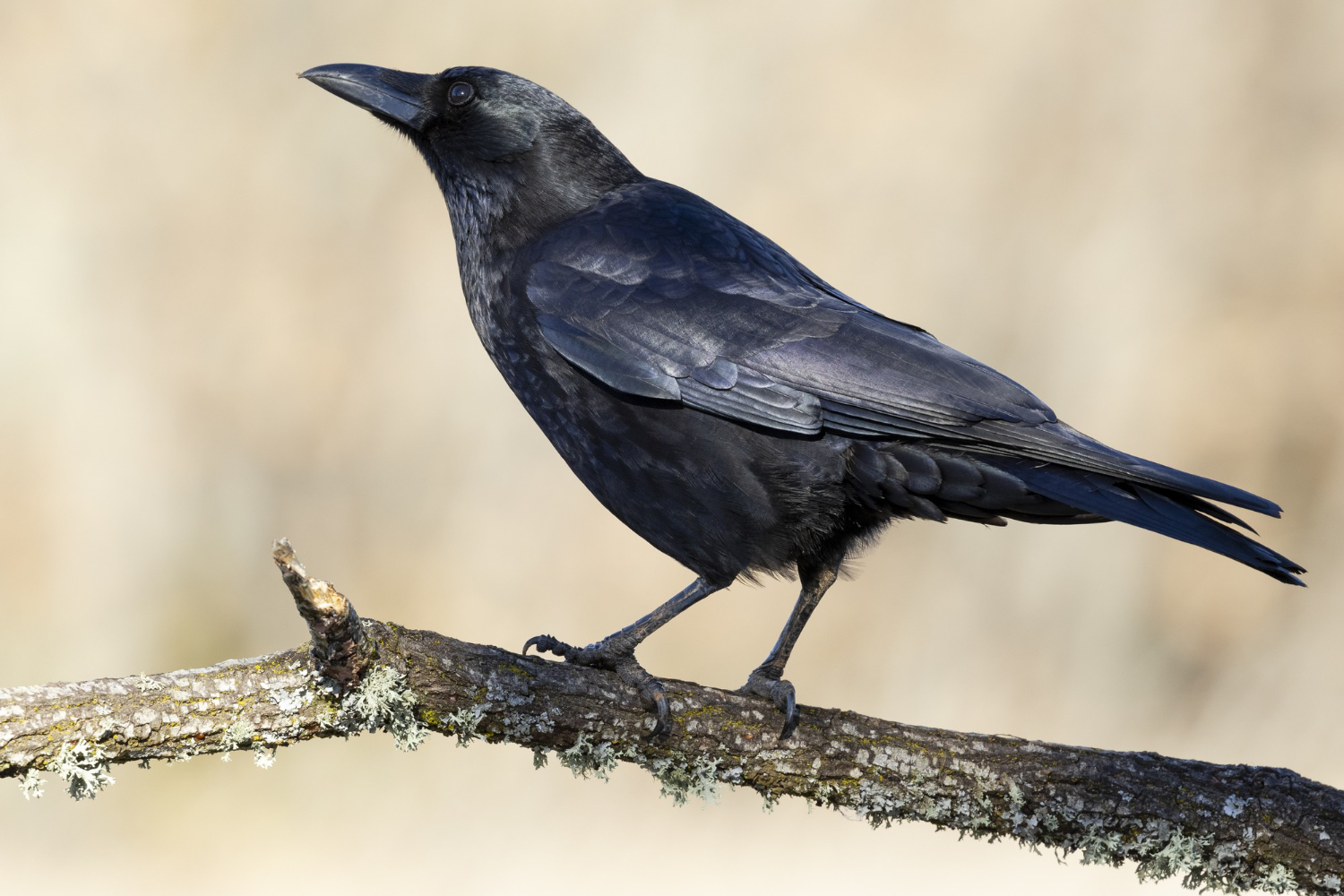
There is a long-standing assumption in how intelligence gets discussed, and corvids are the clearest available argument against it.
The assumption is that sophisticated cognition requires a particular kind of brain — specifically a large mammalian one, with the layered structure that primates have and that a great deal of neuroscience was built around studying.
Birds do not have that structure. The bird brain is organised on a different plan, without the layered arrangement, and for a long period this was taken as evidence that birds were correspondingly limited. The vocabulary reflected it, with a dismissive term for small brains that is still in circulation.
Then people started testing corvids properly, and the results did not fit.
What They Actually Do
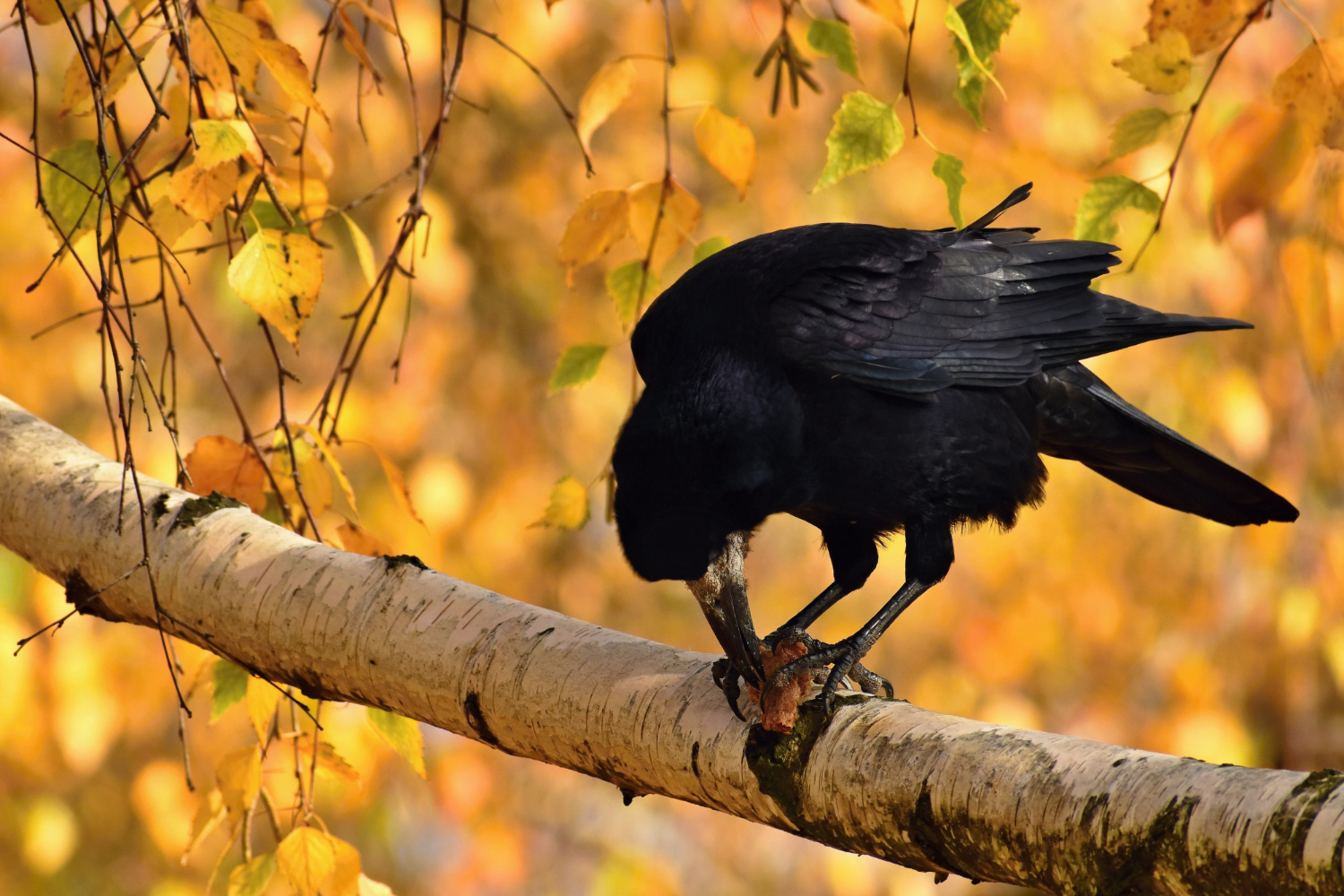
The findings are worth setting out specifically, because the general claim that crows are clever conveys very little.
Tool manufacture is the best-known result. Certain corvids not only use objects as tools but modify them for the purpose — shaping, trimming and in one famous case bending straight wire into a hook without ever having encountered wire before.
That last point matters. Using a tool is impressive; making a tool from an unfamiliar material to solve a novel problem indicates something beyond a learned routine.
Multi-step problem solving has been demonstrated in tasks requiring several actions in sequence, where the early steps produce no reward and only make later steps possible. Solving that requires holding a plan rather than responding to immediate feedback.
Delayed gratification appears in experiments where an individual can take a lesser reward immediately or wait for a better one, and corvids will wait.
Planning for future need has been reported in tasks where individuals select and store a tool that will be useful later, in a context where it is of no use at the time.
Caching behaviour is a whole research area on its own. Species that hide food remember an enormous number of locations, remember what was hidden where, and adjust behaviour based on how long ago each item was cached and how perishable it was.
Like our content? Follow us for more.
The Face Recognition Result

The finding that captures public attention deserves careful description because it is regularly exaggerated.
Researchers wearing distinctive masks captured and released crows, then observed subsequent behaviour toward people wearing those masks and toward people wearing different ones.
Birds reacted strongly to the specific mask associated with the capture and not to others, and the response persisted over years. That establishes individual recognition and long-term retention.
The extension is what makes it remarkable. Birds that had not been present during the original capture also reacted to the mask, which indicates the information spread through the population — most plausibly through the reactions of birds that did know, observed by others.
That is social transmission of specific information about a specific individual, which is a substantially stronger claim than good memory.
It should be noted that this is one research programme, that the interpretation involves inference about what the birds learned from whom, and that the popular version frequently escalates it into claims about crows holding grudges or communicating descriptions, which the evidence does not support.
The Brain That Should Not Work
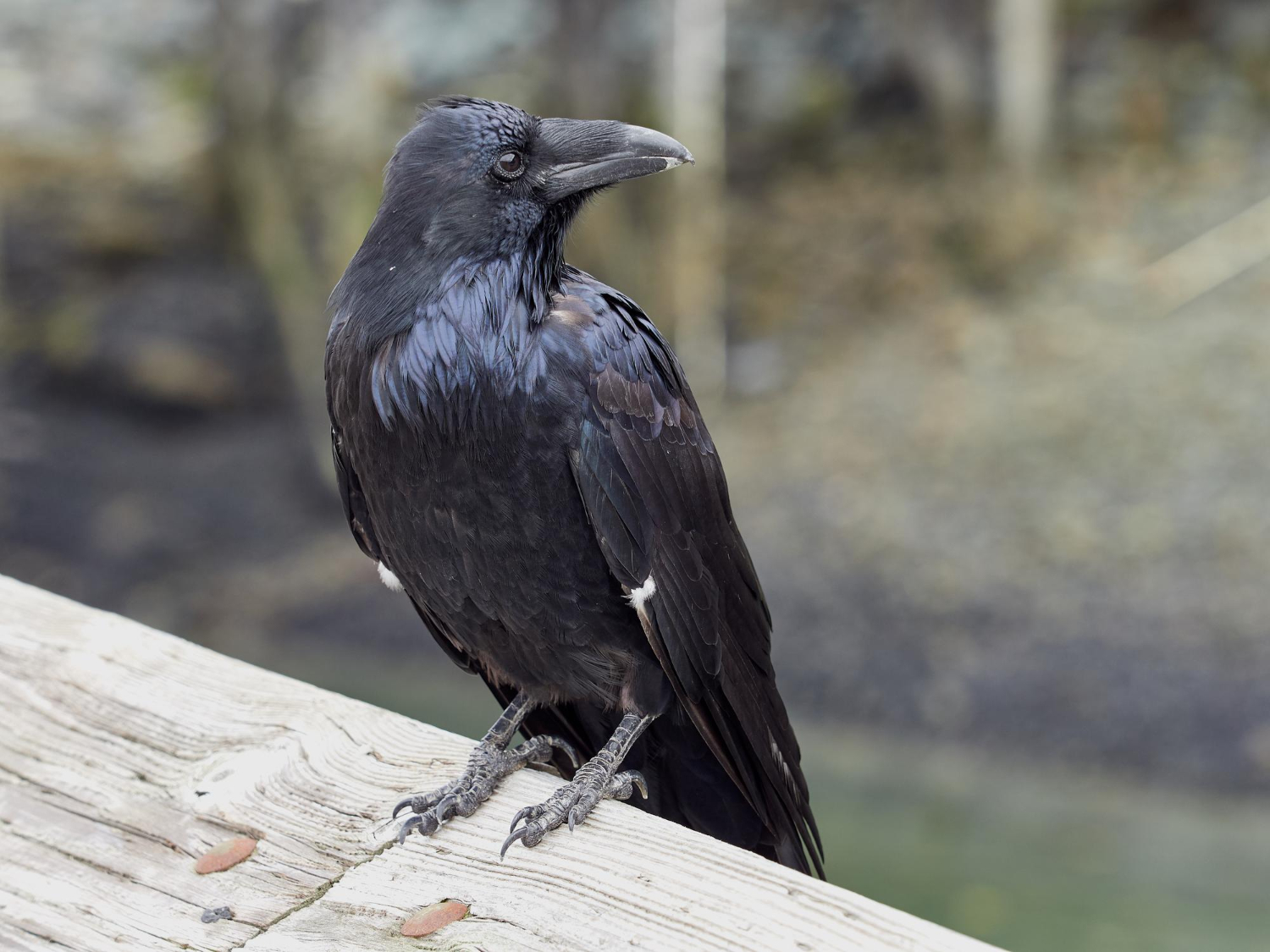
The neuroanatomy is why the behavioural findings matter beyond the birds themselves.
Mammalian cognition is associated with the neocortex, a layered sheet of tissue whose organisation is central to most theories of how complex processing happens.
Birds have no neocortex. Their forebrain is organised differently, in clustered rather than layered arrangements, and for a long time the structures were misidentified and misnamed on the assumption that they corresponded to more primitive mammalian regions. The naming was formally revised in the 2000s once it became clear the assumption was wrong.
Subsequent work found that bird forebrains contain circuit arrangements functionally comparable to layered cortex despite the different physical organisation, and that neuron density in bird brains is substantially higher than in mammalian brains of similar mass.
That last point partly resolves the puzzle. A small bird brain can contain a number of neurons comparable to a much larger mammalian one, packed more densely and with shorter connections.
So the answer is not that corvids achieve mammalian cognition without the hardware. It is that the hardware was assessed by the wrong measure, and that comparable computation can be built more than one way.
The Experiments and Their Limits
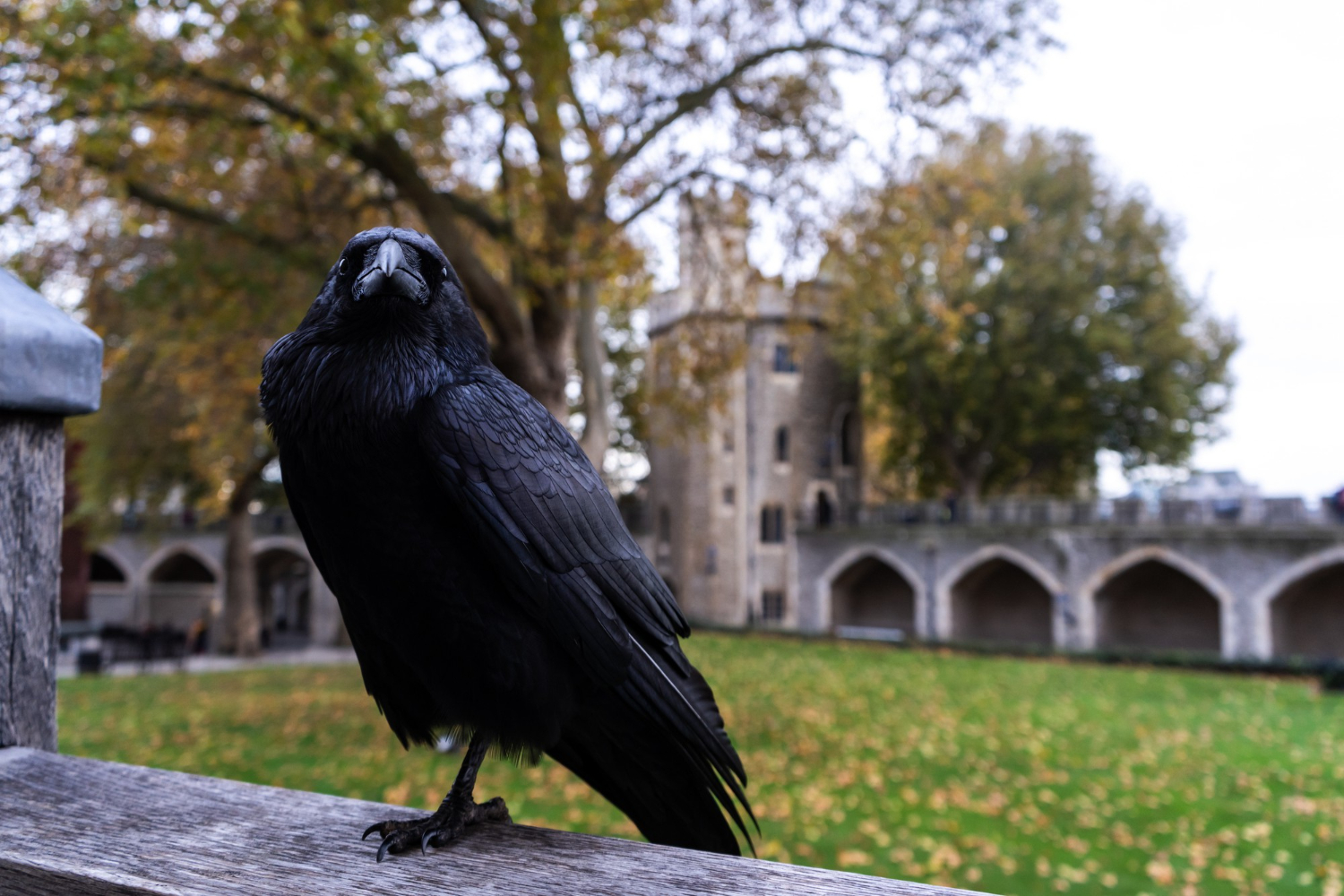
It is worth understanding how these findings are actually produced, because the method shapes what they can show.
A typical study presents an individual with a problem it cannot have encountered — an apparatus requiring a specific sequence, a tool that must be modified, a choice between immediate and delayed reward — and records what it does.
The design has to exclude the obvious alternative explanations. If the bird had seen the solution demonstrated, the result shows imitation rather than reasoning. If it had many attempts, it may show trial and error. If a simpler rule would produce the same behaviour, that rule is the better explanation.
Good studies control for these by using truly novel materials, limiting attempts, and testing variants where a simple rule would produce a different answer from actual understanding.
That is why the wire-bending result is cited so often. The material was novel, the solution appeared without demonstration, and no simpler rule accounts for it.
The limits are equally real. These are individual animals, frequently ones with extensive prior experience of experimental apparatus, and an individual solving a problem does not establish that the species can. Replication across groups and populations is what turns a striking result into a finding, and it does not always follow.
There is also a publication asymmetry. An animal solving a problem is reportable and an animal failing to is generally not, which means the accumulated literature systematically overrepresents success.
None of that undermines the core findings, which are robust. It does mean the popular version — assembled from the most striking individual results — describes a more capable animal than the evidence supports.
Why This Matters
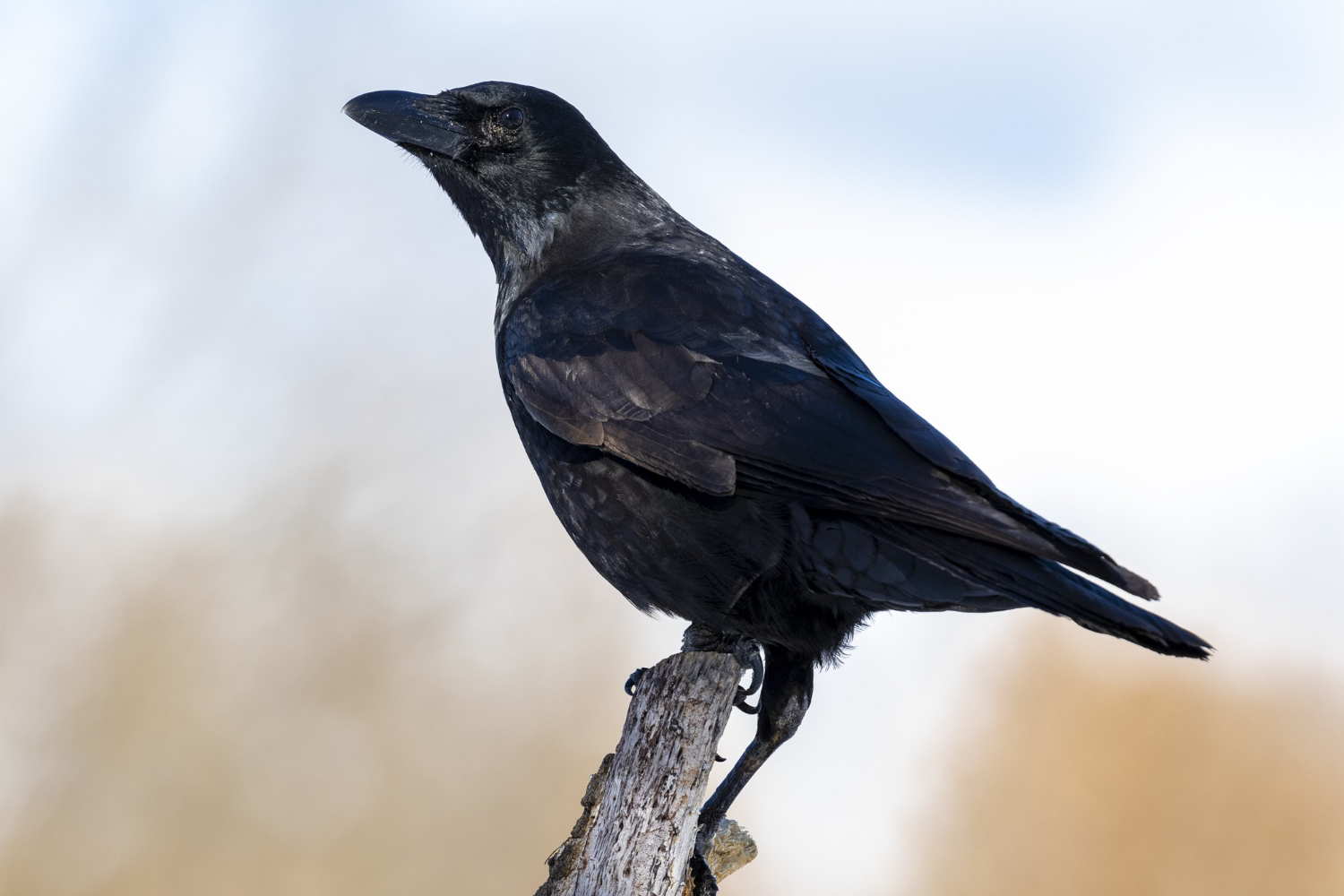
The consequence extends well past ornithology.
Corvid and primate lineages separated an extremely long time ago, and their last common ancestor had nothing resembling the cognition either shows now. That means the capacities developed independently.
Independent development of similar capacities in unrelated lineages is the standard signature of convergent evolution — the same problem producing the same solution twice. It indicates that the solution is available rather than fluky, and that the problem was common.
The problems generally proposed are social complexity, food storage requiring memory, and generalist foraging in changeable environments, all of which reward flexible problem-solving rather than fixed behaviour.
It also demonstrates that a particular brain architecture is not required. If two entirely different arrangements produce comparable results, then the layered structure is one solution rather than the solution — which is a substantial claim about what cognition needs.
What the Caching Research Shows
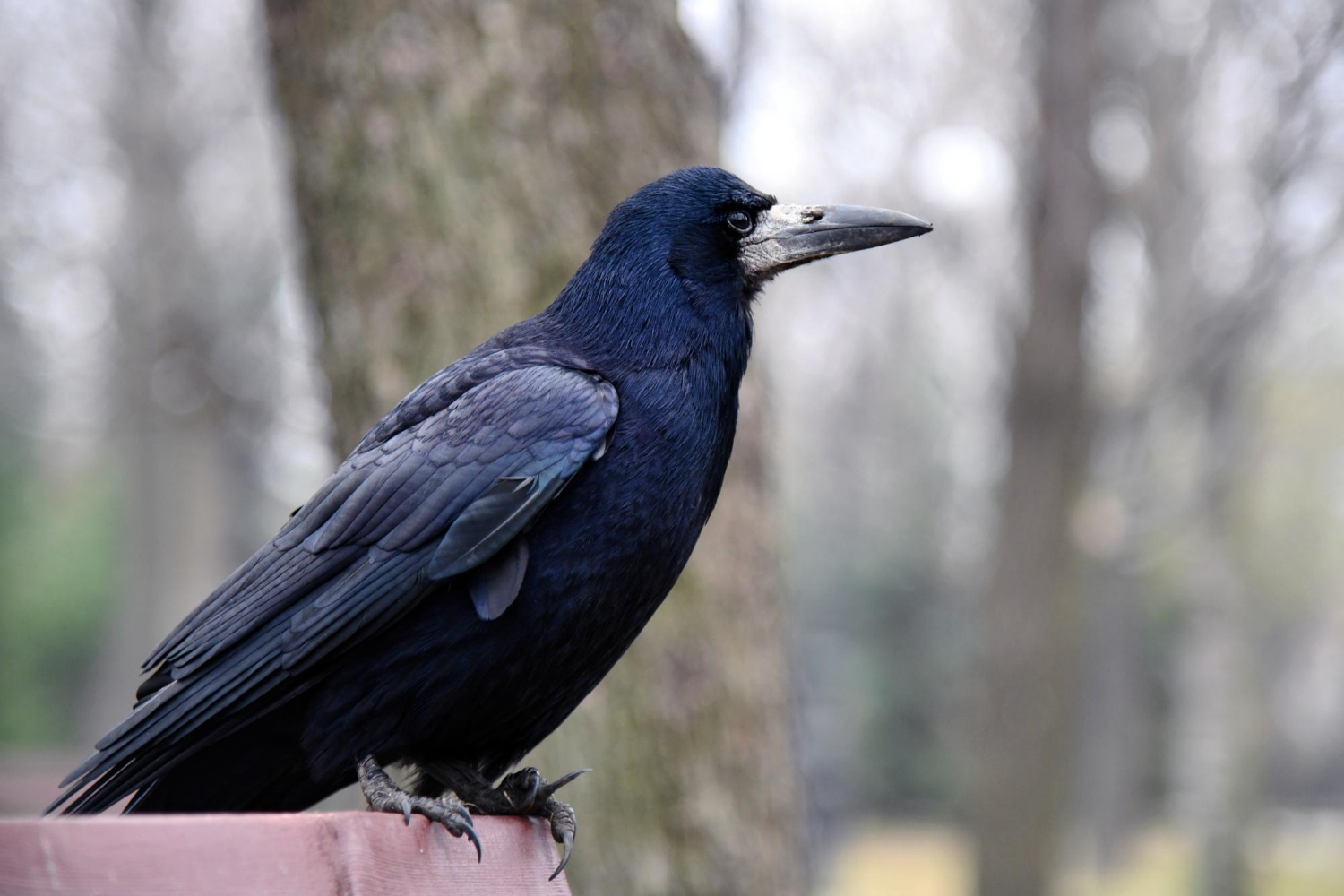
The food-storing work deserves separate treatment, because it produces the most sophisticated results and gets the least attention.
Species that cache food hide items in very large numbers of locations and recover them later, which requires remembering where each is. That alone is impressive and is not the interesting part.
What the research established is that individuals also remember what was hidden in each place and how long ago, and adjust recovery accordingly — retrieving perishable items sooner and durable ones later, in a pattern that tracks decay rather than any simple rule.
That combination of what, where and when is the structure of episodic memory, and demonstrating it in a non-human animal was a substantial result because it had been argued that such memory required language.
There is a further finding involving other individuals. Birds that have themselves stolen from caches behave differently when caching in view of others — moving items, re-hiding them, or waiting until unobserved.
That has been interpreted as indicating some representation of what another individual can see, which is a considerable claim and is contested. The alternative reading is that the behaviour is a learned response to observation without any representation of another’s perspective, and the two are difficult to distinguish experimentally.
The caching work is the strongest evidence in the field and the interpretive disagreement within it is real, which is a reasonable summary of the subject as a whole.
What Should Not Be Concluded
Some limits belong here, because this subject attracts overstatement.
The experiments demonstrate specific capacities in specific tasks. They do not establish that birds think in any sense that maps onto human experience, and inferring inner life from problem-solving is not something the evidence supports.
Not all corvids do all of these things. Tool manufacture is concentrated in particular species, and generalising from one to the family is an error the popular coverage makes constantly.
Laboratory findings involve small numbers of individuals, frequently ones that have been trained extensively, and replication across research groups matters.
And these are wild animals rather than subjects for interaction. Nothing in this article is an argument for approaching, feeding or attempting to befriend any bird, and wildlife is best appreciated at a distance and on terms set by people qualified to advise on it.
What the research truly establishes is narrower and more interesting than the headlines: that flexible problem-solving evolved at least twice, in lineages separated by a very long time, using brains built to different specifications — and that the assumption it required one particular design was simply wrong.
Like our content? Follow us for more.