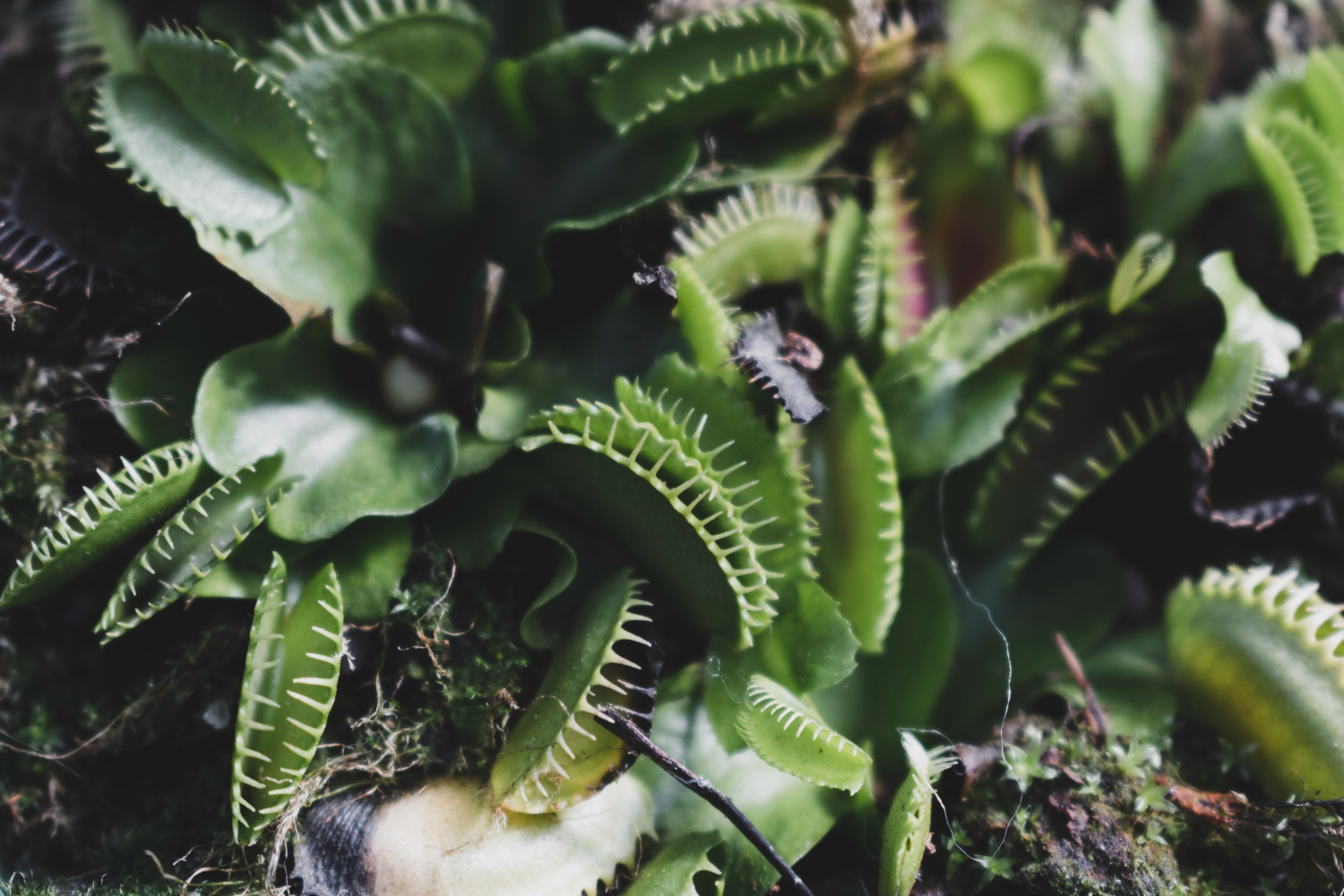
There is a misunderstanding built into how these plants are usually described, and correcting it makes everything else about them clearer.
They are not predators in the sense of animals that eat. They photosynthesise, they build sugars from light and air, and their energy budget works exactly like any other plant’s.
What they are short of is the mineral nutrients that plants normally draw from soil — nitrogen above all, and phosphorus. Those are the components of proteins and of the machinery of a cell, and no amount of sunlight substitutes for them.
Carnivorous plants live in places where those minerals are almost unavailable: waterlogged bogs where decomposition is slow and acidic, thin sandy soils that hold nothing, and rock faces with essentially no soil at all.
So they get their nitrogen from somewhere else. An insect is a package of exactly the right chemistry, and catching one is an alternative supply route rather than a meal.
Why It Happened So Many Times
The repeated independent evolution is the strongest evidence for that reading.
Carnivory has arisen separately in numerous unrelated plant lineages, across different continents and different plant families, with estimates commonly placing the number of independent origins at eleven or more.
That is a substantial number for a specialised adaptation. Things that evolve repeatedly are things where the environmental pressure is consistent and the available solution is reachable from an ordinary starting point.
The pressure is nutrient-poor waterlogged ground, which occurs in similar form all over the world. The starting point is a plant that already has sticky glandular hairs, or a leaf that already forms a cup, or a surface that already holds water — none of which is unusual.
From there, incremental improvement produces a trap. A slightly stickier hair catches more insects; a slightly deeper cup drowns more of them; a plant that absorbs some nutrients from decaying material on its leaves does slightly better than one that does not.
Nothing about the sequence requires an improbable leap, which is why it happened repeatedly.
Like our content? Follow us for more.
The Trap Types
The mechanisms fall into a small number of categories, and each has appeared more than once.
Sticky traps use glandular surfaces that hold anything landing on them, sometimes with tentacles that curl inward over the captured insect. They require no moving parts and are the simplest form.
Pitfall traps are modified leaves forming a container, generally with a slippery rim and downward-pointing structures, holding fluid at the bottom. An insect that loses its footing cannot climb out.
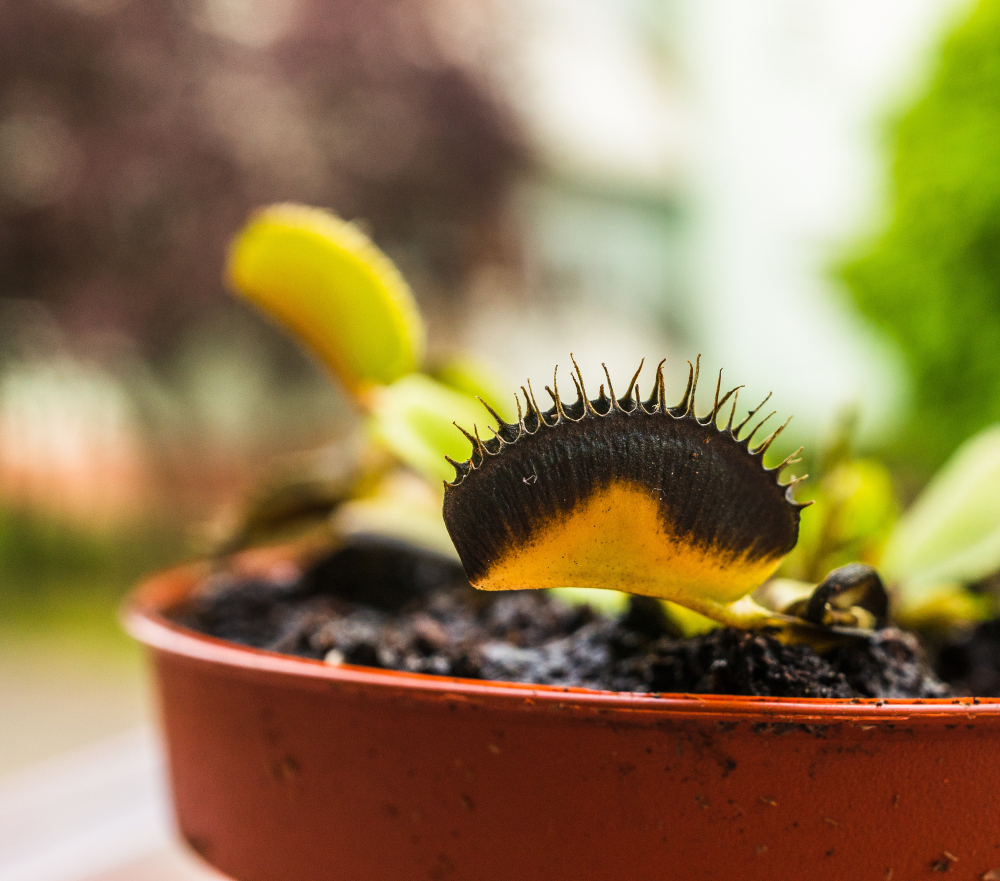
Snap traps close mechanically. The best-known example uses trigger hairs and requires more than one contact within a short interval before closing, which prevents the plant wasting a closure on a raindrop.
Suction traps operate underwater, using a bladder held under negative pressure that opens when triggered and pulls in water and whatever is in it, in a movement that is among the fastest in the plant kingdom.
Lobster-pot traps allow entry easily and make exit difficult through inward-pointing hairs, guiding the captive along a passage from which it cannot turn back.
Each of these solves the same problem with entirely different physics, which is again what independent evolution produces.
Digestion Without a Stomach
What happens after capture varies more than the traps do.
Some plants secrete their own digestive enzymes, breaking down soft tissue and absorbing the released compounds through the leaf surface. That is the closest to real digestion.
Others rely on bacteria, which do the breaking down while the plant absorbs the products — an outsourced arrangement comparable to the fermentation strategies used by plant-eating animals.
Several host entire communities of organisms in their trapping fluid that live there permanently, feeding on captured prey, with the plant absorbing what those organisms release. The trap becomes a small ecosystem rather than a digestive vessel.
And a number of species have arrangements with animals that are not prey at all. Some are used as shelter by small vertebrates, with the plant absorbing nutrients from the droppings — which is the same nutrient strategy with the trapping step removed entirely.
That last arrangement is the clearest demonstration of the underlying point. What the plant needs is nitrogen, and catching insects is one route to it among several.
There is a further constraint worth noting. Traps must attract prey to be useful, which generally means colour, scent or nectar – and all of those are additional investments on top of the structure itself.
Several species also have to solve the problem of not trapping their own pollinators, which some do by holding flowers well away from the traps on long stalks.
The Cost of Carnivory
Trapping is expensive, and understanding the economics explains where these plants can and cannot live.
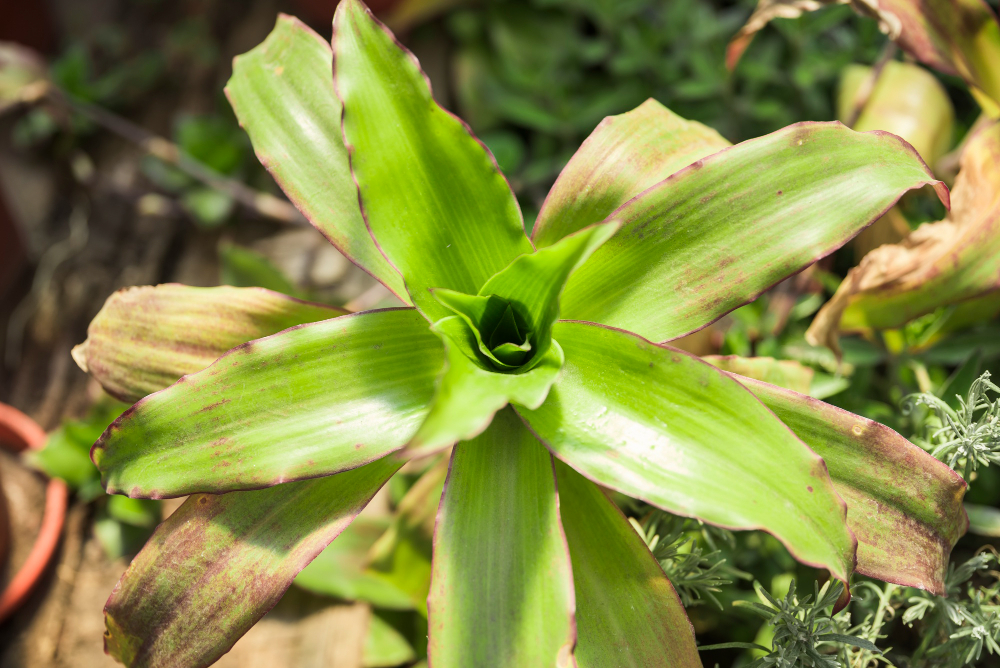
A trap is a modified leaf, and a leaf specialised for trapping is worse at photosynthesis. The structures are frequently reduced in green tissue, oddly shaped and positioned for capture rather than for light.
So every trap represents photosynthetic capacity given up in exchange for nutrient acquisition.
That trade only pays where nutrients are truly scarce and light is plentiful. In fertile soil, a carnivorous plant is simply a plant with inefficient leaves, and it is outcompeted immediately by anything with ordinary foliage.
Which is why they are confined to open, sunny, nutrient-poor, frequently waterlogged sites. It is not that they prefer bogs; it is that a bog is the only place where the arithmetic works.
There is a further consequence. Several species reduce trap production when nutrients become available by other means, which indicates the mechanism is regulated according to need rather than being a fixed strategy.
There is one further arrangement worth mentioning. Several species obtain nutrients not from prey they catch but from organisms that live in the trap deliberately – insect larvae, mites and others that occupy the fluid, feed on the captured material and are tolerated rather than digested.
The plant absorbs what those residents release, which makes the trap a habitat with a service arrangement rather than a straightforward digestive vessel.
Where the Line Blurs
The definition turns out to be less clean than it appears, which is worth knowing.
To count as carnivorous, a plant is generally required to attract, capture and absorb nutrients from prey. Various species do some of that without doing all of it.
Some are sticky and trap insects incidentally without absorbing anything, which is defence rather than nutrition. Some capture prey and rely entirely on other organisms to process it, which raises the question of whether the plant is doing the eating. Some have traps that no longer function.
Those borderline cases are informative because they look like the intermediate stages the evolutionary account requires — plants partway to carnivory, doing part of the job, which is exactly what should exist if the transition happens gradually.
The Ones That Gave It Up
A small number of species appear to have reduced or abandoned carnivory, and they support the economic reading better than anything else.
Where a carnivorous lineage has colonised richer ground, traps in some species are smaller, fewer or less functional than in close relatives that remained in poor soil.
That is what the trade-off predicts. If a trap costs photosynthetic capacity and returns nutrients, then in ground where nutrients are available the trap is a pure cost and selection should reduce it.
There are also species that trap seasonally, producing functional traps only during the period when nutrients are scarcest and ordinary leaves for the rest of the year.
And the regulation observed within individual plants points the same way — several species produce fewer or smaller traps when nutrients become available, adjusting within a lifetime rather than across generations.
None of that would be expected if carnivory were simply what these plants do. All of it follows if carnivory is an expensive solution deployed when the arithmetic favours it.
That is the strongest available evidence for reading these plants as nutrient strategists rather than as botanical curiosities, because it shows the strategy being turned down as well as up.
What They Are Actually Telling You
The general lesson is about how to read an adaptation.
A plant that catches animals looks like an inversion of the natural order, which is why these species attract the attention they do. Read as a nutrient strategy in mineral-poor ground, it is an entirely ordinary solution to a common problem.
The repeated independent origins confirm it. This is not a bizarre one-off; it is what happens reliably when plants encounter waterlogged nitrogen-poor ground with plenty of light, and it has happened over and over on separate continents.
And the trade-off explains their distribution completely. They are rare because the conditions that make the arithmetic work are rare, and where those conditions do not hold, an ordinary leaf beats a trap every time.
Which is a more useful way of understanding them than the one that treats them as plants behaving like animals — because they are not behaving like animals at all. They are solving a soil problem with the only material available.
Like our content? Follow us for more.