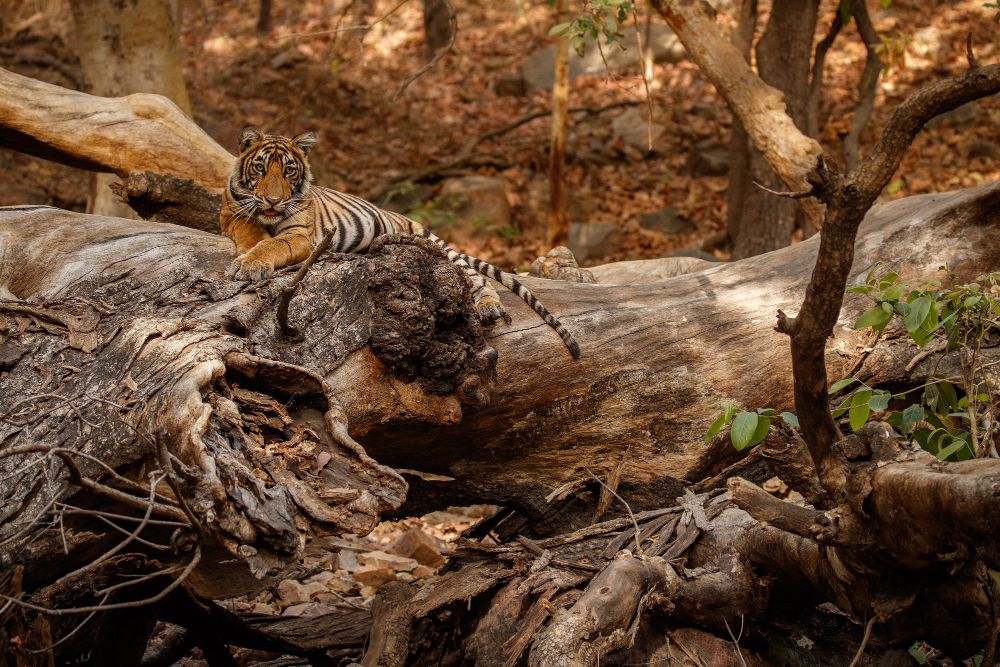
There is a common assumption about concealment that is intuitive and mostly wrong.
The assumption is that hiding means matching — that the way to be invisible is to be the same colour as whatever is behind you.
That helps, and it is not the main thing. A uniformly coloured object in front of a background of the same colour remains detectable, because the visual system is not comparing colours across the scene. It is looking for edges, and an object has an edge whatever colour it is.
Understanding that changes what counts as good concealment, and it explains why the most effective natural patterns look nothing like their surroundings when examined closely.
Why Edges Are the Target
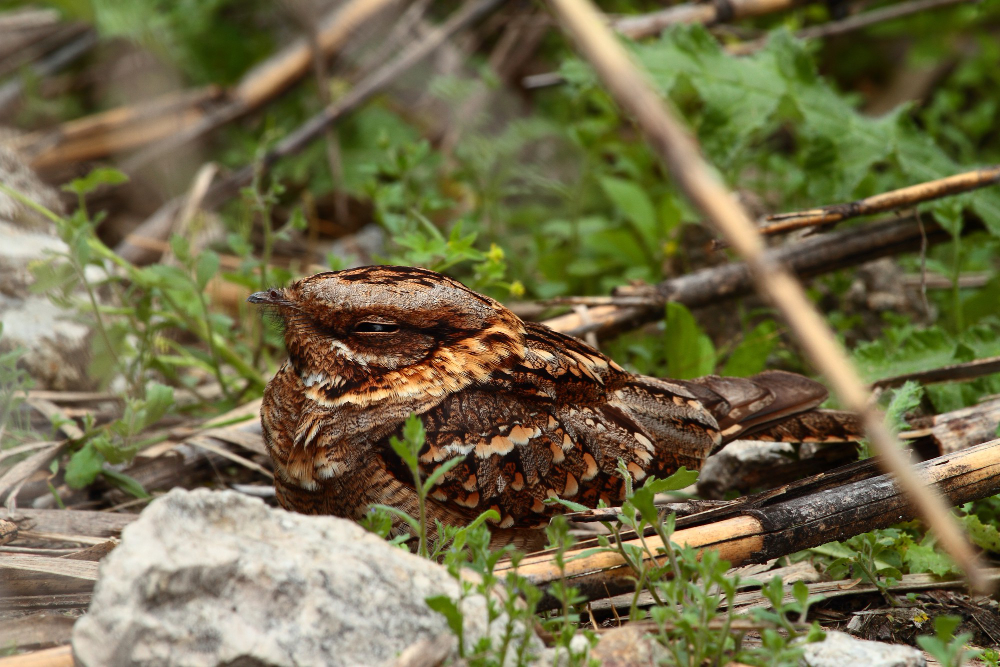
The perceptual point is the foundation and is worth stating precisely.
Visual systems identify objects by detecting discontinuities — places where brightness, colour or texture change abruptly — and assembling those into boundaries that enclose a shape.
That process is fast, automatic and remarkably good at recovering objects from incomplete information. A partially hidden animal is still detected because the visible fragments of outline are joined up.
So the problem for anything trying not to be seen is not that it is a different colour from the background. The problem is that it has a continuous boundary, and the boundary is what gives it away.
Effective concealment therefore attacks the boundary rather than the colour, and every major strategy is a way of doing that.
Like our content? Follow us for more.
Breaking the Outline
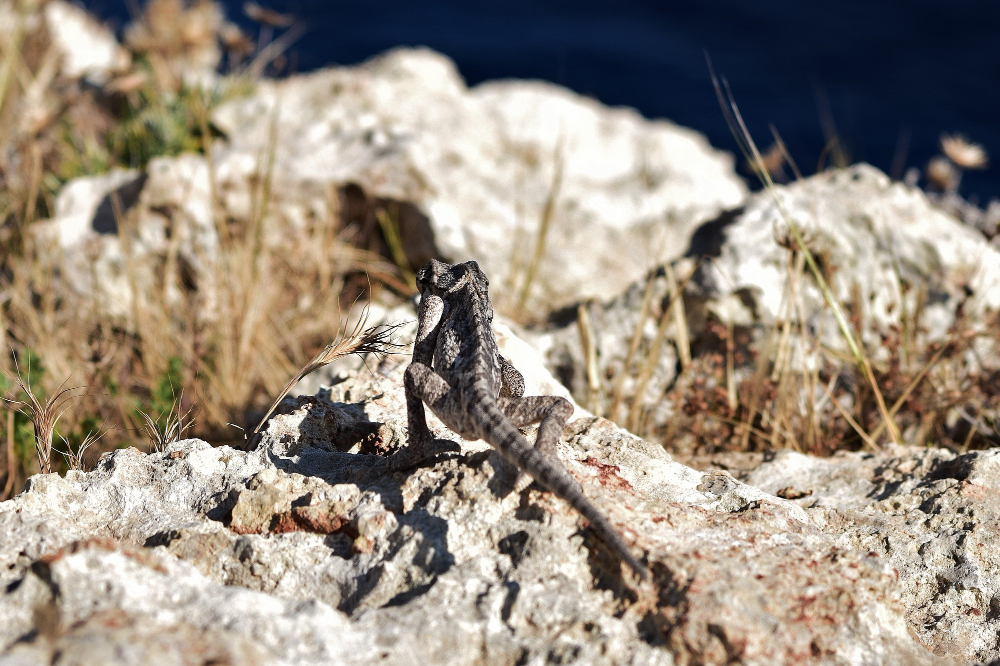
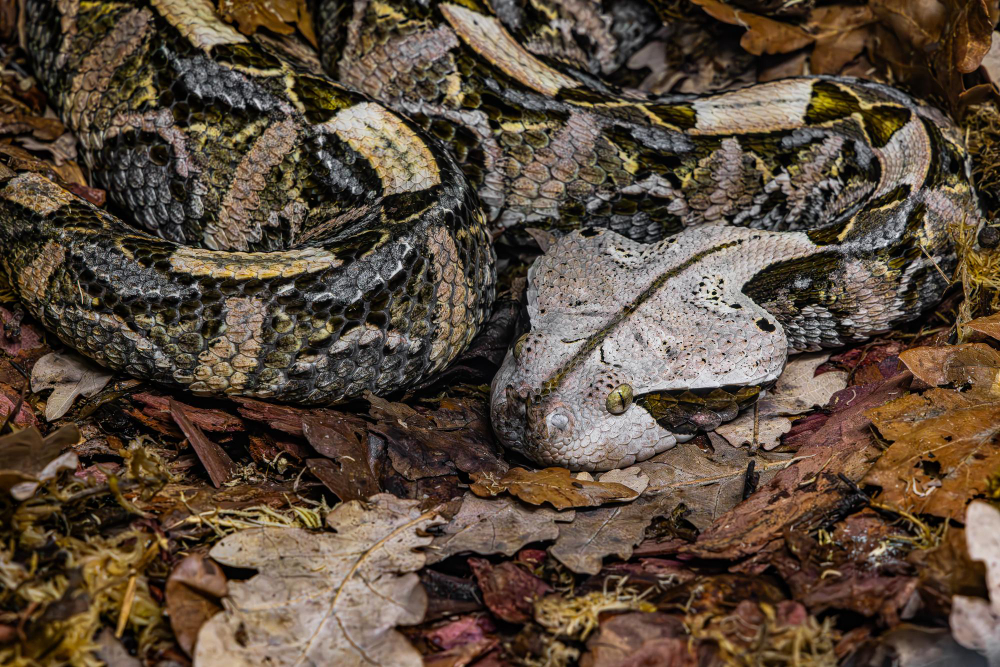
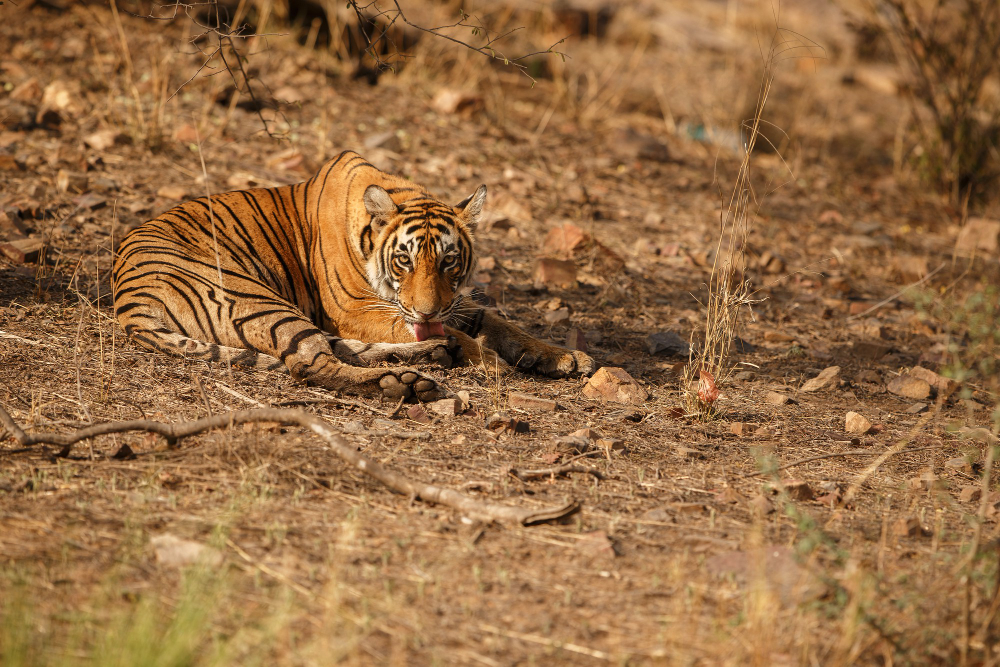
The primary technique is patterns that contradict the shape of the body.
High-contrast markings placed across the outline create edges in the wrong places. The visual system detects those edges, treats them as boundaries, and assembles the wrong shape.
That is why such patterns are bold rather than subtle. A subtle pattern does not generate edges strong enough to compete with the real outline; a strong one produces false boundaries that dominate.
The critical feature is that the markings must cross the edge of the body rather than sitting within it. A pattern confined to the interior decorates an outline; a pattern running off the edge destroys it.
It also explains why such animals look conspicuous in isolation and disappear in context. Against a plain background the pattern is obvious and the shape is intact; against a complex one the false edges merge with real edges in the scene and the animal ceases to be a separable object.
Cancelling the Shading
A second technique addresses a different cue and is more subtle.
Light comes predominantly from above, which means a solid object is lighter on top and darker underneath — and that gradient is a powerful indicator of three-dimensional form.
An animal coloured darker on the back and lighter on the belly cancels that gradient. The illumination makes the back lighter and the pigmentation makes it darker, and the two approximately balance.
The result is an object that reflects light uniformly, which removes the shading cue and makes it appear flat rather than solid.
That arrangement appears across an enormous range of unrelated animals, in water and on land, which is a reasonable indication that it works.
There are cases where the gradient is reversed, and those occur in animals that habitually orient themselves upside down — which is the exception proving the mechanism, since the correction is applied relative to the light rather than to the body.
The Other Approaches
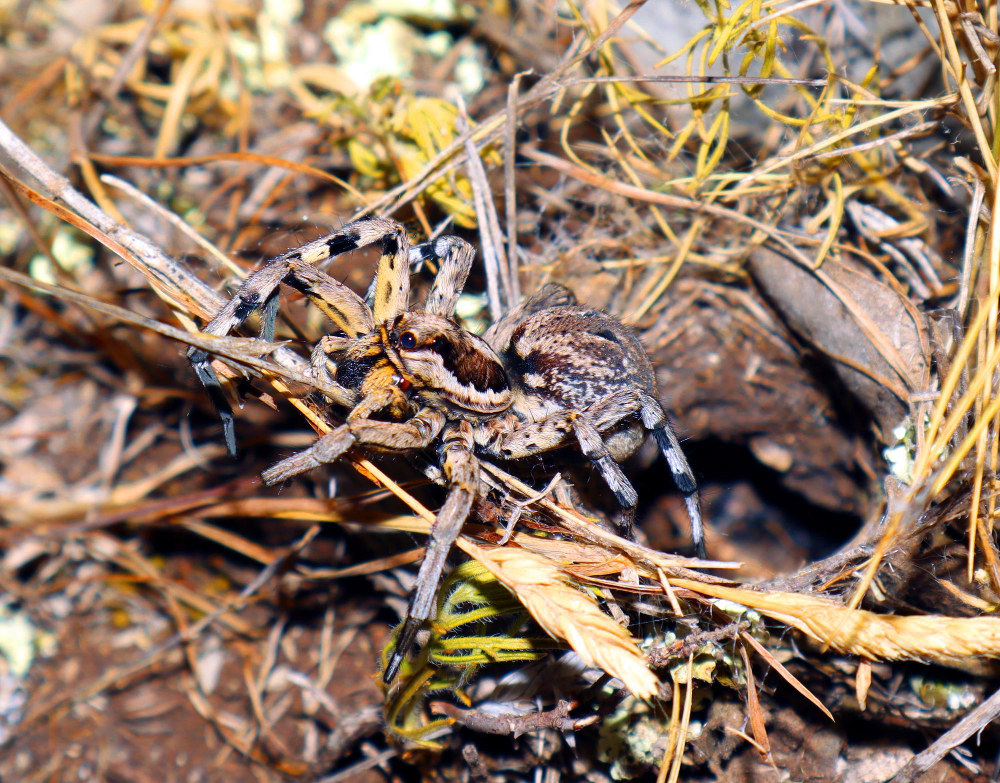
Several further strategies exist and are worth distinguishing.
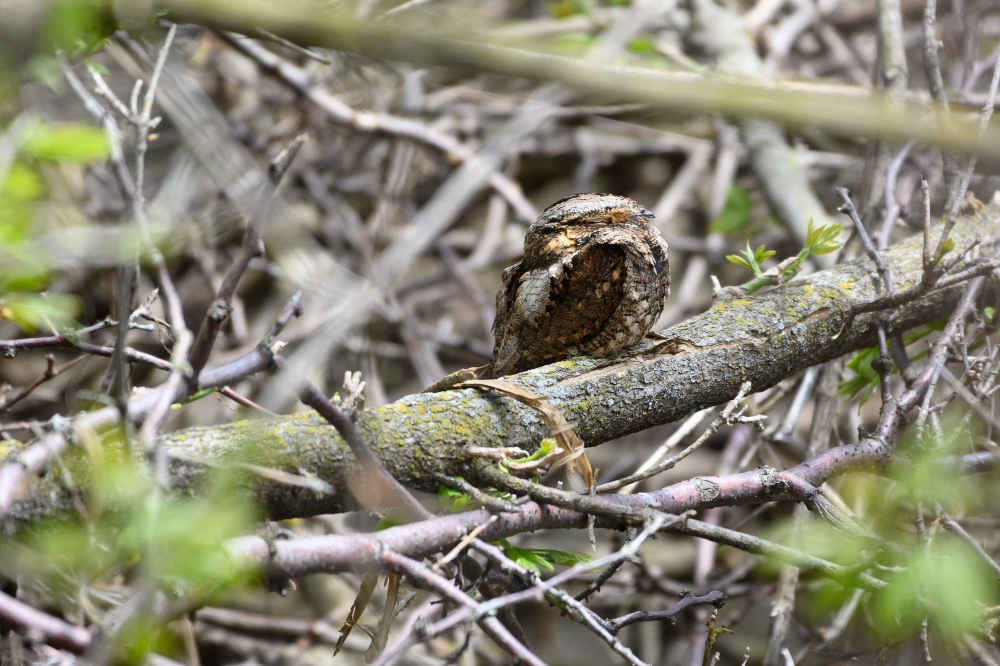
Resembling a specific object rather than a background — a leaf, a twig, a stone, a piece of debris — works differently, since the animal is not attempting to be invisible but to be categorised as something uninteresting.
That requires accuracy in shape as well as colour, frequently including asymmetry, damage and irregularity, because a perfect leaf is less convincing than a partly eaten one.
Transparency removes the problem entirely and is common in open water, where there is no background to match, and rare on land because the necessary tissue properties are difficult with a terrestrial body.
Producing light to match the brightness of the sky above works in water at depth, where an animal viewed from below is a silhouette against downwelling light, and the solution is to emit light matching it.
And motion camouflage is a separate category, since almost any concealment fails once the object moves — which is why so many concealed animals rely on absolute stillness and why movement detection is such a strong visual capability.
The Problem of Being Seen Anyway
Several limitations constrain every strategy and are worth stating.
Concealment is relative to a viewpoint. A pattern that works against one background fails against another, and an animal that moves between environments cannot be concealed in both.
Some resolve that by changing. A seasonal change in colouring matches a changing background, and works only if the change is timed correctly — which becomes a problem where the environment changes on a different schedule from the animal.
Others resolve it by rapid change, altering appearance within seconds through direct control of the skin, which is rare and is restricted to a small number of groups.
There is also a trade against other requirements. Colouring used for signalling to others of the same species conflicts directly with concealment, and animals needing both frequently solve it by displaying selectively — concealed at rest and conspicuous only when displaying.
And concealment is expensive in behaviour. An animal relying on it must remain still, must choose backgrounds correctly and must suppress responses that would reveal it, all of which constrain what else it can do.
That is the recurring point about any adaptation. It is never free, it is always relative to something, and the cost appears somewhere other than where the benefit does.
What Humans Copied and What They Got Wrong
The applied history is instructive because the early attempts made the intuitive mistake.
Initial military efforts concentrated on matching colour to terrain, producing uniform drab shades that reduced conspicuousness and left the outline entirely intact.
The shift to disruptive patterning — bold shapes crossing outlines — came later and was informed directly by observation of animals, by people who had studied them.
The same principle was applied at large scale to structures and vehicles, using patterns designed not to hide them but to make their shape, size, orientation or speed difficult to judge.
Modern approaches add considerations that natural camouflage does not face, since detection now occurs across parts of the spectrum the eye cannot see, and a pattern optimised for human vision may be irrelevant against other sensors.
That is a useful reminder that camouflage is always relative to a specific observer, and a pattern is only concealing with respect to the system trying to detect it.
Being Seen on Purpose
The opposite strategy is worth including, because it uses the same understanding in reverse.
A great many animals are conspicuous deliberately — bright, high-contrast, patterned in ways that make them impossible to overlook.
That works when being noticed is an advantage. An animal that is truly dangerous to eat benefits from being recognised quickly, since a predator that has learned to avoid it must be able to identify it.
The patterns used for that purpose are the opposite of concealing ones. They are bold, simple, repeated and consistent between individuals, because the requirement is to be memorable and recognisable rather than ambiguous.
And they cluster. Unrelated species that share a defence frequently converge on similar patterns, because a predator that learns one has learned them all, which benefits every species using it.
There is also imitation of that arrangement by species without the defence, which works while imitators remain uncommon relative to the real article.
That whole system depends on the same perceptual facts as camouflage, applied in reverse — and the two strategies frequently appear in closely related species, which indicates that the underlying machinery is the same and only the objective differs.
Why It Is a Perception Problem
The broader point is what the subject reveals about seeing.
Camouflage works by exploiting how a visual system builds objects out of a scene, which means every effective pattern is a statement about that process.
The patterns that work tell you what the system relies on: edges, shading gradients, symmetry, familiar shapes and motion. The patterns that do not work tell you what it ignores.
That makes natural camouflage a kind of accumulated research into vision, conducted by selection over an enormous period, arriving at solutions that human designers reached much later and partly by copying.
And it explains the central counterintuitive fact. The best way to be invisible is not to look like your surroundings. It is to not look like anything — to present a visual system with information it cannot assemble into an object at all.
Which is why the effective patterns look so strange up close. They are not attempting to resemble anything; they are attempting to prevent a shape being formed, and looking like nothing at all is a far more demanding specification than looking like a background.
Like our content? Follow us for more.