

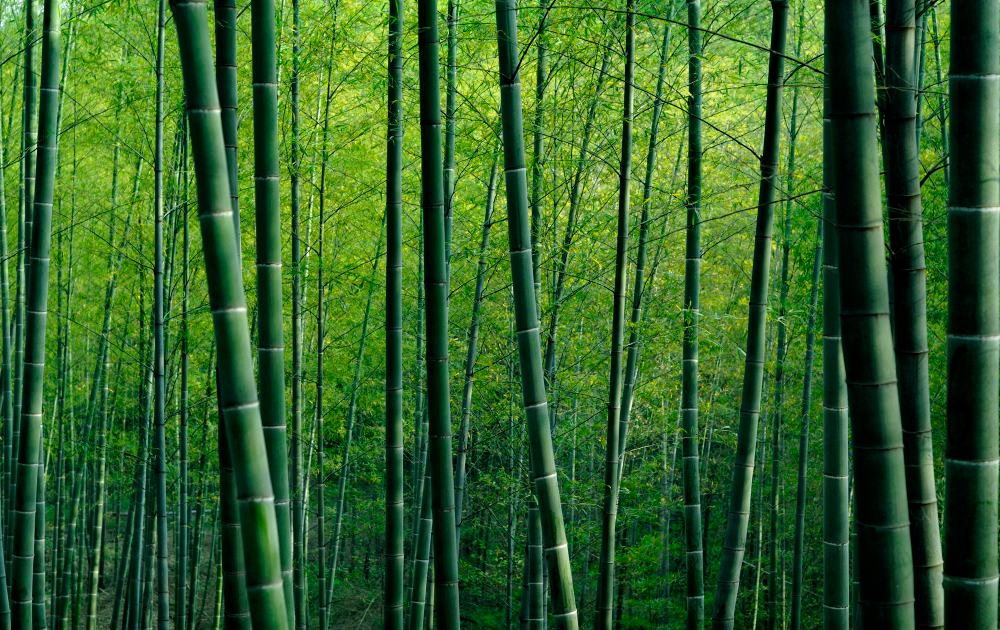
There is a plant that behaves so differently from a tree that most of what people assume about it is wrong, starting with what it is.
Bamboo is a grass. Not a tree that resembles one, not a woody plant loosely related to grasses — a member of the grass family, with the growth pattern of a grass applied at a scale that produces a structure tens of metres tall.
That single fact explains the growth rate, the shape, the way it spreads, the material properties and the reason it flowers the way it does.
And the material that results is one of the few naturally occurring structures that outperforms engineered equivalents on several measures at once, which is why it has never been displaced in the places it grows.
Growing Without Thickening

The growth pattern is the fundamental difference and it is worth being clear about.
A tree grows outward as well as upward. It adds a layer of new material around its circumference each year, thickening progressively, which is what tree rings record.
A grass does not. It extends from growing points and does not add girth afterwards, which means a bamboo stem emerges from the ground at essentially its final diameter and then extends.
That extension is rapid because the plant is drawing on an established underground system built by previous years, so a new stem is not growing so much as being deployed from resources already accumulated.
The extension completes within a single growing season, after which the stem hardens and does no further growing at all. It will live for years and will not change dimension.
That is why a stand of bamboo contains stems of the same thickness at different ages, and why age is read from colour and surface condition rather than from size.
Like our content? Follow us for more.
Why It Is Hollow
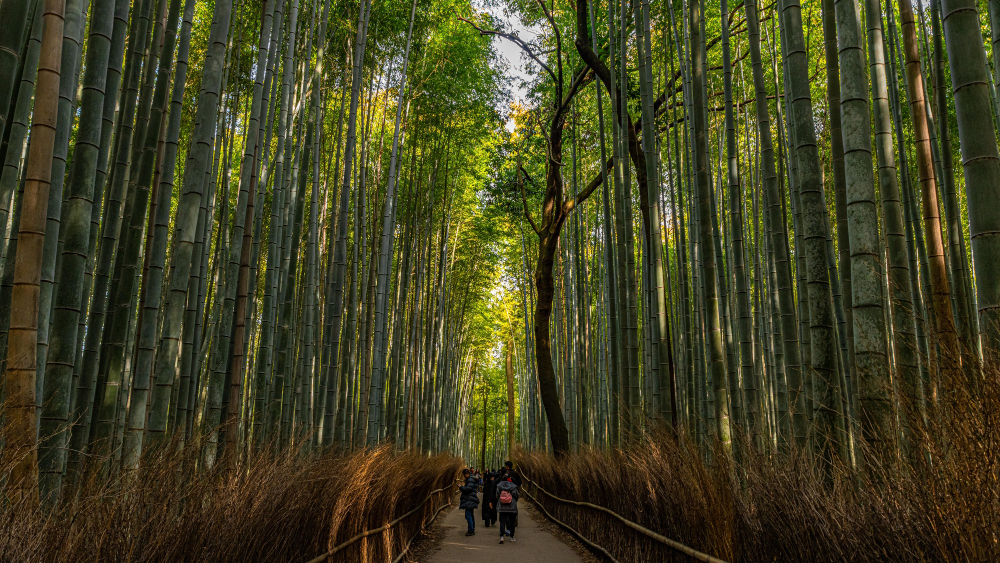
The structural logic is the same one that produces hollow bones and hollow tubing, and it is worth setting out.
Material placed at the centre of a column contributes very little to resisting bending, because bending stresses are concentrated at the outer surface — the far side stretches and the near side compresses, while the middle does almost nothing.
Removing the centre therefore costs very little strength and saves a great deal of weight, and a hollow tube is dramatically more efficient in bending than a solid rod of the same mass.
For a plant that must reach full height in months, that efficiency is decisive. Building a solid stem of the same height would require far more material and a far longer period to assemble it.
The walls are also not uniform. The fibres that carry load are concentrated toward the outside, where the stress is highest, and are sparser toward the interior — which is the same optimisation applied at a finer scale.
The Joints

The transverse divisions along the stem are structural rather than incidental, and they solve a specific problem.
A hollow tube fails in a particular way. Under bending, the cross-section tends to flatten, and once it flattens it loses the geometry that gave it strength and collapses.
A solid partition across the tube at intervals prevents that flattening, holding the circular section against deformation.
That is why the divisions occur along the length rather than only at the ends, and why the spacing matters — closer divisions resist flattening more effectively.
They also compartmentalise the stem, so damage to one section does not propagate along it, and they provide anchoring points for the branches that emerge at each one.
Anybody who has worked with the material knows the practical consequence: the stem is strong between divisions and can be split easily along its length, because the fibres run lengthwise and there is nothing crossing them except at the joints.
Why It Spreads the Way It Does
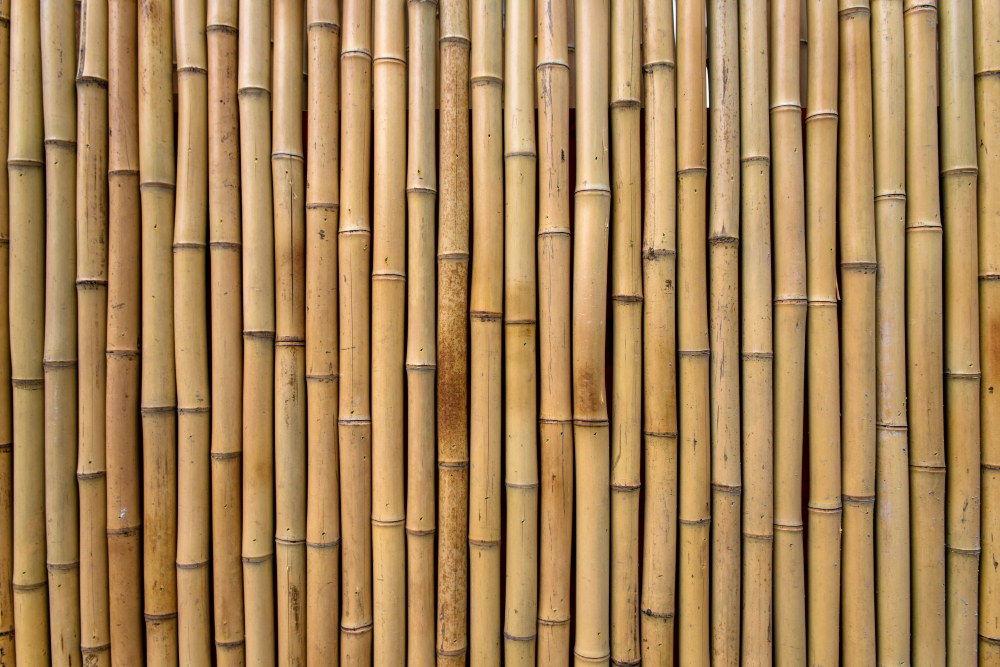
The underground structure explains behaviour that surprises people who plant it.
Bamboo grows from a horizontal underground stem system, from which new shoots emerge — which means a stand is frequently a single connected organism rather than a group of individuals.
Some types have compact underground systems that expand slowly outward, producing a clump that enlarges gradually.
Others have running systems that extend substantial distances horizontally and send up shoots at intervals, which produces a stand that expands rapidly and is difficult to confine.
That distinction is the single most important thing to know before planting any of it, and the difference between the two is not visible above ground.
Containment of the running types requires a physical barrier to a considerable depth, and removal once established is truly difficult because the underground system regenerates from fragments.
There is a maturity point worth noting. A newly cut stem is not at full strength – the material continues to harden for a period after cutting, and stems are selected by age within a stand because a young one is substantially weaker than an older one of identical size.
Age is judged by colour and surface markings, since size gives no indication.
The Flowering Problem

One aspect of the life cycle is really strange and has substantial consequences.
Many types flower extremely rarely — at intervals of decades — and when they do, all plants of that type flower simultaneously across an entire region and frequently across the world, regardless of local conditions or when they were planted.
After flowering, the plants generally die.
The synchronisation is not fully explained. Since plants of a given type descend from common stock and appear to carry an internal timer, the leading account is that the interval is inherited and runs independently of environment — but why such long intervals evolved, and how the timing remains accurate across generations and continents, is not settled.
The consequences are practical. A flowering event removes an entire type from production simultaneously, which affects anybody who depends on it, and the replacement stock takes years to become usable.
It also affects ecosystems where animals depend on it, and the mass seeding and subsequent die-off produce documented knock-on effects.
The Shoots
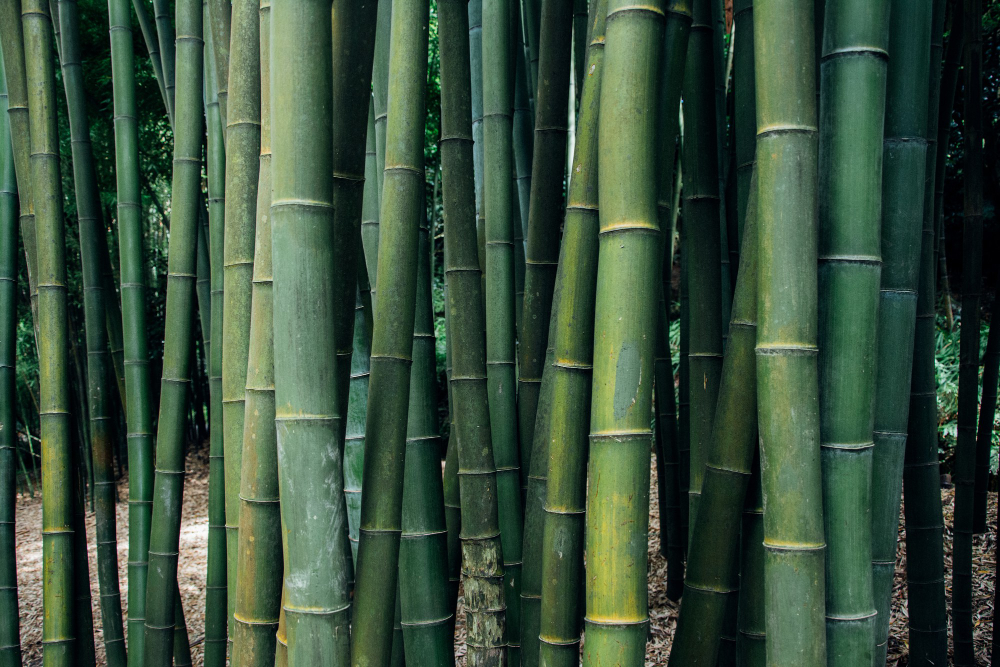
One further aspect belongs here because it is a substantial use in its own right.
New shoots emerging from the ground are harvested before they extend, at a stage when the tissue is still soft and unlignified, and are a significant food in the regions where the plant grows.
That harvest is a direct trade against the structural crop, since every shoot taken is a stem that will not exist — so the two uses compete for the same output.
The shoots also require processing before eating, because several types contain compounds that are removed by preparation, and this is a real requirement rather than a refinement of flavour.
That constraint is worth stating without elaborating on it: shoots from an unfamiliar plant are not a foraging opportunity, and the preparation that makes them edible is knowledge held locally rather than something to be improvised.
The timing is narrow. The window between a shoot emerging and becoming too fibrous is short, which makes it a seasonal harvest with an intense period rather than a continuous supply.
And the harvest doubles as management. Removing some shoots controls the density of a stand, which is necessary because an unmanaged stand becomes too crowded for individual stems to reach usable size.
So the food crop and the material crop are the same operation performed with a different objective, and stands are managed for a balance between them.
Why It Is Used for Everything
The material properties explain the range of applications, and the figures are actually remarkable.
Strength relative to weight is exceptionally high — comparable to engineered structural materials on some measures — because the fibres are strong, aligned along the length and efficiently arranged in a tube.
It is flexible, which allows structures to deform under load and recover rather than failing, and which matters enormously where ground movement occurs.
It is available rapidly. A usable stem takes a few years from the establishment of a stand rather than the decades a timber tree requires, and harvesting does not kill the plant.
And it requires no processing to be useful. A cut stem is a structural member immediately, which is a substantial advantage where processing capacity is limited.
The limitations are equally real. It is vulnerable to insects and fungal attack without treatment, it splits along its length, joining it is actually difficult because it cannot be nailed conventionally, and the natural variation in dimension makes standardised construction awkward.
Which is a reasonable summary of why it dominates where it grows and has never travelled well. The material is exceptional, the difficulties are all in working with it rather than in the substance itself, and the techniques that solve them took a very long time to develop and did not export.
Which is the usual pattern with a material that suits one place. The substance travels perfectly well and the knowledge of what to do with it does not, and the difference between a stand of bamboo and a building is several centuries of technique that stayed where it was worked out.
Like our content? Follow us for more.
