


There is a category of engineering problem that only becomes visible once you think about what a machine has to do over a whole journey rather than at any moment.
Lighter-than-air flight has one of the clearest examples, and it is not the problem most people would guess.
The obvious difficulties — the size, the weather, the flammable gas in some cases — are real and are widely discussed. The structural problem that shaped the technology most is quieter than any of them, and it is simply that the craft gets lighter as it flies while its lift does not change.
That mismatch is a continuous problem throughout every flight, it has no easy solution, and the various answers to it explain a great deal about how such craft were built and operated.
Why Buoyancy Does Not Behave Like Lift
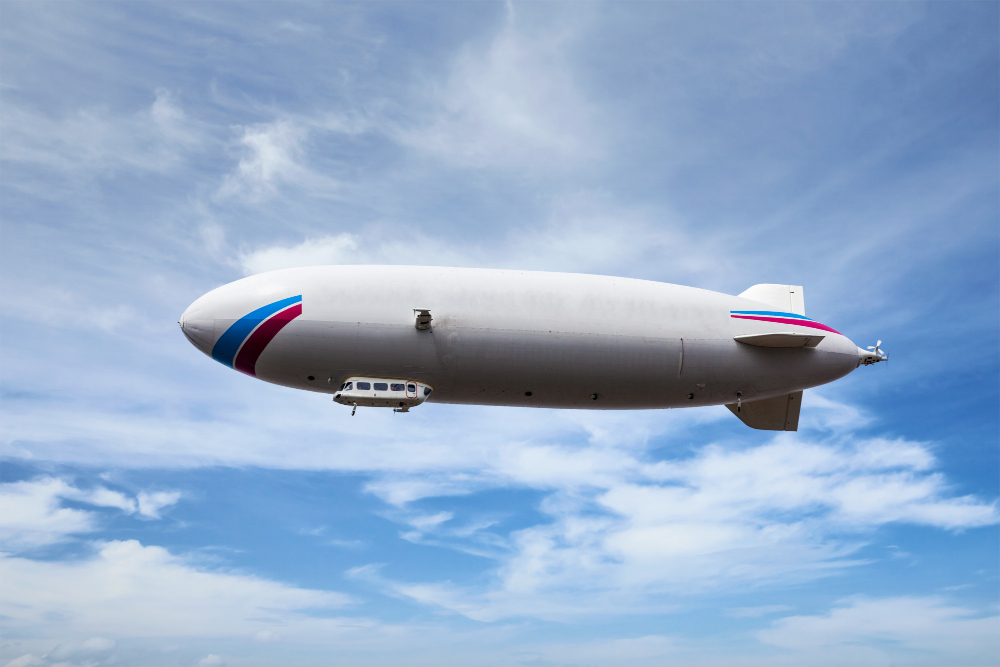
The comparison with a conventional aircraft makes the issue clear.
An aeroplane generates lift from airflow, and the amount generated is controllable moment to moment through speed and the angle of the wing. As the aircraft becomes lighter, less lift is required, and less is produced without anybody doing anything unusual.
Buoyant lift is different. It depends on the volume of gas and the density of the air around it, neither of which changes because fuel has been consumed.
So a craft that starts in balance becomes progressively more buoyant as it burns fuel, and by the end of a long flight it may be substantially lighter than it was while generating exactly the same lift.
That surplus lift has to be dealt with, and every method of dealing with it costs something.
Like our content? Follow us for more.
The Ways of Losing Lift
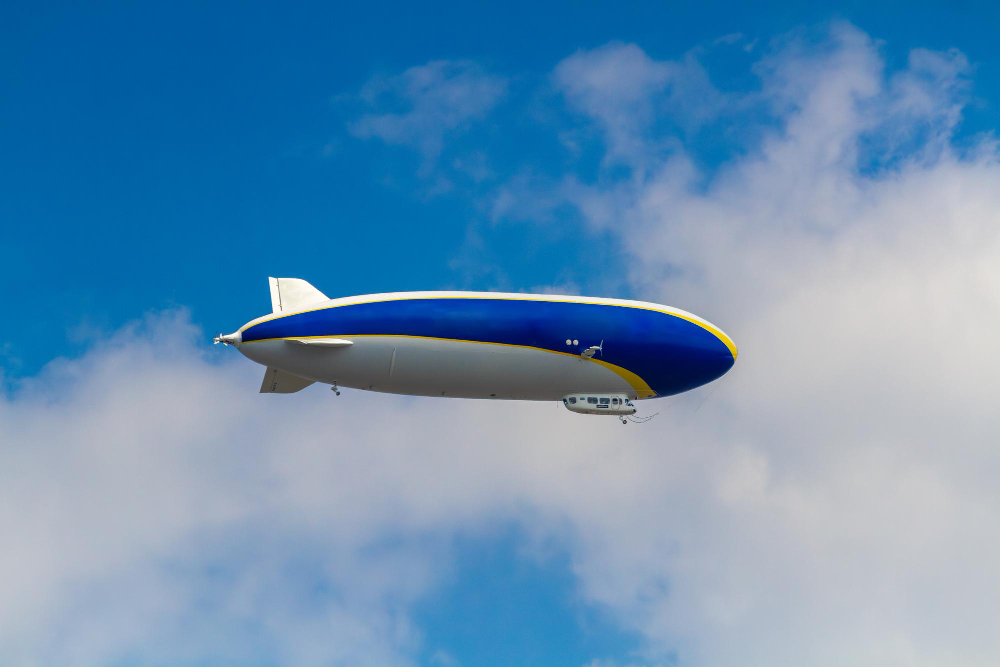
Several approaches existed and each has an obvious drawback.
Venting gas works immediately and is irreversible in flight. The gas is expensive, in some cases difficult to obtain, and once released cannot be recovered — so a flight that vents heavily arrives with reduced capability and requires replenishment before flying again.
Flying nose-down using the hull as a lifting surface can generate downward force to counteract surplus buoyancy, which works and costs fuel — creating a loop in which correcting the problem consumes the substance whose consumption caused it.
Taking on ballast in flight is the elegant answer. Some craft collected rainwater; others condensed water out of engine exhaust, recovering mass from the same combustion that was removing it.
That last solution is truly clever and was used, and the equipment required was heavy and imperfect, which is the usual outcome.
Carrying additional weight for the purpose defeats the point, and simply planning to be too heavy at departure means not being able to take off.
There is a pressure point worth adding. The gas inside is held at only slightly above the surrounding air pressure, because a large envelope cannot contain a substantial pressure difference without enormous structural weight.
That means the lift comes from the density difference rather than from any compression, and a punctured envelope leaks slowly rather than bursting.
Rigid, Non-Rigid and the Difference
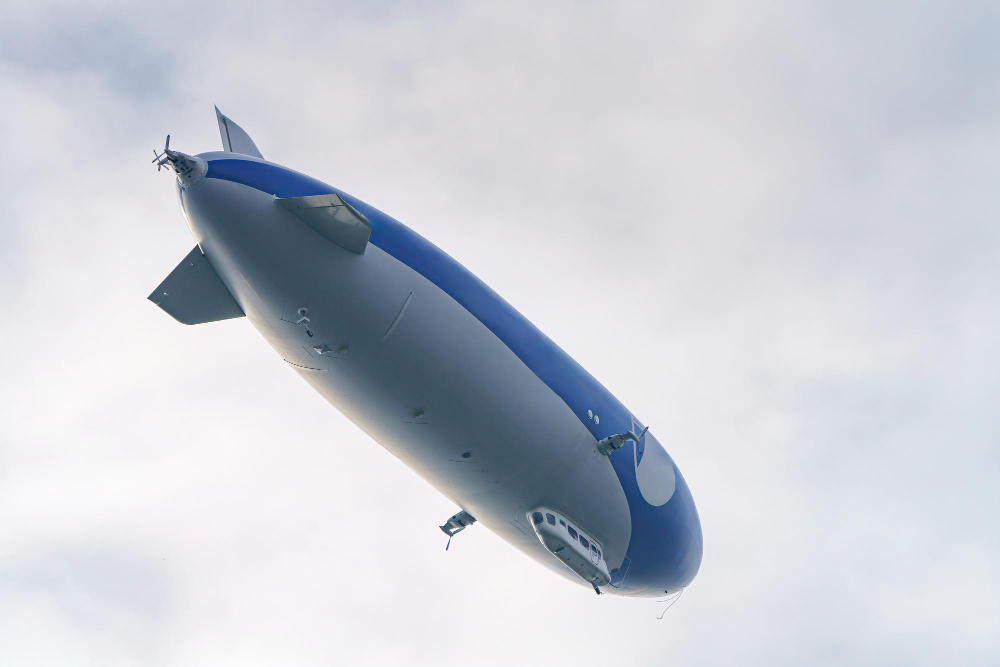
The structural categories are frequently confused and the distinction matters.
A non-rigid craft has no internal framework. Its shape is maintained entirely by the pressure of the gas inside, in the same way a balloon holds its form, and losing pressure means losing shape.
That makes it simple and light and limits its size, because a large unsupported envelope cannot hold a useful shape against aerodynamic forces.
A rigid craft has a full internal framework, with the gas held in separate cells inside it, and the outer covering is a fairing rather than a structural element.
That permits enormous size, allows the gas to be divided so that damage to one cell is not catastrophic, and provides structure to attach engines, accommodation and cargo at multiple points.
It also requires an extremely light framework, which is the central engineering challenge, and produces a structure that is very large, very light and correspondingly vulnerable to structural loads from weather.
A third category sits between them, with a partial keel providing some structure to an otherwise pressure-supported envelope.
There is an operational detail worth noting. Because buoyancy varies with air temperature and pressure, a craft correctly balanced in the morning is not in the afternoon, and passing through weather changes alters the balance during flight.
That made trimming a continuous requirement rather than an occasional one, needing attention throughout any journey.
Ground Handling Is the Hard Part
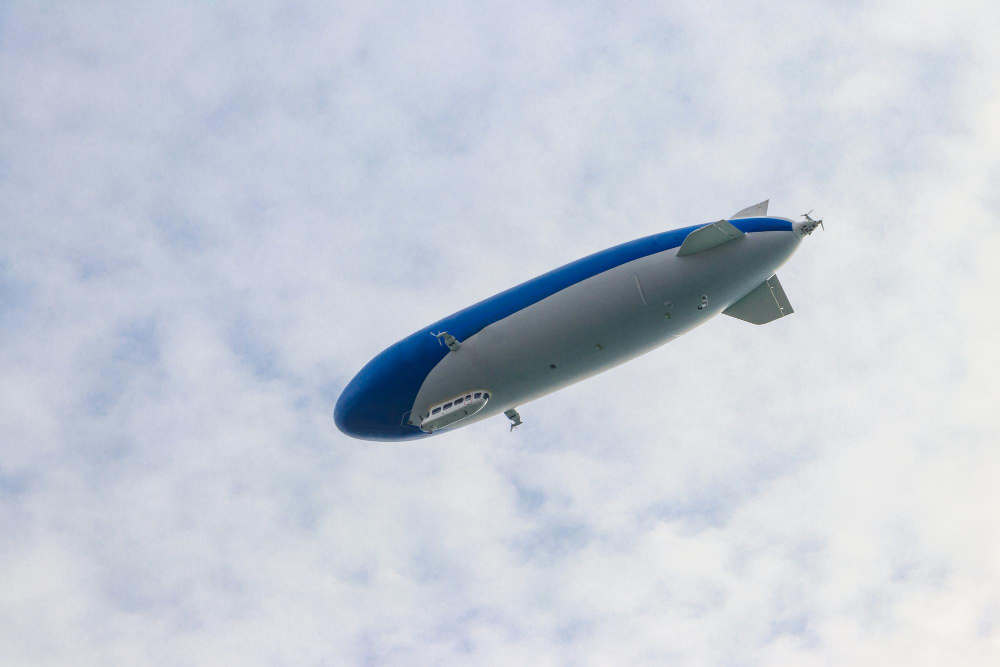
The aspect that determined practicality is the one that receives least attention.
A large lighter-than-air craft near the ground is a vast surface area with very little mass, which means wind acts on it far more strongly than inertia resists.
Handling one therefore requires either a large number of people on lines or specialised equipment, and a change in wind during that operation can be extremely difficult to manage.
That is why mooring masts were developed — allowing the craft to be attached at the nose and to weathervane freely around it, so that wind pressure is reduced rather than resisted.
Sheds for such craft are among the largest enclosed structures ever built, because getting one into and out of a building crosswind is harder than almost anything else involved.
And the fundamental asymmetry remains: an aircraft on the ground is a heavy object that stays where it is put, while a lighter-than-air craft on the ground is a sail attached to something that wants to float.
Why They Stopped and What Persisted
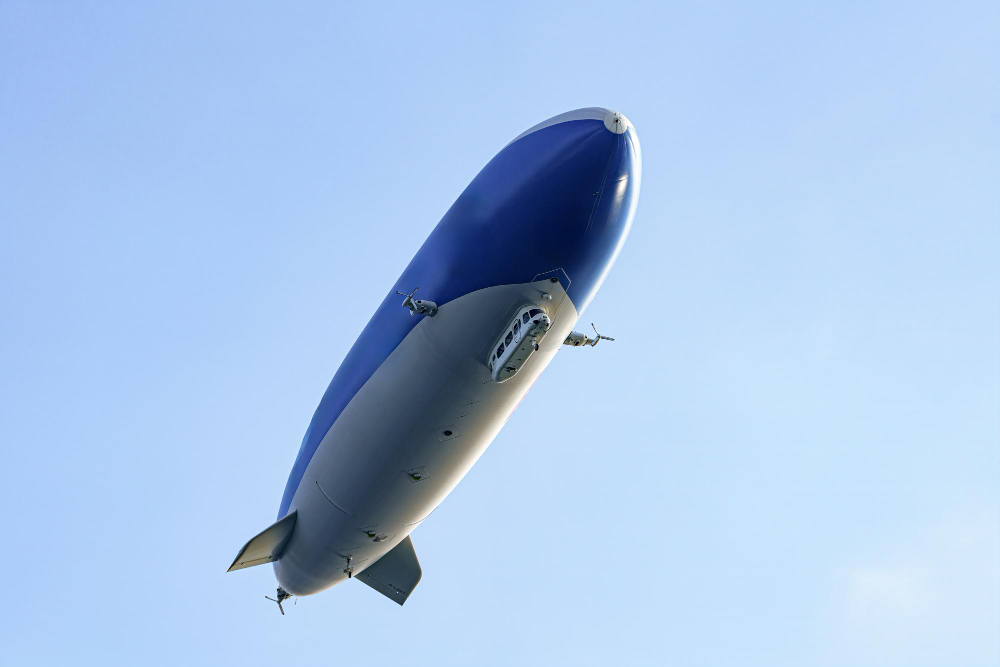
The decline had several causes and the famous one is not the main one.
Aeroplane performance improved rapidly and decisively. Speed, range, payload and reliability all advanced to the point where the comparison stopped being close, and a technology that is slower, larger, more weather-limited and more labour-intensive on the ground cannot compete on routes where speed matters.
Weather vulnerability was a persistent operational limit rather than an occasional problem. Such craft are slow enough that weather systems cannot be outrun and large enough that they cannot be flown through.
Infrastructure cost was substantial, since the sheds and mooring facilities required are enormous and single-purpose.
And a series of losses, of which one is widely remembered, affected confidence and investment at a point when the alternative was already advancing.
What persisted are the applications where the specific advantages matter: remaining in one place for extended periods, carrying equipment aloft without a runway, and operating at low speed where observation is the purpose.
Those uses continue, at modest scale, because buoyant lift costs nothing to maintain once established — which is the one thing no other form of flight offers.
Why They Were So Large
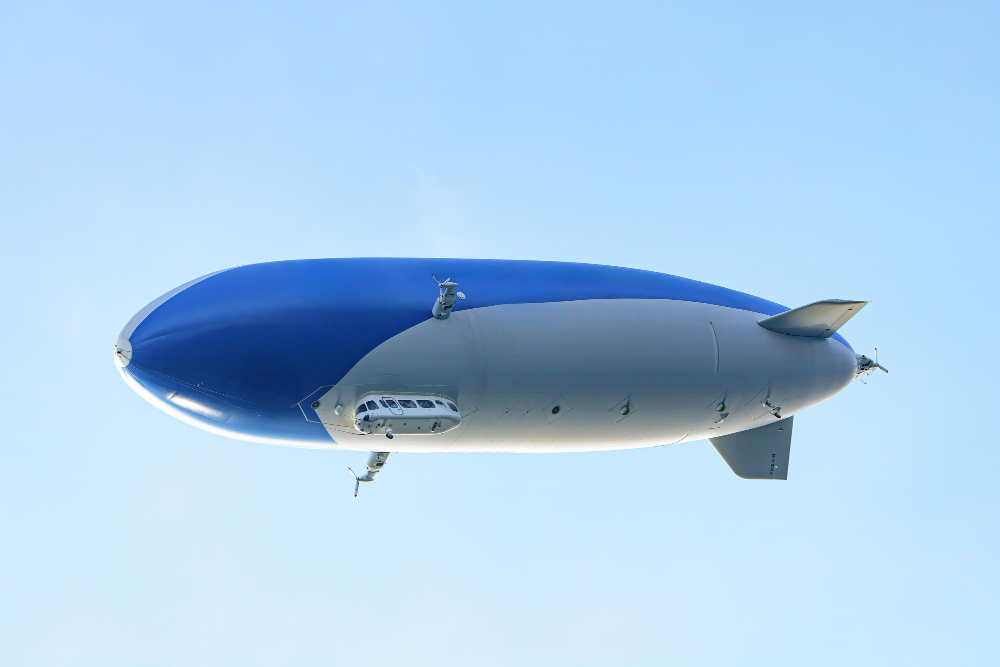
The scale is the aspect that photographs convey and that nobody explains, and it follows from arithmetic.
Buoyant lift is produced by displaced air, which means the lift available is proportional to volume.
Weight, for a structure, is broadly proportional to surface area — the framework, the covering and the fittings all scale with the size of the surface rather than with the space inside.
Volume rises with the cube of a linear dimension and area with the square, which means that doubling the size multiplies lift by eight and weight by roughly four.
So a larger craft is proportionally more capable, and the useful lift remaining after the structure has been accounted for improves dramatically with size.
That relationship pushed designs toward the largest structures that could be built, handled and housed, and the limit was set by those practical constraints rather than by any aerodynamic consideration.
It also explains why small examples of the type are comparatively useless for carrying anything. Below a certain size the structure consumes almost all the available lift, which is why the small versions in use now carry very little and exist for reasons other than payload.
That is an unusual scaling relationship. Most vehicles become harder to build as they grow; this one becomes more efficient, which is why the technology produced some of the largest objects ever flown and nothing in between.
What the Problem Illustrates
The general point is worth extracting because it recurs.
The difficulty that shaped this technology was not a failure of any component. It was a mismatch between two quantities that change at different rates — weight falling continuously and lift staying constant — which is a problem with the concept rather than with any implementation of it.
Problems of that kind are the hardest to engineer around, because no improvement in materials, power or design removes them. They can only be managed, and every method of managing them imposes a cost somewhere else.
Which is a reasonable way to think about the whole subject. The craft were not defeated by being large or slow or by any single event. They were carrying a problem that could not be solved, only paid for, and the price turned out to be higher than the alternative.
Which is worth remembering when any technology is described as having failed. Some are outcompeted, some are made obsolete, and a few were simply carrying a cost that never went away – and telling those apart matters for anybody proposing to revive one.
Like our content? Follow us for more.
