
For American travelers who love the look and feel of a European village but don’t want the cost, the jet lag, or the nine-hour flight, a handful of U.S. towns deliver a genuinely convincing European atmosphere. Some were founded by European immigrant communities who recreated the architecture and traditions of their homelands. Some deliberately rebuilt themselves in a European theme to attract tourism. Some simply preserved the genuine European-influenced building styles of their founding era. The result is a small set of American towns where you can walk a Bavarian street, eat in a Danish bakery, or wander German half-timbered architecture without leaving the country. None of them is a perfect substitute for the real thing, but each offers a real and rewarding version of the European-village experience within a domestic drive or short flight. Here are seven American towns that genuinely feel like Europe.
The appeal of these towns is straightforward — they deliver a specific European atmosphere that American travelers respond to, at a fraction of the cost and effort of an actual European trip. For boomers and older travelers in particular, these towns offer the charm of a European village without the physical demands of long-haul flights, jet lag, unfamiliar transit systems, and language barriers — a genuine consideration that makes the domestic European-style town an appealing alternative rather than merely a consolation prize. The most convincing ones combine authentic architecture, genuine cultural traditions (food, festivals, crafts), and an attractive natural setting. The list below spans the country and represents several different European cultures recreated on American soil.
1. Leavenworth, Washington (Bavarian)
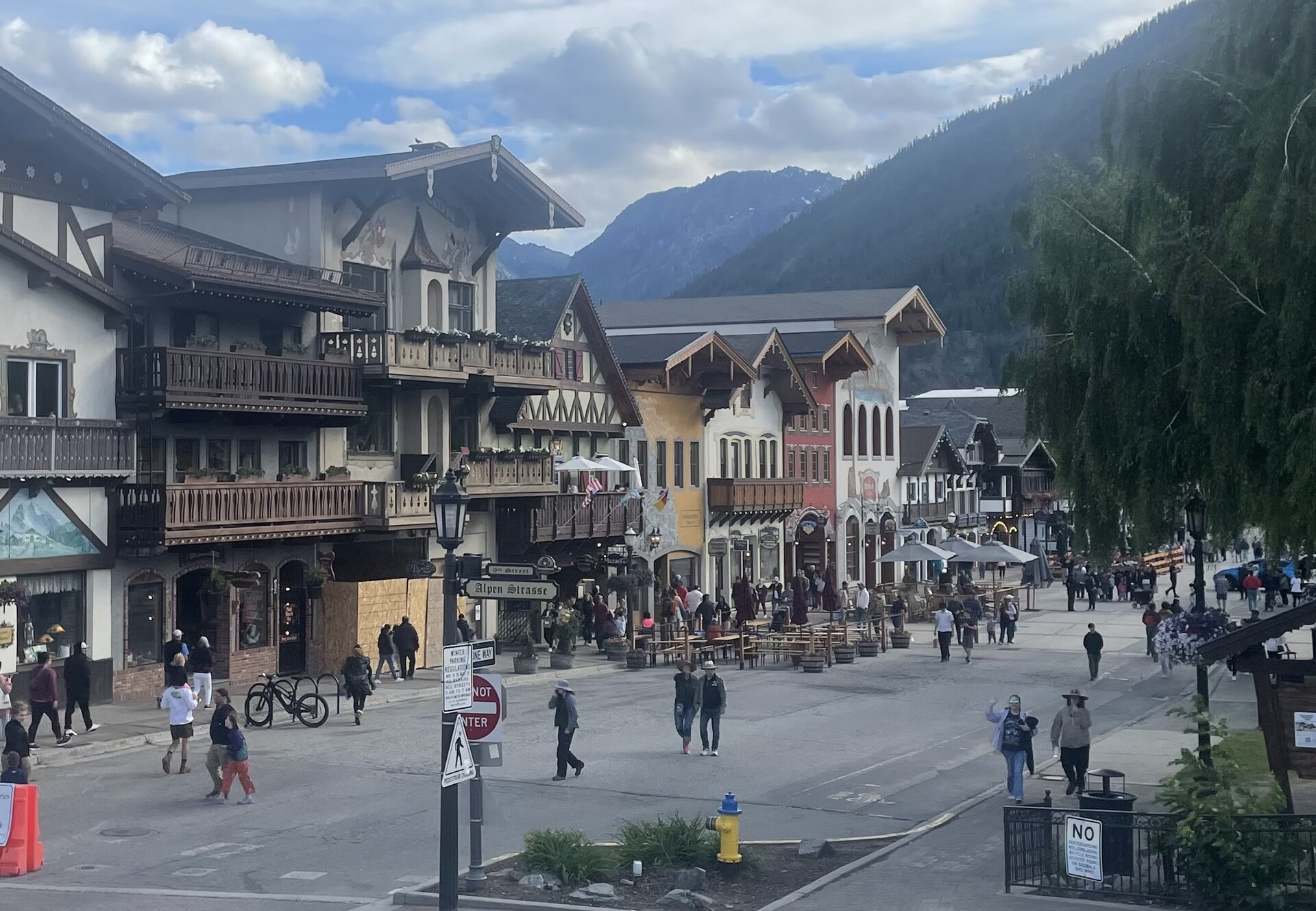
Leavenworth is the most thoroughly committed European-themed town in America. A struggling former logging town in the Cascade Mountains, Leavenworth reinvented itself in the 1960s by rebuilding its entire downtown in a Bavarian alpine style — every building, sign, and storefront follows the theme. The mountain setting genuinely resembles the Bavarian Alps. The town hosts an Oktoberfest, a Christmas market and lighting festival that draws huge crowds, and German restaurants and beer halls throughout. Leavenworth is a deliberate tourism creation rather than an immigrant settlement, but the commitment to the theme and the authentic alpine setting make it remarkably convincing.
2. Solvang, California (Danish)
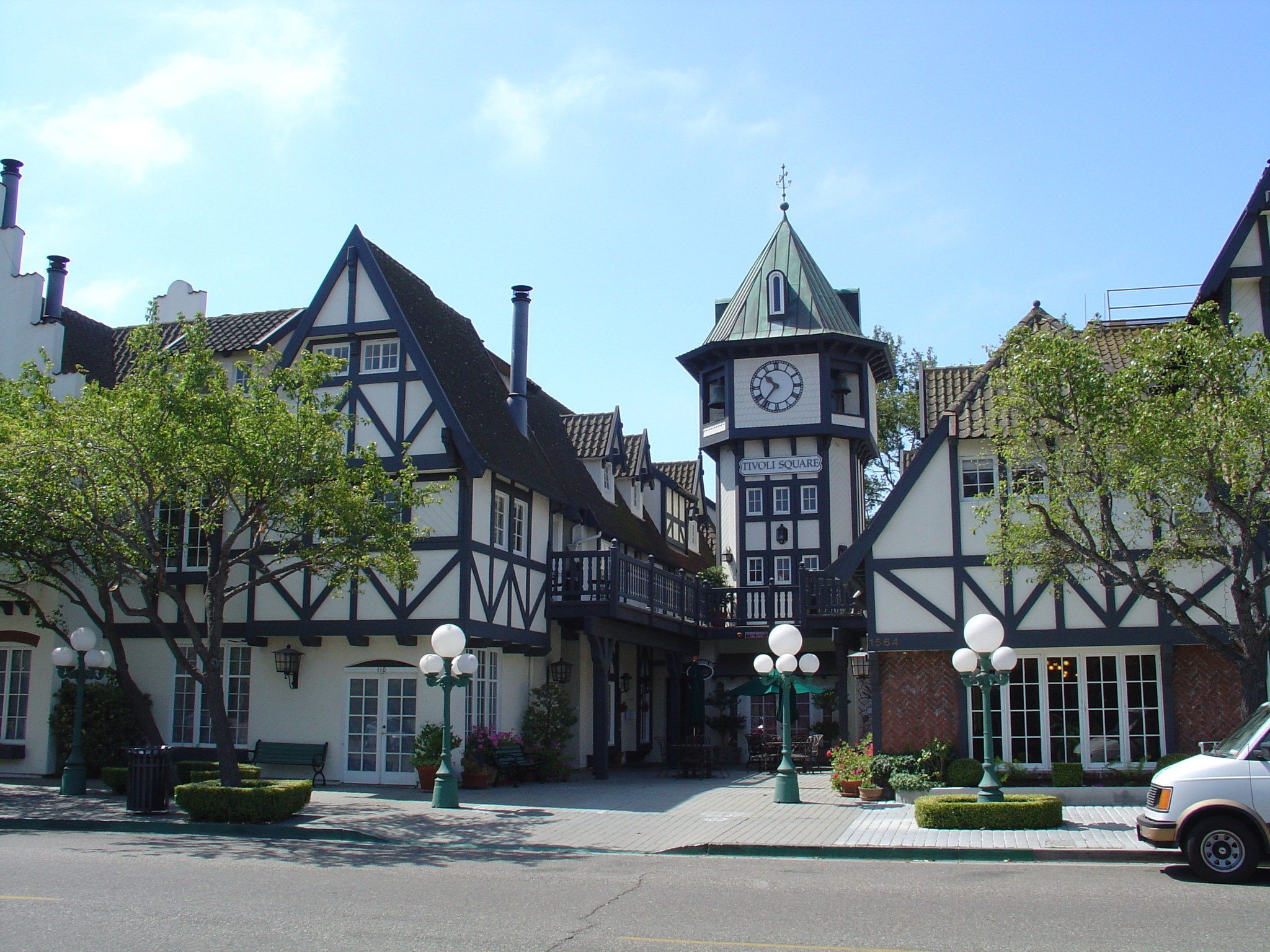
Solvang in the Santa Ynez Valley north of Santa Barbara was founded in 1911 by Danish immigrants who established a genuine Danish-American community. The town features authentic Danish architecture, windmills, half-timbered buildings, Danish bakeries (the aebleskiver pancake balls are a specialty), and a replica of Copenhagen’s Little Mermaid statue. Unlike purely themed towns, Solvang has genuine Danish roots, and the combination of authentic heritage and the picturesque wine-country setting makes it one of the most charming European-style towns in America.
3. Helen, Georgia (Bavarian)
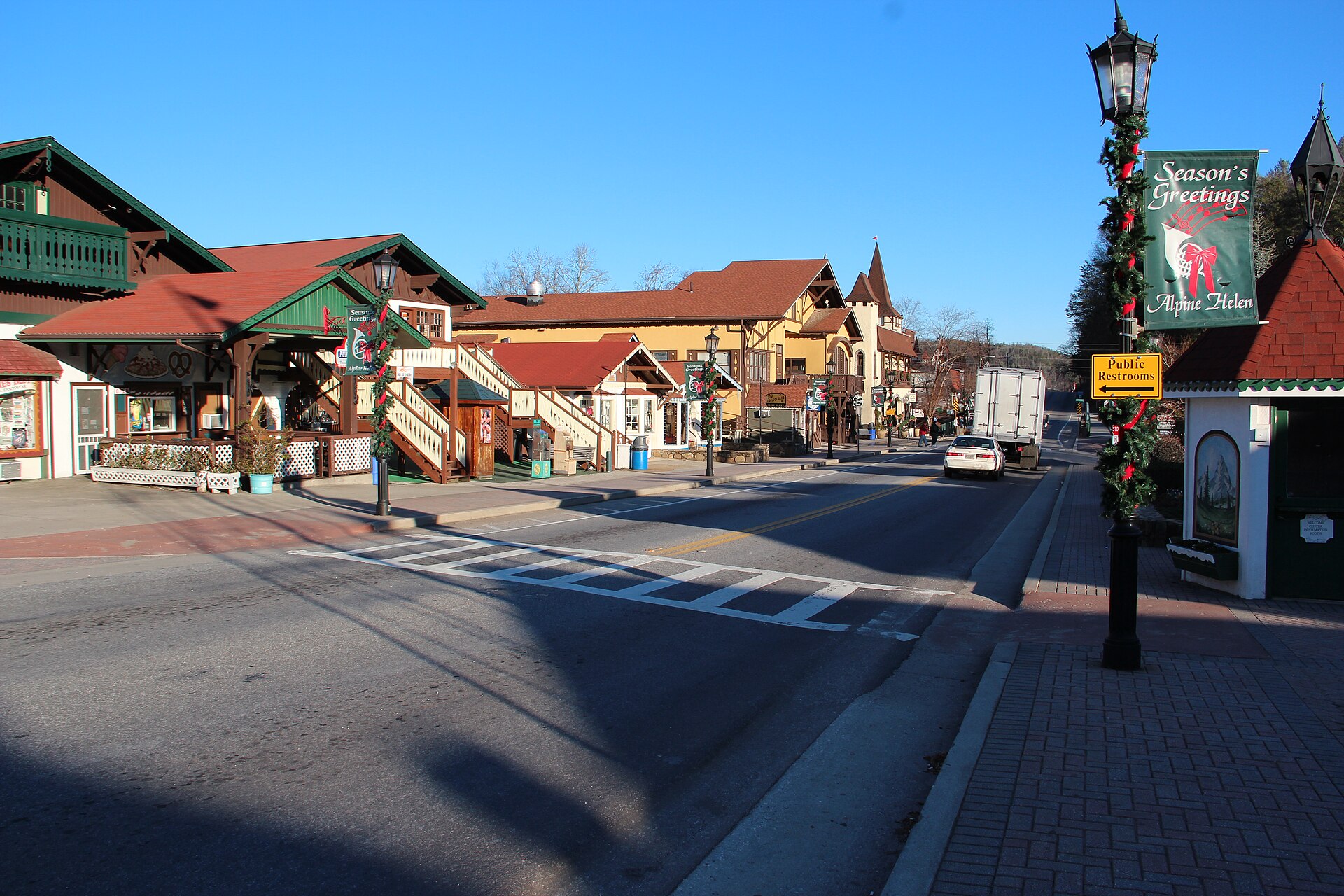
Helen in the north Georgia mountains is, like Leavenworth, a former logging town that reinvented itself as a Bavarian alpine village in the late 1960s. The entire town adopted German alpine architecture, and Helen now draws millions of visitors annually, particularly for its lengthy Oktoberfest celebration. The Blue Ridge Mountain setting and the Chattahoochee River running through town add to the alpine atmosphere. Helen is one of the most-visited towns in Georgia despite its tiny permanent population, a testament to the appeal of the European-village experience in the American Southeast.
4. Frankenmuth, Michigan (German/Bavarian)
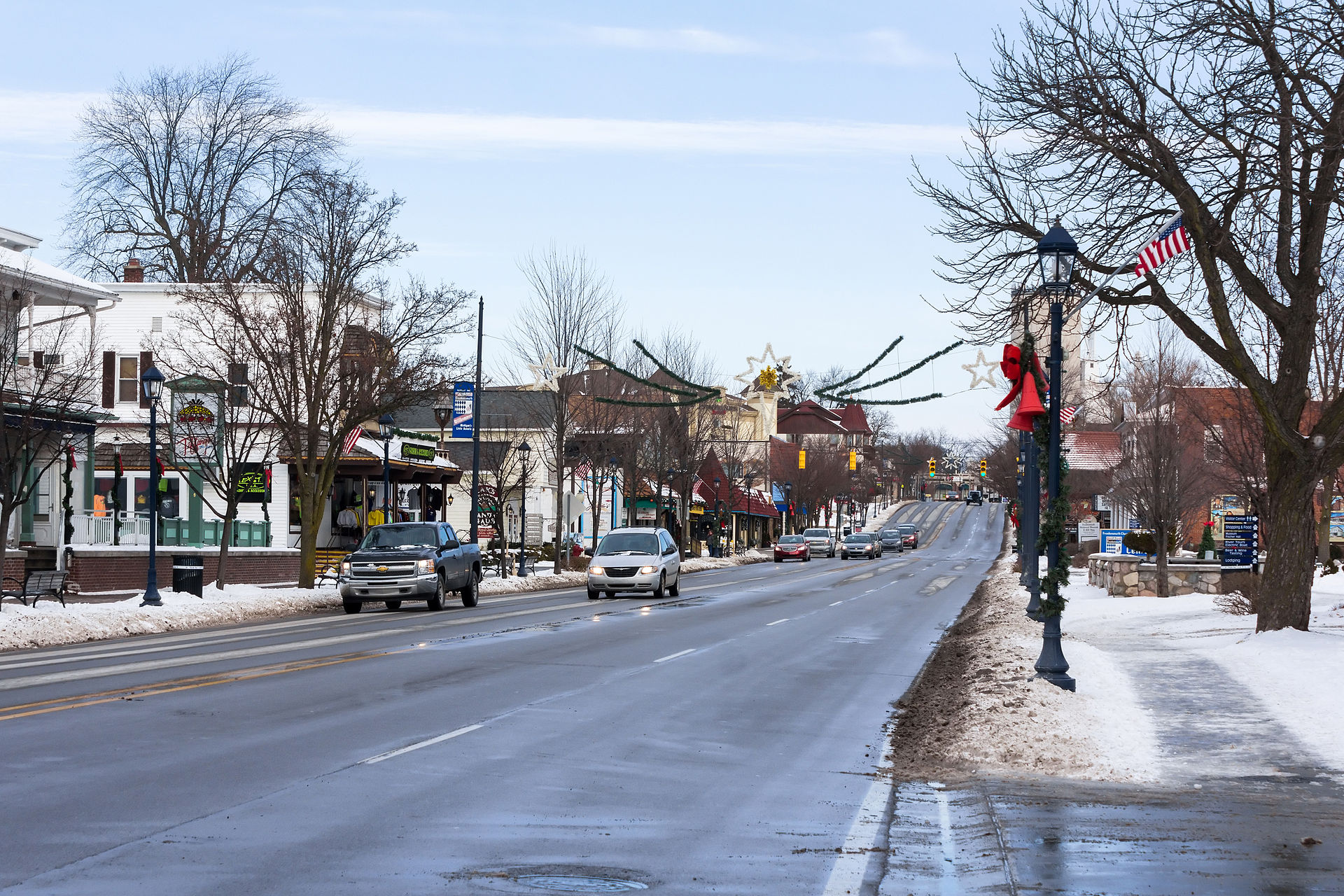
Frankenmuth was founded by German Lutheran immigrants in 1845 and has maintained a genuine German Bavarian identity ever since. Known as “Michigan’s Little Bavaria,” the town features Bavarian architecture, famous family-style chicken dinners, the enormous Bronner’s Christmas Wonderland (the world’s largest Christmas store), and a covered bridge. Frankenmuth combines authentic German immigrant heritage with a well-developed tourism presentation, drawing millions of visitors and offering one of the most complete German-American village experiences in the country.
5. New Glarus, Wisconsin (Swiss)
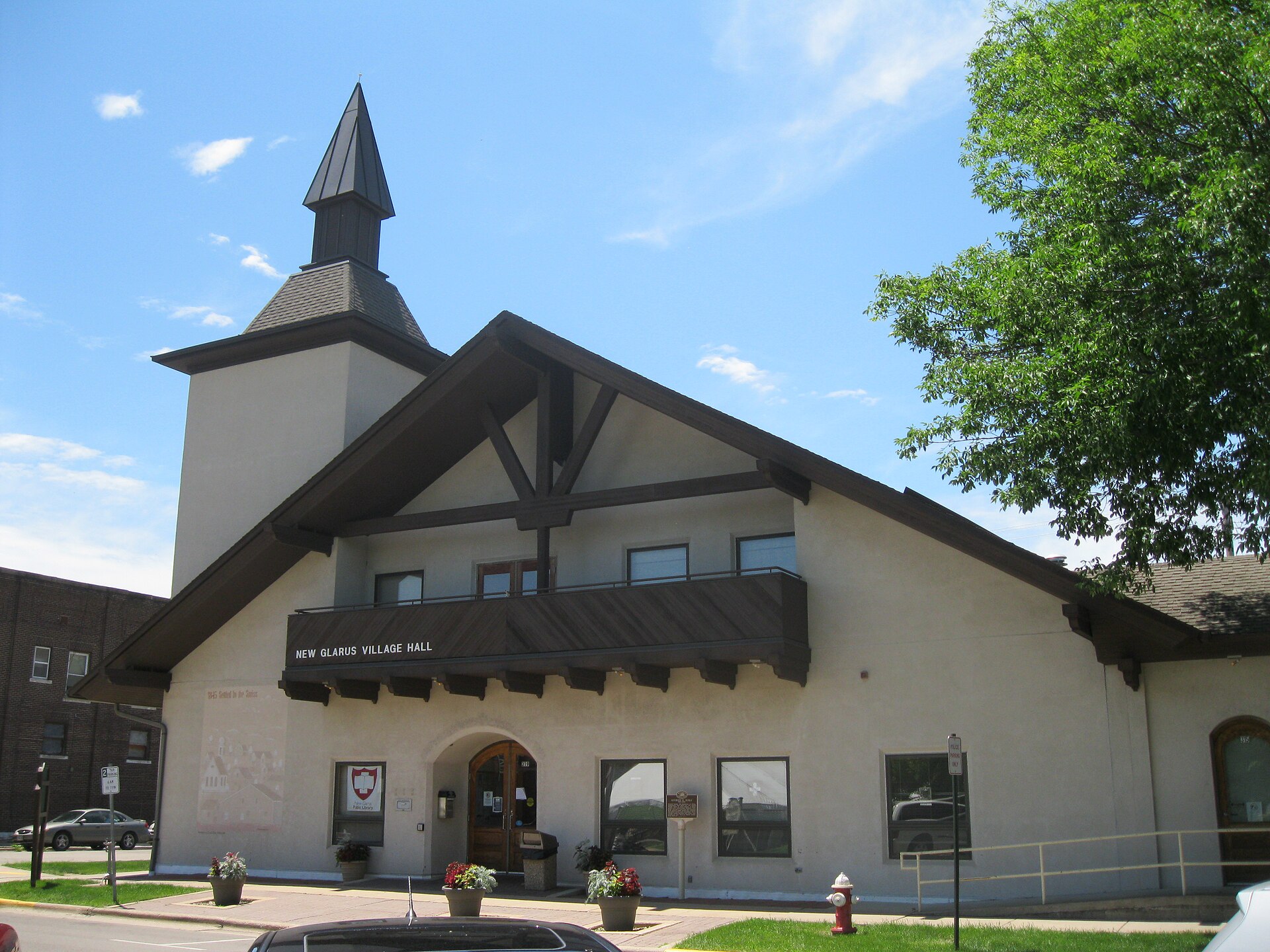
New Glarus was founded in 1845 by immigrants from the Swiss canton of Glarus and has maintained a genuine Swiss identity, calling itself “America’s Little Switzerland.” The town features Swiss chalet-style architecture, Swiss restaurants and a famous brewery, Swiss festivals (including a Heidi Festival and Wilhelm Tell pageant), and the rolling green countryside of southern Wisconsin that genuinely resembles parts of Switzerland. New Glarus is among the most authentic European-immigrant towns in America, with the Swiss heritage continuously maintained since its founding.
6. Vail, Colorado (Alpine/Tyrolean)
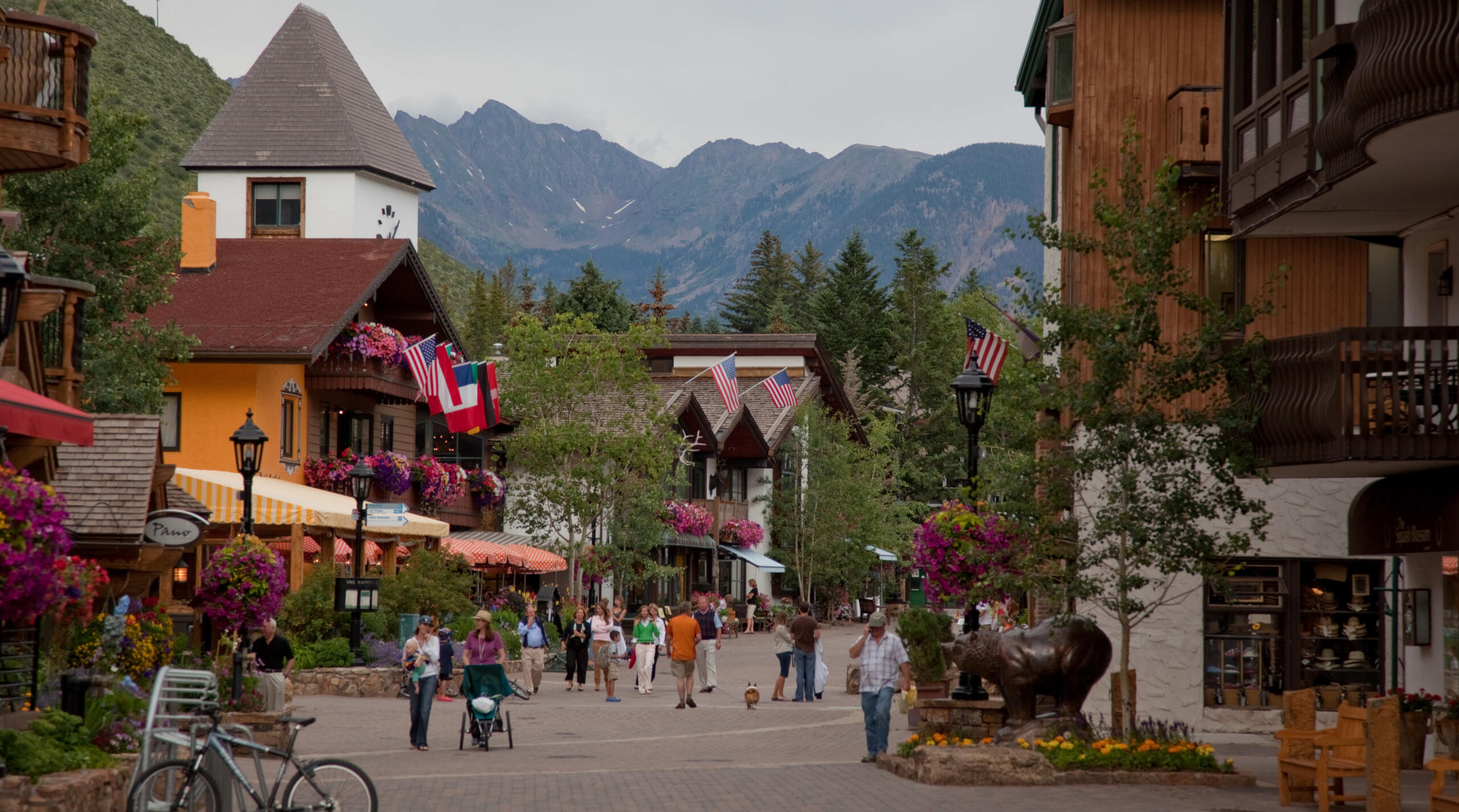
Vail was designed from the ground up in the 1960s as a European-style alpine ski village, modeled on Tyrolean and Bavarian mountain resorts. The pedestrian village core features alpine architecture, cobblestone-style pedestrian streets, and a genuine high-mountain setting that rivals the European Alps. While Vail is an upscale resort rather than a heritage community, the deliberate European-alpine design and the spectacular Rocky Mountain setting deliver a convincing European-ski-village atmosphere, particularly in winter.
7. St. Augustine, Florida (Spanish Colonial)
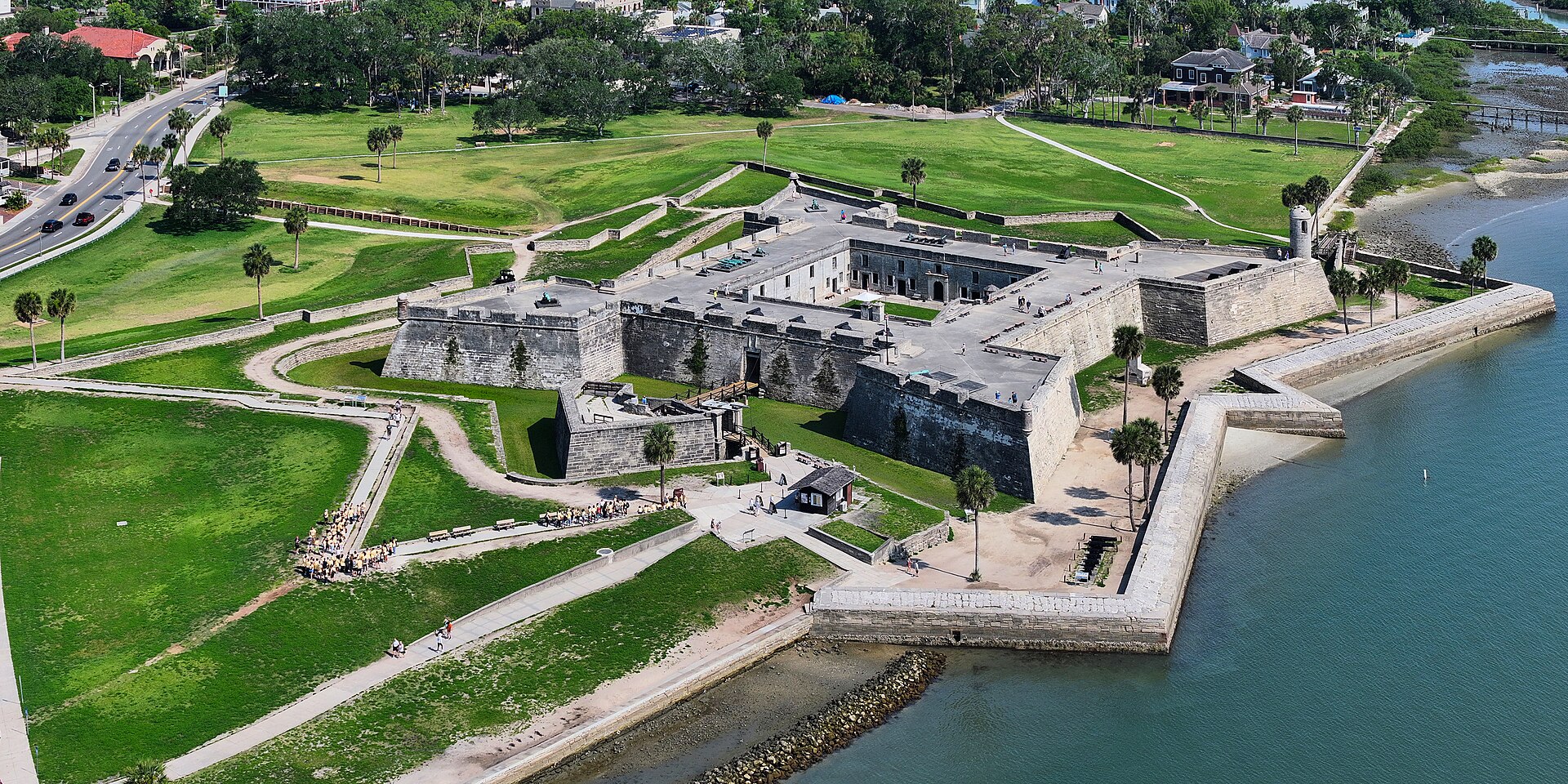
St. Augustine, founded by the Spanish in 1565, offers a genuinely European atmosphere of a different kind — authentic Spanish colonial architecture, narrow old-world streets, a 17th-century stone fortress (the Castillo de San Marcos), and a historic district that genuinely resembles an old Spanish town. Unlike the themed alpine villages, St. Augustine’s European character is entirely authentic, dating to the actual Spanish colonial period. For American travelers seeking the feel of southern Europe — Spain specifically — St. Augustine’s old town is the most genuine option in the country.
A Few More Worth Knowing

Beyond the seven above, several other American towns deliver a convincing European feel for travelers in different regions. Holland, Michigan maintains a genuine Dutch heritage with a working windmill (De Zwaan, actually shipped from the Netherlands), tulip festivals, and Dutch architecture, founded by Dutch immigrants in 1847. Lindsborg, Kansas — “Little Sweden USA” — preserves a genuine Swedish-immigrant culture with Dala horses, Swedish festivals, and Scandinavian architecture on the Kansas plains. Tarpon Springs, Florida offers an authentic Greek community built around the historic sponge-diving industry, with genuine Greek restaurants, bakeries, and Orthodox traditions brought by Greek immigrants in the early 1900s. Pella, Iowa is another Dutch town, complete with a working windmill, Dutch architecture, and a famous Tulip Time festival. These towns demonstrate that the European-immigrant pattern repeated across the American map, leaving a scattering of genuinely European-flavored communities in regions where travelers might least expect them — the Great Plains, the Florida Gulf coast, the rural Midwest.
Choosing the Right One for Your Trip
The seven towns above offer meaningfully different European experiences, and the right choice depends on what European atmosphere you’re after and where you are. For the Bavarian alpine experience, Leavenworth (Pacific Northwest), Helen (Southeast), and Frankenmuth (Midwest) are spread across the country so most American travelers have one within driving distance. For something genuinely rooted in immigrant heritage rather than themed tourism, Solvang (Danish), New Glarus (Swiss), and Frankenmuth (German) offer authentic cultural continuity. For Spanish southern-Europe character, St. Augustine is unmatched and entirely authentic. For an upscale alpine-resort experience, Vail delivers the European ski village.
None of these towns is a true substitute for the actual European destination — the depth of history, the surrounding context, and the genuine foreignness of real European travel can’t be fully replicated. But that’s not really the point. These towns offer a genuine, rewarding, and accessible version of the European-village atmosphere for a weekend trip, a family outing, or a stop on a road trip, without passports, transatlantic airfare, or jet lag. For American travelers who love the European-village feeling and want it close to home, these seven towns deliver it convincingly, each with its own distinct character and its own corner of the country. They’re proof that you don’t always need to cross an ocean to walk a charming old-world street. For a long weekend, a family day trip, or a stop on a longer road trip, these towns deliver genuine European atmosphere — the architecture, the food, the festivals, and the setting — at a fraction of the cost and effort, and with the added benefit that you can drive there, bring the whole family easily, and skip the passport, the currency exchange, and the language barrier entirely.