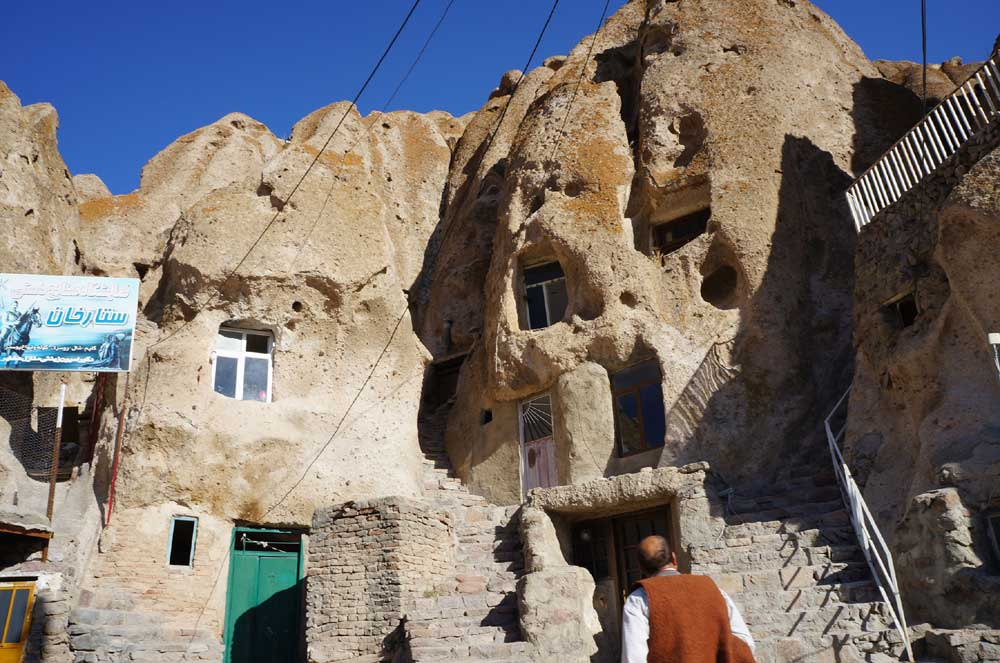
On the northwest slopes of Mount Sahand in Iran’s East Azerbaijan province sits a village that looks like it was sculpted by someone with an unusual sense of humor. The houses are not built — they are carved. Each one is hollowed out of a volcanic cone, some of them 40 feet tall, deposited by an ancient eruption and weathered over millennia into strange tapered shapes. Approximately 600 people still live inside these cones full-time, in homes that have been inhabited continuously for at least 700 years.
Kandovan is one of only three “troglodyte” villages in the world that have been continuously inhabited into the modern era — Cappadocia in Turkey is the most famous, and a handful of cave villages in the American Southwest complete the short list. What makes Kandovan unusual is that its residents aren’t heritage-site maintainers. They’re an actual living community with shops, schools, and grocery deliveries, who happen to live inside 11,000-year-old volcanic rock.
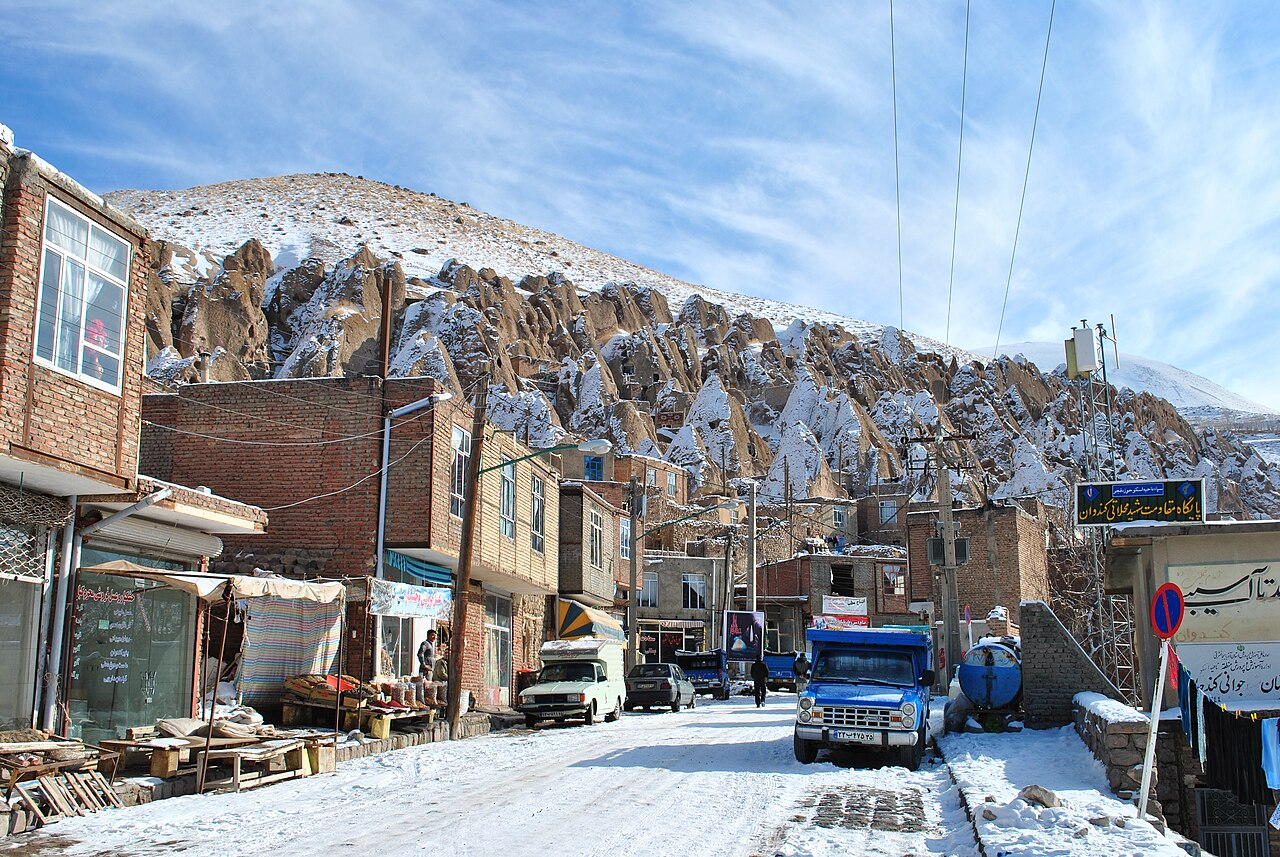
The village sits roughly 60 kilometers southwest of Tabriz, Iran’s fifth-largest city, accessible by paved road through the foothills of Mount Sahand. Tourism began arriving in meaningful numbers in the early 2000s, and the resulting attention has supported continued occupation while also changing the village’s character.
The Geology That Built the Village
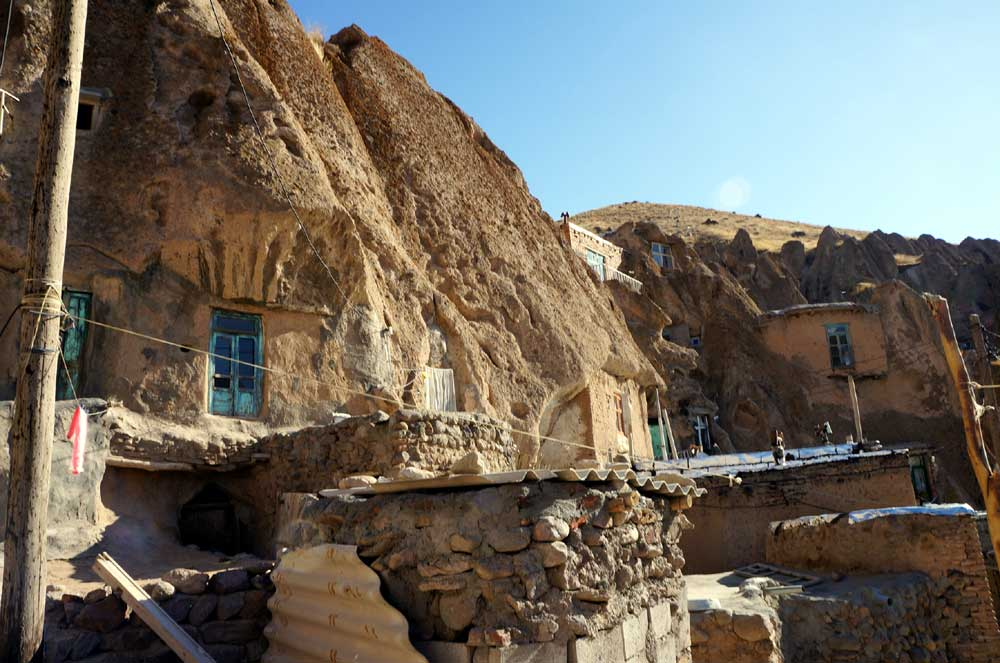
Mount Sahand is a stratovolcano that last erupted approximately 11,000 years ago, near the end of the last Ice Age. The eruption deposited large volumes of volcanic ash across the surrounding landscape, where it settled, compacted, and gradually hardened into soft sedimentary rock called tuff. Over the following several thousand years, water and wind erosion sculpted the deposited tuff into the cone shapes that define Kandovan.
Tuff has an unusual property: it’s hard enough to support a structure and resist weathering, but soft enough to be carved by hand with simple tools. This same geological process produced the more famous “fairy chimneys” of Cappadocia in Turkey, several hundred miles to the west. Both regions were shaped by Anatolian and Iranian Plateau volcanic activity during roughly the same era. Both have been used for human habitation for thousands of years.
The 13th-Century Settlers
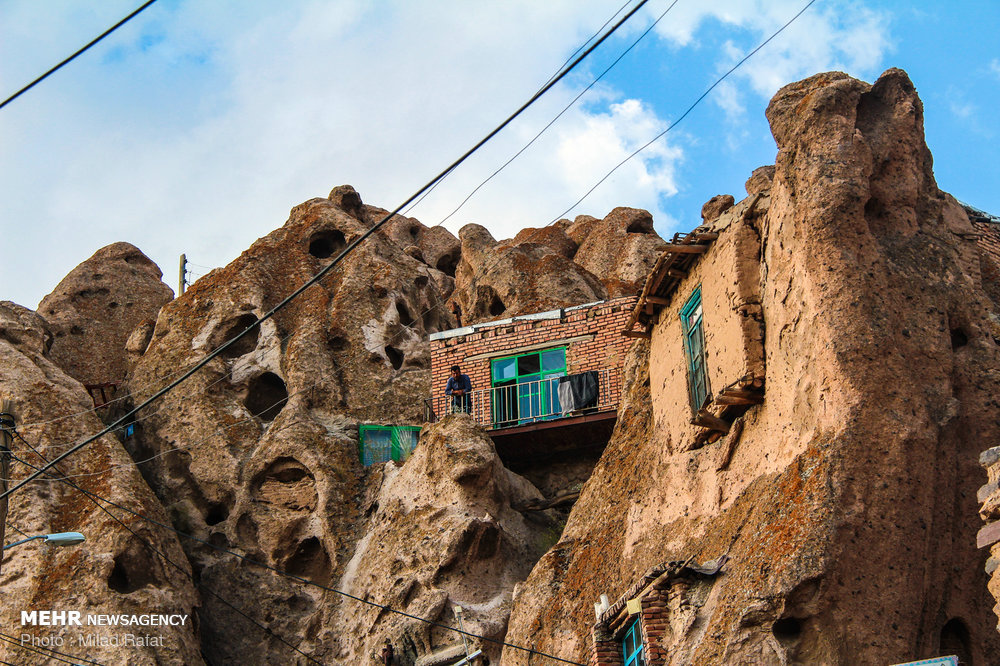
The current pattern of carved cone-houses is generally dated to the 13th century — approximately 700-800 years ago — though there is archaeological evidence of older use of the site. According to local oral tradition, the original settlers of the village were refugees from the Mongol invasions of Iran in the 1220s and 1230s. They settled in the cones partly for shelter and partly for defensive purposes — the cones provided natural cover, elevation gave warning of approaching threats, and the maze of carved passages between cone-houses was difficult for outsiders to navigate.
Whether or not the Mongol-refugee origin story is literally true, the architectural pattern has been stable for at least seven centuries. Some individual cone-houses in Kandovan have been inhabited by the same family lineage for generations, with rooms being added or modified over time as families grew.
Living Inside the Rock
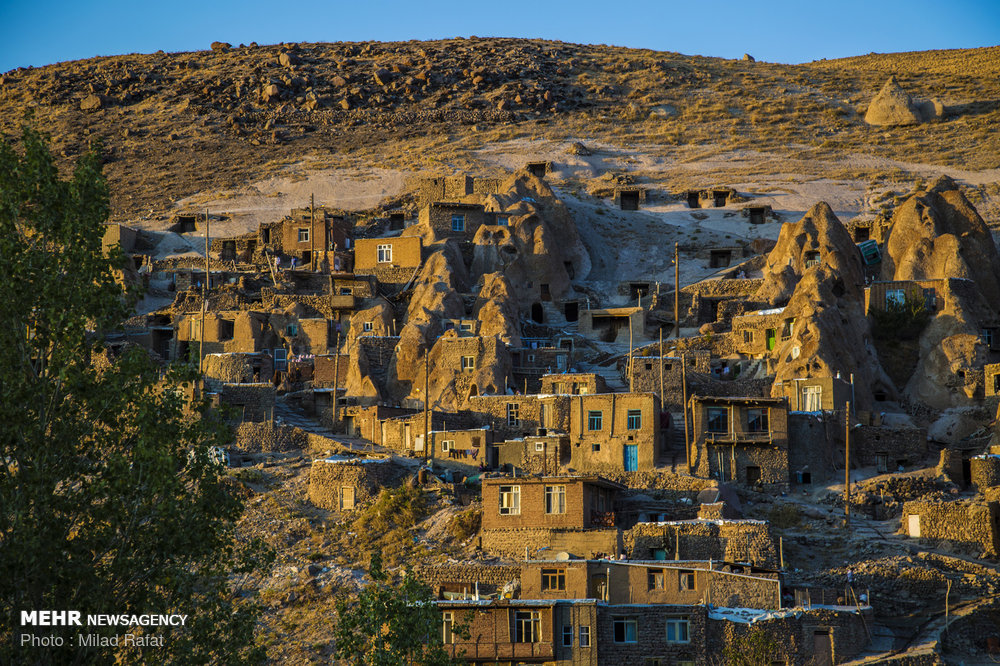
A typical Kandovan home occupies multiple levels carved into a single cone. The ground floor traditionally housed livestock — animals kept indoors during winter for both warmth and protection. The next level up held kitchens and main living areas. Upper levels contained sleeping quarters; in some larger cones, there were three or four levels of rooms reached by narrow internal staircases.
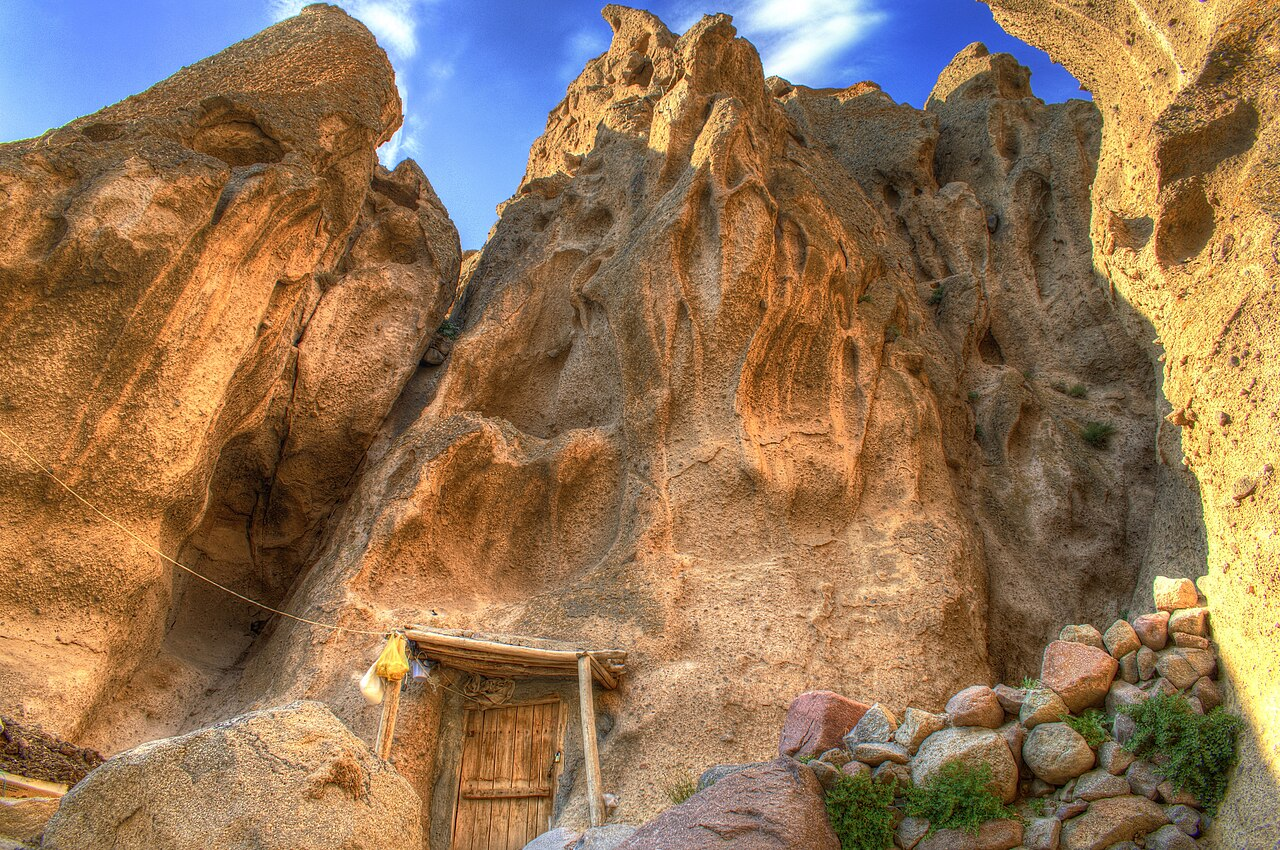
The interior climate of a carved cone-house is remarkably stable. The thick rock walls — typically three to six feet of solid tuff — provide enormous thermal mass. Summer interior temperatures stay roughly 15-20 degrees Fahrenheit cooler than the outside air; winter interior temperatures stay correspondingly warmer. Combined with traditional heating and modern utilities, the cones provide year-round habitable conditions in a region where outside winter temperatures can drop well below freezing and summer temperatures exceed 100 degrees Fahrenheit.
Modern residents have added electricity, satellite TV, and indoor plumbing to the original carved spaces. The result is unusual: living quarters that are unambiguously medieval in basic form, retrofitted with 21st-century infrastructure.
The Laleh Rocky Hotel and Tourism
In 2007, an Iranian hotel company opened the Laleh Kandovan International Rocky Hotel, a 5-star property carved into a cluster of the village’s volcanic cones. The hotel was controversial. Some residents welcomed tourism revenue; others objected that turning the village into a luxury destination was changing its character irreversibly. The compromise that emerged was that the hotel was permitted but additional commercial conversion of cone-houses was restricted.
The Laleh remains the only Western-style hotel inside the village proper; other visitor accommodation is in guesthouses outside the cone cluster or in nearby Tabriz.
Visiting Kandovan
Reaching Kandovan from outside Iran requires obtaining an Iranian tourist visa and traveling overland from Tabriz. From Tabriz, the village is approximately 60 kilometers by paved road, drivable in about 90 minutes. There is no train service to Kandovan itself. Tabriz is served by Tabriz International Airport, which has connections to Tehran and to some Middle Eastern hubs.
Once inside the village, visitors typically walk — the carved passages between cones are far too narrow for vehicles. Most photography is permitted, but residents have asked tourists to refrain from photographing families without permission, a respect that Iranian travel guides routinely emphasize.
The Preservation Challenge Ahead
Two things have preserved Kandovan as a functioning community across seven centuries: the underlying geology (tuff is durable when sheltered from direct erosion) and continuity of human occupation (inhabited buildings receive maintenance that abandoned buildings don’t). What threatens the village now is paradoxical: too much attention rather than too little. Heavy tourist foot traffic, vibration from nearby road construction, climate-change-driven precipitation shifts, and the loss of traditional maintenance knowledge as younger residents leave for Tabriz and Tehran — all are pressures the village didn’t face in previous centuries.
The cones will stand for many more centuries with reasonable care. Whether they will still be lived in by families, with children running through the carved passages, depends on choices that Iranian heritage authorities and the village’s residents are still in the middle of making.