

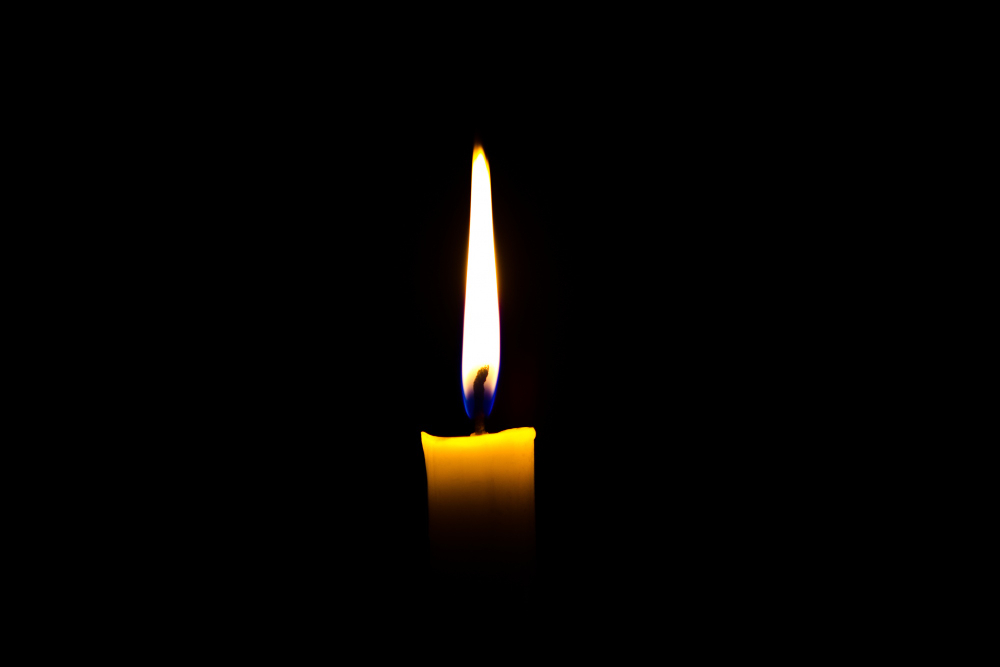
There is a demonstration that has been used to teach chemistry for well over a century, and it works because a candle is far more complicated than it looks.
The complication is that the object is doing three separate jobs at once — storing fuel, delivering it and burning it — and it regulates all three automatically without any mechanism.
A candle sets its own fuel supply rate, maintains its own flame size, adjusts to how much wax is available and continues without intervention until the fuel runs out.
That is a self-regulating system assembled from a stick of solid fat and a piece of string, and understanding how it manages it explains most of what a flame is.
The Three States
The sequence from solid to flame is the part that surprises people.
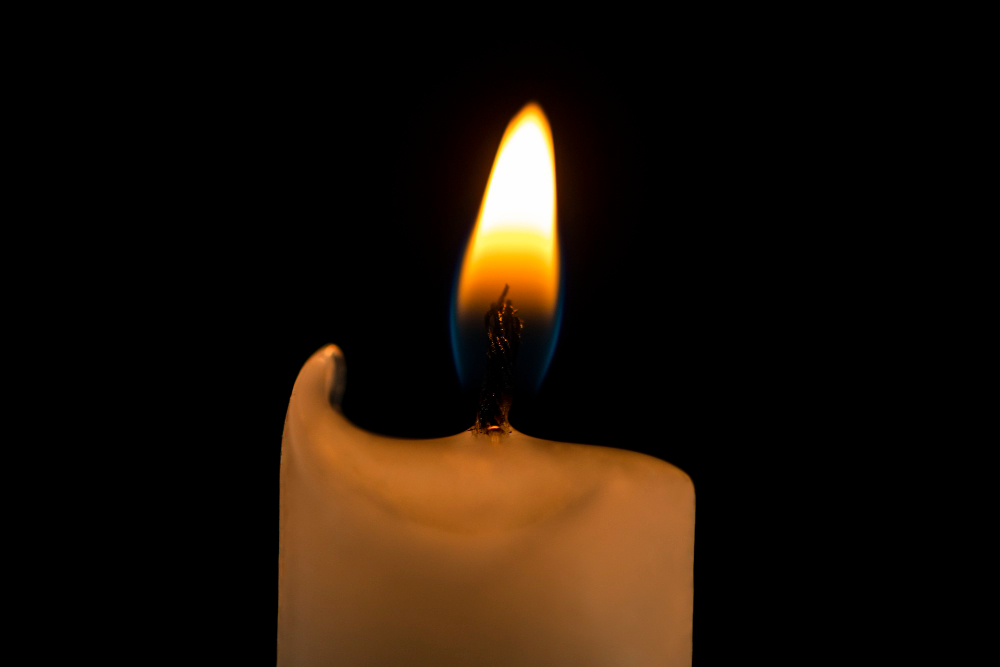
Heat radiating downward from the flame melts the wax immediately around the wick, producing a shallow pool of liquid.
That liquid is drawn up the wick by capillary action — the same effect that pulls water up a paper towel — travelling against gravity through the spaces between the fibres.
Near the top, the heat is sufficient to vaporise it, and the wax leaves the wick as a gas.
That gas mixes with air and burns, slightly away from the wick rather than on it, which is why there is a dark space immediately around the wick inside the flame.
So the wax passes through solid, liquid and vapour before anything burns, and the visible flame is consuming a substance that was solid a few seconds earlier and a few millimetres lower.
Like our content? Follow us for more.
Why It Regulates Itself
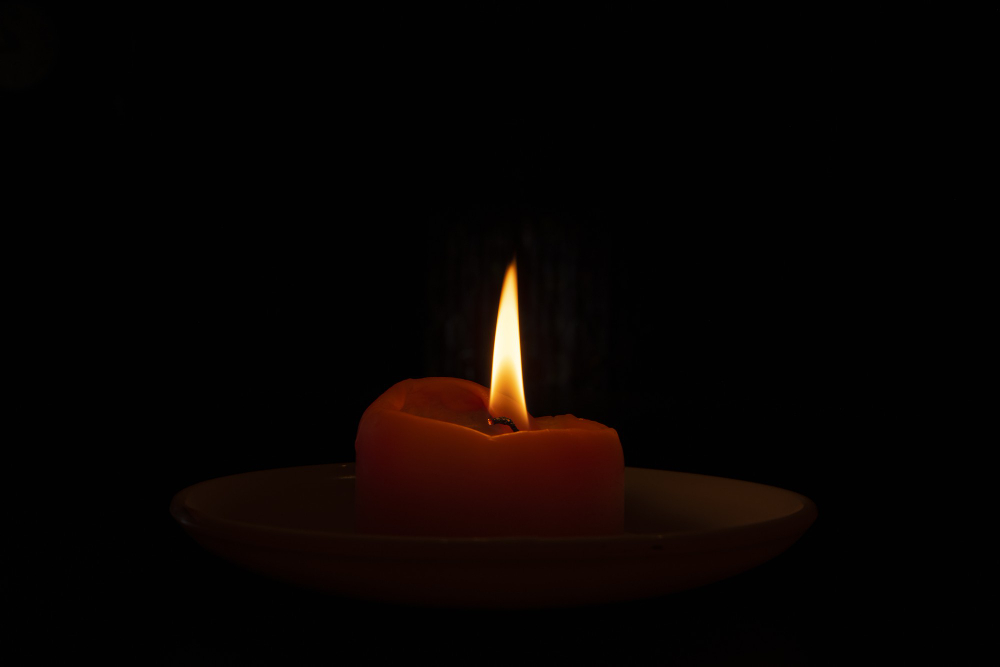
The feedback is what makes it work unattended.
If the flame grows, it produces more heat, which melts more wax and draws more fuel up — which would seem to make it grow further.
What prevents runaway is the wick. The rate at which liquid can travel up it is limited by its structure, so beyond a certain point the flame cannot obtain more fuel regardless of how much is melted.
If the flame shrinks, less heat reaches the pool, less wax melts, and the supply reduces — which stabilises it at a size the wick can sustain.
The result is a flame whose size is set by the wick rather than by the quantity of wax, which is why a large candle and a small one with the same wick burn almost identically.
That also explains the most common fault. A wick that is too large for the wax draws more fuel than can burn cleanly, producing smoke and an oversized flame; one too small produces a flame that drowns in its own melted pool.
The Wick Has to Bend
A detail in modern candles is a real piece of design and is invisible until you look.
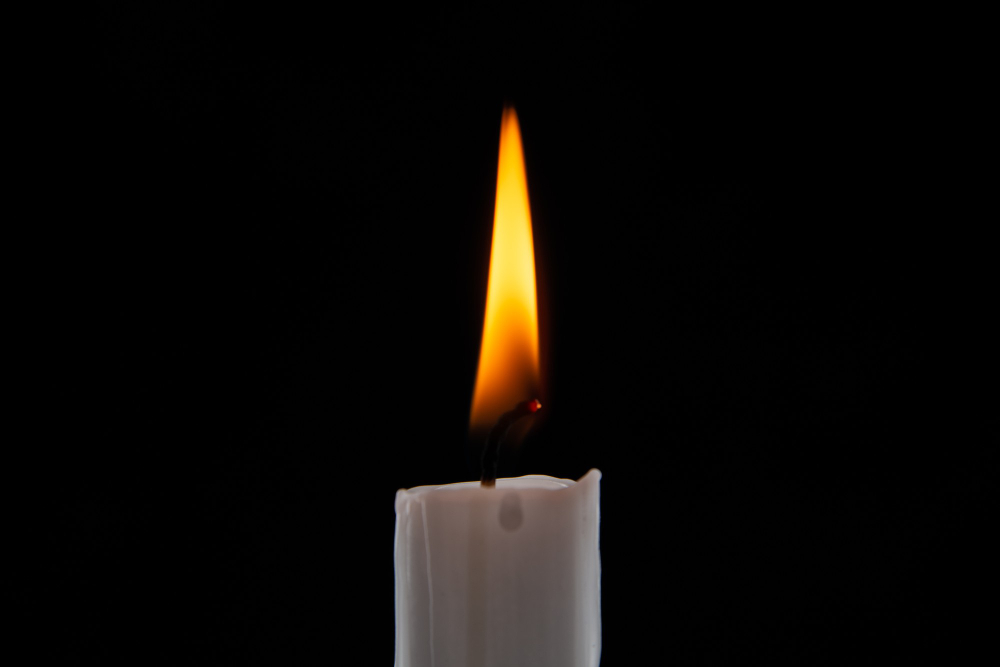
An upright wick grows longer as the candle burns, because the wax retreats faster than the wick is consumed — and a long wick produces a large smoky flame and eventually collapses.
Historically that was managed by trimming, which had to be done regularly, and the tool for it was a standard household object.
The modern solution is a wick constructed so that it curls outward as it burns, which carries the tip into the hottest and most oxygen-rich part of the flame, where it is consumed completely.
That means the wick trims itself continuously and stays at a constant length without anybody touching it — which is why trimming scissors disappeared from households and why most people have never needed one.
It is a small change with a large effect on how the object is used, and it is achieved entirely through how the fibres are braided.
Why the Flame Is Shaped Like That
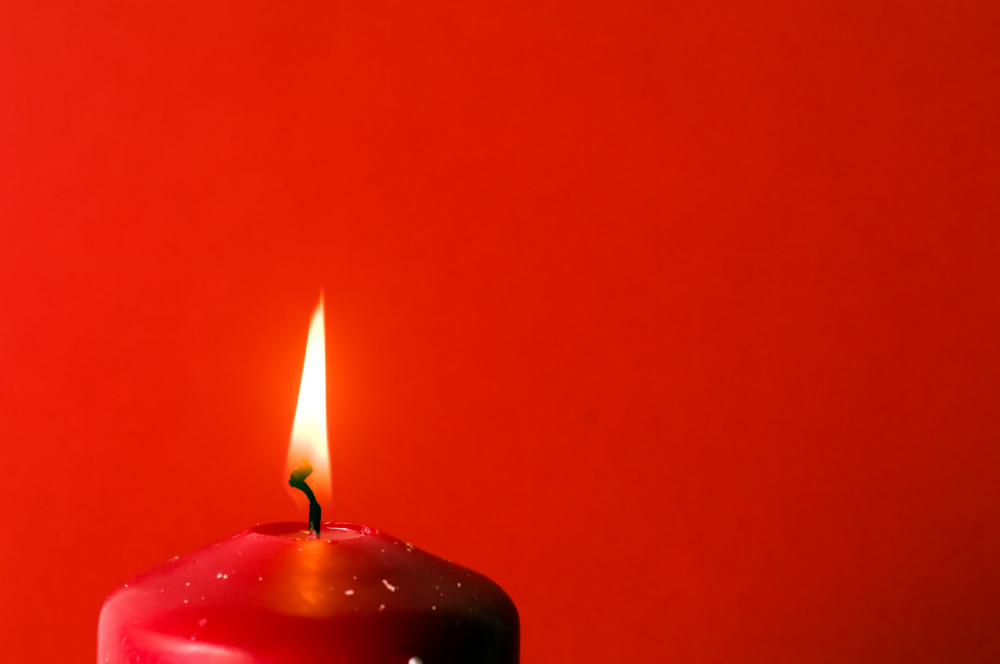
The form has a specific cause and it is not obvious.
Burning produces hot gas, which is less dense than the surrounding air and rises — drawing cooler air in at the bottom to replace it.
That convection current is what gives a flame its shape. The rising column narrows as it goes, the incoming air feeds the base, and the whole thing takes the familiar tapered form.
Remove gravity and the effect disappears entirely. A flame in free fall has no buoyancy-driven convection, so it becomes roughly spherical, burns far more slowly and is much dimmer, because fresh air reaches it only by diffusion.
That is a truly striking demonstration that the shape of every flame anybody has seen is a consequence of gravity rather than of combustion.
It also explains why a flame flickers. Any disturbance in the incoming air changes the supply, and the flame responds immediately — so it is reporting the movement of air in the room continuously.
There is a measurement point worth adding. The light output of a candle was used as a unit for comparing light sources, because it was the most widely available reference anybody had.
That unit survived long after the reference stopped being relevant, which is a common fate for standards defined against whatever was to hand.
The Colours Are Temperatures
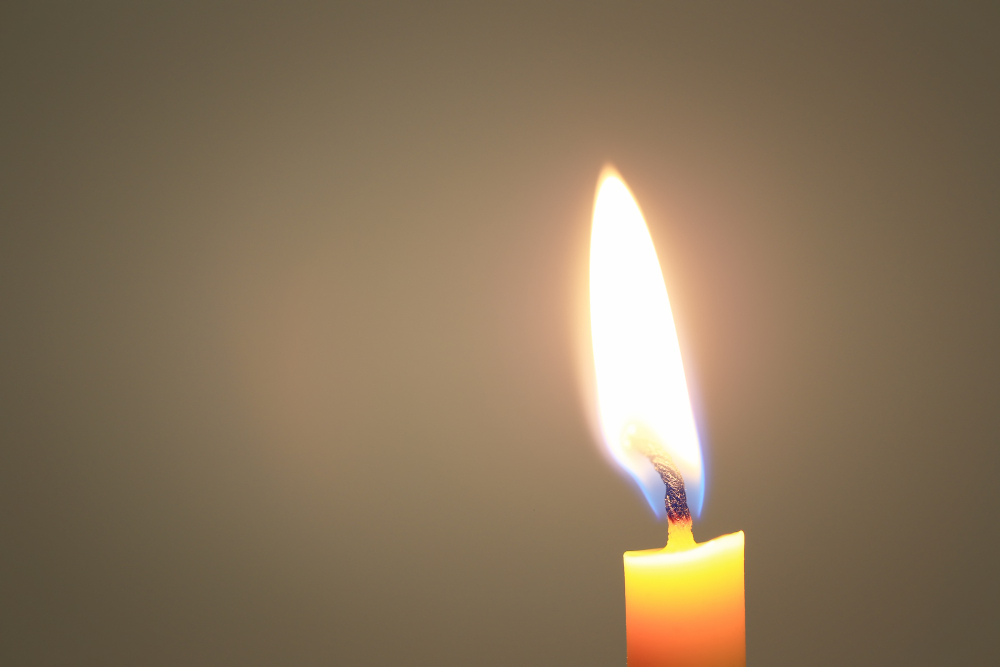
The structure within the flame is readable once you know what to look for.
The dark region immediately around the wick is vapour that has not yet mixed with enough air to burn.
The bright yellow region is where carbon particles produced by incomplete combustion are heated until they glow — so the yellow light is not the chemistry of burning but small solid particles incandescing.
Those particles then generally burn as they rise into better-mixed air, which is why a candle does not usually produce soot.
The faint blue region at the base is where mixing is most complete and combustion is most efficient, which burns hotter and produces light by a different mechanism.
That means the brightest part of a candle flame is not the hottest, which is counterintuitive and is true — and it is why a candle is a good light source and a poor heat source relative to other flames.
What It Was Made From
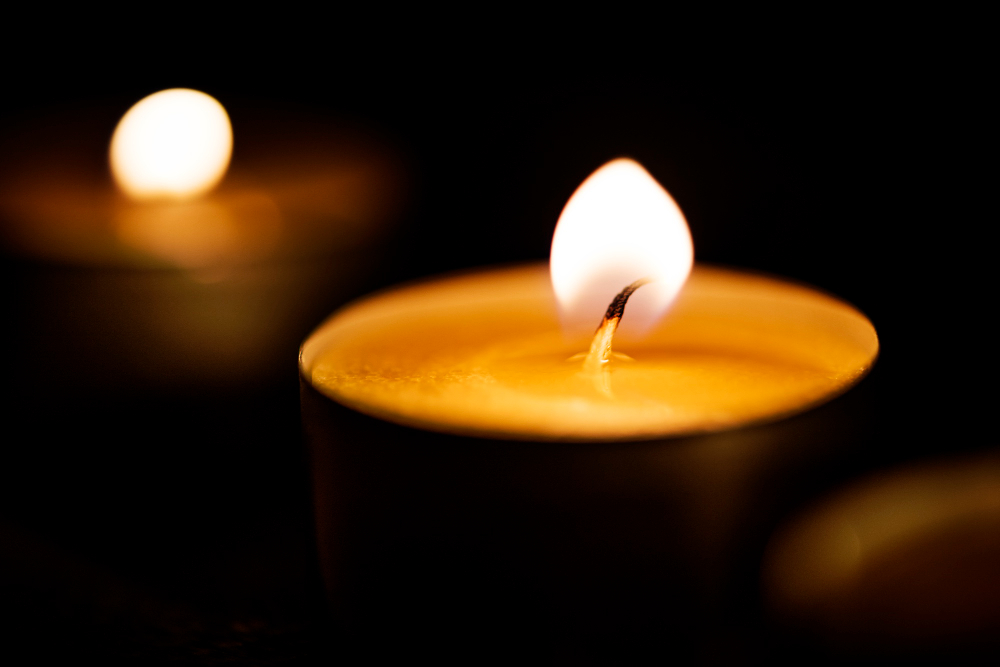
The material history is worth a section because it determined who had light.
The earliest versions used animal fat, which is cheap, widely available and burns with a smoky flame, a strong smell and a tendency to gutter — and which was what most households used for a very long time.
A superior material came from a specific source and produced a brighter, cleaner, less odorous flame that burned at a steadier rate, and it was expensive enough that its use was a marker of a household that could afford it.
That difference mattered practically as well as socially. A cleaner-burning material required less attention, deposited less on surfaces and permitted reading, which meant the quality of the material determined what could be done after dark.
The transition to manufactured materials changed that completely. Processing produced consistent material with a high melting point, which holds its shape in warm conditions, burns evenly and can be made in quantity at low cost.
That is the point at which good light became affordable generally rather than being rationed by material cost, and it happened shortly before the technology was superseded entirely.
Which is a common pattern at the end of a technology. The final refinement arrives just as the replacement does, which means the best version of the old thing and the first version of the new thing are contemporaries — and for a period the old one is truly better.
What Replaced It and What Did Not
The decline is straightforward and the residue is interesting.
As a light source, a candle produces very little light for the fuel consumed, requires attention, presents a fire risk and cannot be controlled beyond being lit or extinguished.
Every replacement was better on all of those, and the transition was rapid and complete wherever an alternative existed.
What remains is everything the candle does that a lamp does not. It produces a light that moves, which is a quality rather than a quantity. It requires no supply of anything. It works when nothing else does.
And it has acquired functions entirely unrelated to illumination, in occasions, observances and atmosphere, where the point is that it is a flame rather than that it produces light.
Which is the common fate of a technology superseded at its original job. It does not disappear; it retreats to the uses where the thing that made it obsolete is irrelevant — and in this case that turned out to be a substantially larger market than anybody would have predicted when the light went out of it.
And it is worth noticing what survived. Nobody kept the candle for its light output, which was the entire point of it for several thousand years – they kept it for the way the light moves, which nobody was measuring at all.
Like our content? Follow us for more.
