

Handedness looks like it should be a simple trait. It is visible, it is binary in everyday terms, and everybody has one. It turns out to be none of those things underneath, and the most interesting fact about it is that humans are the only species with a strong population-level bias at all.
Other Animals Have a Preferred Side. They Just Do Not Agree on Which

Individual animals frequently favour one side. Cats reach with a preferred paw, parrots hold food in a preferred foot, and many primates show consistent hand preference for particular tasks.
The difference is at population level. In most species the split is roughly even: about half prefer one side and half the other. The preference is individual, not shared.
Humans are the outlier. Around ninety per cent of people across every population studied are right-handed, and that figure is remarkably stable across continents and cultures. Some populations run slightly higher or lower, but nothing approaches an even split anywhere.
A species-wide bias in one direction is what needs explaining. Individual preference is easy; a whole species agreeing is not.
Like our content? Follow us for more.
The Evidence That It Is Very Old

Several independent lines converge on the same conclusion.
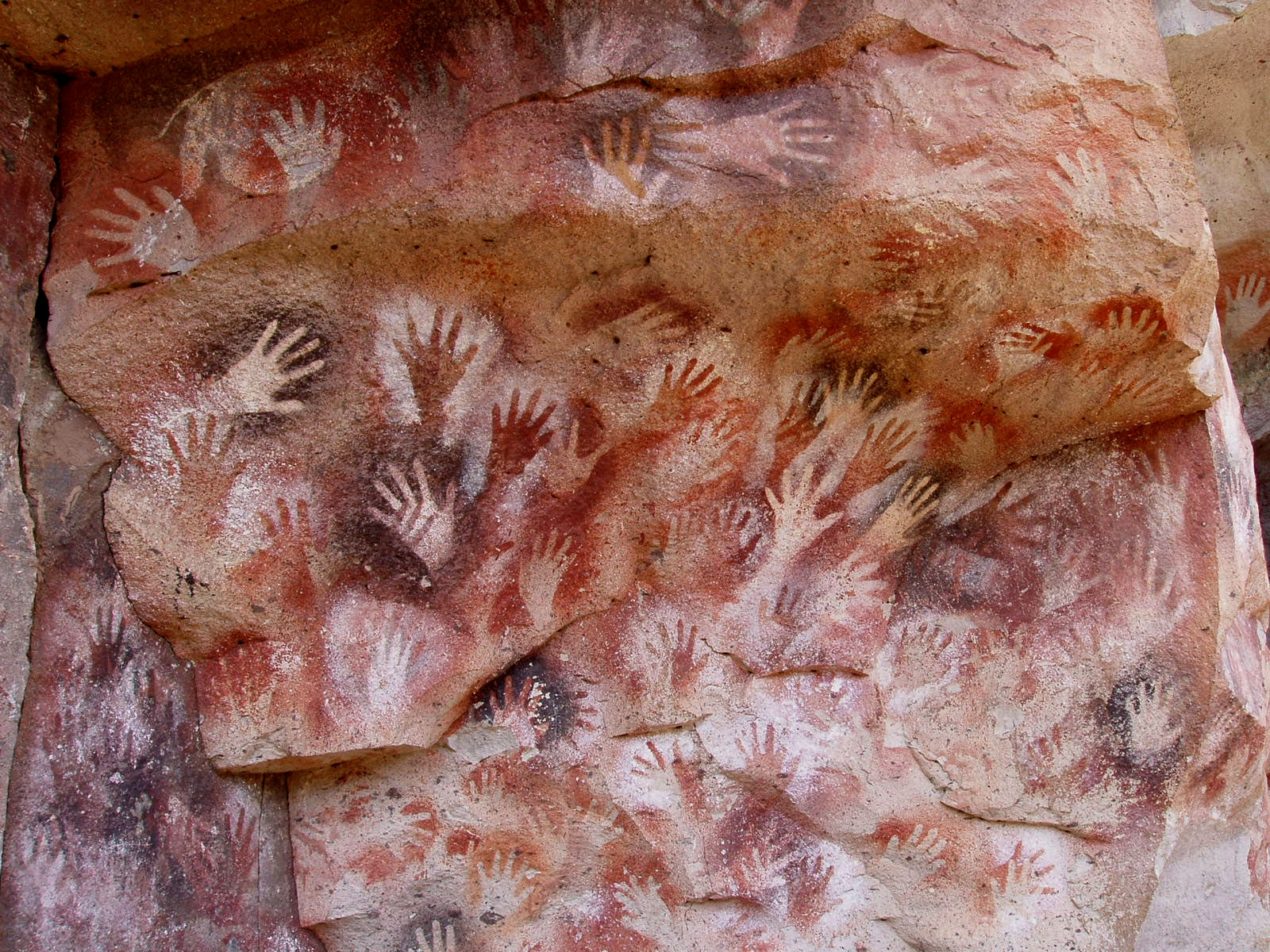
The hand stencils found in prehistoric caves were made by placing a hand against rock and blowing pigment around it. Most of them are left hands – which means most were made by people holding the pigment in their right.
Stone tools show it too. The flakes struck from a core come off in a pattern that reveals which hand held the hammerstone, and analyses of prehistoric assemblages return right-handed majorities.
The most unusual evidence is dental. Some early humans appear to have gripped material in their teeth and cut it with a tool, leaving scratches on the front teeth whose angle indicates which hand held the blade. The scratches run predominantly one way, and the proportion is comparable to the modern figure. That evidence extends the pattern back hundreds of thousands of years, well before our own species.
None of these is individually conclusive and each has been argued over. Together they make a reasonable case that the ratio is ancient and has not moved much.
It Is Not Straightforwardly Genetic

Handedness clearly runs in families. Two left-handed parents are considerably more likely to have a left-handed child than two right-handed parents. So there is a heritable component.
But it does not behave like a simple inherited trait. Identical twins, who share their DNA, differ in handedness surprisingly often – in roughly a fifth of pairs. Whatever is being inherited cannot be a straightforward instruction, because two people with the same instructions frequently end up different.
Large genetic studies have now identified a number of variants associated with handedness, and the picture they give is of many genes each contributing a very small amount. Together they account for only a modest share of the variation.
The model that fits best is that what is inherited is not a side but a tendency. Most people inherit a bias toward the right. A minority inherit no directional bias at all, and in those people the side is effectively settled by chance during development – which would produce roughly half of them ending up left-handed and half right-handed, and would explain the twin discordance neatly.
That account is a model rather than a proven mechanism, and it is worth treating as such.
The Brain Asymmetry Is Real but Not What People Assume

Handedness is related to how the brain divides its work, and the popular version of that relationship is badly wrong.
In most people, language is handled predominantly by the left hemisphere, which also controls the right hand. That correspondence is the origin of the assumption that left-handers must have everything reversed.
They do not. The great majority of left-handers also have left-hemisphere language dominance – around seventy per cent by most estimates. A minority have it on the right, and some have it distributed across both. So left-handedness raises the likelihood of an unusual arrangement without determining it.
The broader point is that the brain is asymmetric in most people regardless of handedness, and that asymmetry appears very early. It can be detected in foetal development, and some of it is present before the motor systems being blamed for it are functional.
The folk psychology built on top of this – that left-handers are more creative, more artistic, more right-brained – does not hold up. The creative-right-brain idea is a popular simplification of real but much more limited findings, and studies looking for consistent personality or ability differences by handedness have found very little.
Ten Per Cent Is a Strange Number to Be Stable At

If right-handedness were simply better, the proportion of left-handers should have fallen toward zero. If it made no difference, the ratio should drift. It has done neither, which suggests something is holding it there.
The leading explanation is that two pressures pull in opposite directions.
One favours the majority. A species that makes and uses tools benefits from everyone doing things the same way: tools, techniques and instruction all transfer more easily between people with the same handedness, which is an advantage to being in the common group.
The other favours the minority. In any contest where an opponent’s movements have to be anticipated, being unusual is an advantage, because the opponent has less experience of facing somebody like you. This is the fighting hypothesis, and its most cited support is sport: left-handers are substantially over-represented in interactive sports such as fencing, boxing, cricket and tennis, and not over-represented in sports where opponents do not interact directly, such as darts, gymnastics or swimming. That contrast is exactly what the hypothesis predicts.
A minority advantage that disappears as the minority grows produces a stable equilibrium rather than elimination, which is a good fit for a figure that has sat near ten per cent for a very long time.
This remains contested. The sporting evidence is consistent with it but does not establish that the same mechanism operated in prehistory, and other explanations exist.
A World Built for the Other Nine

Most of the practical experience of left-handedness comes from objects rather than biology.
Scissors are the standard example, and the issue is not the handles. The blades are ground so that the cutting edges press together when squeezed in the intended hand; used in the other hand, the same squeeze pushes them apart, and the material slips between them.
Other examples follow the same logic. Tin openers, corkscrews, chainsaw controls, cameras with the shutter release under the right index finger, chequebook and notebook bindings, the serrated edge on a butter knife, the spiral of a spiral-bound pad running under the writing hand, and the ladle designed to pour from one side.
Writing in a left-to-right script is the hardest case, and the interesting part is the adaptation rather than the problem. The characteristic hooked wrist position, with the hand curled above the line and the pen pointing back toward the writer, exists to get the hand clear of the line it has just produced. It is arrived at independently by children who have never seen anybody else do it, which is a reasonable sign that it is the available solution rather than a taught one.
There is a second adaptation that is easier to miss: many left-handers rotate the paper considerably further than a right-hander would, sometimes past forty-five degrees, so that the line of writing runs away from the body rather than across it. Between the two adjustments, the geometry is restored and the script becomes writeable.
A great many left-handers therefore end up effectively ambidextrous for specific tasks, not from any natural facility but because certain objects only exist in one form.
It Is Not One Trait, and the Questionnaires Know It

Asking somebody whether they are left- or right-handed produces a clean answer and conceals how messy the underlying thing is.
Handedness is measured by task, not by declaration. The standard instruments ask about a list of specific actions – writing, throwing, using scissors, striking a match, holding a toothbrush, dealing cards – and produce a score rather than a category. Run that and a substantial number of people turn out to be mixed, doing some tasks with one hand and some with the other, quite consistently.
Writing is the task that dominates the label, because it is the most visible and the most trained. But writing hand and throwing hand differ more often than people expect, and someone who writes with the left and throws with the right will usually describe themselves as left-handed without hesitation.
Footedness exists too, and is a separate measurement, as are eye dominance and ear preference. They correlate with handedness loosely rather than tightly, which is another argument against a single switch somewhere deciding sidedness for the whole body.
So the tidy nine-to-one figure is a simplification of a distribution, produced by collapsing a continuous score into two boxes at the point where the writing hand sits. The underlying trait is graded, and a noticeable slice of the population sits in the middle of it.
Forced Switching, and What It Did Not Change
For a long period in many countries, children writing with the left hand were made to switch, sometimes harshly. It was widespread through the nineteenth and much of the twentieth century and has declined substantially since.
The change provides a clean test. Recorded rates of left-handedness rose sharply through the twentieth century in countries where the practice stopped, and then levelled off – at around ten per cent.
That is informative in both directions. It shows that the historical figures were suppressed rather than real, since the true rate had been there all along and simply became visible again. And it shows the underlying rate was not being changed by any of it. Decades of pressure altered which hand people wrote with and left the proportion of left-handers exactly where it had been.
Which is the fact worth ending on. The ratio has survived changes in tools, in writing systems, in teaching and in deliberate campaigns to eliminate it, across every society that has been measured. Whatever sets it is not listening.
Like our content? Follow us for more.
