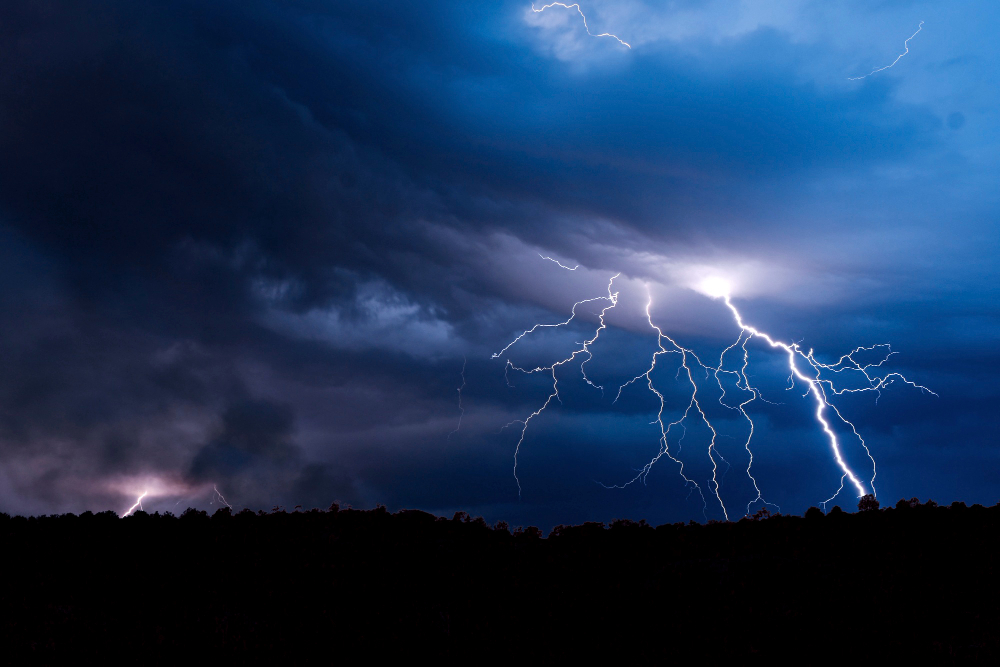
Thunder is usually described as the noise lightning makes, which suggests the bolt itself is loud in the way a bell or an engine is loud. It is not. Lightning makes no sound whatsoever. What it does is heat a narrow column of air so violently that the air itself becomes the sound source, and almost everything strange about thunder – the rumbling, the cracking, the way it goes on for fifteen seconds – comes from the shape of that column rather than from the flash.
A Tube of Air Heated Instantly
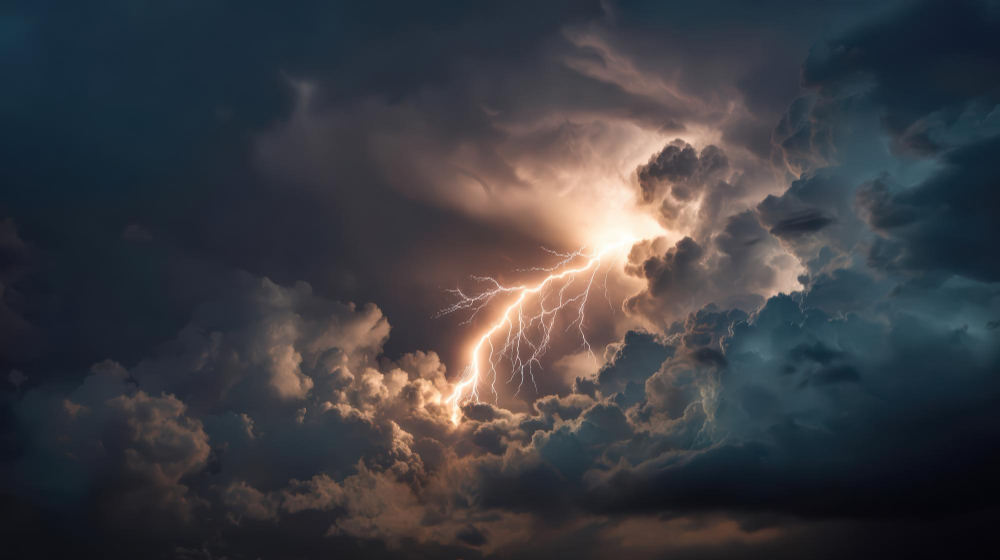
When a lightning channel forms, an enormous current passes through a path only a few centimetres wide. The energy deposited into that thin column of air is delivered in microseconds.
The air in the channel reaches somewhere in the region of thirty thousand degrees Celsius. At that temperature it is no longer behaving as ordinary air at all; it is ionised plasma, which is why the channel glows.
Gas that is heated tries to expand, and gas that is heated that fast expands faster than the surrounding air can get out of the way. The result is not a gentle push outward but a shock wave: a near-instantaneous jump in pressure moving outward from the channel at greater than the speed of sound.
That shock wave decays as it spreads, slowing to ordinary sound speed within a few metres, and from then on it travels as a very loud sound wave. Close to a strike, what arrives is a sharp crack, because the pressure front is still steep. Further away it has spread and softened into a rumble.
And behind the shock wave there is a partial vacuum where the superheated air pushed outward. Surrounding air rushes back in to fill it, which contributes the lower-frequency component that follows the crack.
Like our content? Follow us for more.
Why It Rumbles Instead of Banging
If thunder were a point explosion it would be a single bang. It is not a point, and this is the key to the whole phenomenon.
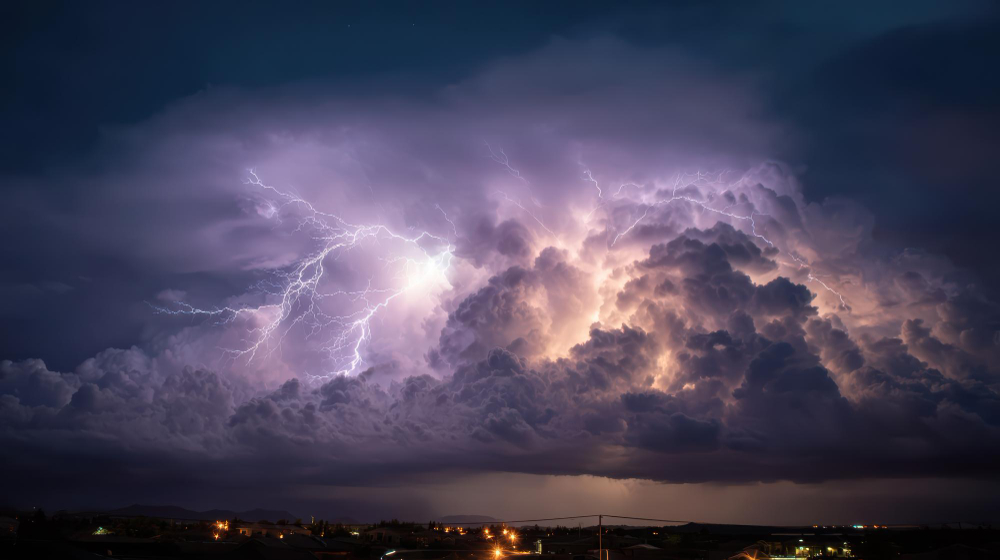
A lightning channel is typically several kilometres long, and often much longer. Every part of that channel produces its shock wave at essentially the same instant, but the parts are at different distances from you.
Sound travels roughly a kilometre every three seconds. So the sound from the nearest section of the channel arrives first, and the sound from the furthest section arrives seconds later, with every intermediate section filling in between. A single flash therefore delivers a continuous sound spread over however long it takes the difference in path lengths to play out.
That is the rumble. It is not multiple thunderclaps and it is not an echo. It is one event, heard as a smear, because different parts of the same channel are at different ranges.
The branching makes it more complicated still. A lightning channel is not a straight line; it forks and kinks, and the zigzags mean the distance from you changes abruptly along its length. Each of those changes produces a change in the arriving sound, which is why thunder has structure rather than being a smooth fade.
And if the channel happens to run nearly directly toward or away from you, the arrival times are stretched over the longest possible interval, which is why some thunder goes on for an improbably long time.
Why a Nearby Strike Cracks
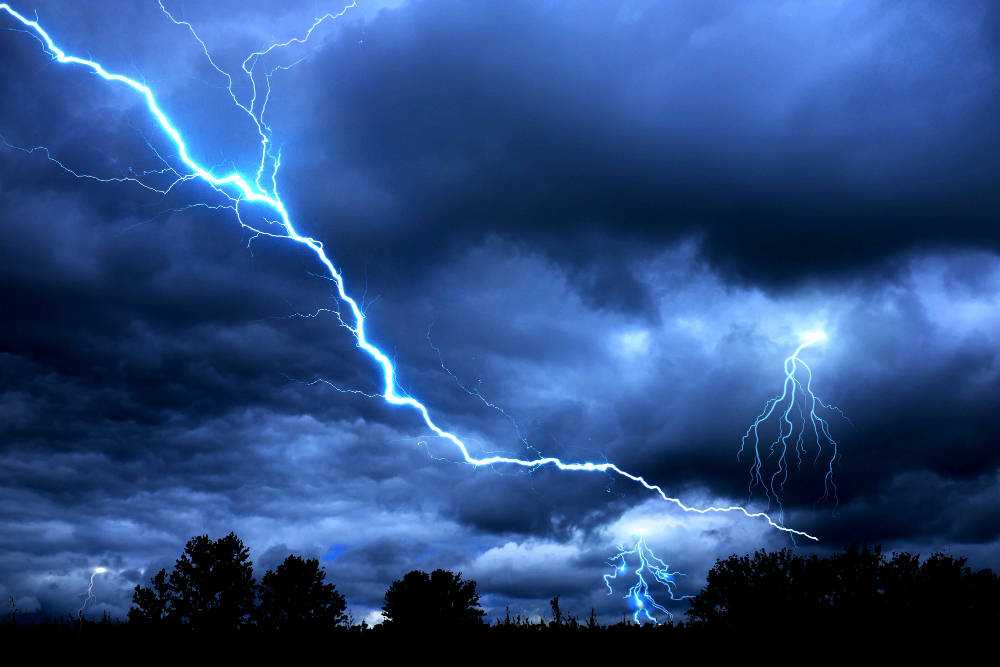
The difference between a crack and a rumble is almost entirely distance, and there are two reasons.
The first is geometry again. If a strike is close, the part of the channel nearest you dominates completely, and the spread of arrival times is small. A large fraction of the sound arrives at once.
The second is what the air does to sound on the way. Air absorbs high frequencies far more readily than low ones, so the sharp, high-frequency content of a shock wave is stripped out as it travels. Over several kilometres, only the low frequencies are left.
This is why distant thunder is all rumble and no crack. The crack did not fail to happen; it was filtered out en route. It is the same reason distant music is heard as bass through a wall while the vocals are inaudible.
It is also why thunder is rarely heard beyond about fifteen or twenty kilometres. The sound does not stop existing; it simply loses so much of its energy, and is bent upward by the atmosphere, that nothing usable reaches the ground.
The Counting Rule, and Why It Works
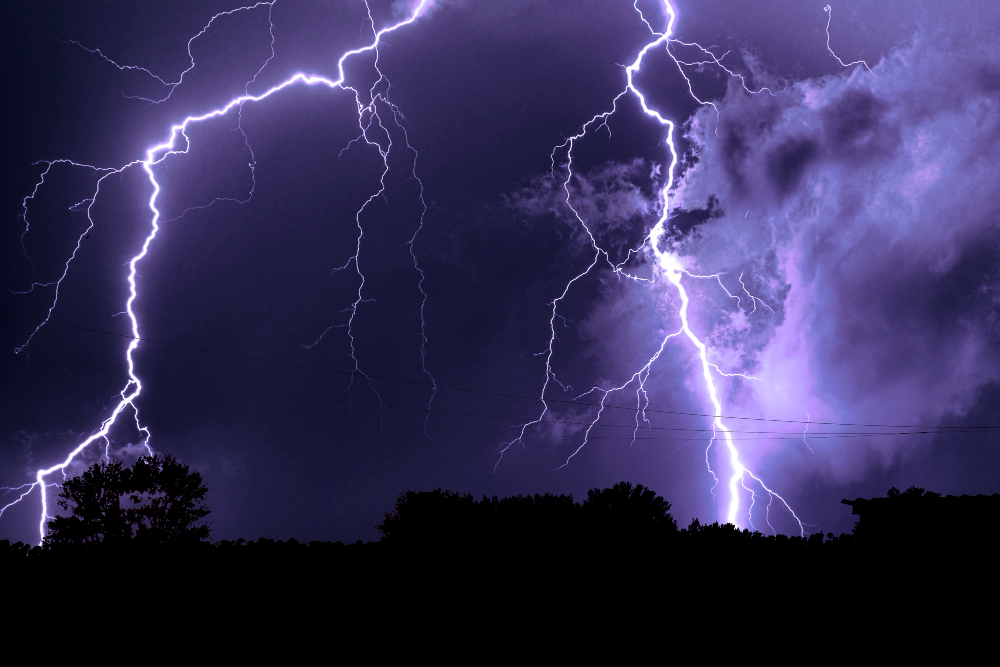
The familiar method – count the seconds between the flash and the thunder, divide by three for kilometres or five for miles – is sound, and the reason is a large mismatch in speeds.
Light covers any distance you might care about instantaneously for these purposes. Sound does not; it travels at roughly a third of a kilometre per second in ordinary conditions.
So the delay is almost entirely the sound’s travel time, and converting it to distance is straightforward arithmetic.
There are honest limitations. The figure you get is the distance to the nearest point of the channel, not to wherever it struck the ground, and those are not the same if the channel is long. The speed of sound varies a little with temperature. And a flash seen without any thunder at all – the thing usually called heat lightning – is not a different kind of lightning. It is an ordinary strike far enough away that the sound has not reached you, often with the flash reflected off cloud.
None of this is offered as safety advice, which is a separate matter and belongs with official guidance rather than with an article about acoustics.
The Sounds That Arrive Before the Bang
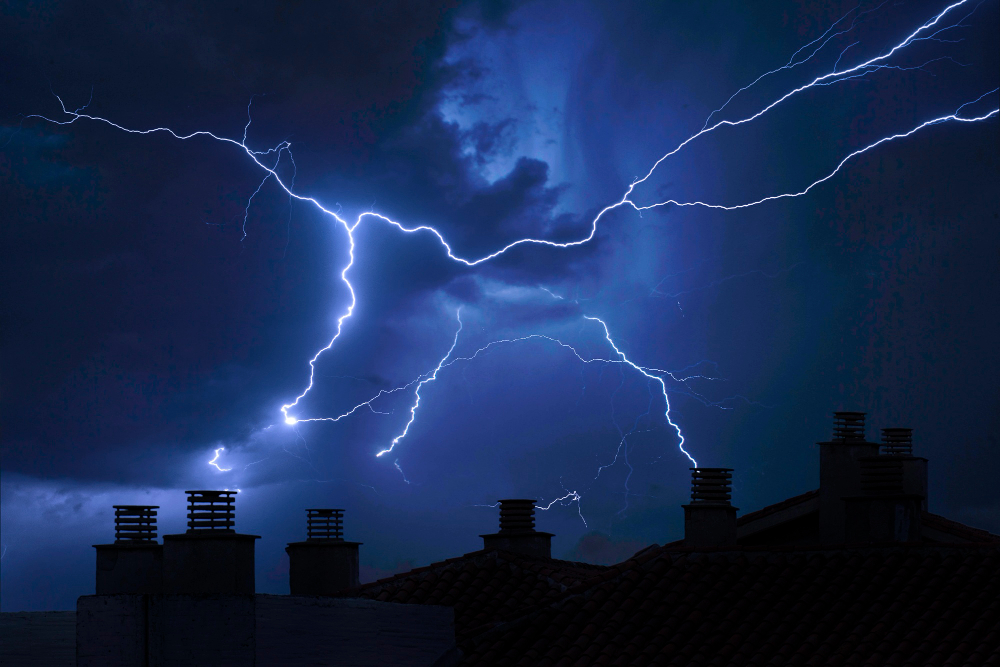
People standing very close to a strike frequently report hearing something before the thunder proper, and the descriptions are consistent enough to be taken seriously.
The commonest is a hiss, a crackle or a fizzing, arriving in the moments before the main report. This is generally attributed to the electrical discharge activity preceding and accompanying the return stroke – the stepped leader working its way down, and corona discharge from objects on the ground responding to the enormous field building overhead. Those are small, local, high-frequency sound sources, close to the listener, and they arrive ahead of the sound from the channel itself.
Corona discharge from nearby objects is also what produces the effect described for centuries by sailors and mountaineers: a faint glow around masts, railings and ice axes, accompanied by a buzzing. That is the air adjacent to a pointed conductor being ionised by the field, and it is a separate phenomenon from lightning rather than a small version of it.
There is also a smell. Lightning splits oxygen molecules in the channel, some of which recombine into ozone, and the sharp, clean, slightly metallic smell after a close strike is that ozone reaching ground level. It is the same compound, produced the same way, that some electrical equipment generates.
Thunder Without Storms
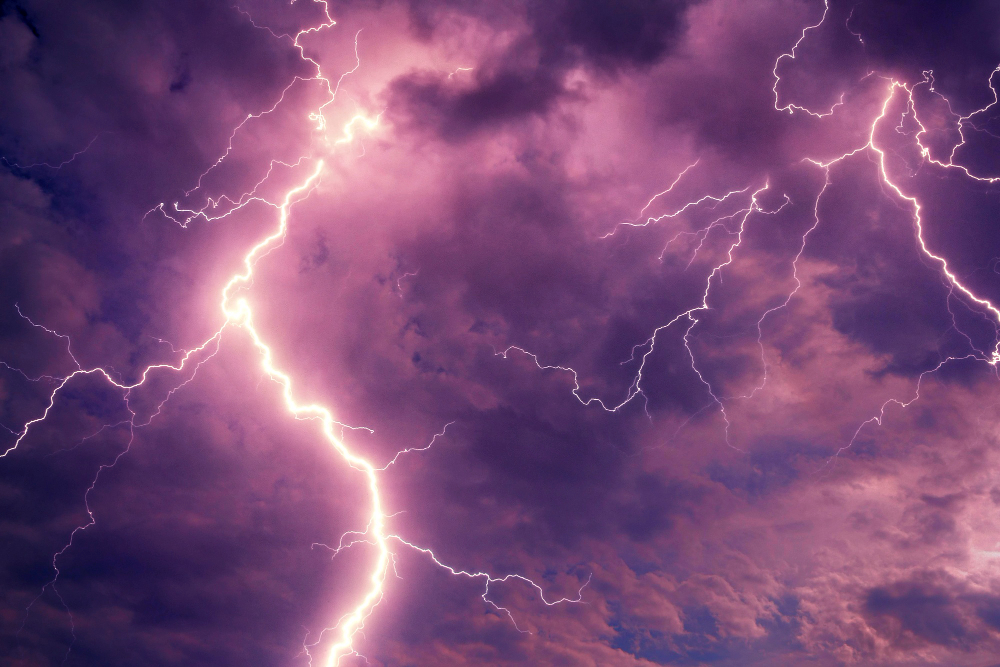
The same mechanism appears in places that have nothing to do with weather, which is a good check that the explanation is right.
Volcanic eruptions generate lightning within their ash plumes, and it produces thunder in exactly the same way. Large wildfires can do the same when they build their own clouds, as can very large explosions that loft enough charged material.
The reverse is also informative. Because thunder’s arrival pattern depends on the shape of the channel that produced it, the sound can be worked backwards. Recording a single flash with an array of microphones at known positions allows the channel to be reconstructed in three dimensions from the arrival times alone – a technique called acoustic mapping, which produced some of the earliest detailed pictures of what a lightning channel actually looks like above the cloud base, where nobody can see it.
That is the strongest confirmation the explanation gets. If thunder were simply a noise the flash made, there would be nothing in it to reconstruct. The fact that a channel’s geometry can be recovered from its sound means the sound is the geometry, arriving late.
An Explosion Shaped Like a Line
So the whole thing resolves into one unusual geometry.
An ordinary explosion is roughly a point, and produces a bang. Thunder is an explosion several kilometres long and a few centimetres wide, detonated along its entire length simultaneously, and then heard by somebody standing at one particular distance from a structure that is at many distances at once.
Everything follows from that. The crack is the near end. The rumble is the far end arriving late. The structure in the middle is the channel’s kinks and branches. The lowering of pitch with distance is the air filtering out the high frequencies. And the silence beyond twenty kilometres is the point at which there is nothing left to hear.
The flash and the noise are not two events. They are one event, seen instantly and heard over the following fifteen seconds, because sound is slow and lightning is long.
Like our content? Follow us for more.