

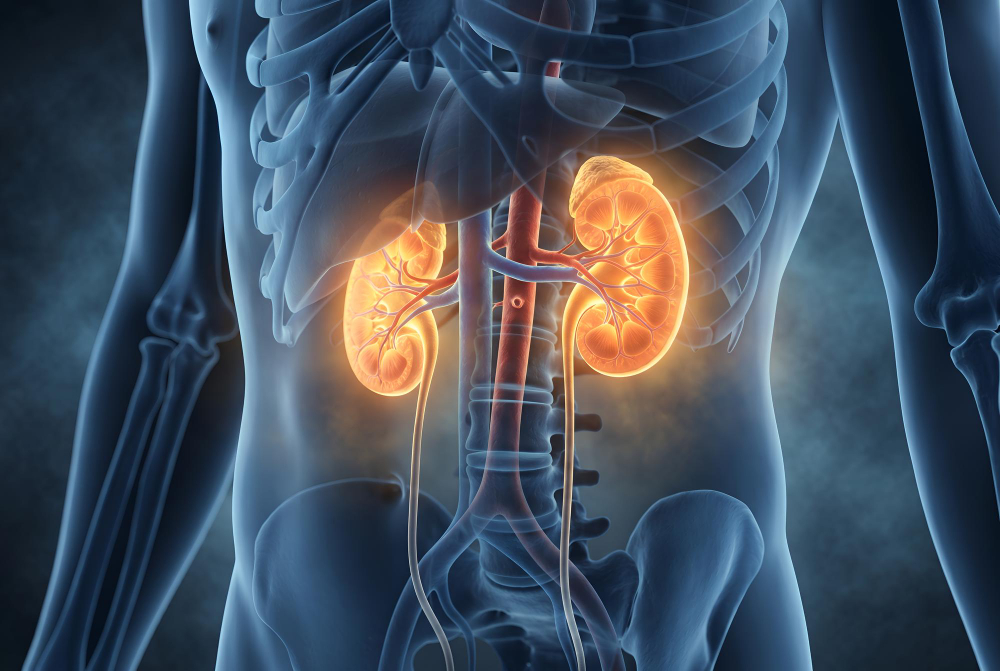
The Metaphor Is the Wrong Way Round
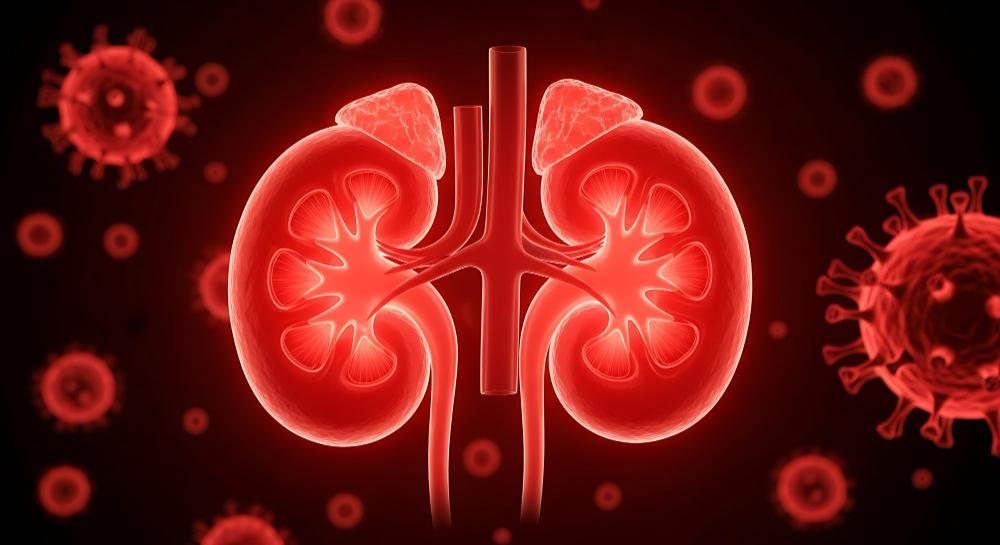
Almost everybody carries the same mental picture of what a kidney does. Blood arrives dirty, passes through something like a coffee filter, and leaves clean, with the unwanted material trapped on the paper and sent out as urine. It is a tidy image and it is almost exactly backwards.
What actually happens at the start of the process is indiscriminate. Blood enters a dense knot of capillaries and is pushed against a membrane by pressure alone. That membrane holds back blood cells and the large proteins, because they are simply too big to pass, and it lets through essentially everything else. Water goes through. Salt goes through. Sugar goes through. Amino acids, the building blocks the body has gone to considerable trouble to acquire, go through. Vitamins go through. The resulting liquid in the tube on the other side is not waste. It is a near-copy of blood plasma with the cells and the big proteins removed, and it contains almost nothing the body wanted to lose.
The selectivity comes afterwards, and it runs in the opposite direction from the one the filter metaphor implies. Along the length of the tube that leads away from that knot of capillaries, the body reclaims. It pulls water back. It pulls sugar back, essentially all of it. It pulls salt back, in a quantity it adjusts continuously. It pulls amino acids back. Each of those recoveries costs energy and requires a specific transporter protein embedded in the wall of the tube, and there is a different set of transporters at different points along its length.
What finally emerges at the far end is not what the kidney caught. It is what the kidney declined to pick up again. Urine is the leftovers of a reclamation process, not the catch of a net.
Like our content? Follow us for more.
The Quantities Involved Are Difficult to Believe
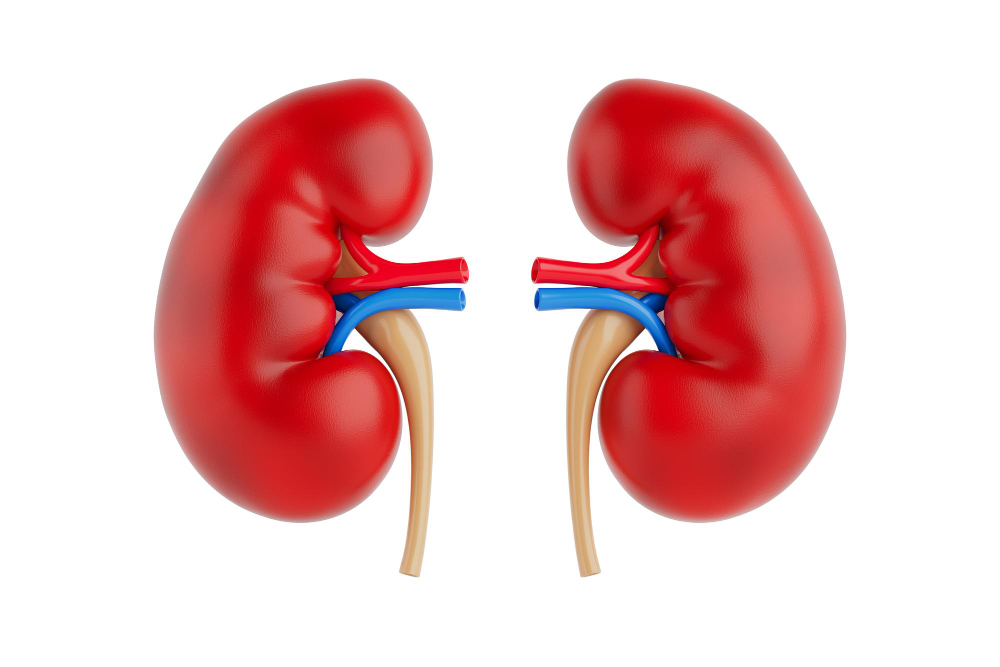
The scale of this is the part that stops people when they first hear it. The two kidneys together receive something in the region of a fifth of everything the heart pumps, which is a startling share for two organs that between them weigh about as much as a pair of apples. They are not large, and they are not doing mechanical work. They are getting that much blood because they are processing it.
Out of that flow, the initial indiscriminate step produces roughly a hundred and eighty litres of fluid a day. That figure bears repeating, because it is obviously impossible as a volume of anything leaving the body. It is far more than the total water content of a person. It is something like forty times the volume of blood they have. The body is pushing the equivalent of its entire plasma volume through this membrane dozens of times over in a single day.
And then it takes back more than ninety-nine per cent of it. What leaves is on the order of one to two litres, which is why the arithmetic works at all. The system is running an enormous throughput and reversing almost all of it, and the small remainder is the output.
This looks like a spectacularly wasteful way to build an organ, and from an energy standpoint it is expensive. The kidneys consume a disproportionate share of the body’s resting energy for their size, almost all of it spent on pumping things back across membranes against their natural direction of flow. But the design buys something that a selective filter could never provide, and that is the subject of the next section.
Why Throwing Everything Out First Is Actually Clever
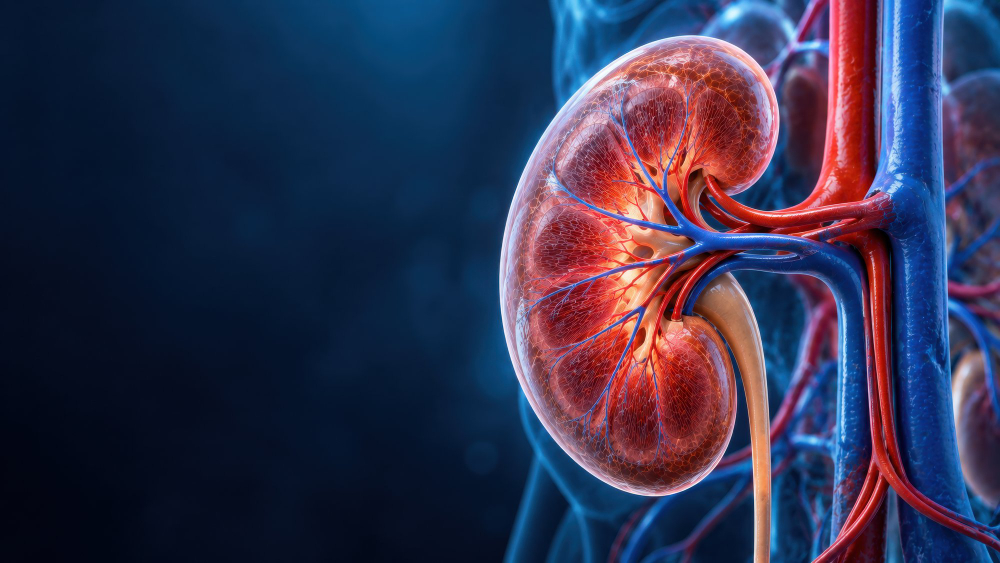
A filter that catches specific unwanted molecules has to know what they are. It needs a receptor or a binding site for each one. That works for a short, fixed list of substances, and it fails completely for anything new.
The body is constantly confronted with things it has no evolved machinery for. Compounds in food it has never encountered. Products of its own metabolism that happen to be in excess that day. Substances absorbed from the environment. A specific-capture system would have no way of removing any of them, and they would accumulate.
The dump-and-reclaim design solves this at a stroke. Anything small enough to pass the membrane is removed from the blood by default, with no recognition required at all. The only things that stay are the things the body has specifically built a transporter to retrieve. Removal is the default state and retention is the exception that has to be actively arranged.
This is why the system handles unfamiliar substances so well. A compound the body has never met has no reclamation transporter, so it is filtered out and simply leaves. No evolutionary foresight was needed. The design is permissive at the front end and selective at the back end, and that ordering is what makes it general-purpose.
It also means the point of control is the reclamation step, which is exactly where you would want it. Changing how much water or salt the body keeps does not require rebuilding the filter. It requires turning a reclamation process up or down, which can be done in minutes by a hormone, and which is adjustable by small degrees rather than all or nothing.
The Reclaiming Happens in Stages, and the Order Matters
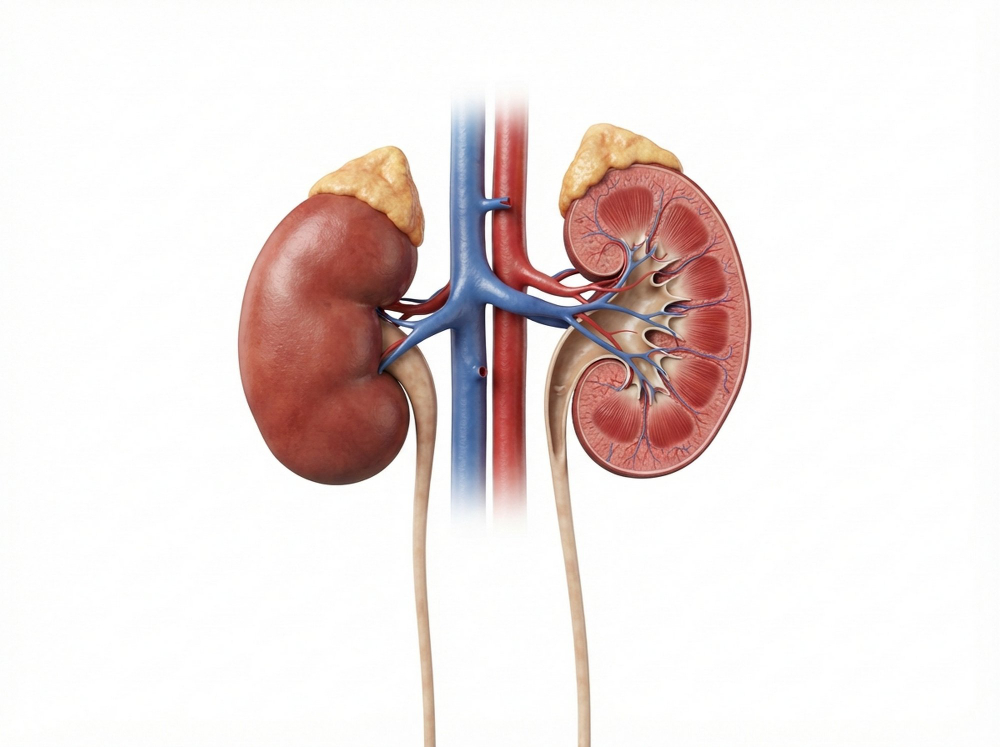
The tube leading away from each filtering knot is not uniform. It has distinct regions, each with a different wall, a different set of transporters and a different job, and they are arranged in a deliberate sequence.
The first stretch does the bulk work. This is where the great majority of the water, the salt, the sugar and the amino acids come back, in large quantities and without much fine control. It is a high-capacity, low-precision section, and its purpose is to reduce an absurd volume to a manageable one.
Then the tube does something structurally odd. It dives down into the deep tissue of the kidney, turns around and comes back up. That hairpin is the part that allows urine to be concentrated, and the way it achieves that is one of the most elegant pieces of plumbing in the body. The descending limb and the ascending limb run alongside each other in opposite directions, and because of what each limb does and does not let through, the two of them together build up a steep salt gradient in the surrounding tissue, with the deepest part being the saltiest. That gradient is not the output. It is a tool. It is a standing reserve of saltiness that the final section of the tube can later use to pull water out of the fluid passing through it.
The last sections are the precision ones. Here the adjustments are small, specific and under hormonal control. This is where the body makes the day’s actual decisions: how much water to retain, how much salt, how much potassium, how acidic to make the output. The volume being handled by this point is small, which is exactly why fine control is affordable here and would be impossible at the front end.
Which Is Why a Hormone Can Change the Colour of Urine Within the Hour
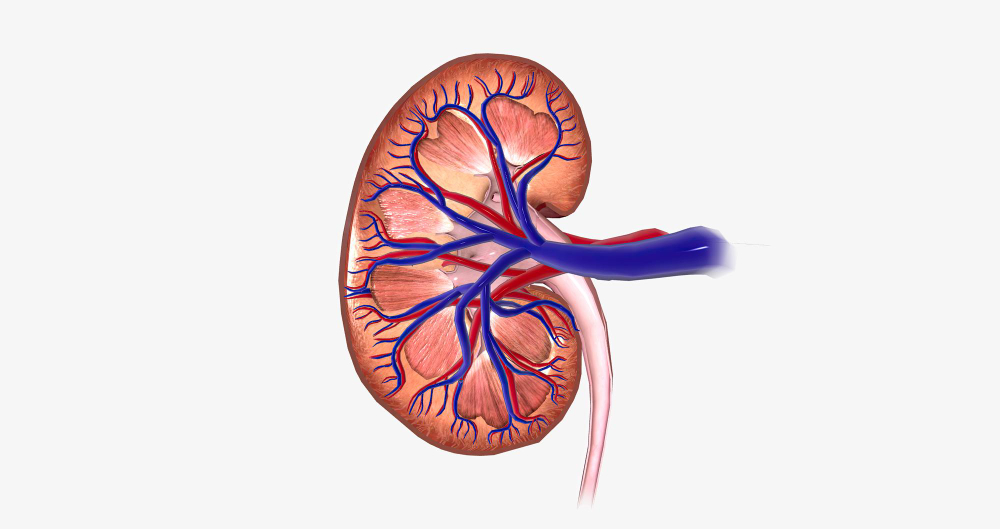
The final part of the tube is impermeable to water unless it is told otherwise. Being told otherwise means a hormone arriving from the brain and causing water channels to be inserted into the wall of the tube.
When those channels are in place, the salt gradient built by the hairpin does its work. Water leaves the fluid in the tube, moves into the surrounding tissue and returns to the bloodstream, and what continues down the tube is a smaller volume of much more concentrated liquid. When the hormone is absent, the channels are withdrawn, the wall goes back to being impermeable, the water stays in the tube and a large volume of very dilute liquid leaves.
That single switch is the explanation for something everybody has noticed. Concentrated, dark output means the hormone is high and the body is conserving water. Pale, copious output means the hormone is low and the body has water to spare. The change can happen within an hour of drinking, because inserting and removing water channels is fast.
The same mechanism explains why certain substances cause a person to produce far more urine than they drank. Anything that suppresses that hormone takes the water channels out of the wall of the tube, and the water that the salt gradient would otherwise have recovered goes straight out instead. The body did not acquire extra water; it lost the ability to keep what it had.
It also explains why the ability to concentrate urine is one of the first things to decline with age and one of the first things to go when the kidney is damaged. The hairpin gradient depends on very precise tissue architecture, and architecture is harder to maintain than chemistry.
The Organ That Quietly Sets Your Blood Pressure
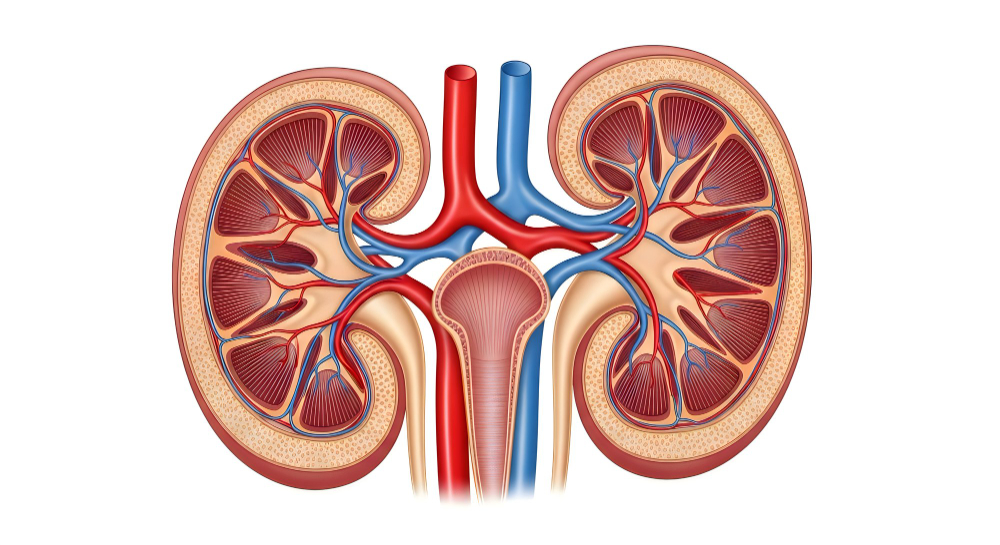
Everything described so far is about handling fluid. But the kidney’s second career is arguably more consequential, and it follows directly from the first.
The kidney is exquisitely sensitive to how much blood is arriving and how fast. It has to be, because its filtering step runs on pressure. If pressure drops, filtration drops, and the organ notices immediately.
What it does in response is release a signal that sets off a chain of events ending in two outcomes: blood vessels throughout the body narrow, and the kidney’s own reclamation of salt increases, which means more water retained and more volume in circulation. Narrower vessels and more volume both raise pressure. The kidney, in other words, does not merely tolerate the blood pressure it is given. It is one of the main organs setting it.
This is why kidney problems and blood pressure problems are so tightly bound together, in both directions. High pressure damages the delicate filtering capillaries over years. Damaged kidneys misread the situation and raise pressure further. The loop runs in a direction that makes things worse, which is why the two are almost always discussed together.
It is also why the kidney is such a common target for medicines that act on pressure and fluid balance. Several whole classes of drug work by interfering at specific points along the reclamation tube or in the signalling chain the kidney starts, and the reason there are several classes is that there are several distinct stages to interfere with.
And the Organ That Tells the Marrow to Make Blood

There is a third job, and it is the one most people have never heard of. The kidney is where the body measures its own oxygen supply.
This makes a certain sense once stated. The kidney receives a large, steady, well-characterised share of the circulation, and it has a high and fairly constant oxygen demand. A fall in the oxygen content of blood shows up there reliably. Cells in the kidney detect it and release a hormone that travels to the bone marrow and instructs it to produce more red blood cells.
So the kidney is the body’s oxygen sensor and the controller of its own blood supply’s carrying capacity. That is why severe kidney disease produces anaemia as a standard feature, and why the anaemia is not caused by any problem in the marrow at all. The marrow is working perfectly. It simply stopped being told to work.
The kidney also performs the final activation step on vitamin D. The skin produces a precursor when exposed to ultraviolet light, the liver modifies it, and the kidney completes it into the active form that governs how much calcium the gut absorbs. Which means the kidney sits in the control loop for bone as well, and failing kidneys produce bone problems for reasons that have nothing to do with bone.
Three jobs, then, in one organ: fluid and solute balance, blood pressure, and the production of both red cells and the active form of a vitamin. None of them is what the filter metaphor would lead anybody to expect.
Why It Fails Quietly, and What That Means
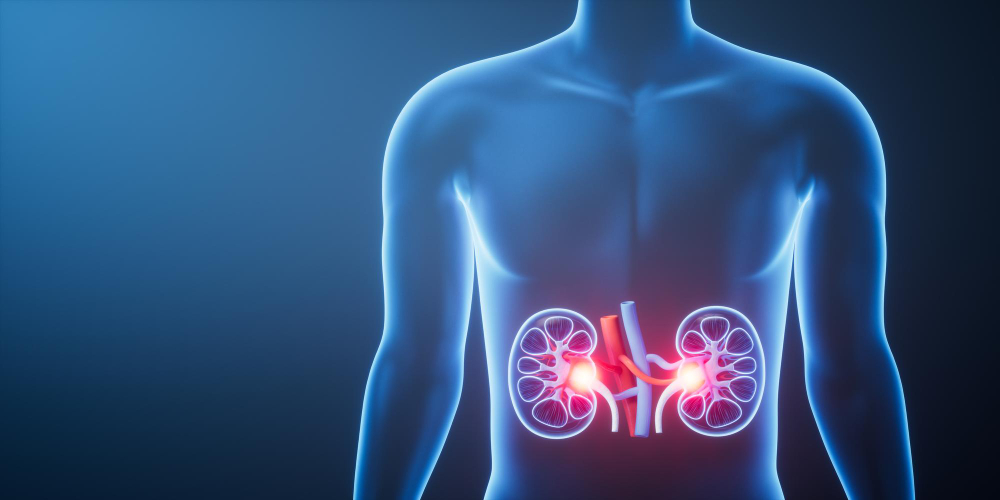
The kidney has an unusual amount of spare capacity. A person can lose a great deal of functional tissue before anything measurable goes wrong, because the remaining units simply take on more work. This is the reason it is possible to live a normal life with one kidney.
It is also the reason kidney disease is notorious for producing no symptoms until it is advanced. There is no pain, because there are few pain-sensing nerves in the tissue itself and nothing is stretching or tearing. There is no obvious change in output for a long time, because concentrating ability declines gradually and the body compensates. The signals that do appear early are vague and easily attributed to something else entirely: tiredness, poor appetite, feeling cold, swelling at the ankles after a long day.
The practical consequence is that the condition is usually found by a blood or urine test done for some other reason, rather than because anybody felt unwell. That is simply how an organ with large reserve capacity and no pain nerves behaves.
None of this is advice, and nothing here describes a symptom anybody should interpret for themselves. It is included because the quietness of the failure is a direct consequence of the design. The spare capacity that makes the kidney robust is the same spare capacity that hides its decline, and that trade is built into the architecture rather than being an unfortunate accident.
A Reclamation Plant, Not a Filter
So the organ everybody thinks of as a strainer is better understood as a sorting operation running at enormous volume. It discards the entire small-molecule contents of the blood dozens of times a day and buys back what it wants, which is a design that is wasteful in energy and brilliantly general in function, because it removes unfamiliar substances automatically and puts all the control at the retrieval end where control is cheap.
And while doing that, it sets the body’s blood pressure, decides how many red blood cells there should be, and finishes manufacturing the vitamin that governs the skeleton. The filter image is not a small simplification. It leaves out most of the organ.
Like our content? Follow us for more.
