

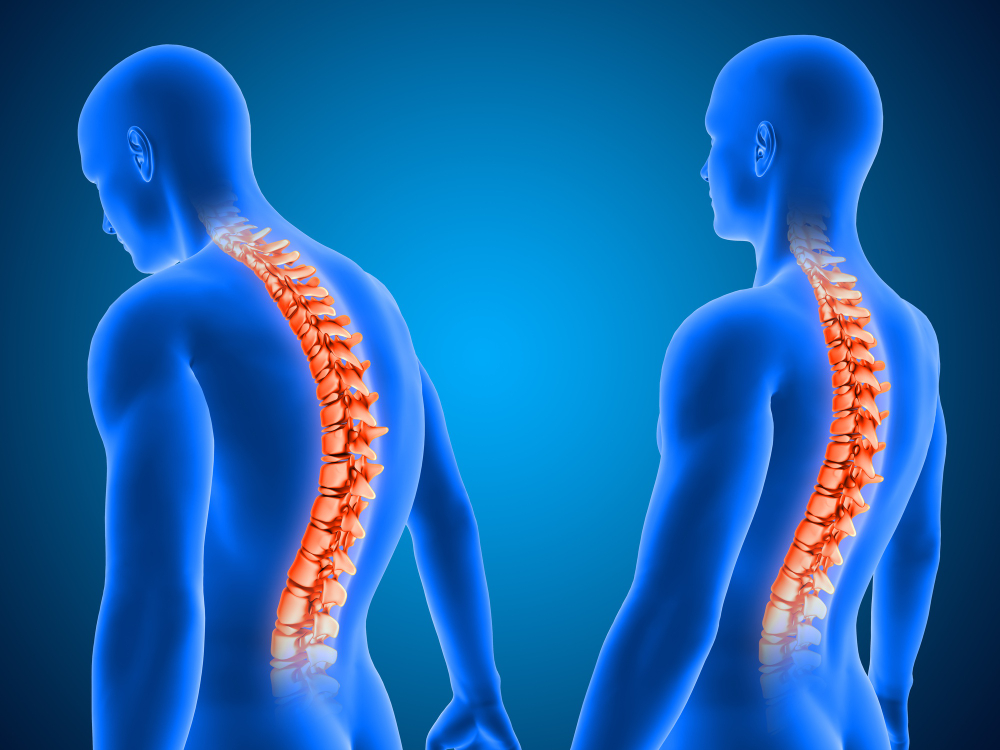
Measure Yourself Tonight and Again Tomorrow

The effect is large enough to find with a pencil mark on a door frame, which is the only reason anybody believes it without being shown.
Stand against a wall first thing in the morning, heels down, and have somebody mark the top of your head. Do it again last thing at night, same wall, same posture, same shoes or none. For most adults the second mark will be somewhere between half a centimetre and two centimetres lower, and in some people more.
Then sleep, and measure again in the morning. You will be back where you started.
This is not a measurement error and it is not posture slumping, although posture contributes a little. It is a real, repeatable, daily change in the distance from the floor to the top of your head, and it is happening to everybody reading this.
Like our content? Follow us for more.
Where the Centimetre Goes
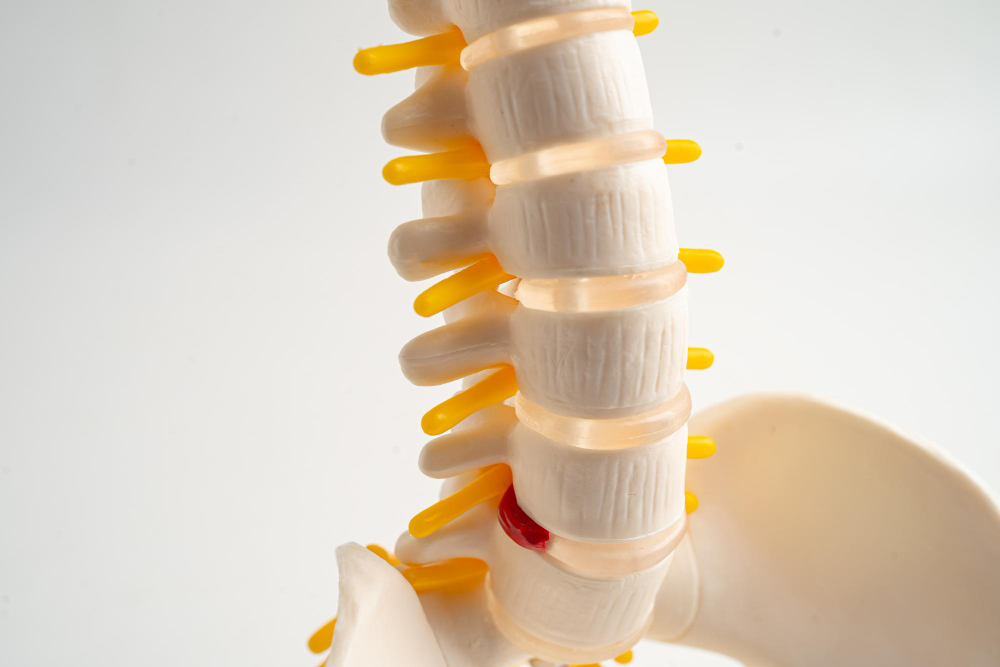
It goes into the stack of soft pads between your vertebrae, and specifically it goes out of them as water.
Between each pair of vertebrae sits a disc, and the middle of each disc is a gel that holds a great deal of water. Water is effectively incompressible, so a well-hydrated disc is a firm cushion that transmits load and springs back.
Put weight on it, though – which is what standing or sitting does all day – and the pressure slowly forces water out of the gel and into the surrounding tissue and the bone above and below. The disc gets thinner. Not by much, but it gets thinner, and it stays thinner for as long as the load is on.
Lie down and the load comes off. The gel is chemically thirsty – it attracts water strongly – so with nothing pressing on it, it draws the water back in and swells to its full thickness again. That is what is happening while you sleep. You are not resting so much as rehydrating a stack of cushions.
Twenty-Three Small Losses That Add Up
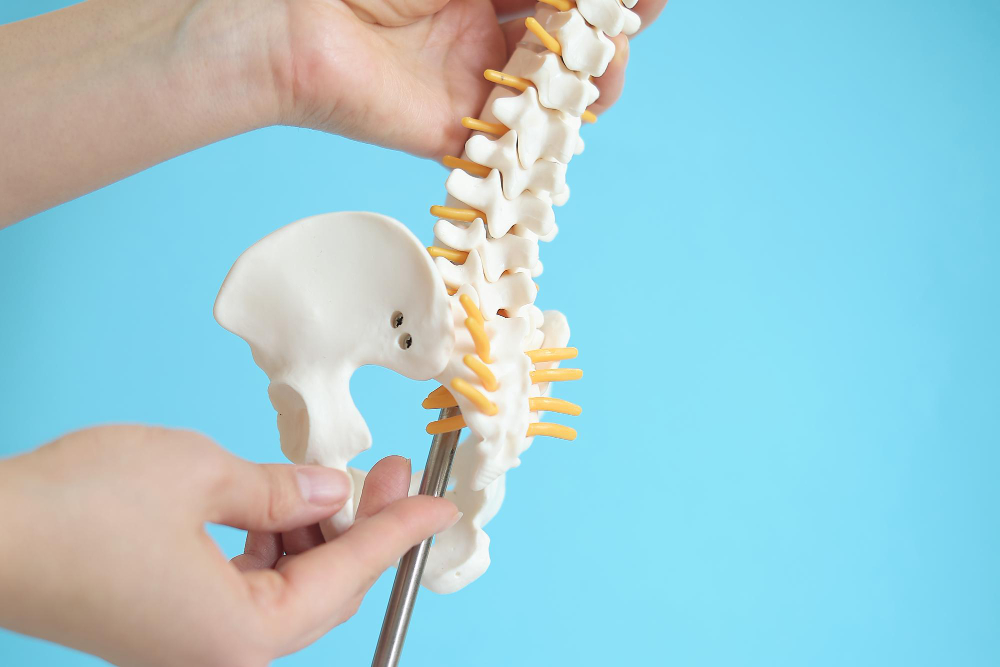
No individual disc loses anything you could measure, which is why the total is surprising.
There are twenty-three of them running from the base of your skull to the bottom of your spine. If each one gives up a few tenths of a millimetre over the course of a day, no single one has done anything dramatic. Added together, over twenty-three of them, the sum is comfortably a centimetre.
This is the same arithmetic that makes a lot of biology counterintuitive. The change at each site is too small to notice, there are a lot of sites, and they are stacked in series so the losses add rather than average.
It also explains why the effect is bigger in some people than others. More discs in better condition holding more water means more water available to lose, which is why the daily swing tends to be larger in younger people and smaller in older ones.
Most of It Happens in the First Couple of Hours
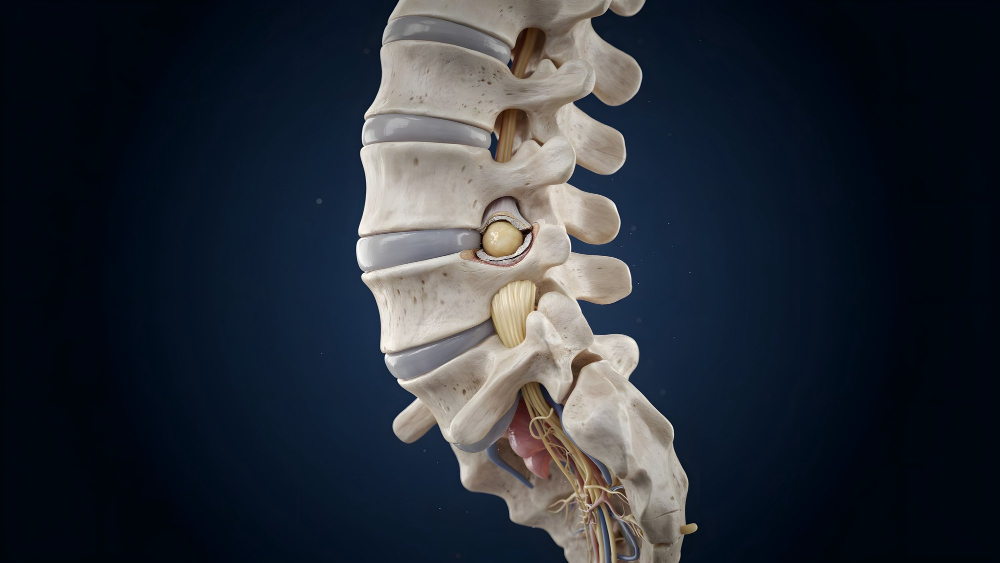
The curve is steep at the start and nearly flat by the afternoon, which is not what most people would guess.
A substantial share of the whole day’s loss has already happened within an hour or two of getting out of bed. The discs are at their most swollen and least able to resist, so the initial squeeze is rapid. After that the rate falls away sharply, and by the second half of the day very little further change occurs.
Which has a practical consequence for the experiment above: measuring at breakfast and at lunch will show you most of the effect, and measuring at lunch and at bedtime will show you almost none of it.
It also means that if you have ever been measured twice on the same day and got two different answers, the gap between the measurements mattered far less than which end of the morning the first one was taken.
Which Means There Is No Such Thing as Your Height

Follow that properly and a number everybody treats as a fixed personal fact turns out to be a reading rather than a property.
Your height is not a constant with some measurement error around it. It is a variable that depends on how long you have been upright, what you have been carrying, and how much water your discs are currently holding. The morning figure and the evening figure are both correct. They are measurements of different states of the same person.
This is why anybody who measures height seriously specifies when. Clinical growth monitoring, military and occupational standards and sports classification all have to say something about time of day, or standardise it, or accept a tolerance wide enough to swallow the variation.
And it is the explanation for an experience a lot of people have had and filed as a mystery: being measured as slightly shorter than you were certain you were. Both numbers were real. One of them was taken at four in the afternoon.
The People Who Prove It Best Are in Orbit
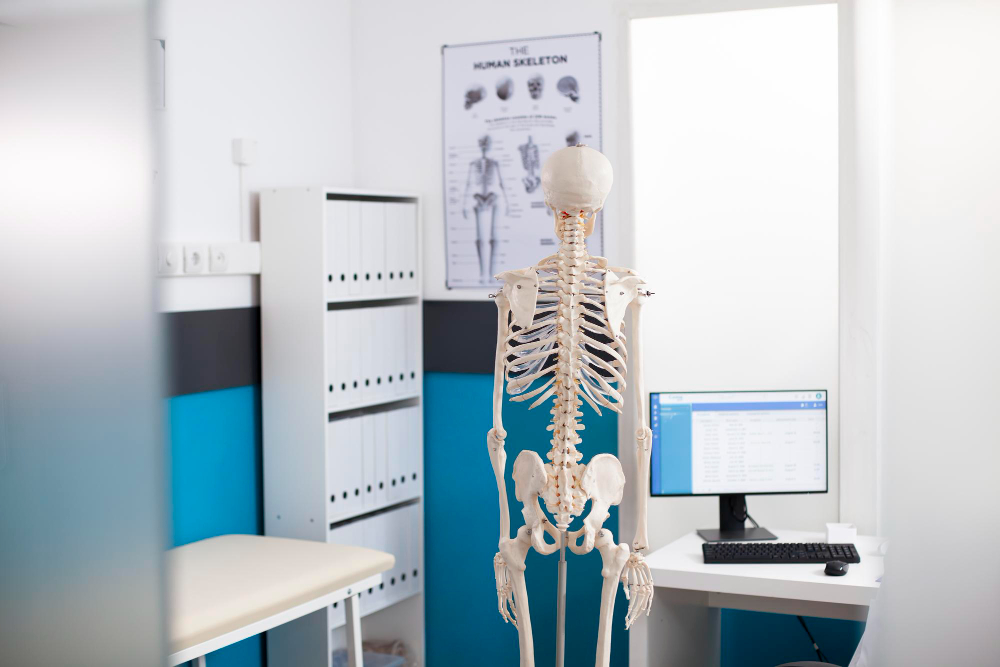
Remove the load entirely, for months, and the process runs to completion – which is why astronauts return from long missions taller than they left.
In orbit there is no weight pressing down through the spine at all. The discs take up water and keep it, the spinal curves flatten out slightly, and the whole stack lengthens. The gain over a long stay is commonly a few centimetres, several times the daily variation on the ground.
It is also completely temporary. Within days of returning the discs are compressed again and the height is back to normal, and the readjustment is frequently uncomfortable, because tissue that has spent months at an unaccustomed thickness has to go back.
This is about as clean a demonstration as biology offers. One variable – axial load – was removed, the predicted change occurred in the predicted direction and the predicted magnitude, and restoring the variable reversed it.
The Daily Cycle and the Lifetime Decline Are the Same Tissue
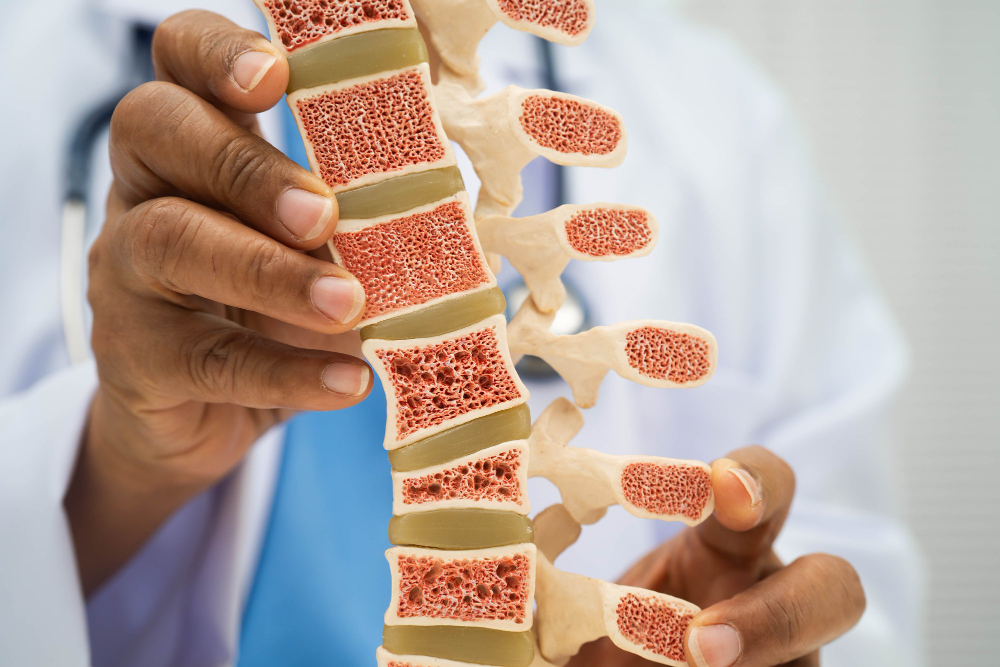
People lose height as they get older, and it is largely the same thing happening permanently rather than nightly.
The gel in the middle of each disc loses its capacity to bind water over decades. It holds less, it recovers less completely, and the disc settles at a thinner resting state. The daily cycle still happens, but it swings around a lower baseline and the swing itself gets smaller.
That accounts for a good part of the height loss associated with age, alongside changes in the vertebrae themselves and in posture, which are separate processes with their own causes.
Which puts the morning-to-night change in a useful light. It is not a curiosity sitting on top of the real system. It is the same mechanism you will experience as a permanent change much later, running on a cycle of hours instead of decades, and visible on a door frame today.
The Discs Have No Blood Supply, So the Squeezing Is How They Are Fed
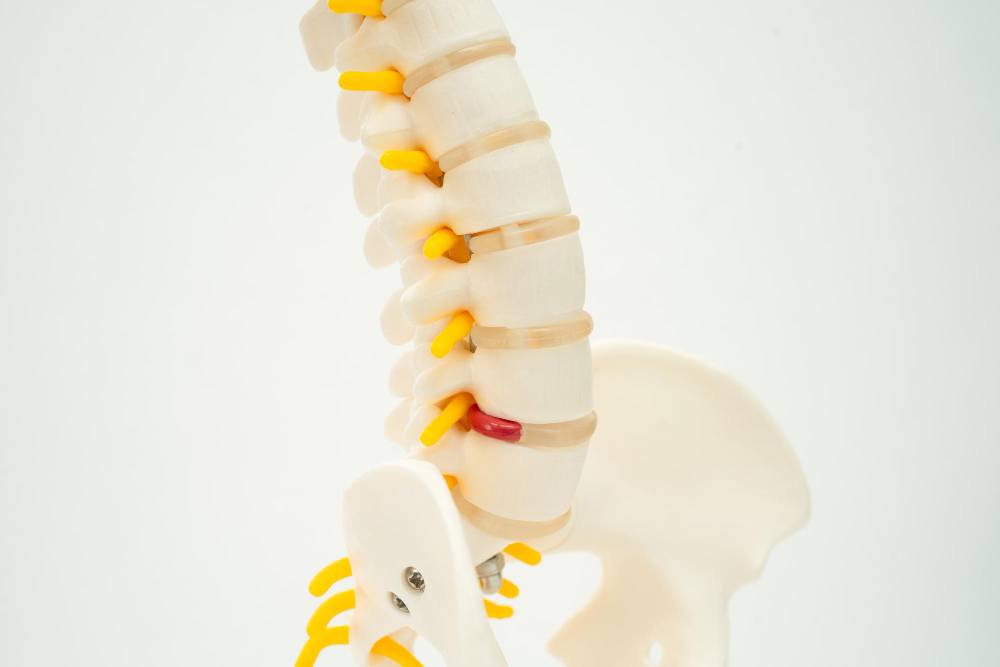
This is the part that turns the whole thing from a curiosity into something the body cannot do without: the disc is the largest structure in the human body with no blood vessels in it at all.
Nothing delivers to it. There is no capillary network inside the gel, which means oxygen and nutrients have to arrive by seeping in from the tissue at the edges and through the bone surfaces above and below, and waste has to leave the same way. For a structure of that size, that is an extremely marginal supply arrangement.
Which is where the daily cycle earns its keep. Fluid being pressed out under load and drawn back in at rest is not only a change in thickness – it is movement of the medium that carries everything in and out. The loading and unloading works as a slow pump.
So a day of being upright followed by a night of lying down is not simply wear followed by recovery. It is one complete cycle of the only delivery system the tissue has, and the centimetre you lose is the visible side of it.
It Is Not a Flaw, It Is the Mechanism Working
The instinct is to read all this as the body sagging under its own weight. That is backwards: the water movement is not a failure of the cushion, it is how the cushion works.
A disc has to do two incompatible things. It has to be stiff enough to hold two vertebrae apart under heavy load, and compliant enough to let the spine bend in every direction without damage. A rigid spacer would do the first and prevent the second. A soft one would do the second and collapse.
The answer is a bag of water-attracting gel inside a tough fibrous ring. Under load it resists by being full of a fluid that will not compress, and it accommodates movement by letting that fluid shift. Losing some of it under sustained pressure is not a side effect of the design – it is the design, operating exactly as a hydraulic system does.
So the centimetre is a receipt. It is the measurable record of a day’s worth of load passing through twenty-three hydraulic joints, and getting it back is what the night is for.
Like our content? Follow us for more.
