


The Problem Is That Your Eardrum Has Air on Both Sides
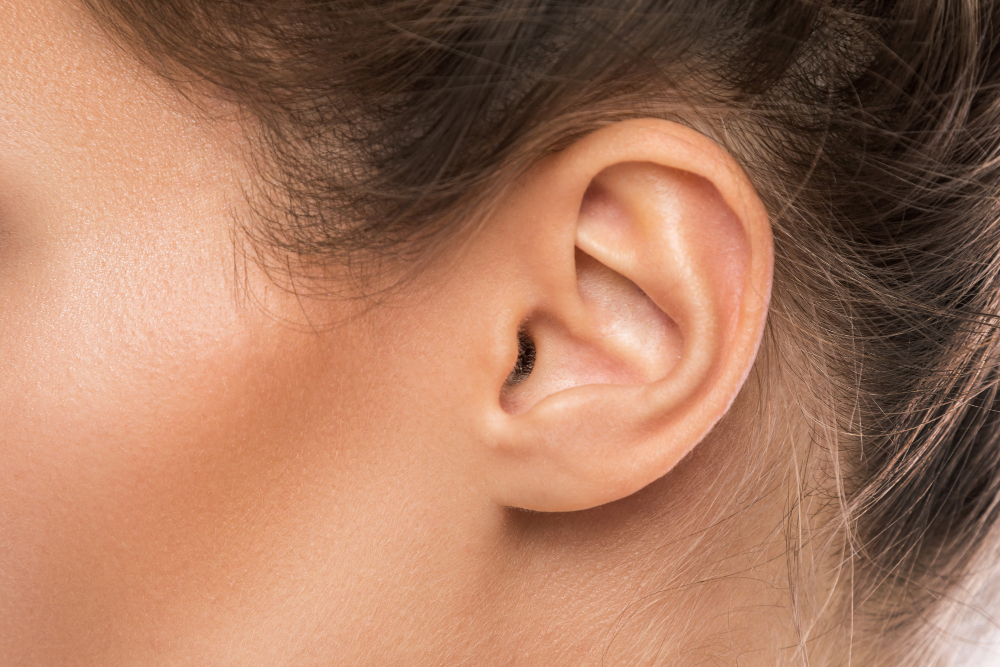
Behind the eardrum is not solid tissue. It is a small sealed cavity full of air, and that is the whole source of the trouble.
A membrane stretched across a space with air on both sides only works properly when the pressure matches. If the pressure on one side rises, the membrane is pushed toward the other side and held there, stretched and tensioned, and a stretched membrane does not move freely.
Which means your ears are not detecting altitude in any clever sense. They are a pair of taut membranes with a fixed pocket of air behind each one, and they report the difference between that pocket and the outside world. Change the outside and the pocket is suddenly wrong.
Everything else here follows from that single arrangement: a sealed box that needs to stay at the same pressure as a world that keeps changing.
It is also why the ears are the first part of the body to report a change in altitude, well before anything else notices. Most of you is liquid and solid, and liquids and solids barely change volume when the pressure around them shifts a little. A trapped pocket of gas is the one component that does, and you happen to have two of them mounted directly behind a pair of taut membranes connected to your hearing.
Like our content? Follow us for more.
There Is a Tube Running From Each Middle Ear to the Back of Your Nose
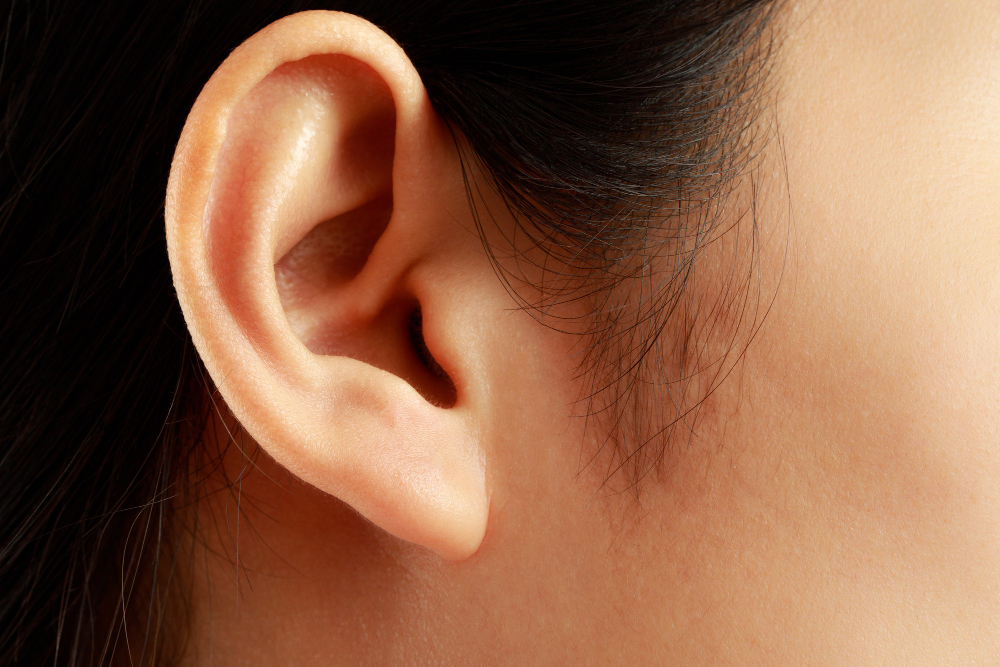
The solution is a narrow passage, a few centimetres long in an adult, running downward and forward from each middle-ear cavity to the very back of the nasal passage, well behind where anything you could reach would get to.
That is the only connection. The outer ear canal is on the wrong side of the eardrum and does nothing at all for the pressure inside. Air entering or leaving the middle ear does so through the nose and throat, which is an arrangement most people find faintly surprising when they first hear it.
It is why a blocked nose affects your ears, why a heavy cold makes flying unpleasant, and why the same muscles turn out to be involved in both.
Two sealed boxes, two narrow tubes, both discharging into the back of your nose.
It Is Shut Almost All the Time, and That Is Deliberate
The obvious design would be to leave the tube open and let the pressure sort itself out continuously. It is closed instead, and closed is the correct answer.
An open tube would be a direct route from the back of the nose into the middle ear for anything travelling in that direction – fluid, swallowed material, whatever is in the nose at the time. It would also let every sound you made internally resonate into the cavity.
So the tube is held shut by the surrounding soft tissue and opens only when it is actively pulled open. The default state is sealed, and the opening is an event rather than a condition.
Which is the compromise: you get protection almost all the time, and you accept that pressure equalisation has to be arranged in brief deliberate episodes rather than happening by itself.
Swallowing Opens It, Which Is Why Swallowing Works
The reason everybody’s advice is to swallow, chew or yawn is that these are the actions that physically pull the tube open.
The muscles that lift the back of the roof of your mouth during a swallow also take hold of the tube’s wall and draw it apart. Swallowing is therefore a pressure-equalising event that happens to be free, because you were going to swallow anyway – roughly a couple of thousand times a day.
Which explains why handing somebody a sweet or a drink on a descending aircraft has worked for as long as there have been aircraft. Nobody is treating the ear. They are supplying a reason to swallow repeatedly over the period when the outside pressure is changing fastest.
And it explains why the trouble arrives when you fall asleep on a descent. The swallowing rate drops a long way during sleep, the tube stops being opened, and the pressure difference accumulates with nothing clearing it.
The Pop Is the Tube Opening and the Eardrum Returning
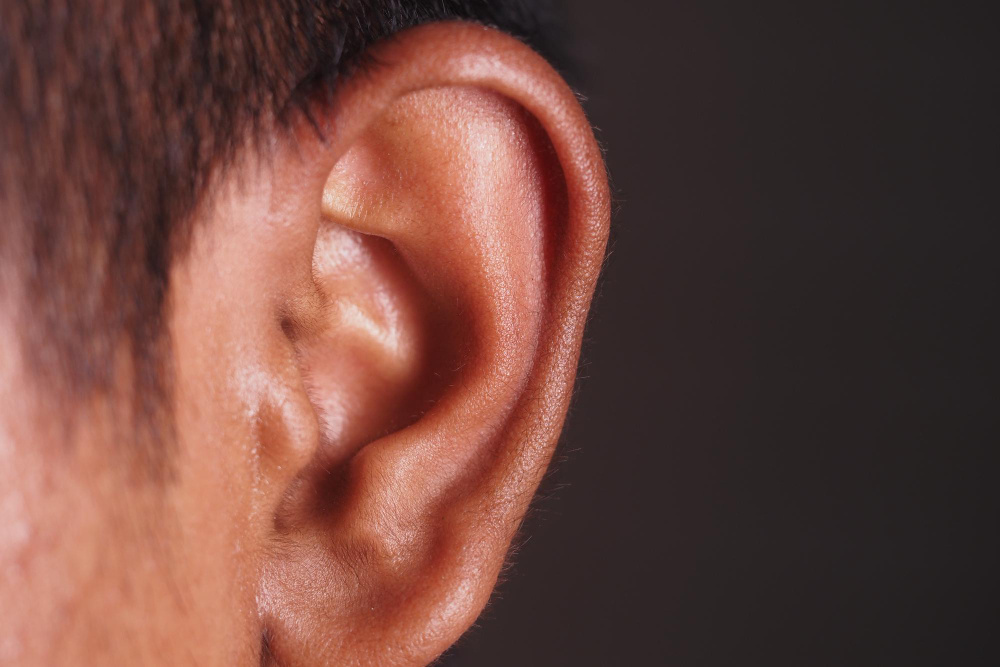
The sound has two parts and both of them are mechanical.
The first is the tube itself. Walls that have been held together and are then pulled apart separate with a small audible click, and air moving through a narrow passage that has just opened adds to it. You are hearing that happen a very short distance from the apparatus you hear with.
The second is the eardrum. A membrane that has been pushed out of position and held under tension snaps back to its neutral shape the instant the pressure behind it equalises, and that movement is itself a sound.
Which is why the relief is so immediate and so total. The muffling was not a substance that had to clear. It was a membrane in the wrong position, and it returned in a single movement.
Going Down Is Harder Than Going Up, and There Is a Reason
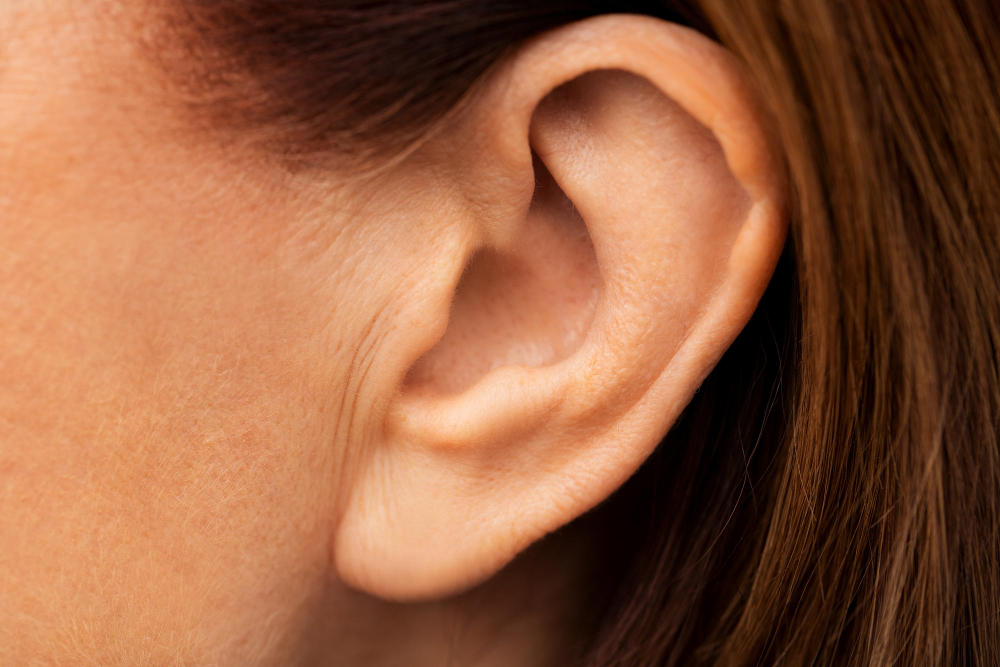
Almost everybody has noticed that climbing is easy and descending is the painful half, and the explanation is that the tube is much better at letting air out than letting it in.
On the way up, outside pressure falls, so the pressure in the sealed middle ear is now the higher of the two. Air pushing outward from inside tends to force the tube open, and it vents, usually without you doing anything or noticing.
On the way down, outside pressure rises, so the outside is now higher. Pressure from the nasal end pushes on a tube whose walls are already touching, and pressing on a soft collapsed tube does not open it – it holds it shut more firmly. The air cannot get in by itself, and the difference keeps growing.
So the asymmetry is not about the ear being more sensitive in one direction. It is a flap valve that happens to be oriented to vent outward, and the whole business of chewing and swallowing on a descent exists to compensate for it.
The Muffled Feeling Is Not a Blockage in Your Ear
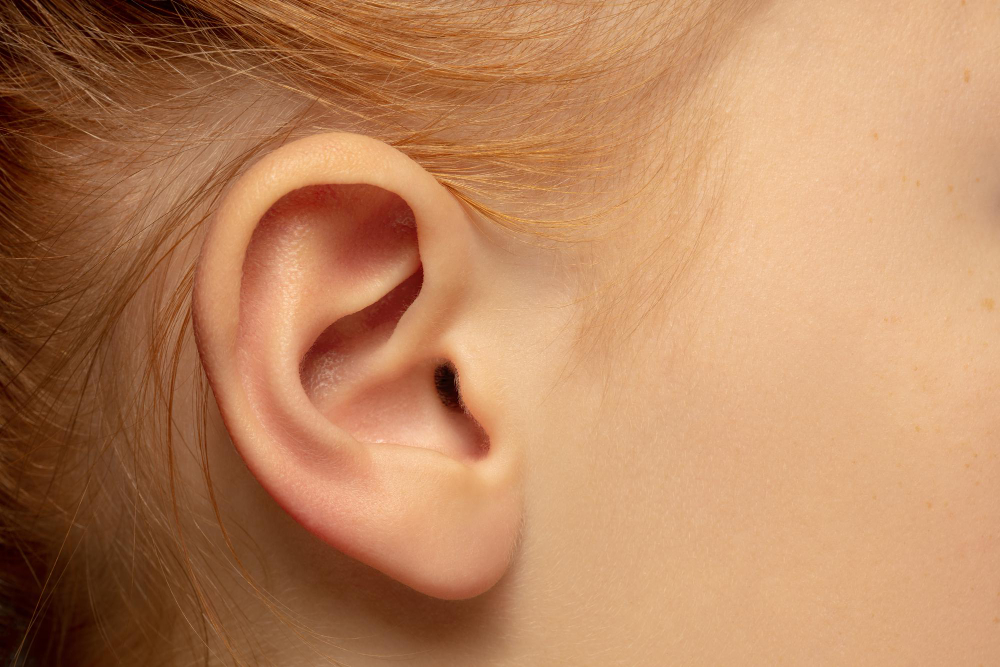
This is the misunderstanding worth correcting, because it sends people looking in completely the wrong place.
When your hearing goes dull with a pressure change, nothing has arrived in your ear canal and nothing is sitting in front of the eardrum. The canal is as empty as it was five minutes ago.
What has happened is that the membrane has been displaced and tensioned, so it transmits far less of what arrives at it. The sound is being reduced before it gets past the first step, by a drum that has been pulled out of shape.
Which is why the sensation is specifically dullness rather than silence, why your own voice sounds strange at the same time, and why nothing done at the outer ear makes any difference to it. The problem is on the far side, and the route to the far side goes through your nose.
It Also Drains and Ventilates, Which Is Its Other Job
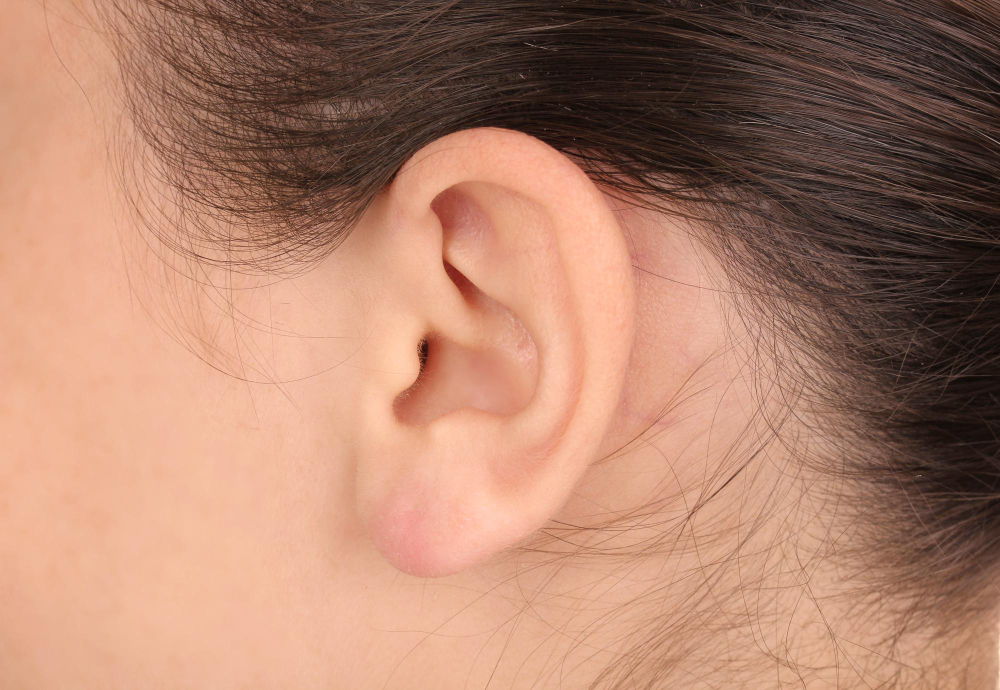
Pressure gets the attention, but the tube has two further responsibilities and they run continuously.
A sealed cavity lined with living tissue produces fluid, and that fluid has to go somewhere. The tube is the drain, sloping downward and forward to carry it away toward the throat, and the brief openings during swallowing are also brief opportunities for drainage.
The cavity also needs its air refreshed, because the lining slowly absorbs gas from a closed pocket. Left completely sealed for long enough, a middle ear’s pressure would fall on its own without the outside doing anything.
So the opening that happens when you swallow is doing three things at once: balancing the pressure, letting fluid out and letting fresh air in. It is a single narrow passage performing the ventilation, drainage and pressure relief of a sealed room, for a fraction of a second at a time, a couple of thousand times a day.
A Child’s Tube Is a Different Shape
The adult arrangement described above is not what anybody starts with, and the difference is purely geometric.
In a small child the tube is markedly shorter and runs much more horizontally – closer to level than to the adult’s distinct downward slope – and it is also softer and narrower.
The consequences follow directly from the geometry. A short level tube is a less effective drain than a long sloping one, because gravity is contributing almost nothing, and a narrow soft tube opens less reliably when the muscles pull on it.
The tube lengthens and tilts as the skull grows, over a period of years, and the adult arrangement arrives gradually. Which is one of those cases where a piece of anatomy that looks like a design flaw is simply a structure partway through being built, and nothing here is a claim about any child or a reason for anybody to do anything.
Like our content? Follow us for more.
