

The Part You Can See Has Been Dead for Months
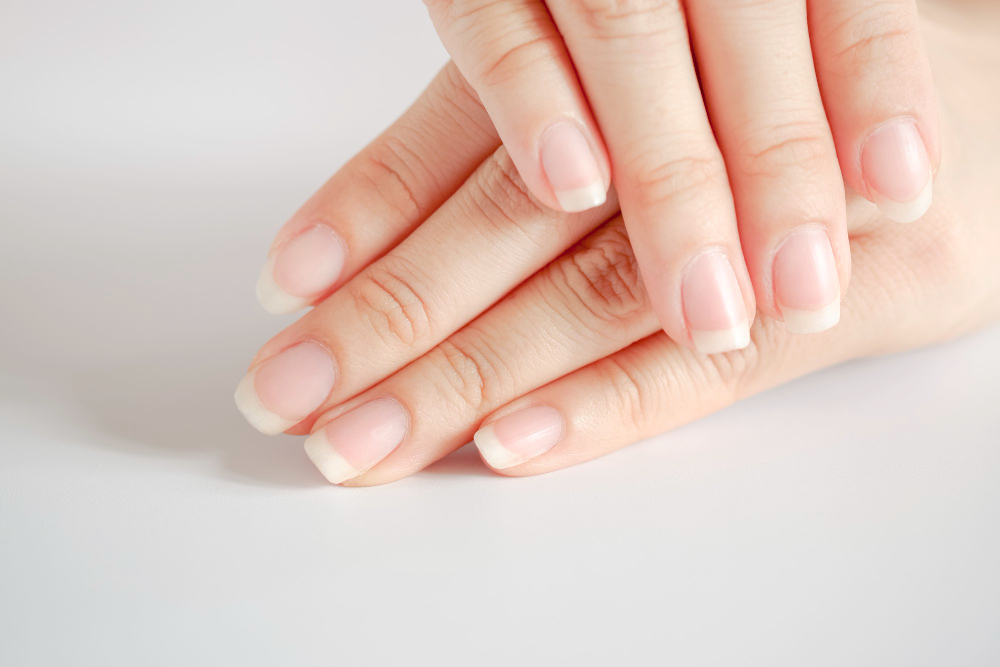
Everything visible is finished product. The only living part of a fingernail is tucked out of sight under the skin at the base, in a strip of tissue that manufactures nail and pushes it forward.
That strip is the whole operation. It builds hardened cells, packs them flat, cements them together and extrudes the result. By the time any of it has emerged past the skin, it is inert – no blood, no nerves, nothing happening in it at all.
Which is why cutting a nail does not hurt and why it does not bleed, and also why nothing you put on the visible nail can change how it is being made. The decisions about thickness, curve, hardness and colour were all taken months ago, behind the skin, by tissue you cannot reach.
The nail on your finger right now is a physical record of what that strip was doing in the first half of this year.
Like our content? Follow us for more.
Which Means Nails Do Not Lengthen, They Get Pushed
A nail does not grow the way a plant grows. Nothing is being added at the tip and nothing in the middle is getting longer.
New material is laid down at the back and everything ahead of it is shunted forward, sliding along the nail bed like a strip of material off a production line. The nail you trim off the end entered the world at the base about half a year earlier and has been travelling ever since.
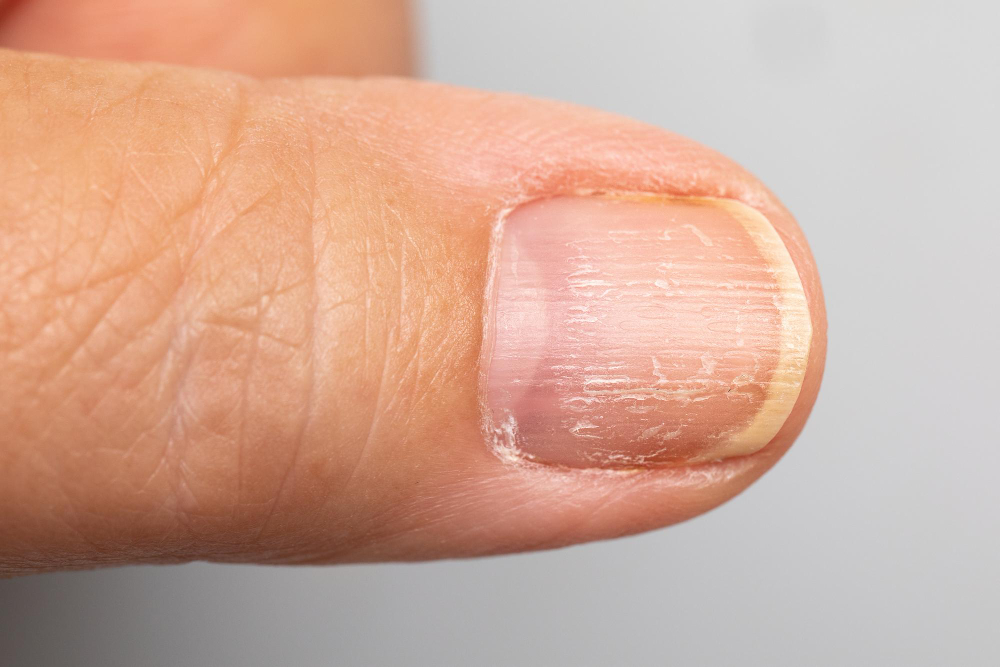
The distinction matters for making sense of everything else. A mark on a nail does not move within the nail – it moves with the nail, out toward the end, at a fixed rate, and then it is cut off. A ridge, a dent or a change in thickness is a fixed feature of a moving object.
It is extrusion rather than growth, and the nail bed underneath is a track rather than a source.
Fingernails Grow Two to Three Times Faster Than Toenails
This is the sort of asymmetry nobody notices until it is pointed out, and then it is obvious from how often each needs cutting.
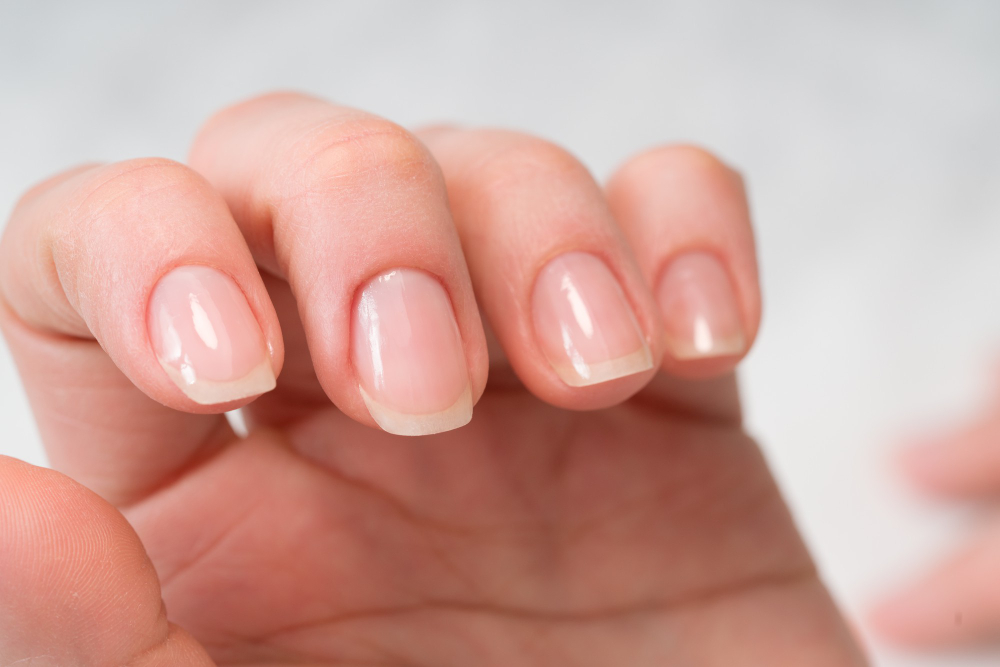
A fingernail advances a few millimetres a month and replaces itself completely in roughly six months. A toenail manages a fraction of that and takes somewhere between a year and eighteen months to replace itself entirely.
The reasons are not fully pinned down but they point the same way. Fingers are better supplied with blood, they are warmer, and they are subjected to constant minor knocks and pressure, all of which are associated with faster production. Toes sit in shoes, cooler and less used.
It also means that anything affecting your nails shows up on your hands long before it shows on your feet, and lingers on your feet long after your hands have grown it out.
And the Middle Finger Beats the Thumb
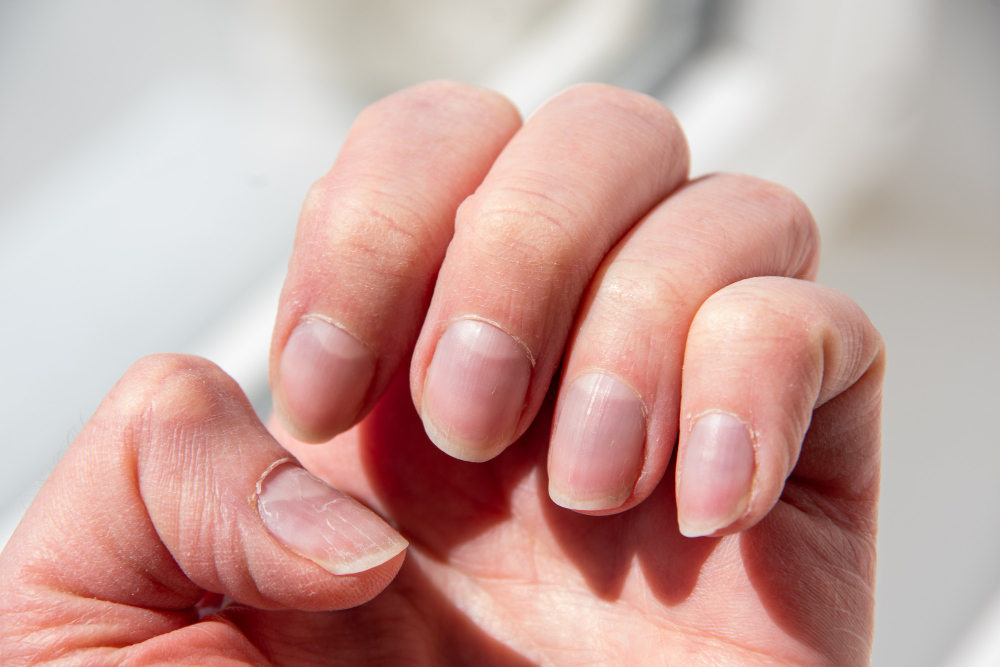
The variation does not stop at hands versus feet. Within one hand the five nails grow at measurably different rates.
The middle finger’s nail is the fastest. The thumb and the little finger are the slowest. The others fall in between, and the ordering follows the length of the digit – longer finger, faster nail.
Why length should predict it is not settled. Better blood supply to a longer digit is the usual suggestion, and more frequent use and contact may play a part. The dominant hand’s nails also run slightly ahead of the other hand’s, which fits the idea that use matters.
Nobody notices this because everybody cuts all ten at once. If you stopped, the shape of your hand would gradually become a bar chart of blood supply.
They Are Not Armour, They Are Counter-Pressure
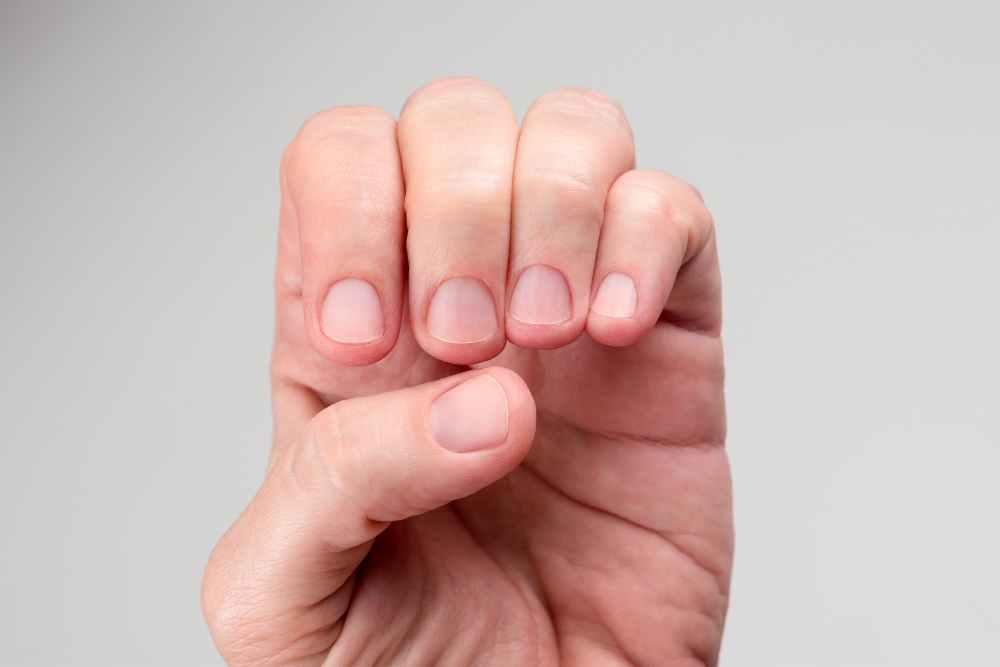
Here is the central point, and it inverts the explanation almost everybody carries: the nail is not primarily protecting the fingertip. It is giving the fingertip something to push against.
Press a finger onto a small object. The soft pad flattens and spreads around it, which is what creates a large area of contact and a lot of grip and sensation. But a pad with nothing behind it would simply squash and keep squashing, and the force would dissipate.
The nail is a rigid plate on the opposite side that stops the tissue going anywhere. The pad is compressed between the object and the plate, so the pressure is concentrated rather than absorbed, and the finger can apply precise force to something very small – the edge of a page, a single hair, a splinter, a coin on a flat surface.
Remove the nail and the problem is not that the finger is exposed. The problem is that the finger has become vague. It can no longer bring force to a point, and fine manipulation goes with it.
Which Is Why Primates Have Nails and Not Claws
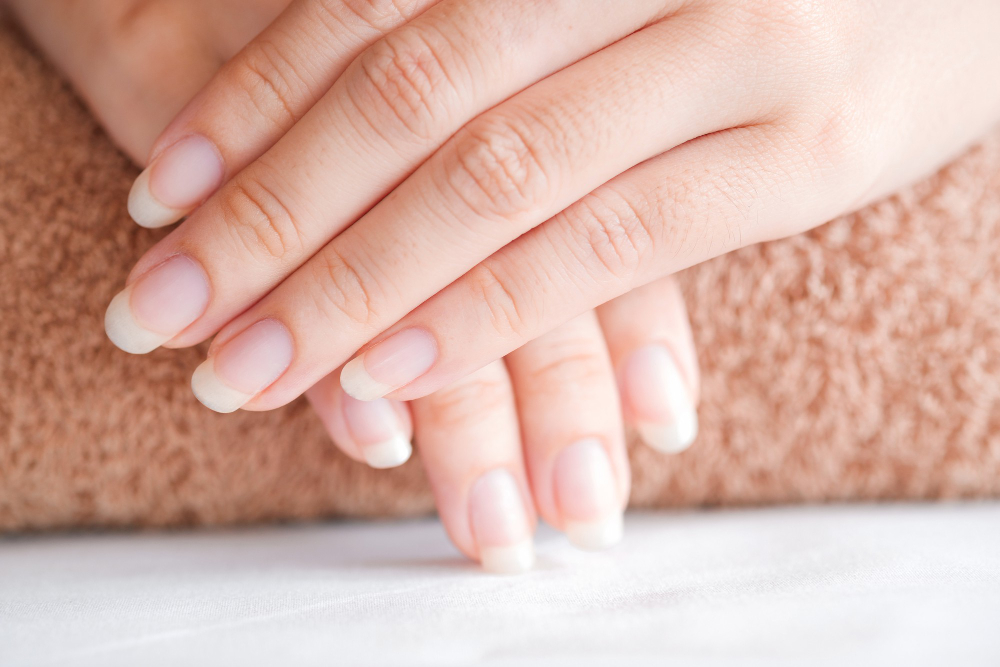
Follow the counter-pressure argument and a much older pattern falls into place. Flat nails are not a degraded claw; they are a different solution, and the group that has them is the group that handles things.
A claw is a tool in its own right – it digs, hooks, climbs and kills, and it projects well beyond the flesh. It is also hopeless at the job above, because it holds the fingertip away from whatever is being touched and there is no broad soft pad behind it to compress.
Nails do the opposite. They retreat to the back of the digit, present no point, do nothing by themselves, and exist entirely to make the pad on the other side work better. Trading a tool for a backing plate only makes sense for an animal whose hands are for investigating and manipulating objects rather than for digging or striking.
So the flatness is the adaptation. A nail is what you get when a claw stops being the useful end of the finger and the fingertip takes over.
The White Crescent Is the Factory Showing Through
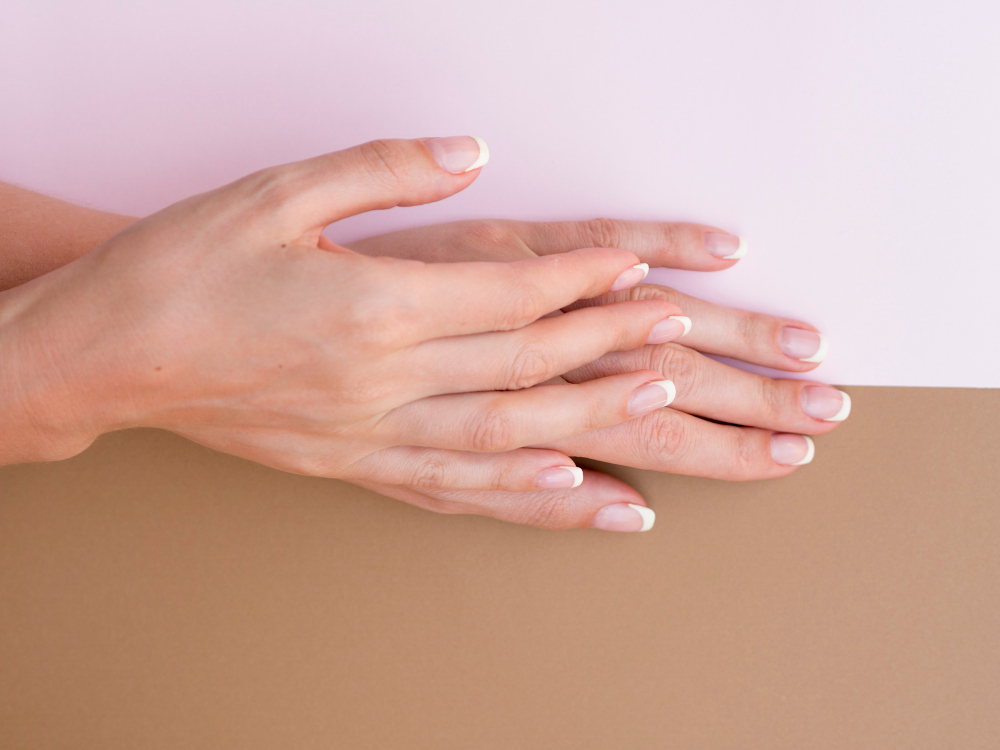
The pale half-moon near the base of the nail is not a different kind of nail and it is not an air pocket. It is the front edge of the living strip, visible through the nail that has just left it.
Nail is translucent, and what gives the rest of it a pink cast is the blood supply in the bed beneath. At the very back the tissue underneath is the production strip itself, which is thicker and denser and does not let that colour through, so that section reads as pale.
Which is why the boundary is curved: it is tracing the leading edge of the strip, and the strip is curved.
It also explains why not everybody has visible ones on every finger. The amount showing depends on how far forward the strip sits relative to the skin fold, and on the little finger it is frequently covered altogether. A missing half-moon is not a missing part – it is the same part, hidden.
Six Months of Travel Means the Nail Carries a Record
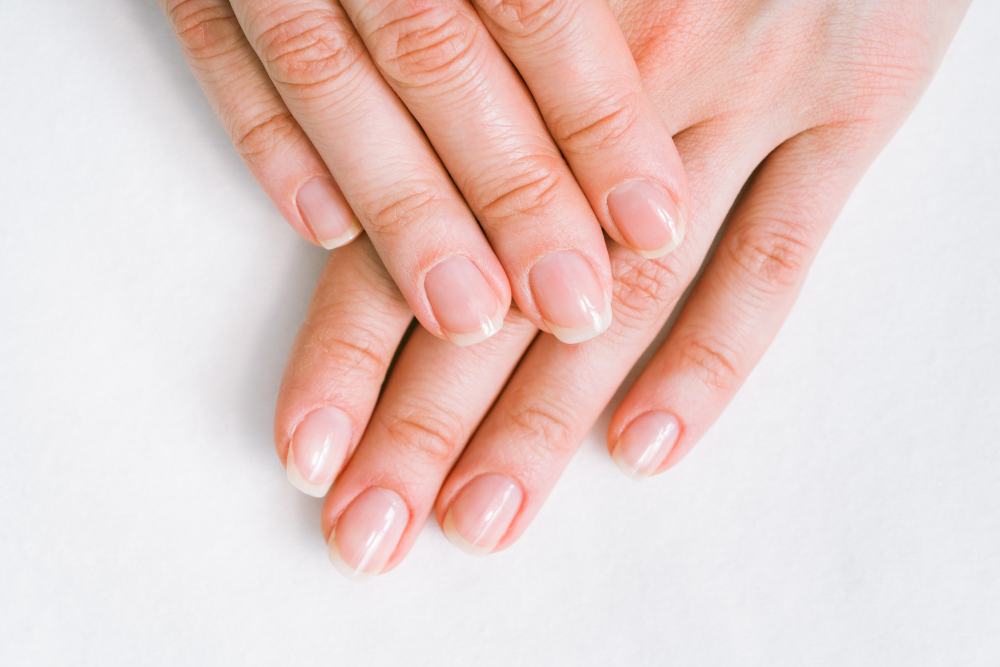
A structure that takes half a year to pass from base to tip is, by construction, a slow-moving log of whatever was happening at the base when each part of it was made.
Anything that interrupts the production strip leaves a mark across the width of the nail, and that mark then travels outward at a steady few millimetres a month. Squeeze the base of your thumb hard enough and you may see the consequence emerge, as a line, weeks later and some distance from where you did it.
This is one of the oddest properties of the thing. Most of the body repairs its damage and erases it. The nail cannot repair the visible part, because the visible part is not alive, so it carries the damage out to the end and disposes of it by growing past it.
Which gives you a rough clock. The distance between a mark and the base, divided by a few millimetres a month, tells you approximately when the mark was made – and nothing here is a reason to go looking for marks or to draw any conclusion from one.
And They Do Not Grow After Death
The old belief that nails keep growing after death is one of the more durable pieces of folklore about the body, and it has a tidy explanation.
Nail production requires living tissue doing active work, and that stops when everything else does. Nothing is manufactured.
What does happen is that the surrounding skin dries and retracts. Skin that has shrunk back from the base and from the sides exposes more of the nail that was already there, and the nail looks longer against the finger because less of it is covered. The same retraction makes hair appear to have grown.
It is a good example of a recurring error: a change in what is visible being read as a change in what is there. The nail did not advance. The thing that was hiding part of it got out of the way.
Like our content? Follow us for more.
