

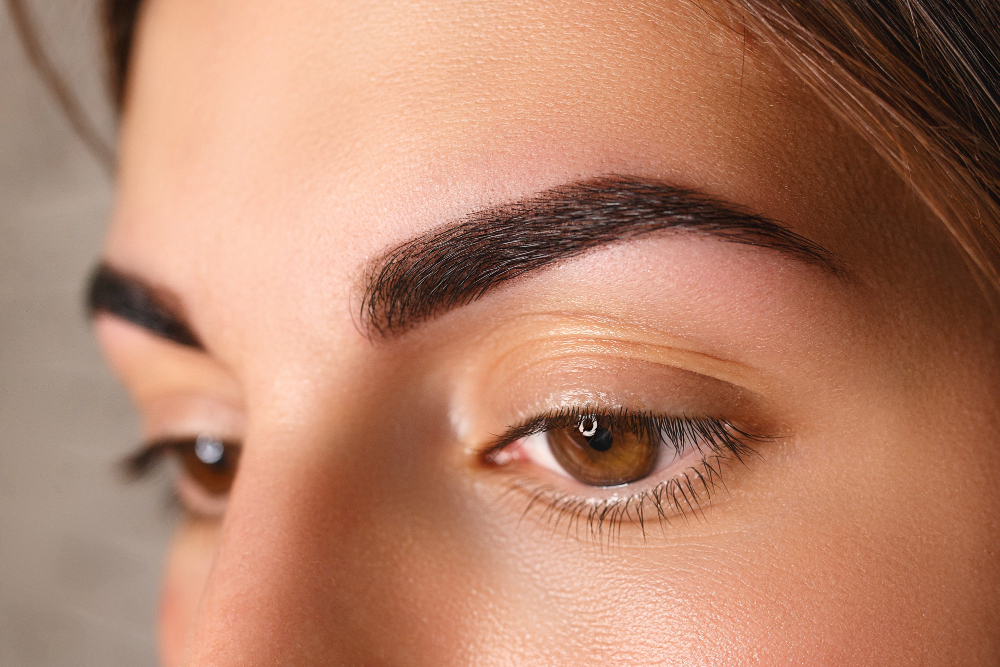
The Sweat Answer Is Real and Is Not the Main One
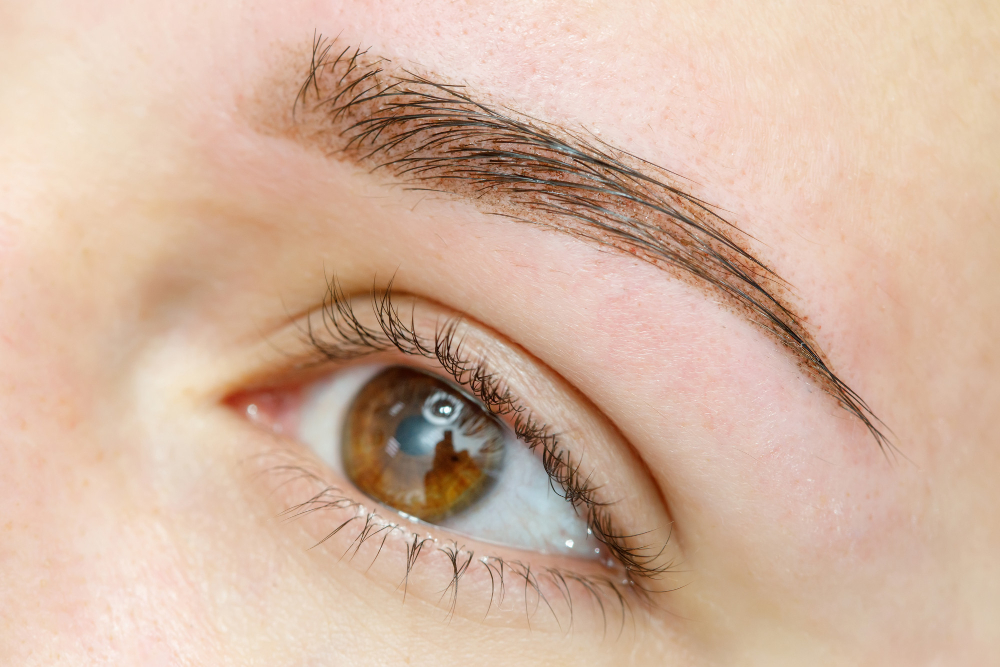
Eyebrows do divert liquid. That part of the story is correct, and it is the only part most people have been told.
Sweat running down the forehead and rain landing on it both arrive at a ridge of angled hair, and they are routed sideways around the eye socket rather than straight down into the eye. The hairs lie in a direction that encourages this, outward and slightly downward toward the temples. They also catch dust and loose debris before it reaches the eye.
So the function is real. The difficulty is that it is a small benefit obtainable by much simpler means, it does not explain why the structure is so precisely controlled by muscle, and it does not explain the thing anybody who looks at a face already knows: that eyebrows are constantly moving, and that the movement means something.
A rain gutter does not need to be able to change shape forty times a minute.
Like our content? Follow us for more.
Remove Them From a Photograph and Nobody Knows Who It Is
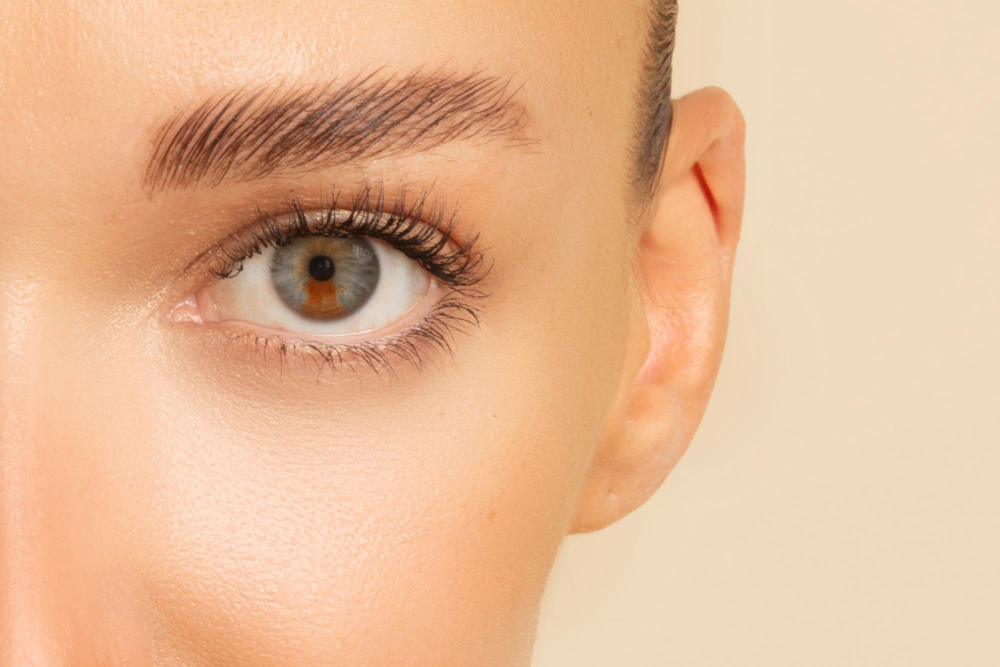
The finding that reframed the subject is simple to describe and quite startling. Take photographs of faces people know well, digitally remove features, and ask people to identify them.
Remove the eyes and recognition drops. Remove the eyebrows instead and recognition drops further. The eyebrows turned out to matter more to identifying a known face than the eyes did.
Nobody predicted that, including the people who ran it, and it is counterintuitive in the strongest way – we describe eyes as the most important thing in a face, we write about them, we look at them when we talk. And a face with its eyes removed is more identifiable than the same face with its eyebrows removed.
The practical demonstration is available to anybody. A photograph of a familiar face with the brows edited out does not look like somebody with no eyebrows. It looks like a stranger, and the effect is immediate and uncomfortable.
They Are the Most Mobile Part of Your Face

The reason they carry so much information is that they are the part of the face that moves most and most visibly.
Each eyebrow is operated by several muscles pulling in different directions: one set lifts, another pulls down, another draws the inner ends together. Between them they can raise one end, raise both, lower both, flatten the arch, pull the inner ends into a knot, and do several of these in combination.
Every one of those positions reads as something, and the reading is consistent enough across completely unrelated populations that it is treated as near-universal. Raised means surprise or enquiry. Lowered and drawn together means anger or concentration. Inner ends up and outer ends down means distress.
And it is all happening on a high-contrast line against a flat background, which makes it readable from much further away than anything the eyes themselves are doing. The eyebrow is a large, dark, moving marker sitting on a pale, still forehead – which is close to an ideal design for a signal meant to be seen across a clearing.
There Is a Greeting Almost Everybody Makes and Nobody Names
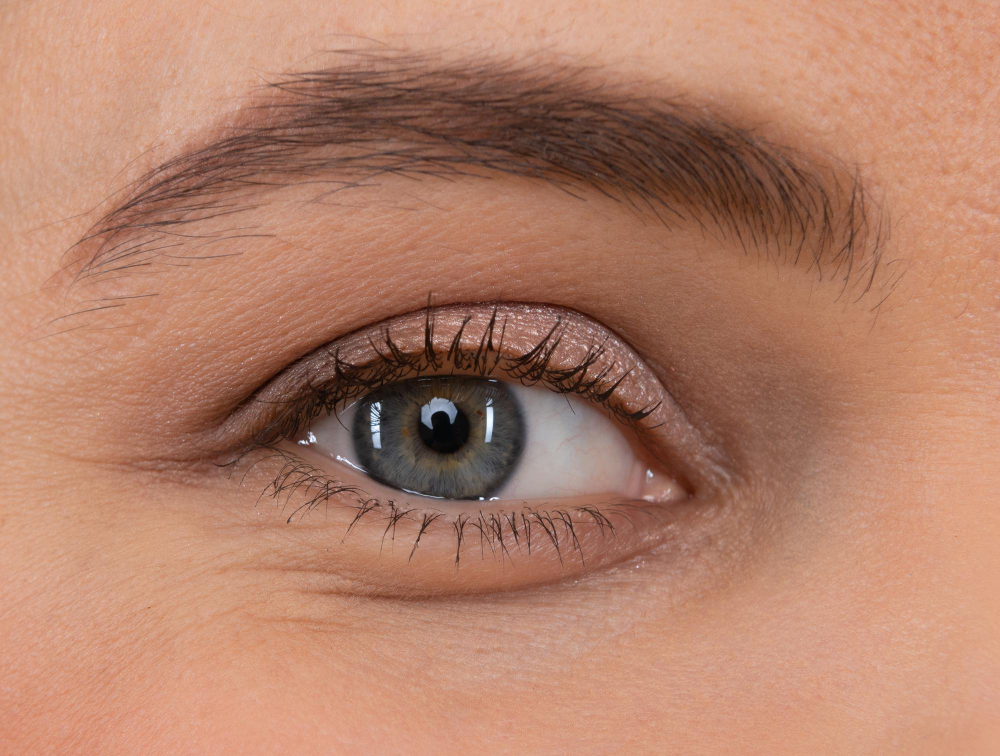
Watch two people who know each other catch sight of one another across a room. Both eyebrows go up, fast, and come back down – the whole thing lasts about a sixth of a second.
This has been filmed in communities with no contact with one another, on several continents, and it appears everywhere it has been looked for. It is a recognition signal, it is made and received without anybody thinking about it, and it means roughly I have seen you and you are not a threat.
Almost nobody knows they are doing it. It has no name in ordinary speech, there is no word for it in English, and a person can perform it tens of thousands of times without ever noticing. If you deliberately suppress it when greeting somebody, the greeting feels wrong to both of you and neither will be able to say why.
A signal that is universal, invisible to its users and performed with the eyebrows is a strong hint about what the eyebrows are for.
Your Ancestors Had a Bony Ridge Instead, and Losing It Is the Point
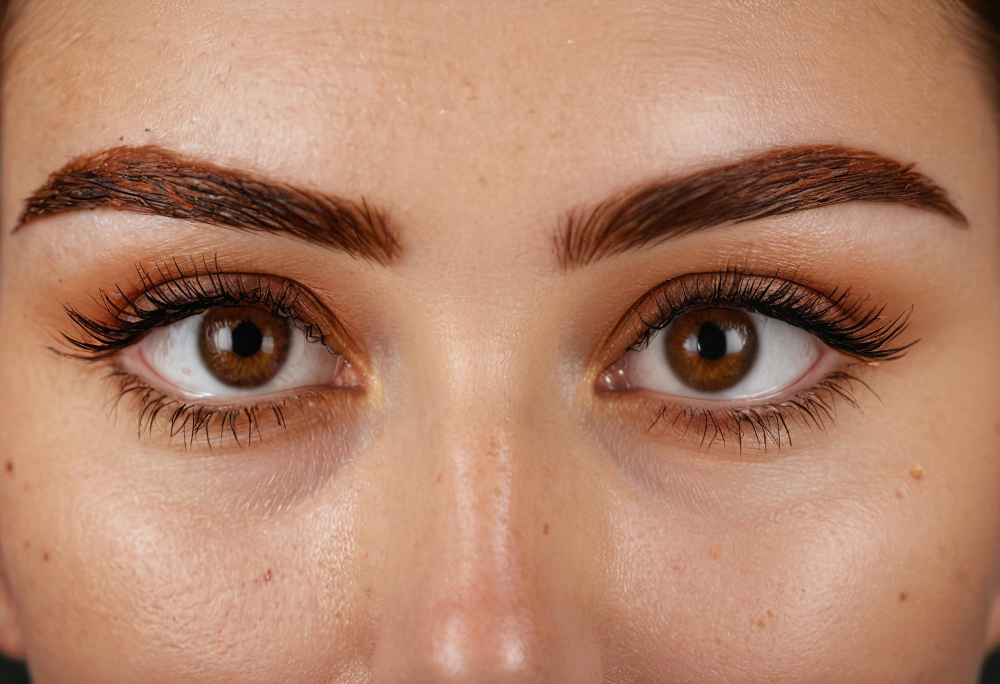
Archaic humans had heavy continuous bone above the eyes – a solid ridge across the brow with no flat forehead behind it. Modern humans have a flat forehead and mobile hairy brows instead, and the swap looks deliberate.
The obvious assumption is that the ridge was structural, holding the face together against heavy chewing loads. Modelling work on archaic skulls does not support that: the ridge is substantially more bone than those loads require, so something else was keeping it.
The argument that has gained ground is social. A heavy fixed ridge is a fixed object. It cannot be raised, lowered or tilted, and skin stretched over it cannot do much either. Flatten the forehead and the brows become free to move independently and through a far greater range, and a face capable of fine graded signalling becomes possible.
On that account the modern forehead is not an absence of something. It is the thing that had to be removed so the eyebrows could work.
Which Is Also Why Drawn-On Eyebrows Work at All
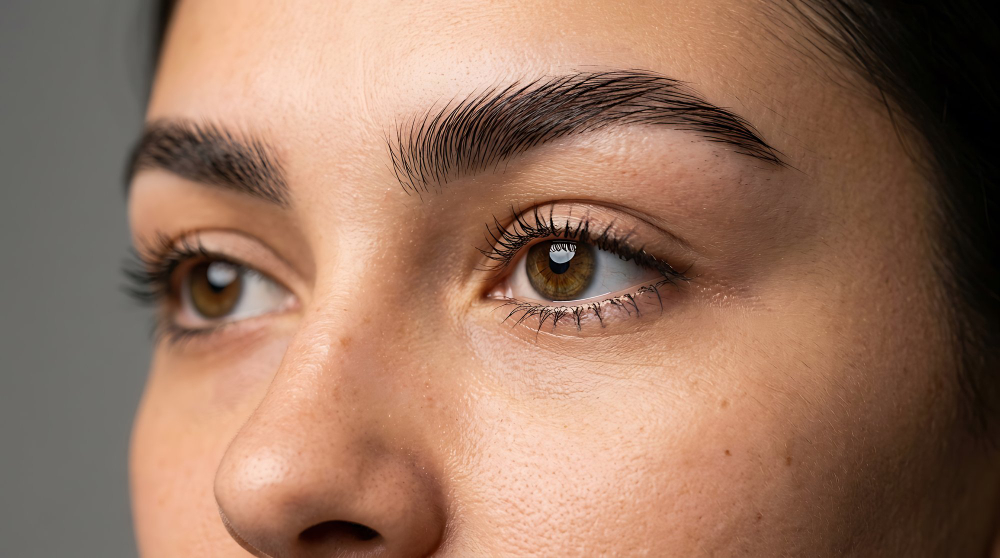
If the eyebrow’s job were protective, a line drawn on the skin would be useless. It diverts nothing, catches nothing and keeps nothing out of anybody’s eye.
And yet a drawn or tattooed brow works completely as far as other people are concerned. The face reads normally, the expressions read normally, and observers do not experience the uncanny wrongness that a photograph with the brows edited out produces.
That is a clean separation of the two functions. Whatever the physical hair is doing about rainwater, the thing other people are responding to is a dark line in a particular place at a particular angle – and a line is a line, whether it grew there or was put there.
It also explains why the practice is ancient rather than modern. Painting, darkening and reshaping the brows turns up across a very long span of recorded history and in a great many unconnected places, which is what you would expect of something that visibly alters how a face is read rather than merely how it is decorated.
They Stop Growing on Purpose, Which Is Why They Stay the Same Length
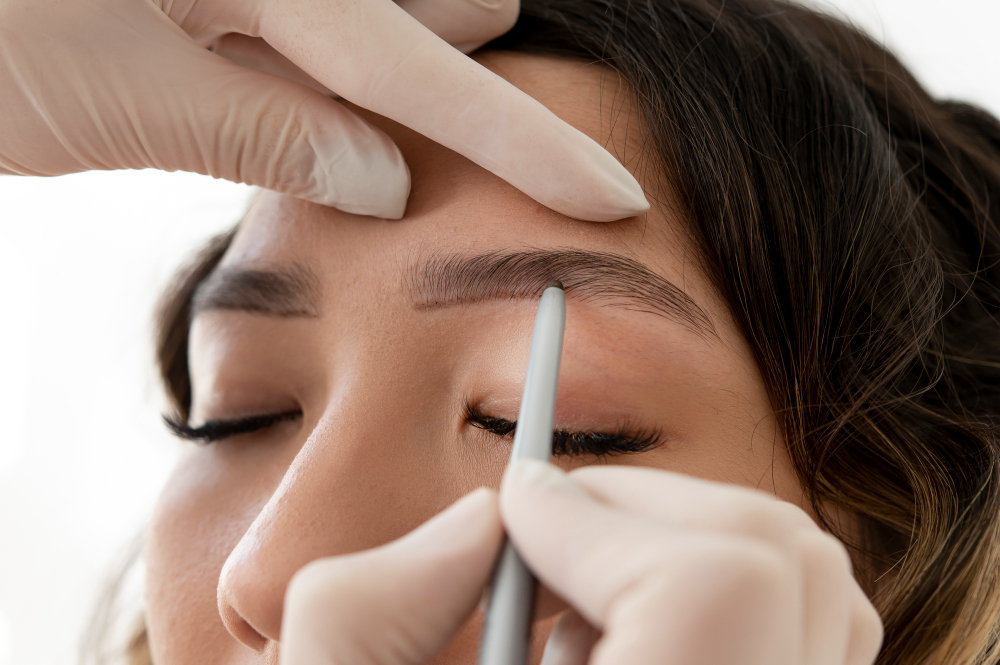
Here is a fact available to anybody who has ever had a haircut and never thought about it: your eyebrows do not need cutting.
Scalp hair grows for years before it is shed, which is why it reaches whatever length you let it. Eyebrow hairs grow for a matter of weeks and then stop, sit for a while and fall out, and the follicle starts again. The growing phase is short by design.
That short cycle is the whole reason the shape is stable. A structure whose job is to present a consistent, readable outline cannot be allowed to keep growing – a signal that changes shape continuously over years is not a signal. So the hairs are given a brief growth window and a fixed terminal length.
It also explains something people only discover by accident: an over-plucked or damaged eyebrow grows back on a timetable of weeks rather than the days a trimmed beard takes or the months a haircut takes.
One of Them Moving Alone Is a Separate Signal
Raise both eyebrows and you have signalled surprise or greeting. Raise one and you have signalled something entirely different, and everybody knows which.
The single raised brow reads as scepticism, appraisal or amusement – a deliberate withholding of agreement. It is a distinct and widely understood expression, and it is produced by driving one side of a paired structure independently of the other.
Not everybody can do it well, which is itself revealing. The muscles are present in everybody but the independent control is not evenly distributed, and people who cannot produce it find it properly difficult rather than simply unpractised.
Which adds a dimension to the signalling system. Most facial signals are symmetrical, because most are produced by paired muscles firing together. The eyebrows are one of the few places where breaking the symmetry is itself a message, and that roughly doubles what a single pair of structures can say.
Which Is Why the Fashion in Them Swings So Violently
Over the past century the fashionable eyebrow has gone from a pencil-thin arch drawn well above the natural line, to a heavy natural shape, to a thin one again, to a thick squared one, and round again – a cycle of reinvention matched by almost no other part of the body.
Nobody redesigns the shape of their nostrils by the decade. The reason the eyebrows get this treatment is that they are the part of the face carrying the most social information per square centimetre, and altering them changes how the whole face reads rather than just how one feature looks.
It is the same mechanism as the photograph experiment, used deliberately. Move the line, change its weight or change its angle, and you have adjusted the thing observers are using to identify and interpret the face.
Which brings the subject back round. A structure explained to everybody as a rain gutter turns out to be the most mobile, most watched, most readable and most frequently redesigned thing on the human face – and the rain, while real, is the least of it.
Like our content? Follow us for more.
