

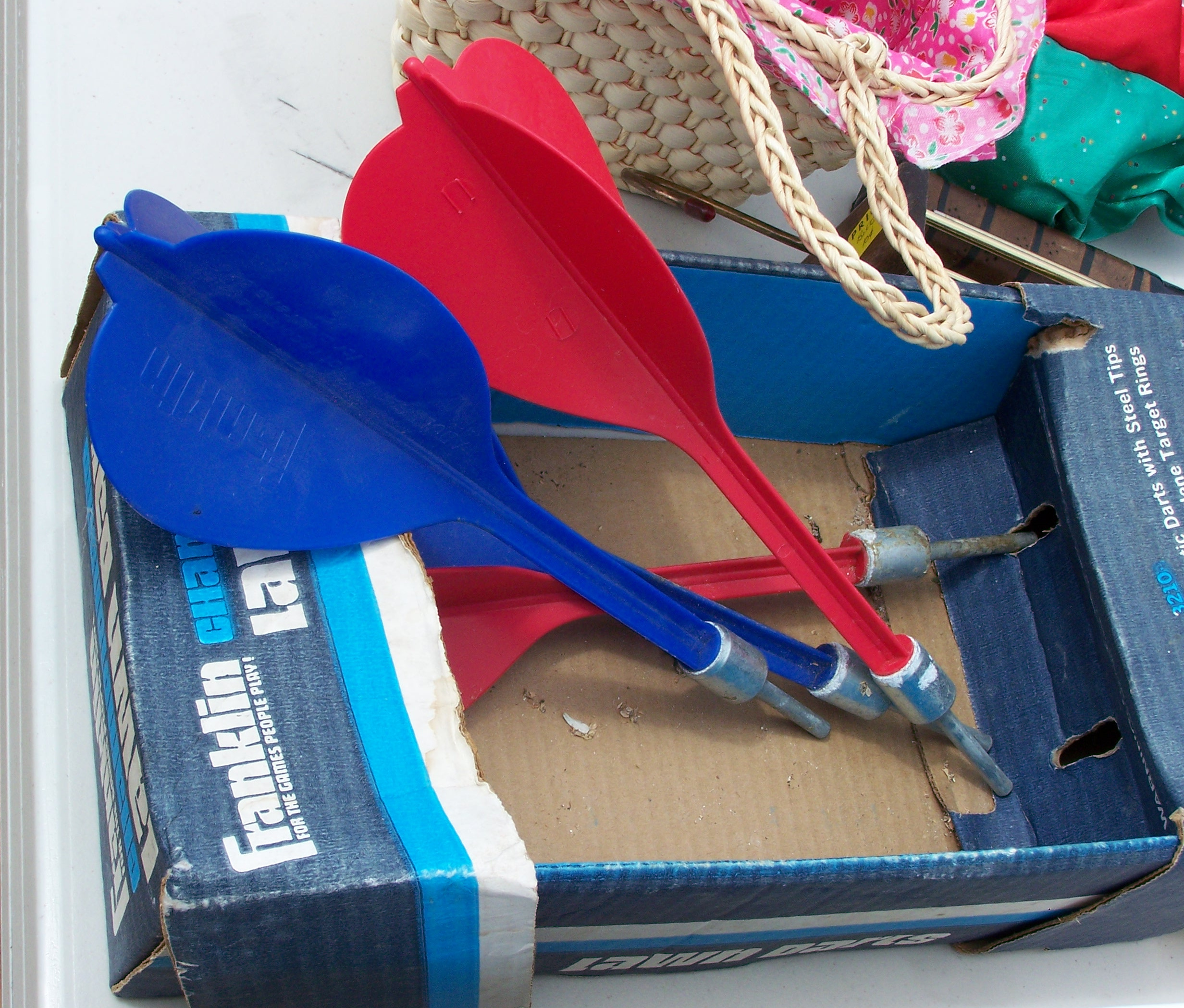
The object itself is the thing that stops people. A shaft about a foot long, a set of plastic fins at one end for stability, and at the other a weighted metal point. You stood in one spot, lobbed it in a high arc, and it came down nose-first somewhere in the general vicinity of a ring laid on the grass. The scoring was the easy part.
It was sold in the United States for roughly three decades as an ordinary summer game, stocked alongside horseshoes and badminton sets, and millions of households had one in the garage. What makes the story worth telling is not that it was eventually banned. It is how the ban actually happened, because the mechanism was almost absurdly indirect, and it says something about how American product regulation really works.
What the Product Was
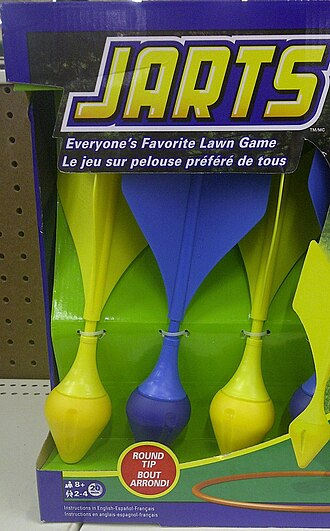
Mechanically, a lawn dart is a very old idea executed in modern materials. It is an aerial projectile with a weighted nose and tail fins, which is the same arrangement that makes a dart, an arrow or a mortar round fly point-first. The fins at the back produce more drag than the nose, so the heavy end leads and the thing arrives tip-down whichever way you release it.
That is precisely what made it a good game and precisely what made it a problem. The design guarantees that the pointed end hits the ground first, with the whole mass of the dart behind it, after a fall from the top of a high arc. The energy at impact is not large by the standards of serious projectiles, but it is concentrated into a very small area, which is the definition of a penetrating impact.
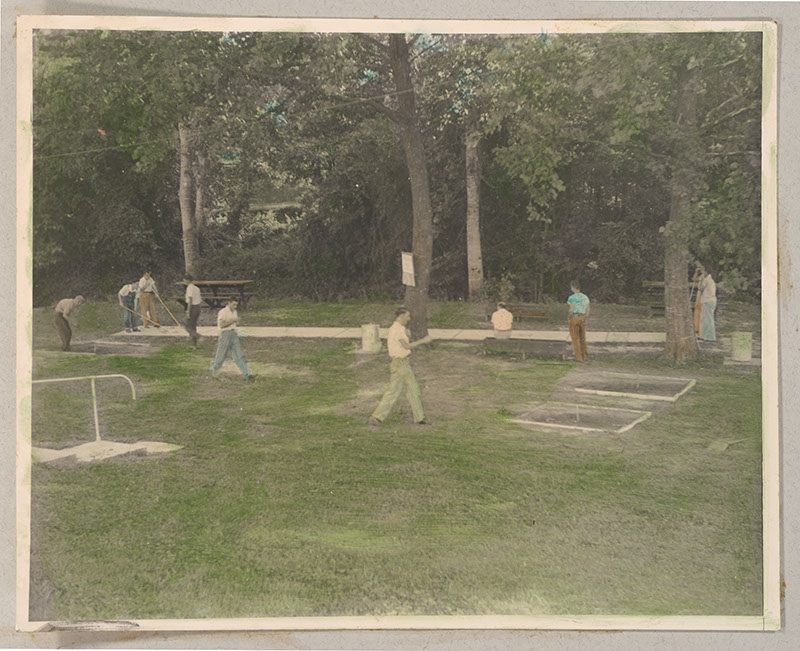
The game was played by two or four people throwing simultaneously from opposite ends, which is also how horseshoes is played, and that arrangement is fine when the projectile travels at knee height along a known line. It is a different proposition when the projectile goes up out of sight and comes down somewhere.
The critical practical fact is the one everybody who owned a set remembers: in flight, at the top of the arc, against a bright sky, a lawn dart is very hard to see.
Like our content? Follow us for more.
Why It Took So Long
It is tempting to read the thirty-year run as regulatory failure, and that is not quite right. The sequence makes sense if you follow the incentives.
American consumer product regulation is, for the most part, reactive and evidence-led. An agency does not get to prohibit a category because it looks dangerous; it generally has to establish a pattern of harm, and then it has to clear a procedural bar that is deliberately set high, because the power to remove a lawful product from commerce is a serious one.
For a product like this the evidence accumulates slowly and diffusely. Injuries happen in backyards, are treated at scattered emergency rooms, and are coded by injury type rather than by product. There is no single incident large enough to force the issue, and no concentration of harm in one place. Meanwhile millions of sets are sold each year to buyers who are satisfied with them, and the manufacturers have a straightforward and reasonable-sounding answer available: the product is safe when used as directed by adults, and the problem is misuse.
That answer is strong because it is partly true, and it put the regulatory conversation onto the one piece of ground where the industry could win – supervision and instructions – for a very long time.
The First Move: Reclassification, Not Prohibition

The regulatory response, when it came, did not begin with a ban. It began with a relabeling, and the relabeling is what eventually did the damage.
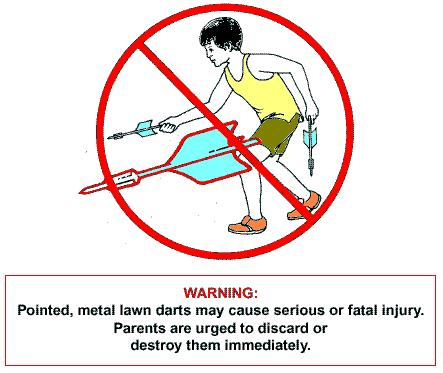
The agency’s position became that the product was not a toy. It was to be marketed and sold as an adult game, not as a children’s product, and the packaging was required to say so: warnings about the pointed metal tip, instructions that it was not for use by children, and a clear statement that it was to be kept away from them.
On its face this looks like a weak compromise, and at the time many people read it that way. In practice it created the condition for everything that followed, for a reason that is purely procedural.
Once a product is formally designated as not-for-children and carries a label saying so, the manufacturer has made a representation. If the product is then displayed in the toy aisle, pictured on the box with children playing it, or sold in packaging that reads as a family game, the manufacturer is not merely selling something hazardous. It is selling something in a manner inconsistent with its own mandated labeling.
That is a far easier thing to act on than dangerousness, because it does not require re-litigating whether the product is safe. It only requires comparing the box to the rule.
The Line of Small Print That Mattered
And this is where the story turns on wording.
The practical problem with the not-a-toy designation was that nobody enforced it at the shelf. Sets continued to be sold in general merchandise stores in packaging that showed a smiling family on a lawn. The age warning was present, in small type, on a box whose entire design communicated the opposite message. Retailers stocked it where the other outdoor games were, which in most stores was adjacent to or indistinguishable from the children’s section.
So the label created a documented gap between what the product was legally required to be and what it was actually being presented as – and that gap, accumulating across every box on every shelf, is what gave the eventual prohibition its footing. The argument was no longer only that the darts caused injuries. It was that the one control relied upon to prevent those injuries, the label, was demonstrably not working, because the product was still reaching children in spite of it and sometimes because of how it was displayed.
When a hazard is addressed by a warning, and the warning can be shown to have failed in practice rather than in theory, the remaining options narrow sharply. There is no second, stronger label to try. The warning was the mitigation, and once the mitigation is discredited the only remaining control is removal.
The ban, when it arrived, was in that sense the conclusion of an argument the label itself had started.
Why the Misuse Defense Collapsed
The manufacturers’ core defense throughout was misuse: used as directed, by adults, with the area clear, the product was safe.
That defense is coherent, and it failed for a reason worth understanding, because it generalizes well beyond this product.
A safety case that depends on every user following instructions every time is only as good as the realistic compliance rate – and for a backyard game bought by families, kept in a garage for years, and brought out at a cookout where several people have been drinking and there are children in the yard, the realistic compliance rate is not close to one. The instructions are read once, by the purchaser, in a store. They are not present at the moment of use.
Regulators came to treat this as a design question rather than a behavior question. If the foreseeable use of a product includes the conditions under which it causes serious harm, then the hazard is in the product, not in the user. A design that is safe only under supervision, in a cleared area, among sober adults, is a design whose safety depends on circumstances the designer cannot supply.
And there was no way to redesign out of it, which is the final nail. The weighted point was not an incidental feature that could be padded or blunted. It was the entire functional principle of the thing: it had to come down nose-first and stick in the grass or it was not the game. Blunt the tip and you have a different product. There was no safe version to retreat to.
What the Case Established

The lawn dart prohibition became a reference point in American product safety for three ideas that have been applied repeatedly since.
The first is that labeling is a control with a measurable failure rate, not a permanent answer. A warning that can be shown not to prevent the harm it was imposed to prevent becomes evidence for stronger action rather than a defense against it.
The second is that how a product is merchandised is part of the product. A box, an aisle position and a photograph on the packaging are representations, and they can contradict the legal classification of the thing inside.
The third is that when a hazard is inseparable from a product’s core function, there is no engineering compromise available, and the regulatory choice collapses to permit or prohibit. Most product disputes are not like this – most end in a guard, a interlock, a thicker gauge, a different material. This one had nowhere to go.
The Honest Summary
So the end of lawn darts was not brought about by a single terrible event, and it was not brought about by anybody deciding the game looked dangerous. It was brought about by the slow accumulation of a documented contradiction: a product legally classified as unsuitable for children, carrying a label saying so, being sold in packaging and in store locations that presented it as a family game, and continuing to reach children anyway.
The label was supposed to be the fix. Its visible failure became the argument for removal, and because the hazard was the product’s whole operating principle, removal was the only option left.
It is a strange thing to realize about an object remembered mainly as a summer afternoon on a lawn. The thing that finished it was not the metal point. It was the sentence printed next to it, and the fact that nobody in the chain between the factory and the backyard behaved as though that sentence meant anything.
Like our content? Follow us for more.
