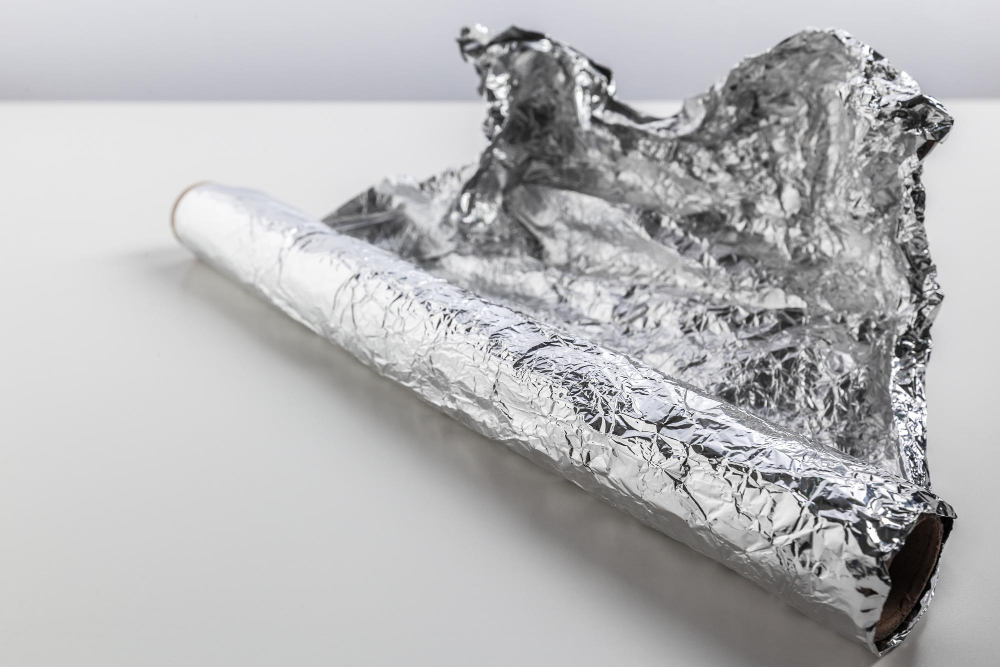
On each end of a box of kitchen foil, cling film or greaseproof paper there is a small perforated oval or rectangle, printed with an instruction that nobody reads.
Push both of them in and a tab folds inward into the tube at the centre of the roll. The roll is now held, it turns against the tabs instead of sliding, and it stops leaping out of the box every time you pull a length off.
It has been on these boxes for decades. Essentially nobody uses it.
Why the Roll Comes Out in the First Place
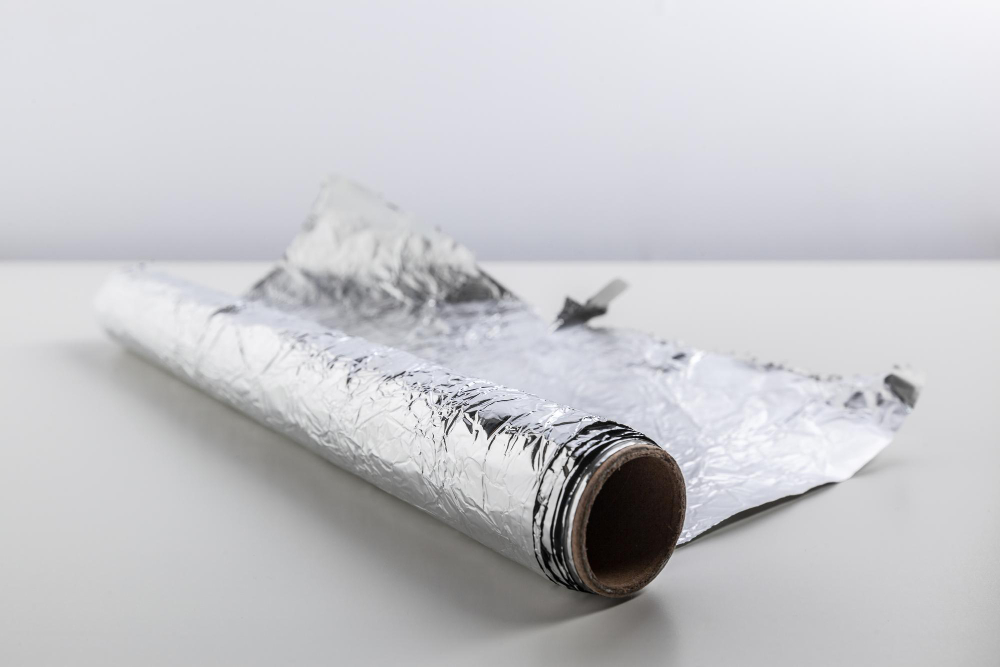
A roll in a box is held only by the box, and the box is a rectangle while the roll is a cylinder, so there is clearance all round it.
When you pull a sheet, you are pulling at a tangent to the roll and the friction between the sheet and the roll drags the whole cylinder in the direction of the pull. There is nothing holding it. It slides along the box, rotates, and at some point the end of it clears the opening and the roll comes out into your hand with a tail of foil attached.
Then you have to feed it back in, find the end, and start again, usually having crumpled a length of it in the process.
The tabs solve this directly. Punched in, each one projects into the hollow core of the roll, which turns the cylinder into something rotating on an axis rather than a loose object in a box. Pull a sheet and the roll spins instead of travelling.
That is the whole mechanism and it works completely.
It also explains why the problem is worse on a nearly empty roll. A full roll is heavy and its own weight resists being dragged; a nearly finished one weighs almost nothing and comes out of the box at the slightest pull, which is why the last few sheets are always the most annoying ones to get.
Like our content? Follow us for more.
The Instruction Is Printed Right There
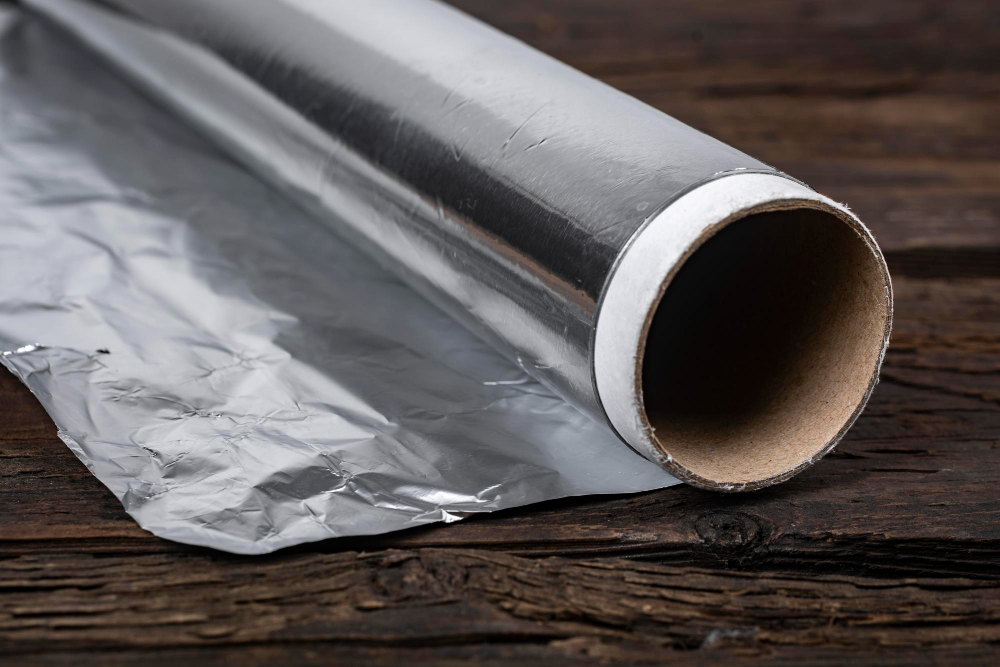
The genuinely odd part is that this is not a hidden feature in the way that most of these are. It is marked.
Most boxes have the tab outlined, perforated, and printed with words – press here, push in to lock, or similar – in small type on the end of the box, which is the one surface nobody looks at because it faces into the cupboard or into the drawer.
So the information has been supplied, by the manufacturer, in writing, on the object, and it has still failed to reach the user. Which tells you something about how little of the printing on packaging is read, and how much depends on the surface it happens to be on.
A thing printed on the front of a box is read. The same thing printed on the end of the same box might as well not be there, because the end of a box is a face that exists to be glued shut and stacked against other boxes.
The Serrated Edge Is Doing More Than You Think
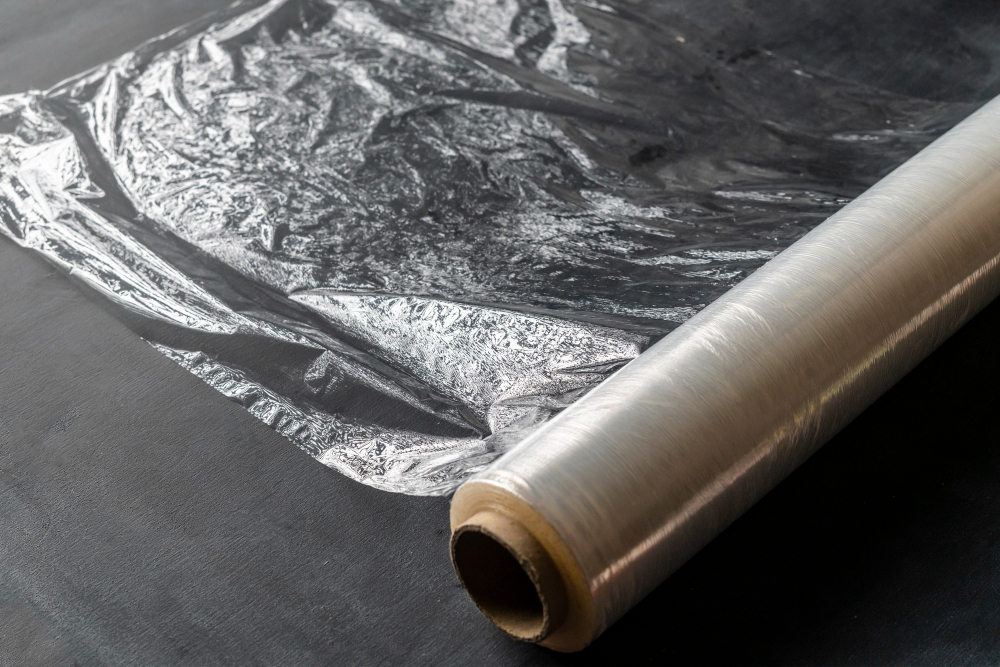
Since you have the box in your hand, the cutting edge is the other part worth understanding.
The metal or plastic serrated strip does not cut by sharpness. The teeth concentrate the tearing force at a series of points, which starts a tear at each one, and the tears then run together across the sheet. It is initiating failures rather than slicing.
This is why the technique matters. Pulling the sheet flat against the whole length of the edge at once works badly, because you are trying to start every tear simultaneously. Pulling from one corner, so the sheet meets the edge at an angle and the tear propagates across, works far better and is what most people arrive at by accident.
It is also why a bent or flattened serrated edge stops working entirely – the teeth are no longer presenting points, and a blunt straight edge cannot start a tear in a material that is designed to resist being pulled apart.
And it is why cling film is harder than foil. Foil tears cleanly because it has essentially no stretch. Film stretches before it tears, which is the property that makes it cling and the same property that makes it fight the cutting edge.
The Box Is Also the Dispenser and That Is Unusual

Worth noticing how much work the carton is doing, because most packaging stops being useful the moment it is opened.
A foil box is not a container that holds a product until you take it out. It is a dispenser that the product lives in permanently, for weeks, being operated several times a day, and it has to keep working the whole time.
So it needs to hold the roll steady, present the end of the sheet where you can find it, let you draw off a variable length, cut cleanly across the full width, and then stay closed – while being made of printed cardboard costing a fraction of the product inside it and surviving being kept in a drawer under other things.
That is a considerably harder brief than a box that simply opens once, and the features it produces are all the ones nobody notices. The tabs. The serrated strip bonded to the lid edge. The lid that folds down and tucks under a flap so the roll is covered. The slight overhang at the front that stops the cut end retracting into the box.
The best test of whether a carton was designed or merely printed is whether the end of the sheet is findable after a fortnight. On a good one it stays where you left it. On a bad one it retracts, sticks to the roll, and you spend a minute with a fingernail every single time – which is the same minute, every time, for the life of the roll.
Cling Film Has Got Worse on Purpose
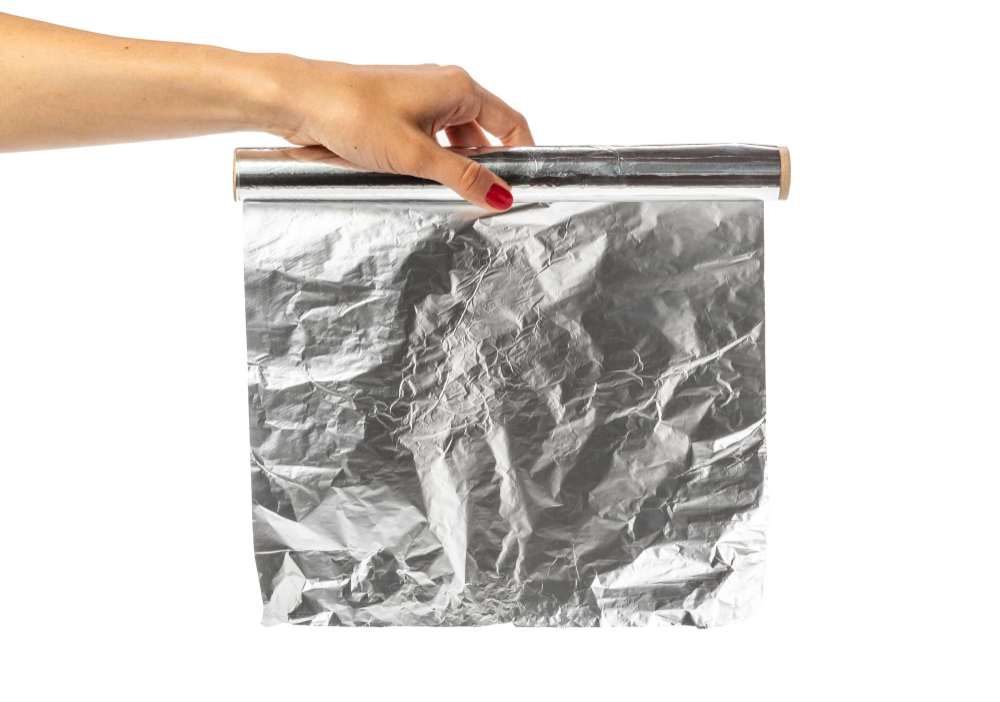
Worth saying, because people assume they are imagining it.
Cling film was historically made from materials that clung aggressively and performed extremely well, and the formulations in general domestic use changed – for reasons involving the chemistry of what was being used, and regulatory and manufacturer decisions about it.
The replacements cling less well, particularly to anything other than itself, and particularly to glass and metal.
So the widely held belief that cling film used to work better is not nostalgia. The material genuinely changed, performance genuinely declined on the measure people care about, and the change was made for reasons that had nothing to do with how well it stuck to a bowl.
It is a rare case of a consumer product getting measurably worse at its job and the reason being defensible, which is a combination that reliably produces complaints that cannot be answered.
Why Packaging Features Go Unused Generally
The locking tab belongs to a large category: features that are present, documented, free to use, and unknown.
The resealable strip on a bag that people tear across instead. The pour spout moulded into a carton that is ignored in favour of cutting the corner off. The measurement marks on the side of a container. The perforated opening that produces a neat edge if used and a mess if not. The tear notch on a sachet.
In each case somebody designed a solution, the packaging carries it, the instruction is frequently printed, and the overwhelming majority of users do it the other way – because the first time they encountered the object they improvised a method that worked well enough, and nothing has ever prompted them to reconsider.
That is the mechanism, and it is why the information does not land. A person who has successfully opened a thousand boxes does not read the box. The improvised method is self-reinforcing precisely because it works, badly, every time.
There is a second factor, which is that the moment of highest motivation to learn is also the moment of lowest patience. Somebody opening a box is in the middle of doing something else – cooking, wrapping, packing a lunch – and the time available to study packaging at that moment is zero. Any instruction that cannot be absorbed in half a second while holding the object with one hand is effectively not there.
Which means the only features that get used are the ones that are obvious from the shape of the thing, and everything requiring a sentence is lost regardless of how clearly the sentence is written.
Which is an argument for occasionally looking at an object you have used for years as though you have never seen it before – a cheap habit that reliably turns up two or three of these.
Go and get the foil out of the drawer and look at both ends of the box.
Push the tabs in. It will never jump out at you again.
And while you are in there, check the baking paper and the sandwich bags, because the same tabs are on most of those boxes too and they have been doing nothing in your drawer for as long as you have owned them.
Like our content? Follow us for more.