The Name Meant Something Literal
Homecoming was not originally about the students. It was about the people who had left.
The point was to bring alumni back – to a specific game, on a specific weekend, with an occasion built around their return – and everything else accumulated on top of that purpose. The parade, the bonfire, the court, the dance: all of it grew out of giving returning graduates something to come back to.
Which is why the whole town was involved rather than just the school. A returning graduate from twenty years earlier was not coming back to see a football game. They were coming back to the place, and the week was constructed to make the place worth coming back to.
In a small town with one high school, that distinction barely existed anyway. The school was the town’s institution, its team was the town’s team, and a Friday night game was the week’s main civic event whether you had a child in the school or not.
That is the thing that has thinned most. The ritual survives in schools; the town-wide part of it is far less common.
Like our content? Follow us for more.
The Week Had a Fixed Structure and Everybody Knew It
Homecoming was a week, not a night, and the sequence was close to standardised.
Spirit days ran through the week, each with its own instruction – a colour, a decade, a costume theme, pyjamas, mismatched clothes – with participation tracked by class year and competed over.
Hall decorating happened overnight or before school, with each class assigned a corridor and a theme, judged on the morning.
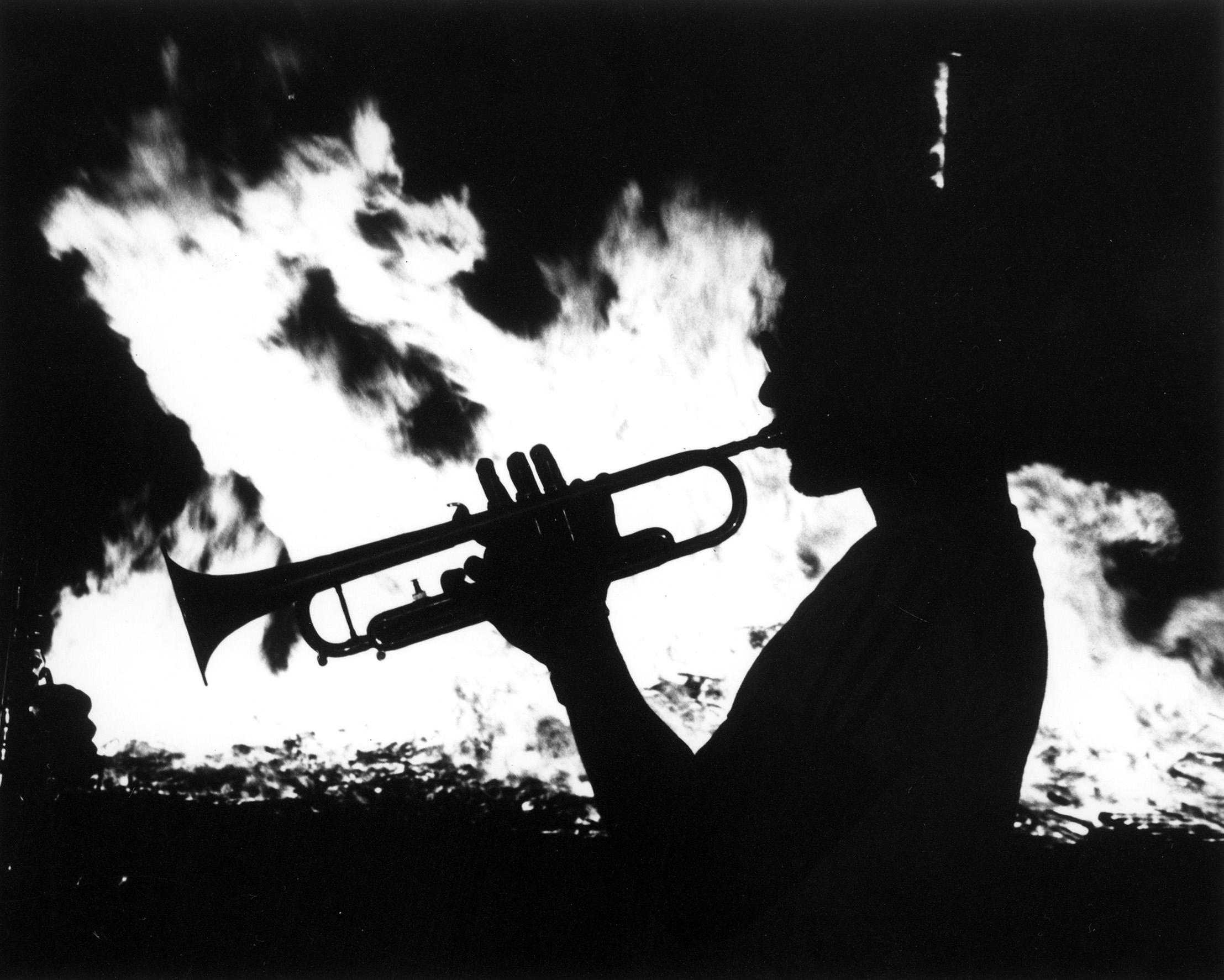
The bonfire came midweek, on school or municipal ground, with the team presented, speeches, and in many places something belonging to the rival school symbolically burned.
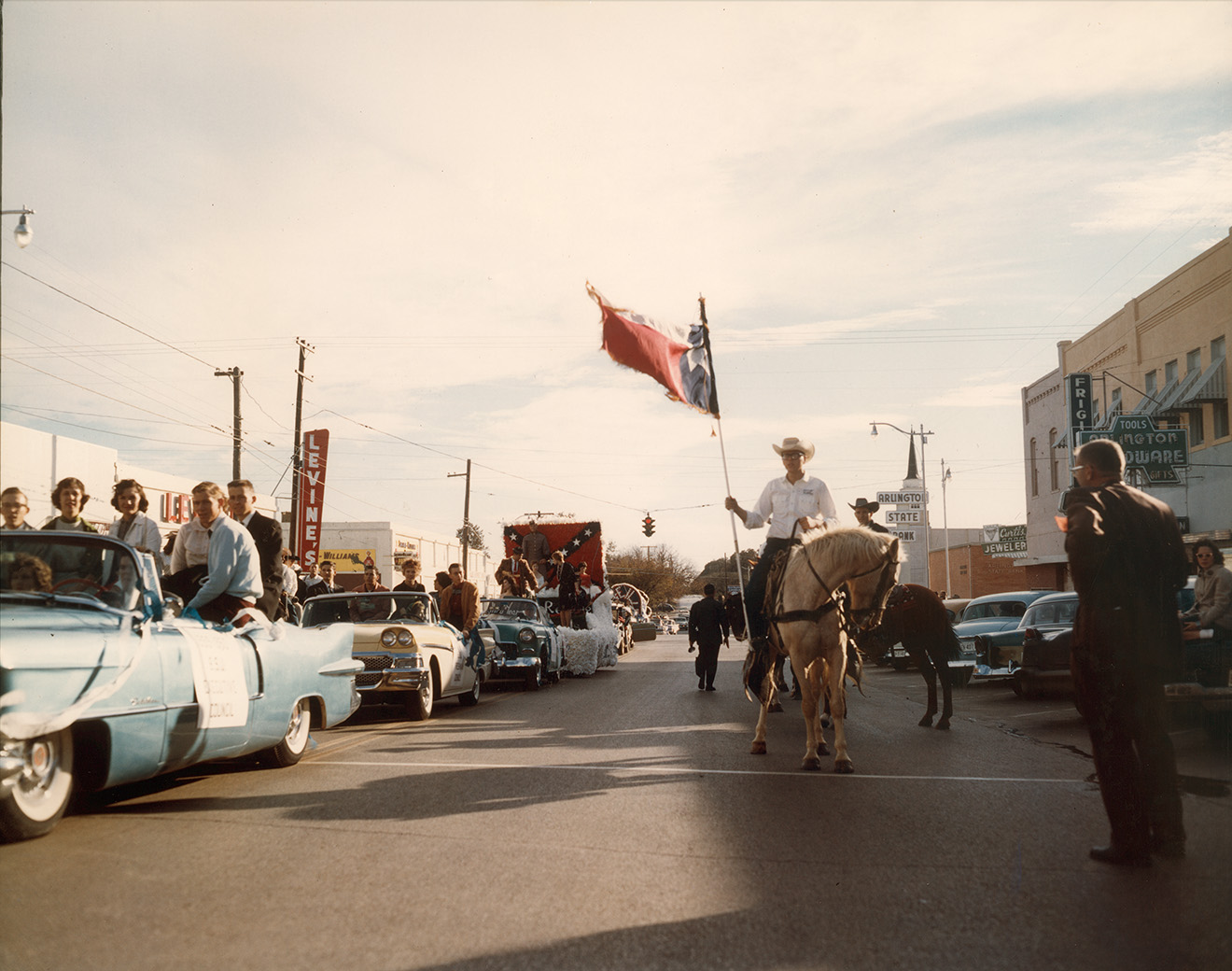
The parade was Friday afternoon – floats built by each class, the band, the team on a flatbed, the court in convertibles, local businesses, fire trucks, and children collecting sweets thrown from the floats.
The game was Friday night. The dance was Saturday.
Five days, with a different obligation each day, all of it voluntary and all of it effectively compulsory.
The Floats Were Built by Teenagers in Somebody’s Barn
The float competition is the part that required the most work and is remembered most fondly, which is not a coincidence.
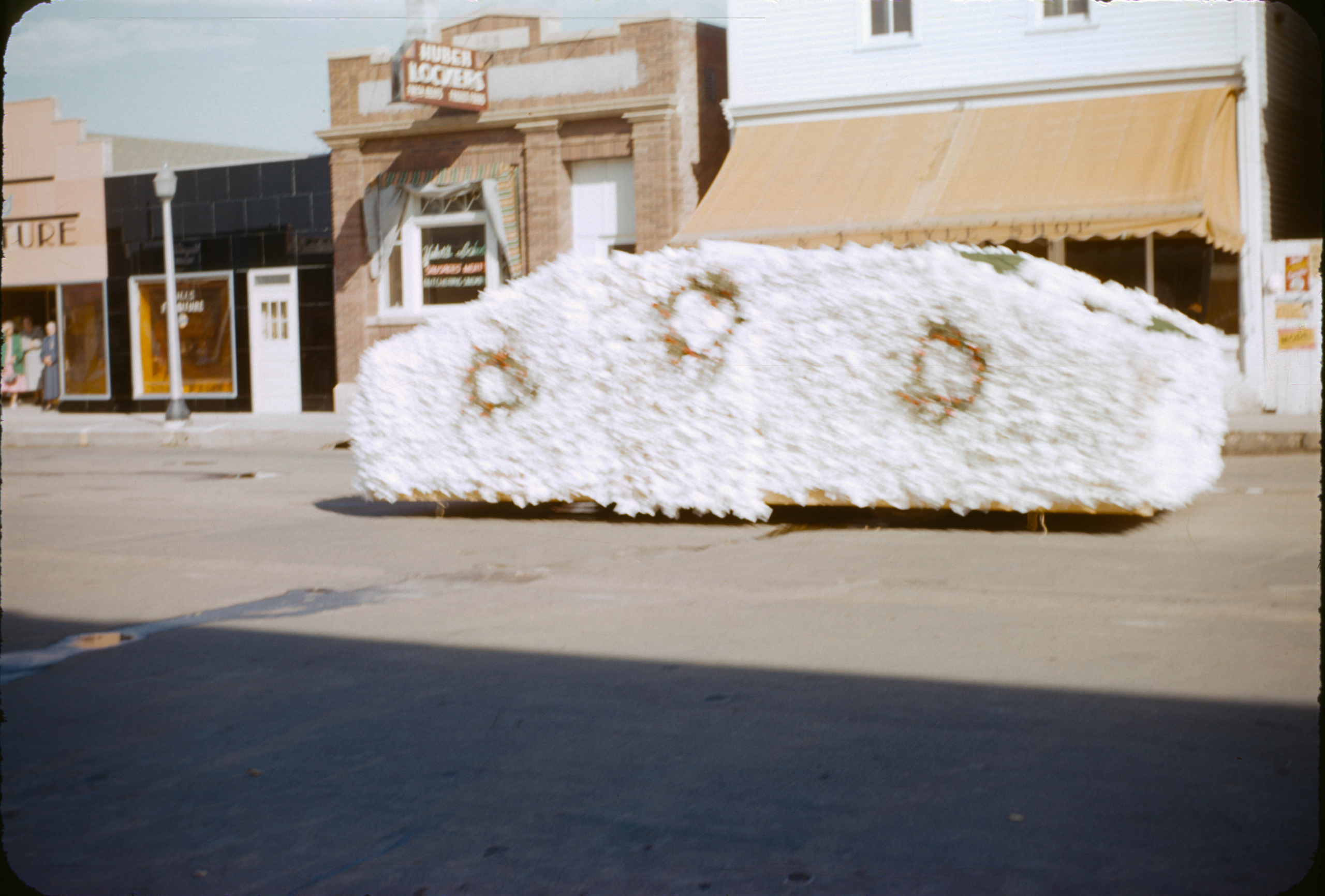
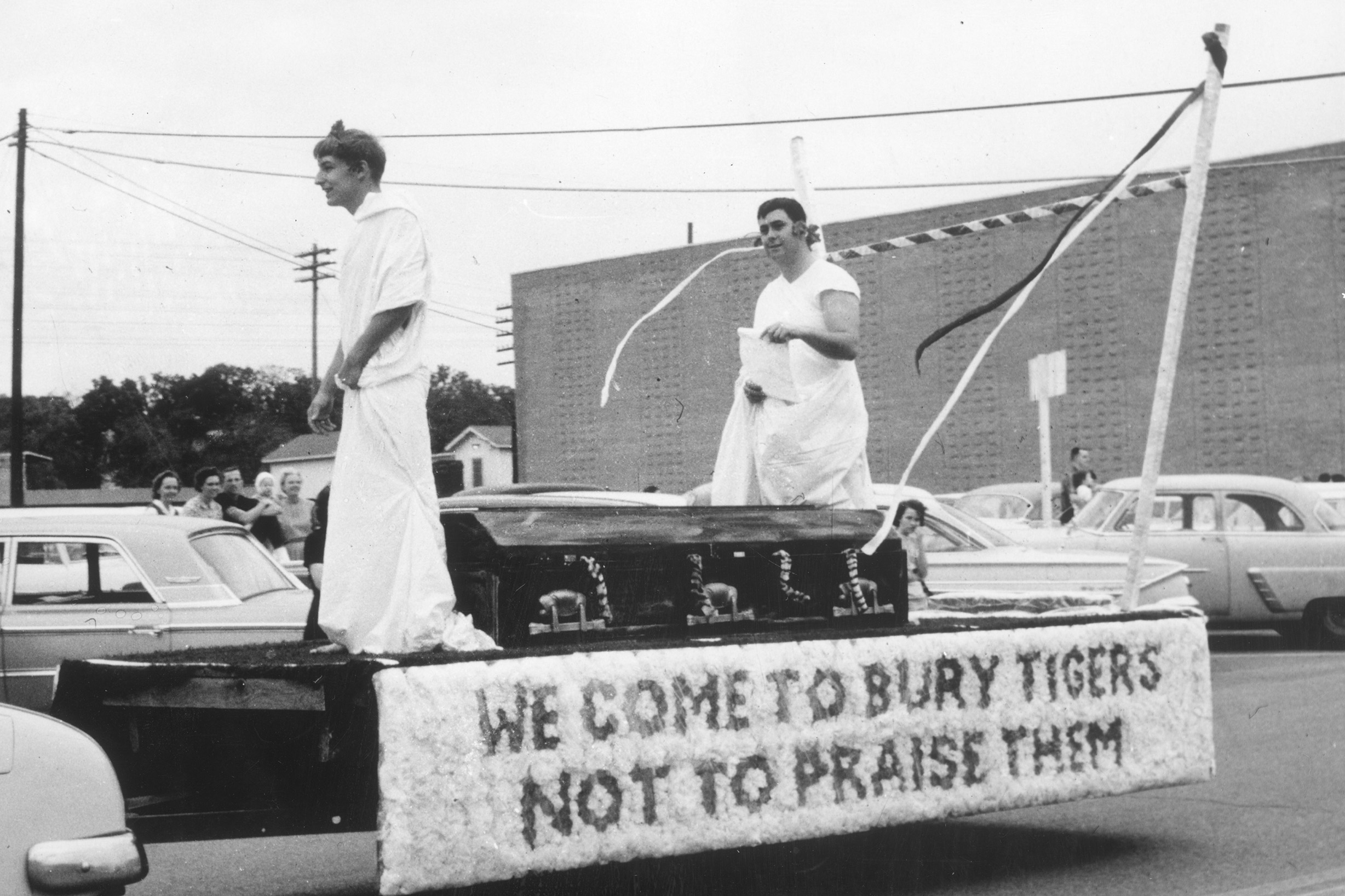
Each class year built one. The base was a borrowed flatbed trailer, a hay wagon or a pickup. The structure was chicken wire over a timber frame. The surface was tissue paper – thousands of individual squares, each one pushed into a hole in the chicken wire with a pencil or a finger, by hand, over multiple evenings.
The work happened in a barn, a garage, a farmyard or a parking lot, supervised loosely or not at all, fuelled by whatever food somebody’s parents supplied, for a week of nights before the parade.
It was tedious, cold, extremely social, and for a lot of people the actual high point of their school years – not the game, not the dance, but four nights in a barn stuffing tissue paper into wire with a group of people, arguing about design and listening to the radio.
The floats themselves were judged, placed, and then dismantled the following day, which means the thing everybody worked hardest on existed for about four hours.
The Court Was an Election and It Was Not Always Kind
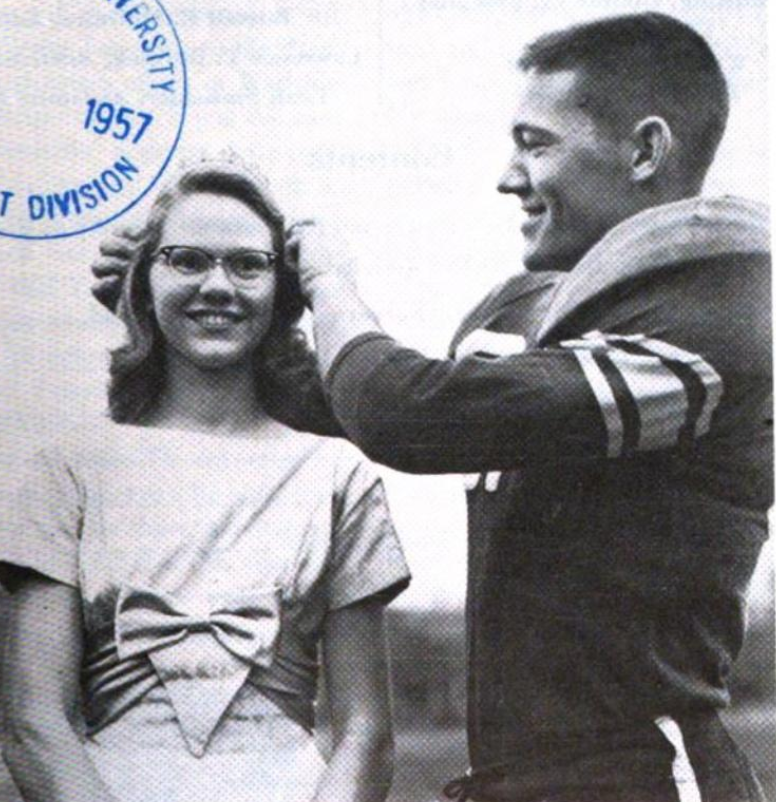
The homecoming court was chosen by student vote – a group of nominees per class year, with a queen and in most places a king crowned at the game or the dance.
Nominees were announced, voted on, and then presented publicly: driven in convertibles in the parade, walked onto the field at half time in formal clothes, with a crown, a sash and a bouquet.
It was genuinely a popularity election, conducted publicly, among teenagers, with the result announced over a public address system in front of the whole town. For the people who won it was one of the better days of their adolescence. For the people who were nominated and did not win it was a public second place. For everybody who was never nominated, the mechanism made perfectly clear where they stood.
A lot of schools have since changed it – gender-neutral titles, elected on service or contribution rather than popularity, or dropped altogether – and the reasons are not difficult to understand.
It is worth holding both facts at once: it was a real honour that people remember with pride, and it was a formalised popularity contest with public losers.
The Mums Were a Local Industry
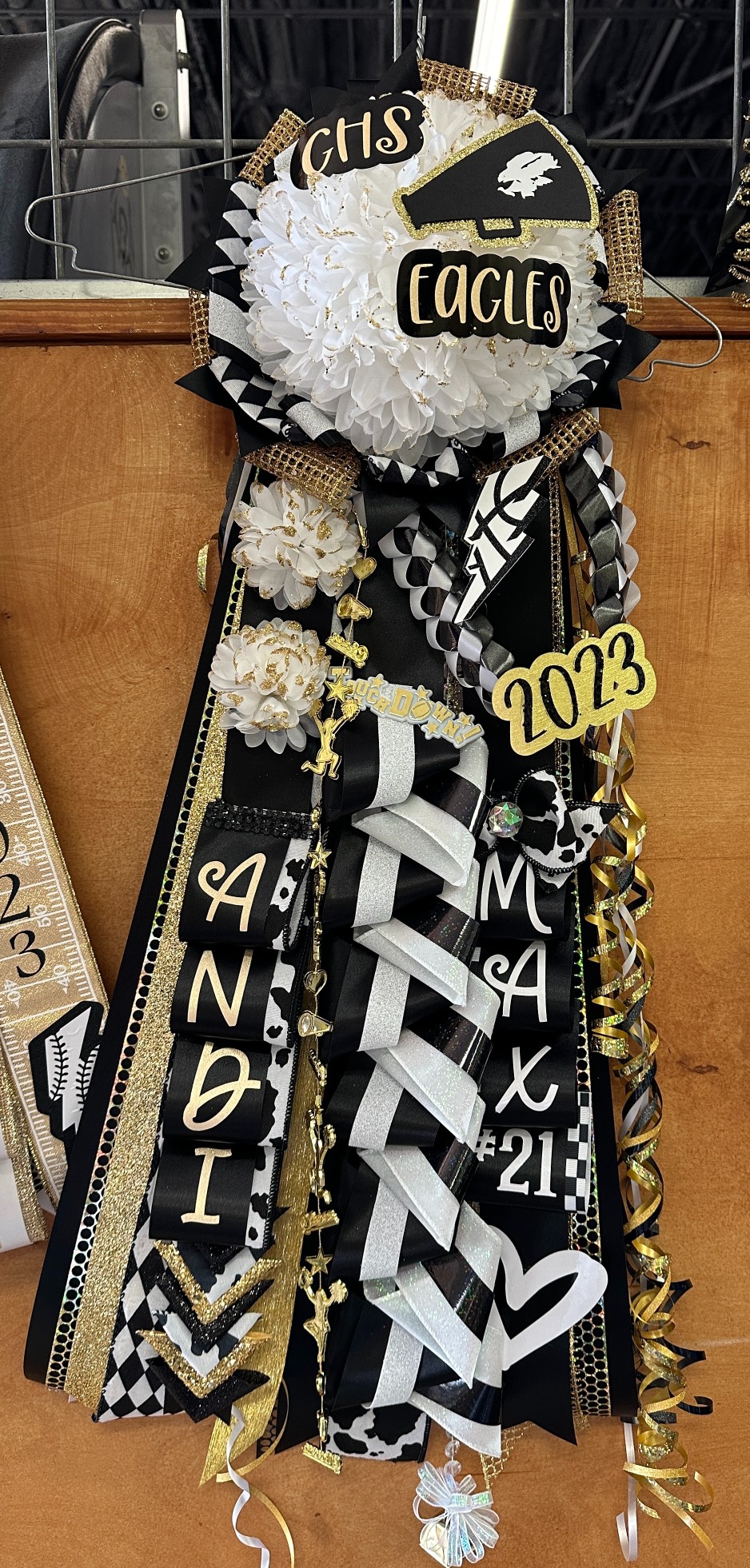
In a large part of the country the homecoming mum was its own phenomenon and is baffling to anybody who did not grow up with it.
It began as a chrysanthemum – a single flower, given by a boy to his date, worn pinned to her clothes for the game. It did not stay that way.
The flower became a silk flower. The ribbons grew longer, then multiplied, then reached the floor. Names were added in glitter lettering, then the year, then the sport, then charms, bells, trinkets, small stuffed animals, LED lights. The mum became a structure, in some cases large enough to require a harness over both shoulders, costing a meaningful sum and made to order by local businesses and specialists working from garages.
Garters were the equivalent worn by boys on an arm, built up the same way.
The escalation is a straightforward signalling spiral: once the size of a mum communicates something, a bigger one communicates more, and nobody can unilaterally stop. It is the same mechanism as any other visible arms race, running on ribbon and glitter, and it became an actual seasonal industry in the towns where it took hold.
Then the Town Part Fell Away
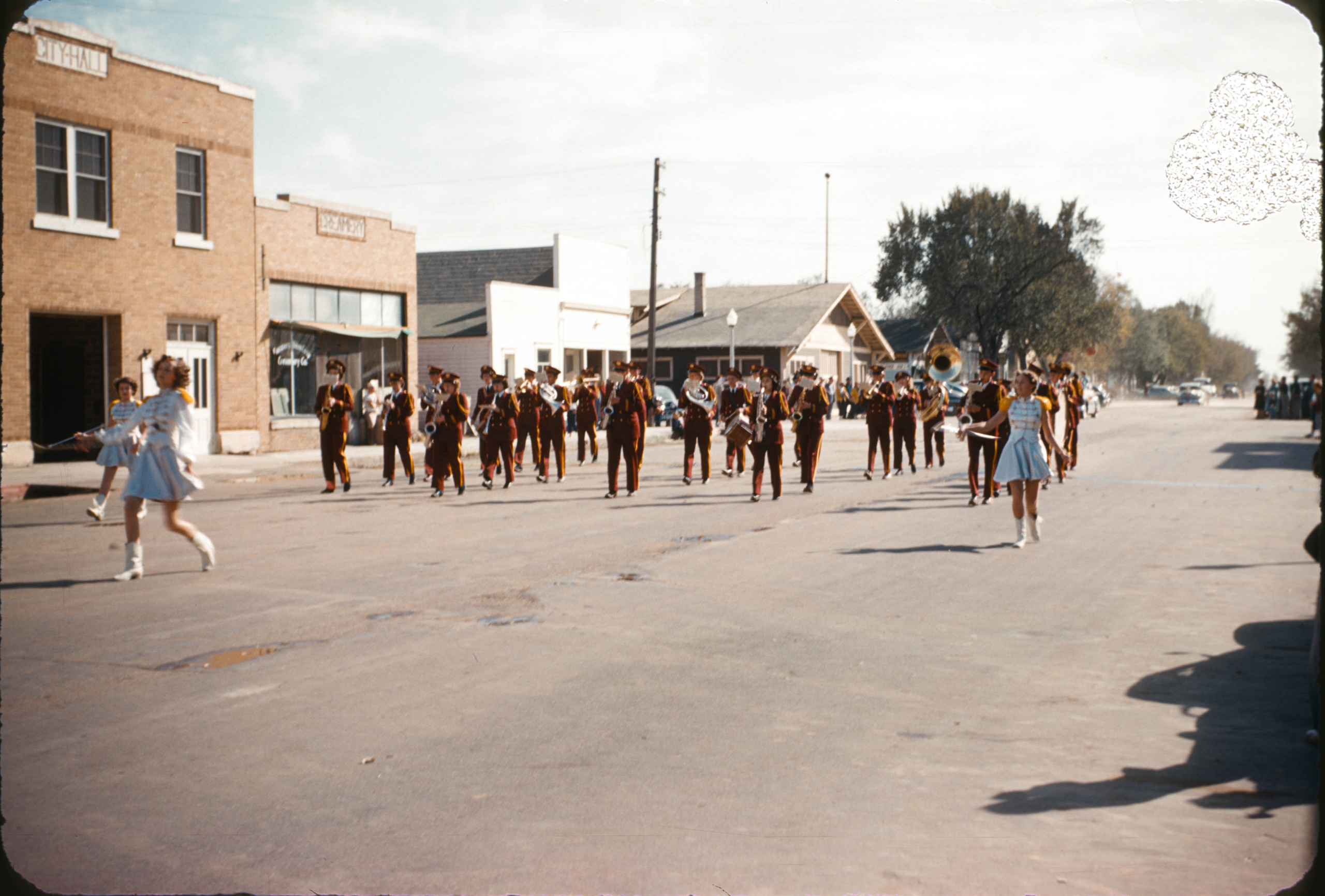
Homecoming still happens in a great many schools. What has gone is the scale and the civic reach.
Consolidation closed small schools and merged districts, which broke the one-town-one-school identity the whole thing rested on. A homecoming parade for a school drawing from five communities does not belong to any of them.
Liability and safety changed several components directly. Bonfires are now frequently prohibited or heavily controlled. Students riding on float trailers through public streets is a risk that many districts no longer accept. Convertibles with teenagers standing in them are a conversation with an insurer.
Attention moved. The Friday night game as the week’s main civic event competed with television, then with a much wider entertainment choice, and the crowd that used to include people with no connection to the school thinned out.
And the alumni return – the original purpose – stopped needing an occasion. People who left town are in contact with everybody they would have come back to see, continuously, and have been for years. The event that existed to gather them has lost the problem it solved.
The Rival School Was Essential to All of It
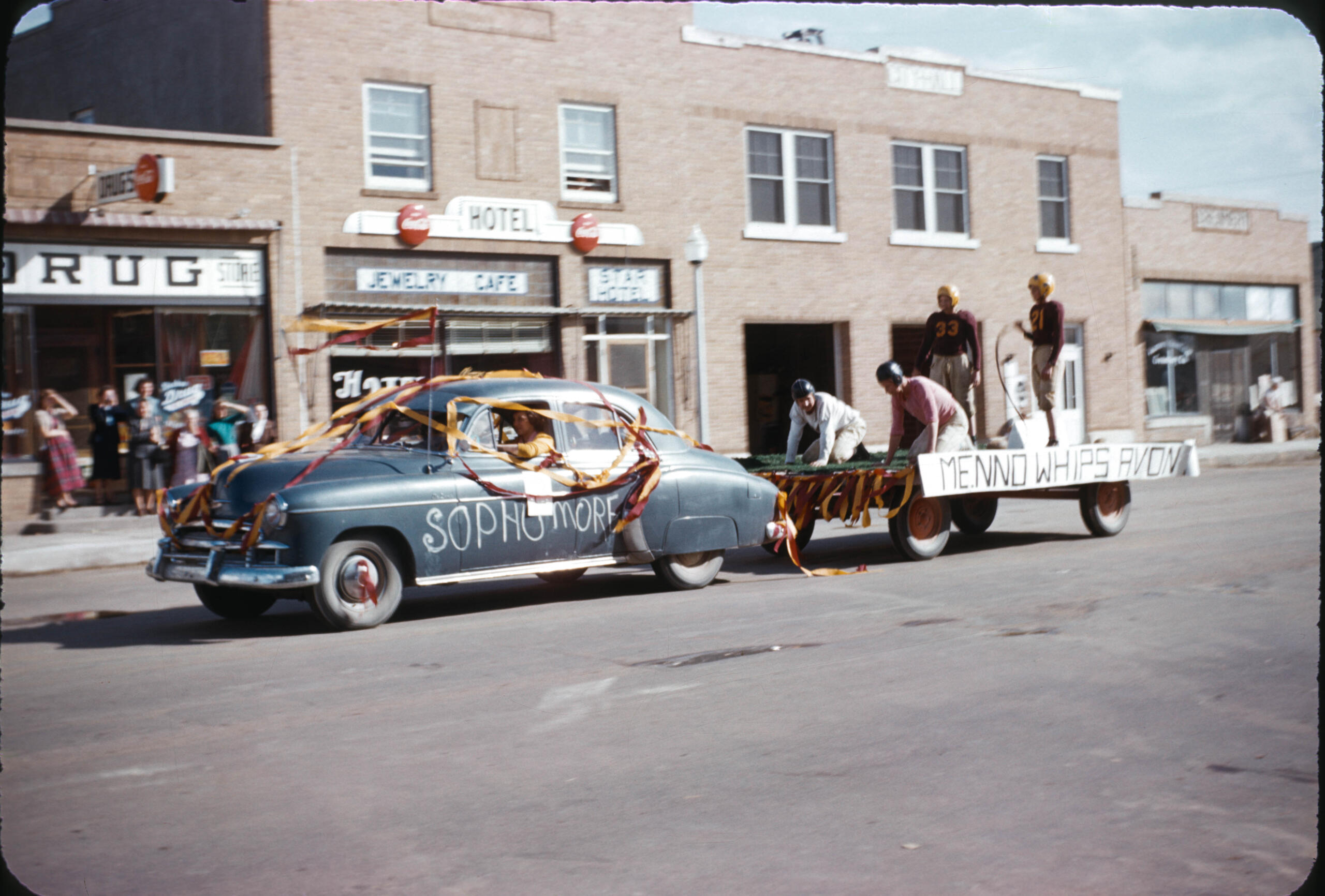
None of this worked without an opponent, and the opponent was specific.
Homecoming was played against a designated rival – frequently the nearest comparable town, sometimes a school the town had been losing to for years – and the choice was not random. A rival has to be close enough to matter, similar enough to compare against, and beatable often enough for the result to be in doubt.
That relationship did a lot of organisational work. It supplied the theme for the hall decorating and the floats. It gave the bonfire something to burn. It filled the stands with people who had no child in either school but a long-held opinion about the other town. And it gave the week a stake, because a homecoming lost to the rival was remembered.
The rivalries themselves were frequently older than anybody involved, handed down without anybody able to say exactly how they started, and maintained with an intensity that was almost entirely performative and occasionally not.
Consolidation damaged this as much as anything. When two rival schools merge, the rivalry does not transfer – it simply ends, and the week loses the thing that gave it its edge.
What Survived Is the Part That Was Never Organised
The institutional parts have been reduced or managed. The part that has survived intact is the bit nobody planned.
Not the game, which people remember the result of only vaguely. Not the dance, which was two hours in a decorated gymnasium. Not the crowning.
The barn. The four nights of stuffing tissue paper into chicken wire with a group of people, in the cold, badly supervised, building something that would be destroyed within the week. That is what people describe when they talk about homecoming forty years later, and it is the one element that was never in anybody’s plan for the week.
Which is a reasonably common pattern with organised traditions. The scheduled events are the reason everybody turns up, and the thing they actually remember is the unscheduled time that the schedule created space for.
So the honest answer about what homecoming was for is not the parade or the court or the alumni. It was a week in which a whole town agreed that a group of teenagers should be given a project, a deadline, a barn and very little supervision – and the fact that the project was pointless was precisely what made it work.
Like our content? Follow us for more.