In 1974 a sugaring family in the American northeast could not plan its season. The sap ran when the nights went below freezing and the days came above it, and when that pattern started everything else in the household stopped.
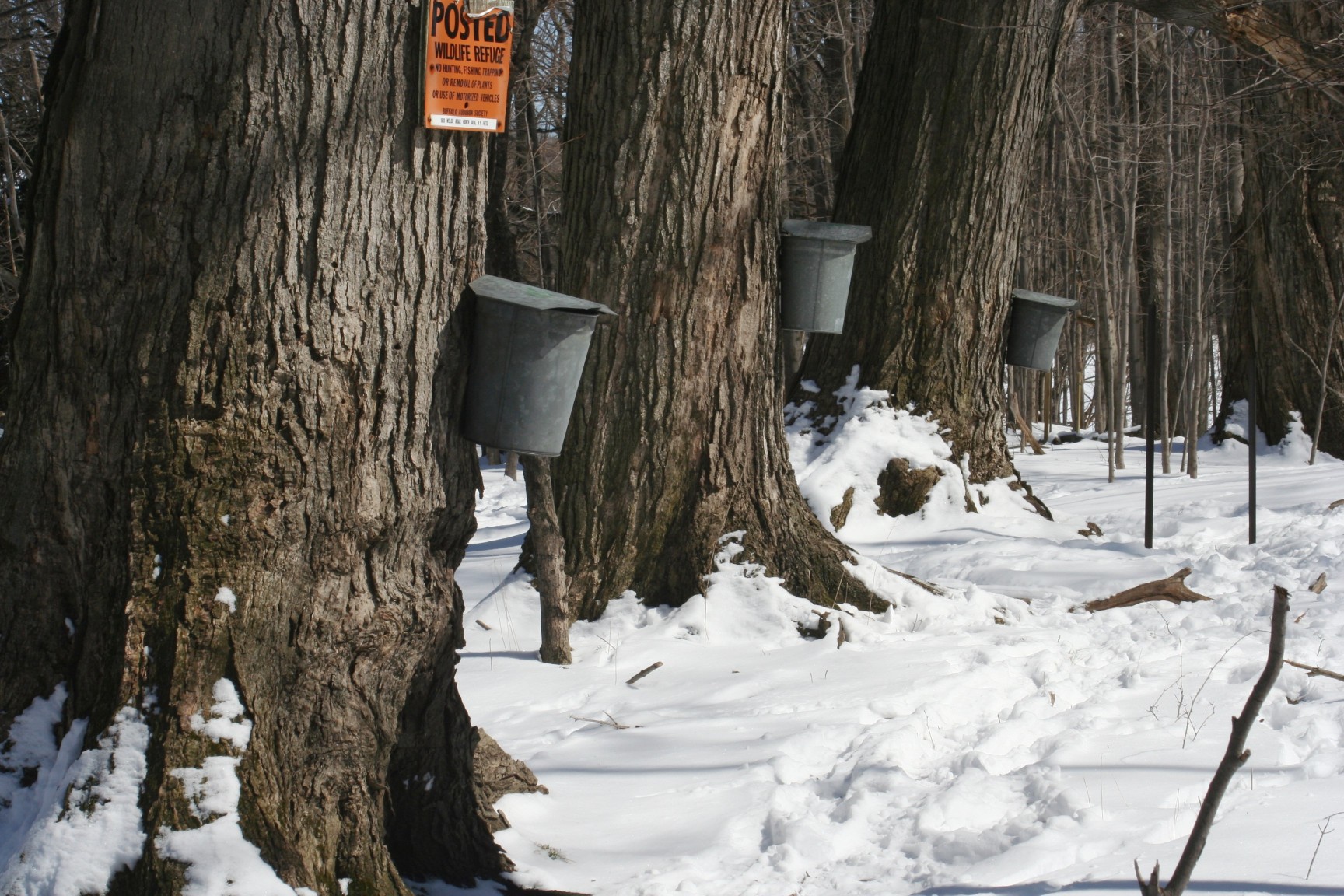
Each tree was bored and a metal spout driven in with a hammer. A galvanised bucket hung on the spout with a little lid tilted over it. Then somebody walked the entire woodlot every day, lifted four hundred buckets off their spouts, tipped them into a carrying pail and hung them back – through snow, mud and ice, for hours.
The tank went to the sugarhouse behind a horse, and the fire burned day and night. Here are fifteen things every sugaring family did.
1. The Season Was a Few Weeks and the Weather Chose Them
Sugaring happened in late winter for somewhere between two and six weeks, and nobody could decide when. The season opened when the weather began a particular pattern and closed when it stopped.
Exactly the same dependence, watched far more closely, with producers now tracking forecasts in detail because the window remains entirely out of anybody’s control.
The uncertainty governed everything. A family could not plan a sugaring season in advance beyond having everything ready, because the work began on a few days’ notice and then ran continuously until it ended – which meant the whole operation had to be able to start on a Tuesday because the thermometer said so.
Like our content? Follow us for more.
2. The Sap Runs Because of Freezing and Thawing
The flow requires nights below freezing followed by days above it. Nothing else produces it: a mild spell stops the run, a long hard freeze stops it, and the season ends when the nights stop dropping below freezing.
The identical requirement, unchanged and unchangeable, which remains the single binding constraint on the entire industry.
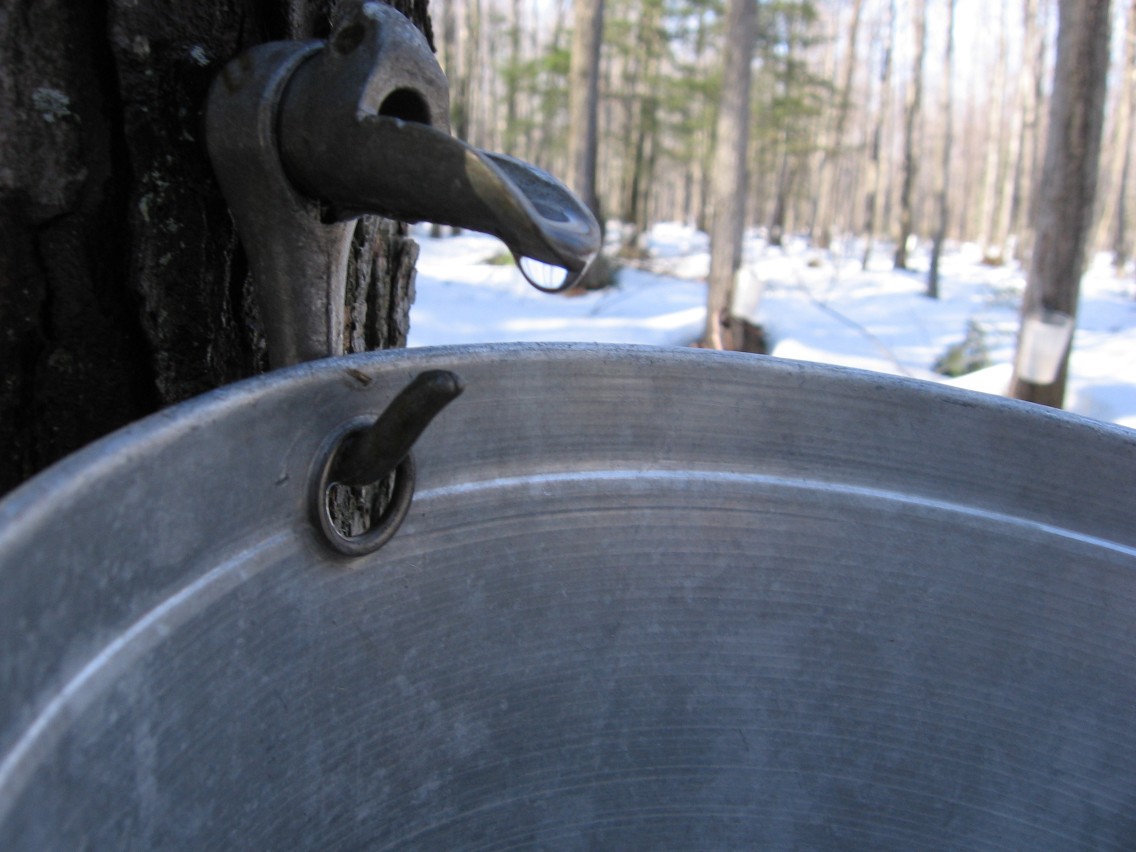
The mechanism is pressure. Freezing and thawing within the tree’s wood generates and releases internal pressure, and sap moves when that pressure is released through an opening. This is why the run comes in bursts rather than steadily, why it can stop by mid-afternoon, and why a sugarmaker watches the overnight low rather than the daytime high.
3. You Drilled the Tree and Drove in a Spout
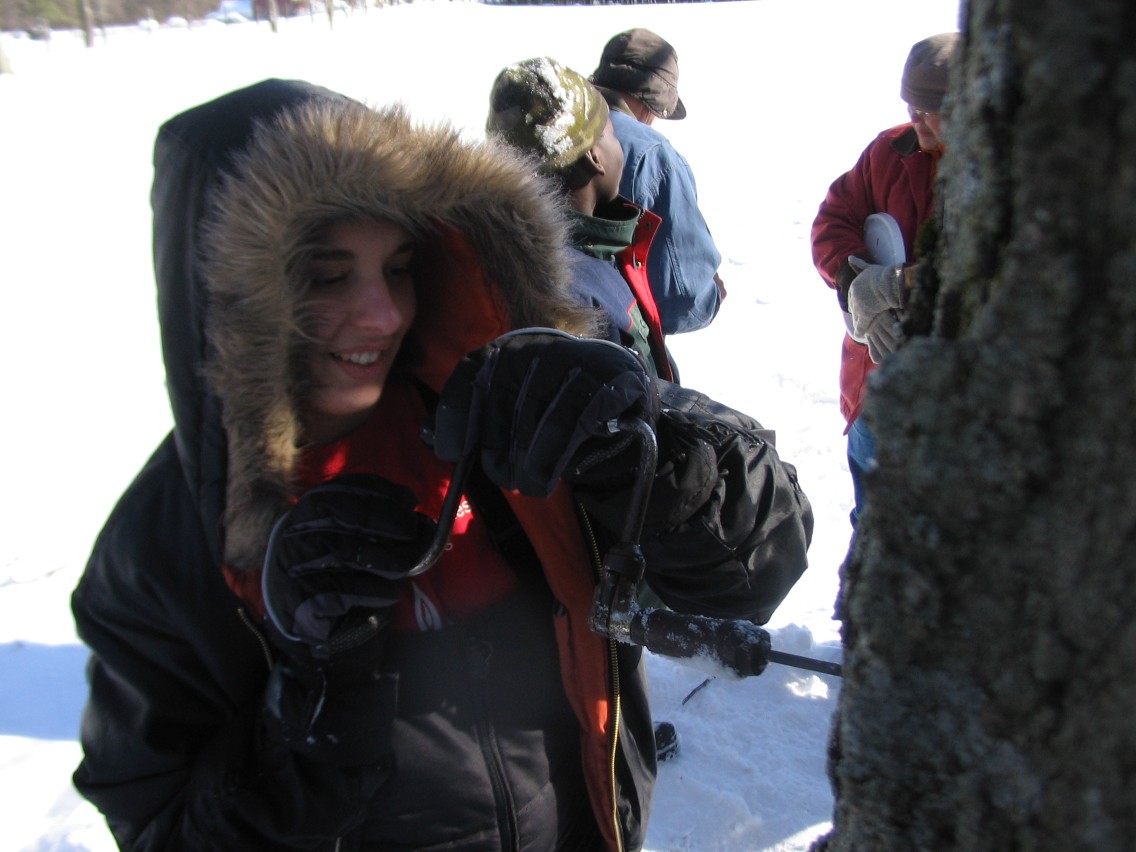
Each tree was bored with a small hole a couple of inches deep, into which a metal spout was tapped with a hammer – one tap on a smaller tree, two or three on a large one, placed at a fresh spot each year.
The same operation with plastic spouts of smaller diameter, placed to a tighter standard on the understanding that smaller holes close faster and do less cumulative damage.
The tree survives this and has to, because a sugarbush is a fifty-year investment. A maple closes the wound over the following seasons, which is why taps are moved annually and why the number of taps is limited by trunk diameter – a rule every sugaring family knew and applied by looking at the tree.
4. The Bucket Hung on the Spout With a Lid on It
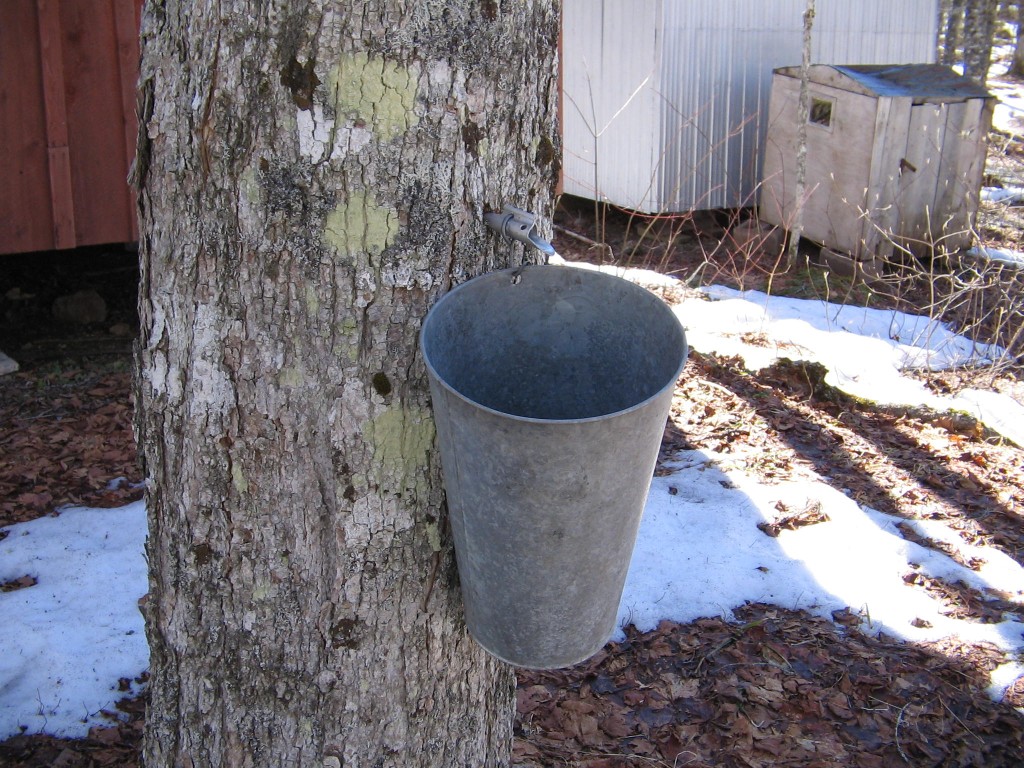
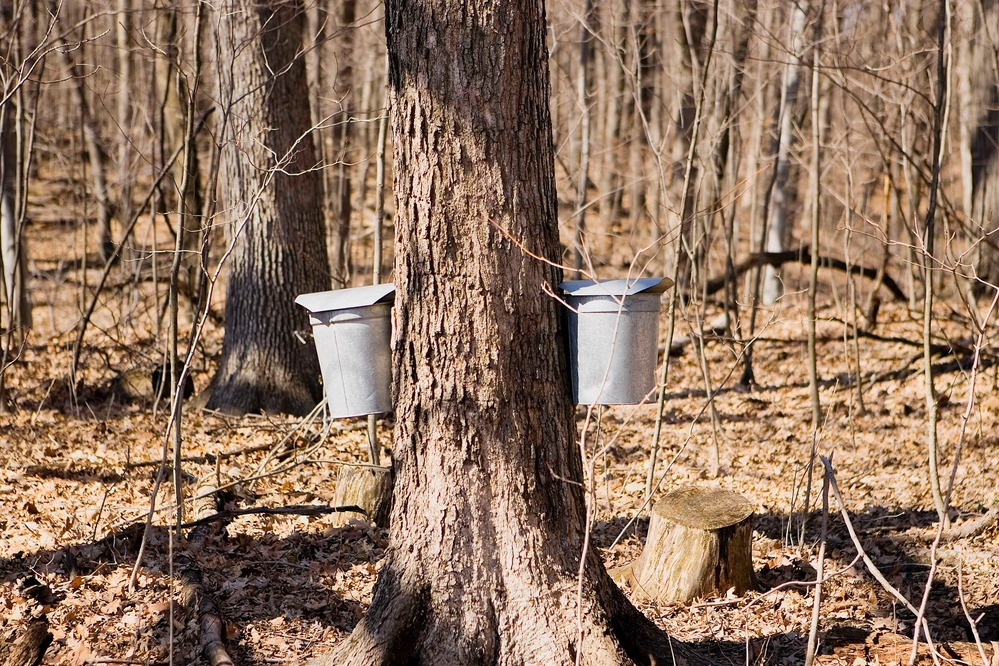
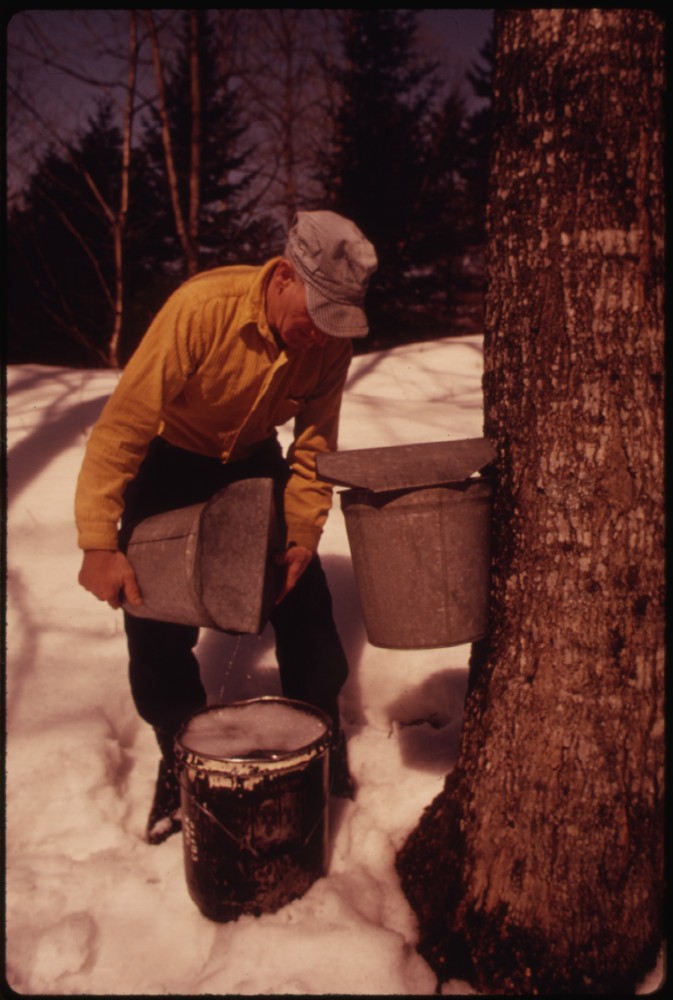
A galvanised bucket was hooked straight onto the spout, with a small metal cover tilted over it to keep out rain, snow, bark and insects while letting the sap drip in.
Plastic tubing running from tree to tree and down the slope to a collection tank, with no container on any tree.
The lid is the detail that tells you what the product is. Sap is a dilute sugar solution sitting in an open bucket in late winter, which means it is both perishable and attractive to everything – so the cover, the cold weather and the daily collection together were the only things keeping it usable.
5. Somebody Walked the Whole Woodlot and Emptied Every Bucket
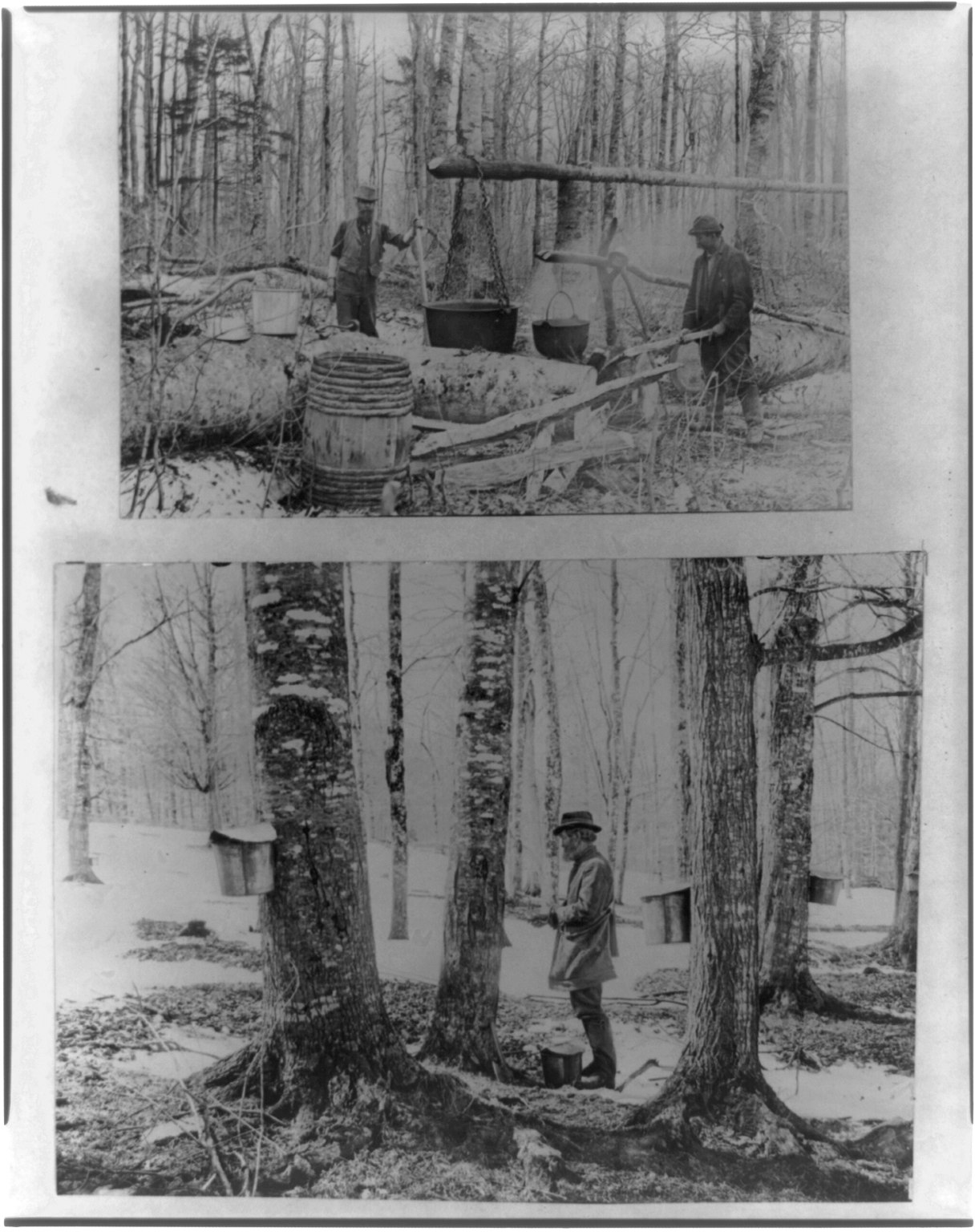
Collection was done on foot, daily, during a run: walking to each tree, lifting the bucket off its spout, tipping it into a carrying pail, hanging it back and moving on – through snow, mud and ice, for hours.
Gravity and vacuum moving sap through tubing directly to the sugarhouse, with no collection round at all and the woods frequently not entered for days.
The walking was the overwhelming majority of the labour and it is the part that has been eliminated most completely. A family with four hundred taps walked several miles a day through late-winter footing, carrying buckets of liquid, every day the sap ran – and that is the work the tubing replaced.
6. The Sap Went Into a Tank on a Sled or a Wagon
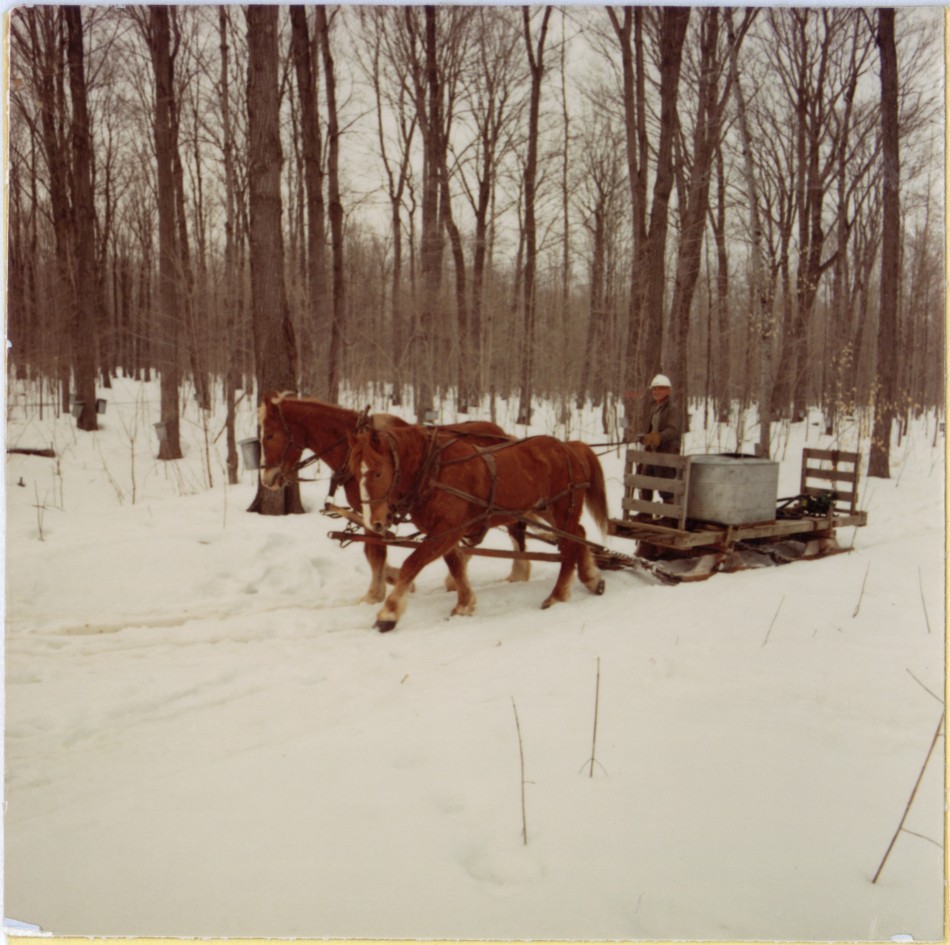
Carrying pails were emptied into a gathering tank hauled through the woods behind a horse, a tractor or a team, which then took the load to the sugarhouse – repeatedly, all day.
Pipelines running to a tank at the sugarhouse by gravity, with pumps where the terrain requires them and nothing hauled anywhere.
Horses persisted in sugaring long after they had gone from the rest of American farming, and for a sound reason. Late-winter footing in a woodlot is soft, uneven and full of roots, a horse can work ground that a tractor sinks in, and a sugarbush has no tracks – so the last working horses on a great many farms were sugaring horses.
7. The Sugarhouse Was a Shed With a Vent in the Roof
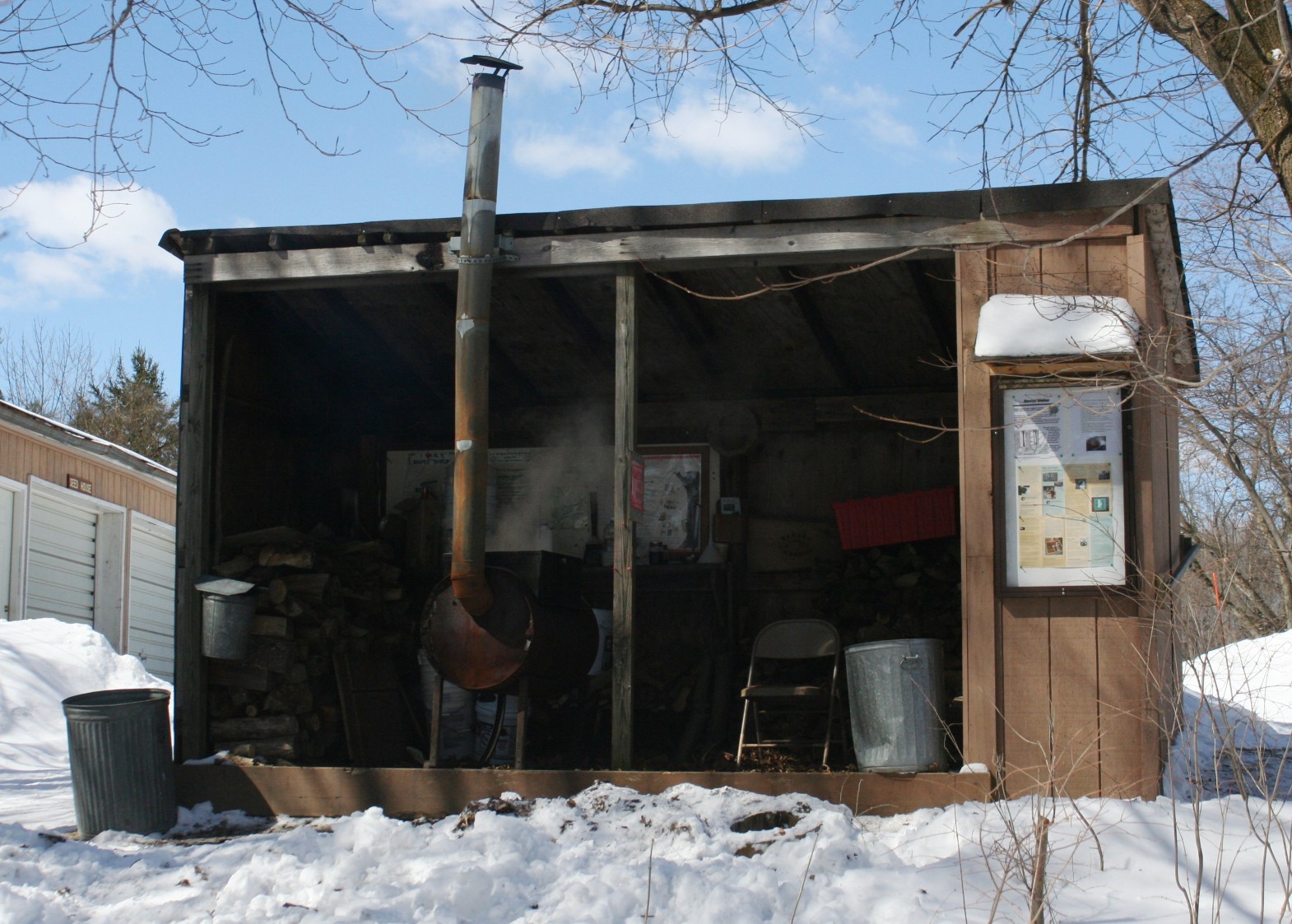
Boiling happened in a dedicated building: a simple timber structure containing an arch and a pan, with a long louvred cupola running the length of the ridge to let steam out.
The same building type, still with the roof vent, now frequently with insulation, better firing and additional equipment – and the cupola remains the defining feature.
The vent is not decoration. Evaporating thirty-nine parts water out of forty produces an enormous volume of steam, and a closed building would be unworkable within minutes – so the roof has to be open along its length, which is why a sugarhouse is instantly recognisable from a distance.
8. It Boiled Over a Wood Fire, All Day and Into the Night
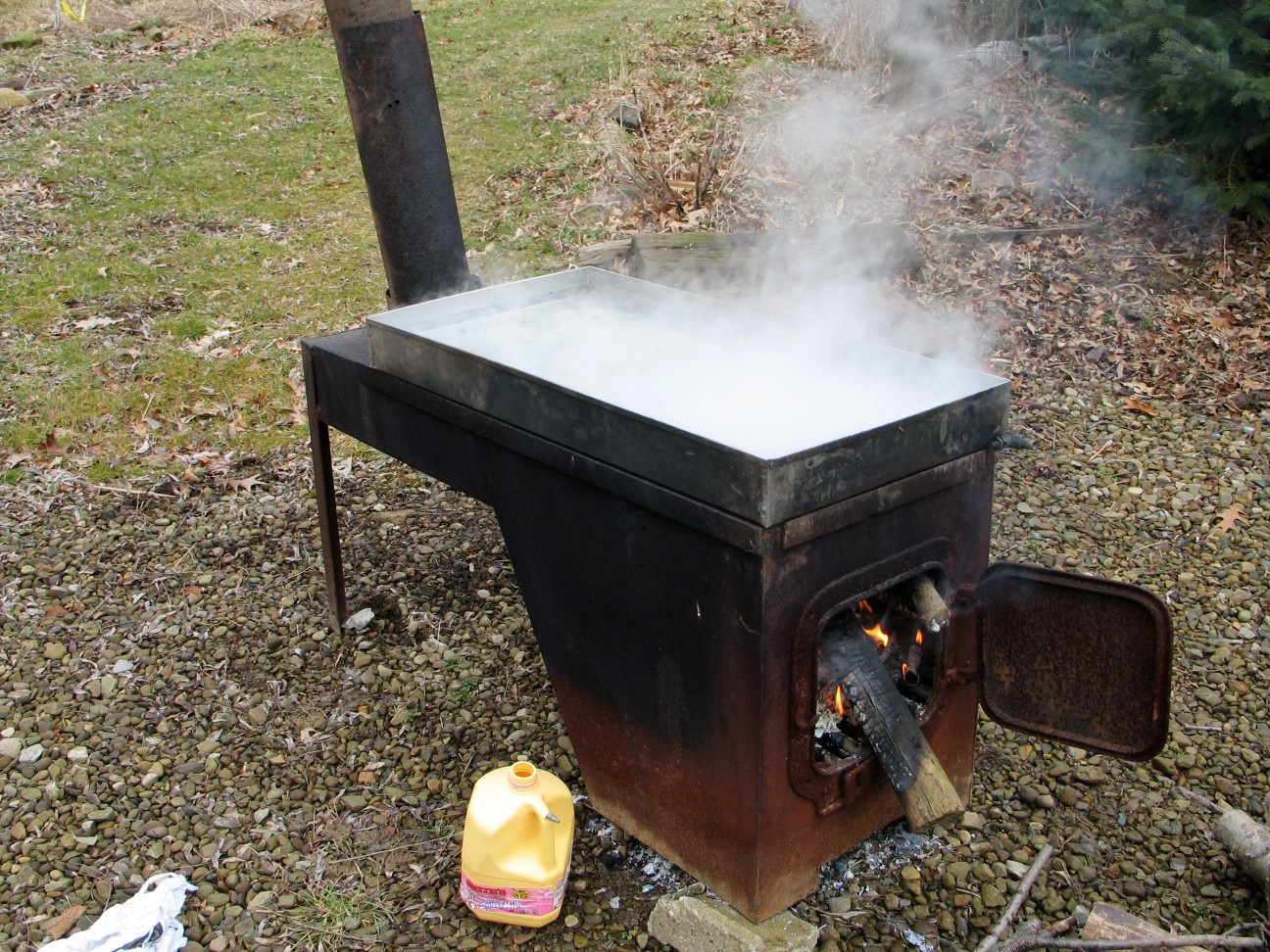
The sap went into a shallow flat pan over a firebox and was boiled hard, continuously, with somebody feeding wood every few minutes and skimming the surface – for as long as there was sap to boil.
Oil, gas and wood firing with far better heat transfer, and in many operations reverse osmosis removing most of the water before any heat is applied at all.
The shallow pan is the key piece of engineering. Evaporation happens at the surface, so a wide shallow vessel boils off far faster than a deep one of the same volume – and the whole design of a sugaring operation is an attempt to maximise surface area over a fire somebody has to keep feeding.
9. The Ratio Is About Forty to One
Maple sap comes out of the tree at roughly two per cent sugar, and finished syrup is around sixty-six per cent – which means something near forty gallons of sap produces one gallon of syrup.
The same ratio, because it is determined by the tree and the product rather than by any method – though reverse osmosis now removes a large share of the water without boiling it.
That number is the whole economics of the product and it explains the price immediately. Everything a sugaring operation does is the removal of thirty-nine parts water, which takes either an enormous quantity of fuel or an enormous quantity of time, and no technique has ever changed the quantity that has to come out.
10. The Finish Was Judged Against Boiling Water
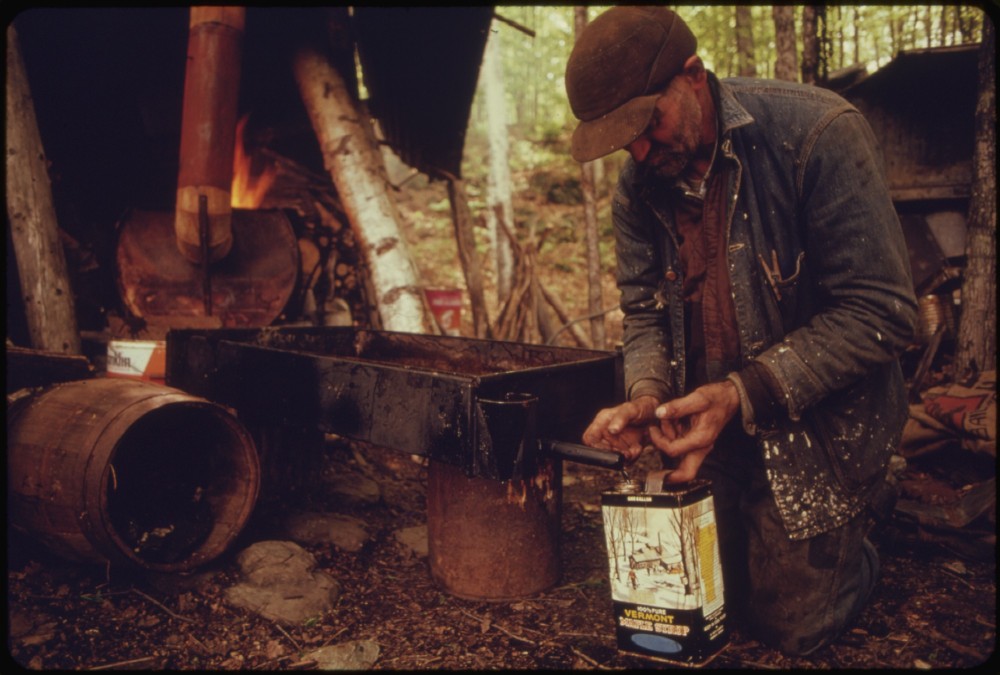
Syrup is done at a specific density, and the practical test was temperature: sugar solution boils above the boiling point of water by an amount that corresponds to its concentration, so the finish was taken at a fixed number of degrees above whatever water boiled at that day.
The same principle, with hydrometers, refractometers and automatic draw-off doing it precisely – and the temperature method still taught as the fallback.
Referencing it to that day’s boiling point rather than to a fixed temperature is the clever part, and it is necessary. Water boils at different temperatures with altitude and air pressure, so an absolute figure would be wrong on most days – but the difference between the two is reliable, which makes a cheap thermometer sufficient.
11. The Grade Changed as the Season Went On
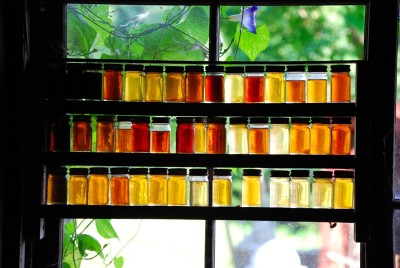
Syrup from early in the season came out pale and delicately flavoured; syrup from late in the season came out dark and strongly flavoured – and it was graded accordingly, with the lighter product commanding the higher price.
The same progression, under grading standards that have been revised to describe colour and flavour without implying that one is better, because the darker product has a substantial market of its own.
The chemistry behind it is bacterial and biological activity rising in the sap as the season warms, which changes what happens to the sugars during boiling. The old price hierarchy was a market preference rather than a quality measure, and the revision of the grading language to stop implying otherwise was a correction rather than a concession.
12. Everybody in the Family Worked and School Came Second
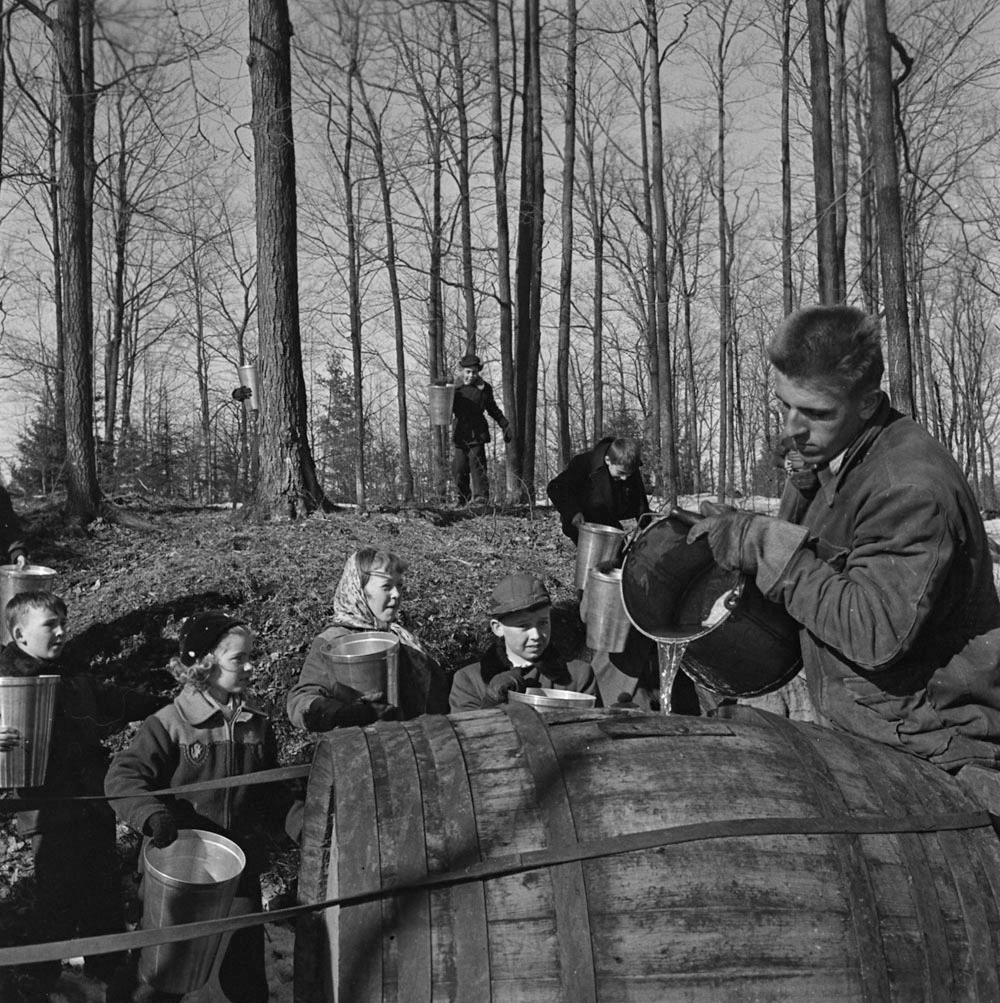
A run meant all hands: children gathering, adults boiling through the night, meals eaten in the sugarhouse, sleep taken in shifts – and in sugaring districts a child’s absence during a heavy run was understood by the school.
Family operations still working the same way during a run, with hired help in larger ones, and no equivalent accommodation from schools.
The compression is what made it a family event rather than a chore. Sap that sits goes off, so when it runs it must be collected and boiled immediately, which creates a few weeks a year of genuine around-the-clock work in which a twelve-year-old was doing something that visibly could not be done without them.
13. Sugar on Snow Was the Payment
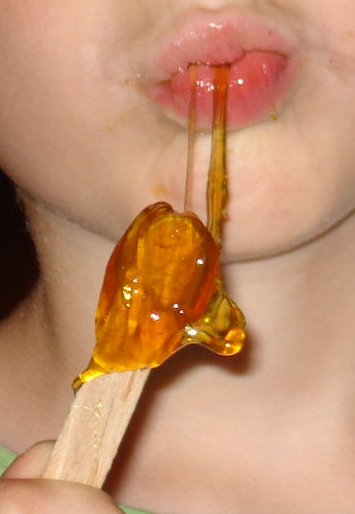
Hot syrup boiled past the syrup stage and poured onto clean packed snow sets into chewy ribbons, eaten straight off the snow – traditionally with a sour pickle and a plain doughnut alongside to cut the sweetness.
The same thing, now most commonly encountered at sugarhouse open days and community events rather than in a family’s own woods during their own season.
It is the oldest and simplest reward in the whole business and it was the children’s wage. The snow is the one ingredient the operation has in unlimited supply, the syrup is at hand, and the result cannot be bought, shipped or stored – which means it has always had to be eaten where it was made.
14. The Firewood Had Been Cut the Year Before
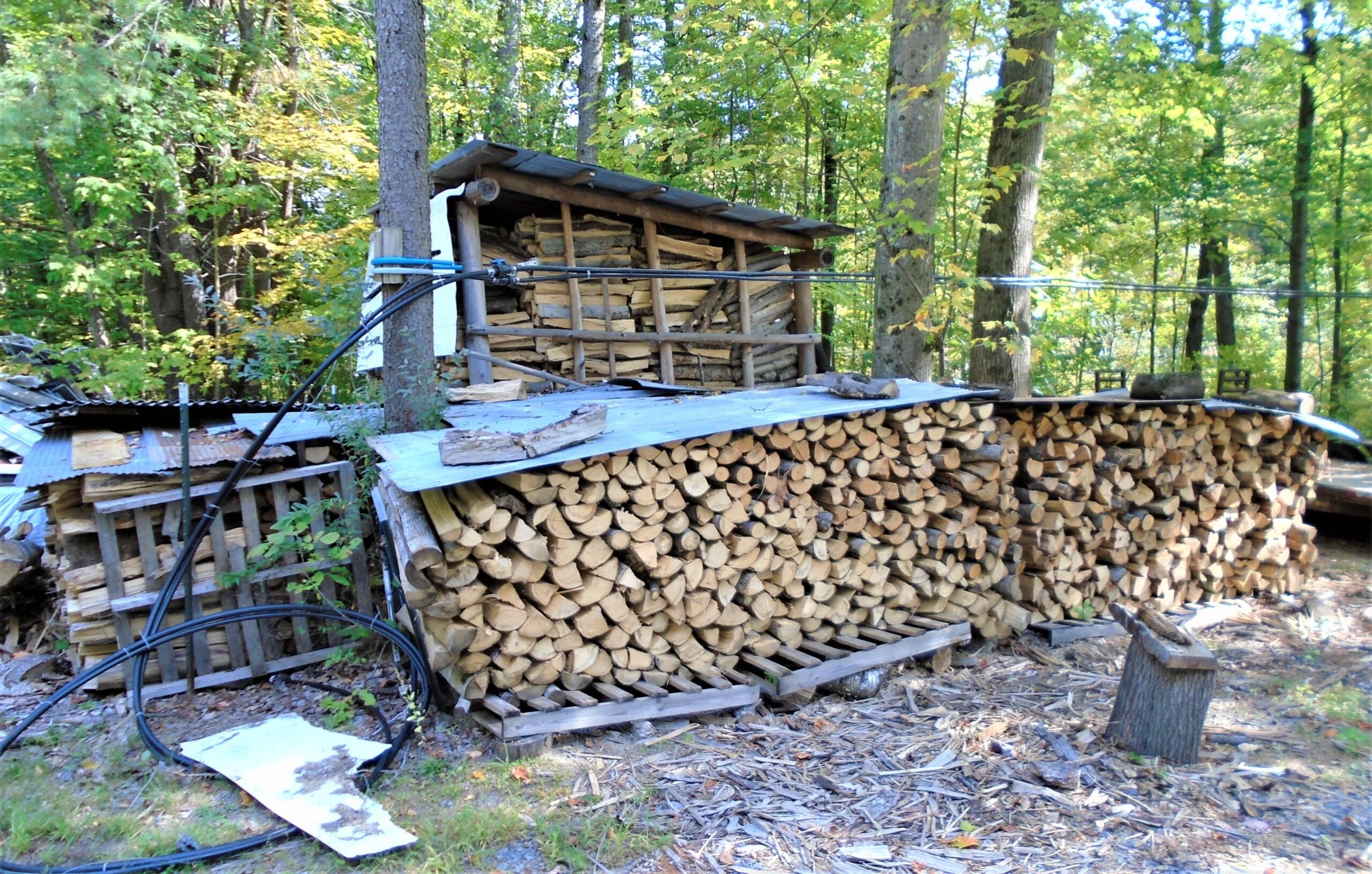
Boiling with wood consumes an enormous quantity of it, and it has to be dry – which means the wood burned in one season had been cut, split and stacked during the previous one, as a separate job entirely.
Oil, gas and far more efficient wood firing, with reverse osmosis reducing the heat required dramatically – and no requirement to have spent the previous summer preparing fuel.
This is the hidden half of the labour and the reason sugaring was a year-round commitment. A family did not simply boil in March; it spent part of the preceding summer cutting the fuel to boil with, which means the season’s real cost in work was roughly double what the few weeks suggest.
15. Then the Walking Stopped
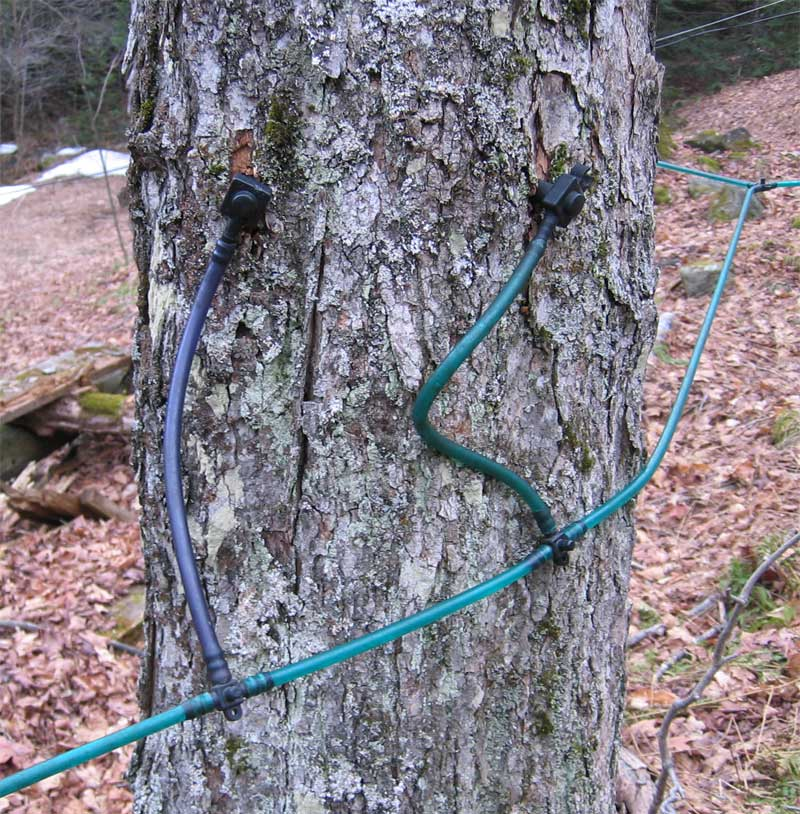
The operation was buckets on spouts, a daily walk of the entire woodlot carrying liquid, a tank hauled by a horse, a wood fire fed every few minutes, a shallow pan, a thermometer and a few weeks of continuous family labour – to remove thirty-nine parts water out of forty.
Plastic tubing on vacuum, reverse osmosis removing most of the water before any heat, efficient firing, instrumented finishing and a fraction of the labour – producing the same product, in greater quantity, at a quality that is if anything more consistent.
And the physical core has not changed at all, which is unusual. Forty gallons still has to become one, the freeze and thaw still decides when, the tree still has to be tapped and still has to recover, and nobody has found a way around any of it – so this is one of the very few American food processes whose fundamentals a 1974 family would recognise completely. What has gone is the walking. Sugaring was the one agricultural activity that required a family to cross every acre of its own woodlot on foot, every day, for three weeks, at the end of winter – noticing which trees had come down, where the deer had wintered, which bank had washed, what had changed since last year. That inspection was not the point of the exercise and it happened anyway, which is precisely why it mattered. Tubing turned the sugarbush into something sap comes out of, rather than something a family walks into, and the knowledge that came free with the buckets now has to be gone and looked for deliberately, which mostly means it is not.
The Only Thing That Really Disappeared Was the Walk
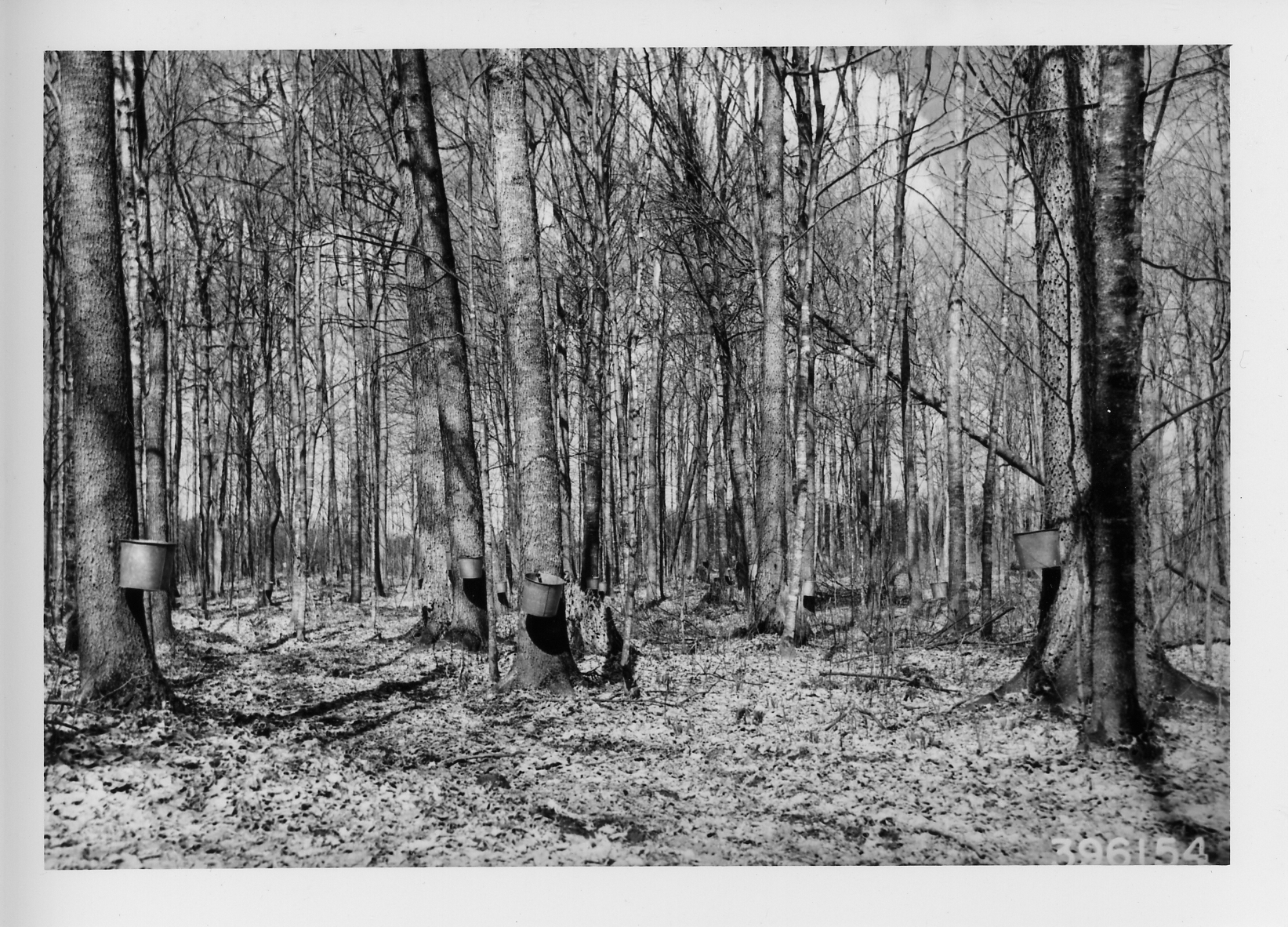
Sugaring is a rare case in American food production: the fundamentals have not changed in the slightest, and nobody has managed to change them.
Sap still comes out of a maple at around two per cent sugar. Syrup is still around sixty-six per cent. Which means roughly thirty-nine parts of water out of every forty still have to be removed, by somebody, somehow – and no technique in the history of the business has altered that number by a drop. The run still requires nights below freezing and days above, which remains entirely out of human control and still decides when the season starts and when it ends. The tree still has to be bored, still has to be tapped in a fresh place, and still has to close the wound – so the number of taps a trunk will carry is still set by its diameter.
A sugaring family from 1974 could walk into a modern operation and recognise the whole proposition immediately.
What they would not recognise is the absence of people in the woods.
The buckets are gone. Plastic tubing now runs from tree to tree and down the slope under vacuum, which not only removes the collection round entirely but pulls more sap from each tap than gravity alone would give. Reverse osmosis strips a large share of the water out before any heat is applied, which cuts the fuel and the boiling time enormously. Firing is efficient. Finishing is instrumented. The same product comes out, in greater quantity, more consistently, with a small fraction of the labour.
Every one of those is a genuine improvement and none of them should be regretted. Walking several miles a day through late-winter footing carrying buckets of liquid is brutal work, and nobody who did it is sentimental about it.
But consider what came free with it.
Sugaring was the only agricultural activity that obliged a family to cross every acre of its own woodlot on foot, every single day, for two or three weeks, at the one time of year when the woods are bare and everything is visible. And while doing that they saw things. Which trees had come down over the winter. Where the deer had been lying up. Which bank had washed out. Where the water was running that had not run last year. What the hemlock at the top had done. Which maple was failing and would have to come out.
None of that was the purpose. It was a by-product of the buckets, and it accumulated into a kind of knowledge of a piece of land that cannot be acquired any other way – because it came from going to every part of it, repeatedly, without having decided to.
Tubing turned the sugarbush into a system that delivers sap to a building. The trees are still tapped, the lines still have to be checked and repaired, and anybody running an operation knows their woods well. But the daily compulsory inspection of the entire property, by the whole family, at the end of every winter, is gone – and knowledge that used to arrive as a side effect now has to be gone looking for on purpose.
Which, as anybody with a long list of jobs will tell you, mostly means it does not get looked for at all.
If your family did this, you remember the sound of four hundred buckets and the weight of a full one.
And you remember sugar on snow in the sugarhouse at eleven at night, with a pickle, which is a combination nobody can explain and everybody who has had it defends.
Like our content? Follow us for more.