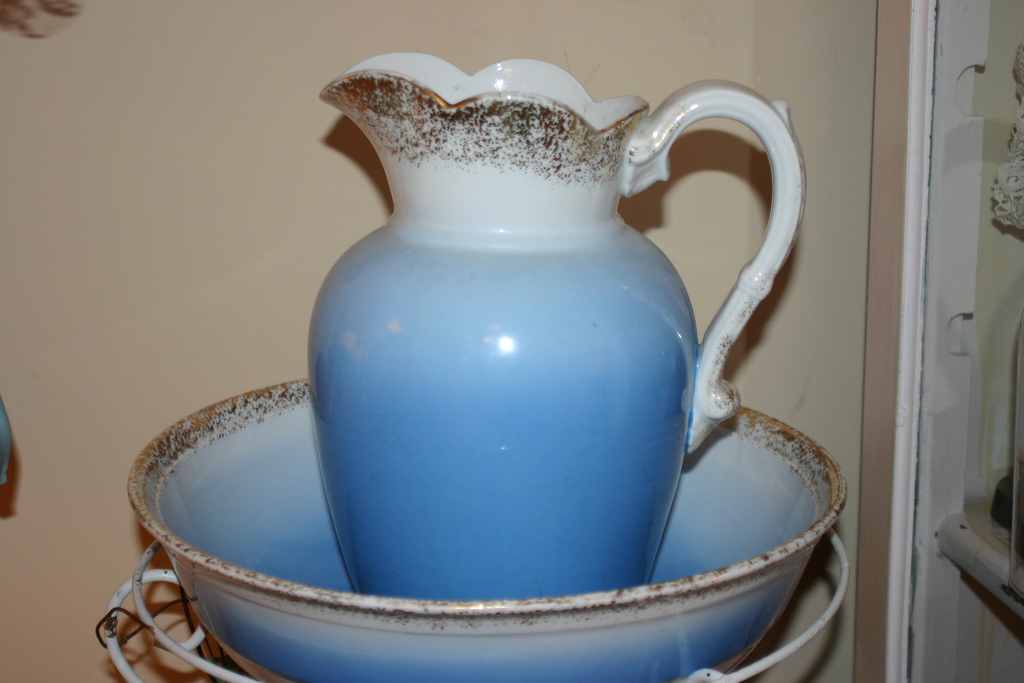
The Bedroom Had a Piece of Furniture for Washing In
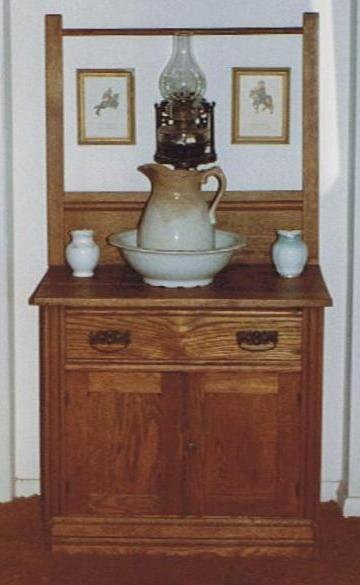
Against the wall of the bedroom, or in a corner, stood a washstand: a waist-high wooden cabinet with a marble or wooden top, a splashback, a towel bar on the side, and a cupboard or shelf underneath.
On the top sat a large china bowl with a matching pitcher standing in it. Around them, if the household had the full set, were a soap dish with a drainer, a small pitcher for hot water, a mug, a toothbrush holder and a covered dish.
Underneath, behind the cupboard door, was the rest of it.
Like our content? Follow us for more.
That Was Where You Washed, in the Bedroom, in Cold Water
There was no bathroom, so the morning wash happened where you had slept.
The pitcher was filled the night before or carried up in the morning. You poured water into the bowl, washed your face and hands and whatever else was being washed, and tipped the used water into a slop pail. A full bath happened weekly at best, in a tub in the kitchen where the stove was.
And the water was cold, because hot water meant somebody heating it on a stove downstairs and carrying it up a flight of stairs in a jug – which happened for guests, for illness and on particular occasions, and not as a matter of course on a Tuesday in February.
The Chamber Pot Existed Because the Privy Was Outside
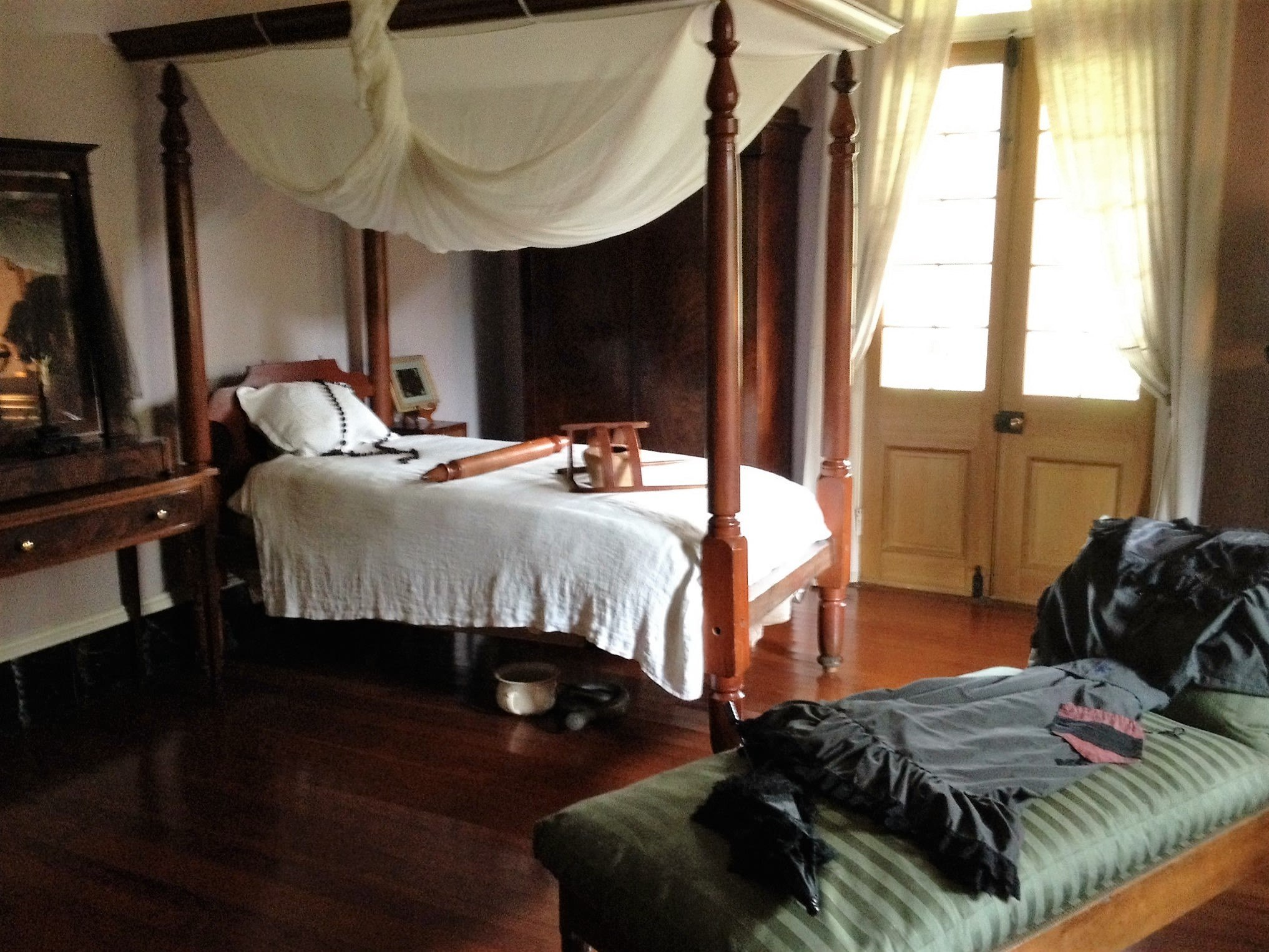
The other vessel was a lidded china pot, kept in the washstand cupboard or under the bed, and its purpose was the night.
The reason is geography rather than laziness. The privy was a separate building across a yard, reached by a path, in the dark, in whatever weather there was, by somebody who had been asleep. For a child, an elderly person, anybody ill, or anybody at all in January, that journey was not reasonable at two in the morning.
So the pot stayed in the bedroom, with a lid on it, and was used at night and emptied in the morning. In many households there was one per bedroom; in some there was one per bed.
The Slop Jar Was the Second Half of the System
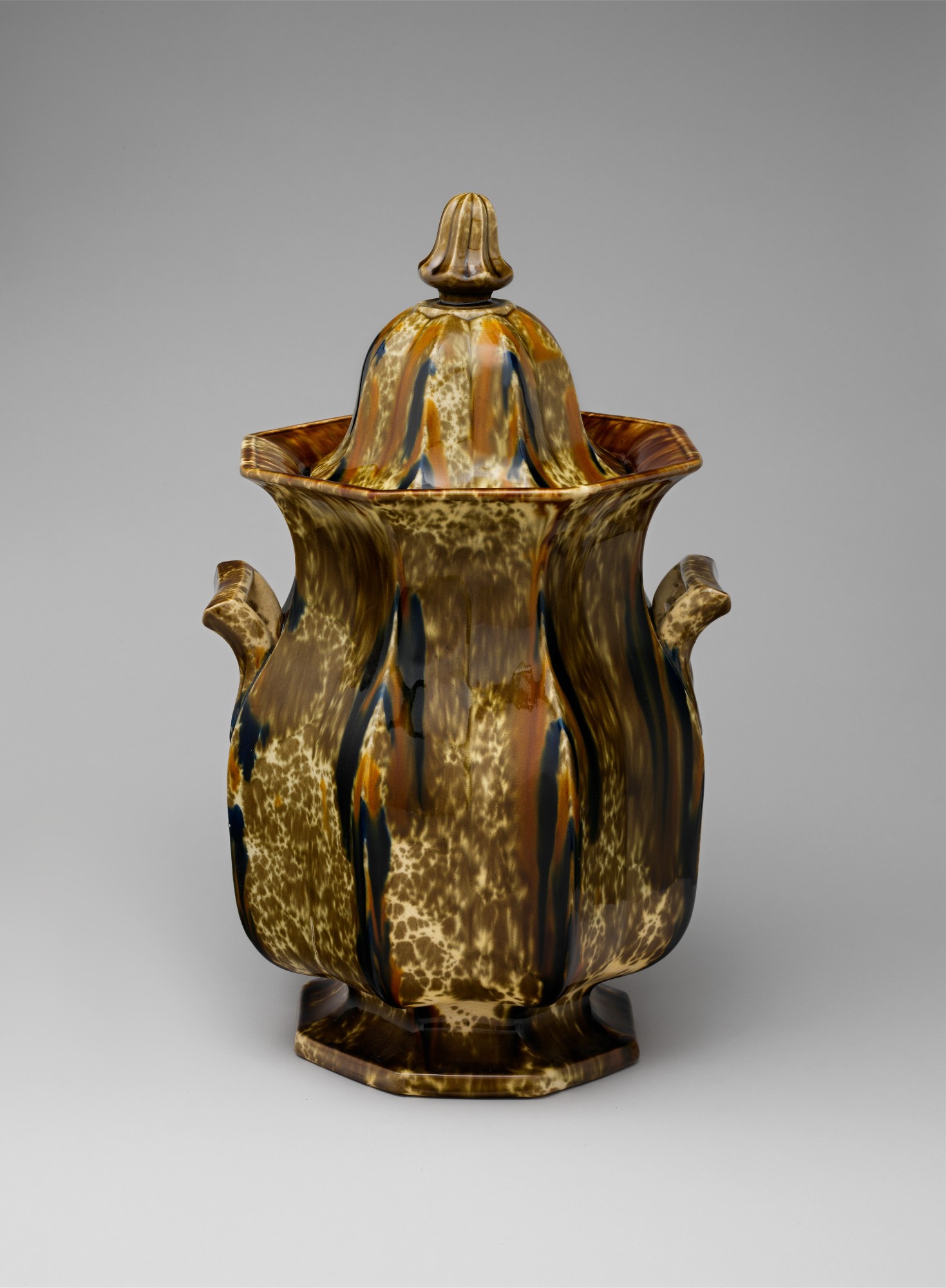
Beside or inside the washstand stood a larger vessel – a tall lidded pail of enamelled metal or china, frequently with a handle and a bail – and it collected everything.
Used wash water went into it. The chamber pot was emptied into it. And once a day somebody carried the slop jar out of the bedroom, down the stairs, across the yard and emptied it, then rinsed it, scalded it and brought it back.
That is the whole arrangement stated plainly: water came up by hand in a pitcher and went down by hand in a pail, every day, in every bedroom, for every person in the house.
Somebody Specific Did the Emptying
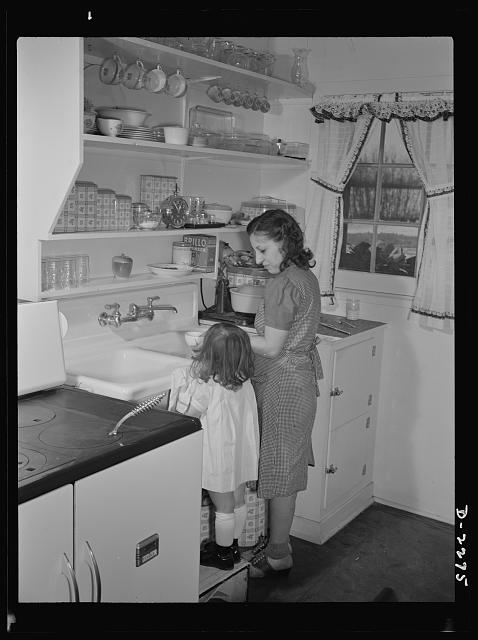
This is the part that matters most and it is routinely left out of accounts that treat the washstand as charming period furniture.
The carrying was not shared. In the overwhelming majority of American households it fell to the women and the older girls, and where there was domestic help it fell to the help – which in practice meant that the most unpleasant recurring task in the house was performed by whoever had the least standing in it.
It happened every single day. It happened in every bedroom. It happened before anybody else was up, so that the bedrooms were clean and the vessels were back in place by the time the household came down.
And it was invisible in exactly the way such work is always invisible. Nobody wrote it down, nobody counted it, and it appears in no account of what a household produced – which is why the furniture survives in antique shops and the labour it required has almost entirely dropped out of the story.
The Vessels Were Washed, Scalded and Taken Seriously
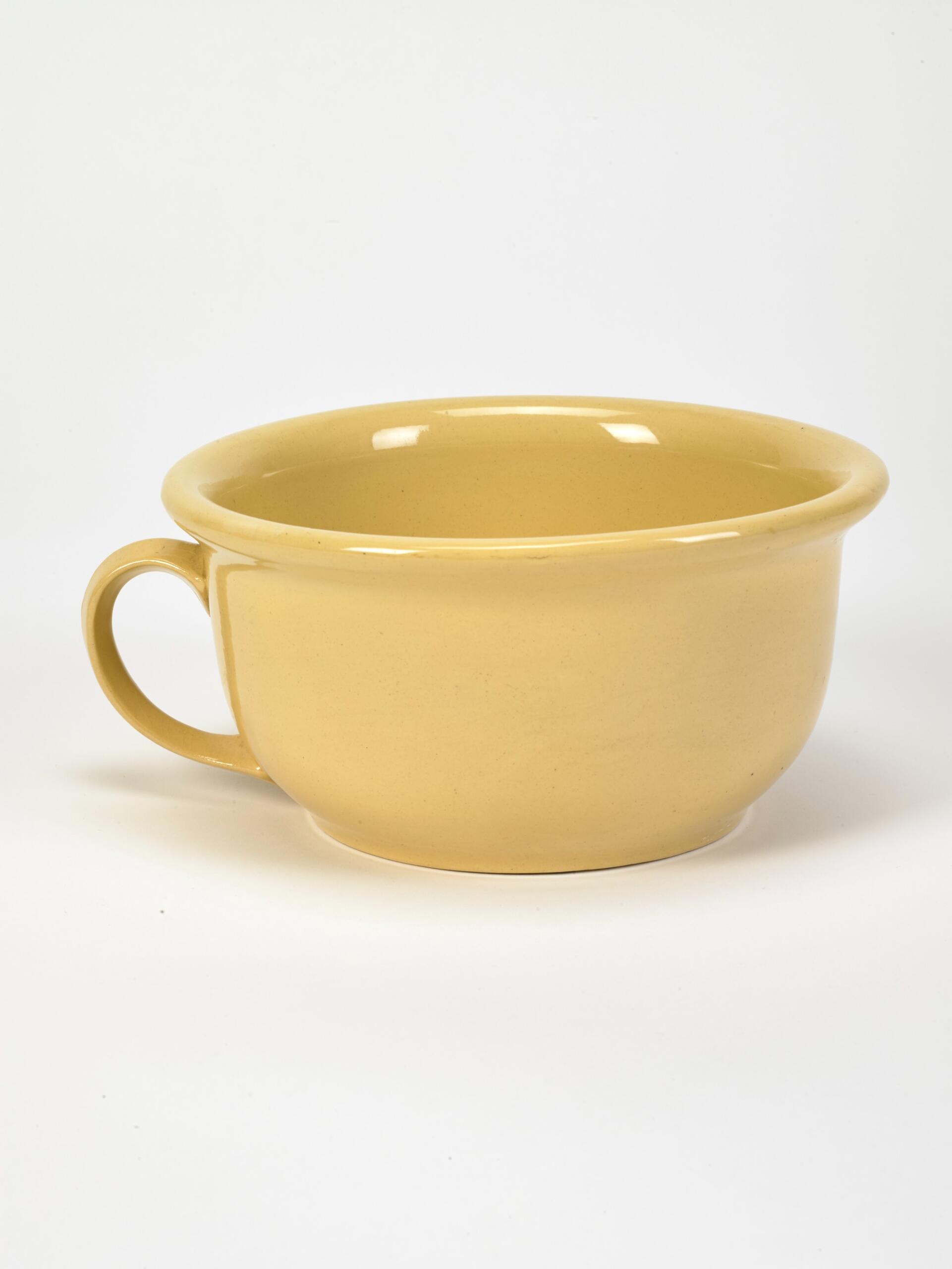
Households of this period are frequently imagined as indifferent to hygiene, which is unfair and wrong.
The vessels were emptied promptly, rinsed, scalded with boiling water, and in many houses treated with something for the smell. The lids were not optional. The slop jar had a close-fitting cover for a reason. Washstand sets were made in glazed china precisely because a glazed surface can be cleaned properly and an unglazed one cannot.
The understanding of why this mattered was improving rapidly through this period as the sanitary movement spread, and households followed the guidance they were given. What they lacked was not care or knowledge. It was running water, a drain and somewhere for the waste to go that was not a bucket and a walk.
The Sets Were Decorated and Given as Gifts
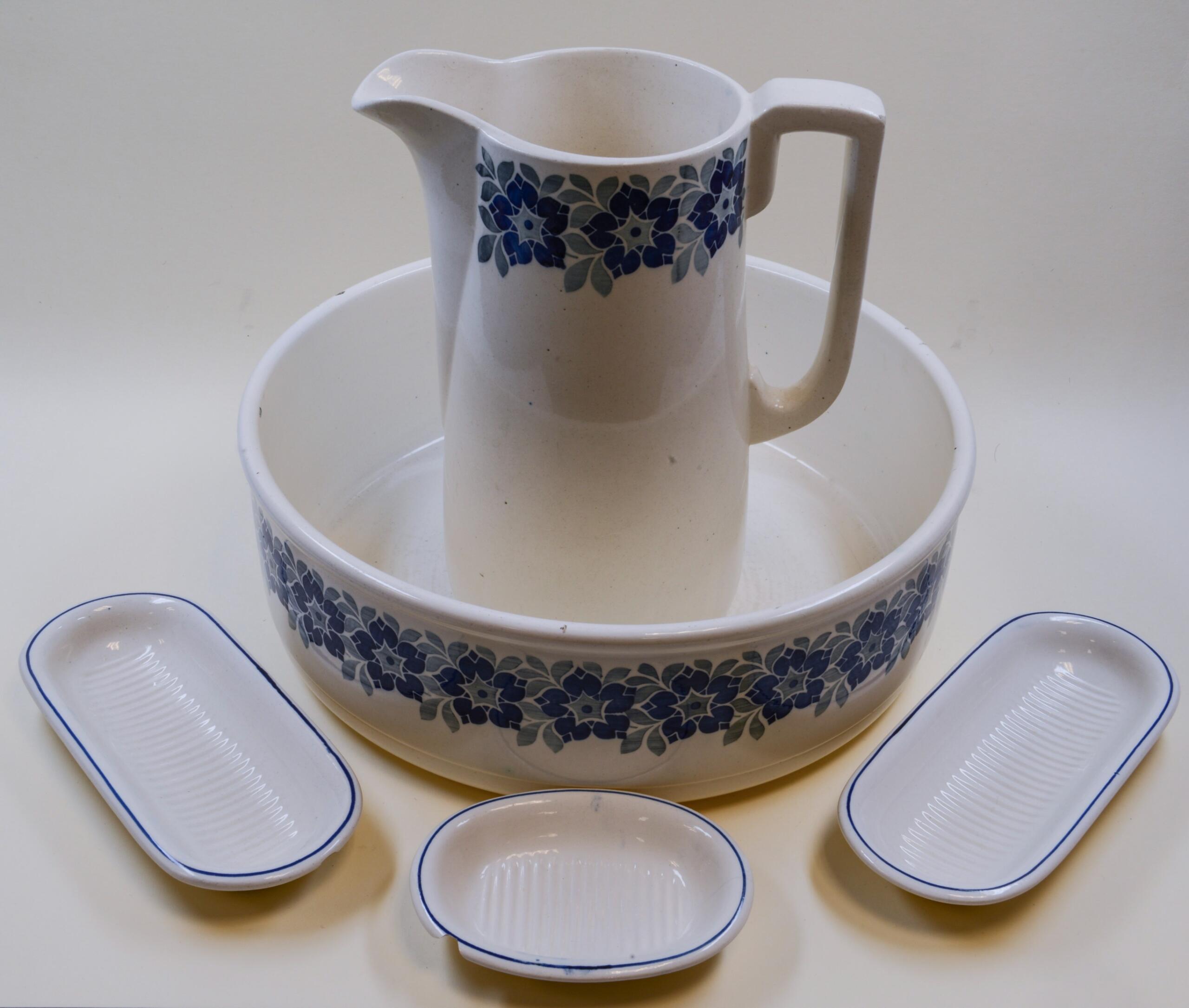
The commercial side of this is worth a paragraph because it explains how much of it survives.
Washstand sets were made in enormous quantities in matched patterns – transfer-printed florals, gold banding, moulded relief – and sold as a boxed set of five, seven or more pieces. They were a standard wedding present, a standard housewarming gift, and a genuine object of pride.
A household displayed its set. The pitcher and bowl sat out in the open on the stand, the pattern matched the mug and the soap dish, and a visitor shown to a bedroom saw it immediately.
Which is why pitchers and bowls are among the commonest surviving pieces of nineteenth and early twentieth century American china, and why they are now sold as decorative objects to people who put flowers in them.
There Was a Whole Vocabulary for It and It Was Polite
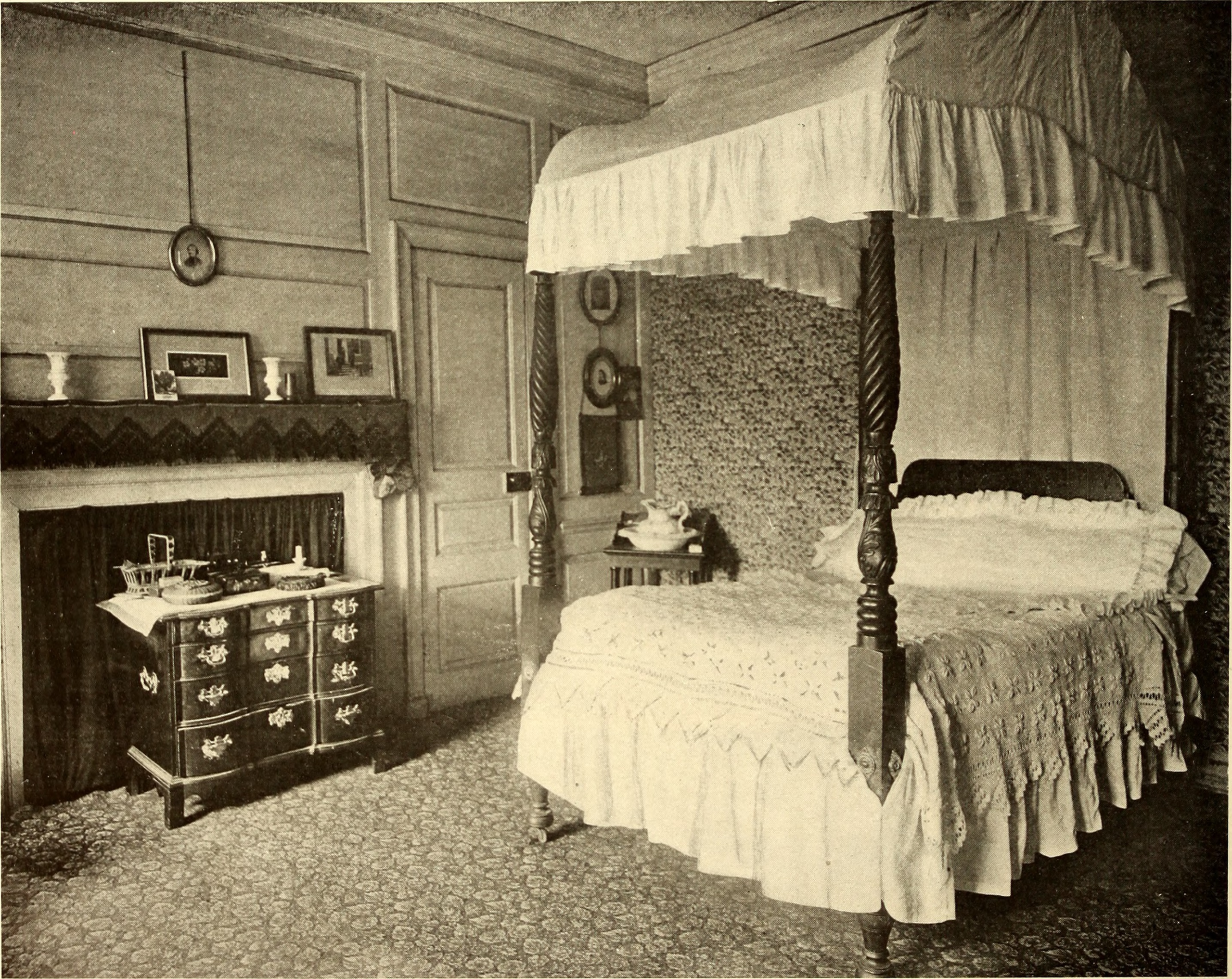
Households of this period had an extensive set of indirect terms, and the care taken over them is itself informative.
The vessels had respectable names. A washstand set was a toilet set, in the older sense of the word, which referred to washing and dressing rather than to plumbing. The pitcher and bowl were the ewer and basin. The chamber pot was the chamber, or simply the china. The slop jar was the slop jar, which is about as direct as the vocabulary got.
Catalogues sold these things in exactly that language, listing a toilet set of ten pieces with the chamber included as a matter of course, illustrated and priced alongside the furniture.
And guests were handled with the same indirection. A visitor shown to a bedroom was told where things were in terms everybody understood and nobody had to spell out, and the arrangements were checked, refreshed and put straight before they arrived.
The vocabulary matters because it shows that none of this was considered shameful or unmentionable at the time. It was ordinary domestic equipment, sold openly, named in print, displayed on a stand and discussed in front of company – which is the opposite of how the same objects are treated now.
The Furniture Was Built for the Weight
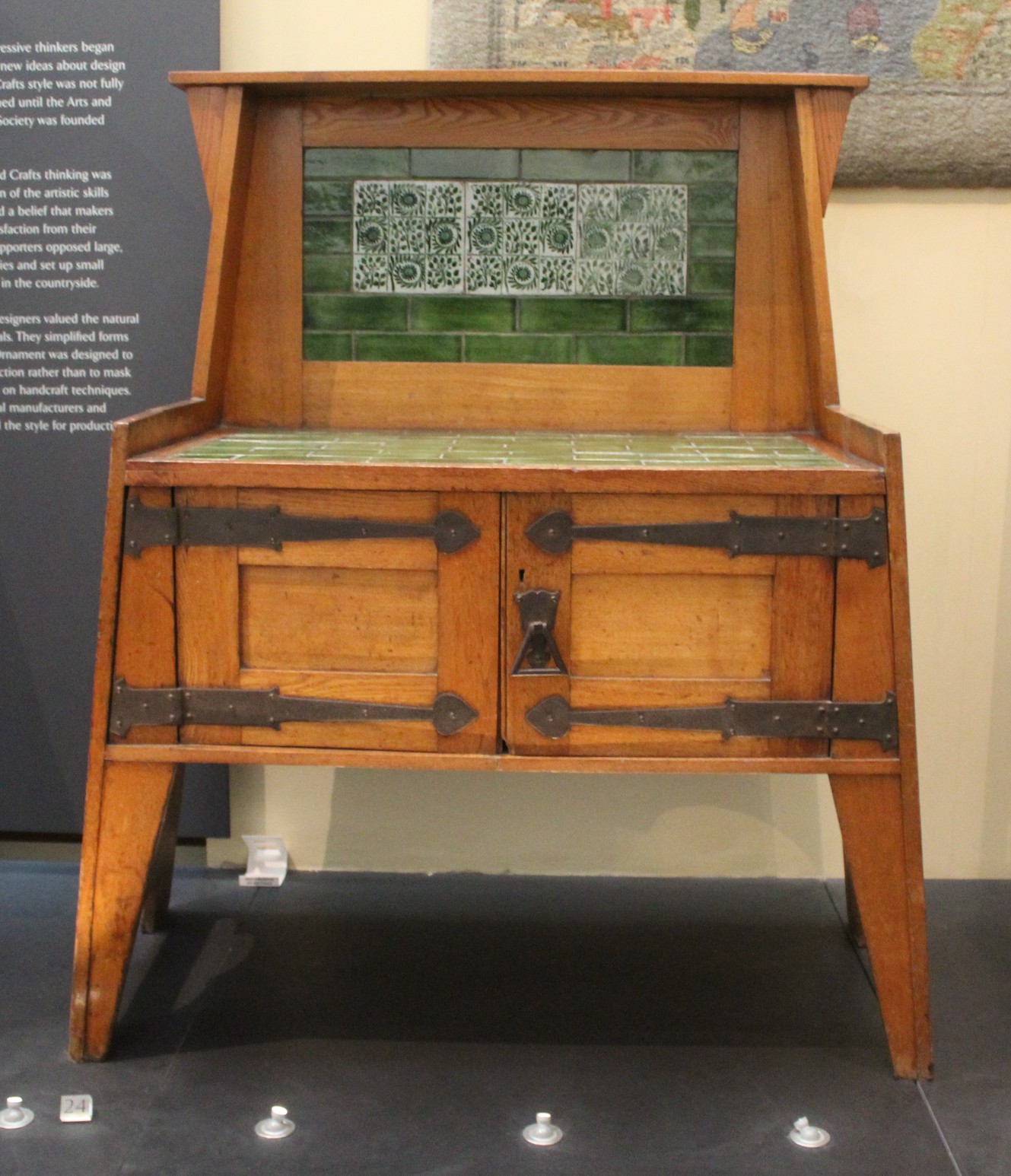
The washstand’s construction is worth a look, because it is heavier than its size suggests and there is a reason.
A full pitcher of water weighs a substantial amount, and so does a bowl with water in it. Both of them are china, both of them are being set down by somebody half awake, and the top of the stand takes that repeatedly, every day, for decades.
So the tops were marble where a household could afford it – impervious, heavy and unharmed by water – and thick hardwood elsewhere, frequently with a raised edge or a splashback to contain what was spilled. The frames were made stout, the legs were braced, and the whole thing was built to be loaded with water and wiped down wet every single morning.
That is why so many survive in good condition and in daily use as furniture. They were engineered for a far wetter and heavier life than holding a lamp and a bowl of keys.
The Bathroom Did Not Arrive for Comfort
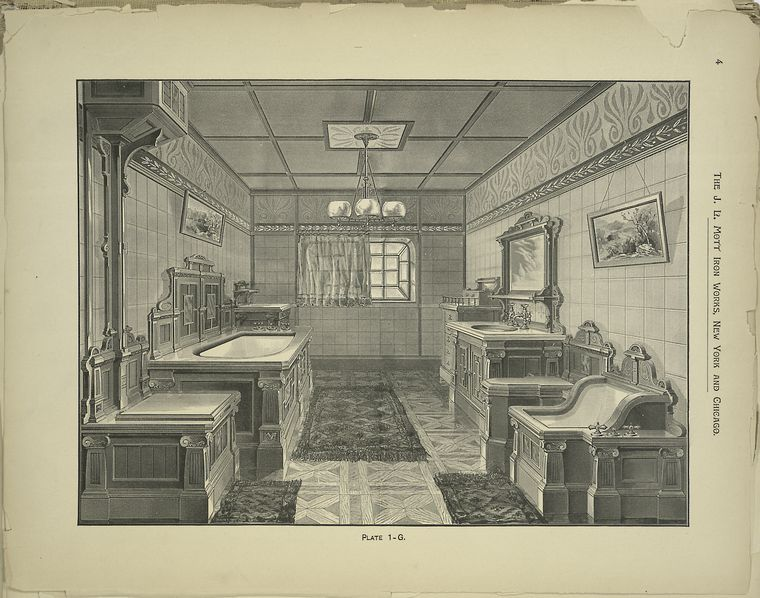
The usual story is that houses got bathrooms because people wanted to be more comfortable. The actual sequence runs the other way round and it was driven from outside the house.
What made an indoor bathroom possible was municipal infrastructure: a pressurised water main in the street and a sewer to connect to. Without both, a bathroom is not an improvement – it is a water supply you have to pump and a drain that has to go somewhere.
What made it compulsory, in large parts of the country, was public health. Sanitary regulation through the late nineteenth and early twentieth centuries progressively required connection to sewers where they existed, set standards for new construction, and in many cities condemned housing without adequate facilities.
And what made it affordable was the plumbing stack. Once a builder is running a vertical pipe through a house anyway, putting the bathroom directly above the kitchen – sharing one stack, one set of supply runs and one vent – reduces the cost enormously. Which is why so many American houses of this period have the bathroom immediately over the kitchen, and why that layout looks like a coincidence and is not.
The Twist: It Abolished a Job, Not an Inconvenience
Follow what the bathroom actually replaced, because it is not what the comfort story suggests.
It replaced a daily two-way carrying operation. Clean water up in a pitcher, every bedroom, every day. Dirty water and waste down in a pail, every bedroom, every day. Vessels rinsed, scalded and returned before the household was awake. Performed by specific people, unpaid, uncounted, in silence, as the first task of every morning for their entire adult lives.
The bathroom did not make washing more pleasant. It eliminated that job completely, in one step, by bringing the water to the room and taking the waste away in a pipe – which means the single greatest domestic labour saving of the American century was not an appliance at all. It was a drain.
And it is almost never described that way. Histories of the bathroom discuss fixtures, tile, colour, the tub and the modern sanitary aesthetic. The thing that changed a woman’s morning from carrying slops down a staircase to turning a handle gets a sentence, if that.
The furniture is the strangest surviving evidence. Washstands are everywhere – in antique shops, in hallways, beside front doors, holding lamps and keys and mail, all over the country. They are the right height for a hall table, they have a useful cupboard, and they look handsome.
And a great many of them have a neat round hole cut in the top where the bowl used to sit, which the current owner has covered with a tray or a cloth or a plant.
It is probably the only piece of furniture in common domestic use whose original purpose nobody mentions.
Like our content? Follow us for more.