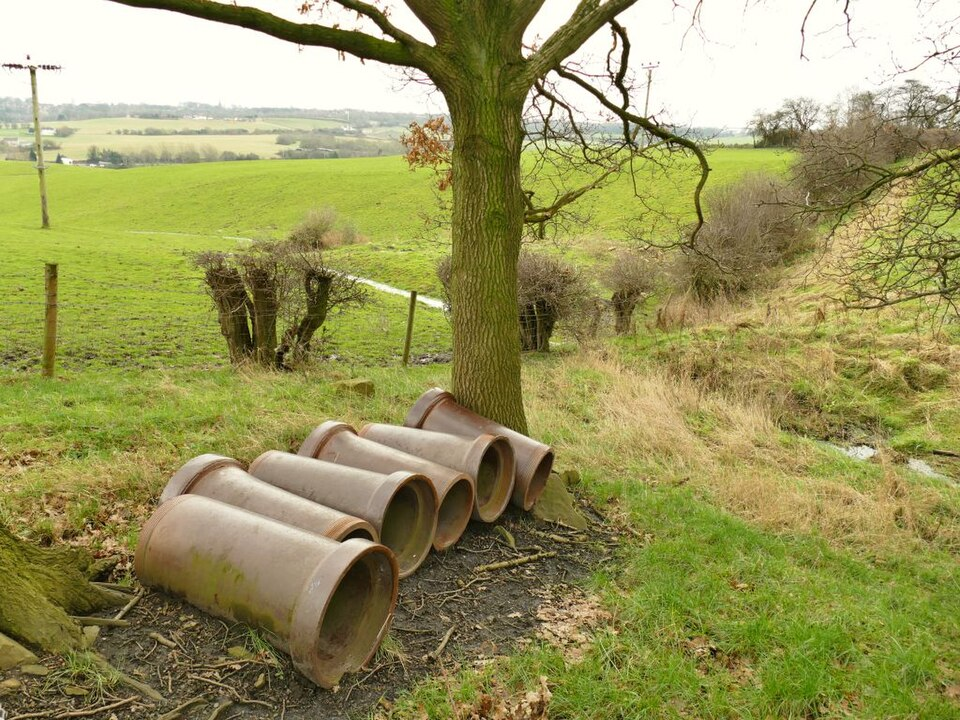
There is an object that turns up constantly on Midwestern farms and almost nobody can identify it. A short cylinder of unglazed red clay, four or six inches across, maybe a foot long, open at both ends, with no bell and no socket – just a plain tube. They come up in plough furrows, get stacked at field edges, end up as garden ornaments and doorstops.
It is a drainage tile, and the quiet fact about it is this: a very large portion of the most productive farmland in the United States is only farmland because millions of those tubes are buried in rows beneath it.
Before they went in, enormous areas of the Midwest were not fields. They were wet prairie, marsh, swamp and seasonally flooded ground – too wet to plough in spring, too wet to carry equipment, and in a great many places genuinely impassable. The soil underneath was superb. You simply could not get at it.
The entire agricultural wealth of that region rests on an engineering project that is completely invisible, was carried out largely with hand tools, and has essentially no place in the popular memory of American farming.
The Tile Was Deliberately Not Sealed
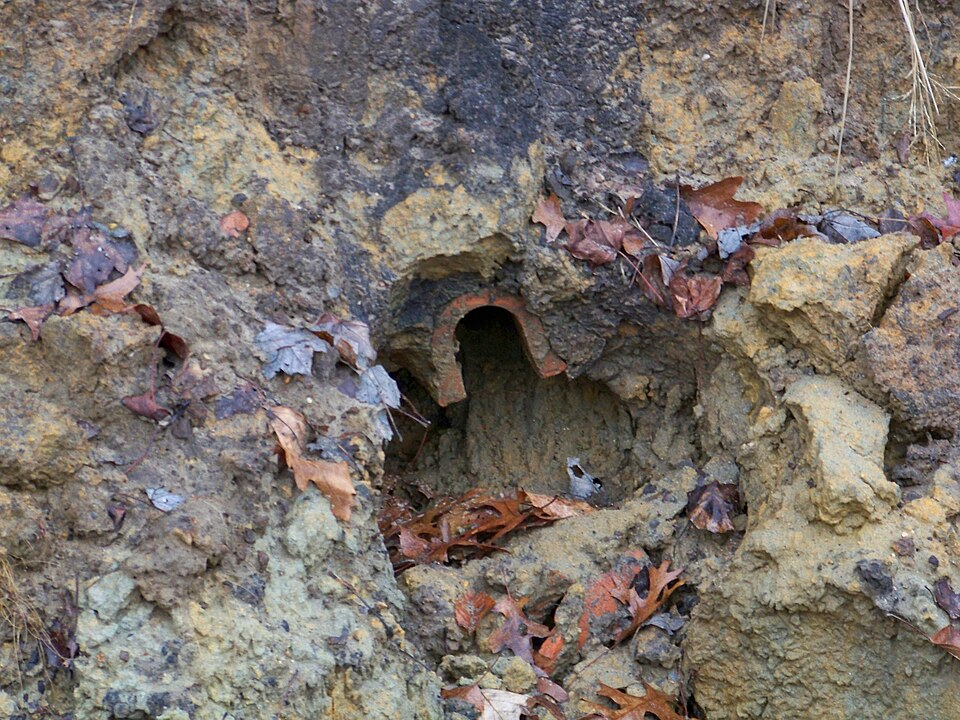
The first thing to understand is that these pipes were designed to leak, which is the opposite of every other pipe anybody deals with.
The tiles were laid end to end in a trench, butted against each other with no joint, no socket, no mortar and no seal. Water does not enter a drainage line through the end of the run; it enters through the gaps between the tiles, along the whole length, from the saturated soil pressing in on all sides.
So the open butt joint is the intake. A sealed line would do nothing at all.
The material was unglazed fired clay, chosen because it is cheap, immensely durable in soil, chemically inert, and strong in compression – which is what a buried tube needs. It does not rust, it does not rot, and it is not attacked by anything in the ground.
Which is why so much of it is still working. Lines laid in the nineteenth century are, in a great many fields, still carrying water today, a century and a half later, having had no maintenance of any kind.
Like our content? Follow us for more.
The Physics Is Simple and the Effect Is Enormous
What a drain does is lower the water table.
Soil holds water in the spaces between its particles. When those spaces are full, the soil is saturated – there is no air in it. Roots need air; a saturated root zone suffocates a crop, and saturated soil cannot be worked because machinery and hooves destroy its structure and because it will not warm up in spring.
Put a permeable pipe at a depth of a few feet with a slight continuous fall, and water in the soil above it drains in through the joints, runs along the line and leaves. The water table drops to roughly the level of the pipe, the soil above it drains and aerates, and the ground becomes workable earlier and dries faster after rain.
That is it. There is no pump, no power, no mechanism and no moving part. The whole system is a gradient and a permeable tube, and it transformed a region.
The second-order effects were bigger than the first. Drained land warmed earlier, which lengthened the growing season. It could be worked in spring, which allowed timely planting. It stopped losing crops to wet years. And it permitted the heavy machinery that American agriculture then developed, which simply cannot operate on ground that is wet in April.
It Was Dug by Hand, by the Mile
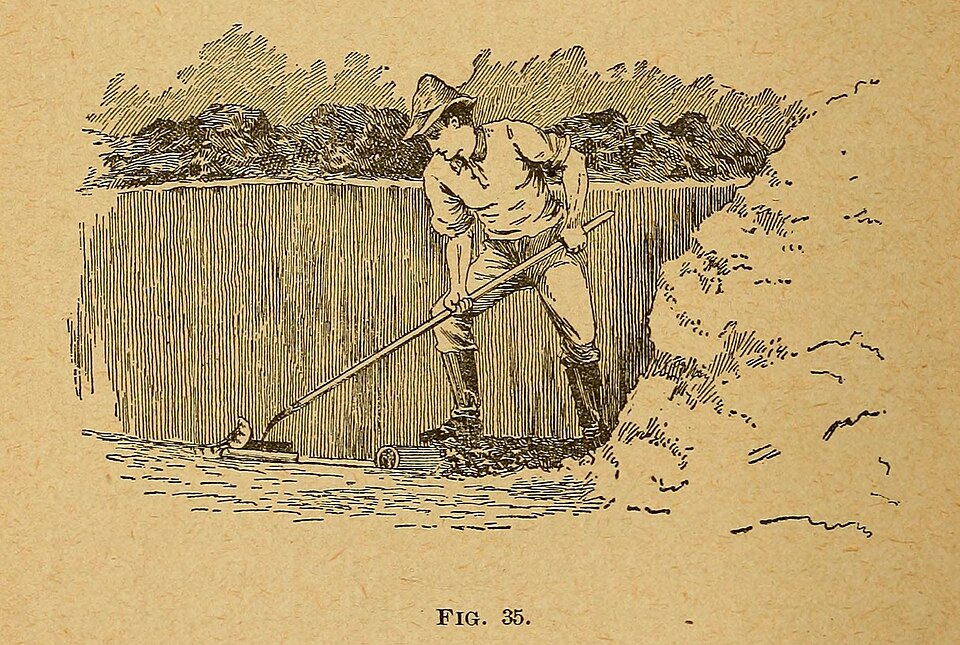
The scale of labour involved is the part that stops people when they hear it.
Early tile was installed by digging a trench by hand – spade, shovel and a purpose-made tiling spade with a long narrow blade – to a depth of several feet, with a continuous and accurate fall maintained over hundreds of yards, in heavy wet soil. Then the tiles were laid in the bottom by a man lying down or working from the trench, checked for line, and the trench was backfilled.
Per acre, a tiled field might carry several hundred feet of line or considerably more. Across a region, the total runs to a quantity that is difficult to express sensibly.
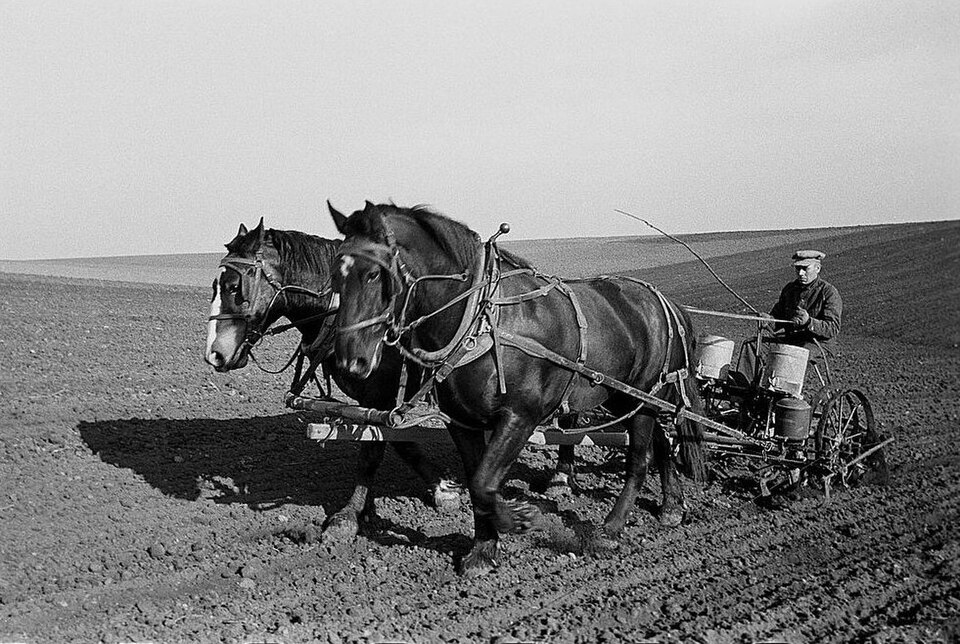
Horse-drawn tile ditchers and then powered trenching machines took over through the late nineteenth and twentieth centuries, and the modern method uses a tile plough that pulls flexible perforated plastic pipe into the ground continuously with laser or satellite grade control, which is faster by orders of magnitude.
But a very large proportion of the original system was put in by men with spades, working for wages or on their own ground, one trench at a time.
The Clay Was Made Locally and That Shaped the Map
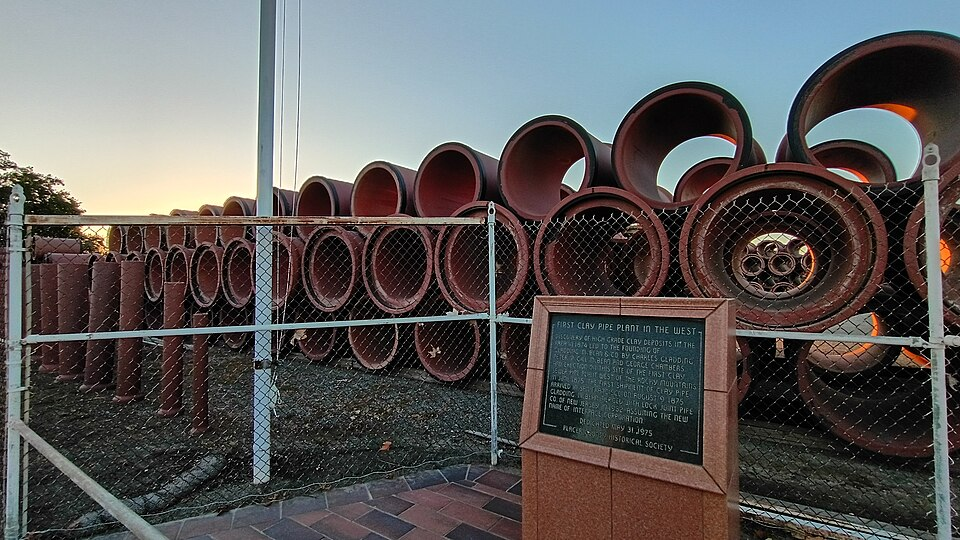
Tile is a heavy, cheap, bulky product, which means it could not be shipped far before the economics collapsed.
So tile works sprang up wherever there was suitable clay anywhere near land that needed draining – small local yards digging clay, extruding tubes, drying them and firing them in kilns, selling to farms within a reasonable haul. A great many American towns had one, and a great many have a street, a road or a neighbourhood named after it.
That local manufacture is why the tile in one county looks different from the tile in the next. Colour, diameter, wall thickness, length and the degree of firing all vary by works, which means a tile pulled out of a field can frequently be identified to a general area by anybody who knows the local products.
The trade also left an odd linguistic trace. In the drained regions, the verb to tile means to install drainage, a tiler is a drainage contractor, and a field is described as tiled or untiled – usages that are completely opaque outside those areas and completely ordinary inside them.
Nobody Remembers It Because You Cannot See It
This is the central puzzle of the subject and the answer is straightforward.
American agricultural memory is full of visible things. The barn, the silo, the windmill, the tractor, the fence, the shelterbelt, the grain elevator. All of them stand up above the ground and can be photographed, drawn, painted and put on a label.
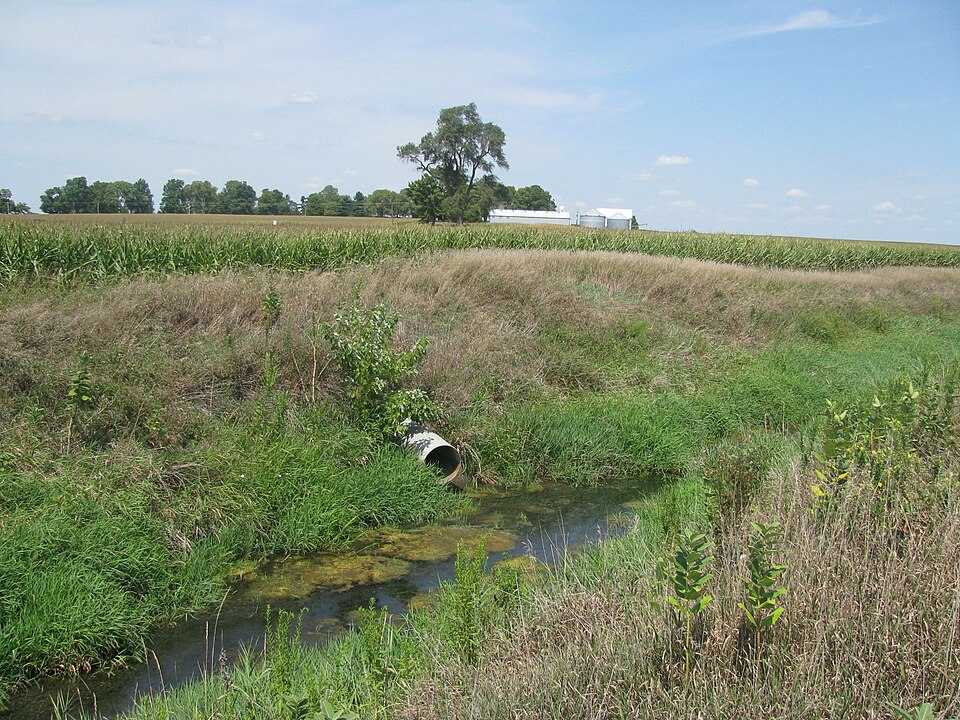
Drainage is a buried system with no above-ground presence at all except an outlet pipe in a ditch bank, which looks like nothing. It cannot be photographed. There is no silhouette. A tiled field looks precisely like an untiled field, except that one of them grows a crop.
So the single most consequential piece of infrastructure in the agricultural history of that region is also the only one with no image attached to it – and the result is that it is absent from the popular account almost entirely, while the windmill, which pumped water for livestock, is on everything.
Plastic Replaced It and the Clay Kept Working
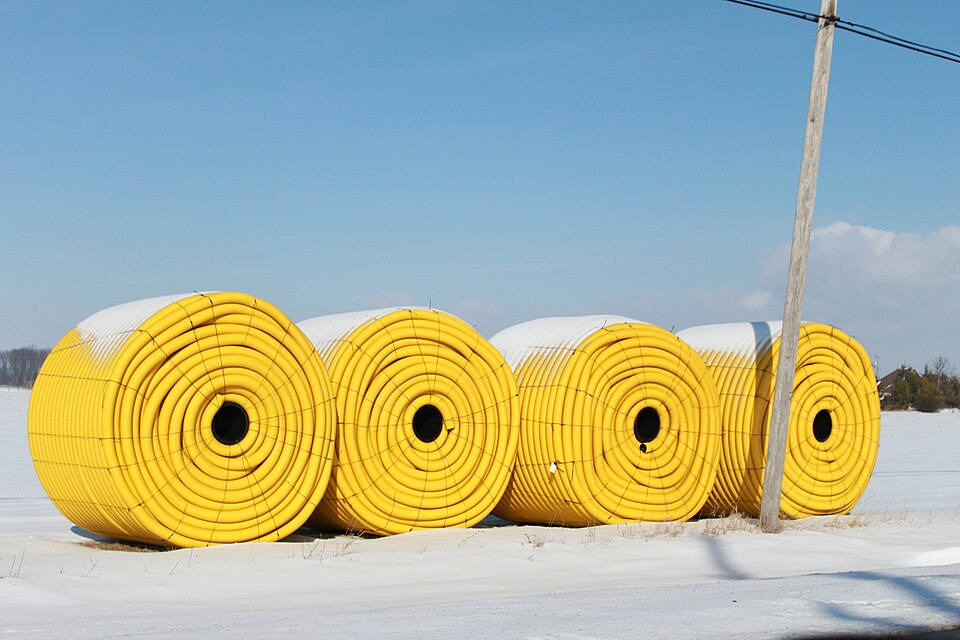
The modern material is corrugated flexible plastic pipe, perforated along its length, supplied in long coils.
It is better in nearly every practical respect. It arrives as a continuous run instead of several hundred separate pieces, which eliminates the entire business of laying and aligning individual tiles. It can be pulled into the ground by a machine without an open trench at all. It is light enough for one person to handle. It does not break when dropped. And because it is perforated rather than butted, the intake is designed rather than incidental.
What it has not done is displace the clay. An enormous quantity of old tile is still in service underneath American fields, and the normal modern practice is to work around it, connect new plastic into it, or replace failed sections while leaving the rest alone – because a line that is still carrying water has no reason to be dug up.
So a great many fields are drained by a hybrid system of nineteenth-century fired clay and twentieth-century plastic, joined together, functioning as one network, with no record in a great many cases of where the old lines actually run. Finding them is a recognised problem: farms locate forgotten tile by the pattern of the crop above it, by where the ground dries first, and by digging where the evidence points.
It Is Also a Live Environmental Question
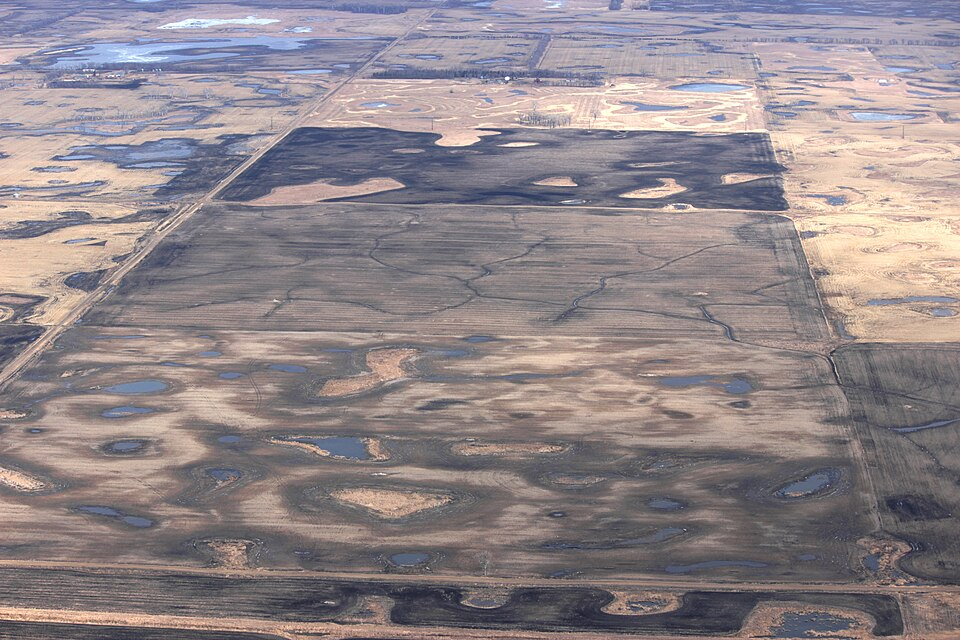
Any honest account has to say that drainage is not a settled matter, because what it does is move water.
Those millions of acres of wet prairie and marsh were ecosystems, and draining them eliminated a very large amount of wetland habitat. That is simply a fact about what happened. Separately, a drainage network delivers water from fields into ditches, streams and rivers faster than undrained ground would, and it carries dissolved material with it – which connects field drainage to ongoing questions about water quality downstream.
Both of those are the subject of active research, active regulation and genuine disagreement among serious people about what should be done. This piece takes no position on any of it, names no agency, programme, statute, waterway or organisation, and does not attempt to summarise a technical debate it is not equipped to settle. Anybody with a practical interest should be working from current authoritative guidance and from their own state’s requirements.
What is not in dispute is the historical mechanism. The food production of a very large region exists because the water table under it was lowered deliberately, and the lowering was done with buried clay pipe.
The Doorstop in Somebody’s Garage
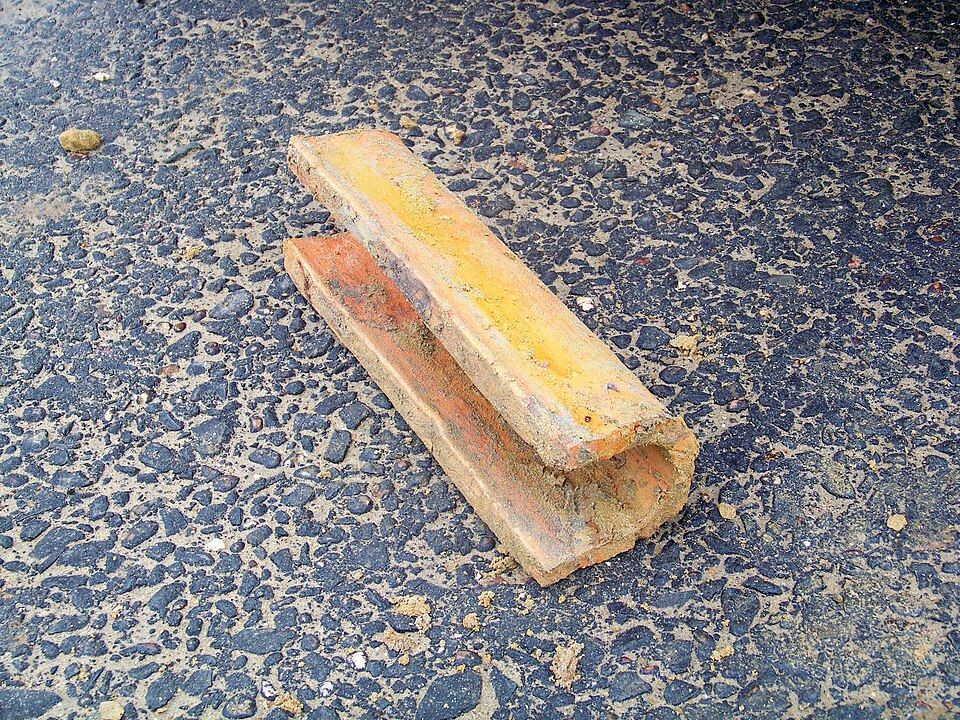
So the object is worth more attention than it gets.
A plain unglazed clay cylinder, open at both ends, made at a works a few miles away out of local clay, laid in a hand-dug trench by somebody whose name is unrecorded, at a depth of several feet, at a fall measured by eye and string, under a field that was previously a marsh.
It has been down there for well over a century in most cases. It has had no maintenance. It is still doing exactly what it was put there to do, which is to let water into itself through a gap and carry it away.
And the reason nobody thinks about it is that it worked perfectly, immediately and permanently, and left nothing to look at.
Like our content? Follow us for more.