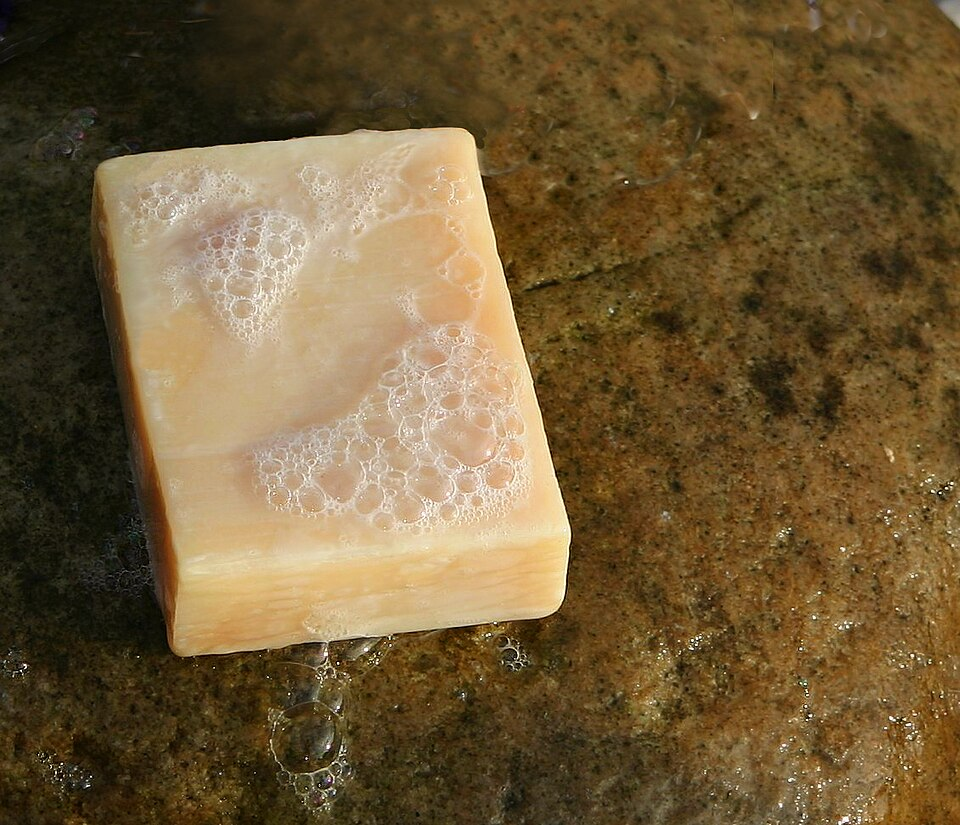
Homemade soap gets presented now as a craft – a hobby with nice packaging, essential oils, moulds in the shape of flowers, and a certain amount of talk about getting back to simpler things.
The historical version was not that, and the difference is worth getting straight, because it changes what the practice actually was.
An American farm household made soap for one reason: it had a continuous supply of two materials it could not use for anything else and could not easily throw away. One was fat. The other was alkali. Put them together and they turn into soap, which the household also needed. That is the whole explanation.
It was not thrift in the sense of frugality, and it was not craft in any sense at all. It was a disposal process that happened to have a useful output – which is a completely different kind of activity from making something because you want to make it.
The Fat Had Nowhere to Go
Start with the input nobody thinks about.
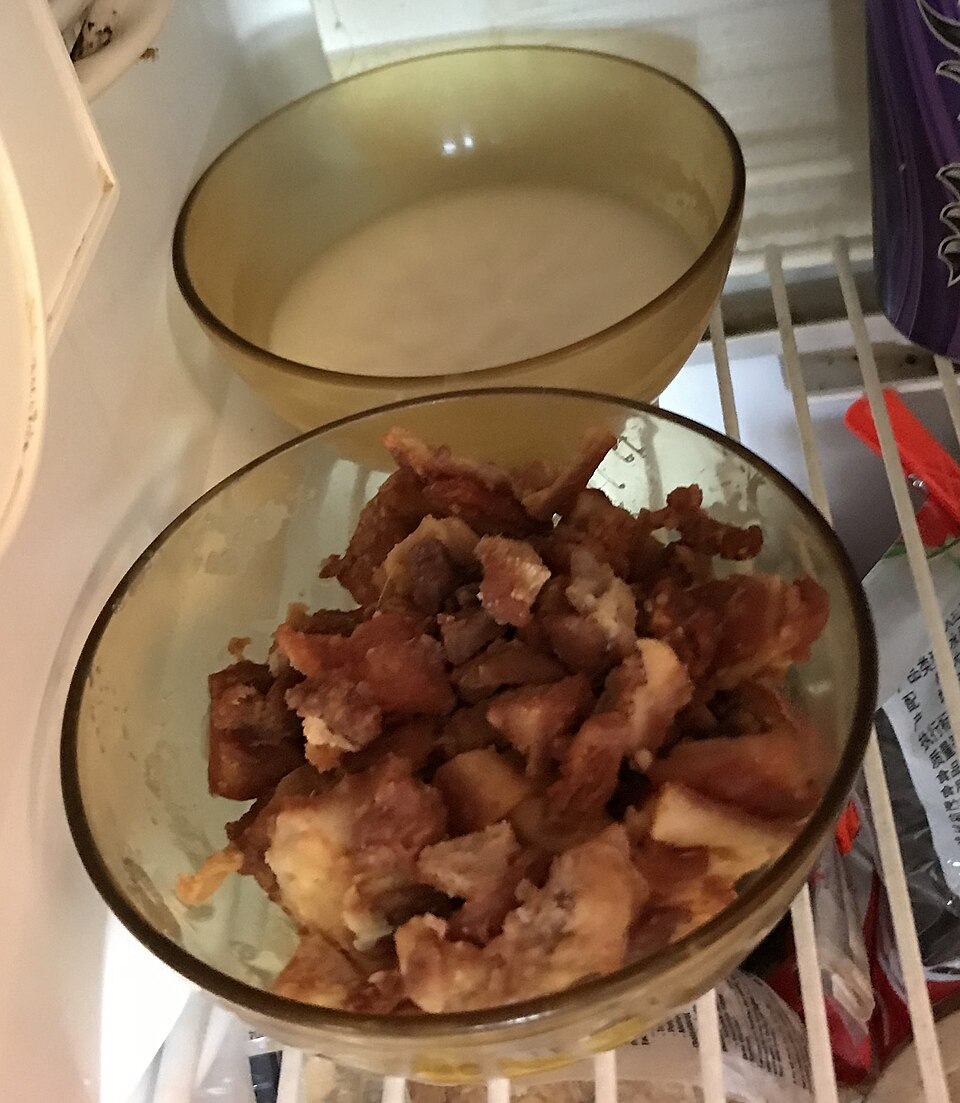
A household that butchered its own animals, rendered its own lard, cooked everything in fat and saved the drippings produced a steady and substantial quantity of fat it could not eat. Trimmings. Scraps. Fat that had been used too many times. Fat from parts nobody wanted. Rendered material that had gone off. Drippings that had turned.
That is a real volume over a year, and it has to go somewhere. It cannot be buried without attracting everything in the county. It cannot be thrown on the ground for the same reason. It cannot be burned easily. And it cannot be left in a bucket in a warm outbuilding, because fat that has turned is genuinely unpleasant and attracts flies and animals.
So a grease crock sat somewhere, and everything went into it, continuously, all year. Which gives you a container of accumulating waste fat and a standing problem about what to do with it.
Soap is the answer to that problem. The fat becomes a product and the problem disappears.
Like our content? Follow us for more.
The Alkali Came Out of the Fire
The second input was equally a by-product.
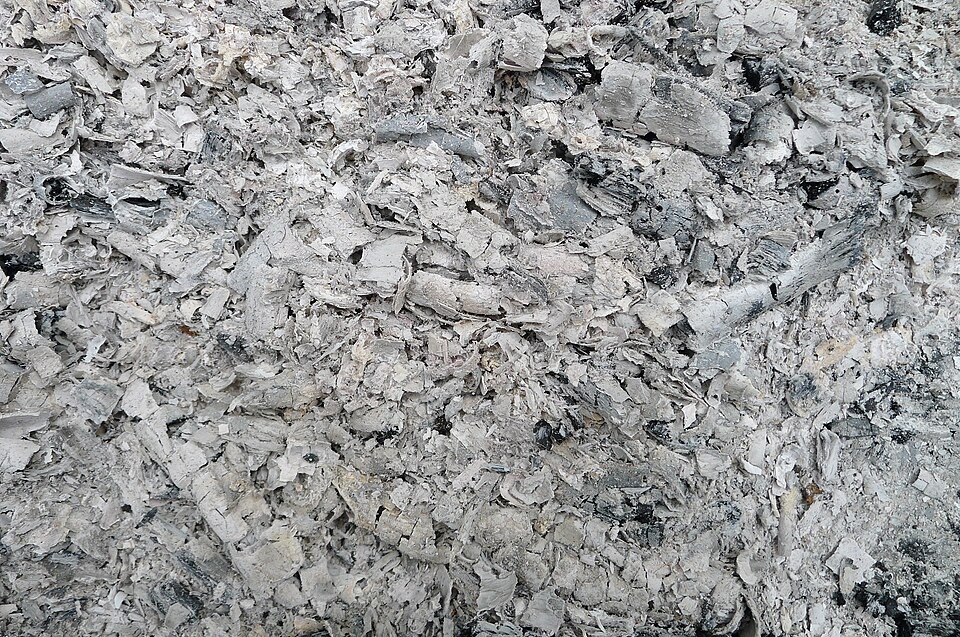
A household burning wood produced ash, every day, all winter, in quantity. Wood ash is strongly alkaline, and water run through it picks up that alkalinity and carries it away in solution – which is the mechanism by which a fire’s residue becomes a chemical reagent.
That reagent is what soap-making requires. Combine fat with a sufficiently strong alkaline solution and a chemical reaction occurs that converts both into soap and glycerine, and the process is called saponification. It is not a mixing or a dissolving; it is a genuine chemical change, and the products are completely different substances from the inputs.
So the household had two waste streams – one from butchering and cooking, one from heating – that combined into something it otherwise would have had to buy.
This piece gives no method, proportion, strength, timing, equipment or procedure for any of it, and that is deliberate rather than coy. The alkaline material involved is strongly caustic, capable of causing serious injury, and the historical practice was genuinely hazardous. Anybody interested in making soap should work from current authoritative sources using purchased materials of known strength, which is how it is now done and is considerably safer than anything a farm household was doing.
Strength Was Guesswork and That Was the Problem
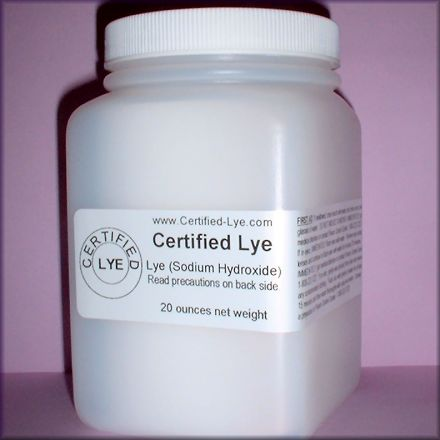
The single biggest difference between the historical practice and the modern hobby is that the old version could not measure anything.
Purchased alkali today comes with a known composition and a label. A household solution made from ash does not; its strength depends on the wood that was burned, how much ash was used, how much water, how long it sat and how it was handled. Two batches made a month apart in the same kitchen could be substantially different.
Which means the proportion of fat to alkali – the thing that determines whether you get soap, or a greasy mess, or a caustic one – was being judged rather than calculated. Households used tests that were genuinely clever given the constraints, and they were still tests of a variable they could not quantify.
The consequence is the reputation. Homemade soap of this period was frequently harsh, because an excess of alkali leaves unreacted caustic material in the finished bar, and that is what people are remembering when they describe soap that took the skin off their hands. A well-made batch was perfectly good. An over-strong one genuinely was not.
It Was Soft Soap, Not Bars
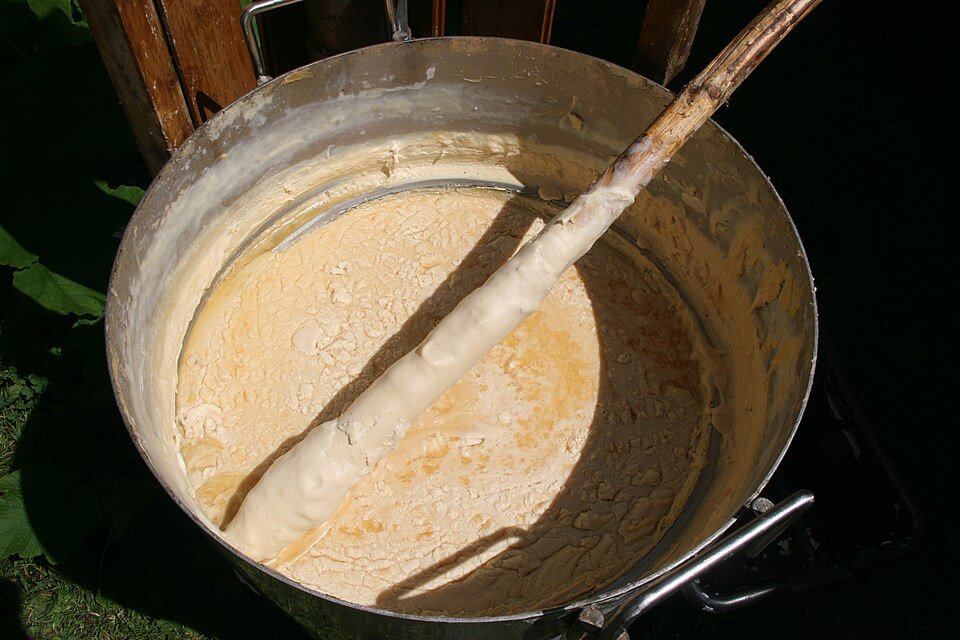
Another thing the hobby version gets wrong by accident: a great deal of household soap was not a bar at all.
Made with the alkali available from wood ash, the usual product is a soft jelly-like soap stored in a crock or a barrel and scooped out with a paddle or a dipper as needed. It does not set into a firm cake.
Hard bar soap requires a different alkali, which households increasingly bought in tins once it became available commercially – at which point the ash step dropped out of the process entirely and the household was buying one input and supplying the other.
That intermediate stage is the one most people’s grandmothers actually remember: fat from the kitchen, alkali from a tin, cooked in a kettle outdoors, poured into a flat box, cut into bars when set. It is halfway between the old disposal process and simply buying soap, and it lasted a long time.
What It Was Used For Was Not Washing People
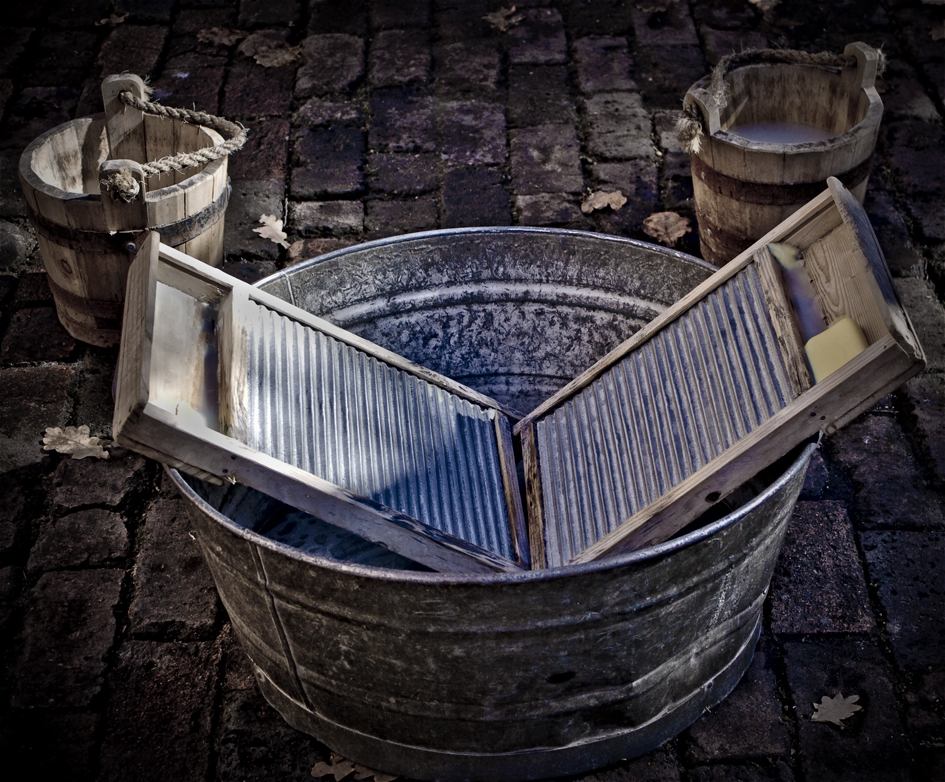
Household soap had a hierarchy of uses, and personal washing was near the bottom.
The strong soap went on the heaviest work: laundry, especially work clothes, which is where most of it was consumed. Scrubbing floors. Washing dishes and milk equipment. Cleaning tools. Washing the dog. Treating hides. In a great many households the farm’s milking equipment got the best and most careful attention because the cream cheque depended on it.
Washing yourself with it was done when nothing better was available, and bought toilet soap – which was pleasant, mild, scented and not expensive – was one of the earliest commercial products that households chose over their own output.
That split is informative. People did not stop making soap all at once; they stopped making the kinds of soap that commercial products did noticeably better, and kept making the rough stuff for work as long as the inputs stayed free.
It Was an Outdoor Job in a Big Iron Kettle
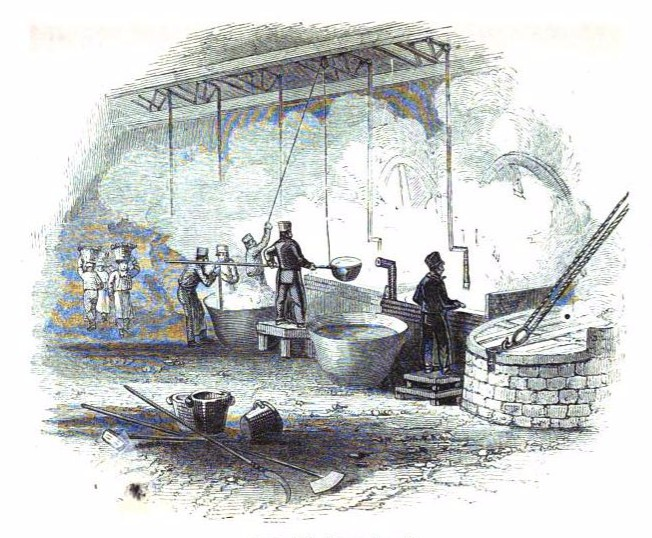
The work happened outside and at a particular time of year, and both of those were practical decisions.
The vessel was a large iron kettle over a fire in the yard – the same kettle a household used for scalding at butchering time, for heating wash water and for anything else that needed a lot of heat and a lot of volume. A kitchen stove could not hold it and a kitchen could not have tolerated the process.
Timing followed the inputs. Butchering happened in cold weather, which is when the fat arrived in quantity. Ash accumulated through the winter. So soap-making fell naturally in late winter or spring, when both materials had built up and before the warm weather made a crock of fat an active problem.
That seasonal placement put it alongside the other spring jobs – the ash hauled out, the buildings cleared, the bedding stripped – which is why so many accounts of it sit inside a general description of spring work rather than being remembered as an event of its own.
And it took most of a day, with somebody attending to it continuously, which meant it was work that got assigned rather than volunteered for.
Both Inputs Stopped Being Free
The practice ended for a reason that had nothing to do with anybody preferring commercial soap, and this is the part that makes the whole subject make sense.
The fat stopped accumulating. Households stopped butchering their own animals, stopped rendering their own lard, bought meat already trimmed, and increasingly cooked with purchased vegetable oils and shortenings in smaller quantities. The grease crock had less in it every year, and eventually there was no reason to have one.
The ash stopped too. Central heating with gas, oil and electricity produces no residue at all, which eliminated the alkaline input entirely and at a stroke. A house with no fire has no ash, and a household with no ash has no soap-making process – only a shopping list.
So both waste streams dried up, within roughly the same generation, for completely unrelated reasons. And once a disposal process has nothing to dispose of, it stops immediately, because there was never any other motive for it.
Commercial soap being cheap and better was the easy part. The practice was already pointless before that mattered.
Which Is Why the Modern Hobby Is a Different Activity
None of this is an argument against making soap now, which is a perfectly good thing to do and produces an excellent product.
But it is a different activity, and the difference is instructive. A modern soap maker buys fat or oil of a chosen type, buys alkali of a known strength, calculates the proportion precisely, controls the temperature and produces a predictable result. That is craft: a deliberate selection of inputs to achieve an intended output.
The historical household did the reverse. It took whatever fat had accumulated and whatever alkali it could get out of its own ashes, combined them in proportions it could only estimate, and accepted whatever came out – because the alternative was a crock of rancid fat and a pile of ash, and both of those were problems.
That is not craft. It is a closed loop in a household economy, in which the outputs of two processes happened to be the inputs of a third.
And when the first two processes disappeared, the third one had no reason to exist. Which is why the only people making soap now are the ones who want to.
Like our content? Follow us for more.