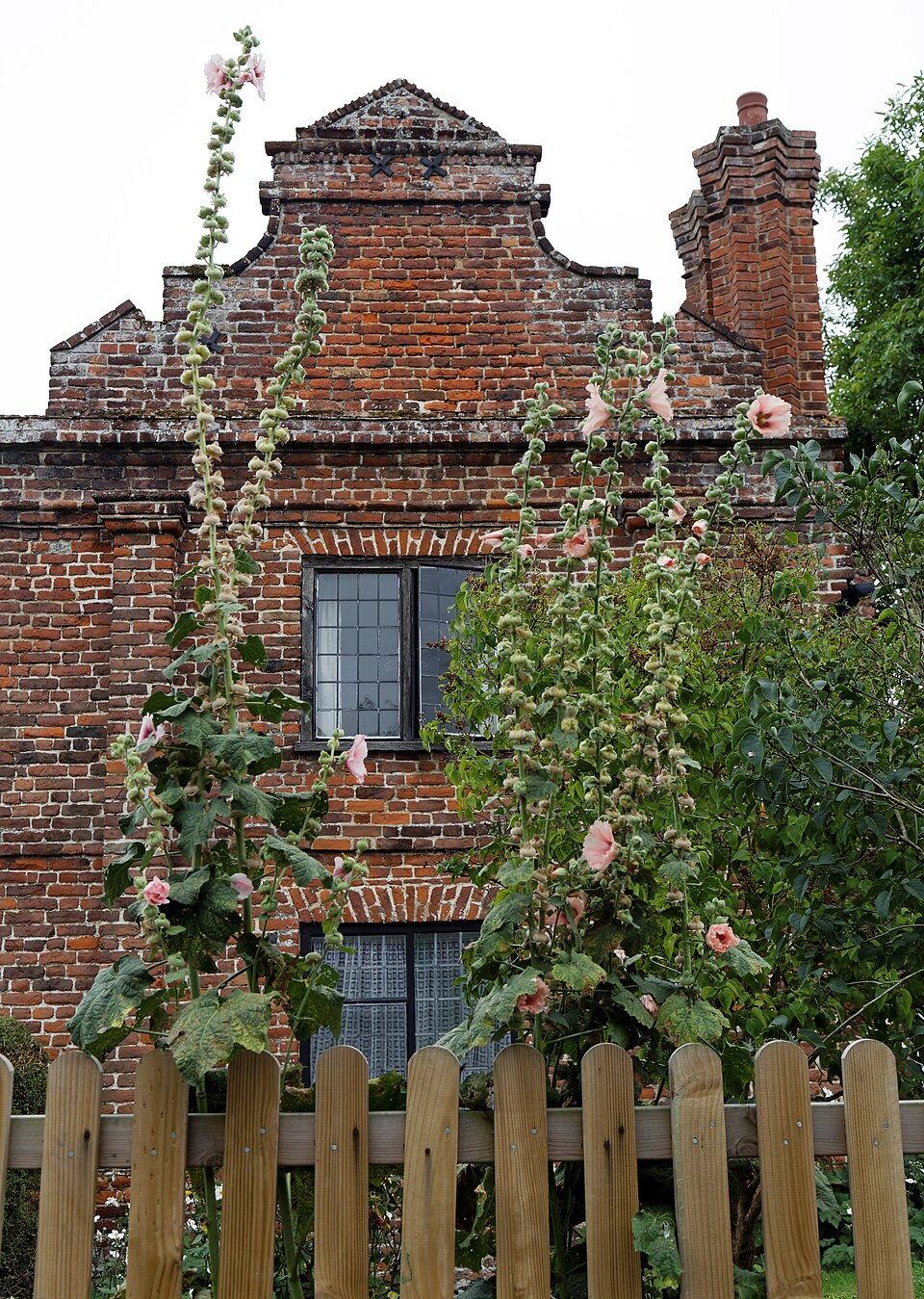
In 1964 the planting right against the door of a house was flowers, and it was kept strictly separate from the vegetables, which were out back in rows.
The plants were tall, floppy and short-lived – hollyhocks, larkspur, foxgloves, four o’clocks, poppies, sweet william – mostly annuals and biennials that grew fast, flowered heavily, dropped their seed and died. Which means they came back on their own. A planting established once continued indefinitely without anybody buying anything, and that single fact governs everything else about it.
It arranged itself, it was grown from seed somebody had been given, and it got the household’s used dishwater. Here are fourteen things every household knew.
1. The Garden by the Door Was Not for Eating
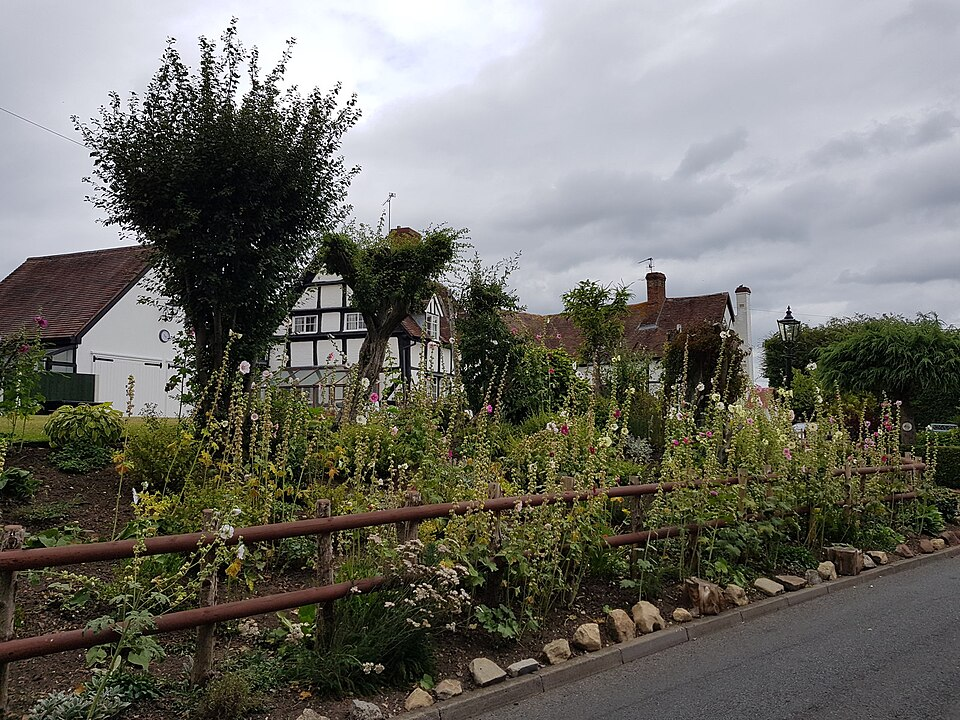
Right against the house – along the foundation, beside the steps, flanking the path to the door – was a planting of flowers kept entirely separate from the vegetables, which were out back in rows.
Foundation planting is now overwhelmingly shrubs – evergreens, a few flowering woody plants – installed at once and kept clipped.
The separation is the thing to notice. Food was grown in a plot, in rows, measured and worked with a hoe; flowers were grown at the door in an unplanned mass, and the two were different activities with different rules and generally different people in charge of them.
Like our content? Follow us for more.
2. The Plants Were Tall, Floppy and Short-Lived
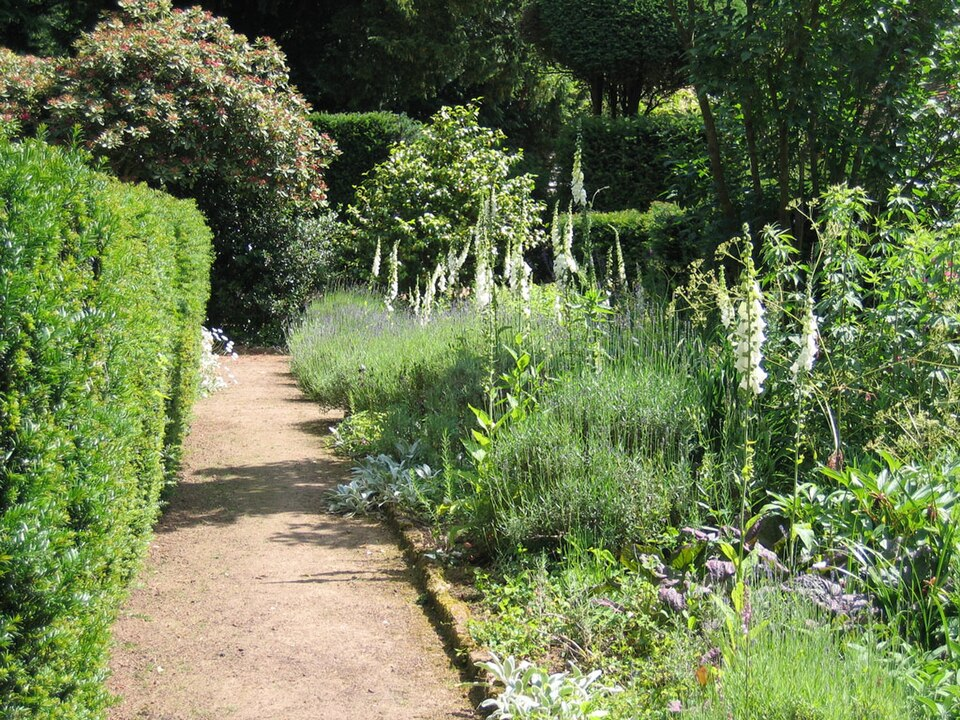
Hollyhocks, foxgloves, larkspur, sweet william, poppies, four o’clocks, bachelor’s buttons and sunflowers – mostly annuals and biennials that grew fast, flowered heavily, dropped seed and died.
The same plants exist and are sold, but residential planting has shifted decisively towards woody shrubs and compact bedding plants bought in flower.
Short-lived plants behave completely differently from shrubs, and this is the root of nearly everything else here. A biennial germinates one year, flowers the next and dies, which means the planting is never the same twice and never finished.
3. Nobody Bought Them – They Came Back on Their Own
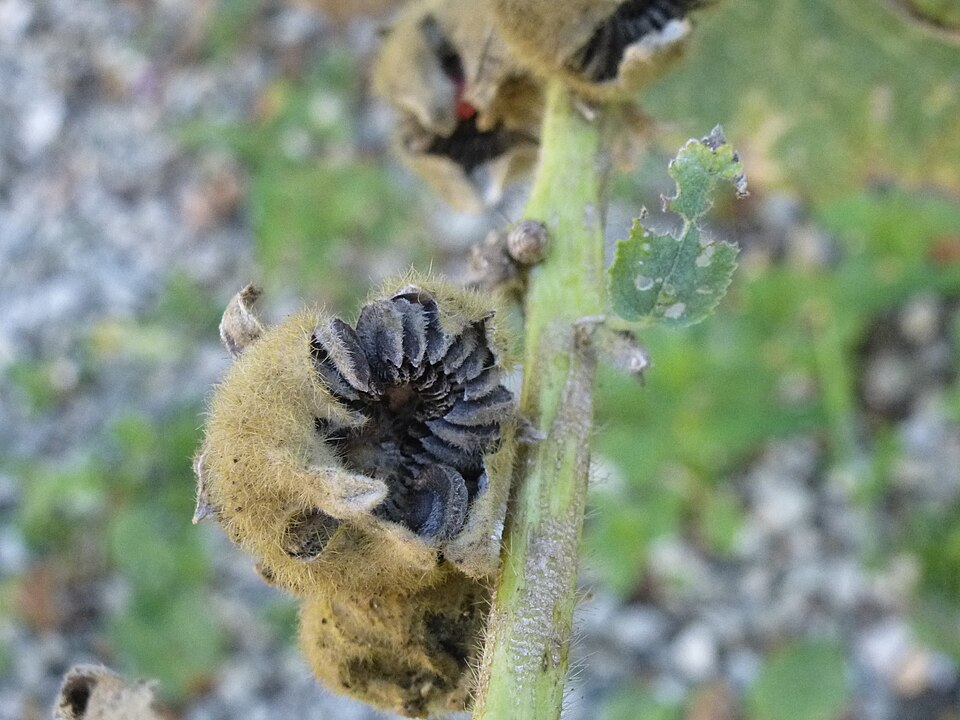
These plants self-seed. They drop seed where they stand, it germinates the following spring, and a planting established once continues indefinitely without anybody purchasing anything.
Bedding plants are bought every spring as flowering transplants in trays, which is a recurring cash expense rather than a one-time one.
Self-seeding is the economic heart of the dooryard garden. The whole thing cost nothing after the first year, which mattered enormously in a household with no money for ornament – and it is exactly what the modern garden centre business model cannot accommodate.
4. The Arrangement Was Not Planned and Could Not Be
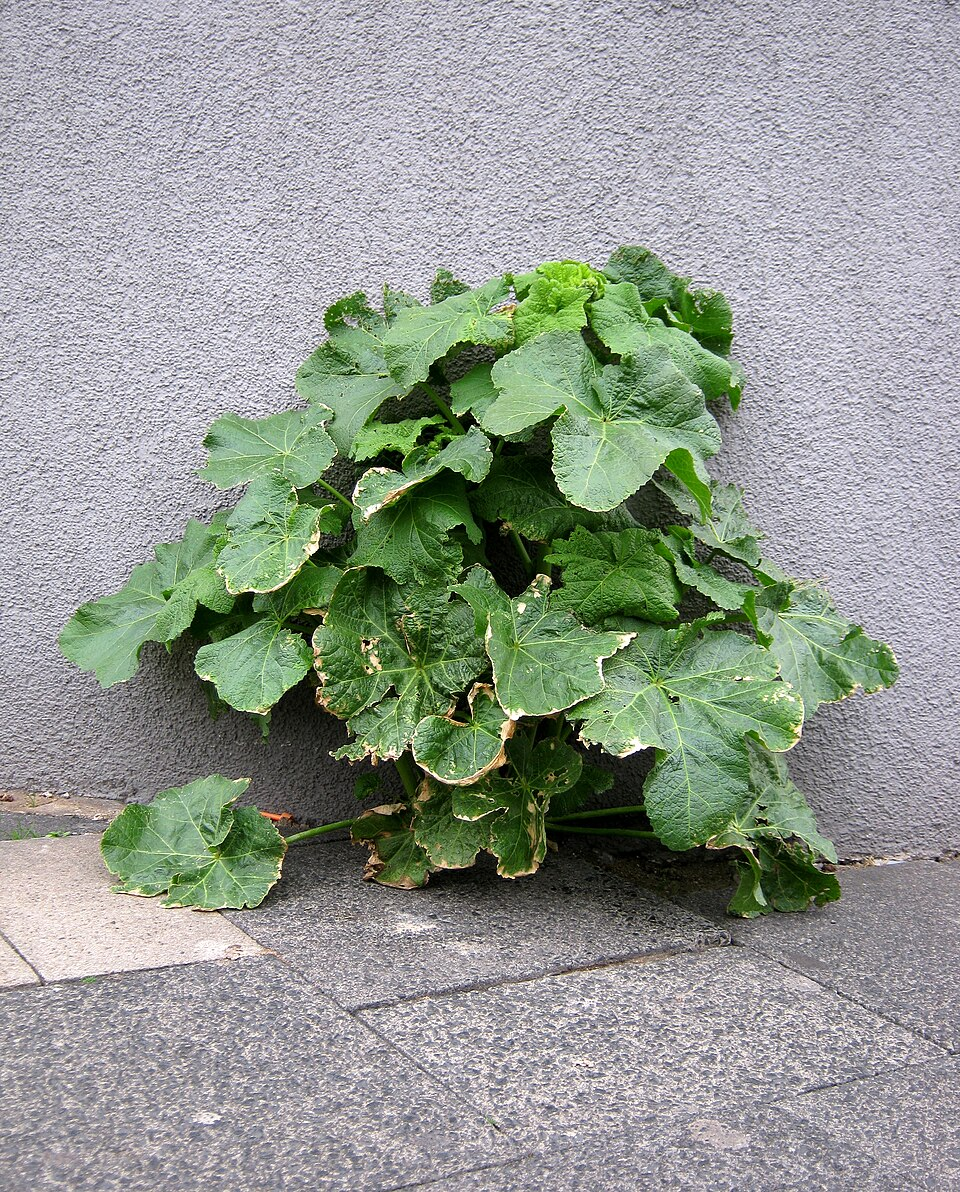
A self-seeding planting arranges itself. Seed falls where the wind and the rain put it, so the hollyhocks move along the wall over the years and the colours shift as some strains outcompete others.
Designed planting schemes, with plants placed deliberately in chosen positions and anything appearing elsewhere removed as a weed.
This is the single largest difference in attitude. The old dooryard garden was managed rather than designed – the gardener edited what appeared, pulling some and leaving others – whereas a modern bed is specified in advance and then defended against change.
5. Seed Was Traded Rather Than Purchased

Seed moved between households in envelopes, in letters, over fences and at church, and a great many dooryard plantings consisted entirely of things somebody had been given.
Commercial seed and transplants, with household seed-saving a deliberate hobby practised by a small minority.
Seed as a social currency is a lost mechanism and it explains a lot about what grew where. A plant that came from a neighbour carried an obligation and a history, which is a different relationship from a plant that came from a rack with a price on it.
6. The Plants Were Known by Household Names
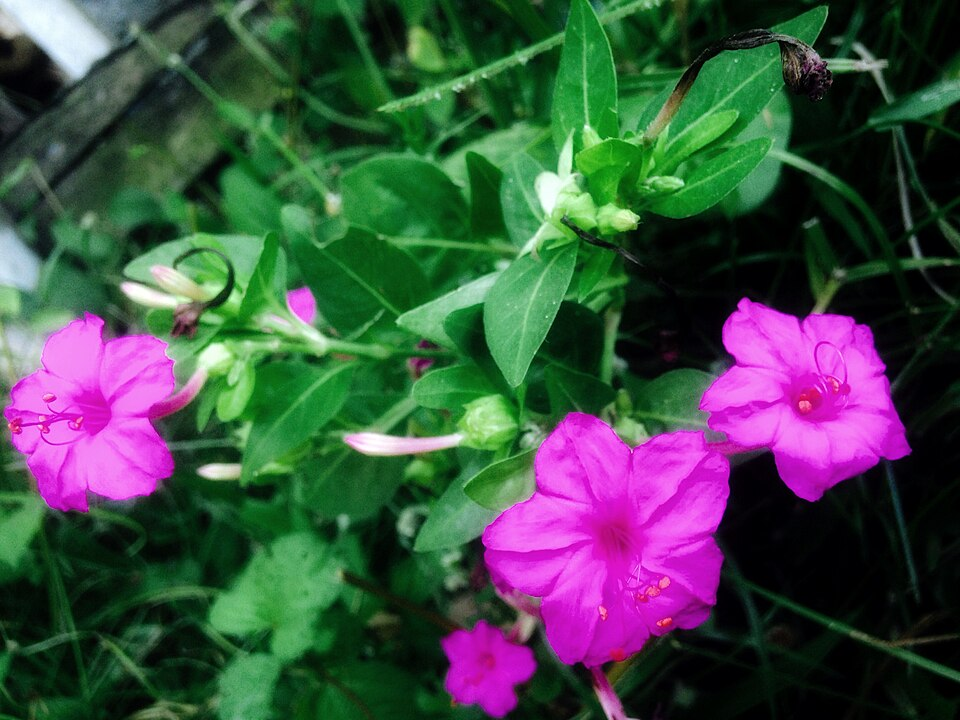
Four o’clocks, bachelor’s buttons, bleeding heart, sweet william, hens and chicks, money plant, old maid’s pink, touch-me-not – names that described behaviour or appearance rather than botany.
Retail names, which are a mix of the old common names and marketing names attached to particular cultivars.
Those names are evidence of how the plants were transmitted. A plant learned from a catalogue carries its catalogue name; a plant learned from the person who gave it to you carries whatever they called it, which is why the same flower had different names a county apart.
7. Hollyhocks Specifically Went Against the House
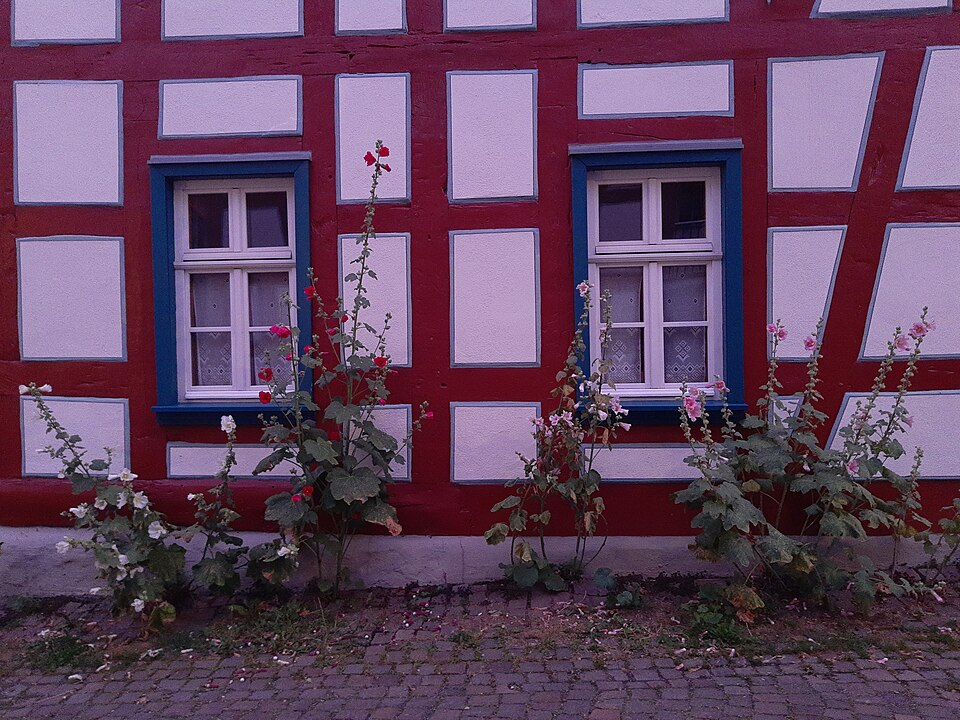
Hollyhocks are very tall, lean badly and flower on a single spike, which makes them awkward in the open and ideal planted against a wall that holds them up.
Still grown, with the same habit and the same solution, though far less commonly and more often in a cottage-garden planting than beside a farmhouse door.
The siting is purely practical and it is why they ended up where they did. A plant that falls over needs something behind it, and a house wall is free, which is the same reasoning that put them along fences, privies and sheds.
8. The Planting Was Chickens’ Business Too
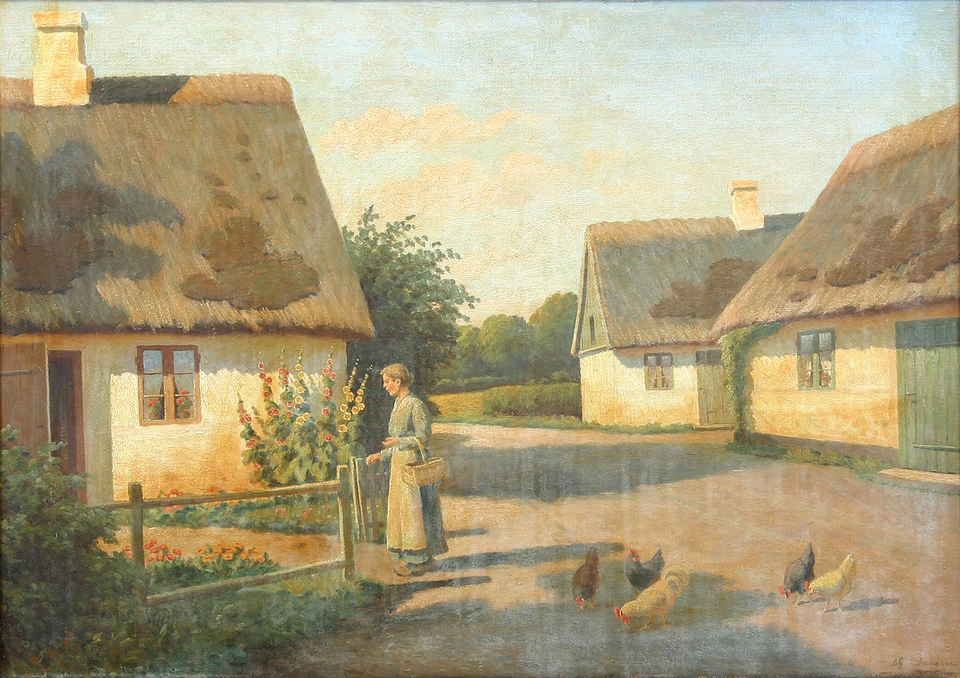
Poultry ran loose on a great many properties and would destroy any planting they reached, which is why dooryard flower beds were fenced, edged with brick or stone, or planted where the birds did not go.
Not applicable in most households. Loose poultry is uncommon in residential areas and the fencing problem has gone with it.
Loose livestock is an invisible constraint on old gardens and it shaped where everything went. A flower bed in 1964 frequently had a low fence around it for reasons that had nothing to do with appearance, and the brick or stone edging that survives was usually a barrier rather than decoration.
9. It Was Watered With Whatever Was to Hand
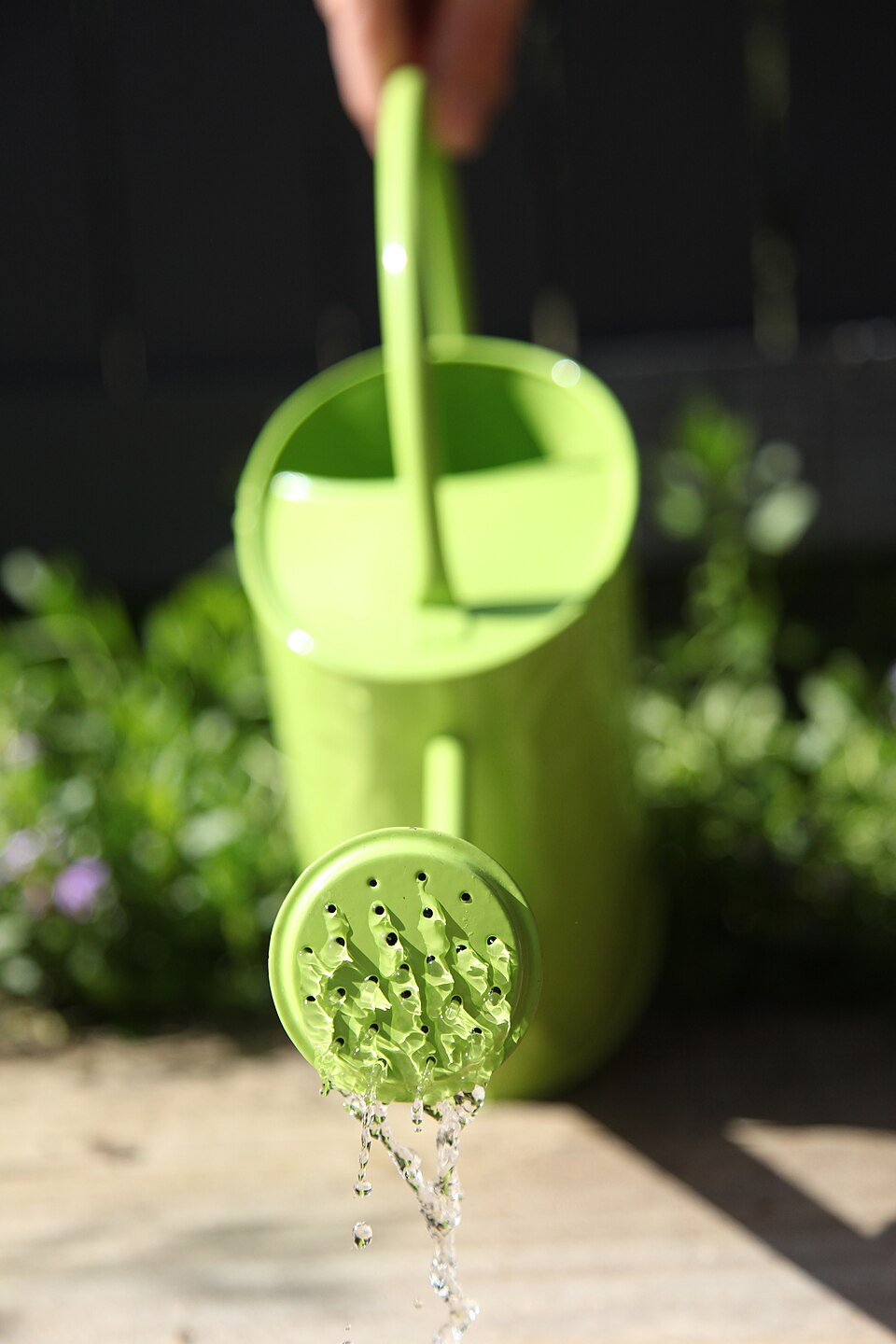
Dishwater, laundry rinse water, the bucket after washing up, water carried from a pump – the dooryard garden received the household’s used water because it was close to the door and the water had to go somewhere.
Hoses, sprinklers and irrigation systems, with household waste water going into a drain.
Proximity to the door is the whole reason that garden was where it was. Carrying water any distance is work, so the planting that got watered was the planting within a few steps of the point where water left the house.
10. The Flowers Were Cut and Taken Places
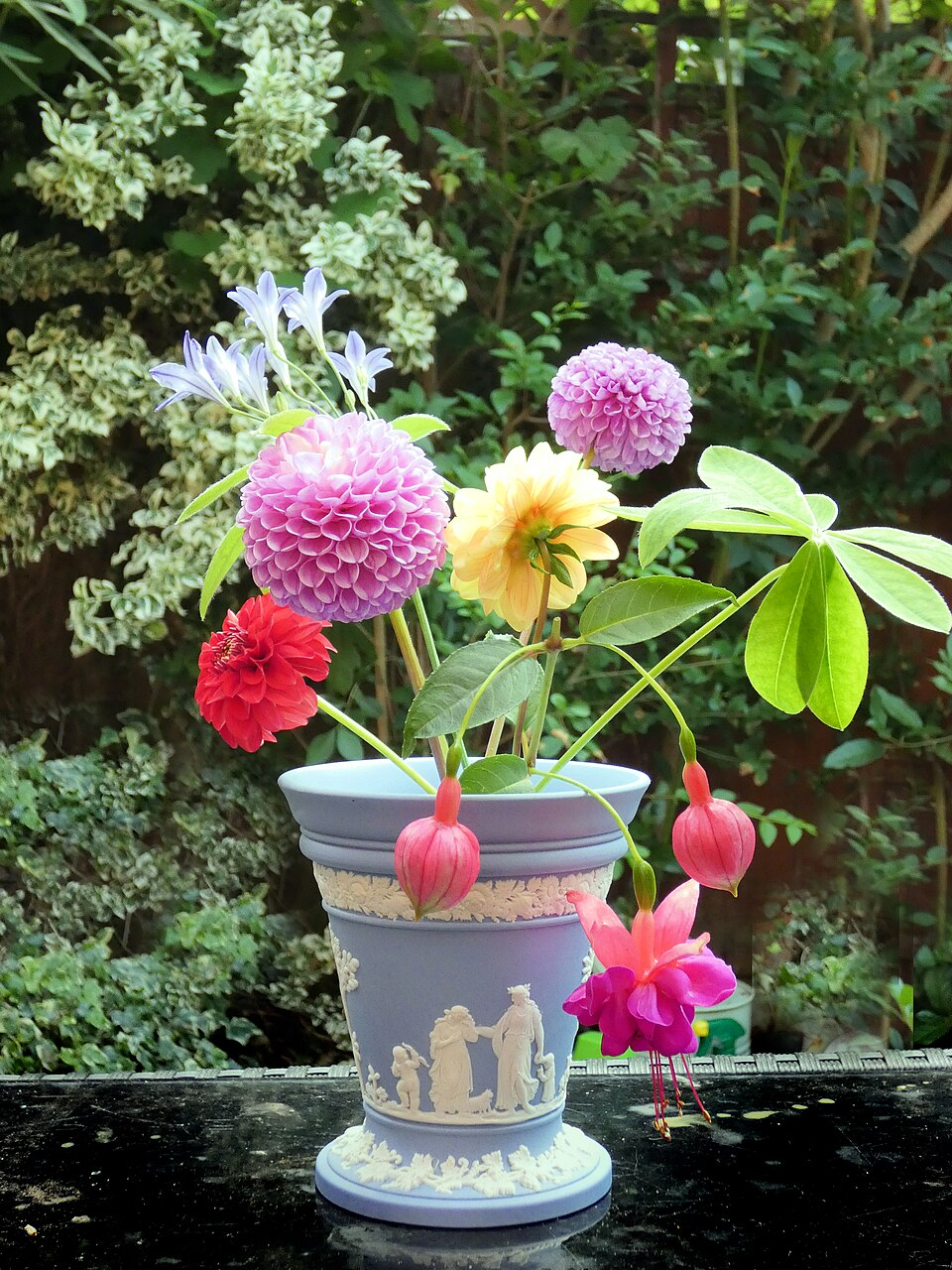
Flowers from the dooryard were cut for the table, for church, for funerals, for sickrooms and for visitors, and a household that grew them had something to give that cost no money.
Bought flowers, from a florist or a supermarket, for the same occasions.
Having something to give is the social function and it should not be underrated. A household with no spare cash and a mass of hollyhocks by the door could send flowers to a funeral, which is a real contribution made from a planting that cost nothing.
11. The Front of the House Was Not Landscaped
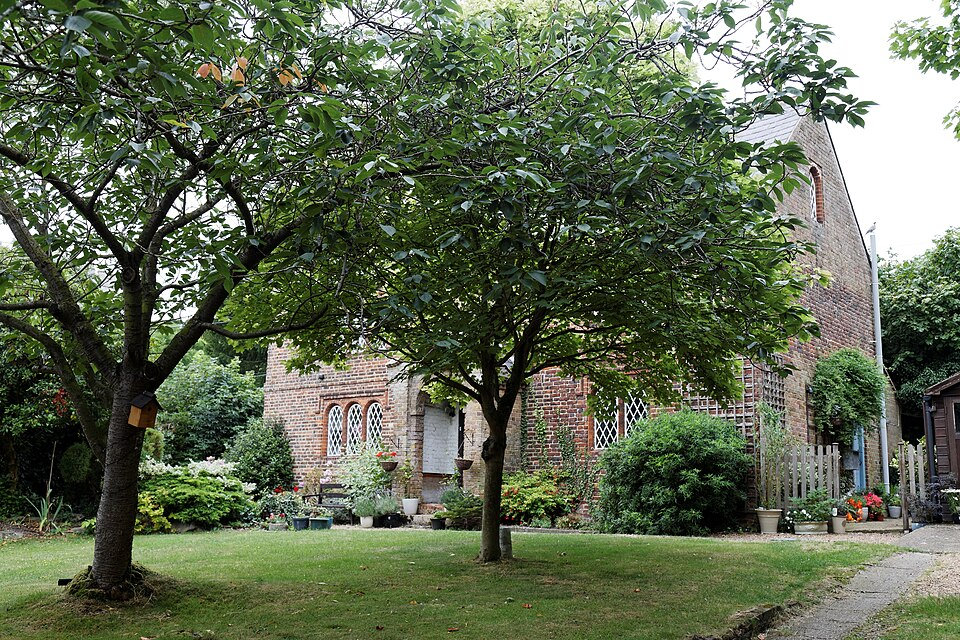
There was no lawn specification, no shrub plan, no mulch and no edging as a system – the front of a house had a path, a dooryard planting, whatever grass established itself and often bare swept earth.
Residential landscaping as a standardised American package – lawn, foundation shrubs, mulch, edging – installed as a unit.
That standardisation is the direct replacement. A landscaping package delivers an immediate, tidy, permanent and completely predictable result, which is everything a self-seeding flower planting is not – and it is bought once and clipped thereafter.
12. Then the Nursery Trade Changed What People Bought
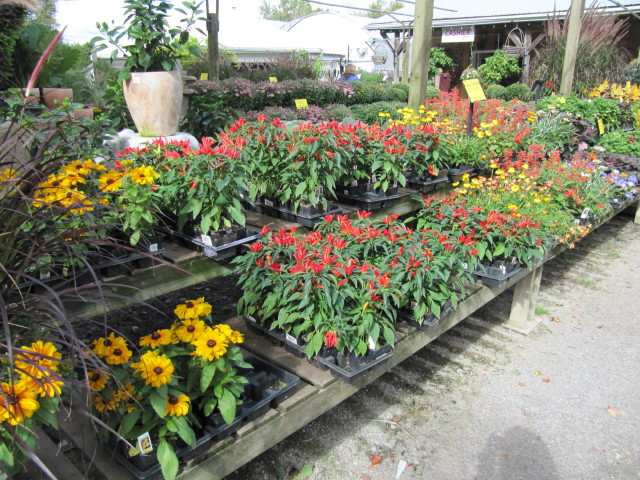
Garden retail shifted decisively towards woody shrubs, bedding plants sold in flower, and compact bred varieties – all of which are easy to merchandise, look good on a sales lot, and transplant reliably.
Dominant, and the reason the plants in American yards are the plants that sell well in trays and pots rather than the plants that self-seed.
A plant that reproduces itself for free is a bad product and a plant that must be repurchased every spring is an excellent one, which is not a conspiracy but is a genuine commercial pressure that ran for decades in one direction.
13. Tidiness Became the Standard It Is Judged By
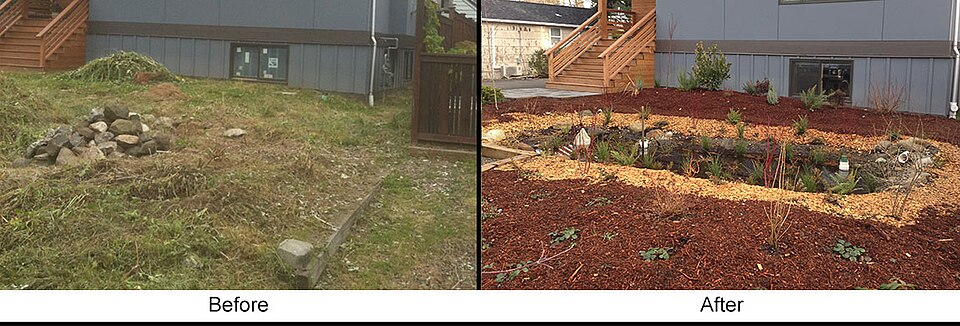
Residential planting is now expected to look controlled – defined edges, visible mulch, nothing out of place – and a self-seeding mass of tall floppy flowers reads as neglect rather than as a garden.
Essentially universal as a visual standard in American residential neighbourhoods, reinforced by property values and in many places by rules.
This is the judgement that finished the dooryard garden off, and it is worth being clear about what it costs. A planting that moves and reseeds is incompatible with an aesthetic built on defined edges, so the standard itself rules the whole plant type out regardless of anybody’s preference.
14. Then Flowers Became Something You Buy
In 1964 the planting at the door of a house was a mass of tall short-lived flowers that had seeded themselves there, arranged by weather rather than design, grown from seed somebody had been given, watered with the household’s used water and cut for church and funerals.
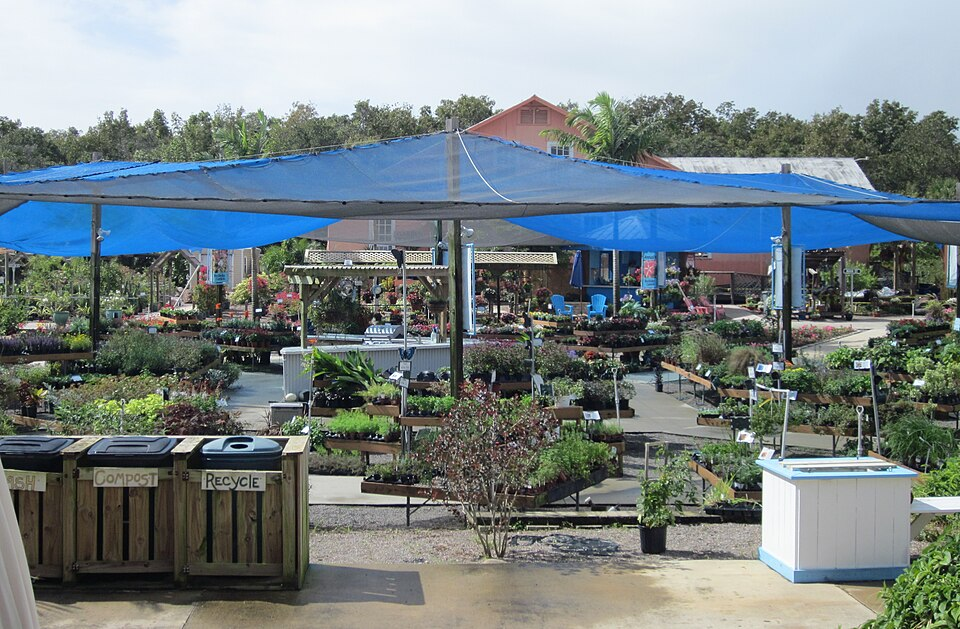
Foundation planting is clipped shrubs and bought bedding plants, flowers for occasions come from a shop, and a self-seeding mass by the door reads as a property somebody has stopped looking after.
And the thing that has really gone is a way of having a garden at all. The dooryard flower planting was free. That is the fact to hold on to, because it governs everything else about it. Established once from seed somebody had given a household, it continued indefinitely, costing nothing in cash and nothing in planning, which is why it existed in places where there was no money for ornament of any kind. The plants that do this are the tall, fast, short-lived ones – annuals and biennials that flower hard, drop seed and die – which means the planting was never the same two years running. The hollyhocks shifted along the wall. Colours came and went as some strains outbred others. Something appeared where nothing had been, and the gardener’s job was to decide what to pull and what to leave, which is editing rather than designing. That mode of gardening has essentially disappeared from American residential property and three things removed it. The nursery trade reorganised itself around plants that can be sold in flower in a tray, which a self-seeder cannot be and does not need to be. The landscaping package arrived – lawn, shrubs, mulch, edging, installed as a unit, immediate and permanent and completely predictable. And the standard of tidiness hardened to the point where defined edges and visible mulch became the definition of a maintained property, which rules out a moving, reseeding, falling-over mass of flowers entirely, however much anybody might like it. What is left of it is the plants themselves, which are still out there. Hollyhocks against the wall of an empty farmhouse, leaning, in a spot nobody chose and nobody has watered in thirty years.
It Was a Garden That Cost Nothing, Which Is Why It Is Gone
Start with the division, because it is the part that gets missed. A house in 1964 had two separate growing areas and they were not the same kind of activity at all.
Out back was the vegetable plot – rows, a hoe, measured spacing, a plan, and food as the output.
At the door was flowers. No rows, no plan, no measurement, and nothing edible. And the two were different in every respect: different ground, different methods, frequently different people in charge of them, and completely different rules about what counted as success.
The dooryard planting was free, and that is the fact that explains the rest of it.
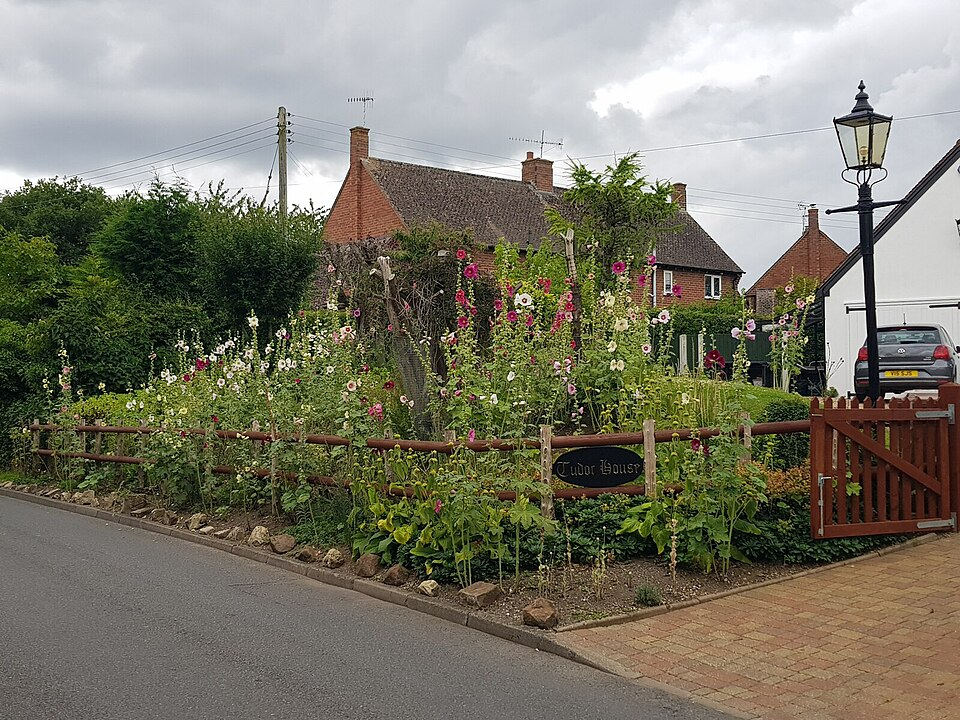
The plants that grew there were the tall, fast, short-lived ones. Hollyhocks, larkspur, foxgloves, sweet william, poppies, four o’clocks, bachelor’s buttons, sunflowers – annuals and biennials that germinate quickly, flower heavily, drop a great deal of seed and then die. Which means they come back. Seed falls where it falls, germinates the following spring, and a planting established once keeps going for decades with nobody buying anything.
In a household with no spare money for ornament, that is the only way ornament happens at all.
And it had a social mechanism attached. Seed moved between households in envelopes, in letters, across fences and at church, which means a great many dooryard plantings consisted entirely of things somebody had been given. A plant that arrived that way carried an obligation and a history – and whatever name the giver used, which is why the same flower was called different things one county over.
Because it reseeded itself, it arranged itself too, and this is the largest difference in attitude between then and now. The hollyhocks shifted along the wall over the years. Colours came and went as some strains outbred others. Things appeared where nothing had been. The gardener’s job was to decide what to pull and what to leave – editing a planting rather than specifying one, which is the opposite of how a modern bed is made and defended.
Practical details followed from where it was. Hollyhocks lean badly, so they went against a wall that would hold them up, which is also why they turn up along fences and sheds. Poultry ran loose on many properties and would destroy anything they reached, so the beds were fenced or edged with brick and stone for reasons that had nothing to do with looks. And it got the household’s used water – dishwater, rinse water, the bucket after washing up – because it was a few steps from the door and that water had to go somewhere.
What came out of it was flowers to cut. For the table, for church, for a funeral, for somebody sick, for a visitor to take home – which meant a household with no cash had something real to give.
Three things removed all of it.
The nursery trade reorganised around plants that can be sold in flower in a tray – woody shrubs, compact bedding varieties, everything merchandisable on a sales lot. A plant that reproduces itself for free is a poor product; a plant repurchased every spring is an excellent one. That is not a conspiracy, but it is a genuine commercial pressure that ran in one direction for decades.
Residential landscaping became a standardised package: lawn, foundation shrubs, mulch, edging, installed as a unit. Immediate, permanent, predictable – everything a self-seeding flower mass is not.
And the standard of tidiness hardened until defined edges and visible mulch became the definition of a maintained American property. That is the one that finished it, because a planting which moves and reseeds and falls over is incompatible with an aesthetic built on edges, whatever anybody’s personal taste.
The plants are still out there, though. Hollyhocks against the wall of an empty farmhouse, leaning, in a spot nobody chose and nobody has watered in thirty years.
If your grandmother had these, somebody gave her the seed and she never bought a flower in her life.
And they are probably still coming up.
Like our content? Follow us for more.