There is a figure in American farm memory that has no modern equivalent at all, and that is precisely why he is difficult to explain.
The hired man was a full-time employee of a farm, usually single, frequently young, sometimes much older, who lived on the place. He slept in an upstairs room, in a room off the kitchen, in a bunkhouse, or above the shop. He ate every meal at the family table. He worked alongside the farmer at whatever the season required, from first light until the work was finished, six days a week and the stock on Sunday.
He was paid a wage, usually monthly, with his board and room counted as part of the arrangement. He had a place at the table, a chair in the sitting room in the evening, and a position in the household that was neither family nor servant and not really describable as either.
A great many American farms had one. The arrangement was completely ordinary, it lasted for generations, and it has vanished so thoroughly that the phrase itself now needs explaining.
Resident Labour Was the Only Kind That Worked
The reason he lived in the house follows from the nature of the work, and it is not sentimental.
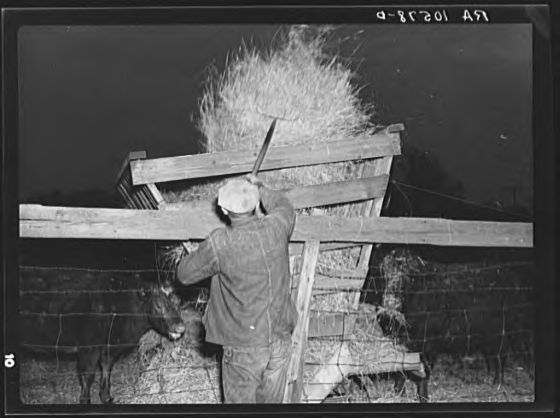
Farm work in that period was not a shift. It was tied to daylight, weather and livestock, all three of which are indifferent to a schedule. Stock needed feeding and watering before anything else happened and again when the light went. Milking, where there was milking, happened twice at fixed hours including Sunday. Field work ran as long as the light and the weather allowed, which in haying or harvest meant until it was too dark to see.
There was no practical way to do that with somebody who went home. A man living four miles away with no car cannot be at the barn at half past five, cannot stay until nine in July, and cannot be called out at two in the morning for a calving or a storm.
So the labour lived where the work was. That is the whole explanation, and it applied equally to the family – which is why the hired man’s hours were the family’s hours and nobody thought of his arrangement as unusual.
Like our content? Follow us for more.
Board and Room Were Most of the Pay
The economics of the position are worth stating clearly because they explain both its appeal and its limits.
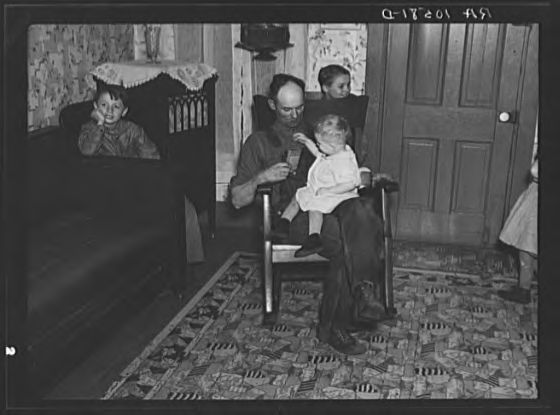
A hired man received a cash wage plus his keep – all meals, a bed, laundry in most cases, and a share of whatever the household had. In a cash-poor rural economy the keep was a substantial portion of the total value, and the cash was therefore almost entirely saveable, because a man living on a farm had very little to spend money on.
That made the position genuinely attractive to a particular person: a young man intending to accumulate enough to buy or rent land of his own. Working as a hired man for several years with almost no outgoings was one of the standard routes into farming for somebody with no inheritance, and a great many American farm families trace their land back to exactly that – somebody who worked for wages, saved nearly all of them, and bought a place.
It also meant the arrangement was effectively a closed economy. The man’s housing, food and work all came from one employer, which is a dependency that cuts both ways and which nobody involved had any illusions about.
His Position in the Household Was Specific and Unwritten
The social arrangement is the part that modern readers find hardest to place, because it does not map onto anything.
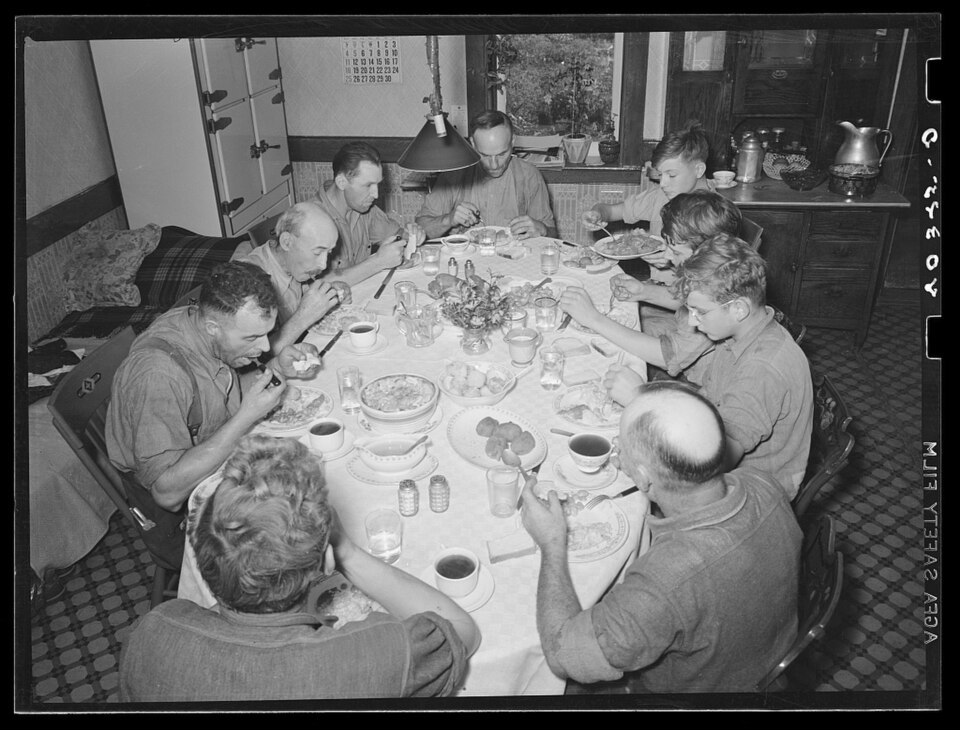
He ate at the family table, at every meal, in the same room and from the same dishes. In most households he sat in a particular place that was understood to be his. He was present for family conversation, family arguments, family news and family prayers where those happened. Children knew him well and in a great many cases remembered him for the rest of their lives.
And he was not family. He was not introduced as such, did not share in the farm’s ownership or its future, had no claim on anything, and could be let go. The relationship had a boundary, everybody knew where it was, and it was never stated.
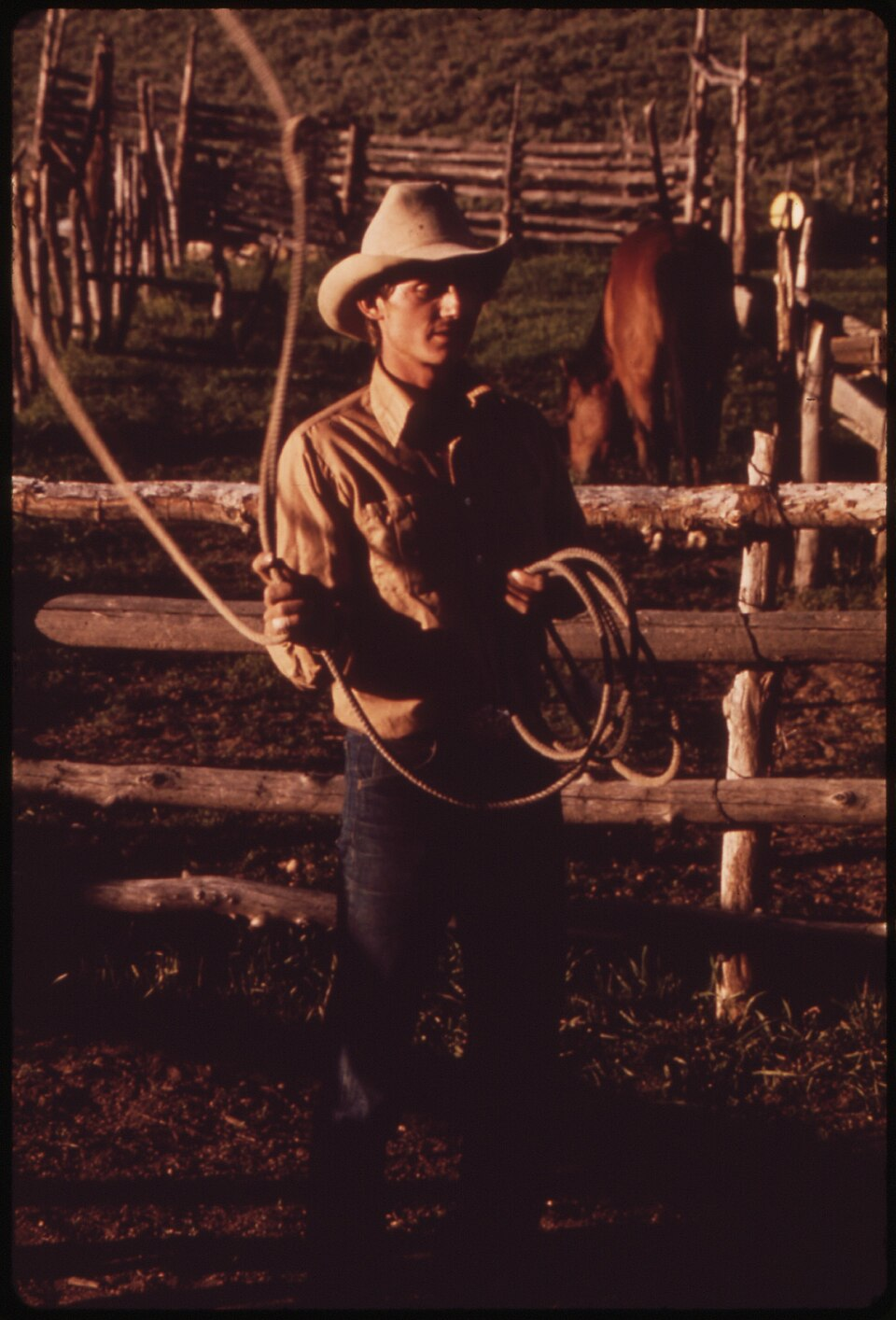
What he had instead was standing, which came from competence. A hired man who was good with horses, who could fix things, who could be trusted with the stock or sent to town alone with money was a valued person whose opinion carried weight at the table – and a man who was not any of those things did not last the season.
The Women’s Workload Is the Half That Gets Omitted
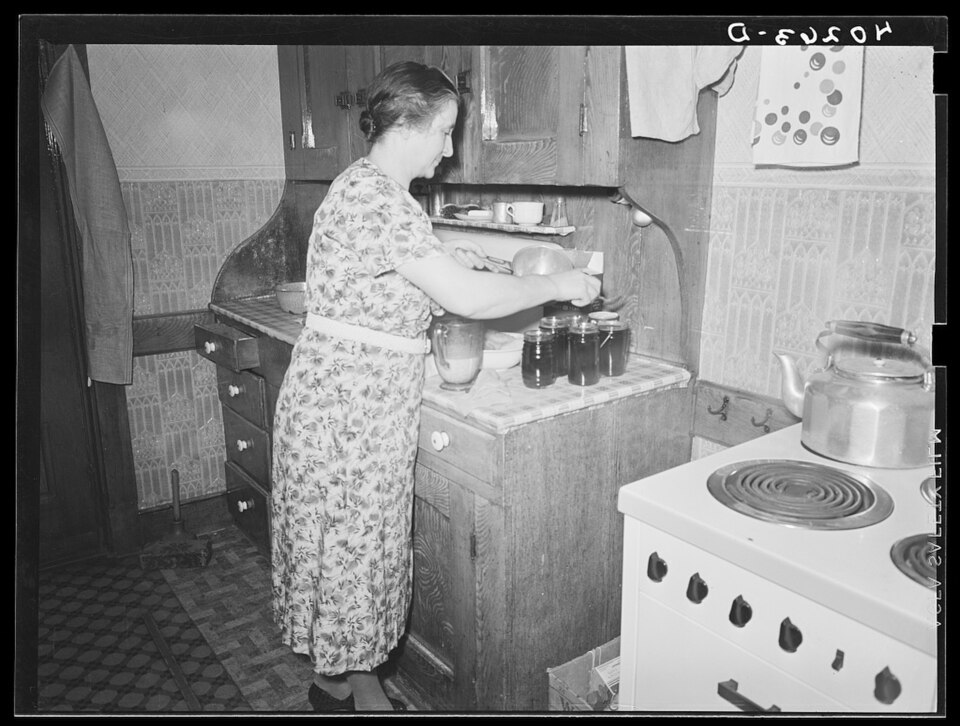
Any honest account of this arrangement has to say who was actually paying for the board.
Feeding a hired man meant another substantial meal three times a day, every day, cooked by the farm wife, in addition to everything else she was doing. It meant more bread, more preserving, more washing up, more laundry, more bedding and another room to keep. On a farm with two or three hired men during a busy season, that is a considerable addition to one person’s day.
None of it was paid or counted. The man’s keep appeared in the farm’s arrangement as board and room, which sounds like a provision the farm made; in practice it was labour performed by a woman, continuously, as part of a bargain she had not negotiated.
That is one of the real reasons the system came apart as soon as there was an alternative, and it is frequently given as a reason by the people who were doing it. A farm wife with the option of fewer people at her table generally took it.
Mechanisation Removed the Need and Then the Option
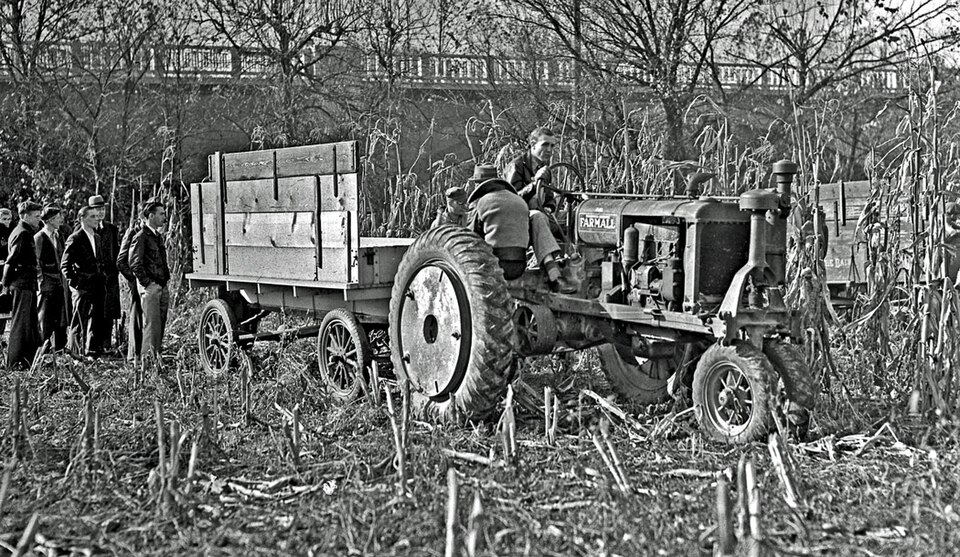
The hired man disappeared for a sequence of reasons, and they arrived in order.
The tractor did the first part. A machine that replaces several horses also replaces the labour of caring for them, and horse care was a very large part of what a resident man did – feeding, watering, grooming, harnessing, cleaning stalls, every day of the year regardless of whether there was field work. Remove the horses and a substantial permanent workload disappears.
Then the machinery got bigger and the work got faster, which cut the peak labour requirement that had justified keeping somebody all year. A farm that needed six people for three weeks in August and two the rest of the time could not justify a resident employee once those three weeks became four days.
Then the car and the telephone meant that labour no longer had to live on the place, because a man could drive in for a day’s work.
And finally the custom operator arrived – a contractor with his own large equipment who did the harvest, the spraying, the hauling or the silage for a fee. Which is the modern answer to a seasonal labour peak, and it requires no room, no board, no wage all winter and no place at anybody’s table.
Off-Farm Work Took the Men Away
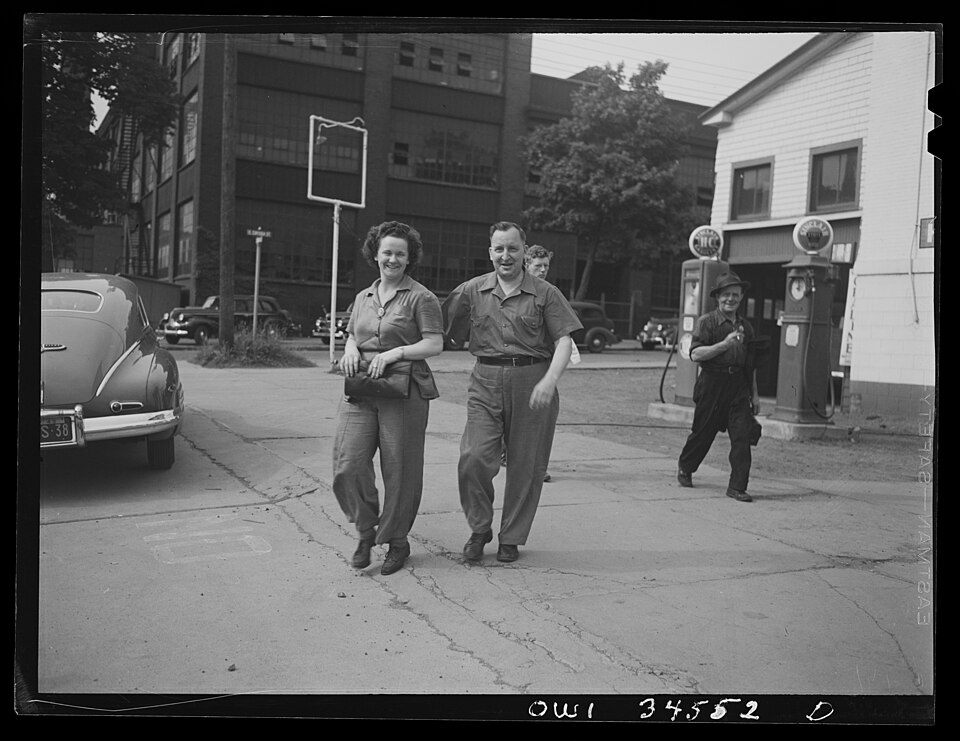
The supply side disappeared at the same time as the demand, which is why the change was so complete.
A young man in 1920 with no land and no capital had a limited set of options, and working as a hired man toward buying a farm was a reasonable one. A young man in 1970 had industrial wages, construction wages, trade apprenticeships, military service with benefits attached, and a general expectation of eight-hour days, weekends, paid holidays and the ability to live where he chose.
Measured against any of those, the hired man’s position looks poor. Long hours, no fixed finish, work on Sunday, no privacy, a dependency on one employer for food and housing as well as income, and a wage that was good only if you intended to spend nothing at all.
So the men stopped presenting themselves, and the farms stopped needing them, in the same two decades. There was no transition period and no shortage anybody had to solve. Both halves of the arrangement simply ceased.
What Went With Him
The honest accounting is that this was not a good job by any modern standard and nobody should want it back – and that something real left with it.
What left is a kind of working relationship that the modern economy does not produce. A person outside the family who was nevertheless inside the household, every day, for years at a time, sharing the work and the table and the weather and the conversation, with a position that was understood by everybody and written down nowhere.
That produced a specific thing in American rural life: adults who were not relatives but who were permanent fixtures in a child’s upbringing, and whose names turn up in family accounts for seventy years afterwards alongside the uncles. It also produced a route into land ownership for people with nothing, which is a form of economic mobility that has no current equivalent in agriculture at all – the modern path into farming without inheritance is considerably narrower than saving a hired man’s wages for five years.
So the figure who vanished was a worker in an arrangement that was demanding, dependent and unpaid at one end. He was also, for a great many American farm children, the other adult in the house.
Like our content? Follow us for more.