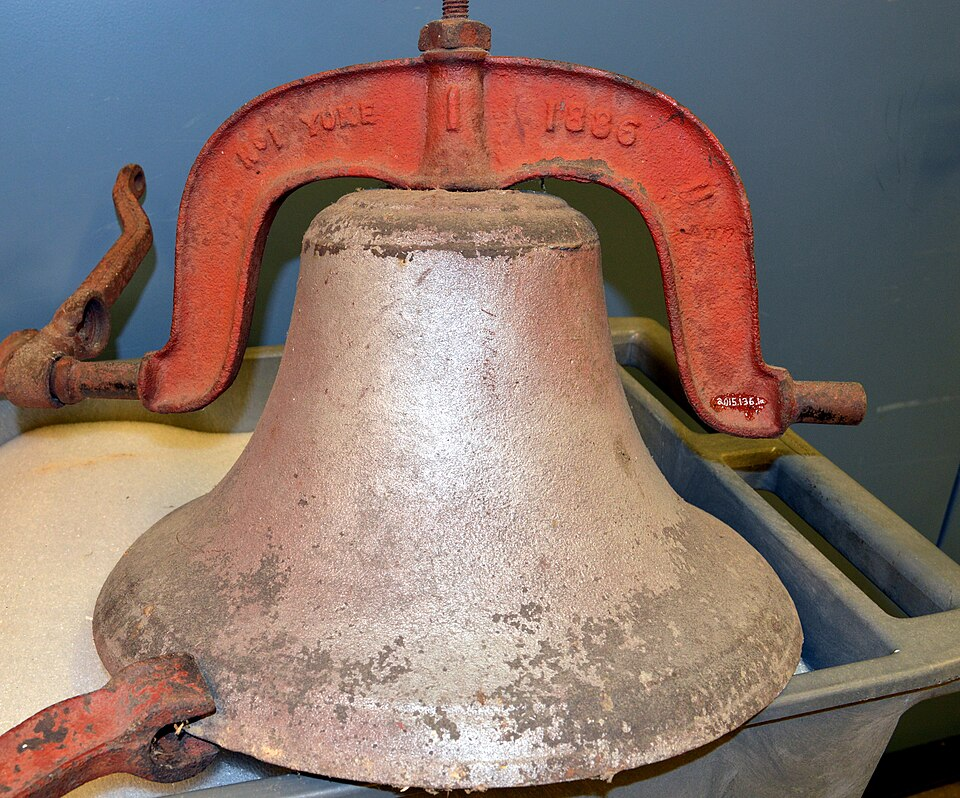
There is one in a lot of American front yards: a cast iron bell, usually painted black or left to rust, mounted on a short post or a length of pipe, with a rope or a lever to swing it. People use them as ornaments. Some are from farms, some were bought at a garden centre last year, and most of them are never rung.
On a working farm it was not an ornament and it was not nostalgia. It was the only piece of long-distance communication equipment the place owned.
And it did something that is genuinely hard to replicate even now: it reached a person who was not carrying anything, was not expecting to be contacted, and could be anywhere within a mile in any direction.
The Problem It Solved
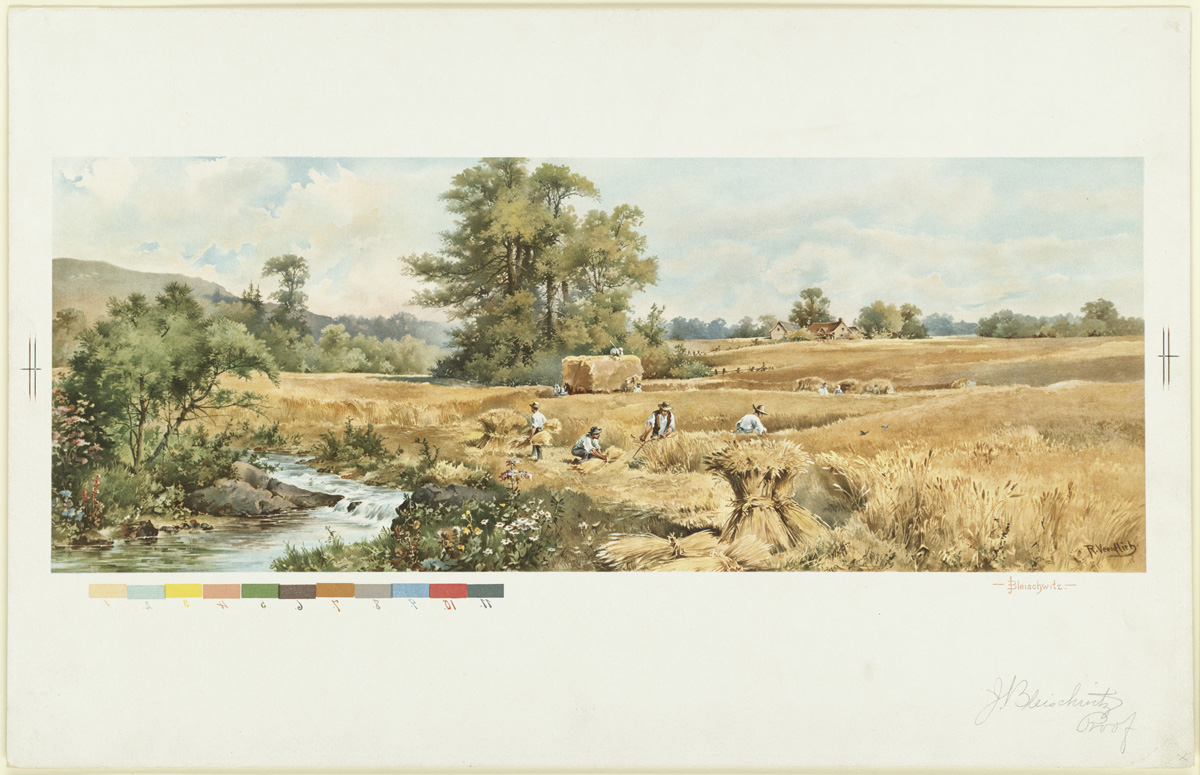
Picture the geography. A farmstead sits in the middle of its land. The people who work it are distributed across that land through the day – one in a field a half mile out, one in a pasture the other way, one in a barn, one gone to a far corner with a team.
The house needs to reach them. Dinner is on the table at a particular moment and will not improve by waiting. Somebody has arrived. A decision is needed. Something has gone wrong.
Shouting does not work. A human voice carries a few hundred yards at best in still air and far less across standing crop or against a breeze, and it is directional – you have to be facing the person. There is no telephone in the field. There is nothing to carry.
So the signal had to come from a fixed point, be loud enough to cross the whole property, and work regardless of which way the listener was facing or what they were doing. That is a bell, and nothing else available at the time did the job.
Like our content? Follow us for more.
Why a Bell Carries and a Voice Does Not
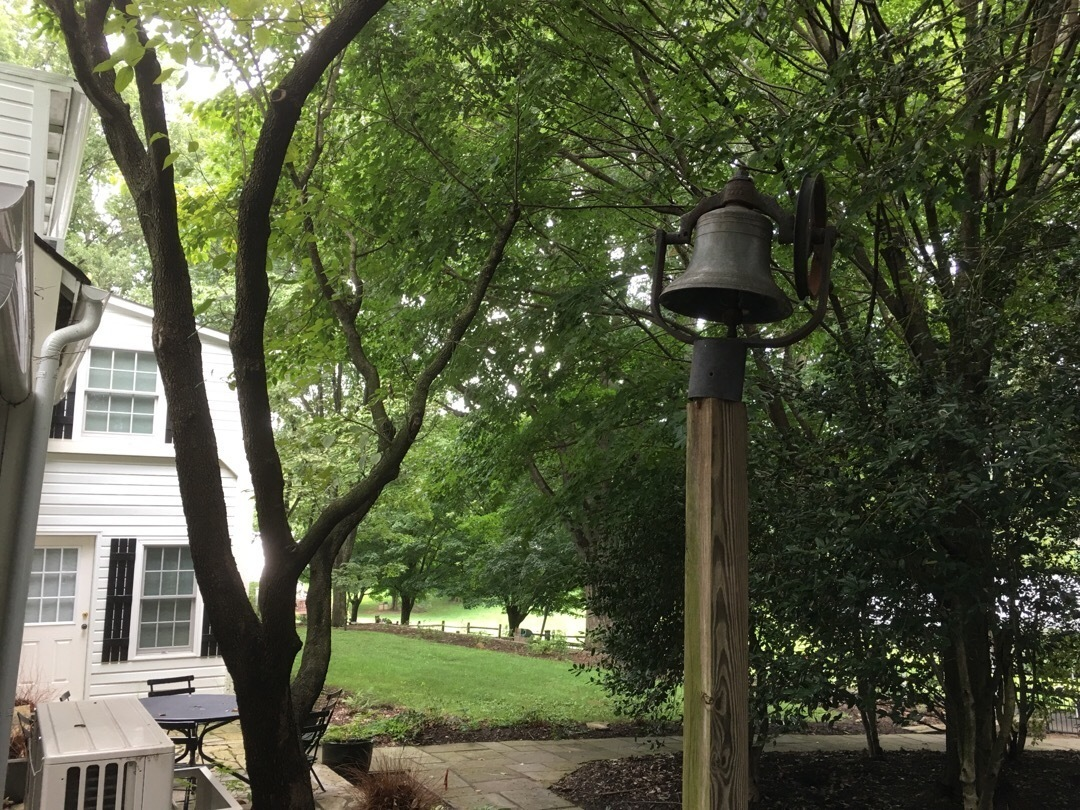
Worth knowing, because it is not just a matter of volume.
A cast bell rings at a few strong pitches and holds them. The sound is sustained rather than brief, which matters because a listener working with their hands and their own noise around them needs a moment to notice something before it is gone. A shout is over before an inattentive person has registered it. A bell keeps going.
The pitch range also helps. A bell’s tone sits where it cuts through the broadband noise of wind, leaves and machinery rather than being buried in it, which is why a bell is audible at a distance where a voice at the same measured loudness would not be.
And it is omnidirectional. Mounted high on a post, a bell radiates in every direction almost equally, so it does not matter whether the person is facing the house. That single property is why bells beat horns and whistles for this purpose, since both of those project forward.
Add the obvious: a bell needs no power, nothing to maintain, and nothing at the receiving end at all.
The Code Was Household-Specific and Everybody Knew It
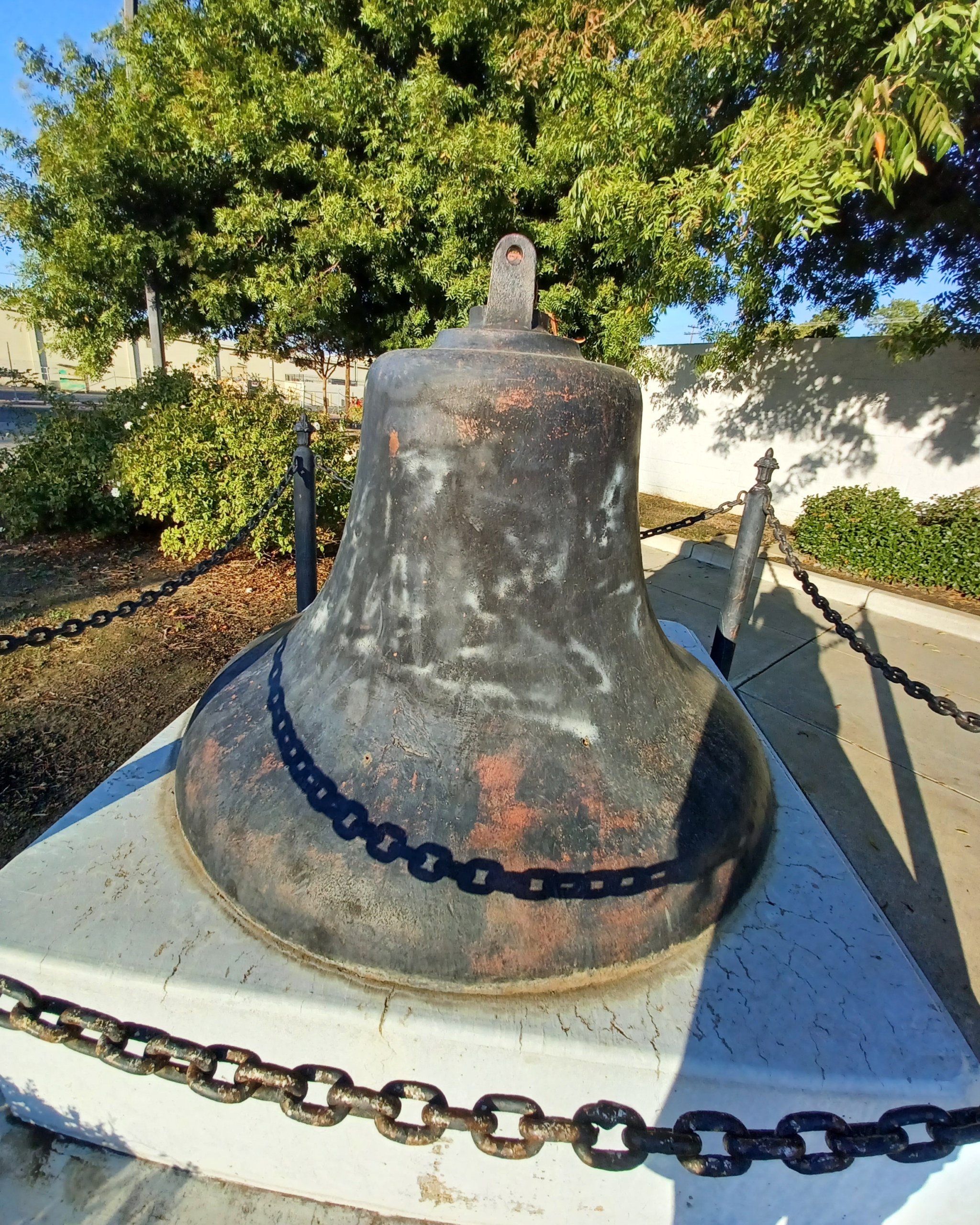
This is the part people find surprising. The bell did not just mean dinner.
Most farms ran a simple code. A steady, unhurried ringing of a certain length meant the ordinary thing – come in, the meal is ready. A different pattern meant something else, and the something else varied by household: come to the house now, there is a visitor, bring a tool, we need you, come quickly.
And rapid continuous ringing – the bell rung hard and without stopping – meant emergency. Fire, injury, a child missing, an animal loose, help needed immediately. That signal was understood not only by the people on the farm but by the neighbours, and a bell rung that way would bring men from the next place over.
Which makes the bell a two-tier system. Routine signals inward to the household’s own people, and an emergency signal outward to anybody in earshot. In a district with no telephone, no siren and no fire department worth the name, that outward function was the whole of the emergency infrastructure.
The codes were not written down and they were not standard. They were learned the way children learn a house, and the fact that nobody needed to be told is precisely why nobody recorded them.
Where It Was Mounted and Who Rang It
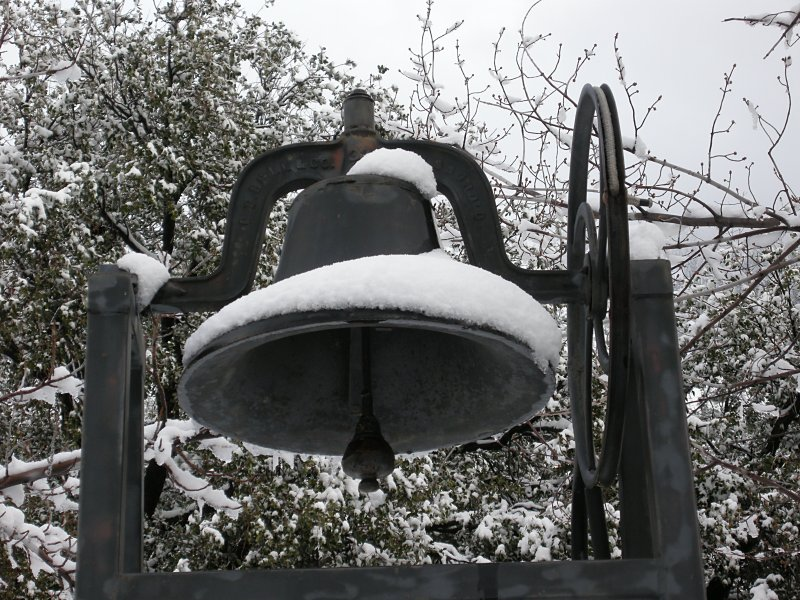
Height matters, so the bell went up – on a post, a pole, the corner of a porch roof, or a frame built for it, high enough to clear the buildings that would otherwise block the sound.
Position mattered too. It went near the kitchen door, because the person who rang it was almost always the woman who had just finished cooking, and she was not going to walk across a yard to do it. The rope or lever came down to a height she could reach in an apron with her hands wet.
That detail is worth sitting with. The dinner bell was operated from the kitchen, by the person whose work defined the schedule it announced, and the fact that the whole farm came in when she rang it is one of the few places where the authority of farm kitchen labour was made audible across the entire property.
Children rang it too, which was a privilege and occasionally a problem, since a bell rung without reason trains people to ignore it.
The School Bell and the Church Bell Did the Same Job
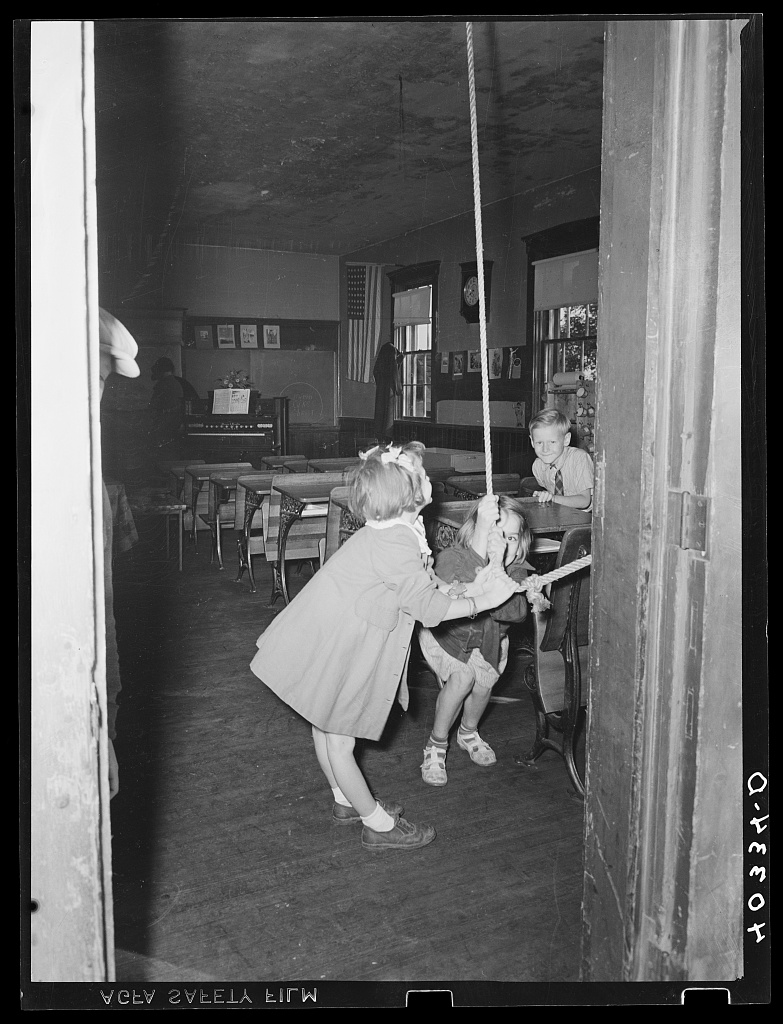
The farm bell was one instance of a general arrangement, and the other instances are worth naming because they explain the landscape.
A one-room school had a bell to call children in from wherever they had scattered, which is the same problem at a smaller scale. A country church had a bell both to call a congregation and, in many places, to carry news – a particular pattern to announce a death, rung in a way the district could read.
Add the locomotive whistle, the mill whistle and the town fire bell, and the result is that a rural American district was organised acoustically. Time, assembly, warning and news all travelled as sound from fixed high points, and people living in it knew which sound came from where and what each pattern meant.
That is an entire layer of ordinary knowledge that evaporated inside two generations, and it left no trace because none of it was ever documented.
Not All of Them Were Bells
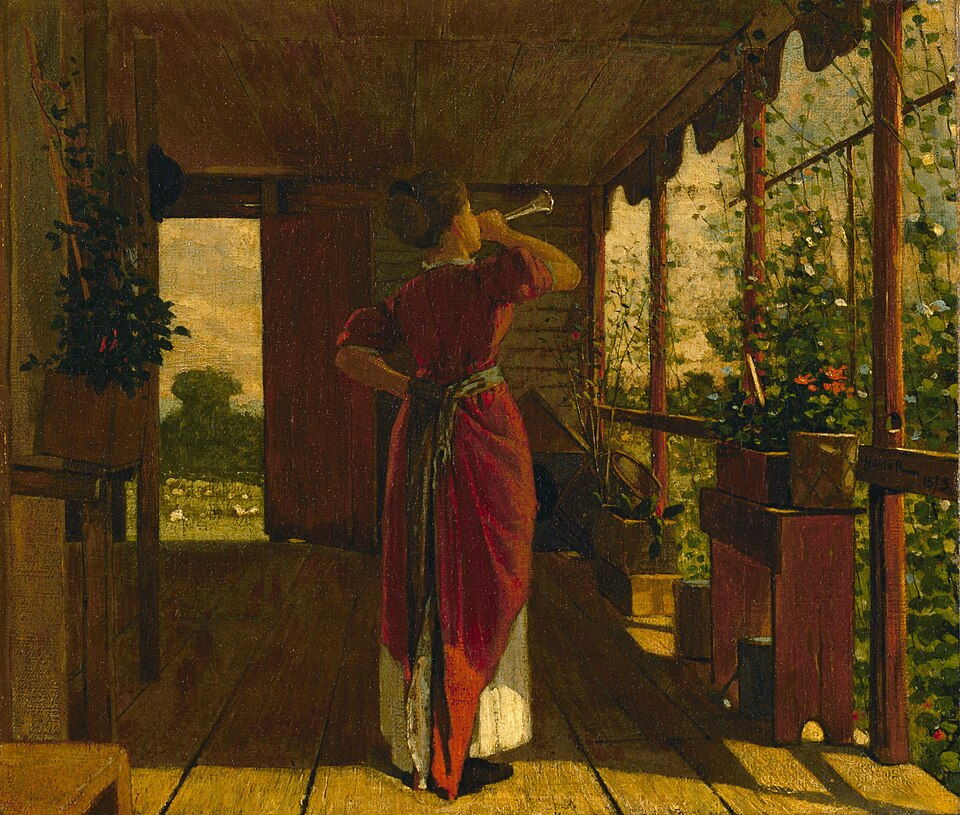
The hardware varied more than people assume, and the variations tell you what each household could afford and what it needed.
The cast bell on a post is the one everybody pictures, and it was the premium option – a bought object, shipped in, representing real money. Plenty of farms had one and were proud of it.
Below that came the dinner horn, which was exactly what it sounds like: a long tin or brass horn, blown. It was cheap and it was loud, but it projected forward and it required somebody with the breath to sound it properly, which is a worse arrangement in both respects.
And below that, the triangle – a bent bar of steel rung with a rod, hung by the door. Cheap, effective at closer range, nothing to break, and still the standard image of a cook calling people in because it turns up in every film ever made about the subject.
What all three have in common is that they were hung where the cook stood and sounded by hand. None of them needed anything bought, powered or maintained at the far end, which in a place four miles from town was the only specification that really mattered.
What Replaced It
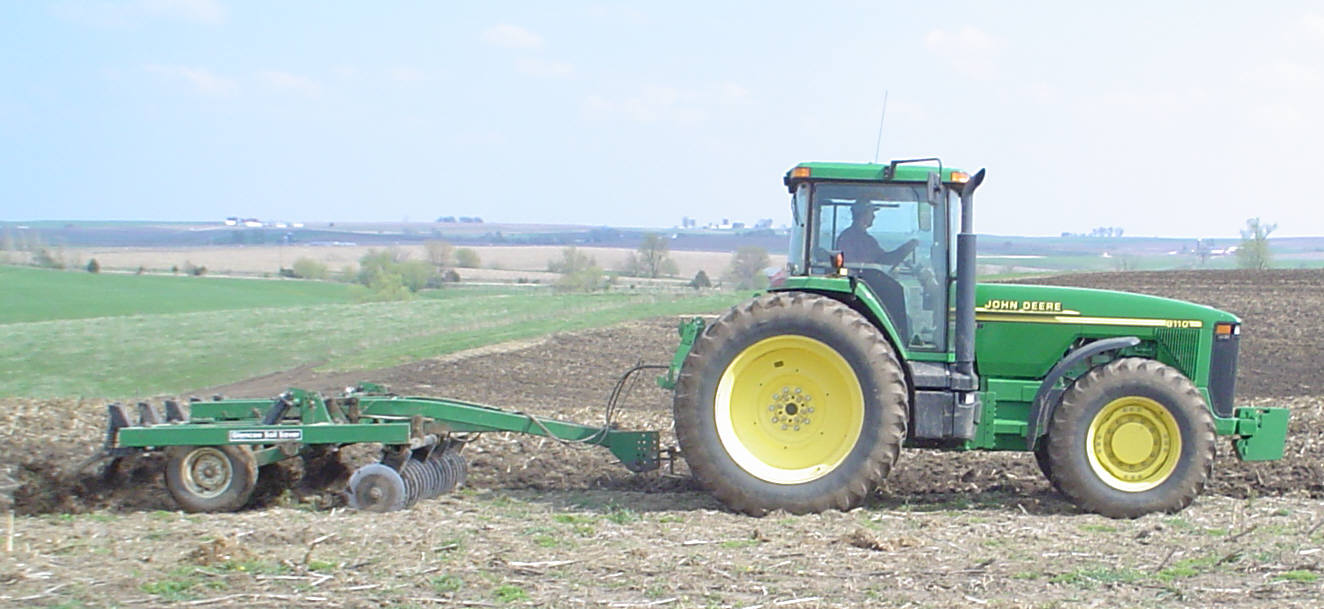
The replacement is not one thing, which is why the bell lingered longer than you would expect.
The telephone reached the house but not the field, so it solved the problem of contacting another farm while doing nothing at all about contacting your own husband in the back forty. That is why bells survived telephones by decades.
The tractor made it worse before it made it better. A man on an open tractor cannot hear a bell over the engine, which broke the system at exactly the moment the farm got bigger and the distances got longer.
What finally fixed it was the enclosed cab with a radio, and then the two-way radio, and then the thing that actually ended the problem forever: a telephone in the pocket of the person in the field. Once the receiver could be carried, the whole architecture of fixed loud signals became unnecessary.
And the farms themselves changed. Fewer people working more acres means fewer people to call, and in a great many cases the person in the field and the person in the house are now the same two people who left the house together.
The One in the Yard
Most of the surviving bells came off farms that were sold or consolidated, and they got mounted in yards by people who liked the look of them or who wanted to keep something from a place that no longer exists.
They are worth more than they look. A good cast bell is a genuinely well-made object, tuned by its shape and thickness, and a hundred-year-old one rings as well as it ever did because there is nothing in it to degrade.
If you have one, ring it properly once. Not a tap – swing it. It will be considerably louder than you expect, and the sound will go further than you think it has any right to.
That is what a half-mile of carrying power sounds like, and it is the reason somebody once bolted it to a post beside a kitchen door.
Like our content? Follow us for more.