

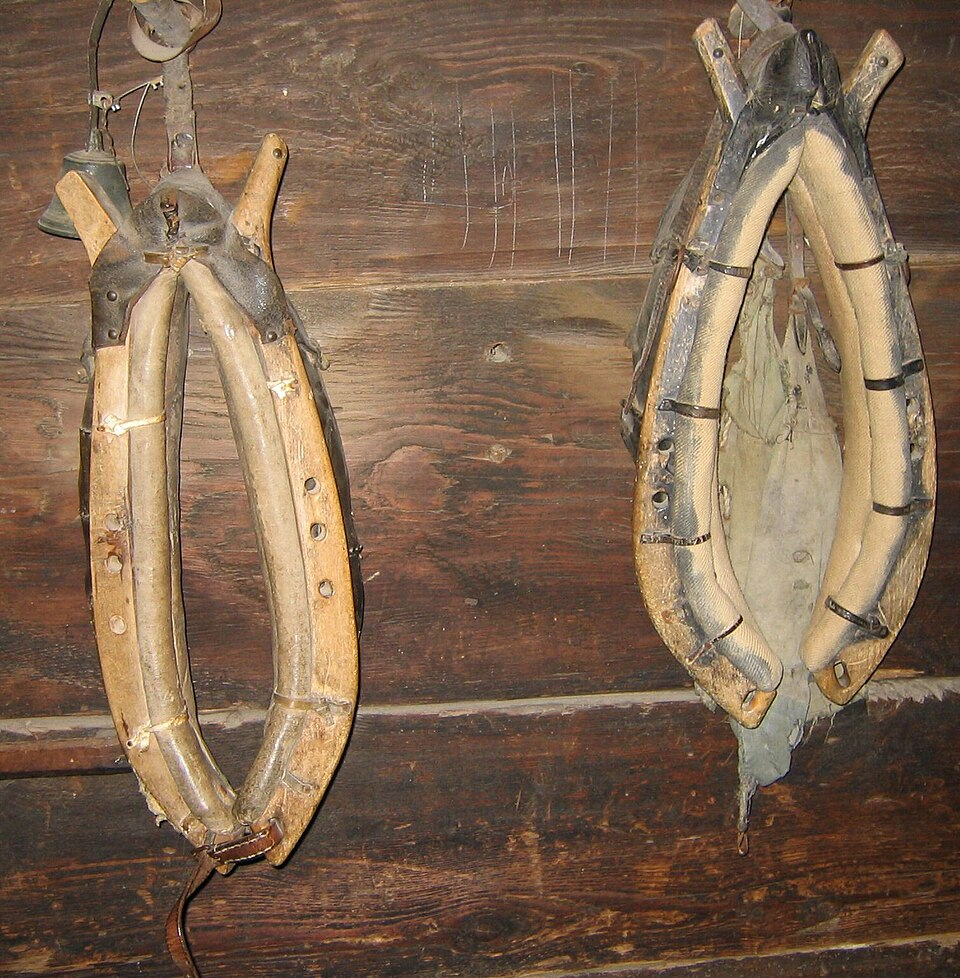
A horse pulls with its shoulders, and the collar exists to make that possible.
A strap across the throat chokes an animal under load and limits it to a fraction of its real capacity. A rigid padded collar bearing on the shoulders lets the horse put its whole weight into the work – which is the difference between a horse as a luxury and a horse as an engine.
But it has to fit that particular animal. Too large and it rocks and rubs; too small and it restricts breathing and bears in the wrong place. A collar wrongly fitted rubs the skin raw and causes sores that put a horse out of work for weeks, which on a farm with one or two animals is a serious loss. So collars were made in many lengths, widths and slopes, stuffed so they would conform, and restuffed as the packing settled. Here are twelve things every teamster knew.
1. A Horse Pulls With Its Shoulders, Not Its Neck
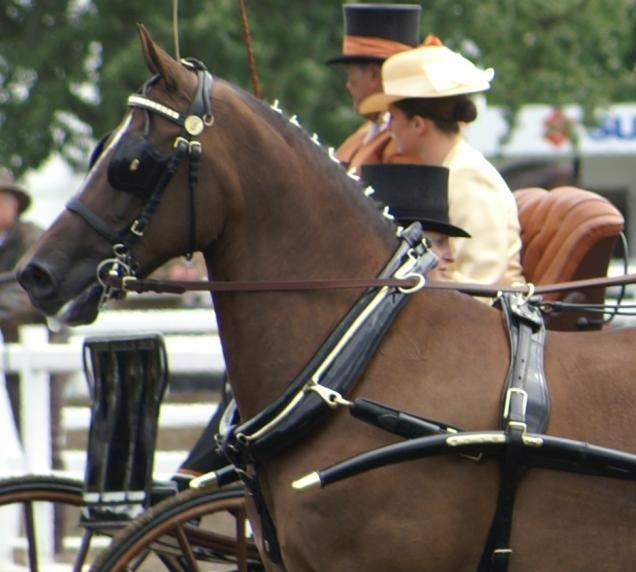
The collar transfers the load to the muscle and bone of the shoulders, which can take it, instead of to the windpipe and soft tissue of the throat, which cannot.
Still the case wherever draught animals work.
Start with the anatomy because it is the entire reason the object exists. A strap across a horse’s throat chokes it under load and limits what it can pull to a fraction of its real capacity, while a rigid collar bearing on the shoulders lets the animal put its whole weight into the work – which is the difference between a horse as a luxury and a horse as an engine.
Like our content? Follow us for more.
2. It Has to Fit That Particular Horse
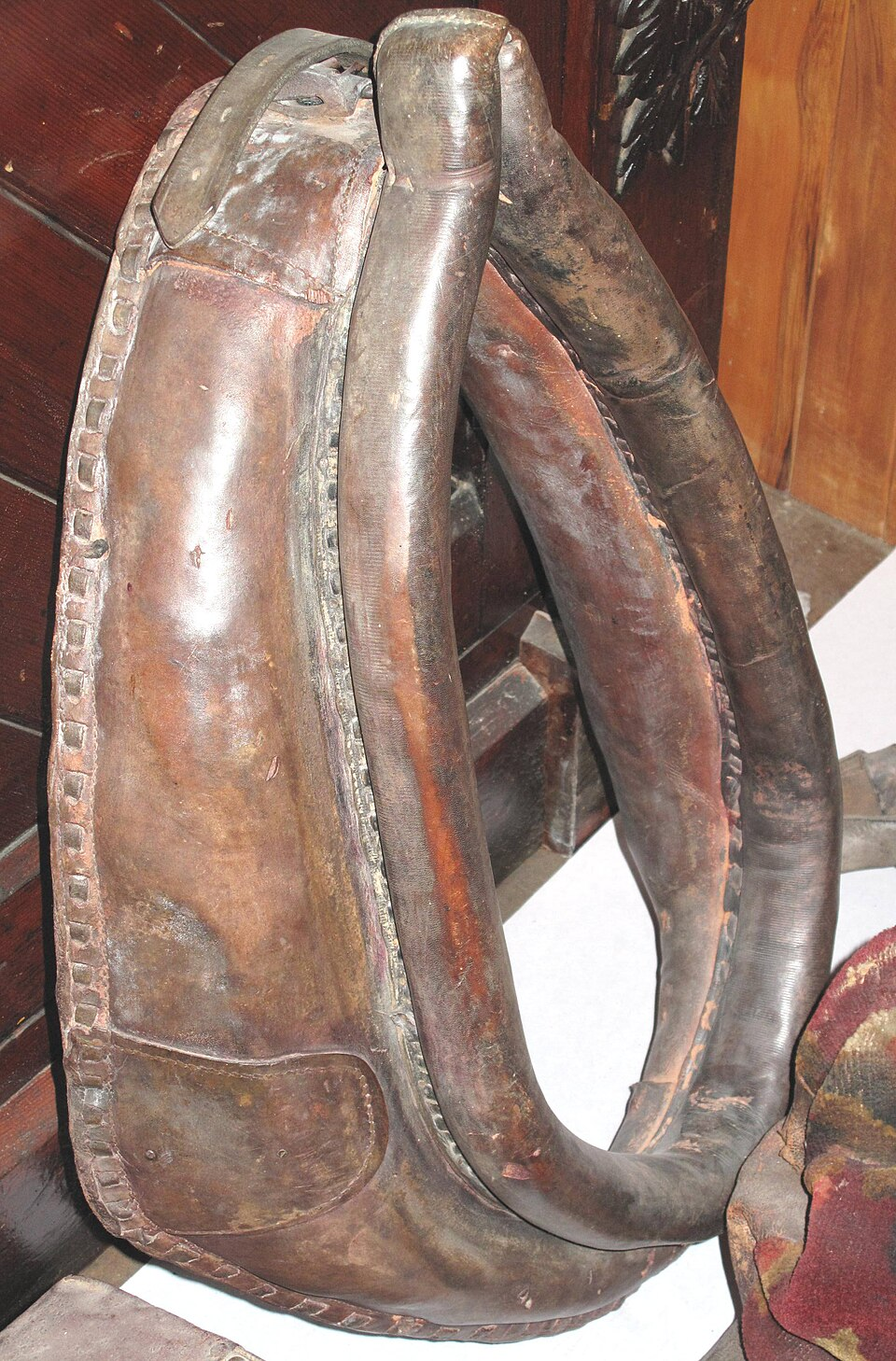
A collar too large rocks and rubs; too small restricts breathing and bears on the wrong place; too long or short sits wrong on the shoulder entirely.
Still fitted individually.
The fitting requirement is the fact that governed everything about owning one. A collar is sized to one animal’s neck and shoulders, and a horse that changes condition through the season needs that fit checked – which means a collar was not a generic piece of equipment but something matched to a specific animal.
3. A Badly Fitted Collar Injures the Horse
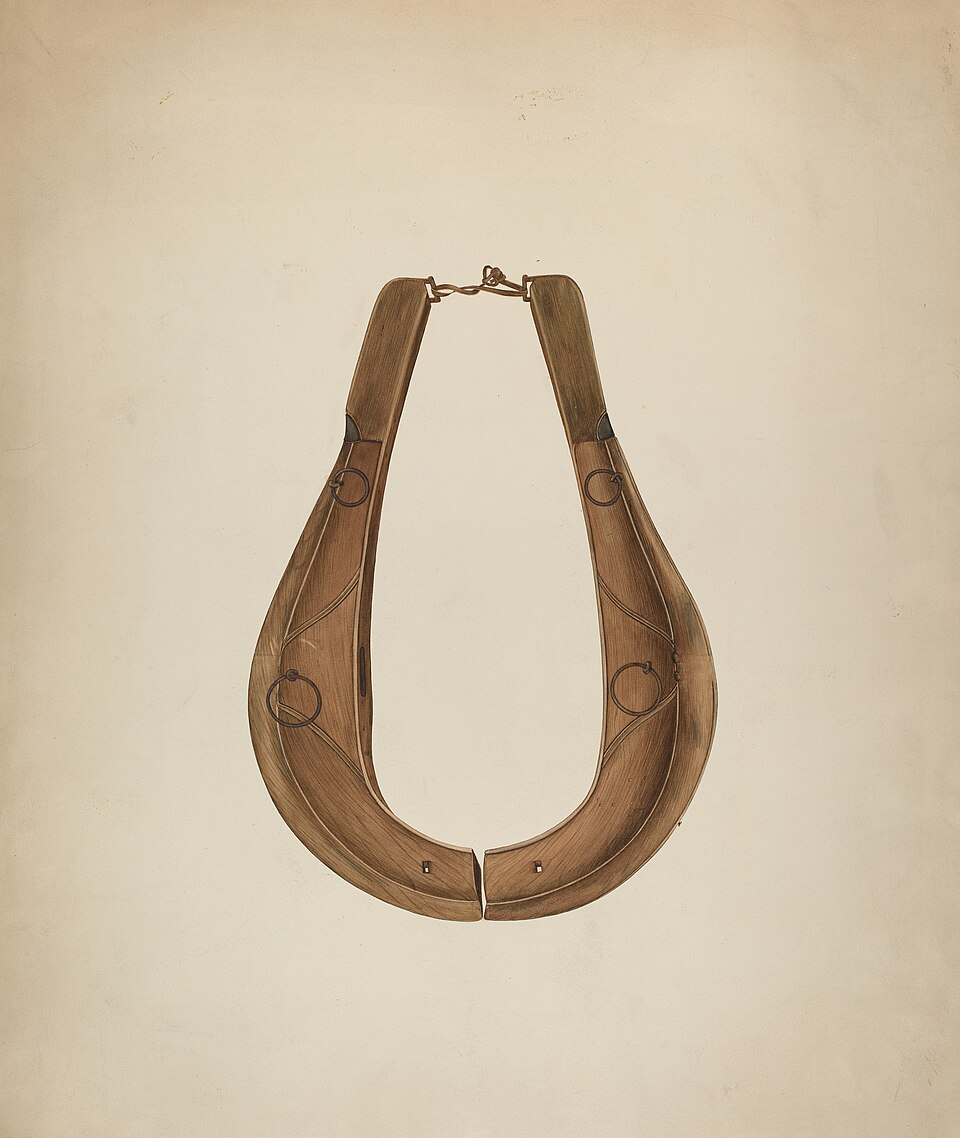
Pressure in the wrong place rubs the skin raw and causes painful sores that put an animal out of work for weeks.
Understood and managed as a welfare and practical matter.
This is why fitting mattered so much and it should be stated plainly. An injured shoulder means a horse that cannot work, which on a farm with one or two animals is a serious loss – so checking the fit and the condition of the shoulders was a daily responsibility, and a man who let his horses get sore shoulders was judged for it.
4. The Shape Had to Match the Shoulder Exactly
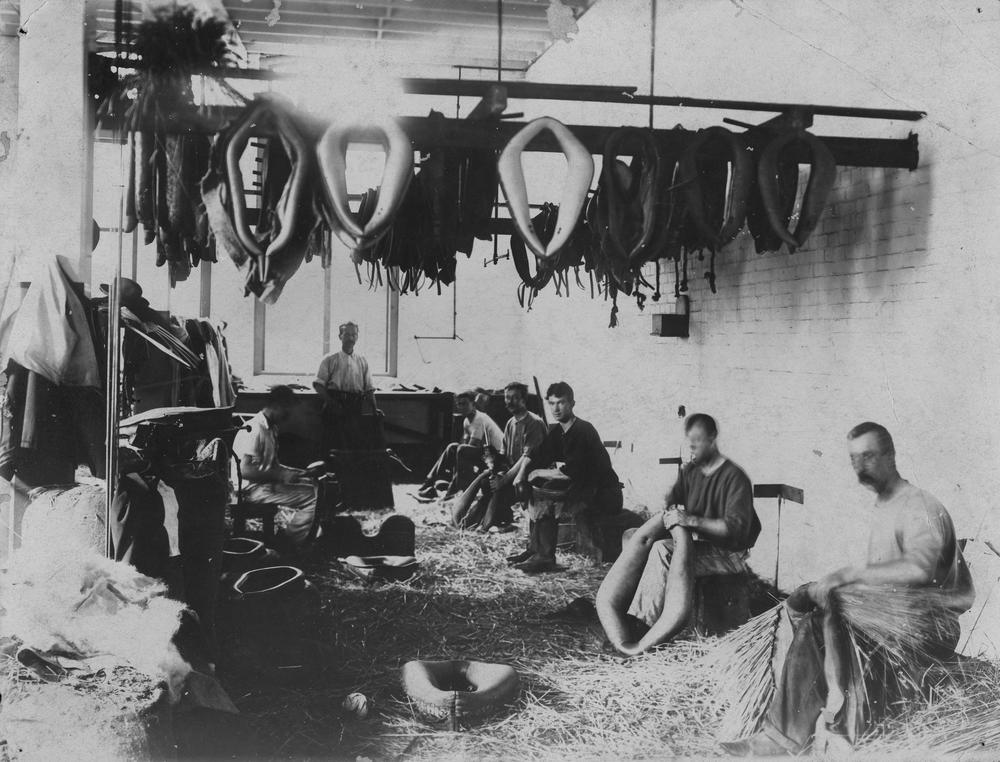
Collars were made in different lengths and widths and with different degrees of slope, because horses are not shaped alike.
Still true.
The range of sizes tells you how seriously this was taken. A manufacturer producing one collar in many shapes is responding to real variation between animals, and a harness maker’s business was substantially about selecting and adjusting from that range for the horse in front of him.
5. It Was Stuffed and Could Be Restuffed
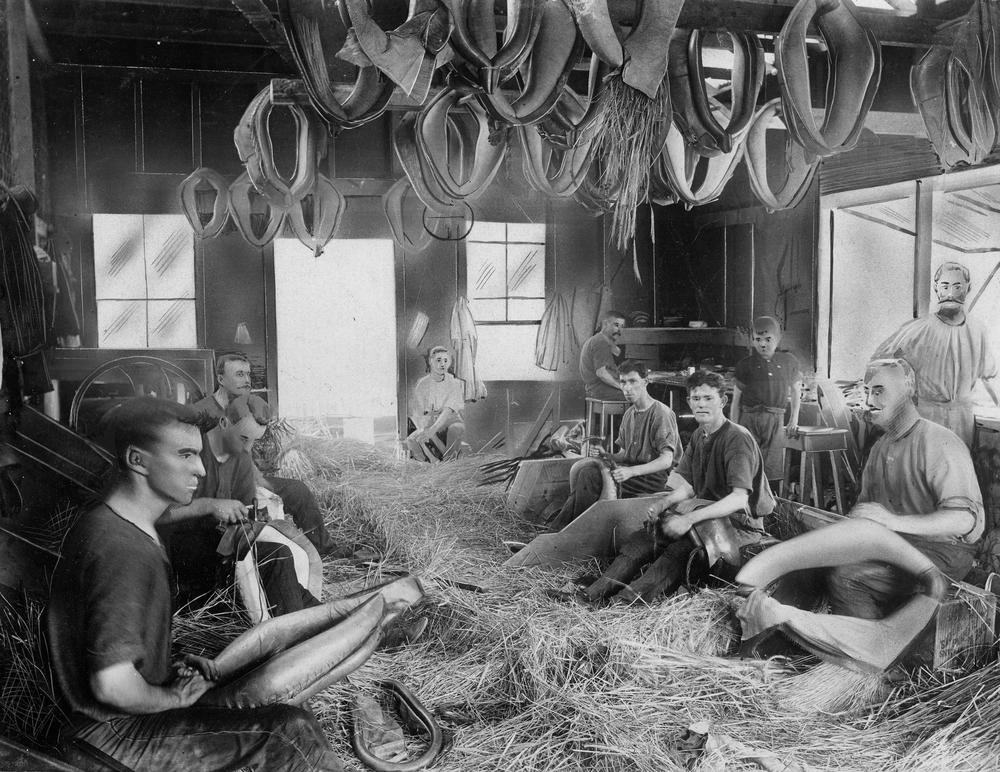
The collar’s body was packed with straw, hair or other material inside a leather casing, and that packing settled, compressed and had to be renewed.
Modern materials hold their shape longer.
The repackable construction is a sensible piece of design. A stuffed pad conforms to the animal it is used on, which is exactly what you want, and it also means the fit changes as the stuffing compresses – so a collar was a maintained object rather than a fixed one.
6. It Went On Upside Down
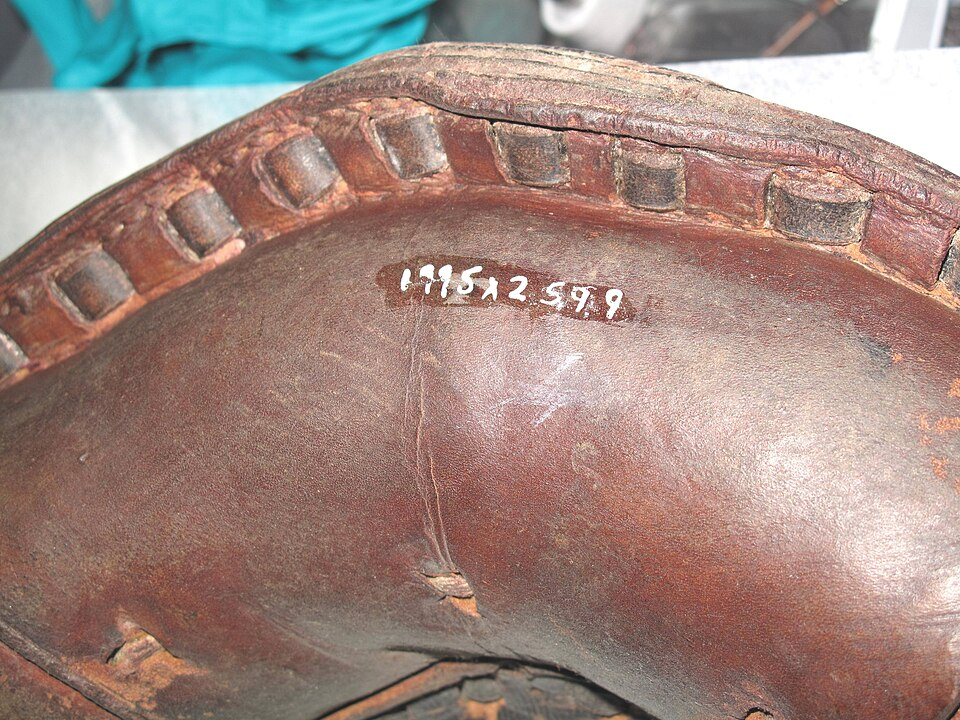
Because the collar is wider at the bottom than the top and a horse’s head is wider than its neck, the collar was turned over to pass it on and then rotated into place.
Unchanged where collars are used.
This is the detail everybody who worked horses mentions and it looks like a trick. The collar will not pass over the head the right way up, so it goes on inverted, is pushed down the neck and then turned – a movement that takes a second once learned and is completely baffling to watch for the first time.
7. The Hames Carried the Pull
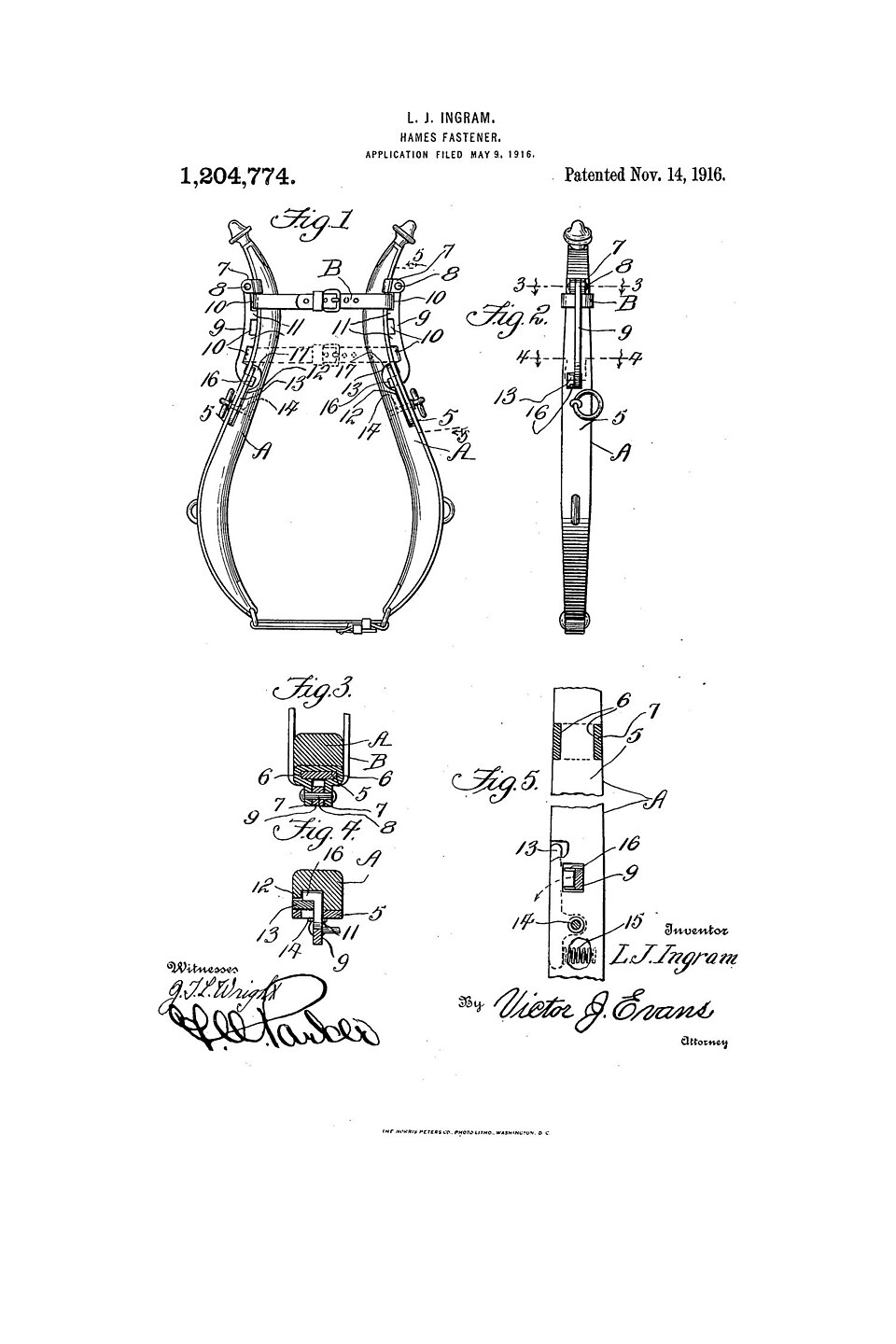
A pair of curved metal or wooden pieces clamped around the outside of the collar, and the traces that took the load fastened to those rather than to the collar itself.
The same arrangement.
Separating the pulling point from the padding is the real engineering. The collar’s job is to spread pressure comfortably and the hames’ job is to take the strain, which means the load is applied to a rigid frame while the animal feels it through a conforming pad – two different requirements solved by two different parts.
8. One Horse Was Faster and Two Were Stronger
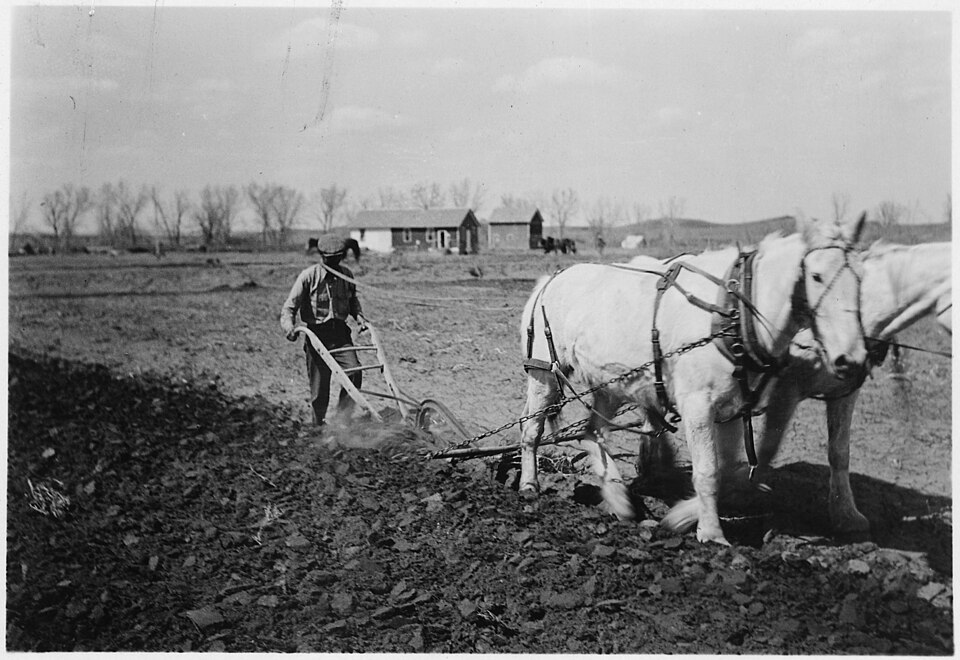
A single horse in a collar could do light work alone, while heavier jobs needed a team pulling together through a connecting bar.
Not applicable in most places.
The arithmetic of teams explains the shape of farm work. Two animals of equal size and matched pace pull more than twice as usefully as one, because the load can be larger and the work steadier – but they must be matched, which is why a farm’s team was a pair kept and worked together rather than two individual horses.
9. The Animal Had to Learn the Work Too
A horse was trained to lean into a collar, to start a load gradually rather than lunging, to stop on command and to stand while hitched.
Not applicable in most places.
The training is the half of the system people forget. A pulling animal is not simply strong – it has learned a specific job involving judgement about how to start a heavy load and when to stop, and a well-trained horse was worth considerably more than a strong one.
10. The Collar Was Kept Clean for a Reason
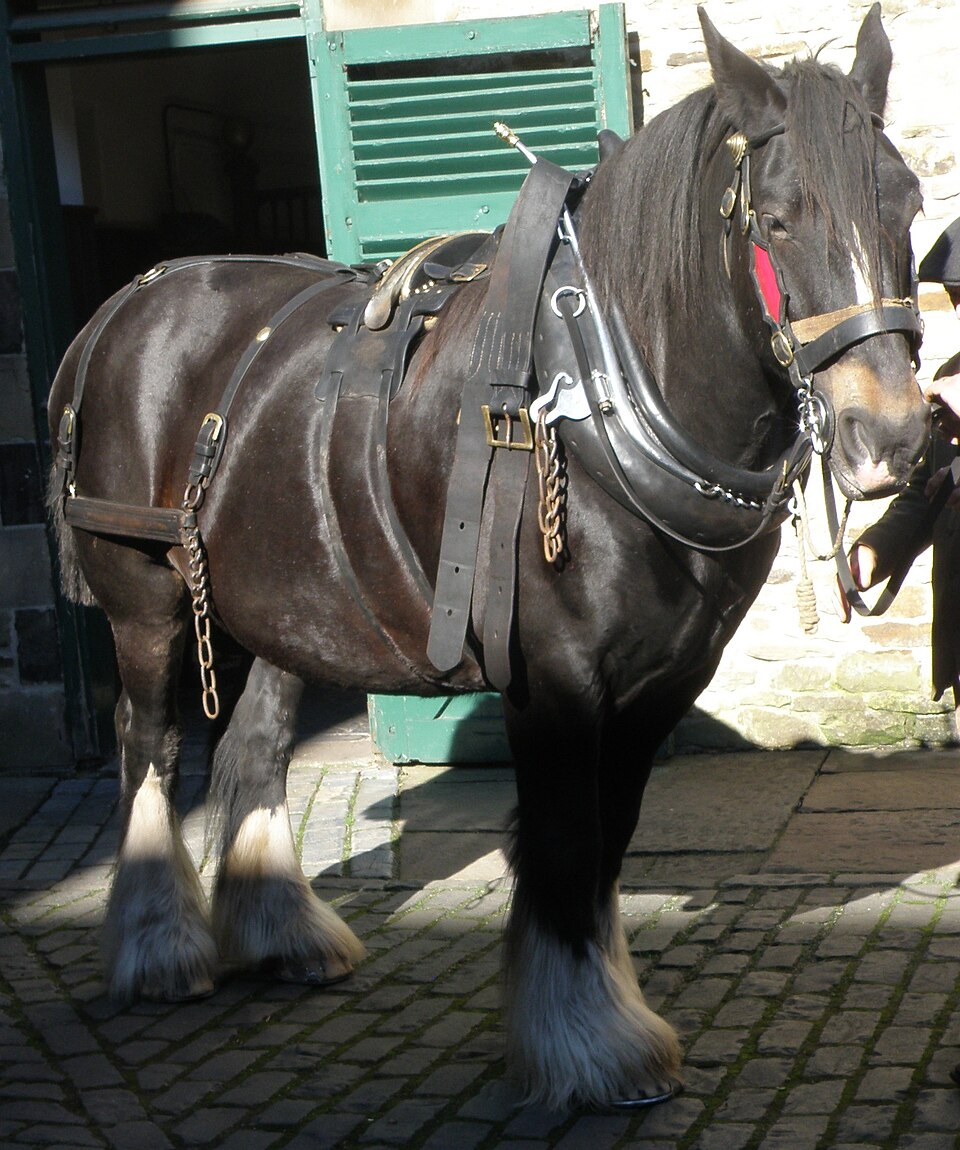
Dirt, sweat and grit between the collar and the shoulder are what cause sores, so the collar face and the animal’s shoulders were wiped and kept dry.
Still standard practice.
The maintenance follows directly from the injury mechanism. Grit under pressure abrades skin, so cleanliness at that one interface is the whole of the prevention – which turned a daily wipe into a genuinely consequential task rather than a tidy habit.
11. Then the Tractor Replaced the Animal Entirely
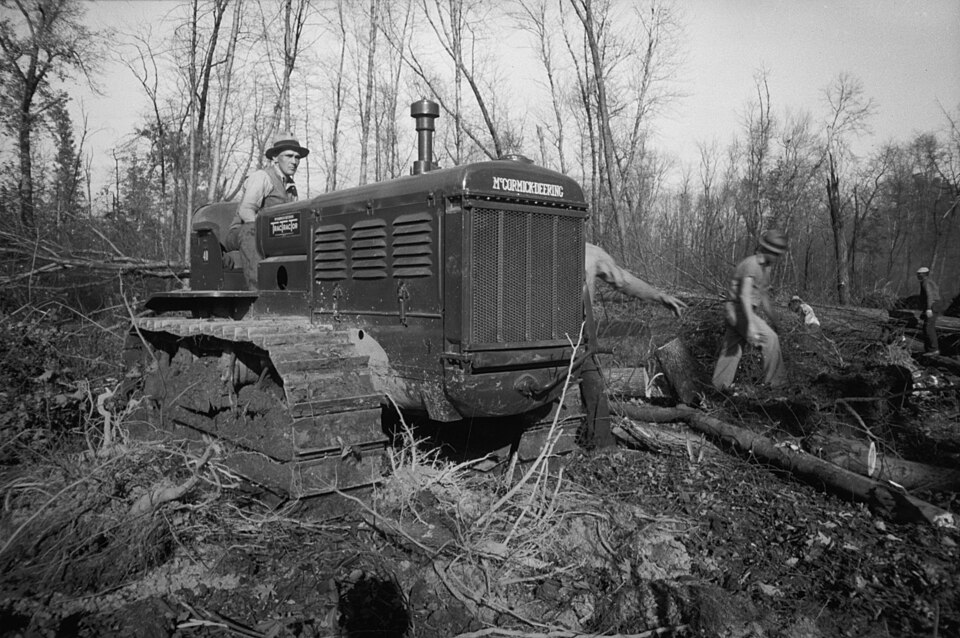
An engine delivers steady power with no fitting, no training, no feeding, no shoulders and no seasonal condition, and does not need to rest.
Universal.
The tractor removed the whole category of problem rather than solving it. Every difficulty the collar addressed – anatomy, fit, injury, matching, training, condition – exists only because the power source is a living animal, and a machine has none of them.
12. And by 1964 the Collars Were Hanging Up as Decoration
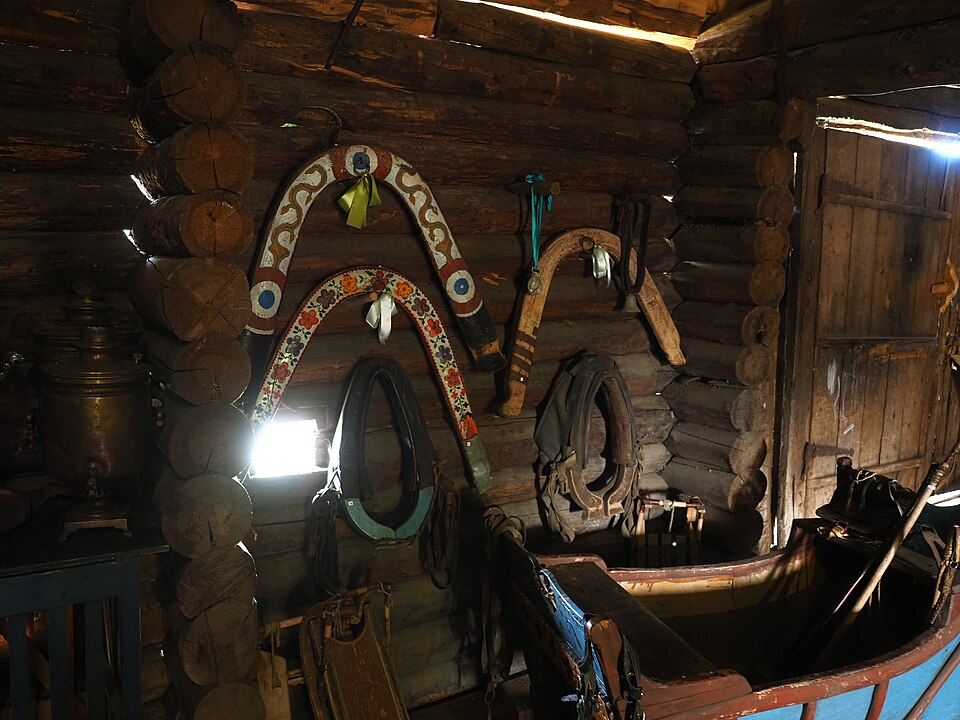
Harness collars survived in enormous numbers in barns and were increasingly hung on walls, fitted with mirrors, or used as ornaments.
Collected and widely used decoratively.
And what deserves the last word is that this object is a solution to an anatomical fact. A horse cannot pull from its throat, so somebody worked out that the load belongs on the shoulders, built a padded rigid ring to spread it there, separated the pulling point onto a metal frame so the padding never takes the strain, made it in a range of shapes because animals differ, stuffed it so it would conform, and arranged that it could be restuffed as it settled. Then an American farmer had to fit it to one particular animal, keep that interface clean every single day, watch the shoulders for the first sign of rubbing, and train the horse to lean into it and start a load gently. That is a great deal of accumulated understanding about a single joint between a machine and a living thing – and the tractor made every bit of it unnecessary, which is why the collars now hang on walls with mirrors in them.
A Great Deal of Understanding About One Joint
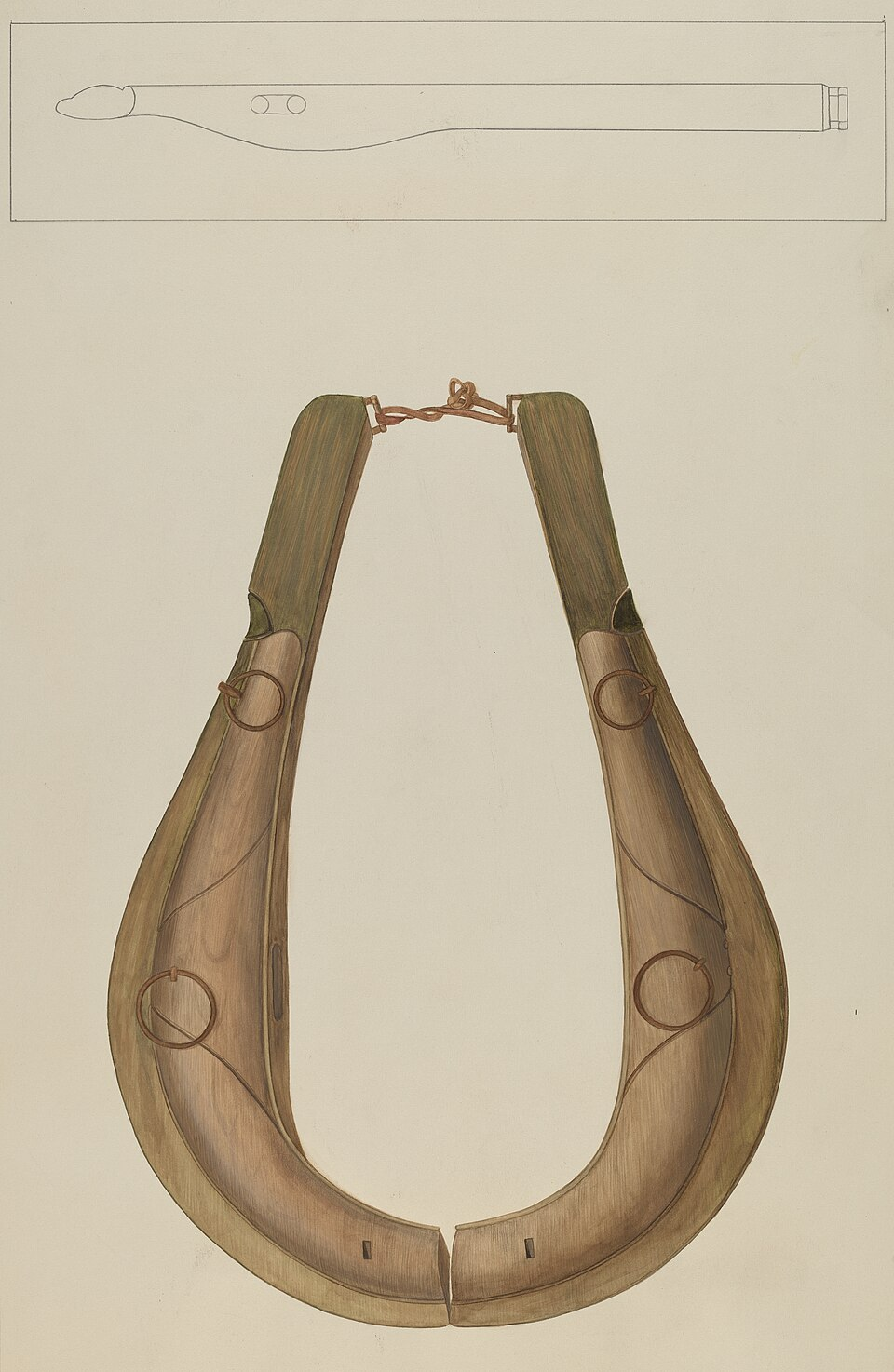
The horse collar is a solution to an anatomical fact, and the chain of reasoning behind it is longer than the object looks.
The fact is that a horse cannot pull from its throat. A strap across the windpipe and soft tissue chokes the animal under load and limits it to a fraction of its capacity. Put the load on the muscle and bone of the shoulders instead and the horse can put its whole weight into the work – which is the difference between an animal that carries people and an animal that is a power source.
Everything else follows from making that transfer work on a living body.
It has to fit the specific animal. Too large and it rocks and rubs; too small and it restricts breathing and bears in the wrong place; wrong in length or slope and it sits incorrectly on the shoulder. And horses change condition through a season, so the fit had to be checked. A collar was matched to one animal rather than being generic equipment.
Because a badly fitted collar injures the horse. Pressure in the wrong place rubs skin raw and causes painful sores that put an animal out of work for weeks – which on a farm with one or two horses is a serious loss. So inspecting the fit and the shoulders was a daily responsibility, and a man whose horses had sore shoulders was judged for it.
Hence the range: collars in different lengths, widths and degrees of slope, because animals are not shaped alike. A harness maker’s business was substantially about selecting and adjusting from that range for the horse in front of him.
And hence the construction. The body was packed with straw, hair or similar material inside a leather casing, which conforms to the animal using it – and which settles and compresses, so the collar could be restuffed. A maintained object rather than a fixed one.
Then two pieces of actual engineering.
The collar goes on upside down, because it is wider at the bottom than the top while a horse’s head is wider than its neck. So it is inverted to pass over the head, pushed down the neck and rotated into place – a one-second movement once learned and completely baffling to watch the first time.
And the hames carry the pull. A pair of curved metal or wooden pieces clamp around the outside of the collar, and the traces fasten to those rather than to the collar itself. Which separates two different requirements: the collar spreads pressure comfortably, the hames take the strain, so the load goes through a rigid frame while the animal feels it through a conforming pad.
Two things about using it.
One horse could do light work alone while heavier jobs needed a team pulling through a connecting bar – and two matched animals pull more than twice as usefully as one, because the load can be larger and the work steadier. Which is why a farm’s team was a pair kept and worked together rather than two individual horses.
And the animal had to learn the job. A horse was trained to lean into a collar, to start a load gradually rather than lunging, to stop on command and to stand while hitched. A pulling animal is not simply strong – it has learned a task involving judgement, and a well-trained horse was worth considerably more than a powerful one.
The maintenance follows straight from the injury mechanism. Dirt, sweat and grit between collar and shoulder are what cause sores, so cleanliness at that one interface is the entire prevention – which made a daily wipe a consequential task rather than a tidy habit.
Then the tractor removed the whole category of problem rather than solving any part of it. Every difficulty the collar addressed – anatomy, fit, injury, matching, training, seasonal condition – exists only because the power source is alive.
So count what sits in that one object. Somebody worked out that the load belongs on the shoulders, built a padded rigid ring to spread it there, separated the pulling point onto a metal frame so the padding never takes the strain, made it in a range of shapes because animals differ, stuffed it so it would conform, and arranged that it could be restuffed as it settled.
And then a farmer had to fit it to one particular animal, keep that interface clean every day, watch the shoulders for the first sign of rubbing, and teach the horse to lean into it and start gently.
That is a great deal of accumulated understanding about a single joint between a machine and a living thing.
Which is why the collars now hang on walls with mirrors in them.
If there is a collar hanging in a barn near you, look for the shape of the shoulder in it.
That padding was pressed into the form of one particular animal.
Like our content? Follow us for more.
