

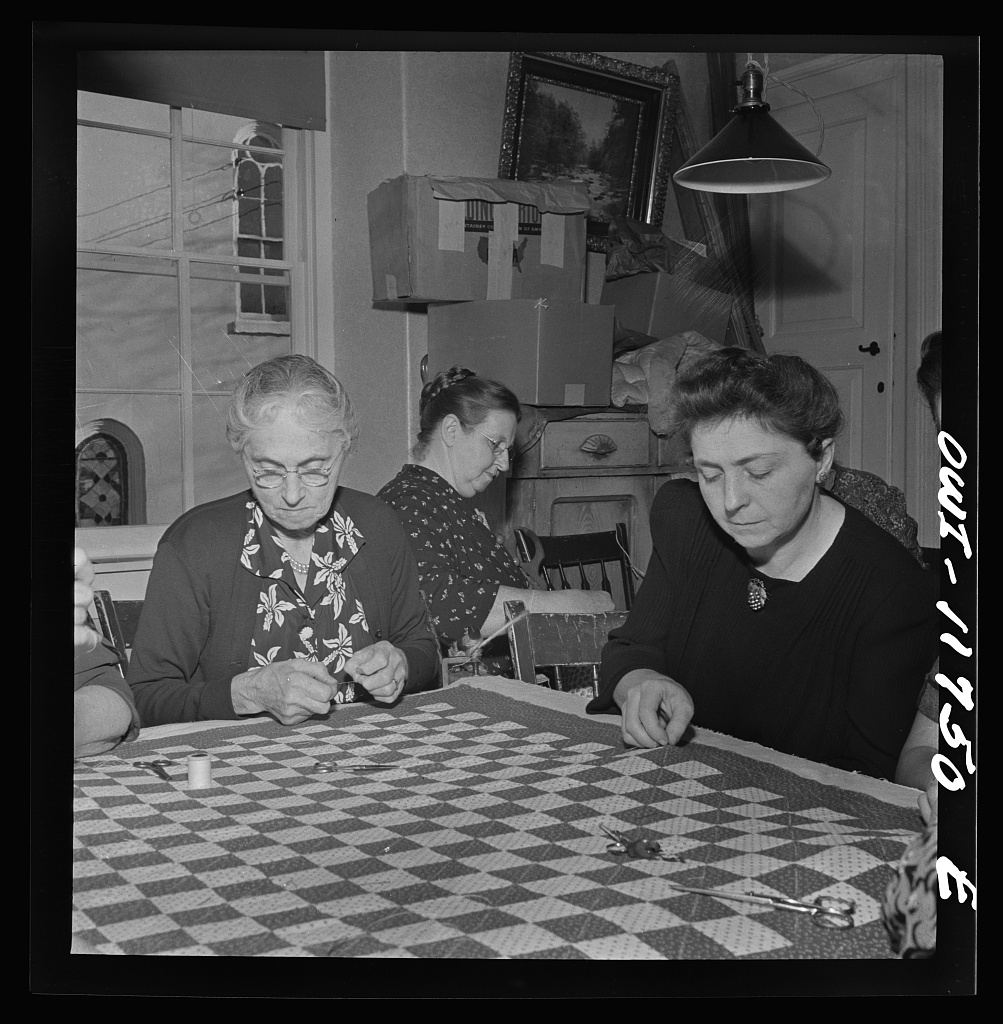
It met every week on a fixed day whether there was anything urgent to do or not.
That regularity is what separates a sewing circle from a gathering. A standing organisation with a membership, officers and a schedule is an institution, and the schedule is what made it reliable enough to be useful to the people who depended on it.
And the work went to somebody else – garments, bedding and household goods for families who had lost a house, a sick neighbour, a hospital, an orphanage, or a mission hundreds of miles away. Members supplied the labour and frequently the cloth, and the product left the room for people most of them would never meet. The work also had to be portable, because a group meeting in a different house each week cannot use anything fixed. Here are fifteen things every town knew.
1. It Met Every Week Whether There Was Work or Not
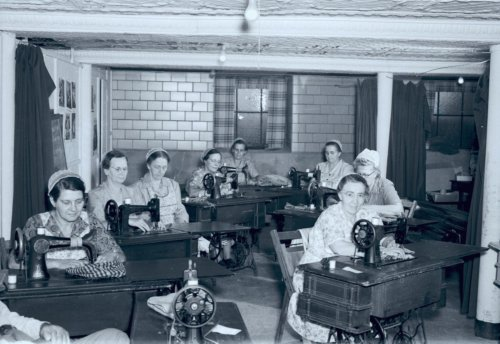
A sewing circle was a standing organisation with a regular day, a membership and officers, which met at a church, a hall or in members’ houses in rotation.
Not applicable in that form.
Start with the regularity, because it separates this from every informal gathering. A thing that meets on a fixed day whether or not there is anything urgent to do is an institution rather than an occasion, and the schedule is what made it reliable enough to be useful to anybody who depended on it.
Like our content? Follow us for more.
2. The Work Was for Somebody Else
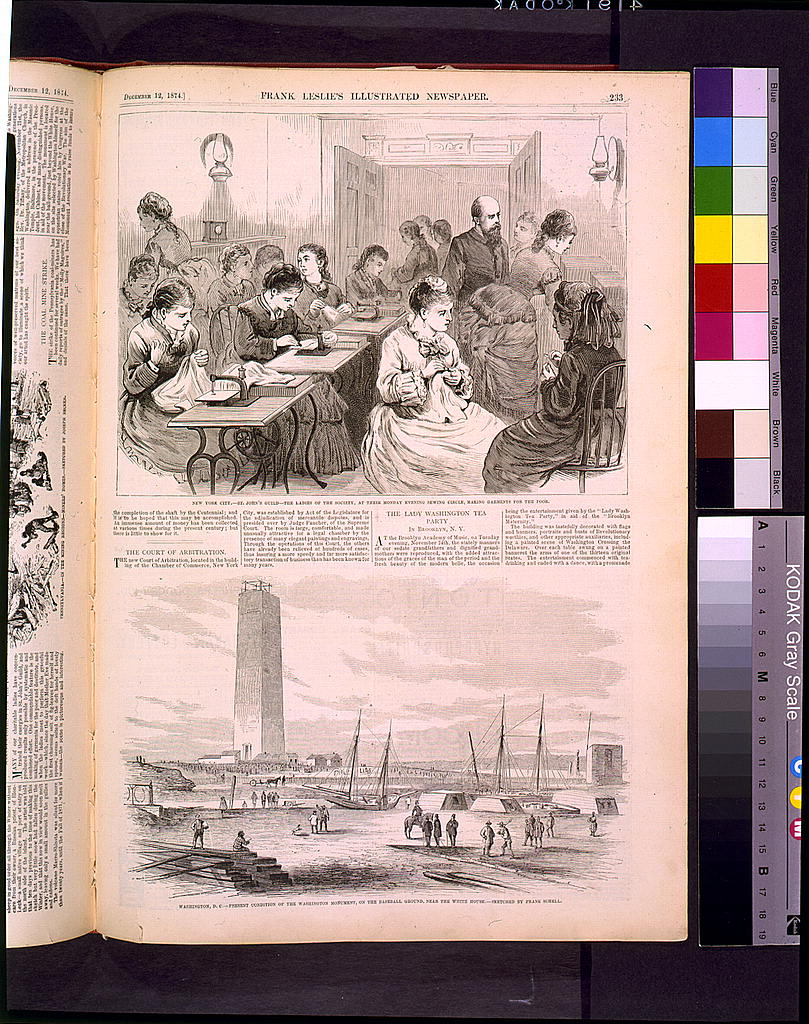
Members sewed garments, bedding and household goods for people outside the group – families who had lost a house, a sick neighbour, a hospital, an orphanage, or a mission somewhere far away.
Charitable organisations do this at scale, with purchased goods.
The external beneficiary is the defining feature and it is what makes the circle a charity rather than a club. The members supplied the labour and frequently the materials, and the product went out of the room to people most of them would never meet – which is an unusual arrangement to sustain week after week for years.
3. The Work Had to Be Portable
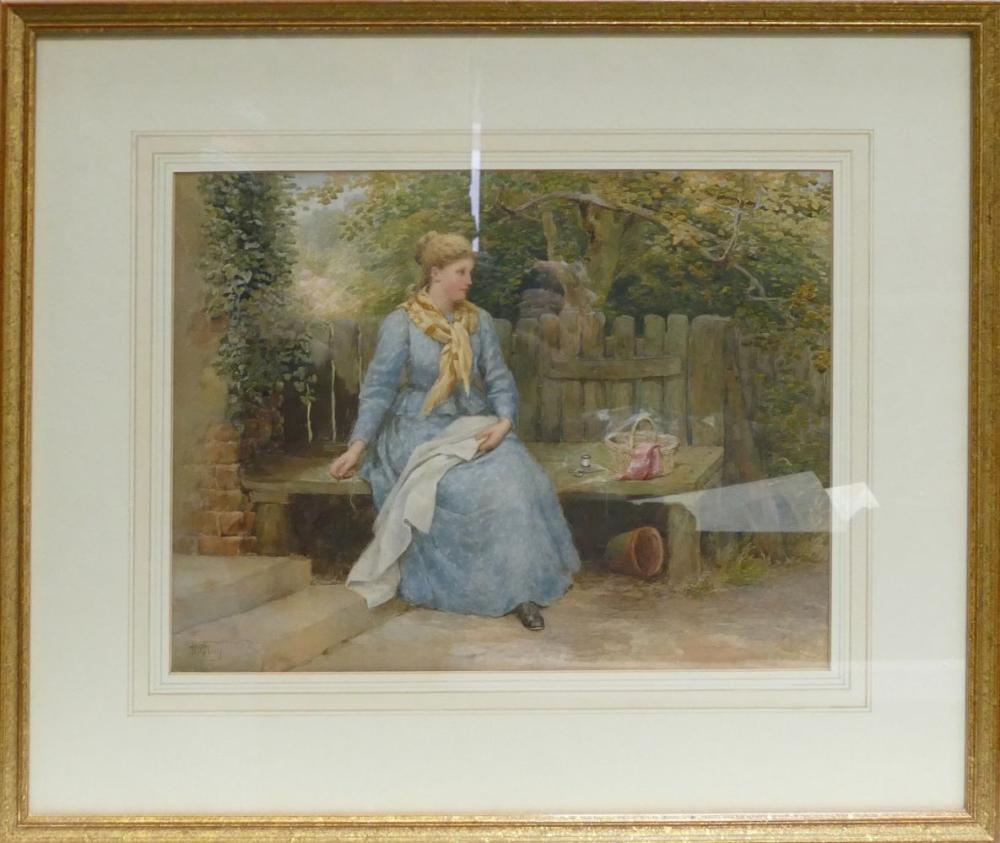
Everything done at a circle was small enough to be carried, picked up, put down and taken home – shirts, nightgowns, bandages, children’s clothes, pieced blocks.
Not applicable.
Portability is the technical constraint that shaped the whole institution. A group meeting in a different house each week cannot use a frame, a loom or anything fixed, so the work was necessarily hand sewing on small items – which also means members could take unfinished work home and bring it back.
4. Somebody Cut and Somebody Else Stitched
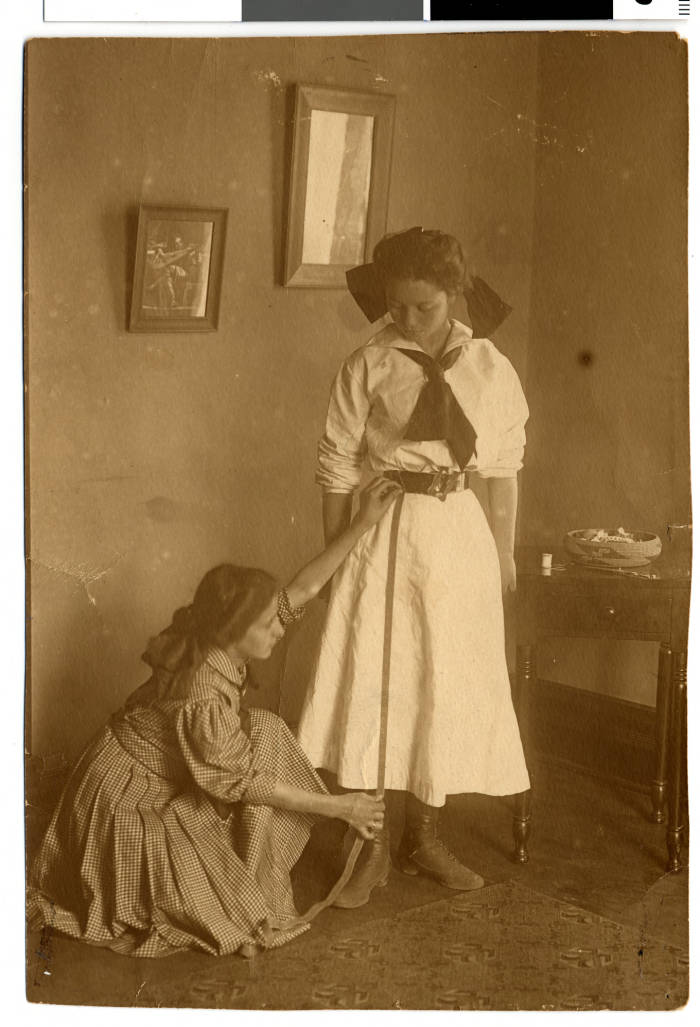
Cutting out garments from a pattern was done by the most skilled members, and the plainer sewing was distributed around the room.
Mechanised entirely.
The division of labour is a genuine piece of organisation. Cutting wastes material if done badly and requires judgement, while straight seams require only care – so a circle that separated the two tasks got more output per hour and gave everybody something they could do competently.
5. Materials Came From Donations and From Members’ Own Houses
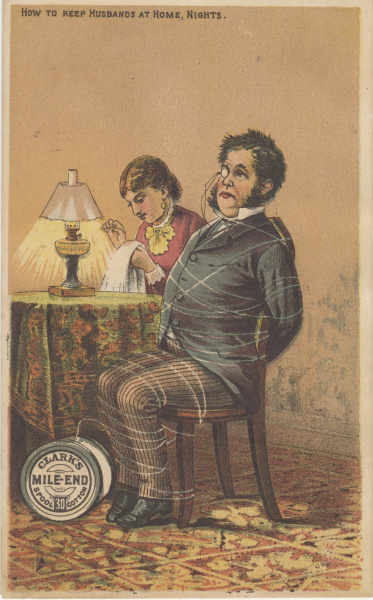
Cloth, thread and buttons were given, bought with collected money, or supplied by members out of their own stores.
Funded and purchased.
Where the materials came from is the unglamorous part and it is also the real measure of what members contributed. A woman bringing cloth from her own shelf is giving something she could have used, which is a different order of generosity from an hour of her time – and the accounts of these groups record both.
6. There Were Minutes, Dues and Elections
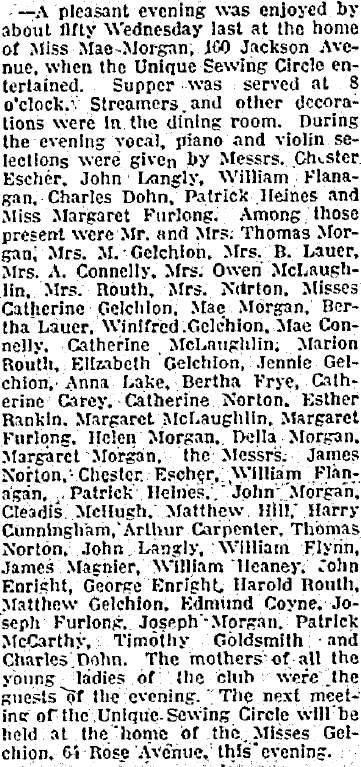
Circles kept records, collected small subscriptions, elected a president and a secretary, and reported on what they had made and sent.
Standard for voluntary organisations.
The formality looks disproportionate for a sewing group and it was doing something important. A body with officers, minutes and dues can be trusted with money, can account for what it did with donations, and can outlast the enthusiasm of any individual member – which is exactly what a long-term charitable effort requires.
7. It Was Frequently Attached to a Church
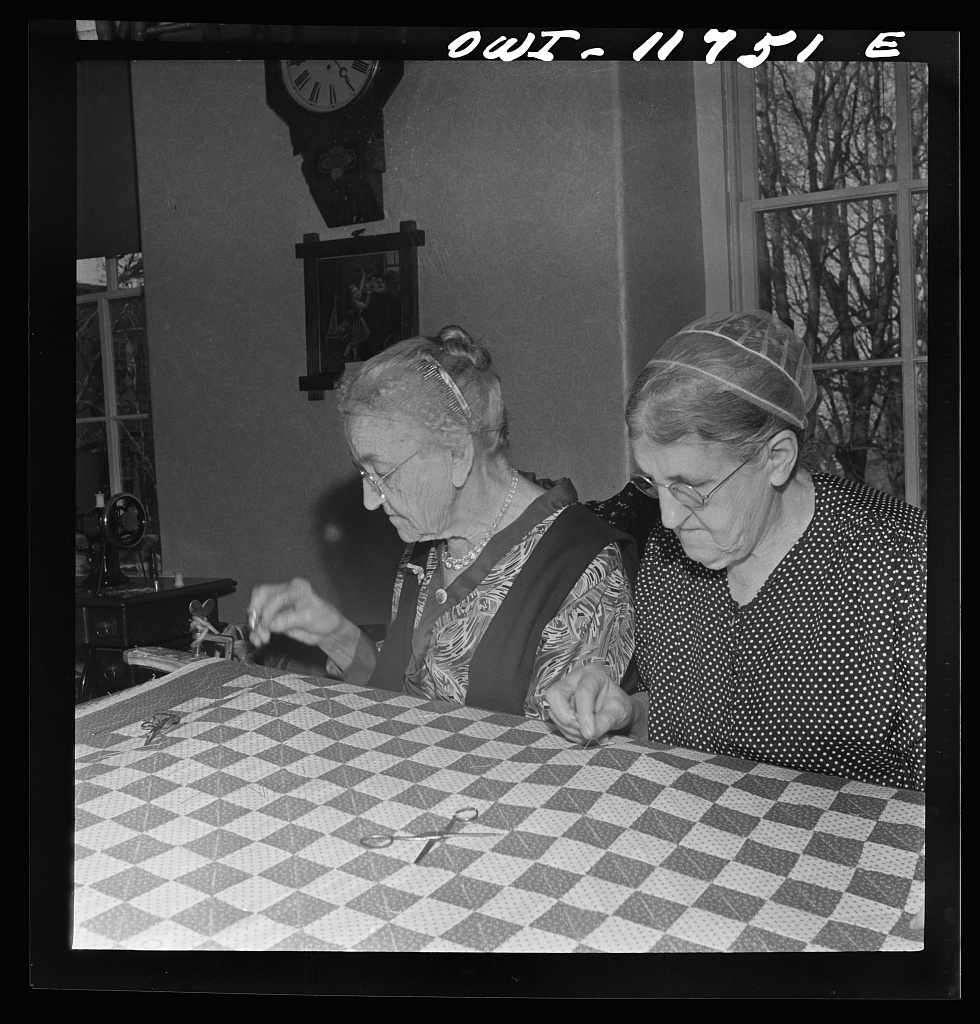
Many circles were organised within a congregation, which supplied the room, the cause and frequently the connection to whatever distant effort the work was being sent to.
Not applicable in the same way.
The church connection explains the reach and it is worth noting without going further into the religion. A congregation belongs to a wider organisation with contacts in other places, which is how a group of women in a small town came to be sewing for a specific institution hundreds of miles away that none of them had seen.
8. War Work Expanded It Enormously
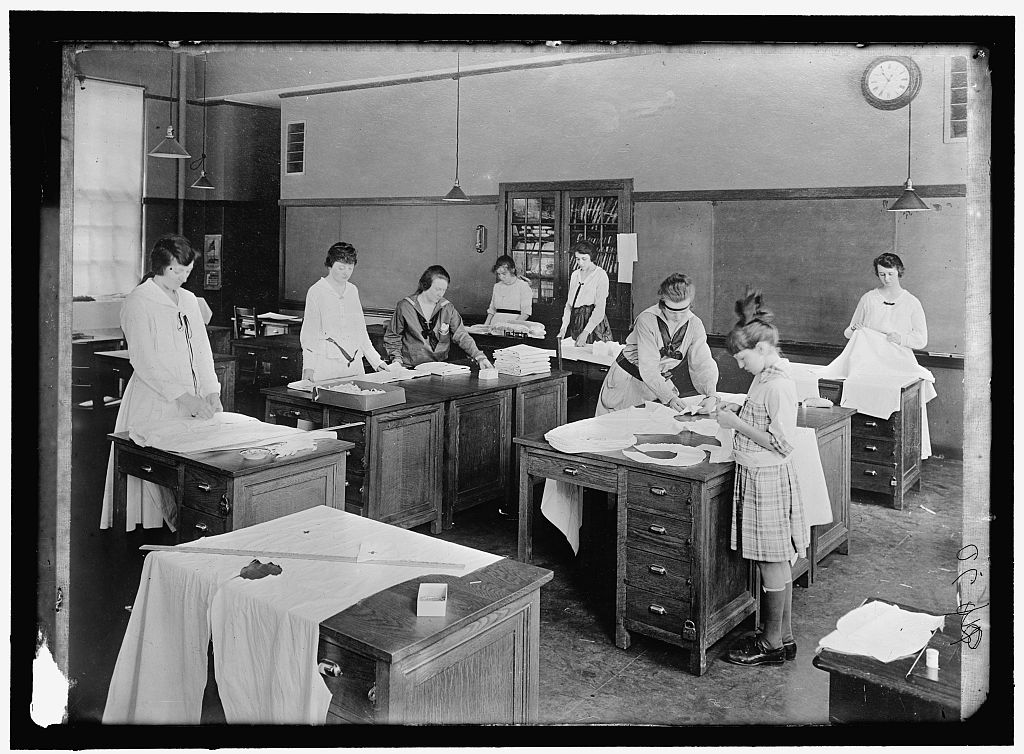
During wartime, circles multiplied and were coordinated into very large efforts producing bandages, garments and comfort items in enormous quantity.
Not applicable; such production is industrial.
The wartime scaling shows what the organisational structure was actually capable of. Thousands of small groups with officers and minutes can be coordinated from the centre and asked for specific items in specific quantities – which turns a network of parlours into a manufacturing capacity, and that is a remarkable thing for an institution built around hand sewing.
9. The Talking Was Not Incidental
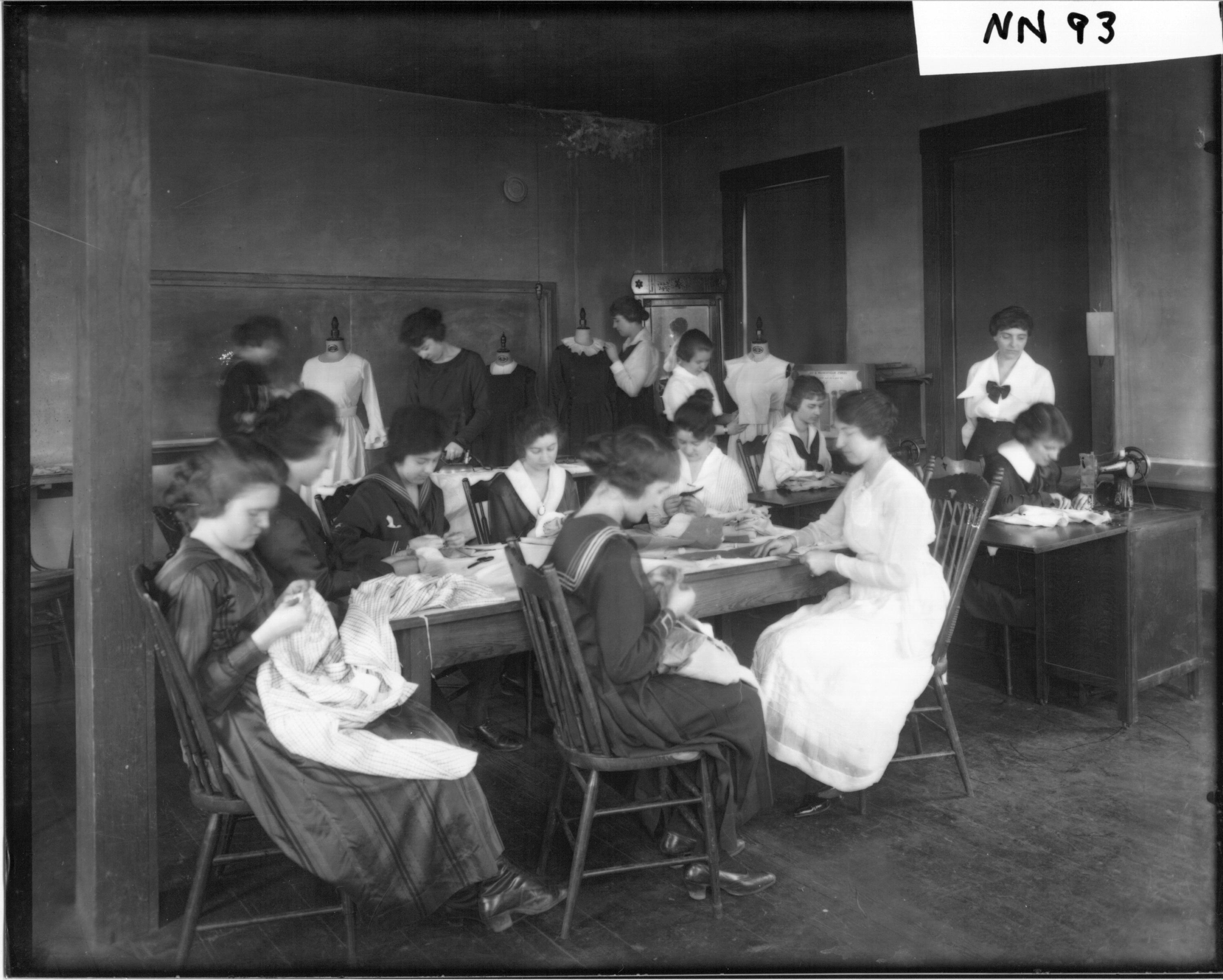
A room of women working with their hands for an afternoon produced sustained conversation, and the circle was a reliable weekly social occasion as well as a productive one.
Not applicable.
Both functions were real and neither was a cover for the other. The work genuinely got done and got sent, and the afternoon was genuinely the members’ own time in company – and a form of labour that occupies the hands while leaving the voice free is uniquely suited to doing both at once.
10. It Was One of the Few Organisations Women Ran Themselves
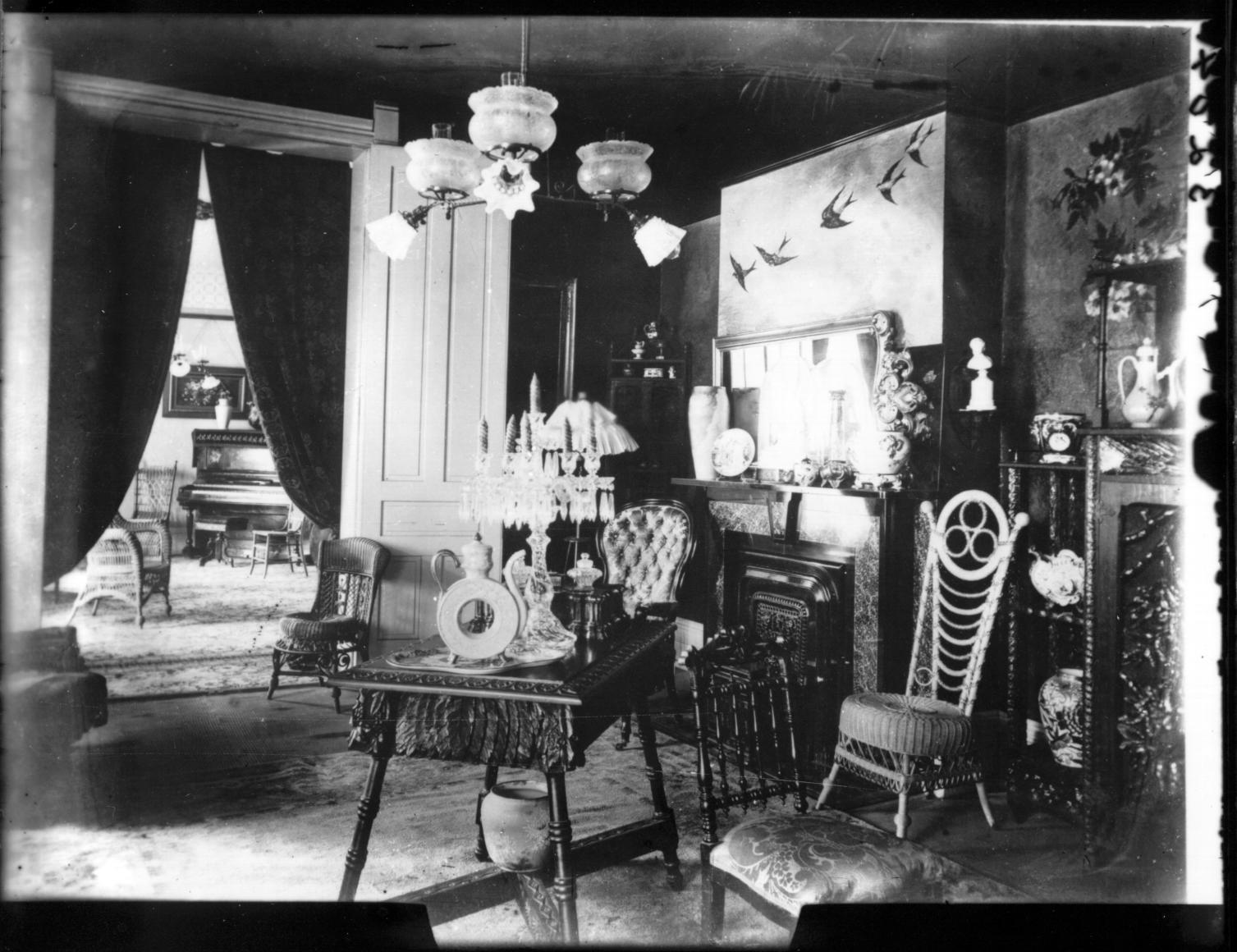
Circles were founded, officered, funded and directed by women, with no male involvement in their decisions.
Not applicable in the same context.
This deserves emphasis because it is easy to miss behind the needlework. In a period when women were excluded from most organised public activity, a body that raised its own money, kept its own accounts, chose its own causes and reported to nobody was genuinely unusual – and the experience of running one transferred directly to other kinds of organisation.
11. Members Learned Administration There
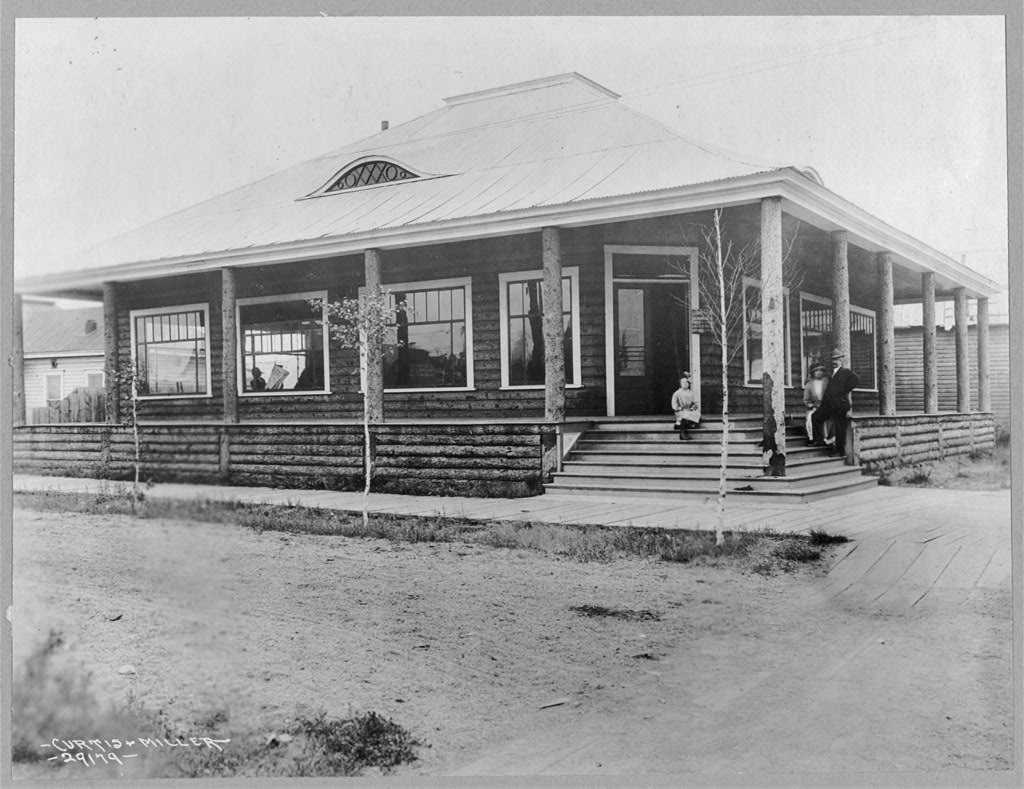
Women who had kept minutes, managed subscriptions, chaired meetings and coordinated with distant bodies carried those skills into other public work.
Not applicable in the same way.
The transferable skills are the most consequential thing about the institution. Running a small organisation competently is a learnable craft, the circle taught it to large numbers of women, and the organisations that women built later were staffed by people who had learned how committees work in a church basement with a workbasket.
12. The Youngest Members Were Taught Properly
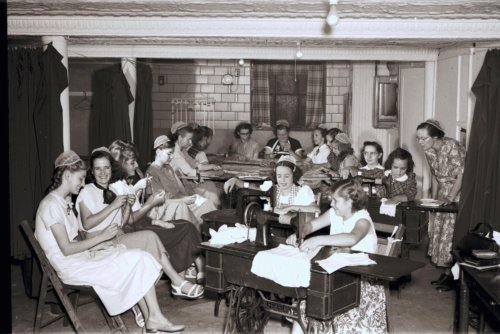
Girls were brought in, given simple work, corrected by experienced members, and gradually moved on to more demanding sewing.
Not applicable.
The apprenticeship function was deliberate rather than incidental. A room containing twenty competent sewers and one beginner is an ideal teaching environment, the work being done had a real purpose so the standard mattered, and the girl learning was also absorbing how a meeting is run.
13. Then Clothing Became Cheaper Than Making It
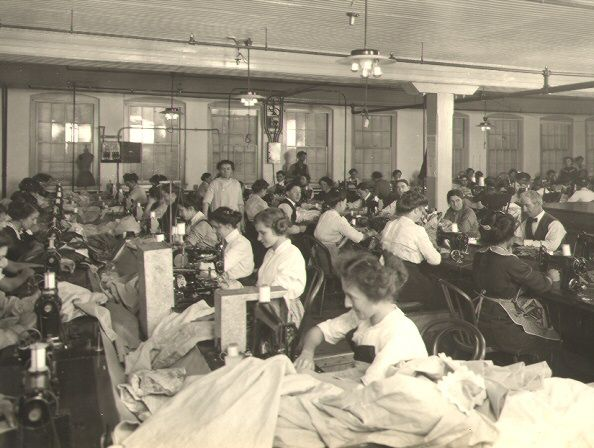
Mass-produced garments fell in price until buying a shirt cost less than the cloth and thread to sew one, which removed the point of hand production.
Universal.
The economics ended the productive function very directly. A charitable group exists to deliver the most help with the resources it has, and once cash buys more clothing than labour can produce, a rational organisation stops sewing and starts raising money – which is exactly what most of them did.
14. Then the Charities Professionalised
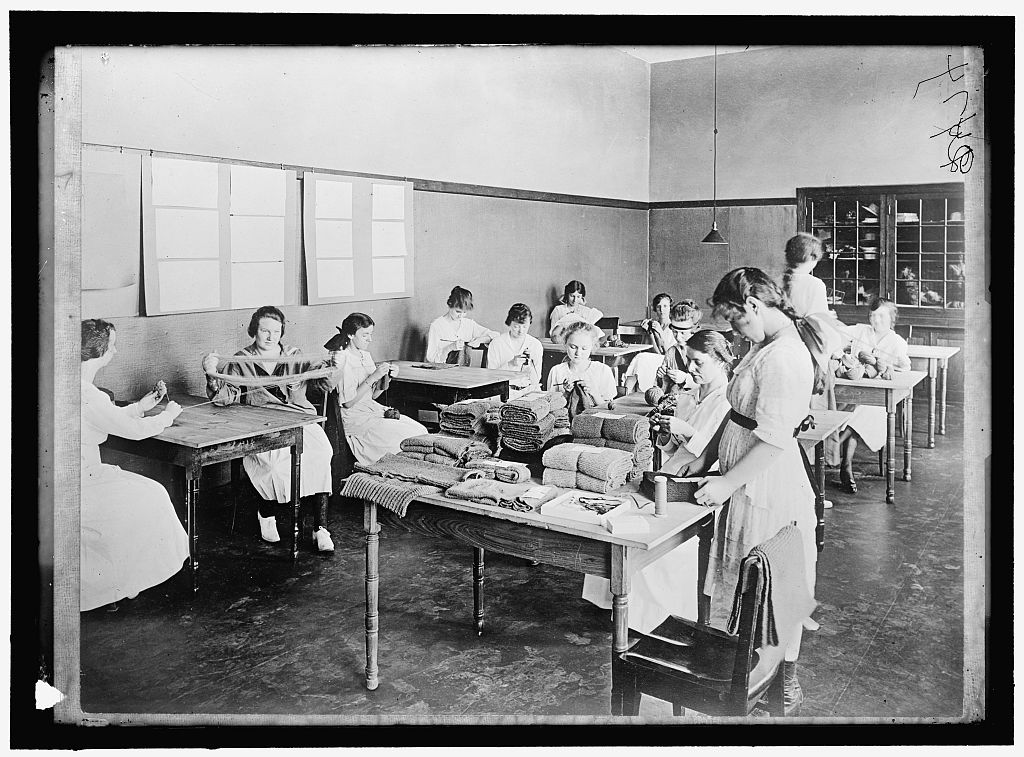
Large organisations with paid staff, standardised supplies and logistics took over disaster relief and institutional supply, and no longer needed parlours full of volunteers making things.
Standard.
Professionalisation is the second half of the cause and it is not a criticism. An organisation that can buy identical blankets in bulk and ship them quickly serves people better than one that assembles donated garments by hand – and the volunteers were redirected to raising the money that buys the blankets.
15. And by 1964 Most Had Become Fundraising Groups
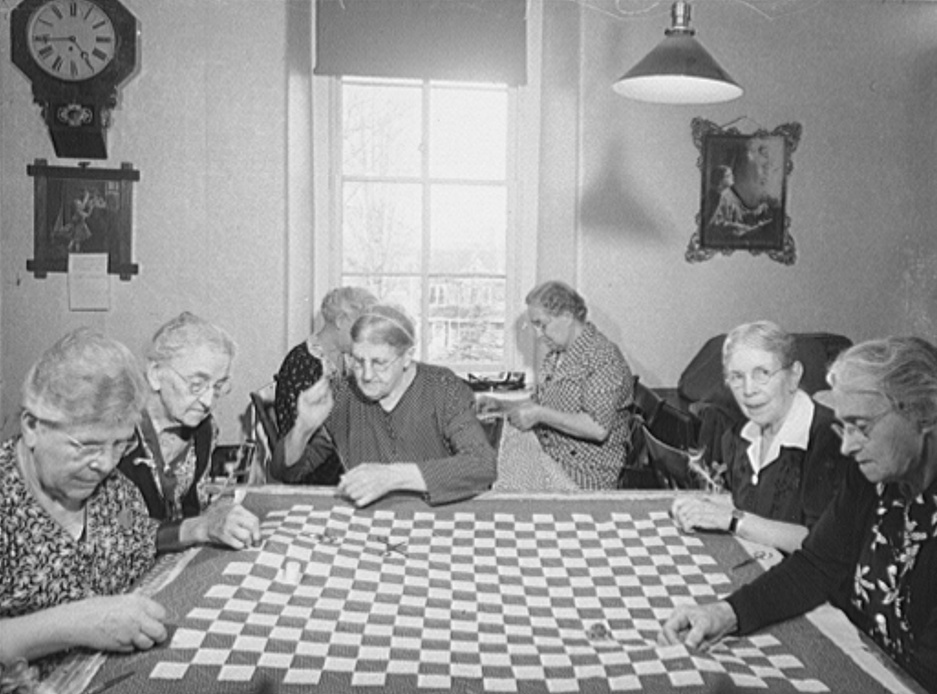
Many circles still met, but made things for sale rather than for distribution, and the proceeds went to the cause instead of the goods.
Church and community groups continue in this form.
And what deserves the last word is what these women built out of a weekly afternoon. A standing organisation with elected officers, written minutes, collected dues, external beneficiaries it reported to, a programme of work, a training function for its youngest members, and the capacity to be coordinated into national efforts at enormous scale – run entirely by women, in a period when women were excluded from almost every other kind of organised public life, and operating out of whichever member’s parlour it was meeting in that week. The sewing was the occasion. What was actually being practised was administration, and a great many of the American organisations that women founded and ran later were staffed by people who first learned how a committee works while hemming somebody else’s nightgown.
What They Were Really Practising Was Administration
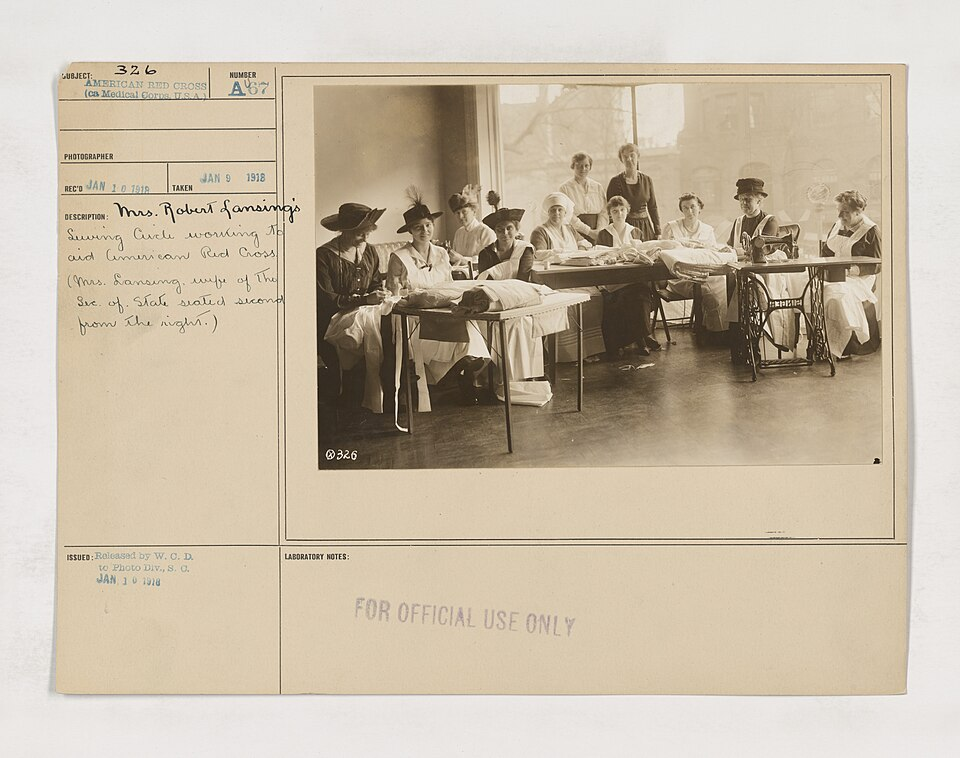
A sewing circle sounds like the mildest institution imaginable, and it was one of the most consequential things available to American women of its period – for reasons that have very little to do with sewing.
Start with what it actually was. A standing organisation with a regular day, a membership, elected officers, written minutes and collected dues, meeting at a church, a hall, or in members’ houses in rotation, whether or not there was anything urgent to do.
That formality looks disproportionate for a group with workbaskets, and it was doing real work. A body with officers, minutes and dues can be trusted with money, can account for what it did with donations, and can outlast any individual member’s enthusiasm – which is precisely what a sustained charitable effort requires.
And the beneficiary was always external. Members sewed for families who had lost a house, for a sick neighbour, for a hospital, an orphanage, or a mission far away. They supplied the labour and frequently the cloth out of their own stores, which is a different order of contribution from an hour of time – and the accounts of these groups record both.
The work was necessarily portable: shirts, nightgowns, bandages, children’s clothes, pieced blocks. A group meeting in a different parlour each week cannot use a frame or anything fixed, so everything was hand sewing on small items that could be carried, put down, taken home and brought back.
They organised the labour sensibly. Cutting out from a pattern went to the most skilled members, because bad cutting wastes material and requires judgement, while plain seams need only care – which got more output per hour and gave everybody something they could do competently.
The church connection explains the reach. A congregation belongs to a wider body with contacts elsewhere, which is how twenty women in a small town came to be sewing for a specific institution hundreds of miles away that none of them had ever seen.
And wartime showed what the structure could really do. Thousands of small groups with officers and minutes can be coordinated centrally and asked for specific items in specific quantities – which turns a network of parlours into a manufacturing capacity. That is a remarkable thing for an institution built on hand sewing.
Two functions ran simultaneously and neither was a cover for the other. The work genuinely got done and got sent. And the afternoon was genuinely the members’ own time in company, because a form of labour that occupies the hands while leaving the voice free is uniquely suited to both at once.
Now the part that matters most.
Circles were founded, officered, funded and directed by women, reporting to nobody, in a period when women were excluded from most organised public activity. A body that raised its own money, kept its own accounts and chose its own causes was genuinely unusual.
And running one is a learnable craft. Women who had kept minutes, managed subscriptions, chaired meetings and corresponded with distant organisations carried those skills directly into other public work. The organisations American women built and ran later were staffed by people who had learned how committees function in a church basement.
The circles also taught sewing properly, and deliberately. Girls were brought in, given simple work, corrected by experienced members and moved on to harder tasks – and a room with twenty competent sewers and one beginner is an ideal teaching environment, particularly when the work has a real recipient so the standard matters. The girl was also absorbing how a meeting is run.
Two things ended the productive function, and neither is a decline.
Clothing became cheaper than making it. Once cash buys more garments than labour can produce, a rational charitable organisation stops sewing and starts raising money – which is exactly what most of them did.
And the charities professionalised. An organisation that buys identical blankets in bulk and ships them quickly serves people better than one assembling donated garments by hand, so the volunteers were redirected to raising the money that buys the blankets.
Which leaves the thing they built out of a weekly afternoon: a self-governing organisation with elected officers, accounts, external beneficiaries it reported to, a work programme, a training function, and the capacity to be scaled into a national effort – run by women with no male involvement in any of its decisions, from whichever member’s parlour it happened to be in that week.
The sewing was the occasion.
What was being practised was administration.
If a woman in your family belonged to one of these, look for the minute book.
She was keeping accounts and chairing meetings decades before she could do it anywhere else.
Like our content? Follow us for more.
