

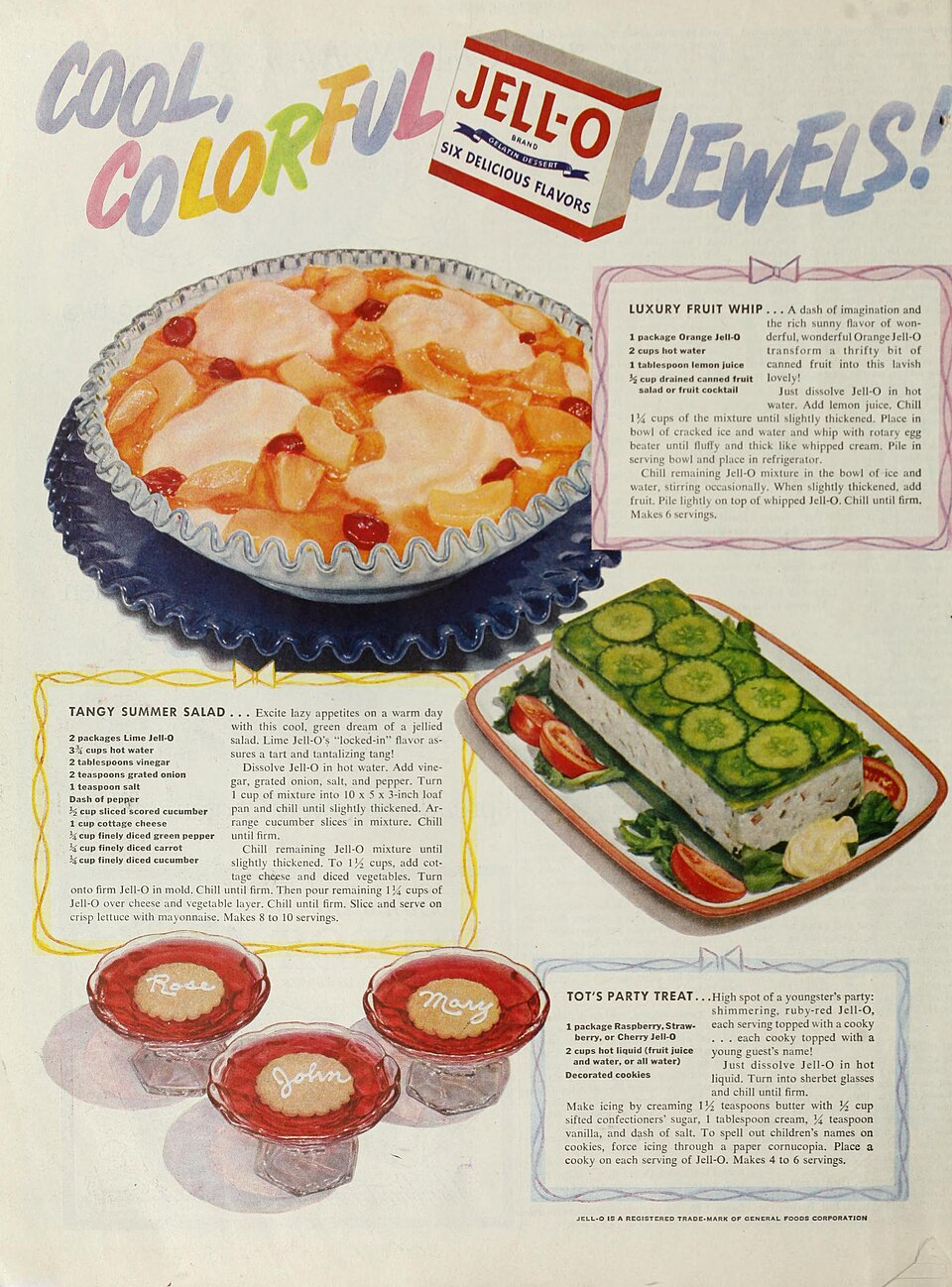
The moulded salad is the most mocked food in American history and the mockery misses most of what was going on. These dishes were not a failure of taste. They were the product of a specific set of conditions — a new domestic refrigerator, a cheap reliable setting agent, tinned fruit and vegetables in every store, and a social expectation that a hostess would be judged on how the table looked.
Given all four at once, the moulded salad is close to an inevitable invention. Here are fourteen of them, and what each one was actually trying to do.
1. Tomato aspic, turned out whole onto a bed of lettuce
The foundation stone of the whole category: tomato juice, a little onion and celery, lemon, seasoning, set firm with gelatin in a ring mould and turned out trembling onto a plate. It was served as a first course at every level of American entertaining.
Nothing is wrong with it. Tomato aspic is a competently constructed savoury dish with a long pedigree in classical cooking, and a version of it made carefully is genuinely good. It is on this list because the form collapsed rather than the recipe.
What finished it is the texture. A generation raised on it accepted a cold, firm, wobbling savoury solid as an ordinary thing to eat, and the generation after that did not, and no amount of argument about the flavour has ever recovered the ground.
Like our content? Follow us for more.
2. Perfection salad, with shredded cabbage suspended in lemon gelatin
Finely shredded cabbage, celery and strips of pimiento, held in a clear lemon-flavoured gelatin, served in squares or turned out of a mould. It won a national recipe competition early in the century and stayed in the American repertoire for sixty years.
It is the purest example of the idea underneath the whole genre, which was that suspending food in a clear set medium was a mark of skill and modernity. The vegetables are arranged to be looked at through the gelatin, which is the entire point of the dish.
No cook would make it now and the reason is not the ingredients, all of which are in a modern slaw. It is that we no longer read transparency and suspension as sophisticated. The same cabbage, dressed, is on every menu in the country.
3. Lime gelatin with cottage cheese folded through it
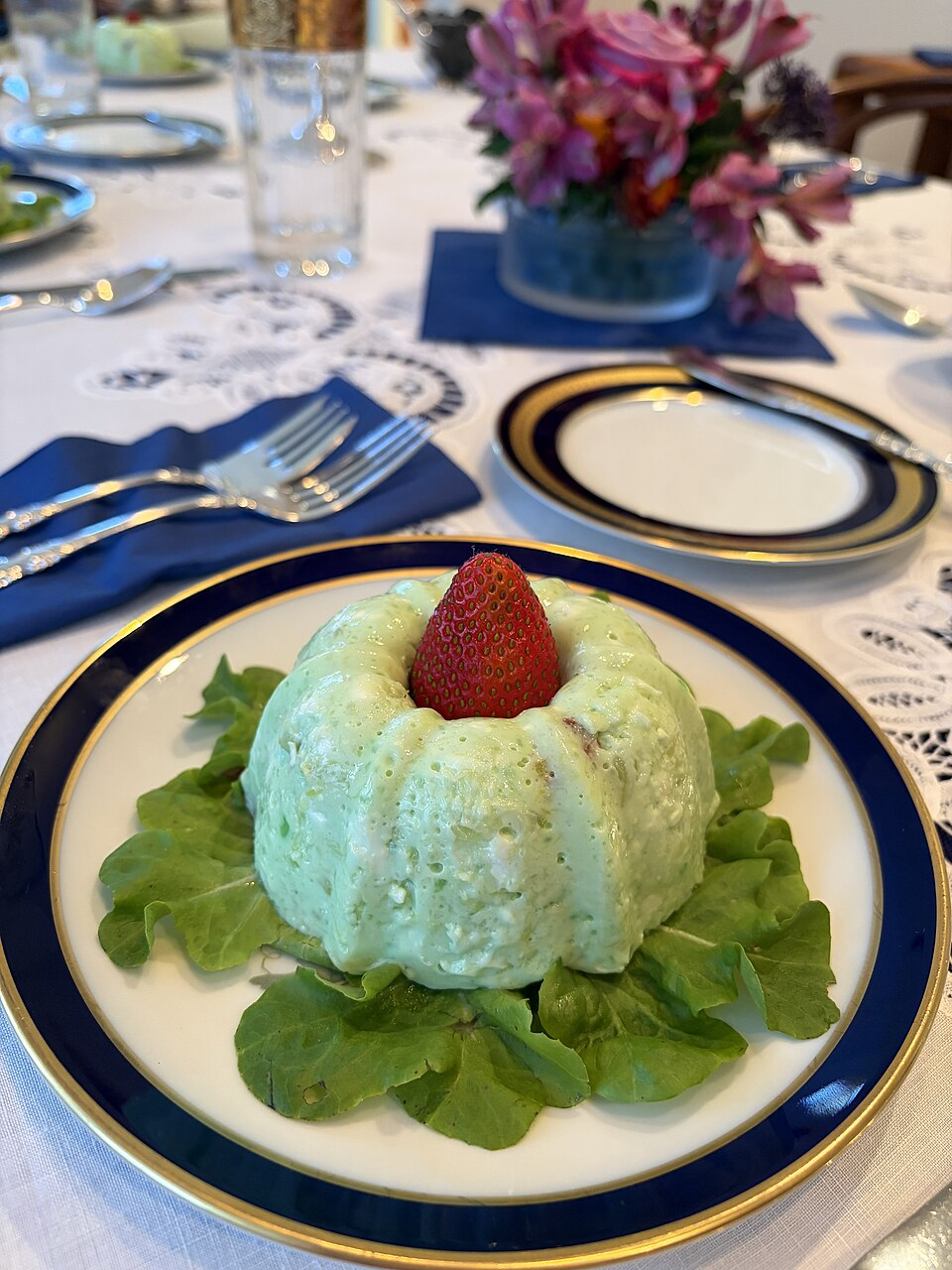
Bright green, opaque, flecked white, set in a mould and cut into squares. Sometimes with pineapple, sometimes with celery, sometimes with chopped nuts, always with the cottage cheese making the whole thing cloudy.
This one is the hardest of the set to defend, and the people who grew up with it are generally the first to say so. It occupied an awkward position: too sweet to be a salad and too savoury to be a dessert, and it was served as both.
It is also the single most frequently cited dish when Americans talk about the food of this period, which means it has become a stand-in for the whole decade. That is slightly unfair to the rest of the list.
4. Sunshine salad, with grated carrot and crushed pineapple in orange gelatin
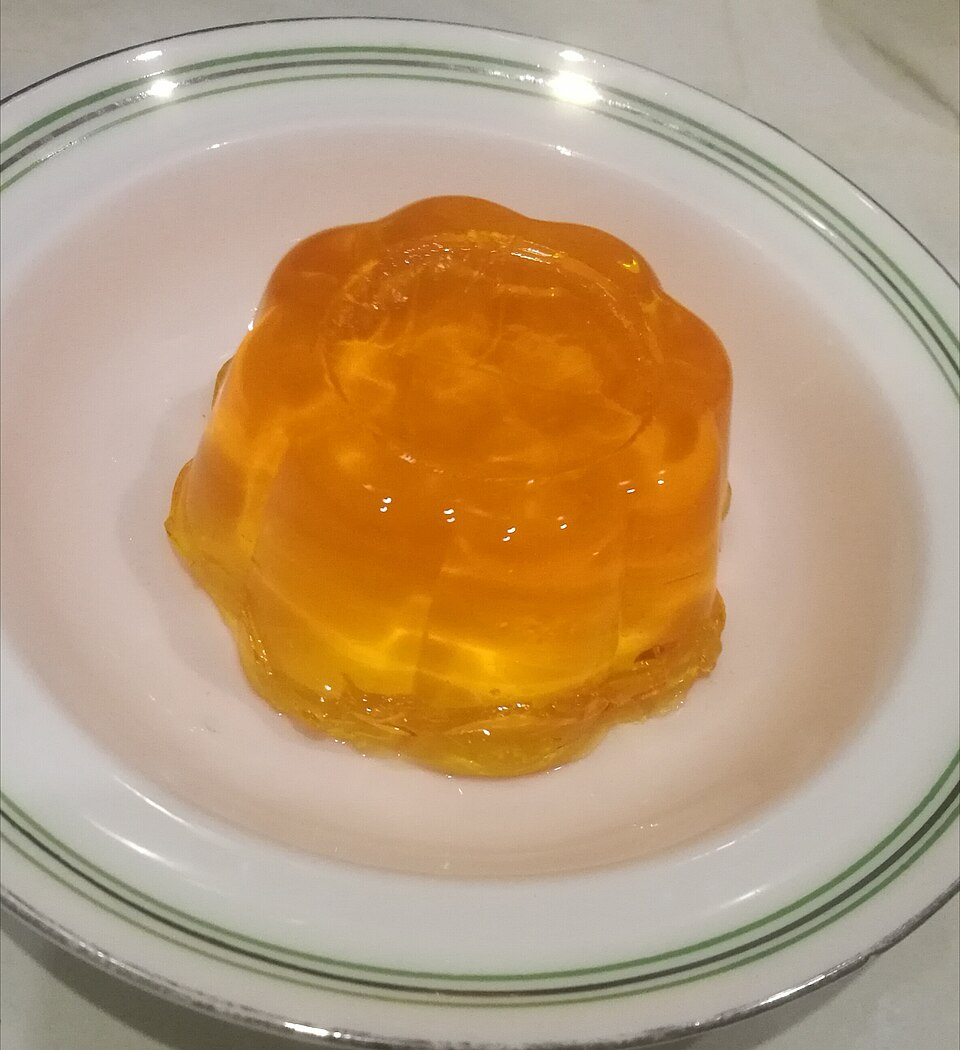
Orange-flavoured gelatin, grated raw carrot and tinned crushed pineapple, set in a ring. It was a church supper staple, a potluck staple and a children’s party staple, and it had the advantage of being almost impossible to get wrong.
The pineapple had to be tinned, and this is the one genuine piece of food science in the whole category. Fresh pineapple contains an enzyme that breaks down the protein in gelatin and prevents it setting. Canning denatures the enzyme, so tinned works and fresh does not.
Any cook who tried it with fresh fruit got a bowl of orange liquid and concluded she had done something wrong. The recipe cards of the period say to use tinned without explaining why, which is a fair summary of how a great deal of cooking knowledge travelled.
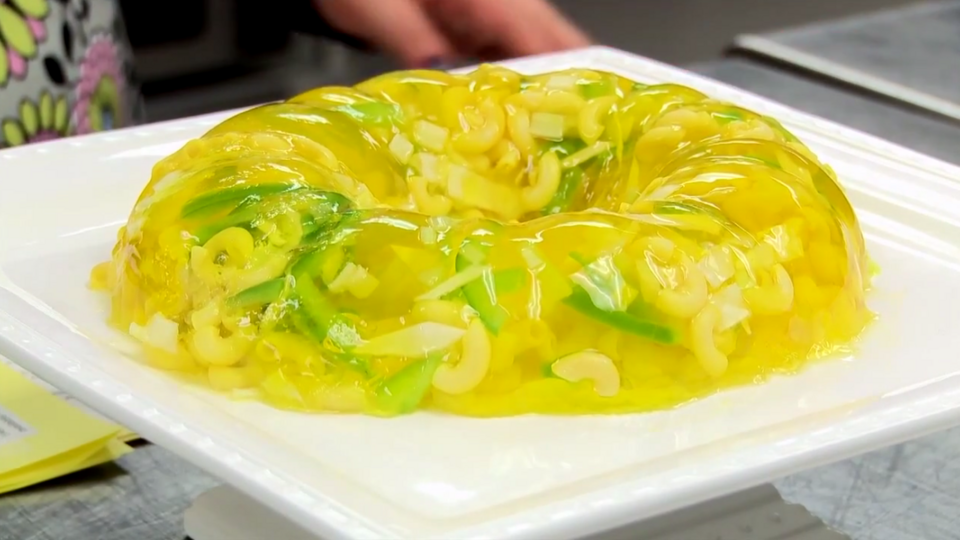
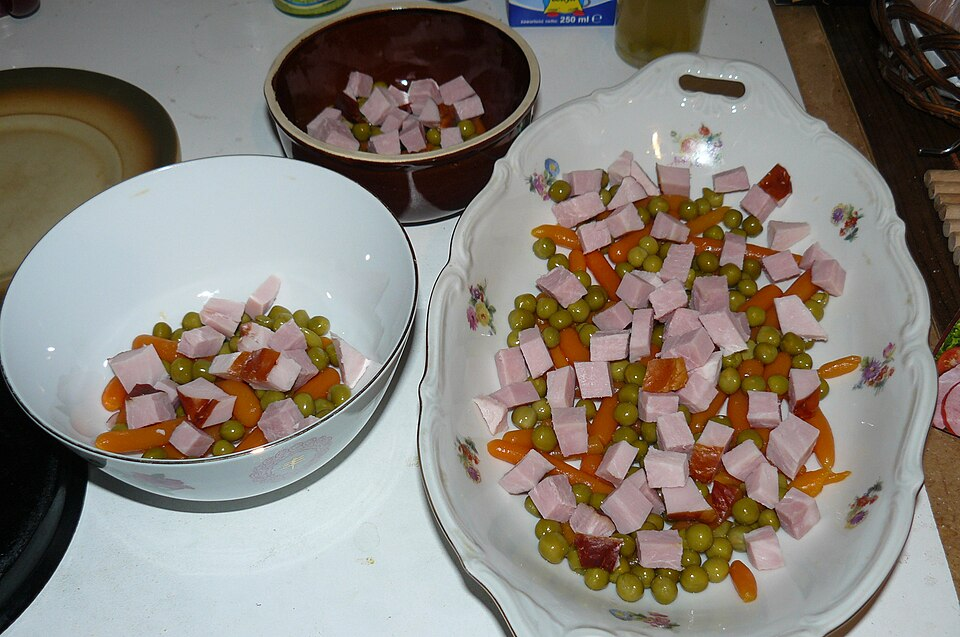
5. Jellied peas and carrots, in a clear savoury mould
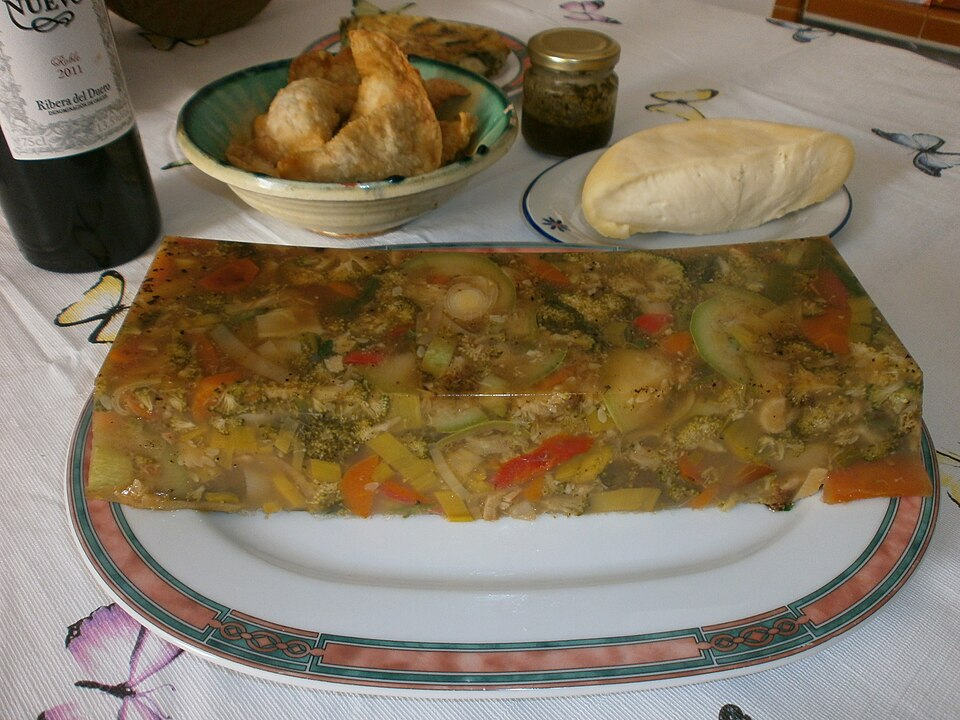
Cooked peas and diced carrot suspended in a lightly seasoned clear gelatin, often with a little vinegar, turned out and served as a side dish alongside the main course rather than as a salad.
This is the item that most often produces disbelief, and it was entirely ordinary. It appears in mainstream American cookbooks of the period without apology and with the assumption that the reader knows why anybody would do it.
The reason is presentation. A plate of peas is a plate of peas and a glistening mould of them is an achievement, and in a decade when a hostess was judged on the look of the table that difference mattered more than it does now.
6. Cucumber and sour cream mould
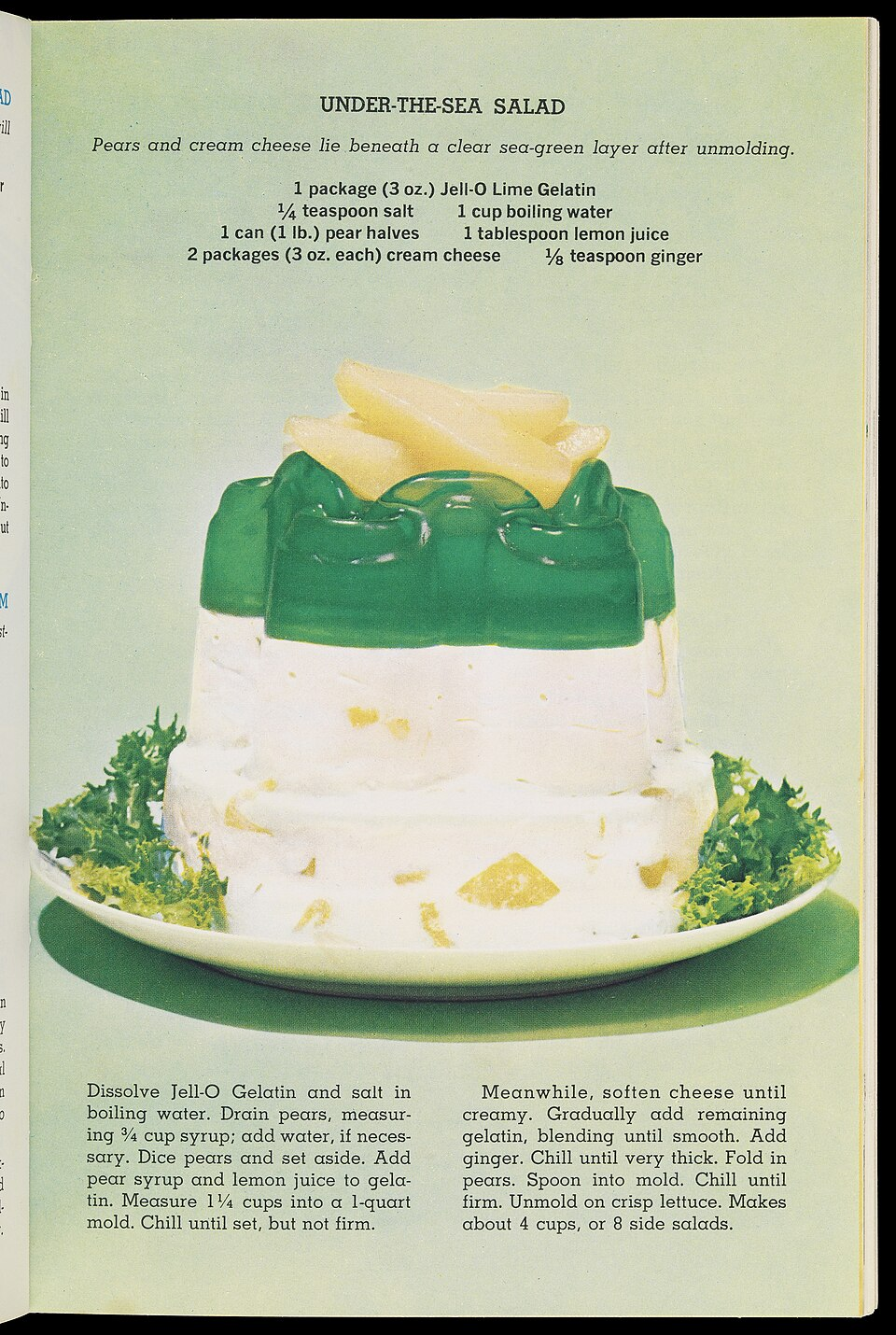
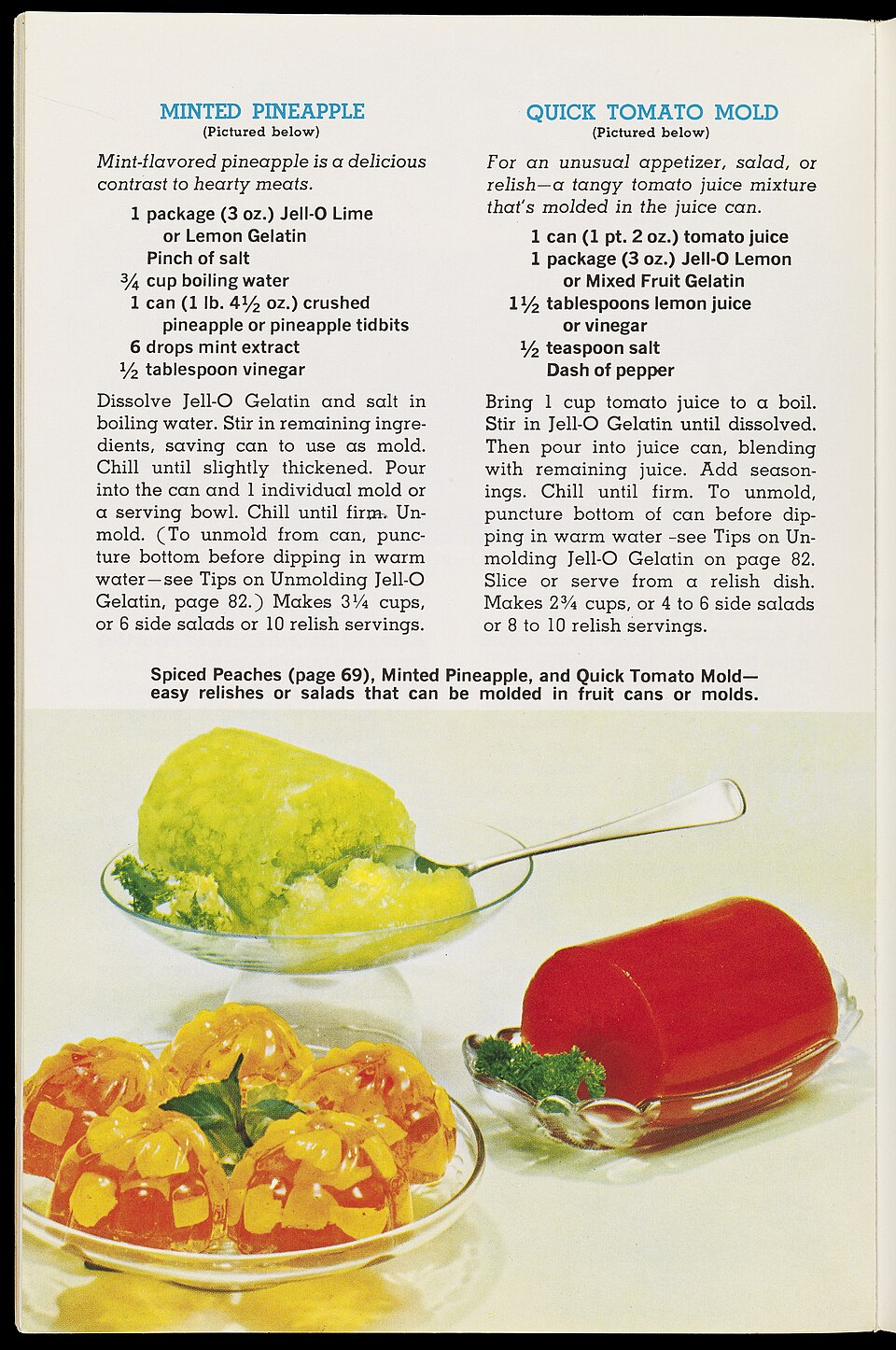
Grated cucumber, sour cream or cream cheese, a little onion and lemon, set in a mould to a pale green opaque solid. Served with cold food in summer, and one of the better dishes in the repertoire by any modern standard.
It survives, slightly, as a dip and as a dressing. The ingredients are precisely those of several things people eat constantly. The only thing that has gone is the gelatin and the mould, which is to say the form rather than the food.
If any dish on this list is due a revival, it is this one, and the obstacle is purely the wobble. Serve the same mixture in a bowl and nobody would blink.
7. The ring mould with a bowl of mayonnaise in the middle
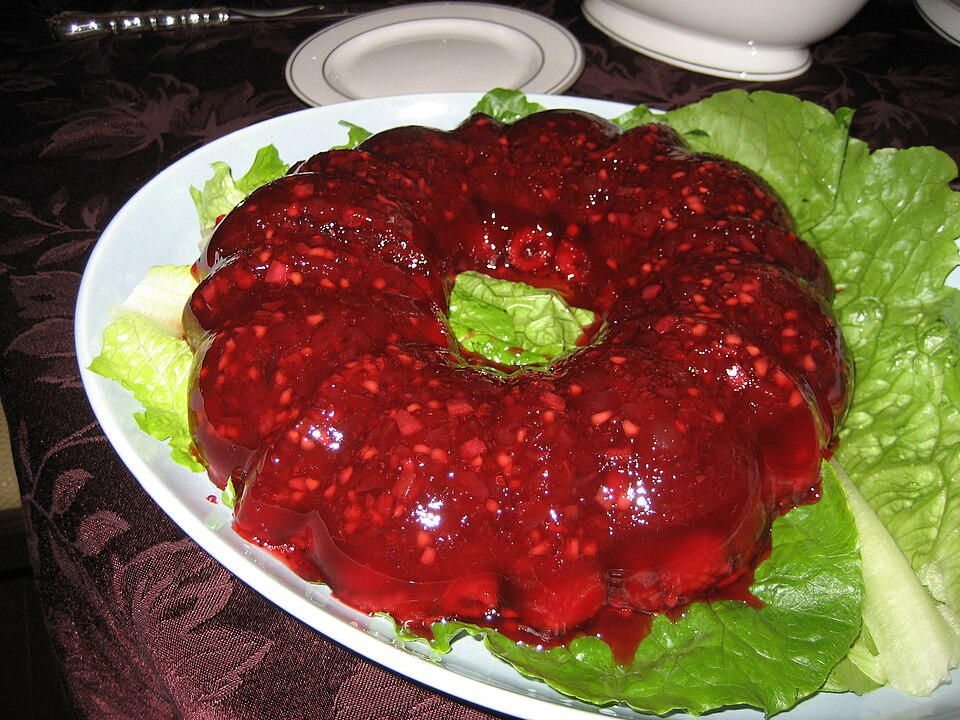
The ring was the dominant shape because the hole in the centre was functional. It held a bowl, and the bowl held mayonnaise, or a dressing, or sour cream, or more salad, making the whole thing a self-contained course on one plate.
The ring mould itself has essentially disappeared from American kitchens except for cake, and with it a whole grammar of presentation that assumed a centrepiece, a filled centre and a plate arranged to be seen from above.
Modern plating is horizontal and asymmetric and composed for a single diner. The ring mould assumes a table of eight looking at one object in the middle, which is a different kind of meal and a different kind of evening.
8. Gelatin frosted all over with mayonnaise
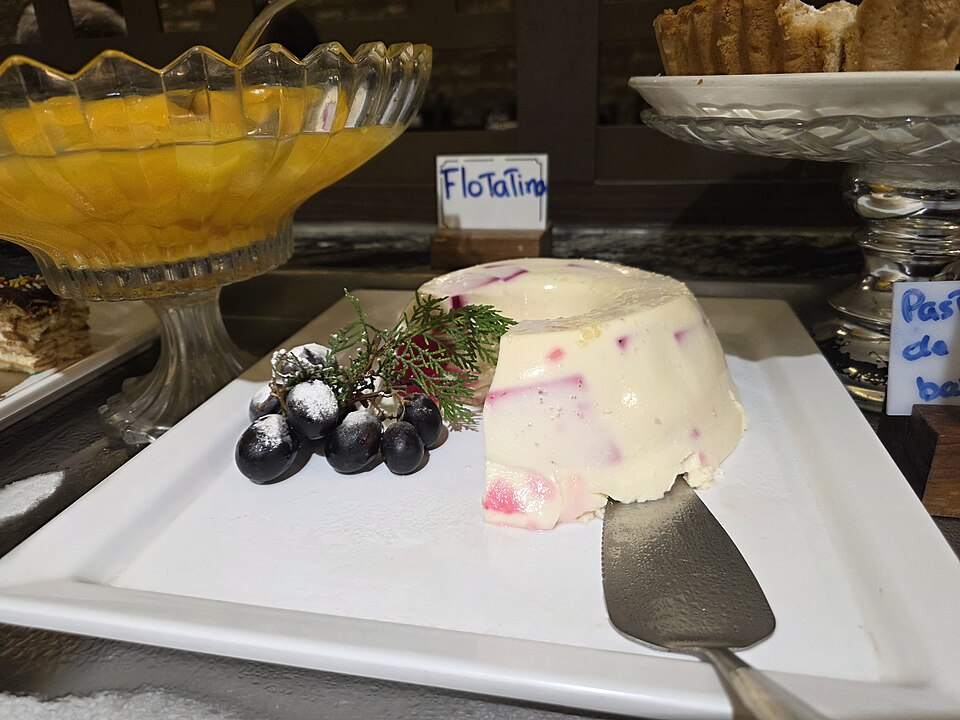
The moulded salad was sometimes finished by coating the turned-out surface in mayonnaise, or in softened cream cheese thinned with milk, spread smooth so the whole thing resembled an iced cake. Decoration went on top.
This is the practice that modern readers find hardest to accept, and the logic behind it is consistent with everything else here. The dish was meant to look like a constructed object, and a smooth opaque surface with piped decoration reads as more finished than a transparent one.
It is also where the genre overreached. A savoury salad presented as a frosted cake is a category error that the diners of the period seem to have accepted and that nobody has been able to explain to anybody since.
9. Layered gelatin in three or four colours
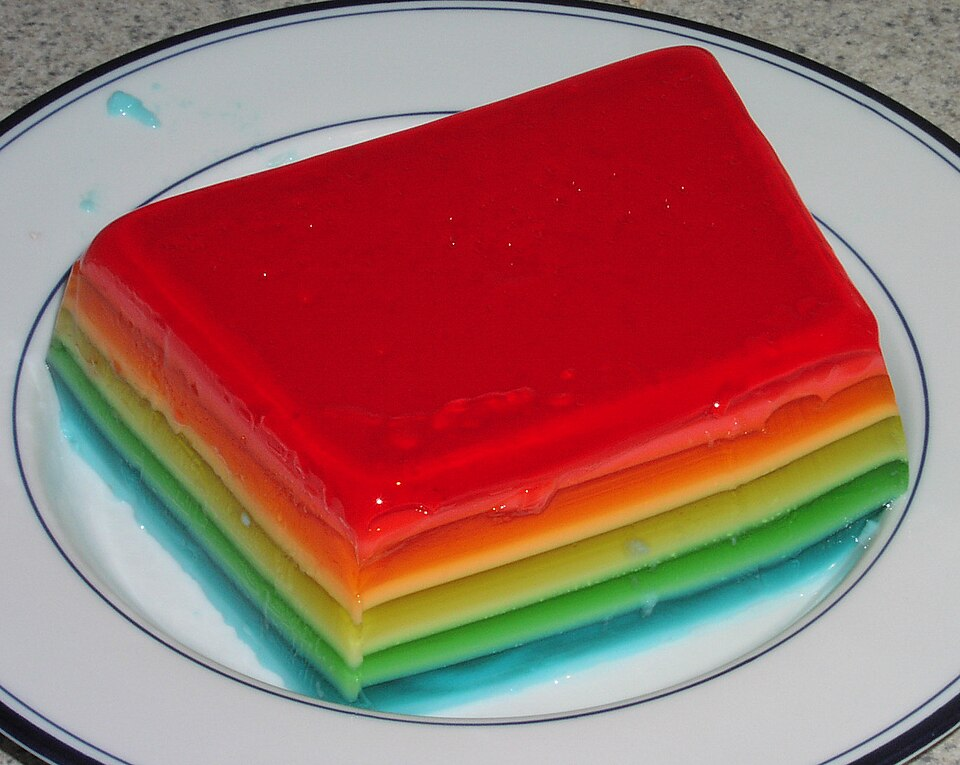
Each layer poured, set, and the next poured on top, over hours, producing clean horizontal bands of colour in a loaf tin or a mould. It was a genuine test of patience and a genuine demonstration of competence.
The technique survives in modern dessert work and in a certain kind of children’s party. What has gone is the ambition: a 1958 hostess might attempt six layers with contrasting opacity, some clear and some made cloudy with milk.
This is the item where the craft argument is strongest. Nobody now does anything in a domestic kitchen that requires the same sequence of timed, patient, unforgiving steps for a purely visual result, and something has genuinely been lost with it.
10. Fruit cocktail and marshmallows, set in a mould
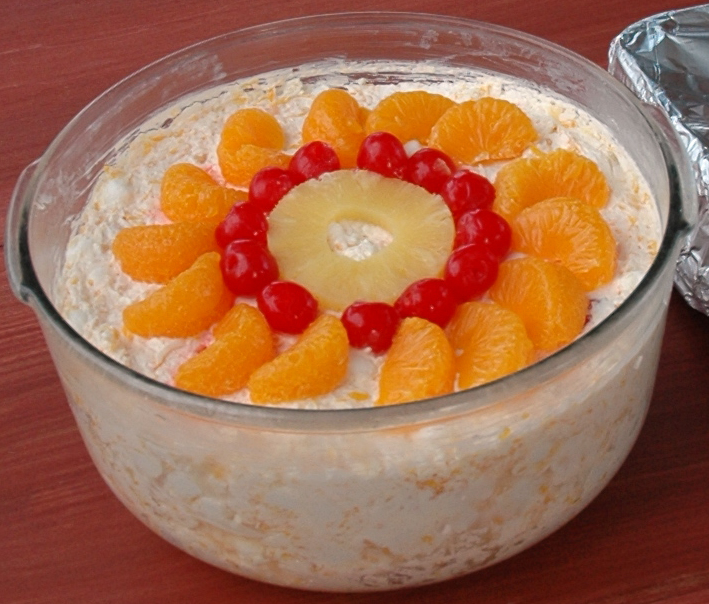
Tinned fruit cocktail, miniature marshmallows, sometimes whipped cream or sour cream folded in, set in a flavoured gelatin and turned out. Served as dessert, as a salad, and at some tables as both in the same meal.
The confusion of course is the defining feature. This dish sat on the table next to the main course and was eaten with it, which is the arrangement that most separates the American meal of this period from the one that followed.
Versions of it survive at family gatherings in parts of the country, usually made by the oldest person present, and are defended with real passion by people who are entirely aware of how it sounds.
11. Cola or coffee gelatin
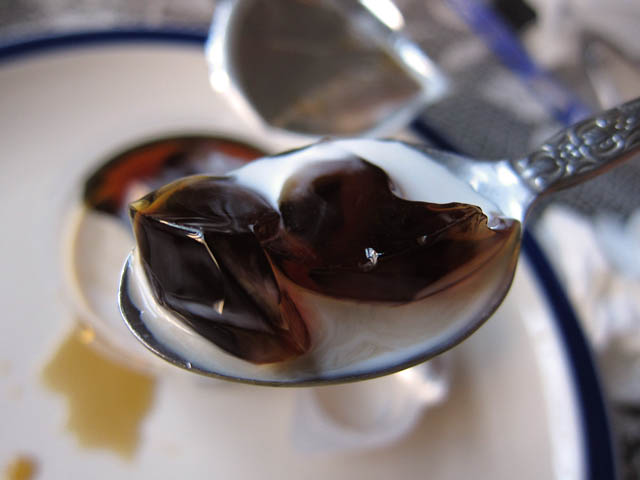
Both were made, both appeared in printed recipes, and both were served as desserts with cream. Cola-flavoured gelatin was marketed commercially, and coffee gelatin was made at home from strong coffee.
Coffee gelatin is the survivor of the two. It is a standard dessert in Japan and appears on American menus occasionally, and it is good. The cola version is the one that has no defenders at all.
What these two show is how far the technique had spread. By 1958 the reasonable question was not what you could set in gelatin but whether there was anything you would not, and the answer was not very much.
12. Gelatin with chopped nuts and celery through it
Walnuts or pecans and finely diced celery, suspended in a sweet or lightly savoury gelatin. The purpose was texture: something to bite in a dish that otherwise offered none.
The textural problem is the real critique of the whole genre and the cooks of the period knew it perfectly well, which is exactly why the nuts and the celery are there. A uniform wobble for a whole course is monotonous and they were solving for that.
It is worth giving them the credit. Almost every addition in this list — the cabbage, the carrot, the nuts, the celery, the marshmallows — is a solution to a texture problem the cook had identified herself.
13. Ginger ale gelatin, made with the real thing
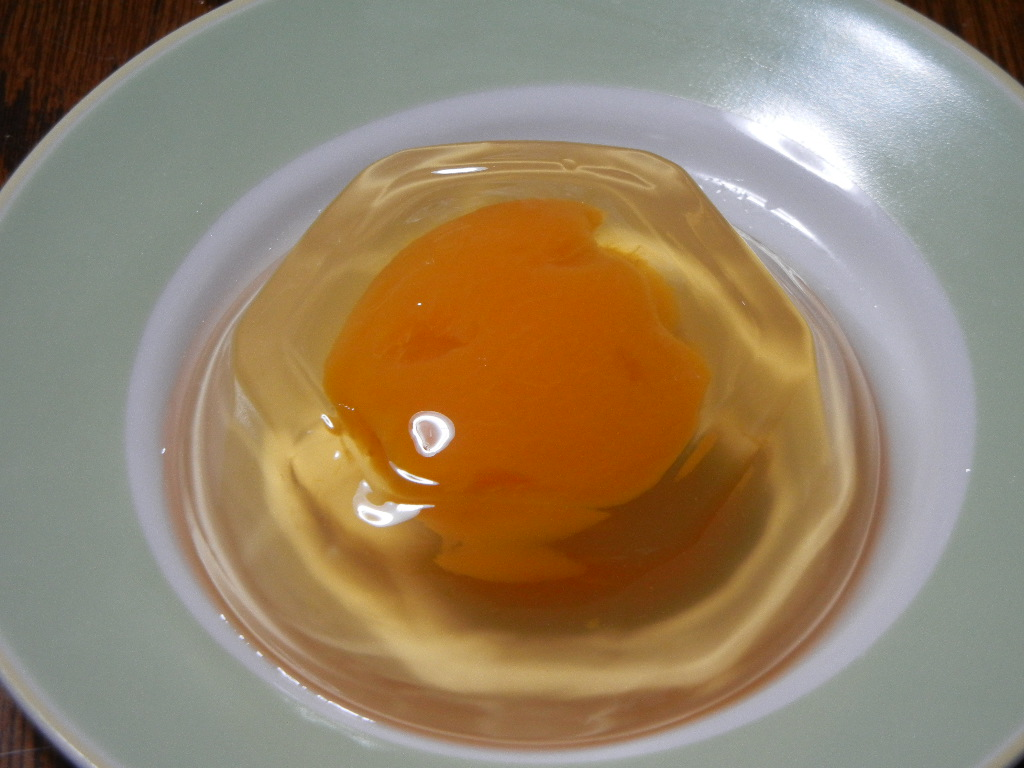
A clear mould set with ginger ale in place of some of the water, sometimes with fruit suspended in it, retaining a faint fizz and a sharpness that plain gelatin lacks. It appears across American community cookbooks of the period.
It is genuinely clever cooking. Using a carbonated flavoured liquid as the setting medium solves the blandness of plain gelatin without adding sugar syrup, and the result is lighter than anything else in the category.
This and the cucumber mould are the two dishes here a modern cook could serve without explanation, provided they were served in glasses rather than turned out of a mould. The form is the whole problem.
14. The unmoulding itself, performed in front of the guests
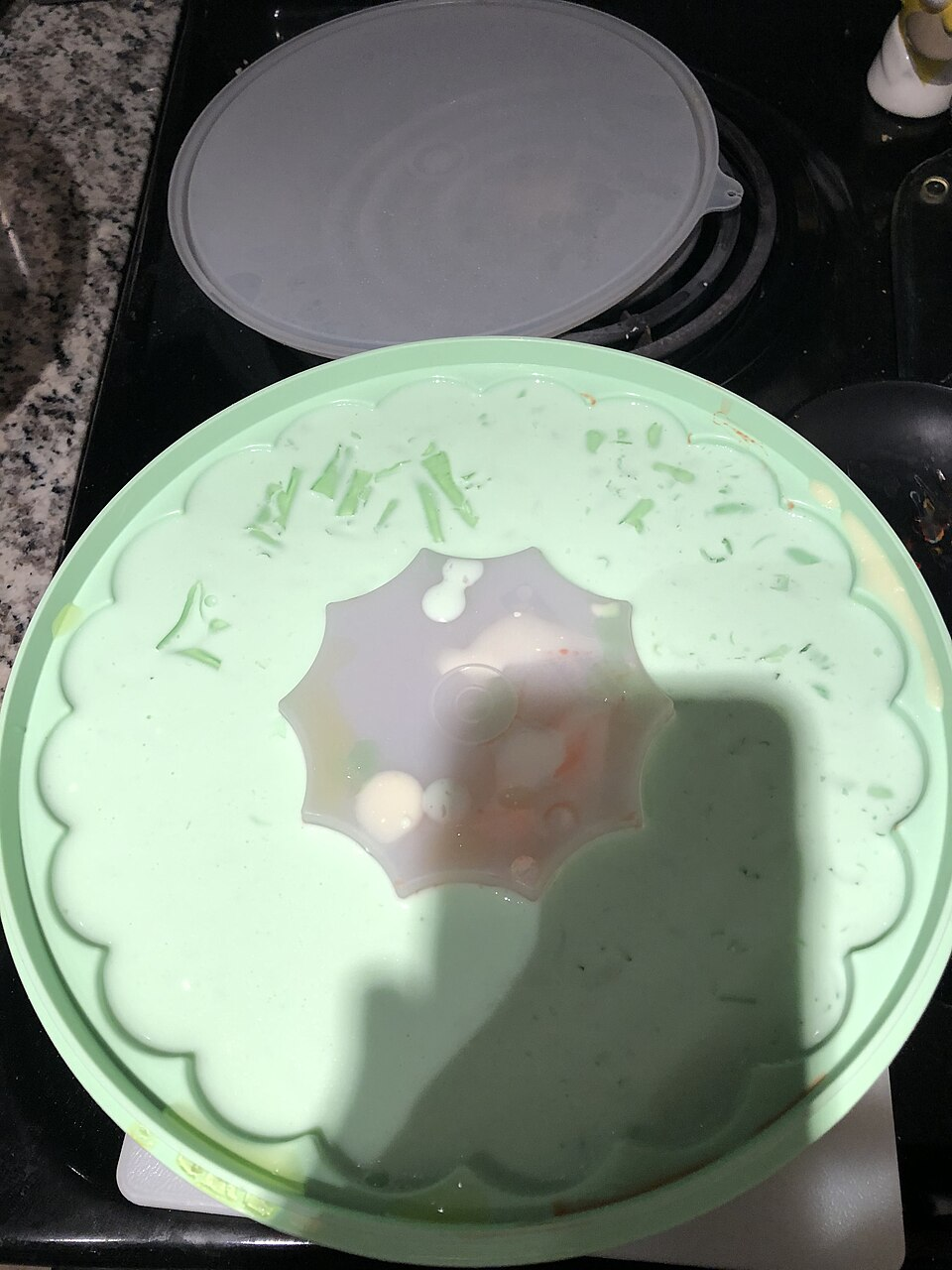
The mould was dipped briefly in warm water, loosened at the edge with a knife, inverted onto a plate, and lifted away. It either came out whole or it collapsed, and it was frequently done at the table.
There is no modern equivalent and that is the point of ending here. The dish’s entire value was concentrated in one irreversible moment of risk performed in public, and a hostess who could do it reliably was demonstrating something real.
That is the honest answer to why these dishes existed. Not because anybody thought a cold savoury solid was the best use of a tomato, but because the moulded salad was the one thing on the table that could visibly go wrong, and did not.
What the mould was for
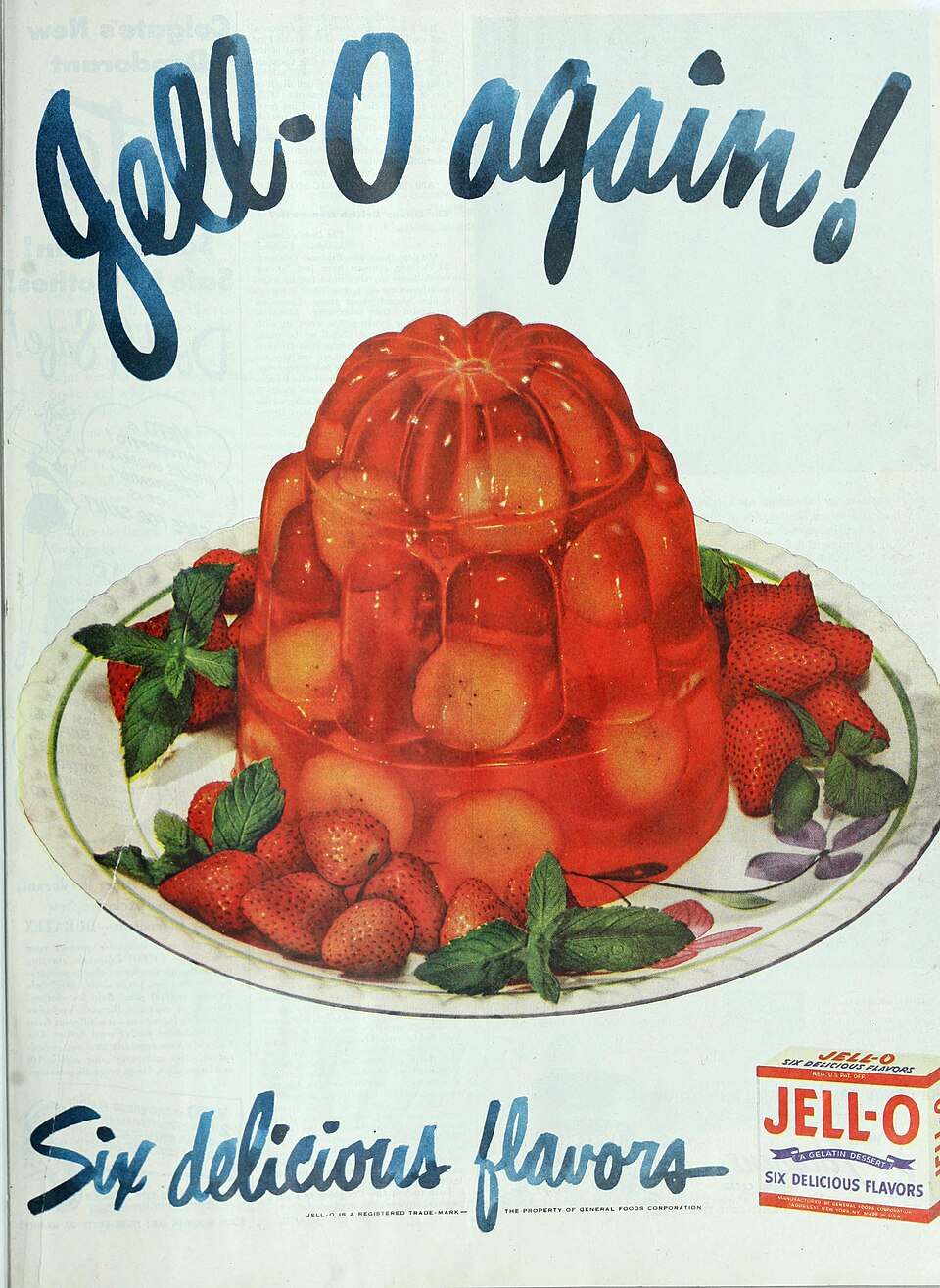
Three things made this food possible and one thing killed it. The refrigerator came first: a reliable cold box in an American kitchen is what allows a dish to be made in the morning and set by the evening, and before that the technique belonged to professional kitchens with an ice house. Commercial flavoured gelatin came second, cheap, consistent and requiring no skill to hydrate. Tinned fruit and vegetables came third, pre-softened, uniform and available in February.
What killed it was none of those. It was the texture, and specifically a generational change in what people are willing to put in their mouths. A cold firm wobble is now read as unpleasant in a way it demonstrably was not in 1958, and no argument about the flavour of a well-made aspic has ever got around it. The craft in these dishes was real, the problem-solving in them was real, and the one thing they all share is the quality that finished them.
The moulds themselves turn up constantly in American antique shops and estate sales, copper and tin and aluminium, in dozens of shapes. They are bought now as wall decoration by people who have never seen one used.
Two of the dishes here deserve rescuing: the cucumber and sour cream mould and the ginger ale gelatin. Both are good, and both would need to be served in a glass rather than turned out of a mould, which means the thing that would save them is the thing that would stop them being what they were.
Like our content? Follow us for more.

