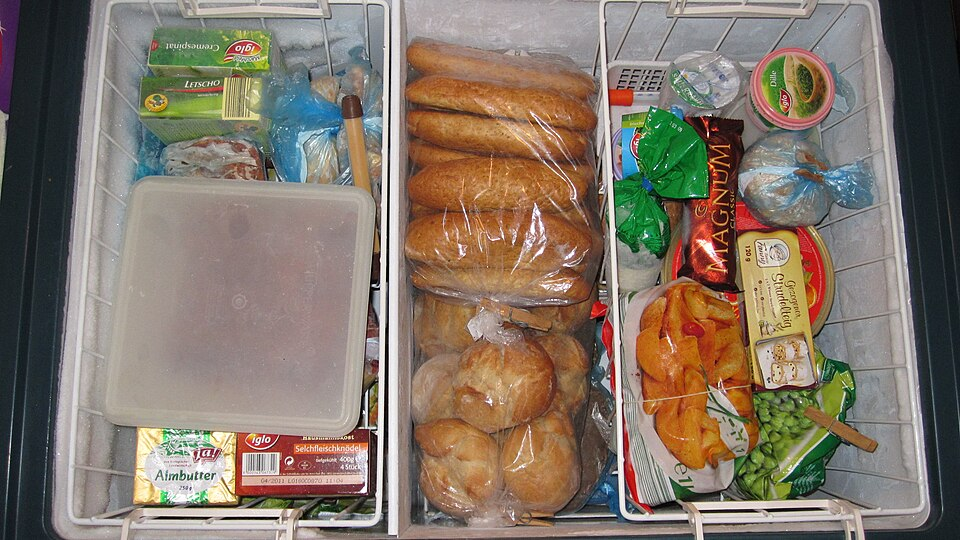
The home freezer arrived in American houses in the 1950s and changed domestic provisioning more than any appliance since the refrigerator. It let a household buy in bulk, preserve a garden harvest without canning it, and keep a month of meals in a box in the basement. By the early 1960s it was an ordinary feature of a suburban or rural home.
It also produced one of the most persistent consumer frauds in American retail history, a whole regulatory literature, and a set of food safety questions that most households were answering by guesswork. What follows is the appliance, the selling scheme that attached itself to it, and the things nobody had been told about how to use it.
The freezer food plan
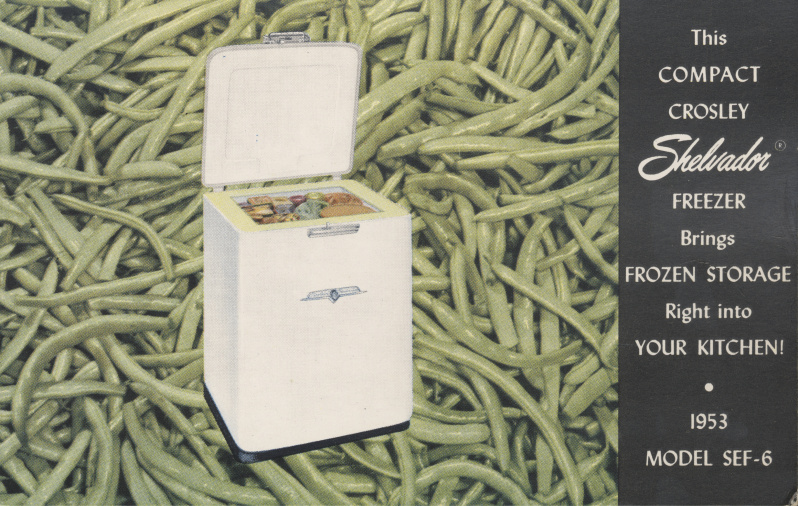
The scheme was simple and it worked for twenty years. A salesman called at the house and offered a package: the freezer itself, plus a supply of food delivered over following months, financed together on one instalment contract. The pitch was that bulk buying at wholesale would pay for the appliance, so the freezer was effectively free.
It was not. The arithmetic in the presentation compared the plan against inflated grocery prices, the food was often of a lower grade than described, the quantities were less than the family could use before quality loss, and the finance charges were substantial and frequently not disclosed in a form anybody could evaluate. The contract was also usually sold on to a finance company, so a householder who stopped receiving deliveries still owed the payments to a third party with no interest in the food.
The Federal Trade Commission brought case after case against these operators through the 1960s and 1970s. The practice is the single best worked example of why the Truth in Lending Act of 1968 required the finance charge and the annual percentage rate to be disclosed in a standard form before the agreement was signed, and why the holder-in-due-course doctrine was later restricted so that a consumer’s defences against the seller survived the sale of the paper.
Like our content? Follow us for more.
Three days to change your mind
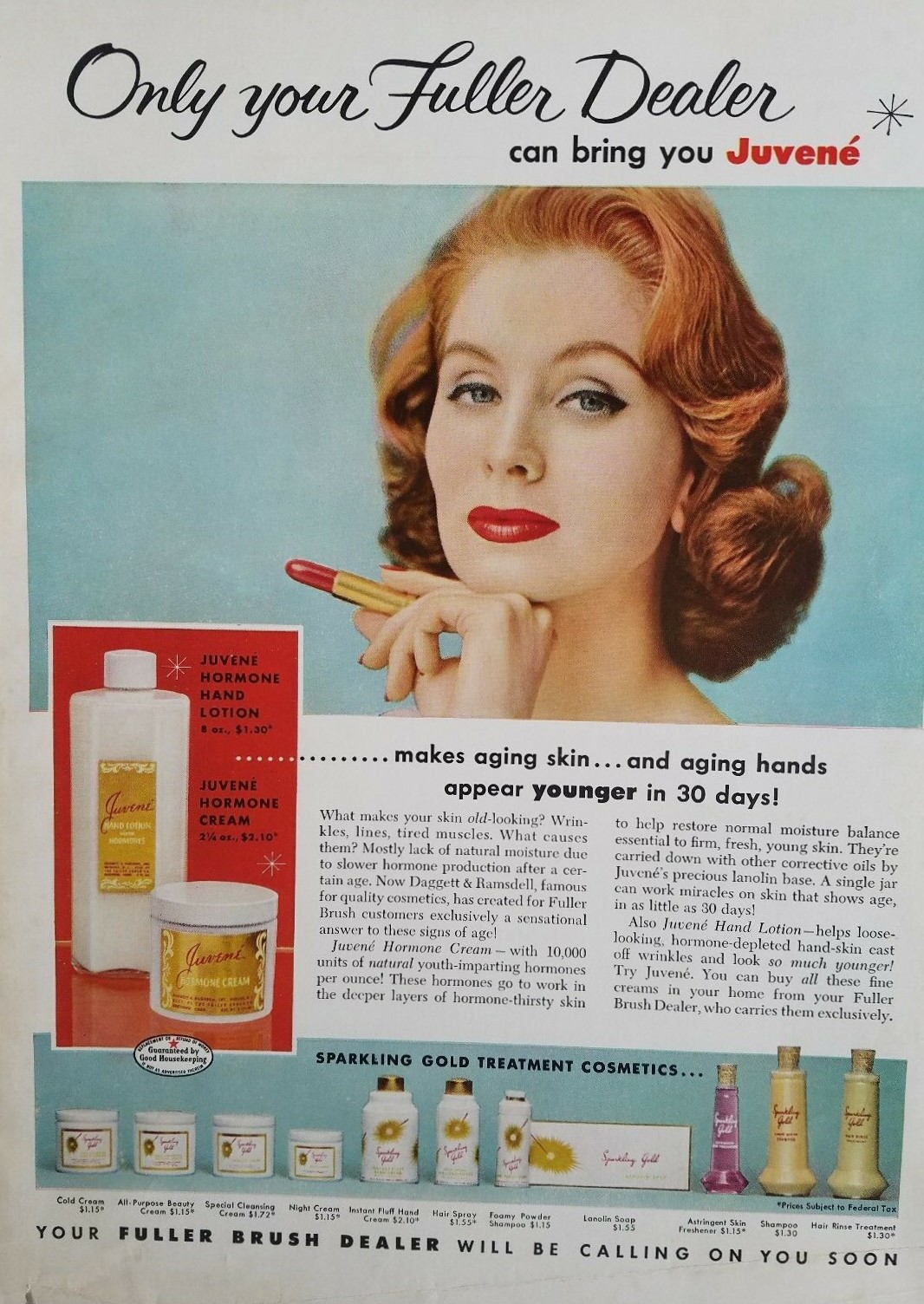
The freezer plan was also a doorstep sale, and the doorstep was where American consumer protection was weakest. A salesman in a kitchen at eight in the evening with a contract and a pen had an enormous advantage over a household that had not been intending to buy anything that day.
The Federal Trade Commission’s cooling-off rule, which gives a buyer three business days to cancel a sale made at their home, was adopted in the early 1970s and is the direct descendant of this category of complaint. Every American who has received a notice of a right to cancel with a door-to-door purchase is looking at a remedy built substantially out of freezer plan cases. It is one of the few consumer protections that most people have heard of and almost nobody can name the origin of.
What a 1962 household actually knew about freezing
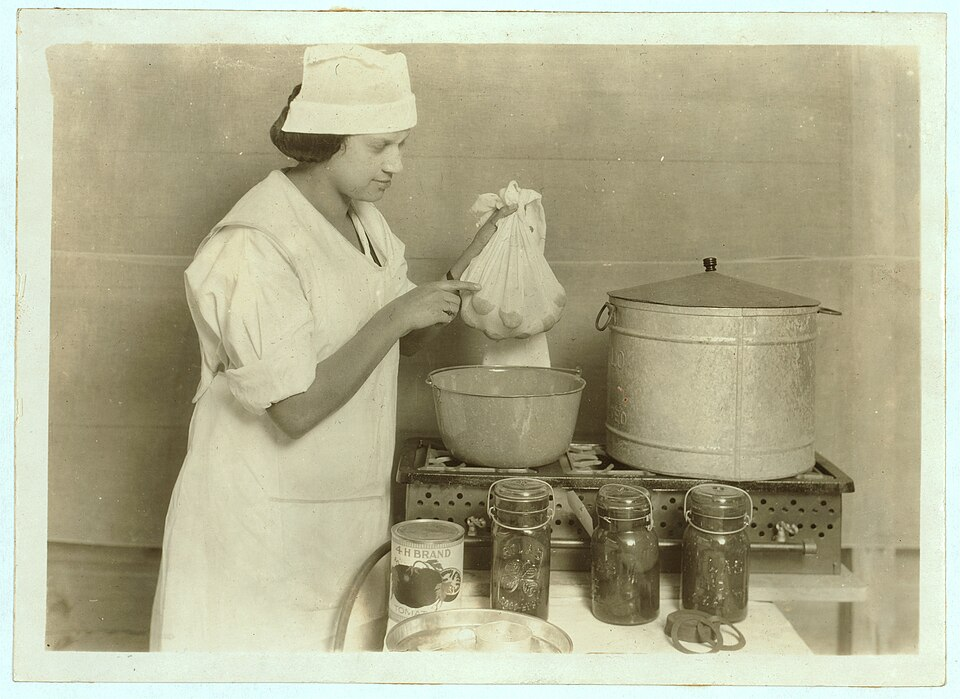
Set the selling aside and there was a genuine knowledge gap. Freezing is the most forgiving preservation method there is, which is exactly why it was done badly. Unlike canning, where a mistake produces a visibly failed seal, a badly frozen food looks fine and is merely worse.
Vegetables need blanching before freezing, because the enzymes that continue working at freezer temperatures degrade texture, colour and flavour over months. A great many households did not blanch, and the resulting produce was edible and disappointing. Wrapping mattered more than anyone realised: freezer burn is dehydration at the surface caused by air contact, and the butcher paper and waxed paper of the period were poor vapour barriers compared with what came later. Portioning mattered too, because a large parcel freezes slowly in the middle, which produces larger ice crystals and more cell damage.
The power cut
The hazard nobody planned for was the thing most likely to happen. A chest freezer full of food represents a substantial investment, and a multi-day power failure in a hot month puts all of it at risk at once.
Current guidance is specific and was not available then: keep the door shut, because a full freezer holds temperature for a long time and a half-full one for much less; judge food by whether it still contains ice crystals rather than by how it looks or smells; and do not refreeze anything that has fully thawed and warmed. The 1962 household’s method was to open the lid and have a look, which is both the least informative test and the one that costs the most cold air. Households also commonly refroze whatever had softened, which does not make food unsafe by itself but degrades it badly and can compound a problem that began during the outage.
Where it stood, and why that mattered
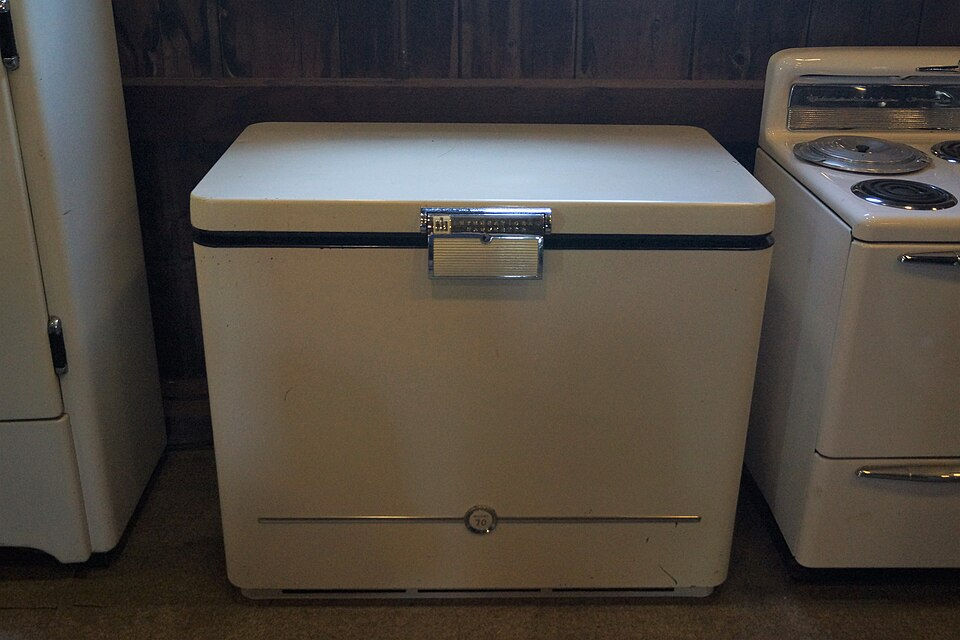
Chest freezers went in the basement, the garage, the back porch or an unheated outbuilding, which is where there was room and where the noise did not matter. Most of those locations were wrong for the machine.
An appliance rated for indoor use in a heated space does not necessarily work in an unheated garage in January, because the compressor relies on a temperature differential and some units simply stop cycling when the surrounding air is cold enough, letting the contents warm. The opposite problem applies in a hot garage in August, where the machine runs continuously and shortens its own life. Garage-rated models exist now and are sold as such, and the ordinary unit a 1962 salesman put on a basement floor carried no guidance about any of this.
The thing that made it all possible
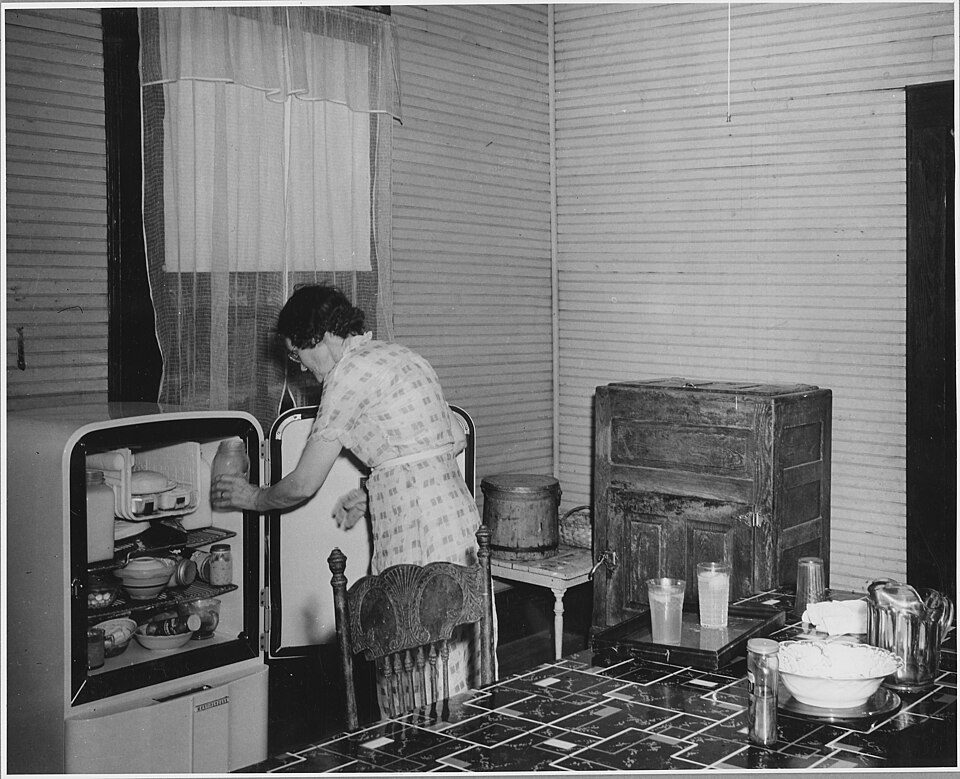
Underneath the appliance is a piece of federal infrastructure that rarely gets mentioned in a domestic story. Large parts of rural America had no electricity until the lending programmes of the 1930s and the cooperatives they created brought it, and the chest freezer is one of the first clearly transformative consumer goods that arrived on the back of that.
For a farm household, a freezer meant that a garden harvest or a share of a cooperative purchase did not have to be canned, dried or given away. The preceding arrangement in many towns was a commercial cold storage plant where families rented space by the cubic foot, and those plants closed in large numbers as home units became affordable. The home freezer did to them what the home refrigerator had done to the ice trade, over about the same span of years and for the same reason.
What the modern freezer fixed without being asked
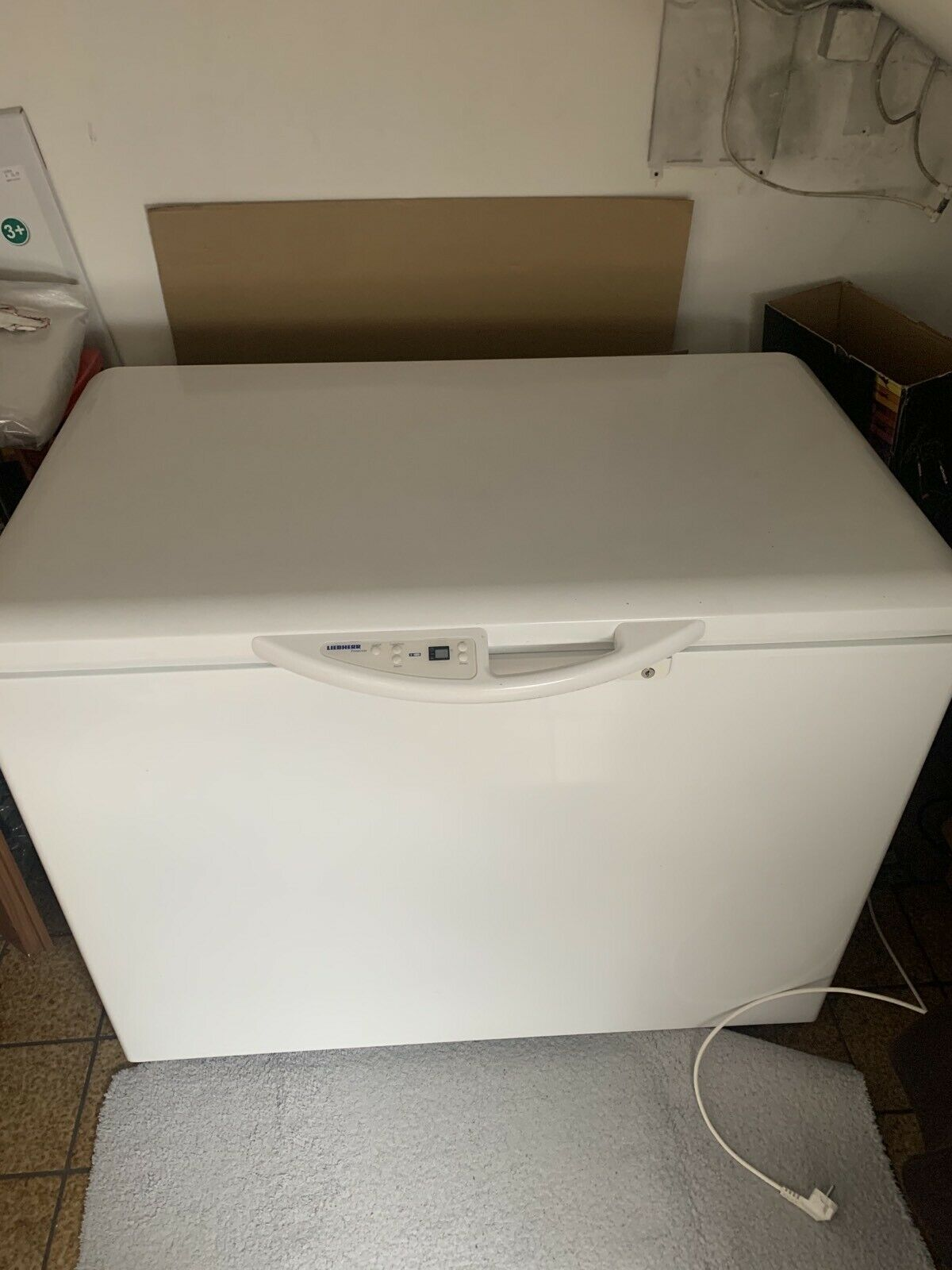
Almost every problem above has been engineered out rather than regulated away. Frost-free operation removed the annual defrosting ritual, which was the single most hated household job associated with the appliance. Modern packaging materials are genuine vapour barriers, so freezer burn is now a sign of poor wrapping rather than an inevitability. Minimum efficiency standards, which arrived with the federal appliance energy legislation of 1987 and have tightened repeatedly, mean a modern unit costs a fraction of a 1962 one to run.
The parts that were not engineered away are the parts that were never about the machine. A chest freezer still encourages a household to buy more than it needs, still hides whatever went in at the bottom, and still represents a single point of failure for a large amount of food. Those were true in 1962 and they are true now, and the only remedies for them are a list on the lid and a habit of rotation.
The salesman’s argument, assessed properly
It is worth giving the freezer plan pitch its due, because the underlying claim was not absurd. Buying food in bulk at a genuine wholesale price and storing it does save a household money, and in 1962 the gap between wholesale and retail was wide enough to make the arithmetic plausible.
What made the schemes fraudulent was never the concept. It was the comparison prices, the grade of what arrived, the quantities nobody could get through, the undisclosed finance charge and the contract sold on to a third party. Strip those out and you have a buying club, which is a legitimate business that still exists. The regulatory response was correspondingly narrow: it did not prohibit selling food with a freezer, it required that the cost of the credit be stated, that a doorstep buyer be allowed to reconsider, and that the seller’s promises stay attached to the debt. That is the usual shape of American consumer protection, and this is where a good deal of it was worked out.
There is a final detail that makes the whole episode legible. The schemes worked best on the households least able to absorb the loss: rural families a long way from a competitive grocery, people on fixed incomes, and anybody for whom a salesman at the door was a rare event rather than a nuisance. That is who doorstep selling finds, which is why the cooling-off remedy is addressed to the place of sale rather than to the product. The freezer was incidental. The kitchen table at eight in the evening was the mechanism.
Like our content? Follow us for more.