

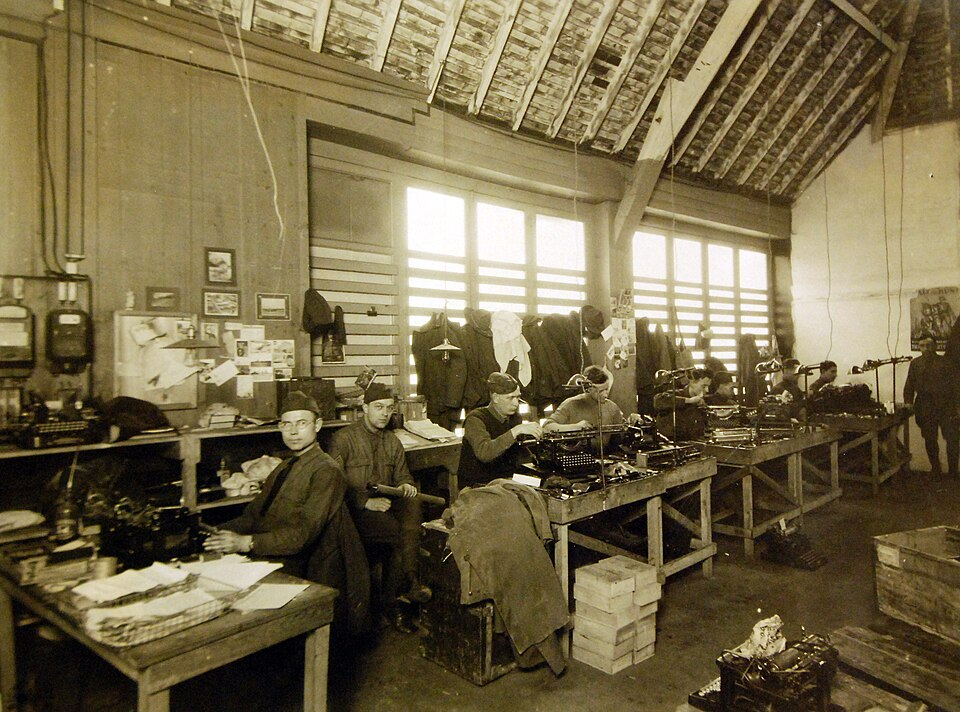
The typewriter repair shop is the clearest example in this series of a trade killed by economics rather than by regulation. Nothing it did was prohibited; the machine it served simply stopped existing.
What it did do, in a small unventilated room, was immerse metalwork in carbon tetrachloride, grind rubber, handle metal-pigmented ink by hand, blow compacted dust into the air with compressed air, and work on live mains equipment at the same bench. Here are fifteen things about that shop.
1. The machine was expected to last thirty years and be repaired, not replaced
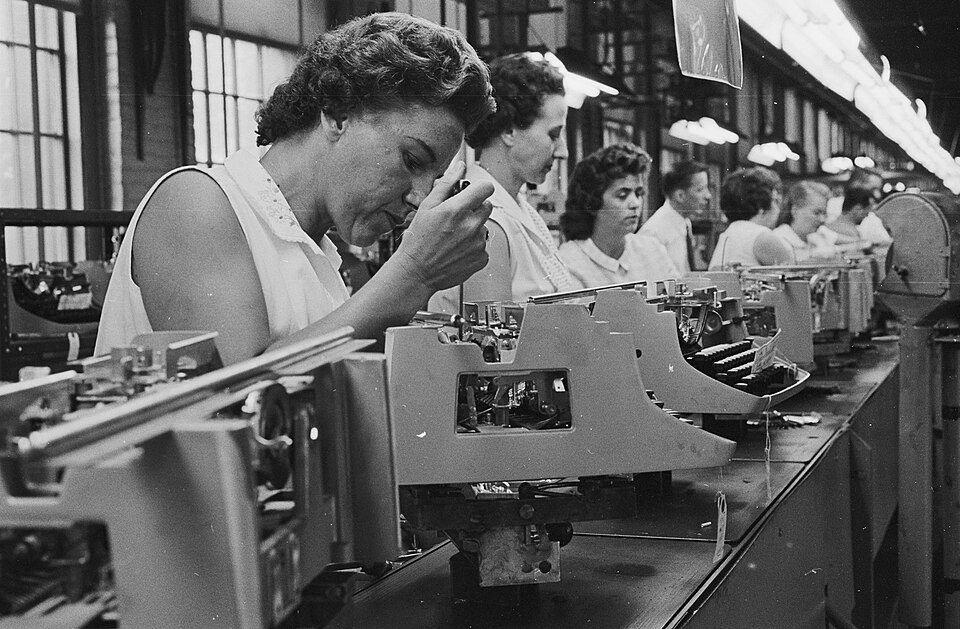
A standard office typewriter was a capital purchase, depreciated over decades, and a business that bought one in 1935 was still using it in 1965. The repair trade existed because the alternative to repair was a very large cheque rather than a trip to a shop.
That expectation is the whole difference between this trade and anything comparable now. The machine was designed with the assumption that a technician would open it, that parts would be available indefinitely, that adjustments would be made rather than modules swapped, and that a worn component would be made good rather than discarded.
The mechanisms themselves are why it worked. A manual typewriter has somewhere between two and three thousand parts, almost all of them steel, almost all of them adjustable, and nothing in it is sealed.
Like our content? Follow us for more.
2. Cleaning was done by immersion in a solvent tank
The standard service began by stripping the machine down and putting the frame and the segment into a tank of solvent, or by brushing solvent through it over a tray, to remove years of accumulated ink, paper dust, eraser grit, tobacco ash and hardened oil.
The solvents used were the general industrial ones of the period — petroleum distillates, benzene in earlier practice, carbon tetrachloride in a great many shops because it did not burn — used in open containers in a small room with no extraction.
Carbon tetrachloride is the one worth naming. It is toxic to the liver and kidneys, is absorbed through skin as well as inhaled, decomposes on a hot surface into a far more toxic gas, had its American consumer uses prohibited in 1970 and is controlled now as an ozone-depleting substance.
3. The platen was recovered with rubber in the shop
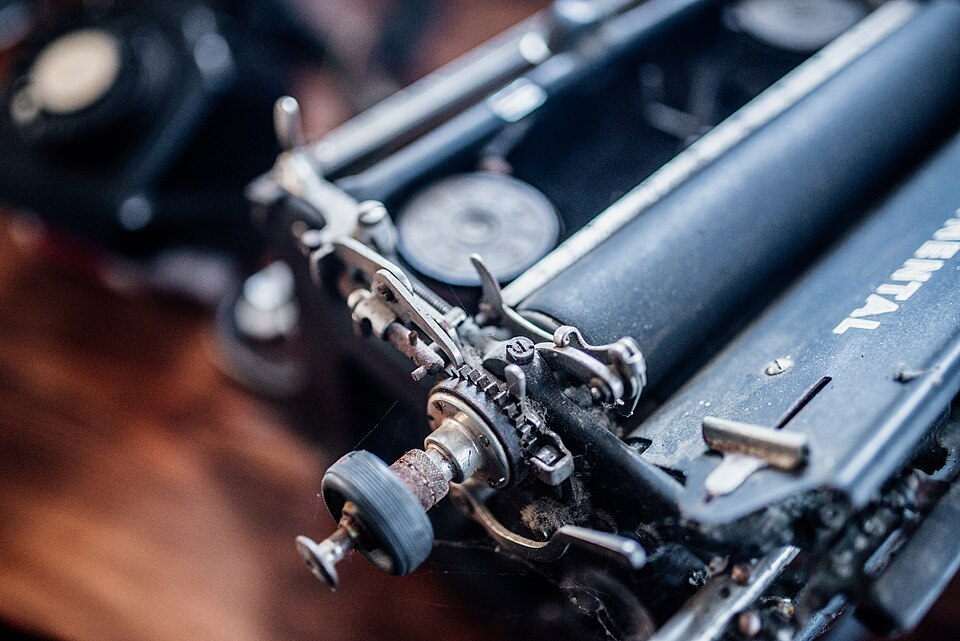
The platen — the hard rubber roller the paper wraps around — hardens and glazes with age, which makes the type cut the paper and the machine noisier. Recovering it meant stripping the old rubber off the steel core, bonding new rubber on and grinding it to diameter on a lathe.
The adhesives and the grinding are the hazards. Contact adhesives of the period were solvent-based with a substantial vapour output, and grinding rubber produces a fine dust of the compound and whatever is in it. Both were done at a bench in the same unventilated room as the solvent tank.
Platen recovering is still done, by a small number of specialists, with the same method and modern extraction. It remains the single most useful repair a machine can have and is the one most owners have never heard of.
4. The ribbons were inked by hand and re-inked rather than replaced
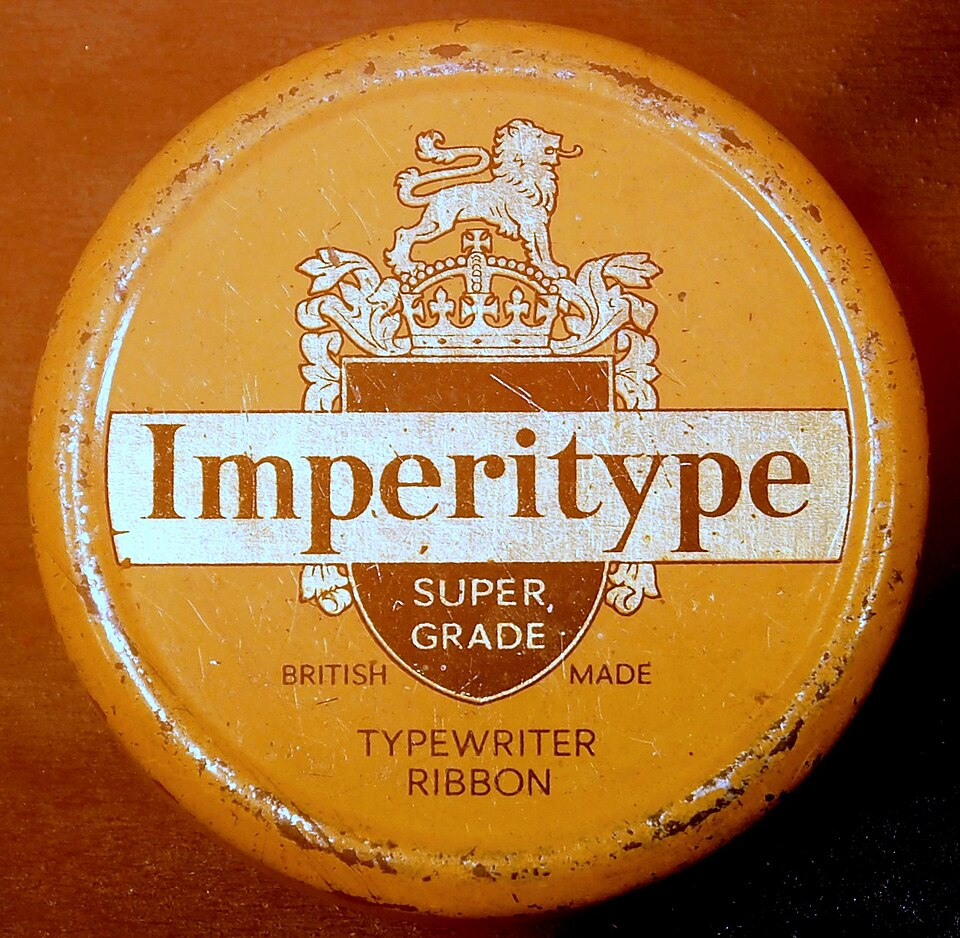
Ribbon was bought on bulk spools, cut to length, wound onto the customer’s own spools, and in many shops re-inked with a roller or by hand when a customer could not afford a new one. The ink was printer’s ink thinned with solvent.
Bulk ribbon handling meant ink on the hands continuously, and the inks of the period contained pigments including, in some formulations, lead and other metal compounds. It is one of the quieter exposures in the trade and it was universal.
Modern ribbon for the surviving machines is nylon on pre-wound spools in a sealed cartridge, which removed the exposure and the skill in the same move.
5. Type bars were bent back into alignment by hand with a tool made for it
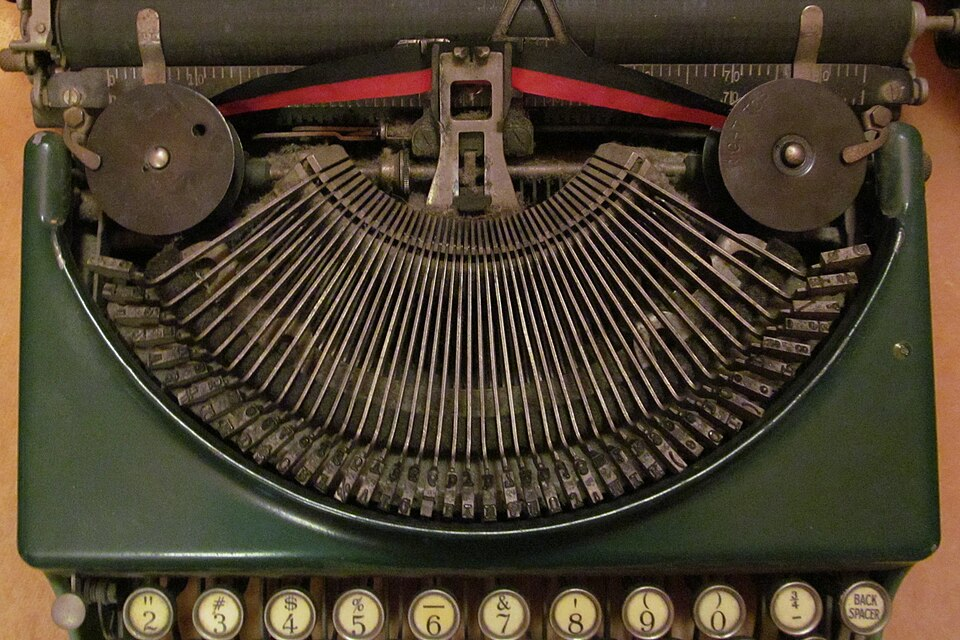
Typeface alignment — making every character strike the platen squarely and at the same height — was adjusted by bending the type bar with a forked tool, by eye, using a sheet of paper and the technician’s judgement about what looked right.
There is no modern equivalent because there is no modern machine with type bars, and the skill is now confined to the collector and restoration market. It is a genuinely difficult operation: bend too far and the bar fatigues, bend repeatedly in the same place and it breaks.
The surviving practitioners describe it as the test of whether somebody can actually do the job, in the same way that a wheelwright’s dish or a watchmaker’s hands were the test in those trades.
6. Everything was adjusted by feel and nothing was measured
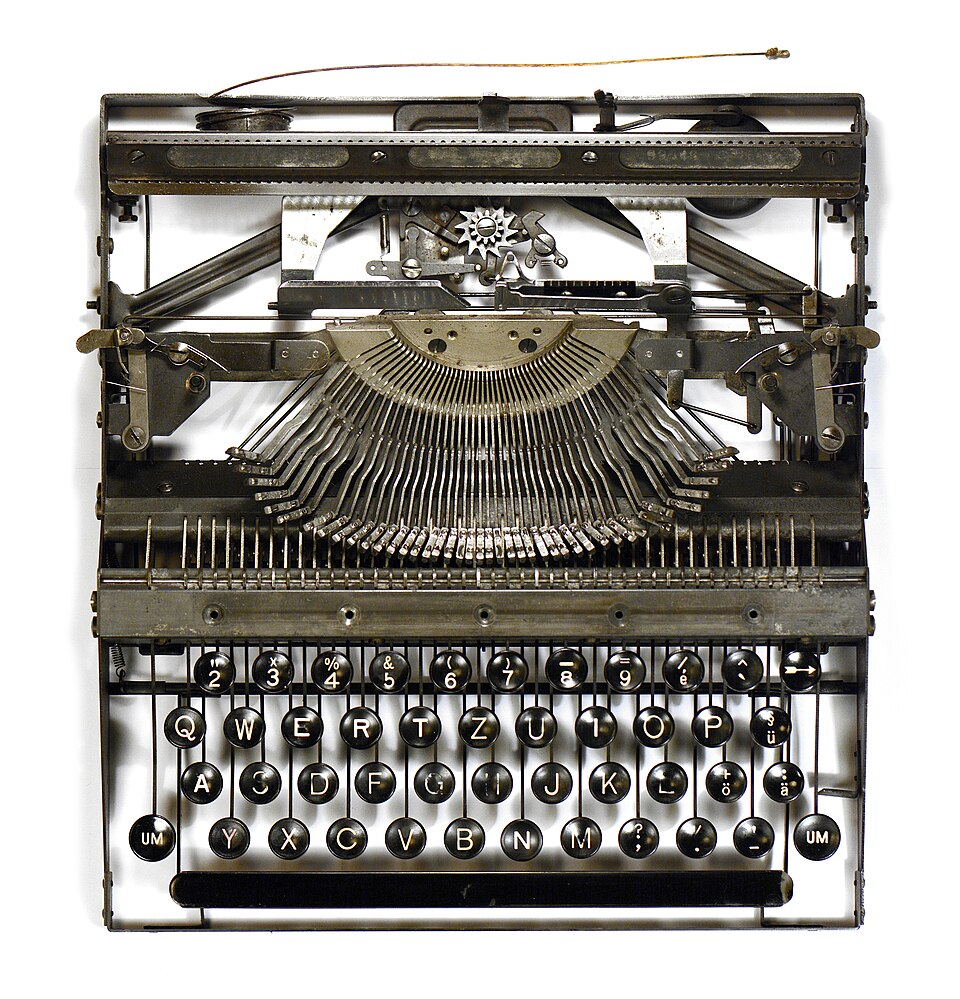
Escapement timing, key tension, ring and cylinder, motion, touch and the dozens of other adjustments in a typewriter were set by the technician’s hands and ears. The specifications existed in manufacturers’ service manuals and the work was done by feel against them.
The modern analogue is any precision mechanical service work, where the shift has been toward measurement: gauges, torque specifications and defined tolerances, so that the result is repeatable and does not depend on who did it. The typewriter trade never made that transition because it ended first.
That is why restoration now depends so heavily on surviving manuals. The adjustments are knowable, they were written down by the manufacturers, and the feel for them was not.
7. The shop also did the house calls
A technician carried a case of tools and spare parts and worked on machines in offices, on desks, among the people using them, with a solvent-soaked rag and an oil can, in a room full of other people working.
Nothing about that arrangement would be acceptable with those materials now, which is the simplest way to put it: solvent work in an occupied office, with no ventilation and no isolation, exposing people who had no idea what was being used.
The house call is the part of the trade former technicians talk about most, because it was where the relationship was. A typist had a machine she had used for fifteen years and a man who came to look after it.
8. Carbon paper and stencil duplicating were part of the same job
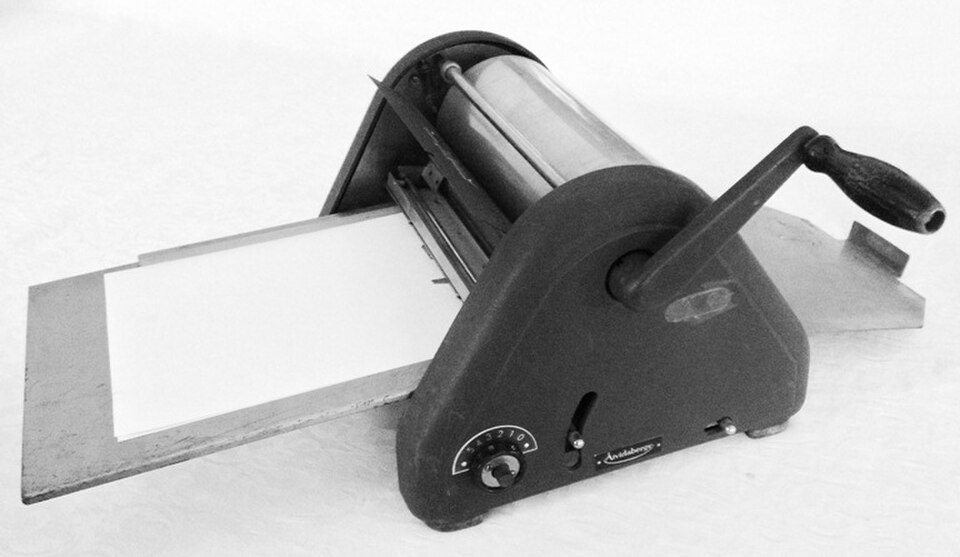
The typewriter technician usually also serviced the duplicator, and the office’s reproduction chemistry was his problem too: stencil duplicating fluid, spirit duplicator fluid, correction fluid and the solvents that went with all of them.
Spirit duplicator fluid was largely methanol, which is absorbed through skin and inhaled and is the component that makes such products hazardous rather than merely smelly, and the machines were operated by office staff with no ventilation and no instruction. The smell of a freshly run spirit duplicator sheet is one of the most widely shared sensory memories of the period, and it was methanol vapour.
Both technologies were replaced by photocopying, which removed the chemistry from the office entirely and is one of the larger unremarked improvements in office health.
9. Correction fluid contained solvents that were later a problem
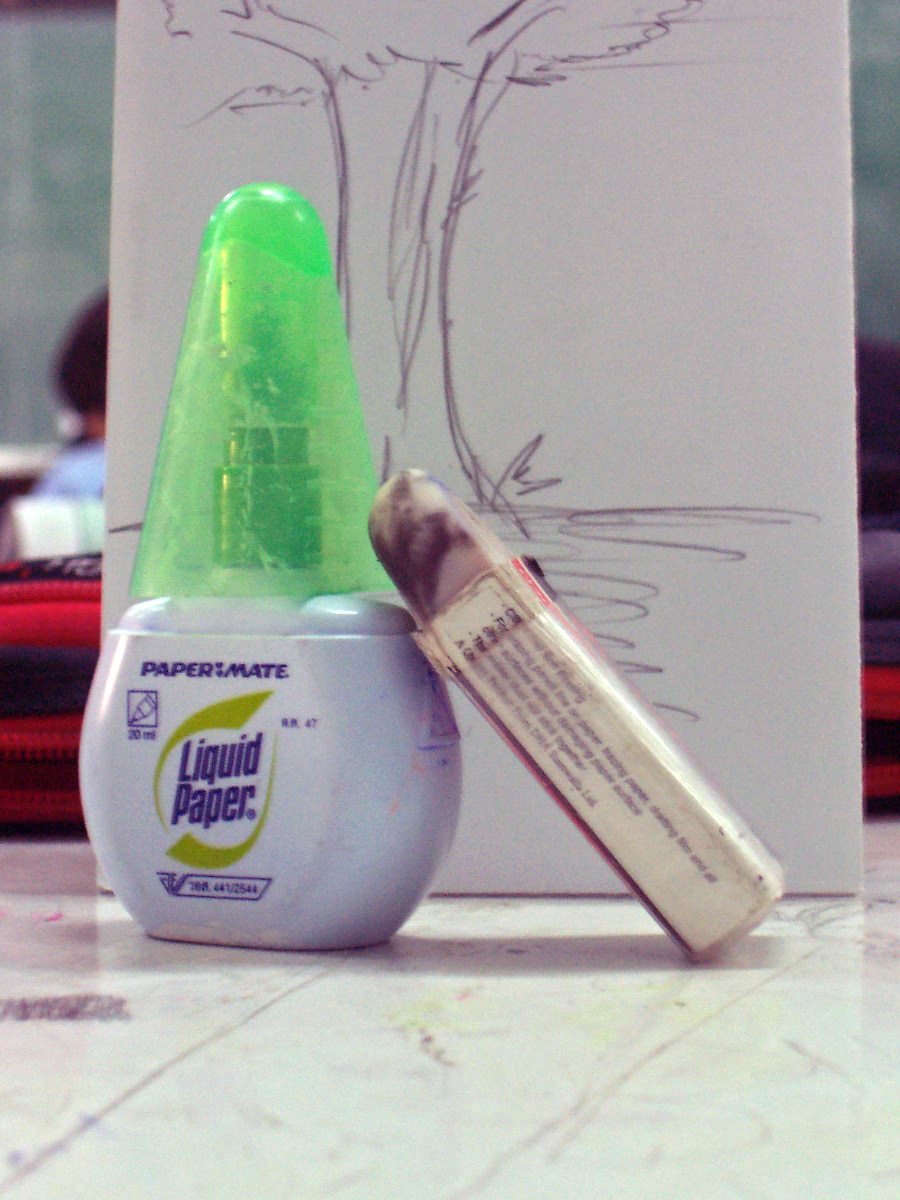
Typing correction fluid arrived in the 1950s and became universal, and the formulations of the period and for decades afterwards were solvent-based, using trichloroethane and related compounds as the carrier.
The solvent in question was phased out internationally under the Montreal Protocol as an ozone-depleting substance, and reformulated water-based correction products followed. There was also a well-documented problem with deliberate inhalation of the solvent-based product, which was a factor in its reformulation and in how it was sold.
That second point is noted only as a fact of the product’s history. No product is named, nothing about the practice is described, and the reformulated products do not present it.
10. The parts drawer was the business
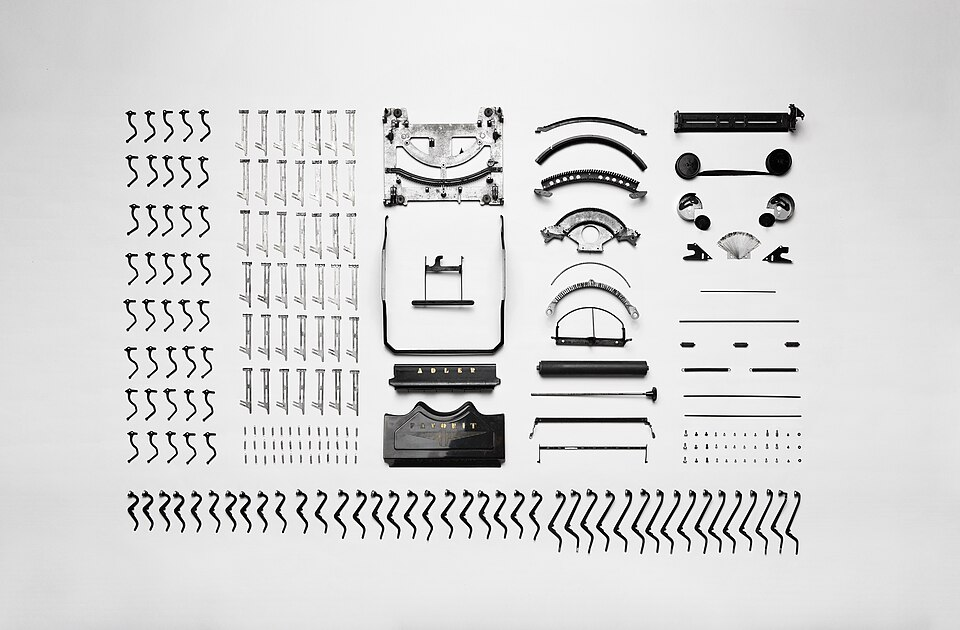
A typewriter shop held thousands of parts: type bars, segments, springs, escapement wheels, keytops, platens, feed rollers, draw bands, spools and screws, in labelled drawers, across dozens of makes and decades of models, and the technician’s value was partly in knowing what was in there.
Modern repair economics have inverted this completely. Parts availability is the constraint rather than the asset, modules are replaced rather than components, and the right-to-repair argument that has become a live political and regulatory issue is substantially an argument about getting back to what this shop took for granted.
It is the clearest illustration in this whole series of a trade whose economics have been reversed rather than improved.
11. The electric machines brought mains voltage onto the bench
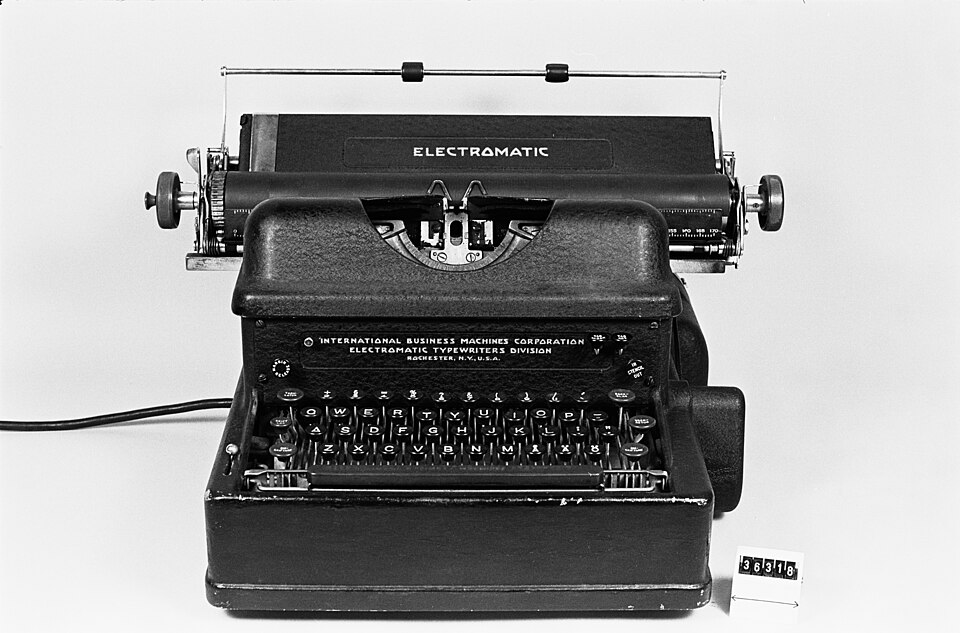
Electric typewriters were established by 1965 and they put a motor, a mains cord and a clutch into a machine that a technician had previously opened with no electrical consideration at all. Service was done with the machine plugged in, because the mechanism had to be running to be adjusted.
Modern practice on any mains-powered equipment involves isolation, lock-out where applicable, insulated tools and protective devices on the supply, and live working only where it is unavoidable and controlled. A bench in 1965 had a two-pin socket and no protective device of any kind.
The combination of live electrical work and an open tank of solvent in the same small room is the one hazard pairing in this file that is worse than either half.
12. The dust was paper, eraser grit and ash, and it was blown out
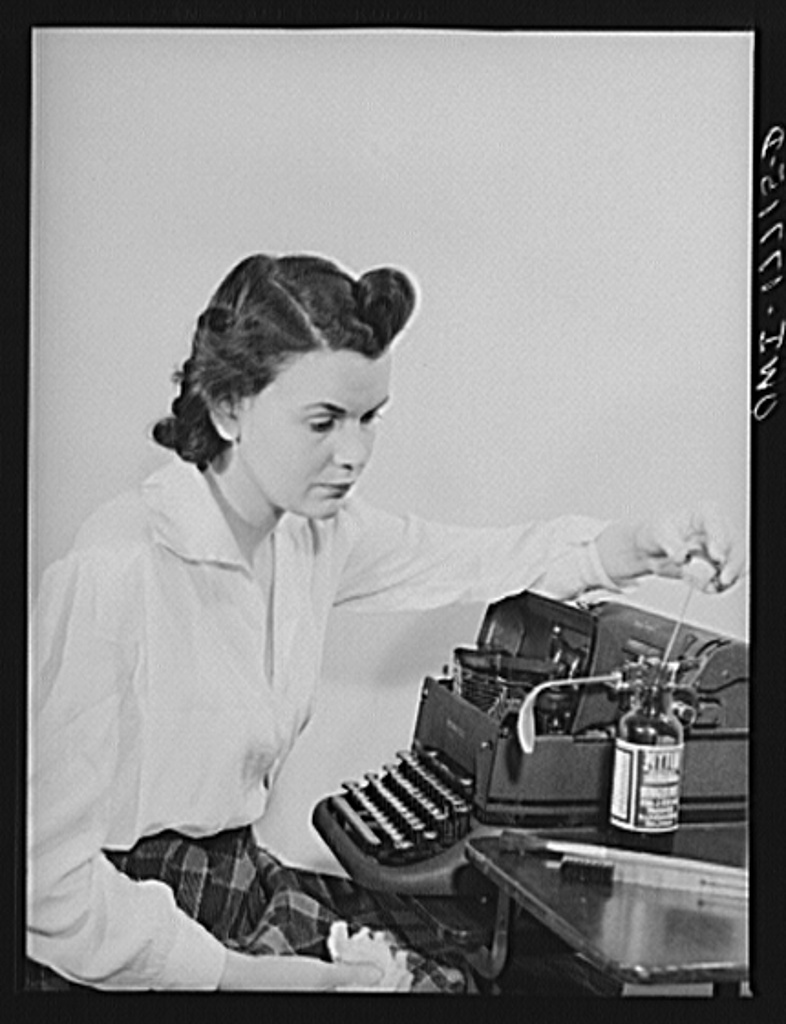
A machine opened after ten years in an office contained a compacted layer of paper fibre, eraser crumb, cigarette ash and hair, and the quickest way to deal with it was compressed air, which put the whole of it into the room.
Compressed air for cleaning is now specifically discouraged and in many workplaces prohibited, because it aerosolises the contaminant rather than removing it and because it drives particles into skin and eyes. The modern method is vacuum extraction, brushing into a captured flow, or wet wiping.
This is the item with the broadest application beyond the trade, because blowing dust off something with an airline is still the first instinct in a great many workshops.
13. The trade had no safety framework at all because it was not a factory
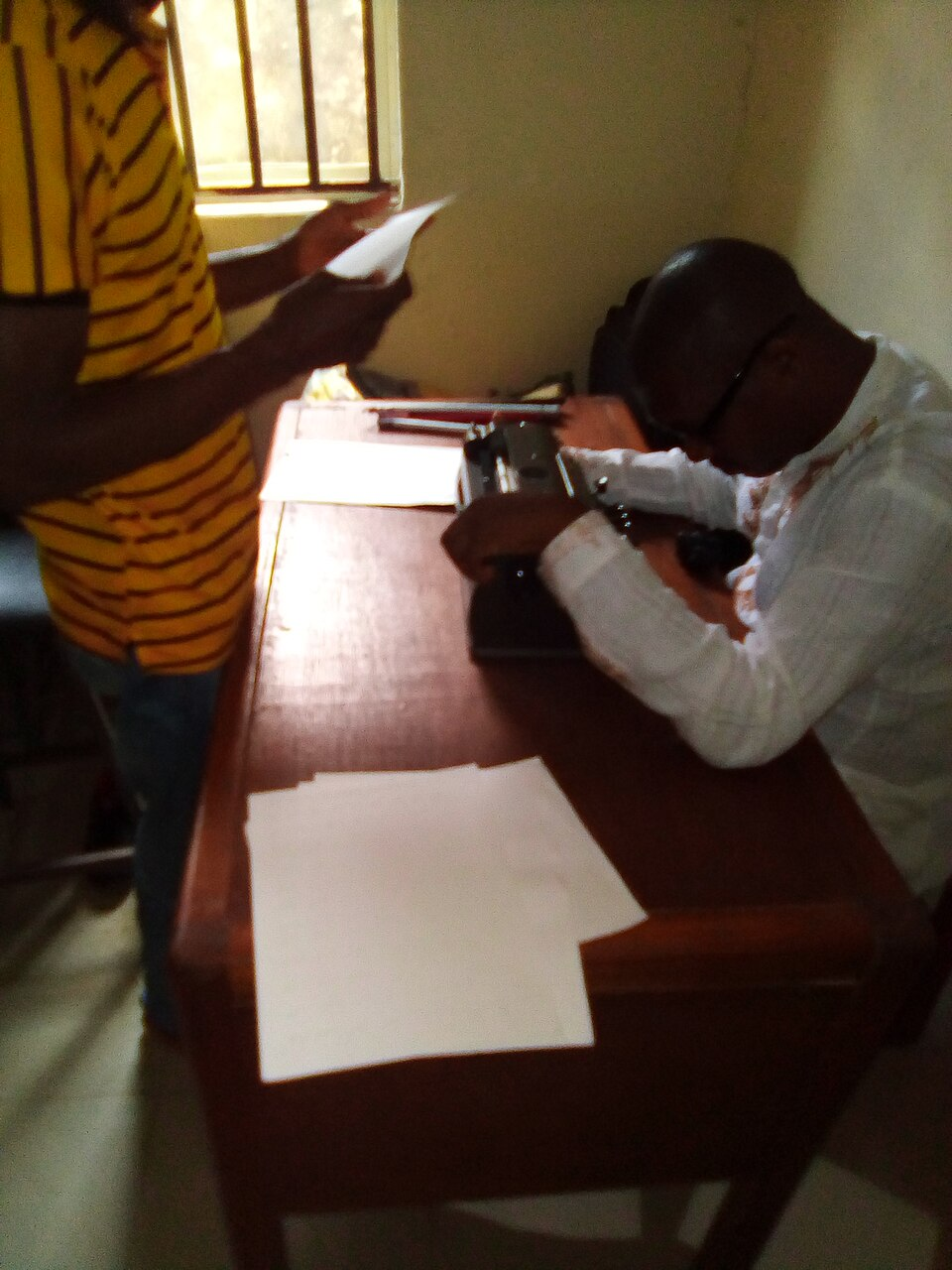
Typewriter repair was carried out in small shops, by self-employed technicians or by two or three people working for a dealer, and the occupational safety structures of the period were built around factories. Nobody inspected a typewriter shop.
That is the structural reason the solvents persisted here long after larger employers had been obliged to address them, and it is the same reason that applies to the watch bench, the sign shop and every other small trade in this series. There was no employer, no works committee and nobody whose job it was to notice.
The hazards were resolved eventually from the outside, when the solvents themselves were withdrawn from general sale for reasons unconnected with any particular trade.
14. The whole trade ended inside fifteen years
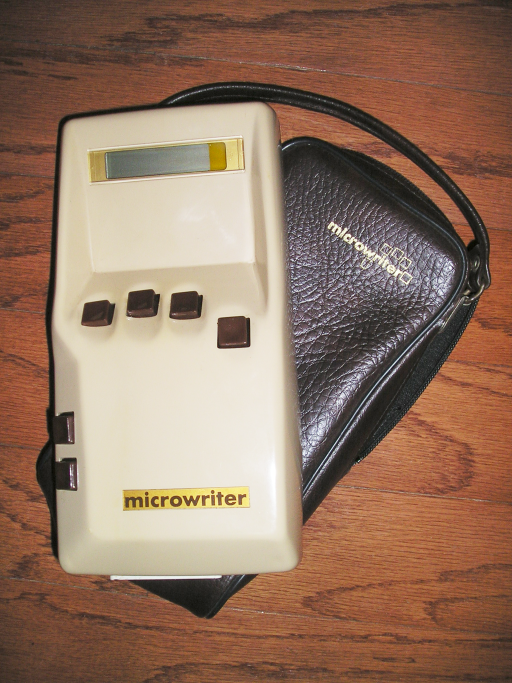
The word processor arrived at the end of the 1970s, the personal computer followed, and the installed base of office typewriters went from universal to residual within about fifteen years. Shops that had served a town for two generations closed in a decade.
What replaced the service relationship was a product cycle: a machine with a three-year life, no user-serviceable parts, no parts supply after the model ends and a replacement cost low enough that repair is uneconomic. The technician’s skill did not become obsolete so much as unsellable.
A handful of shops survived by moving to office equipment service generally, and a very small number survived on typewriters themselves, which have a real collector and writer market now and support a few specialists at prices no 1965 office would have paid.
15. And the thing the machine did that the replacement does not
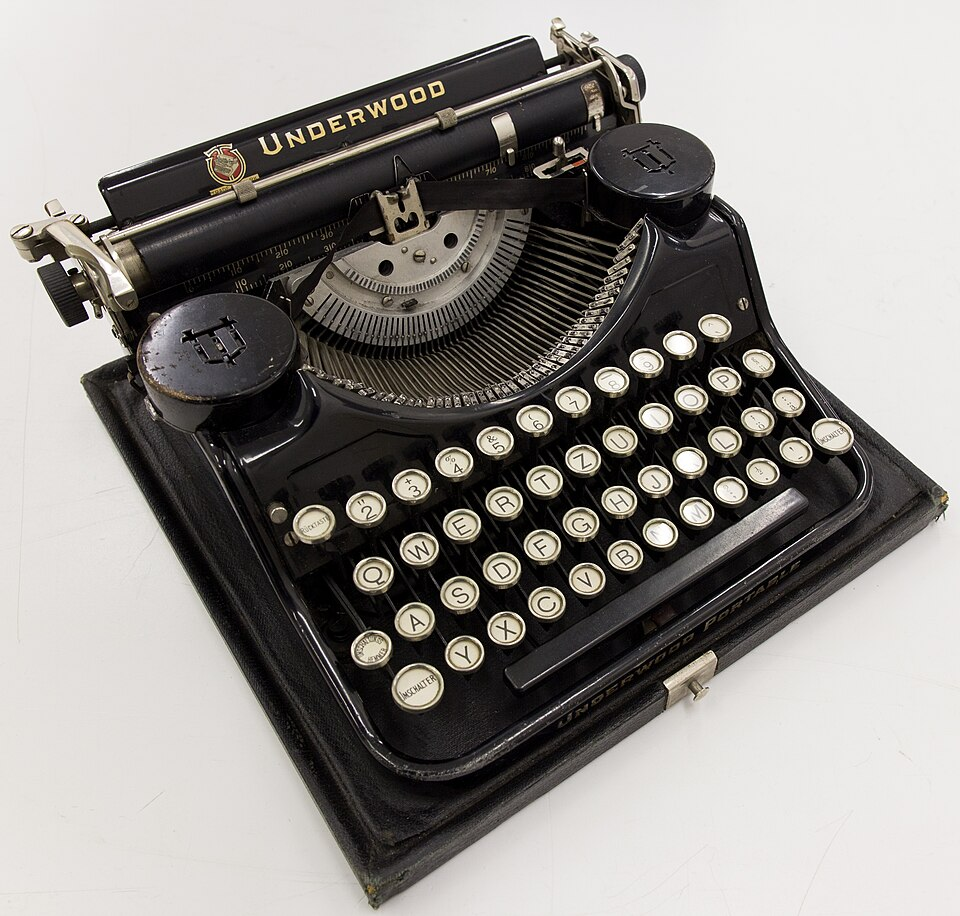
A manual typewriter is a self-contained mechanical object that requires no power, no software, no update and no network, produces a document that exists the moment it is typed, and can be maintained indefinitely by anybody with the manual and the parts. A machine built in 1935 can be made to work perfectly today.
That is not an argument against the computer, which is better at almost everything. It is an observation about durability as a design property: the typewriter was built to be serviced because the economics demanded it, and the thing that ended that was not technology but the price of manufacturing falling below the price of a technician’s time.
The honest summary is that the solvents in that shop were genuinely hazardous and were resolved from outside the trade, that the compressed air and the live electrical work were the avoidable parts, and that the machine itself was one of the best-designed consumer objects of the century and the trade that kept it running was killed by arithmetic rather than by obsolescence.
The solvents, and why nobody stopped them
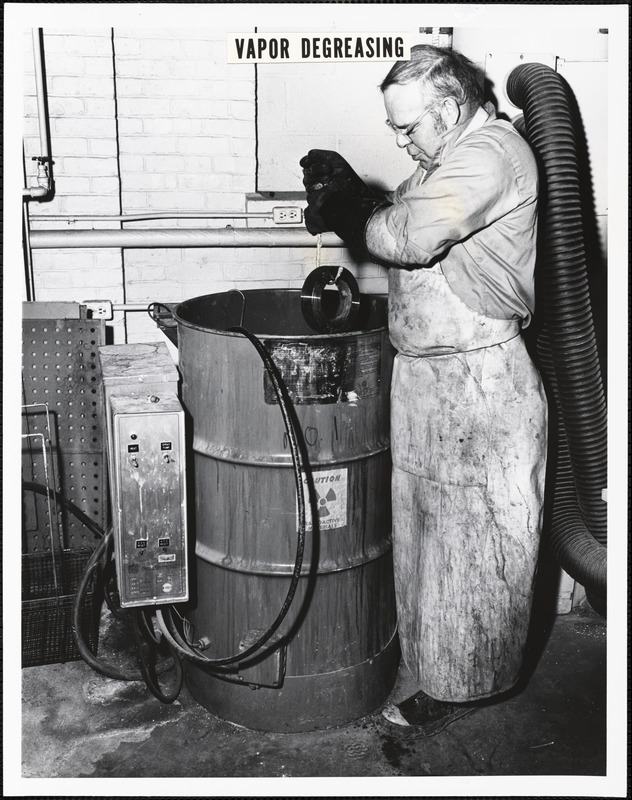
The hazards in this file divide into two groups and the larger one is chemical. The solvent tank is the centre of it: petroleum distillates, benzene in earlier practice and carbon tetrachloride in a great many shops specifically because it would not catch fire, used in open containers at a bench, in a room with a window. Alongside it sat the platen adhesives, the rubber grinding dust, the bulk ribbon ink and, when the technician also serviced the duplicator, the methanol-based spirit fluid that produced the most widely remembered smell of the period.
None of it was addressed by anybody inspecting a typewriter shop, because nobody inspected a typewriter shop. The occupational safety framework of the period was built around factories, and a self-employed technician or a dealer with three staff fell entirely outside it — the same structural gap that applies to the watch bench, the sign shop and every other small trade in this series. What eventually resolved it was the withdrawal of the solvents themselves from general sale, for reasons that had nothing to do with typewriters.
The second group is two avoidable items. Compressed air for cleaning aerosolises the contaminant instead of removing it and is now discouraged or prohibited in many workplaces, and working on live mains equipment beside an open solvent tank is the one pairing in this file that is worse than either half. Both had straightforward alternatives at the time.
There is one thing here with general application. Blowing dust off something with compressed air is still the first instinct in most workshops and it is the wrong one: it puts the contaminant into the room and into whoever is standing in it, and a vacuum, a captured airflow or a wet wipe does the job properly.
The rest is worth reading as a record of what durability used to mean. A 1935 machine can be made to work perfectly today, and the reason it can is that somebody designed it on the assumption that it would be opened.
Like our content? Follow us for more.
